Visiting the Roquefort Caves
Cool air meets you beneath Roquefort-sur-Soulzon.
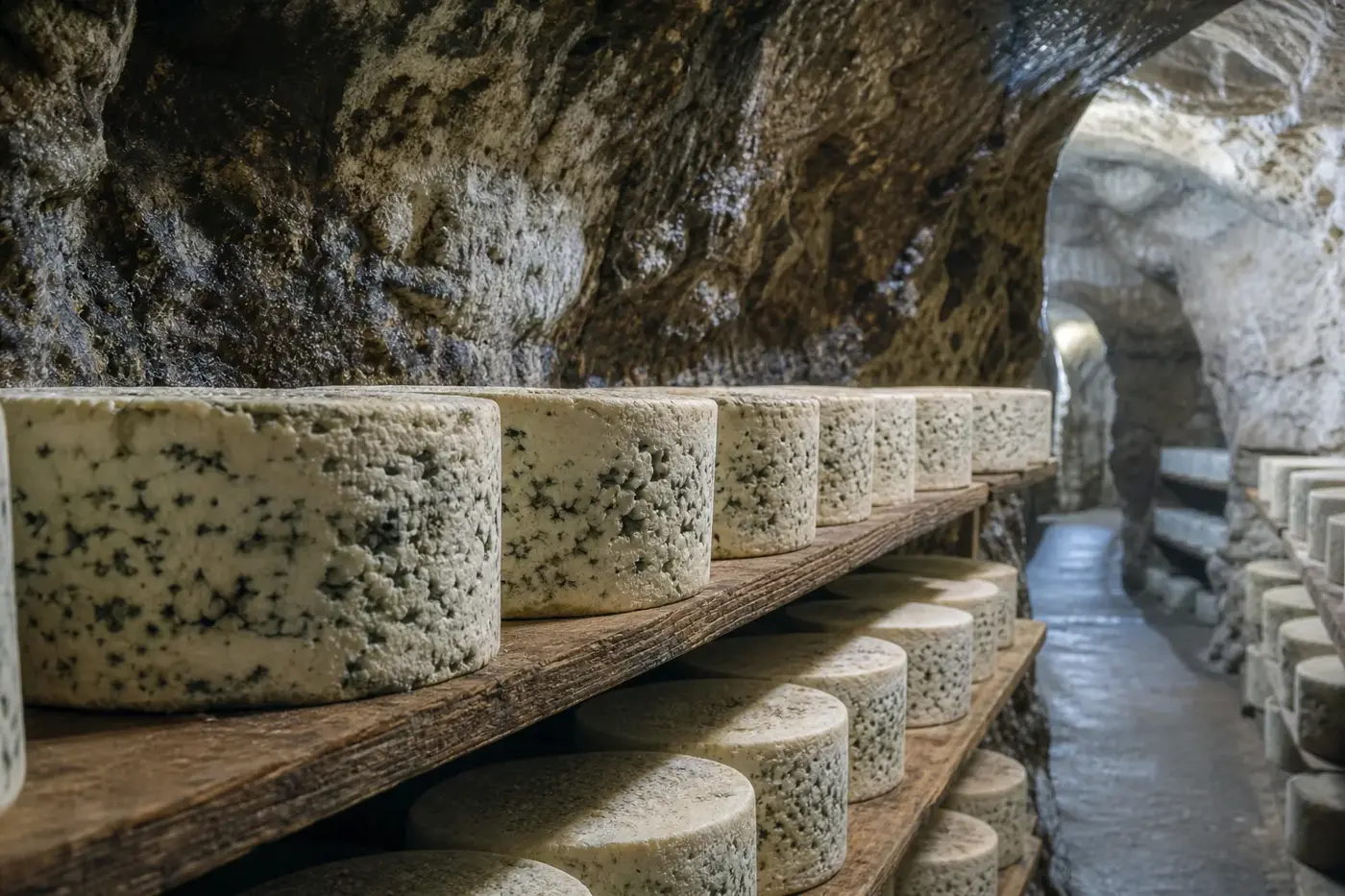
Cool air meets you beneath Roquefort-sur-Soulzon. It slips through fissures in the Combalou rock and into the cheese caves, where the mountain takes a very practical part in ageing Roquefort. You can step inside to understand how, but choose your visit carefully: some public tours explore historical caves, so ask whether ageing cheeses will be visible before booking.[1][3][4]
First, look up at the Combalou
Roquefort-sur-Soulzon stands at the foot of the Combalou cliffs in southern Aveyron, in France’s Occitanie region. Beneath the village, cheese caves occupy the broken limestone debris. You may have come for the cheese, but give the rock its moment: without it, this would be a rather different outing.[1][2]
Look up at those cliffs before you descend. Afterwards, wander through the village streets to put what you have seen into perspective. These caves belong to a settled, working place, not an isolated underground attraction.
For an introduction to the surrounding region and ideas for walks, call at the Pays du Roquefort tourist office on avenue de Lauras. It is a useful place to begin if you want to see more than the caves.[7]
Follow the mountain’s airways
Over centuries, the Combalou cliffs fractured and collapsed. What remained was an accumulation of limestone blocks threaded with interconnected gaps. These natural air passages are called fleurines, and air travels through them into the caves, as the official specification describes.[2]
Keep that picture in mind when you explore an interpretation display: broken limestone, open passages and people adapting the spaces between them. INAO describes caves excavated within limestone scree, ventilated by natural chimneys formed in its fissures. The rock and the spaces within it are equally important.[1]
Ask your guide where air enters the gallery you are visiting. Spotting an opening and hearing how it works can make the whole arrangement click. Those underground conditions suddenly become something you can connect to the rock around you.
Bring a jumper and meet the affineur
The fleurines help sustain the cool, humid microclimate in which Roquefort undergoes cave ageing. According to the specification, circulation responds to outside temperature and atmospheric pressure. As air moves through the underground system, it cools against the rock and takes up moisture.[2]
Dress for the caves, whatever the weather outside. In the visitor information for November 2026, Société describes its caves as around 10 °C; Papillon gives 9 to 13 °C, and Gabriel Coulet reports 10 to 12 °C. Each operator is describing its own spaces.[3][4][5]
Then turn your attention to the person judging the cheese. Société describes its master affineur, the specialist responsible for maturing cheese, overseeing the transformation in its galleries. Ask what prompts the next handling decision, and how staff recognise that a cheese is ready for the following stage.[3]
Follow the milk to those blue-green veins
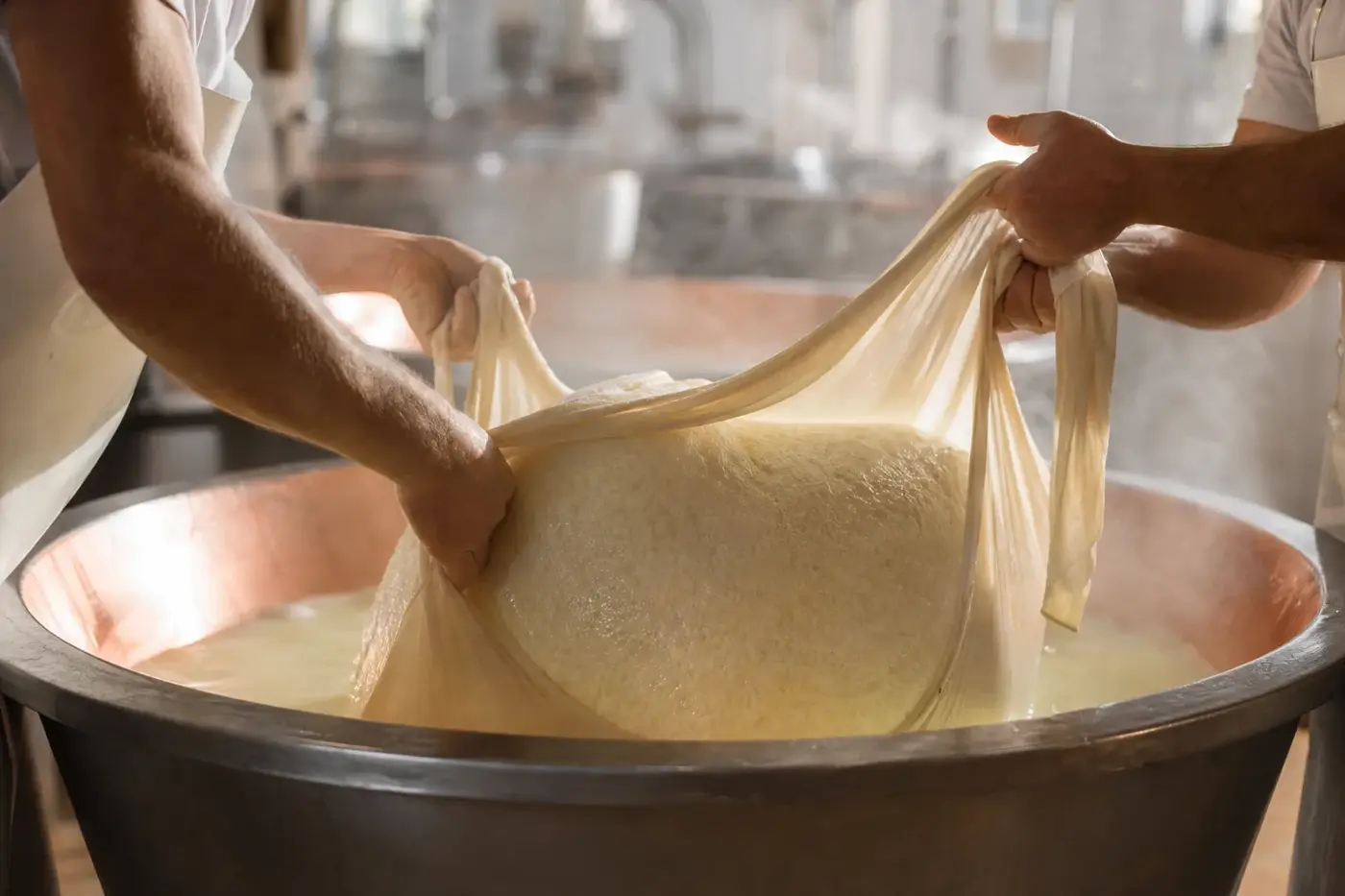
Roquefort starts with raw, whole milk from Lacaune sheep. Rennet, the ingredient that coagulates milk, produces curd, which is divided, stirred, moulded and drained without pressing. The cheese is salted, while cultures of Penicillium roqueforti supply the mould responsible for those characteristic blue-green veins.[2][9]
Next comes piercing, known in French as piquage, which opens passages to aerate the interior. Give those holes a little attention: they matter. The producer organisation identifies mould strains, their concentration, needle size and piercing arrangements among the factors that make Roqueforts different from one another.[9]
Keep these dairy operations separate in your mind from the work underground. A film may take you through milk collection, curd formation and moulding, but those activities happen elsewhere. Société’s programme explicitly includes a film following the process from sheep and milking to cheesemaking.[3]
For the full sequence, explore how cheese is made. For the distinctions between treatments, turn to raw milk and other milk treatments. Once you separate making a fresh cheese from maturing it, you can place each part of the cave visit within the cheese’s development.
Why Roquefort belongs to this mountain
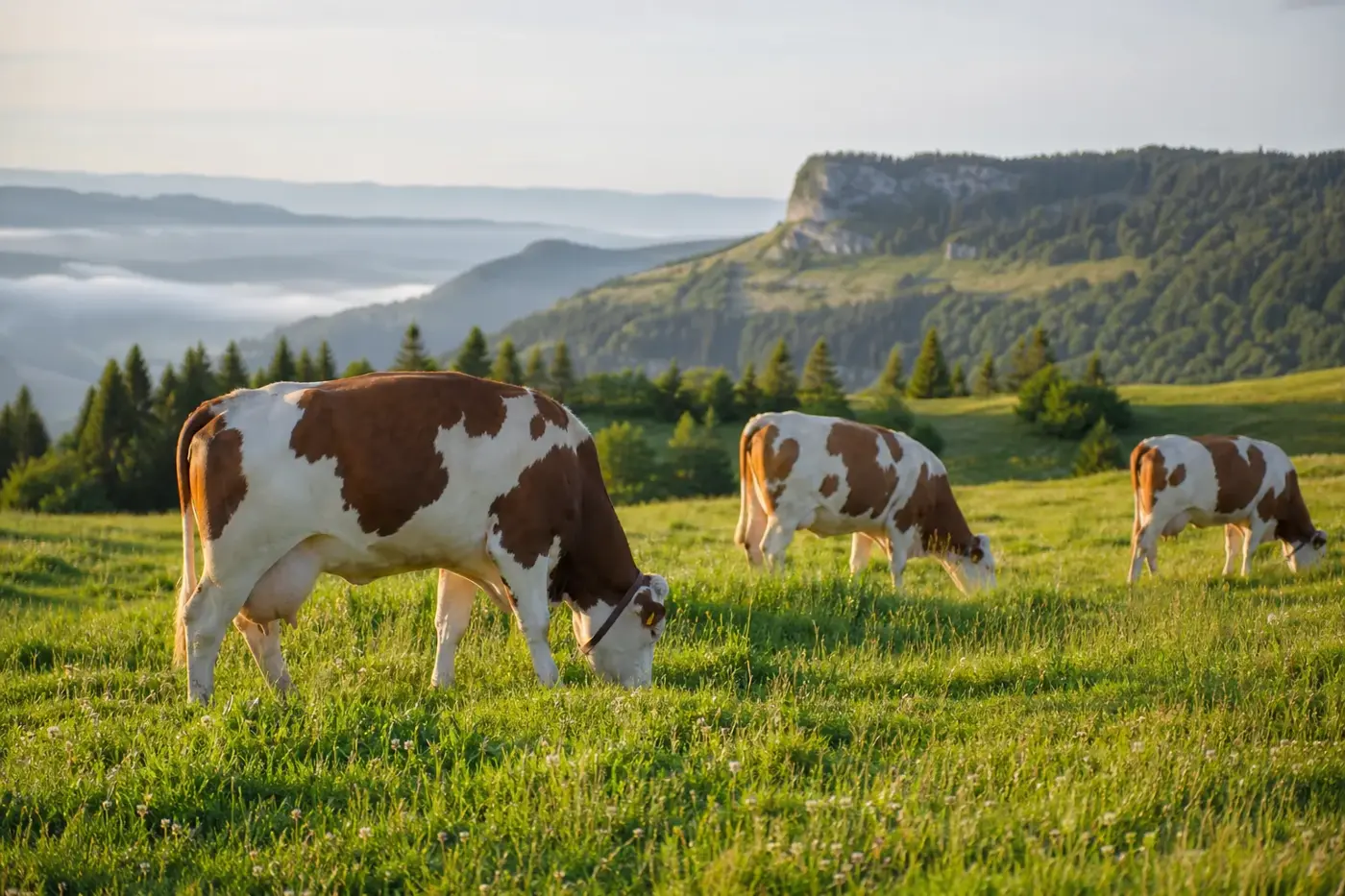
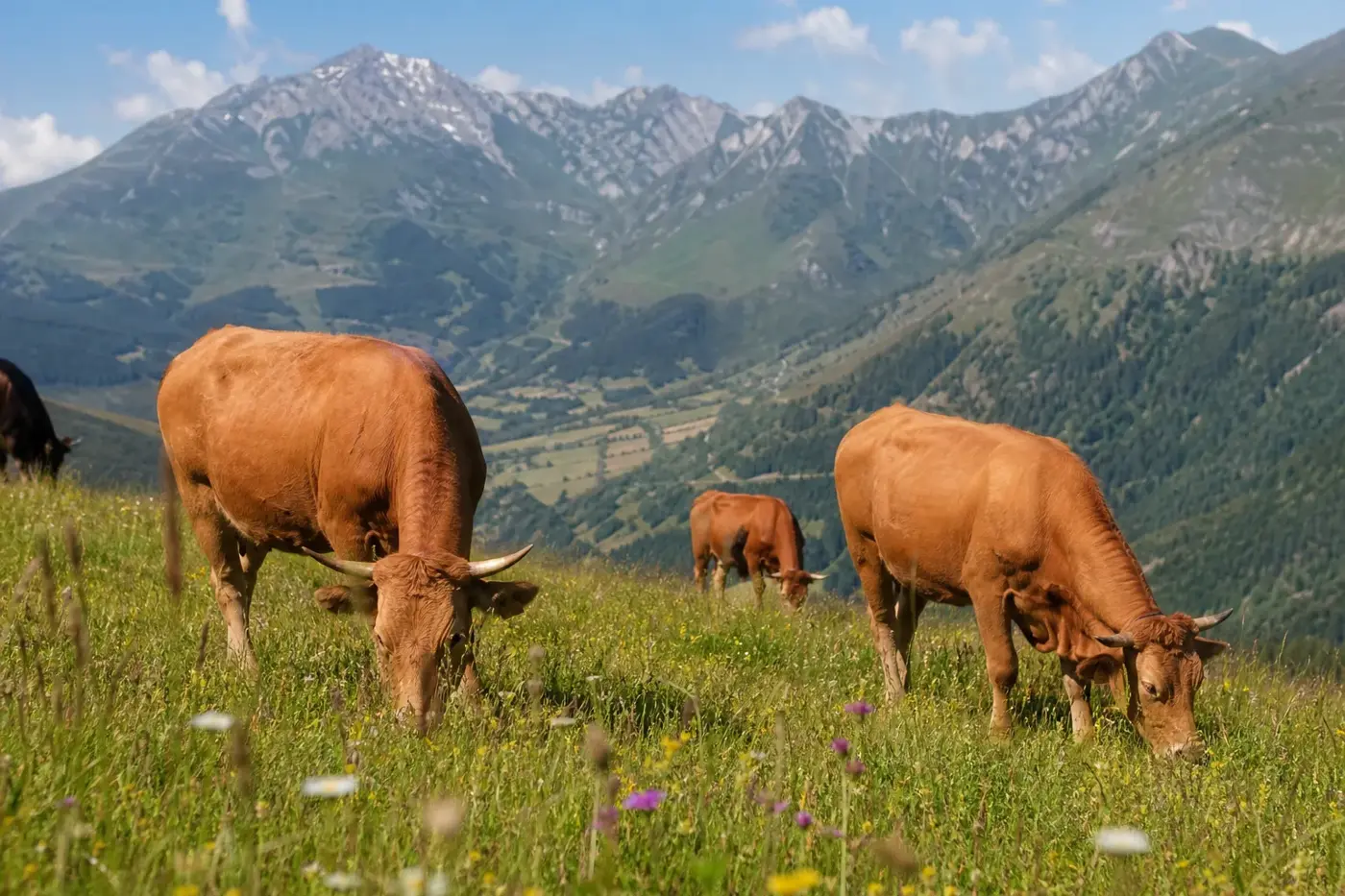
Roquefort is an appellation d’origine protégée, the French term for a protected designation of origin, or PDO, recognised within the EU system. Its specification makes an important distinction. The area for producing milk and making cheese is wider than the tightly defined place for cave ageing.[1][2]
Milk production and cheesemaking take place within the specified geographical area across parts of southern France. Cave ageing belongs to the delimited Combalou scree zone at Roquefort-sur-Soulzon. Subsequent maturation may continue in those caves or in temperature-controlled rooms within the commune.[1][2]
The cheese must spend at least two weeks exposed unwrapped in the designated caves. Combined ageing and maturation must last at least 90 days from manufacture. Keep those requirements separate: the minimum time exposed in the caves is only part of the cheese’s development.[2]
That geography helps explain why a cave visit cannot show you the whole production chain. Milk comes from a broader farming territory; the underground stage belongs to this particular place. See protected names explained for the distinction between a protected geographical name and the individual businesses making cheese under it.
What awaits you underground?
Société’s published route combines a projection on cave formation, an encounter with fleurines and a cheesemaking film. You also get illuminated cave architecture, ageing galleries and a tasting. An exhibition follows the company’s history through its advertising.[3]
Each part offers a different view of the same cheese. The galleries reveal physical conditions and handling, the film supplies the wider production sequence, and the advertising shows how the business has presented itself. Ask where the cheese was made, which stage you are seeing and what happens after it leaves the gallery.
At Papillon, your route takes you through historical caves. Its notice dated 1 July 2026 describes a guided immersive visit and explains that current ageing happens at a nearby site closed to visitors. On this route, you will not see cheeses undergoing maturation.[4]
Find your kind of cave visit
Begin with what you most want to see and understand. The November 2026 visitor information below sets out the published options. Before travelling, contact the operator to confirm your particular route, entry arrangements and conditions for your date.
| Operator | What you can expect | Time to set aside | Questions worth asking |
|---|---|---|---|
| Société | Guided cave route, interpretation displays and tasting | About one hour | Entry arrangements, tour language and whether ageing cheeses will be visible.[3] |
| Papillon | Guided immersive historical cave route; tasting advertised by the tourist office | Ask how long to allow | Duration, telephone reservation, chosen format and language.[4][6] |
| Gabriel Coulet | Self-guided cave visit and tasting; guided groups by arrangement | About one hour | Group arrangements, access needs and seasonal schedule.[5] |
Gabriel Coulet says individuals can follow its self-guided route without reserving, while groups must arrange their visit. Papillon takes reservations by telephone. It says descent into its caves cannot be guaranteed without one.[4][5]
Read other listings carefully, too. The tourist office distinguishes cave visits from Le Vieux Berger’s workshop visit and from producer shops. A shop listing alone does not mean you can take an underground tour.[10]
Would you rather have someone to question, or move at your own pace? A guided route offers the first; a self-guided visit gives you the second. If seeing cheeses actually ageing is central to your trip, ask about that explicitly before choosing a date.
Book the visit, pack the warm layer
Start with the operator’s website, then contact its visitor team. Check your date, tour format and last admission separately from the shop’s opening arrangements. If you are enquiring for a group, give your numbers and language needs at the outset.
Société and Gabriel Coulet describe visits running throughout the year, subject to their published closures and schedules. Papillon issues dated visitor notices, including route changes. Return to these pages shortly before departure rather than planning around an older travel account.[3][4][5]
Ask exactly what your chosen language covers: the live guide, recorded film, written material or all three. An English-language website helps you plan. It does not tell you what you will hear or read during your particular session.
Bring a warm layer, even in summer, as all three operators advise. Choose comfortable footwear for standing and moving through the galleries. Société specifically warns that its route includes steps and discourages pushchairs.[3][4][5]
Make the last stretch straightforward
The tourist office identifies the A75 as the main motorway approach, with exits 46 and 47 serving the area. Set your destination to your chosen visitor entrance. Check the operator’s parking instructions before you set off.[7]
Société identifies car parking beside its upper-village site. Motorhomes, converted vans and other large vehicles are directed away from that car park to suitable nearby spaces. Gabriel Coulet directs visitors towards parking near the tourist office or in the village centre.[3][5]
Coming by rail? The tourist office identifies Tournemire-Roquefort and Saint-Rome-de-Cernon as nearby stations. Consult SNCF TER Occitanie for current journeys and disruption information, and liO for regional coach options.[7][8]
Before choosing your tour time, work out the rail and coach connections to the village. Allow for the final stretch to the cave entrance and plan your return journey, too. The cave booking is only one part of getting there and back.
Discuss accessibility for the exact route you intend to take. Société says visitors with reduced mobility can access the first 20 minutes of its visit, and offers large-print and braille documents on request. Gabriel Coulet asks you to contact it about an adapted experience, as its historical caves are not accessible to everyone.[3][5]
Be specific about what you need. That might mean step-free access, a manageable walking distance, seating, room for a mobility aid or accessible interpretation. Ask which parts of the visit you could experience and whether the tasting area has a separate access route.
Give the tasting a little time
Here is your chance to connect the cheese in front of you with the process you have just explored. The producer organisation attributes differences between Roqueforts to seasonal changes in milk, alongside individual choices in cheesemaking, mould selection, piercing and ageing. There is plenty to discuss before your hand quietly nominates itself for another sample.[9]
Give each sample your attention. Take it slowly:
- Ask which cheese you are tasting and how it differs from others in the producer’s range.
- Look at the paste and the spread of blue-green veins.
- Smell it before tasting, then try a small piece on its own.
- Describe the texture, salt, aroma and persistence in your own words.
- Ask which production or maturation choices your host connects with what you noticed.
Société, Papillon and Gabriel Coulet advertise tasting elements, though the selection and format vary with the visit. Before joining, ask about ingredients and accompaniments. Mention any participation arrangements relevant to your party, too.[3][5][6]
Finish with a question: where did this cheese come from before it entered the caves? That brings the tasting back to the farms and dairies beyond the village. If you plan to take cheese home, consult the current official rules for your departure country, destination and any transit country, for personal or commercial use.
Come back into the Grands Causses
The surrounding area lies within the Grands Causses Regional Natural Park, according to the tourist office. The office provides walking and cycling information. Ask for a route that suits your available time, equipment and the conditions on the day.[7]
Allow time for one cave visit, the village and a separately chosen countryside walk. Leave breathing room for questions, a slower tasting or an unexpected delay. Your day will be more flexible than if you pack several underground visits into a rigid sequence.
Follow marked routes, respect private land and livestock, close gates where instructed and take your litter away. Arrange farm visits in advance. Then look back towards the Combalou after your time underground: you now know that rock as part of the cheese’s working environment, not simply the backdrop to your visit.[1][2]
Questions people ask
What are the fleurines in the Roquefort caves?
Fleurines are natural air passages through broken limestone. Air moves through them into the caves, helping to sustain the cool, humid conditions used for ageing.
Do I need to book a Roquefort cave visit?
Gabriel Coulet says individuals can visit without reserving, but groups must arrange their visit. Papillon takes reservations by telephone and cannot guarantee descent into its caves without one.
How cold are the Roquefort caves?
Société describes its caves as around 10 °C, while Papillon gives a range of 9 to 13 °C. All three featured operators advise bringing a warm layer, even in summer.
Are the Roquefort caves accessible to visitors with reduced mobility?
Société says visitors with reduced mobility can access the first 20 minutes of its visit, and it offers large print and braille documents on request. Gabriel Coulet asks visitors to contact it about an adapted experience because its historical caves are not accessible to everyone.
How do I get to the Roquefort caves by train?
The tourist office identifies Tournemire and Saint Rome as nearby stations. Specific rail and coach connections to the village have not been verified, so check current journeys with SNCF TER Occitanie and regional coach options with liO.
Sources
[1] Institut national de l’origine et de la qualité, Roquefort, product and territory record, undated live edition, checked November 2026. Official product record.
[2] French Ministry of Agriculture and INAO, Cahier des charges de l’appellation d’origine protégée « Roquefort », February 2026 publication, particularly sections 3, 5 and 6. Official specification.
[3] Roquefort Société, Visitez les Caves Société, French live edition, checked November 2026. Operator source for its own visitor arrangements. Visitor information.
[4] Roquefort Papillon, Visite guidée des caves Roquefort Papillon, notices dated February to July 2026, checked November 2026. Operator source for its own route and reservations. Visitor notices.
[5] Maison Gabriel Coulet, Visitez nos caves de Roquefort, undated live edition, checked November 2026. Operator source for its own visitor arrangements. Visitor information.
[6] Office de Tourisme Pays du Roquefort, Les Caves Papillon, 2026 visitor listing, checked November 2026. Tourism listing.
[7] Office de Tourisme Pays du Roquefort, Venir, undated live edition, checked November 2026. Regional access information.
[8] liO Occitanie, Accueil, and SNCF, TER Occitanie, live transport portals, checked November 2026. Regional transport portal and rail journey information.
[9] Confédération Générale de Roquefort, FAQ, undated live edition, checked November 2026. Producer organisation source, particularly its explanations of differences between Roqueforts. Official industry FAQ.
[10] Office de Tourisme Pays du Roquefort, Visiter les Caves de Roquefort, undated live edition, checked November 2026. Visitor directory.
Researched from the official specification, INAO’s product record, operators’ published visitor information and official tourism and transport sources, without a site visit or recorded tasting.
Last checked: November 2026
Last checked November 2026.
The editors suggest you read next
Cheese Travel: Visiting Dairies and Caves
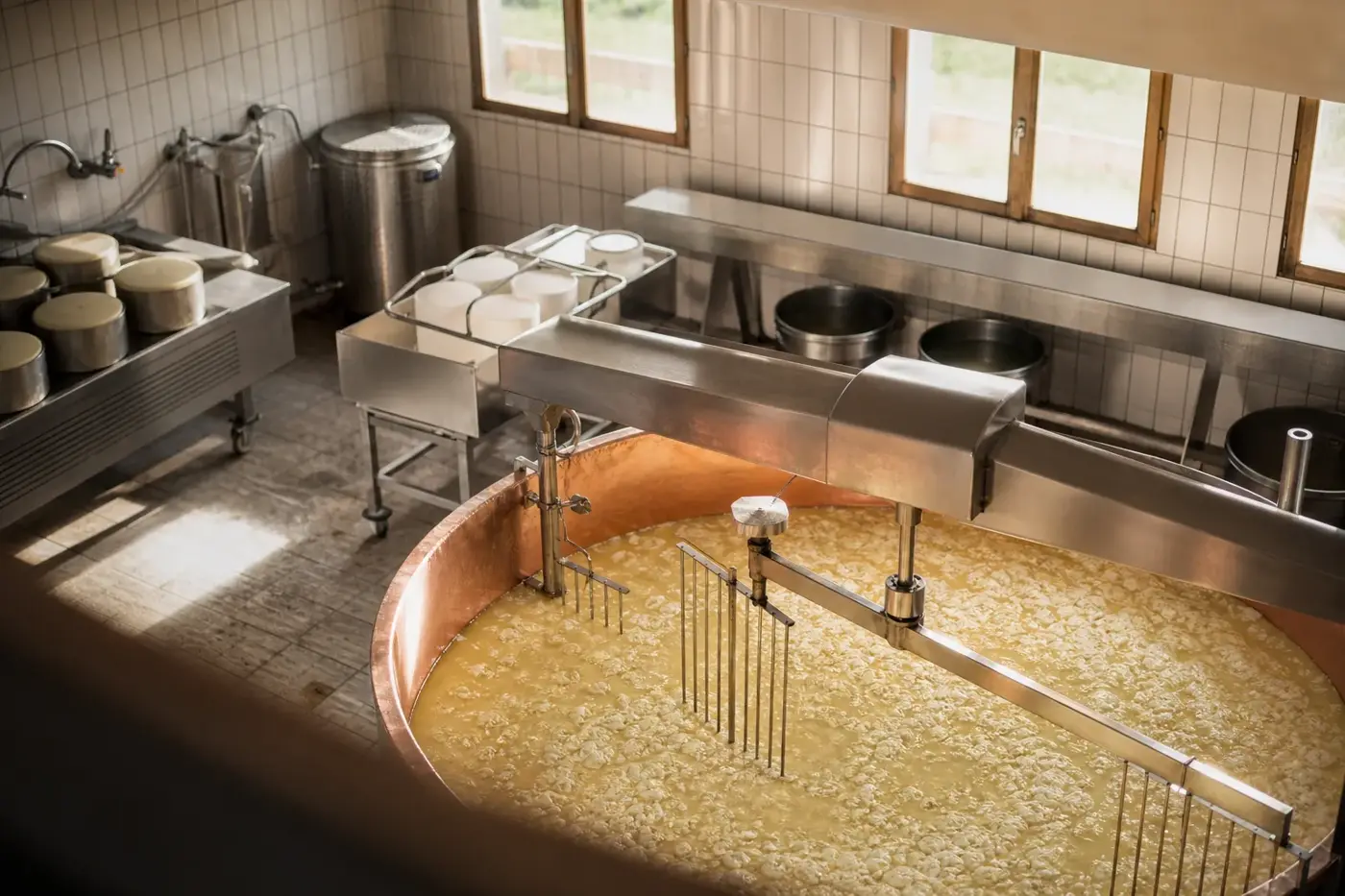
Milk moves through the vats at La Maison du Gruyère in Pringy, Switzerland.