Cheese Travel: Visiting Dairies and Caves
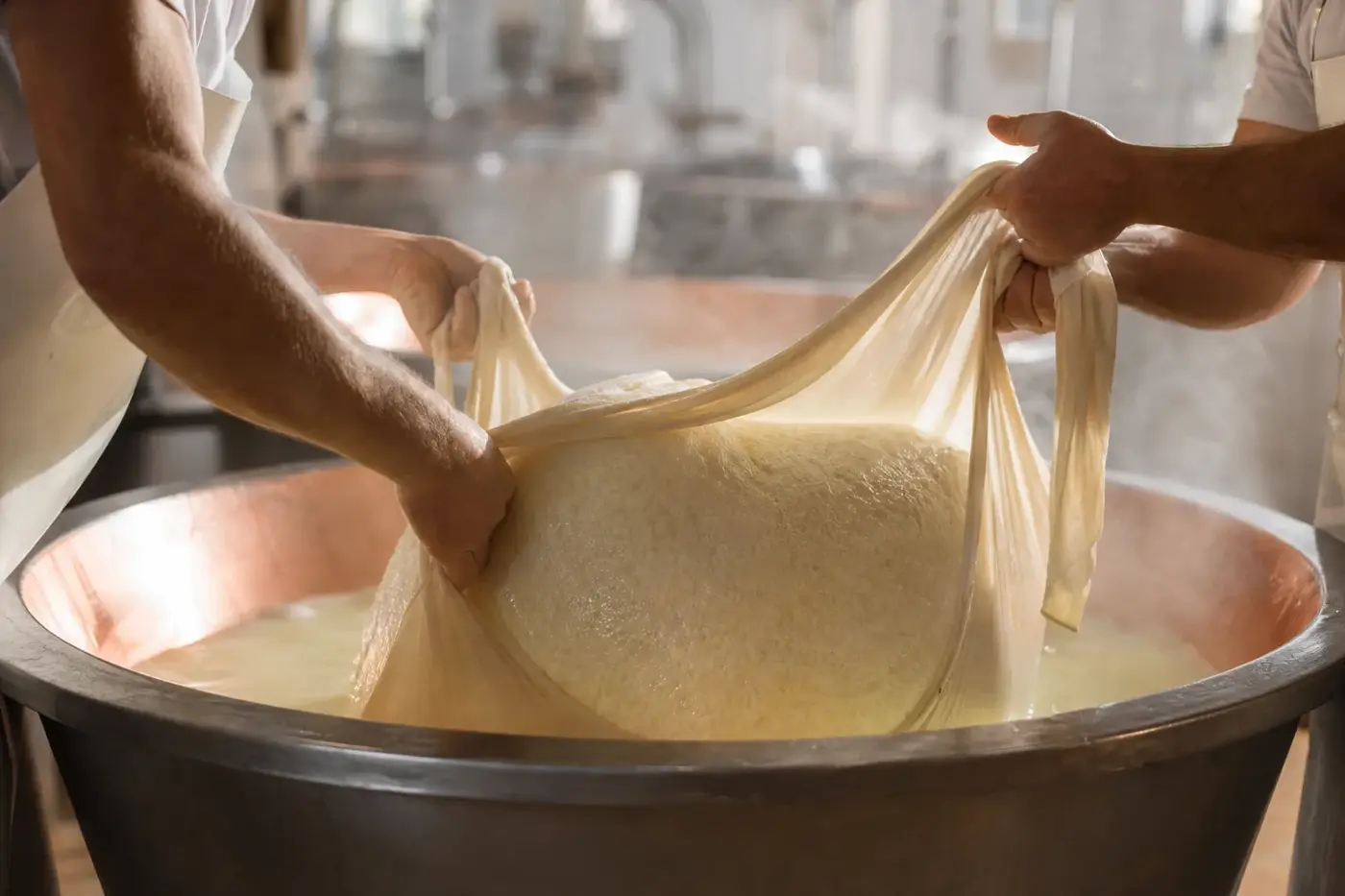
Milk moves through the vats at La Maison du Gruyère in Pringy, Switzerland.
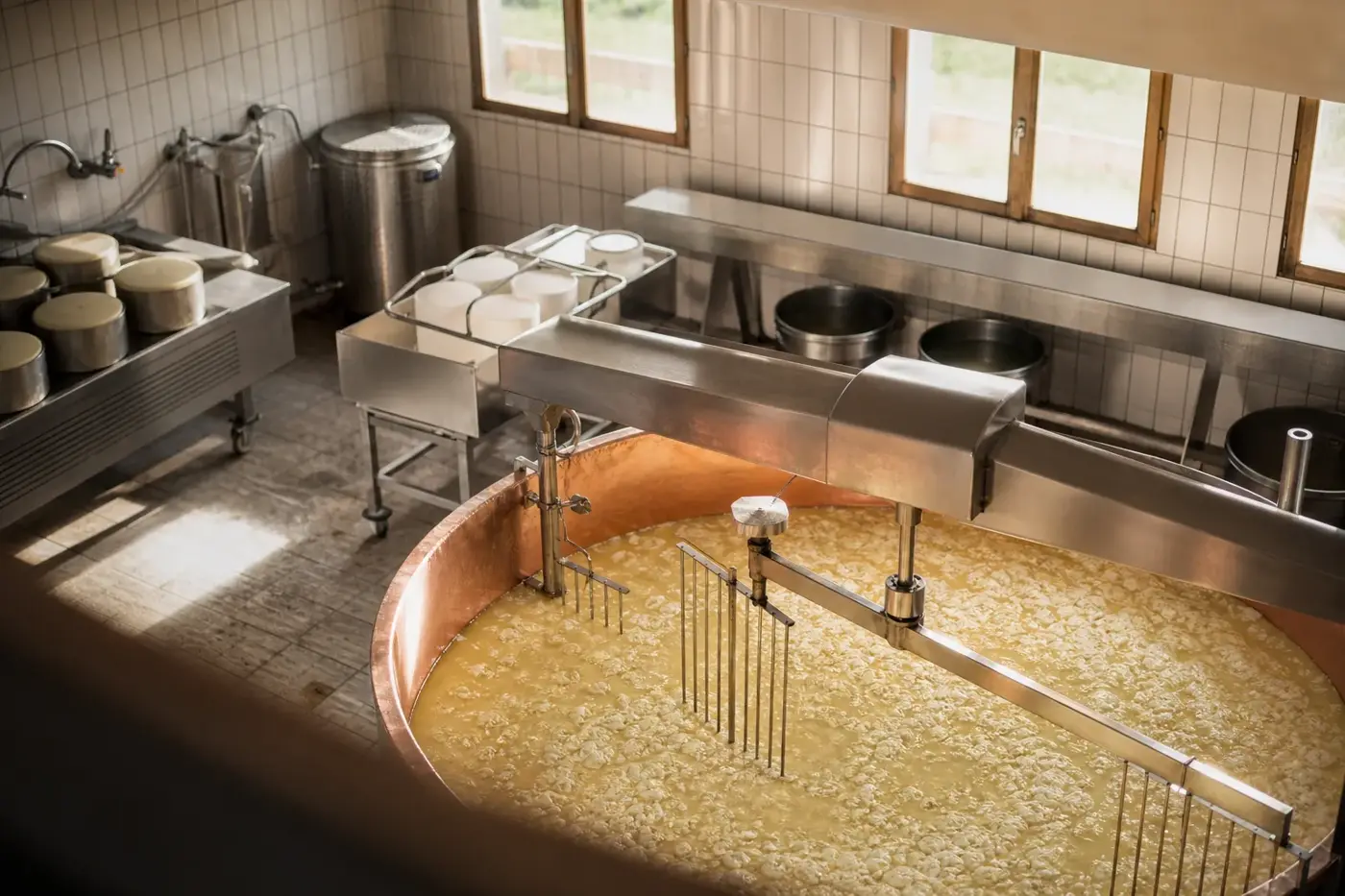
Milk moves through the vats at La Maison du Gruyère in Pringy, Switzerland. Ahead lie the press, a salt bath and the cellar. Arrive at the right moment and you can watch the transformation, rather than meet the cheese only when its work is done.[1]
Pair that production window with a confirmed maturation visit and the story opens out. You follow the maker’s decisions at the vat, then the affineur’s slower work on the shelf. Same cheese, rather different relationship with the clock.[1][6]
What would you love to see?
A working dairy and a cheese museum can both satisfy your curiosity. They simply tell different parts of the story. Before booking, think about which part you most want to follow.
A working dairy makes cheese as its daily business. A demonstration dairy creates opportunities to explain or show that work to visitors. Sometimes you get both: La Maison du Gruyère describes itself as a village dairy with a visitors’ gallery overlooking production.[1]
A cheese museum puts interpretation first, through objects, films, agricultural history and explanations of regional practice. Check whether your visit includes live cheesemaking, demonstrations on selected dates or an exhibition alone. For a “cave visit”, ask whether you enter a working maturation space or follow an interpretation trail.
Let your curiosity choose the route:
- Working dairy: watch the maker judge and handle the curd.
- Demonstration dairy: look for clear explanations, suitable languages and a good viewing position.
- Museum: explore historical context, equipment and the ties between farming and cheesemaking.
- Maturation visit: ask how much time you spend with the cheese, its surroundings and its daily care.
One booking question does a great deal of useful work: “What will visitors actually see being done?” The answer helps you choose the visit you have in mind.
Arrive when the milk is busy
Opening hours tell you when you can enter. Production times tell you what you might see. Milk reception, cheesemaking and cleaning have their own sequence, with little regard for your itinerary.
Ask whether you will arrive during deliveries, milk preparation, vat work or the later handling of young cheeses. La Maison du Gruyère’s published presentation follows milk deliveries through vat work, pressing, a salt bath and cellar ageing.[1] That gives you a sequence to plan around, not just a door to turn up at.
At the vat, look for milk becoming curd, the coagulated material that becomes cheese. Watch how it separates from whey, the liquid portion. An explanation becomes much easier to follow when you can match it to the equipment in front of you.
Depending on the batch and your timing, you might see cutting, stirring, draining or moulds being filled.[1] Ask which decisions rely on observation and touch, and which are measured. Read how cheese is made beforehand, leaving yourself more time to notice what makes this dairy distinctive.
La Maison du Gruyère directs visitors towards morning production viewing. Confirm the manufacturing window for your date, because exhibition opening hours are not a production timetable.[2][3] Allow time to watch an operation develop: the first photograph may come before the change that makes everything click.
Follow the air into the cellar
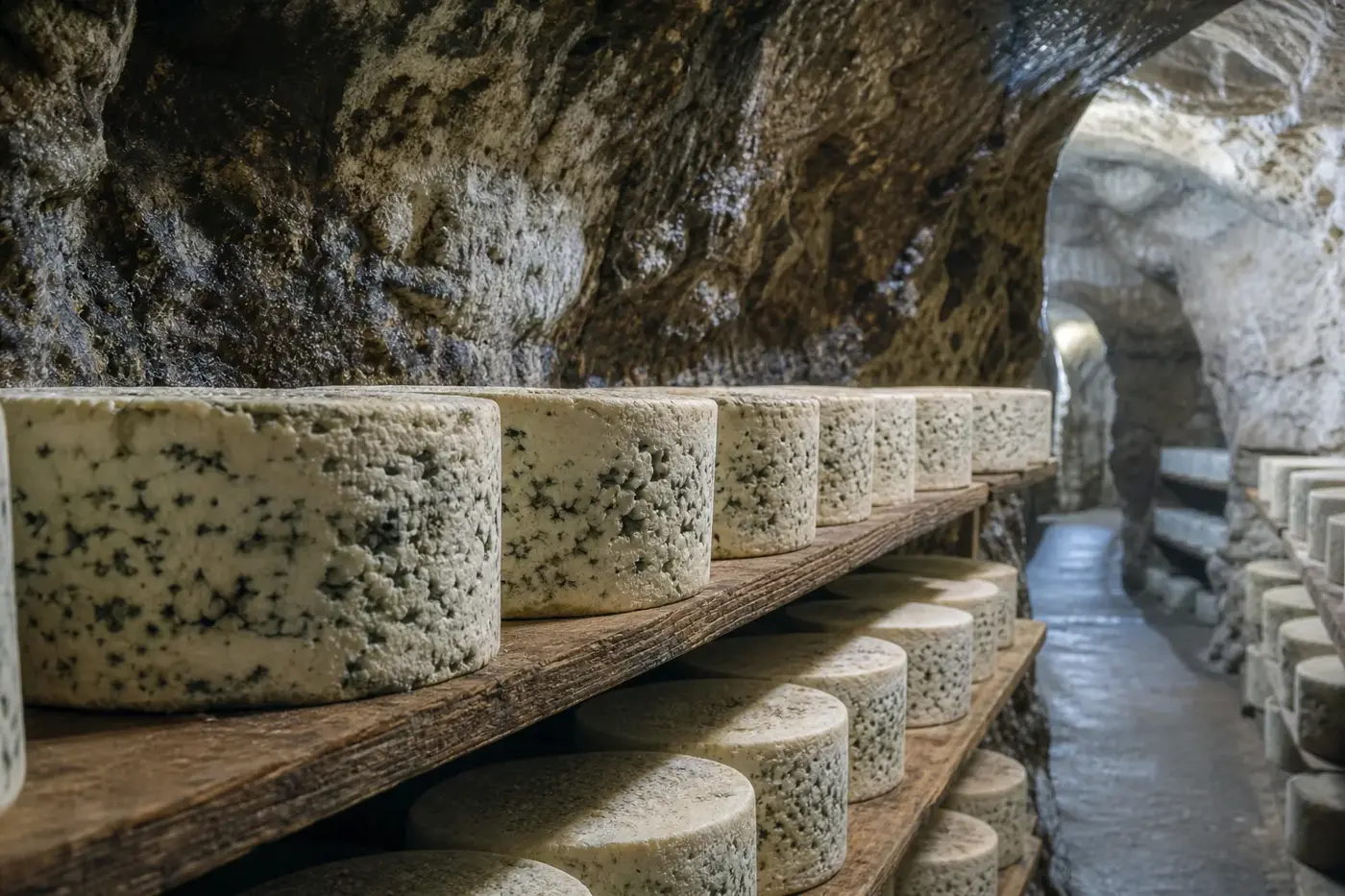
At the Société caves in Roquefort-sur-Soulzon, France, air reaches the ageing spaces through fleurines. These passages connect the caves with the mountainside. The operator describes this natural ventilation as part of the cave system, bringing rock, air and cheese into one story.[4]
Natural caves, constructed cellars and purpose-built rooms offer different ways to manage a cheese’s surroundings. Enjoy the architecture, but look beyond it too. Ask where the air comes from, how conditions are monitored and what the team adjusts.
An existing building can find a new working life as a cellar. The Comté industry body’s account of the Fort de Saint-Antoine visit describes vaulted passages, galleries and walkways through maturation cellars.[5] It is a very different setting from an open production gallery.
For a purpose-built contrast, consider La Tzintre in Charmey, Switzerland. Its cooperative says the cellars were constructed in 2012 and 2013, and welcomes requests to visit its working facilities.[6] A modern room can reveal as much as a rocky chamber when you ask about its controls and the work between the shelves.
Whatever the setting, carry two questions with you. What does the building provide? And what do the affineurs, the people responsible for maturation, do within it?
Look closely at the care behind the rind
Temperature, relative humidity and airflow work together. In a prototype ripening-room study using sheep’s milk cheeses, researchers monitored these conditions and examined the cheeses after 35 days. Their analysis associated environmental differences with characteristics including rind appearance, hardness and internal openings.[7]
Turn that research into questions for your guide. Where are conditions measured, do they differ between shelves, and how does the team respond? Ask whether conditions change during maturation or whether cheeses move between spaces.
Then watch the handling. Turning changes which surfaces face the room; rubbing applies a treatment to the rind. Ask whether the cheeses are turned or rubbed, and how that care shapes their development.
The sheep’s milk study associated differences in room conditions with differences in rind appearance and hardness.[7] There is good reason, then, to notice the care around you as well as the dates on the cheeses.
“What tells you that this wheel needs attention?” opens a richer conversation than “How old is it?” Follow with questions about the rind, the handling routine and the decision to release a cheese for sale. Age matters, but a calendar cannot explain all that judgement.
Find the people who know the region
Start with the dairy or cellar operator’s own website. Regional tourism bodies can help you find visits, while producer organisations connect dairies, farms and maturation specialists across a cheese-producing area. The Comté industry body’s Routes du Comté listings, for example, include maturation visits and operator contact details.[5]
Make your shortlist, then confirm arrangements directly. Tell the operator what draws you there: production, agriculture, maturation, history or a guided tasting. Ask whether the guide can explore those subjects in your preferred language.
Before committing, confirm:
- Your date, arrival time and expected production activity.
- Whether individuals or groups need to book ahead.
- Minimum and maximum group sizes, including arrangements for children.
- The tour language and whether interpretation is live, recorded or written.
- Whether tasting is included, where it happens and what information accompanies it.
- Cancellation arrangements and whom to contact if transport is delayed.
Ask about age limits and photography rules at the same time. Keep written confirmation, especially when fitting two visits together. You will have a clear record of what each operator has agreed.
Take a Swiss morning from vat to cellar
Pringy and Charmey make a practical Swiss pairing for a group that secures both appointments. Request morning production viewing at La Maison du Gruyère, then ask the La Tzintre cooperative about an afternoon maturation visit.[2][6]
The cooperative asks visitors to send a request. Confirm your group size, date and arrangements before fixing the rest of your day.[6] Even the most appealing cheese itinerary needs two firm appointments.
| Part of your day | Your proposed plan | What to confirm |
|---|---|---|
| Morning | Watch cheesemaking at La Maison du Gruyère in Pringy | Production window, admission and language |
| Middle of the day | Make room for lunch and the transfer | Connection, waiting time and final approach |
| Afternoon | Explore La Tzintre’s maturation cellars in Charmey | Written acceptance, group conditions and access |
| Return | Head from Charmey to your accommodation or onward connection | Return service and an alternative if you miss a connection |
TPF’s 2026 route 260 timetable includes a 27 minute morning journey from Gruyères railway station to Charmey, La Tzintre.[9] Check the afternoon service separately against your travel date and appointment. Allow for waiting, and establish how you will reach both the station and the cellar entrance.
Give the afternoon visit room to breathe, with time for questions rather than a hurried stop. If the cellar cannot accept your party, keep the confirmed dairy visit as your day’s anchor. Add a regional exhibition or town visit instead.
Plan the last stretch to the door
Work backwards from your appointment, starting with the venue’s precise entrance. Check parking, the public transport stop and the final approach. On a rural itinerary, connections and finding the door need time of their own, beyond a map’s driving estimate.
Wear secure footwear suited to the route the operator describes. Bring an extra layer for a cool cellar. Société advises warm clothing for its cave visit and gives a cave temperature of 10 °C (50 °F).[4]
For accessibility, consider the whole experience, from arrival to departure:
- Is the route step-free from arrival to the tasting area?
- Are there stairs, slopes, narrow passages or long periods of standing?
- Can you sit during explanations?
- What arrangements apply to assistance dogs and pushchairs?
- Are accessible toilets, written interpretation or hearing support available?
La Maison du Gruyère states that it is accessible to visitors with reduced mobility.[2] Ask for the practical details that matter to you. A general statement is the beginning of that conversation, not its conclusion.
Société describes reduced-mobility access for the first portion of its visit, rather than the complete cave route.[4] Discuss the route before travelling. The agreed visit should match what you can comfortably manage.
Be a welcome guest in a working dairy
Your visit runs alongside somebody’s working routine. Ask about hygiene requirements before arrival, particularly if you will go beyond a public gallery. Follow instructions on clothing, footwear, hand hygiene and where you may carry belongings.
Respect barriers and marked routes. Ask before touching cheese, shelves or equipment, and let the guide choose a suitable moment for close observation. A gallery can give you a useful view without interrupting production, as La Maison du Gruyère’s arrangement illustrates.[1]
Confirm photography rules before taking out your camera. Ask separately about cheese, machinery and staff, and about flash or video. Permission for a personal photograph is a separate conversation from permission to publish an identifiable person’s image.
If an area is off limits, ask what the restriction protects: hygiene, uninterrupted work or visitors’ safety around machinery. Your guide may be able to explain what happens there through a diagram, film or example. You do not need to enter every room to understand the process.
Ask what makes this cheese itself
The best question often starts with something you have just noticed. Pick a few and give your guide room to answer. This is a conversation, not an inspection with a tasting at the end.
At the dairy, ask:
- Does the milk come from one herd or several farms?
- Which milk treatment is used for this cheese?
- What changes with the season, and how does the maker respond?
- Which stage requires the closest judgement today?
If those milk distinctions are unfamiliar, read about raw, thermised and pasteurised milk before your visit. Once the terms feel familiar, you can give your attention to the details.
In the maturation room, try:
- Was this cheese made here or brought from another dairy?
- What care does its rind receive?
- How are the conditions chosen for this stage?
- What differences would you expect between these two batches?
- How do you decide when a wheel is ready?
Finish by asking what your guide would like you to notice during the tasting. That answer connects the cheese in front of you with the milk, handling and maturation you have just explored.
Taste the story, then get it home
A tasting at different stages of maturation lets you compare texture, aroma and finish. Record the ages as you taste. La Maison du Gruyère describes a tasting at three stages of maturation.[10]
Ask what else differs between the samples. Age should not take all the credit for every contrast. Here is your chance to connect what you taste with what you have seen.
Write down the dairy, affineur and cheese name. If you buy cheese, ask which organisation made it and which matured it, then keep the label so those details travel home with you. The guide to reading a cheese label helps you distinguish the different information.
Before choosing cheese for the journey, describe your route. Ask for storage instructions, suitable packing and the label information you need to retain. Establish what refrigeration you will have.
For England, Northern Ireland and Wales, consult the Food Standards Agency’s chilling guidance, with November 2026 as the reference date.[11] Elsewhere, consult the country’s official food safety guidance. For the next stage, see storing cheese at home.
Check import rules before buying cheese to carry across a border. For personal travel from Switzerland or France into Great Britain, consult the current GOV.UK meat and dairy guidance, including its exceptions and transit requirements.[12] For travel to the United States, check the USDA guidance on dairy products, declarations and farm visits for your origin and transit countries.[13]
Check every transit country as well as your destination. Keep the cheese’s origin information and receipt, and revisit the official guidance shortly before departure.[13] For detailed regional itineraries, continue with the regional guides in the Cheese Travel hub.
General information only, not medical advice: follow the official guidance where you live.
Questions people ask
What is the difference between a dairy visit and a cheese museum?
A working dairy makes cheese as its daily business, while a demonstration dairy creates opportunities to explain or show that work to visitors. A cheese museum focuses on interpretation through objects, films, agricultural history and explanations of regional practice.
When should I visit La Maison du Gruyère to see cheesemaking?
La Maison du Gruyère directs visitors towards morning production viewing. Confirm the manufacturing window for your date, as the exhibition’s opening hours are not the production timetable.
Can I visit a dairy and a maturation cellar in one day?
The page suggests requesting a morning production visit at La Maison du Gruyère in Pringy and an afternoon cellar visit at La Tzintre in Charmey. La Tzintre asks visitors to send a request, so obtain confirmation before fixing the rest of the day.
Are cheese cave visits accessible?
La Maison du Gruyère states that it is accessible to visitors with reduced mobility. Société describes reduced mobility access for the first portion of its visit, rather than the complete cave route. Ask each operator about the practical details you need before travelling.
Can I bring cheese home across a border?
Check the import rules before buying, including the rules for every transit country as well as your destination. For personal travel from Switzerland or France into Great Britain, consult the current GOV.UK meat and dairy guidance. For travel to the United States, check the USDA guidance on dairy products, declarations and farm visits.
Sources
- La Maison du Gruyère, Welcome to La Maison du Gruyère, operator presentation, undated PDF hosted in its July 2022 directory. Sections describing the village dairy, visitors’ gallery and production sequence. Operator presentation.
- La Maison du Gruyère, Informations générales, current operator information, checked November 2026. Visitor information.
- La Maison du Gruyère, Opening Hours, timetable updated 13 October 2026, checked November 2026. Used for production-viewing guidance, not to reproduce opening hours. Operator timetable.
- Roquefort Société, Les caves, current operator information, checked November 2026. Sections on fleurines, clothing, cave temperature and accessibility. This is the operator’s account of its own venue. Cave visitor information.
- Comité Interprofessionnel de Gestion du Comté, Caves d’affinage Petite du Fort de Saint-Antoine, Routes du Comté listing, checked November 2026. An industry-body listing, used for discovery and the description of cellar architecture. Routes du Comté listing.
- Coopérative fribourgeoise des producteurs de fromage d’alpage, Caves de la Tzintre, current operator information, checked November 2026. Cooperative’s cellar information.
- Instituto Nacional de Investigação Agrária e Veterinária and collaborating institutions, Applying Computational Fluid Dynamics in the Development of Smart Ripening Rooms for Traditional Cheeses, Foods, volume 10, article 1716, 2021. Abstract and sections 2.1 and 2.2. Open-access research paper.
- La Gruyère regional tourism body, Caves à fromage de La Tzintre, current visitor listing, checked November 2026. Regional visitor listing.
- Transports publics fribourgeois, Horaire 2026, ligne 260, Gruyères, Jaun, 2026 timetable, checked November 2026. Route 260 timetable.
- La Maison du Gruyère, L’Exposition interactive et ludique, current operator information, checked November 2026. Exhibition and tasting information.
- Food Standards Agency, How to chill, freeze and defrost food safely, official guidance published 2017, current page retrieved November 2026. Provided as the official handling reference for England, Northern Ireland and Wales. Official chilling guidance.
- UK Government, Bringing food into Great Britain: Meat, dairy, fish and animal products, current traveller guidance, checked November 2026. Official personal-import guidance.
- United States Department of Agriculture, Animal and Plant Health Inspection Service, International Traveler: Milk, Dairy, and Egg Products, modified 13 January 2026, checked November 2026. Official US traveller guidance.
Researched from operator publications, regional visitor information, an official transport timetable, primary maturation research and government traveller guidance; the itinerary is a desk-researched planning example.
Last checked: November 2026
Last checked November 2026.
The editors suggest you read next