Visiting Parmigiano Reggiano Dairies
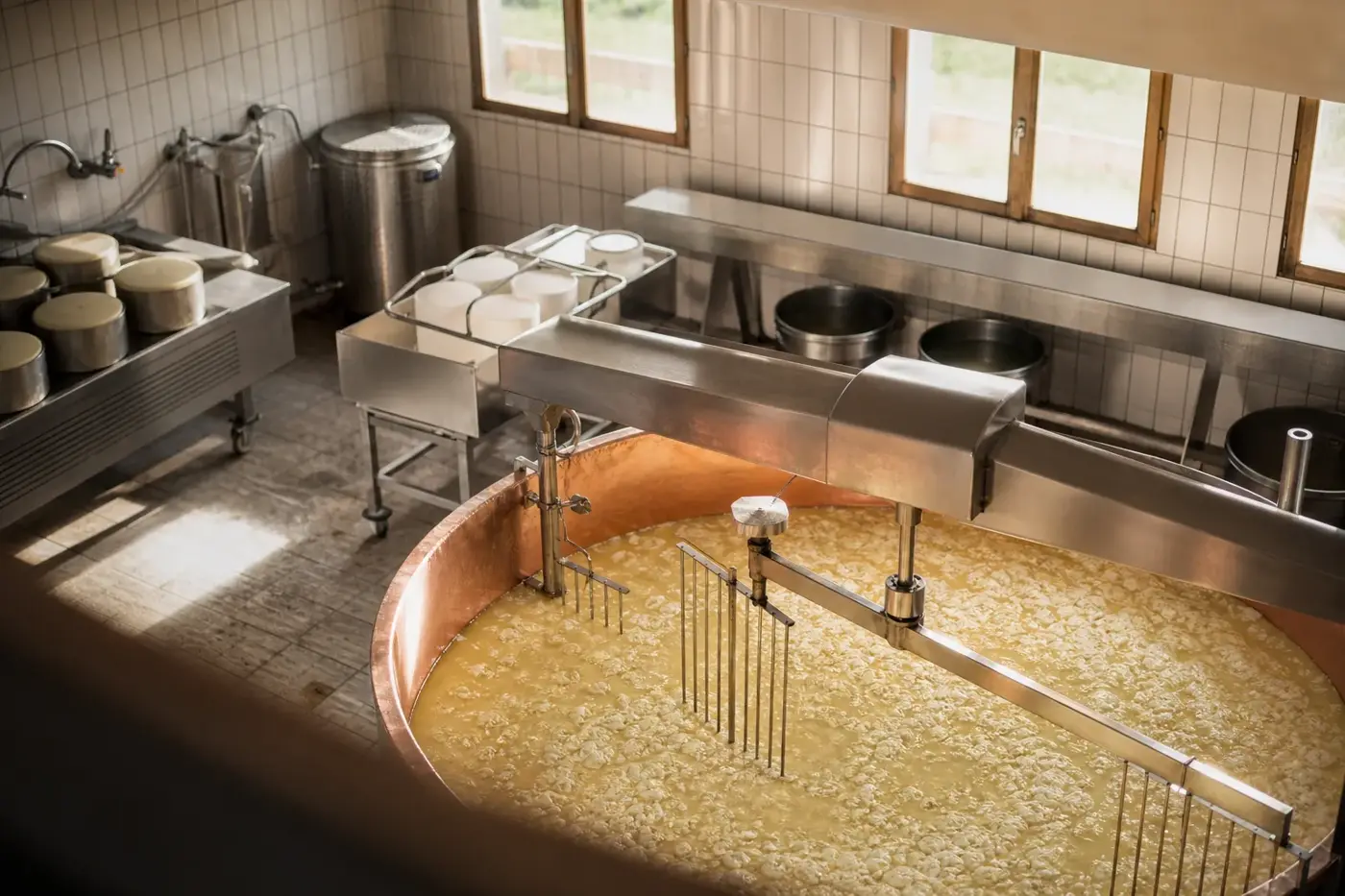
Peer into a copper vat and you catch local milk on its way to becoming a Parmigiano Reggiano wheel.
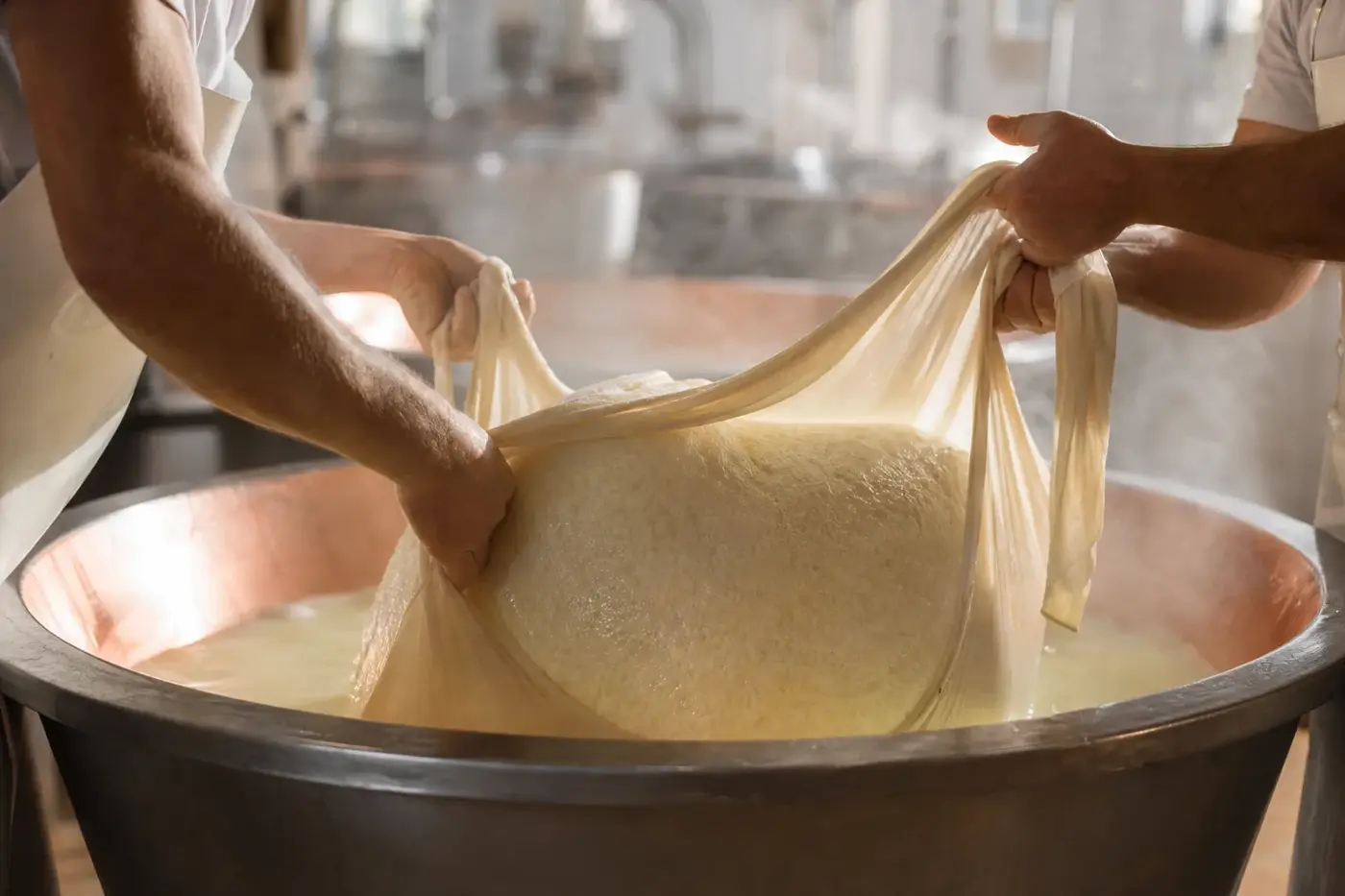
Peer into a copper vat and you catch local milk on its way to becoming a Parmigiano Reggiano wheel. Before the morning is over, the curd must be broken, cooked and allowed to settle. This work has its own rhythm: book a confirmed tour, arrive for the cheesemaking, then leave time for the ageing room and tasting. The cheese, quite reasonably, has not arranged its morning around yours. [1]
Arrive while the cheesemakers are at work
The morning matters. The production specification requires breaking, cooking and settling the curd to be finished by its end, so “seeing production” leaves a little too much unsaid. Ask which stages should be happening when you arrive, especially if you want to watch the curd being lifted. [1]
At 4 Madonne, morning visits include production; afternoon visitors have this stage explained instead. Choose the experience you want, then ask how early to reach reception. The starting minute is not your arrival time. [4]
Follow the rivers into cheese country
Open your map and look beyond the provincial borders to the rivers. In the EU, Parmigiano Reggiano has protected designation of origin status, or PDO. Its specified Italian production area covers Parma, Reggio Emilia and Modena provinces, the part of Bologna province on the left bank of the Reno, and the part of Mantua province on the right bank of the Po. [1, 2]
The first four lie in Emilia-Romagna; Mantua takes you into Lombardy. Check those river boundaries before choosing where to travel. They belong to the cheese’s geography, not just the scenery. [2]
The single document describes country stretching from the Apennine ridge to the Po. It connects the milk with locally grown forage and skills developed in the area. Ask where your dairy’s milk comes from and whether the visit includes a farm: those surrounding fields suddenly become part of what you are tasting. [2]
Choose your dairy, then explore the route
Start with the Parmigiano Reggiano Consortium’s dairy directory, which has province filters and a visit reservation filter. Its separate guided tour platform lets you search by province, language and date. With a shortlist in hand, read each dairy’s visitor information and check the precise site address. [3]
The producer’s name tells you only part of the story. At 4 Madonne’s Lesignana site, you watch production through windows; at Baggiovara, the advertised route takes you into the production room with protective equipment. The operator describes Lesignana as barrier-free and Baggiovara as particularly suited to adults and accompanied children over ten. Choose with your whole group in mind. [4]
Book a visit that suits everyone
One clear enquiry can spare you a string of messages. Give your date, numbers of adults and children, preferred language and any access requirements. Ask whether you will join a shared tour or have a dedicated guide, how large the group can be, how long the visit lasts and exactly what the tasting includes.
Confirm the language spoken on the tour. An English booking page is useful, but it does not answer that question.
4 Madonne advertises Italian and English tours, with other languages on request, and requires advance booking. Schools, university groups and professional delegations can also enquire through the consortium’s formal visit service. [4, 5]
Save your confirmation somewhere you can reach without mobile reception. Keep the meeting point, contact number and cancellation arrangements together, and tell the organiser if your party changes. If the tasting is your main attraction, ask which ages will be offered before choosing between otherwise similar visits.
Watch yesterday’s milk meet today’s
Evening milk and morning milk come together in the vat. The specification requires raw cow’s milk: the evening milk is partially skimmed by letting its cream rise naturally, then mixed with the morning milk. In the bell-shaped copper vats, natural whey starter brings lactic acid bacteria from the previous cheesemaking operation into the next. Whey is the liquid separated from the curd. [2]
Calf rennet is required, too. This enzyme preparation coagulates the milk into a gel, which becomes curd. The curd is broken and cooked, then its granules settle into a mass at the bottom of the vat. [1]
Watch where the cheesemaker’s attention goes as the milk changes. Ask your guide what they are looking for at each stage. Those decisions give you a thread to follow through the morning. [1]
For the wider process, read how cheese is made; for the coagulant, see rennet explained. During the visit, focus on the sequence and the cheesemaker’s decisions. Understanding those will give you more than a pocketful of technical terms.
Follow the first steps towards a wheel
Lifting and shaping turn that settled mass into the beginnings of a wheel. As it moves into moulds, ask your guide to explain the handling. After a few days comes salting: the wheels are immersed in brine, a salt solution, before maturation. [1]
A morning tour can bring these stages together through cheeses made on different days. Compare a newly formed wheel with the finished cheese, and ask which marks are applied during moulding and which come later. Use the dairy’s explanation alongside how to read a cheese label, looking particularly for the production date and dairy identification. [1]
Meet the wheels taking their time
Every wheel must mature for at least 12 months from moulding. In the ageing room, ask which ages surround you, how the wheels are cared for and which will stay longer. The consortium describes cheeses aged 24, 36, 48 months or longer; check which your booked visit will show and offer to taste. [1, 6]
Every wheel also faces quality inspection. Consortium experts assess the cheese, including examination with a percussion hammer. The authorised control body has a separate checking and certification role, and the oval selection mark follows the required checks. [1, 7]
Ask your guide to read the marks on an actual wheel with you. Find out whether the visit includes an inspection demonstration, too. You will understand more of the work behind those marks when someone explains them on the cheese itself. [1, 7]
Taste slowly and hear what age has to say
Comparing maturities gives you plenty to explore at the tasting. Keep each cheese’s age beside your notes, so you know which mouthful prompted which thought. The consortium’s 2026 guide describes these broad sensory tendencies: [8]
| Age in months | The consortium’s tasting notes | What you can look for |
|---|---|---|
| 12 to 19 | Milk, yoghurt and fresh fruit | Find the lactic aromas before adding accompaniments. |
| 20 to 26 | Fresh fruit, nuts and meat stock; crumbly and grainy | Compare how the paste breaks. |
| 27 to 34 | Spices, nuts and meat stock; particularly crumbly and grainy | Notice the granules and the aroma that lingers. |
| 35 to 45 | Spice aromas | Compare the aroma’s intensity with younger samples. |
Try each cheese plain first. Break a piece and smell the newly exposed surface, then chew slowly. Notice its firmness, its granularity and how readily it breaks down. The consortium’s sensory guide uses these distinctions and notes that granularity and crumbliness generally increase with ageing. [6]
Write down what you find. There is no prize for hunting down every descriptor on the sheet, and no one needs to summon a nut that simply is not there. Ask whether the samples come from the same dairy, too: knowing what else you are comparing makes the conversation about age more useful.
Make the journey as easy as the tasting
Work backwards from your confirmed meeting point. If you are taking a train, check the onward connection with both the dairy and the transport operator, including the return journey. Reserve a transfer if needed, give the driver the visitor entrance rather than just the producer’s name, and leave some slack before the tour starts.
If you are driving, confirm parking, vehicle access and the meeting point before setting off. 4 Madonne publishes parking and taxi information for its visitor sites, so check the details for the one you have booked. [4]
For mobility access, ask about the whole route, not simply the entrance. Check toilets, seating and any areas left out of an accessible visit. [4]
Get ready for the route, little visitors included
Ask what footwear the dairy requires and whether protective clothing is supplied. Wear secure shoes suitable for the visitor route, and follow instructions about where to stand, what to touch and where to leave bags. At 4 Madonne, published visitor rules require compliance with hygiene instructions and restrict eating and drinking to designated areas. [4]
If you are bringing children, check minimum ages, standing time, buggy access and how much of the explanation is designed for younger visitors. Give the organiser their ages before booking. A viewing route may suit your family better than entering the production room, so let the operator’s description guide your choice.
Children should stay with their accompanying adult throughout. Keep that rule in mind when choosing the route that will suit everyone.
Leave an afternoon for the country around you
Make one dairy the anchor of your day. Then choose one nearby experience rather than another long transfer. Let the morning’s questions shape the afternoon: a countryside walk to think about farming, a town lunch to see the cheese at the table, or another food producer to compare working methods.
Around Modena, ask about visiting a balsamic vinegar producer. 4 Madonne’s visitor team offers suggestions for continuing your day with other local producers; follow up the suggestion and confirm the second visit directly. Leave time for lunch and an unhurried return, rather than filling every gap with another booking. [4]
Before reserving accommodation, put the dairy and your other intended stops on the same map. One province explored attentively can leave a stronger impression than an itinerary designed simply to cross the whole production area. Give yourself time to notice the place, not just reach the next stop.
Pack your confirmation and a few good questions
Shortly before travelling, revisit the dairy’s official website and your booking confirmation. Ask about anything unclear, and reconfirm current opening arrangements, tour language, arrival instructions and the production stages expected during your slot. Check photography rules for each part of the route, including restrictions on flash or filming and whether you need permission to photograph staff.
Save a few questions for the people making the cheese. Which part of today’s make demanded the closest attention? How do they choose wheels for longer maturation, and which differences would they like you to notice in the tasting?
Their answers give the morning a human scale. Beyond the vats, moulds and rows of wheels, you meet the people whose decisions you have been following.
Follow your Parmigiano Reggiano curiosity further
- Parmigiano Reggiano: explore the cheese’s identity, production and maturation in detail.
- Protected Names Explained: PDO, PGI and TSG: get to know the different European protection schemes.
Questions people ask
What time should I visit a Parmigiano Reggiano dairy?
Book a morning tour if you want to see cheesemaking. The curd must be broken, cooked and allowed to settle by the end of the morning, so ask which stages will be under way when you arrive.
How do I book a dairy tour?
The Parmigiano Reggiano Consortium’s dairy directory has province and visit reservation filters. Its guided tour platform lets you search by province, language and date. Check the dairy’s own visitor information and confirm the tour language before booking.
What is the difference between the 4 Madonne visitor sites?
At Lesignana, visitors watch production through windows, while the advertised Baggiovara route enters the production room with protective equipment. The operator describes Lesignana as accessible without barriers and Baggiovara as particularly suited to adults and accompanied children over ten.
How long is Parmigiano Reggiano aged?
Every wheel must mature for at least 12 months from moulding. The consortium also describes cheeses aged 24, 36, 48 months or longer. Ask which ages your visit will show and offer to taste.
What does Parmigiano Reggiano taste like at different ages?
The consortium’s 2026 guide describes milk, yoghurt and fresh fruit at 12 to 19 months. At 20 to 26 months, it describes fresh fruit, nuts and meat stock, with a crumbly, grainy texture. The consortium notes that granularity and crumbliness generally increase with ageing.
Sources
- Consorzio del Formaggio Parmigiano Reggiano, Product specification of the protected designation of origin “Parmigiano Reggiano”, English consolidated document dated 2 July 2025, linked by the consortium as the specification in force from 24 April 2025. Cheese Production Standards, Articles 1 to 3; Rules on Markings, Articles 1, 4, 6, 8 and 14. Read the specification.
- European Commission, Single document: “Parmigiano Reggiano”, EU No PDO-IT-0016-AM06, published in the Official Journal of the European Union, 9 June 2023, pages C 202/72 to C 202/75; copy linked from the consortium's current specification page. Sections 3.2 to 3.4, 4 and 5. Read the single document.
- Consorzio del Formaggio Parmigiano Reggiano, Find dairies and Book a guided tour, live directory and booking interface, undated, checked November 2026. Find dairies; search guided tours.
- 4 Madonne Caseificio dell'Emilia, Guided tours, operator's visitor information, undated, checked November 2026. Lesignana and Baggiovara descriptions, languages, booking, visitor guidelines and transport information. Read the operator's visitor information.
- Consorzio del Formaggio Parmigiano Reggiano, Book a formal visit, undated, checked November 2026. Educational, university and professional visit enquiries. Read the formal visit information.
- Consorzio del Formaggio Parmigiano Reggiano, Sensory analysis, undated, checked November 2026. Olfactory analysis, tactile analysis and maturation discussion. Read the sensory guide.
- Consorzio del Formaggio Parmigiano Reggiano, Seals and marks, undated, checked November 2026. Grade selection mark, consortium inspection and control body certification. Read about selection marks.
- Consorzio del Formaggio Parmigiano Reggiano, Parmigiano Reggiano: Guidelines for point of sale, revision 02/2026, “Organoleptic characteristics”, printed page 28. The sensory descriptions are the consortium's own. Read the 2026 guidelines.
This article was researched from the production specification, its published single document, consortium visitor resources and a dairy operator's own information, without a site visit or independent tasting.
Last checked: November 2026
Last checked November 2026.
The editors suggest you read next
Cheese Travel: Visiting Dairies and Caves
Milk moves through the vats at La Maison du Gruyère in Pringy, Switzerland.