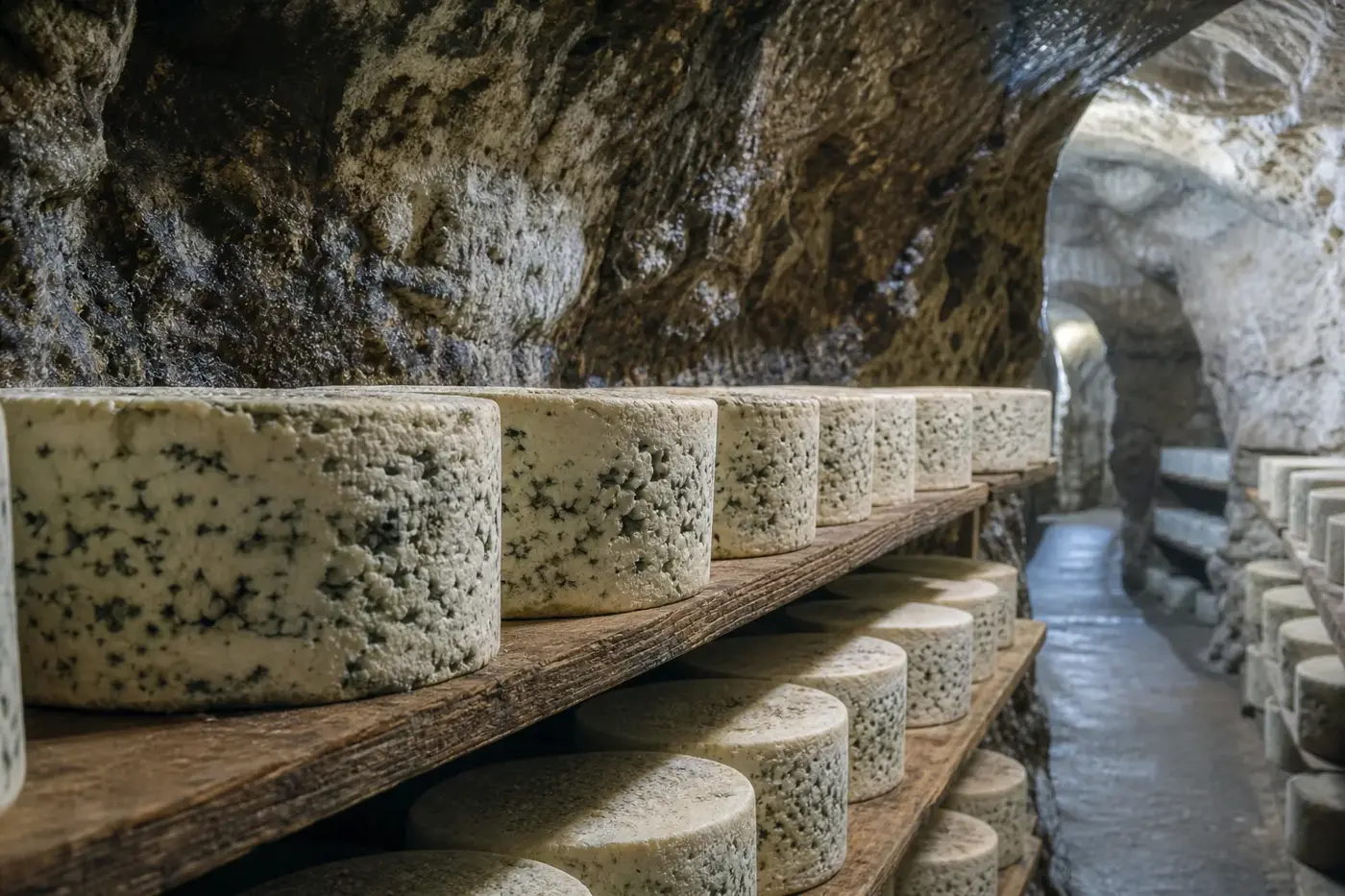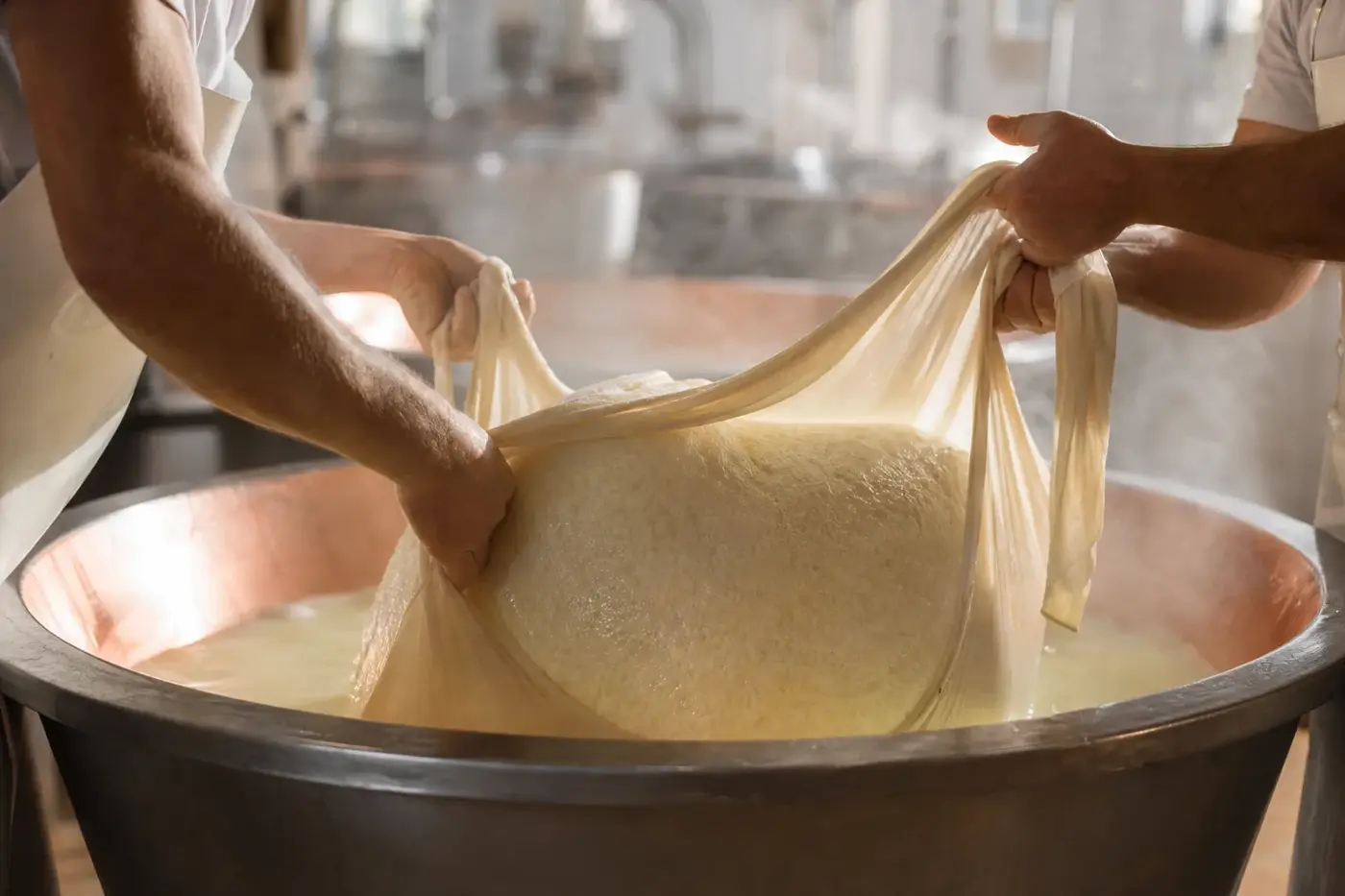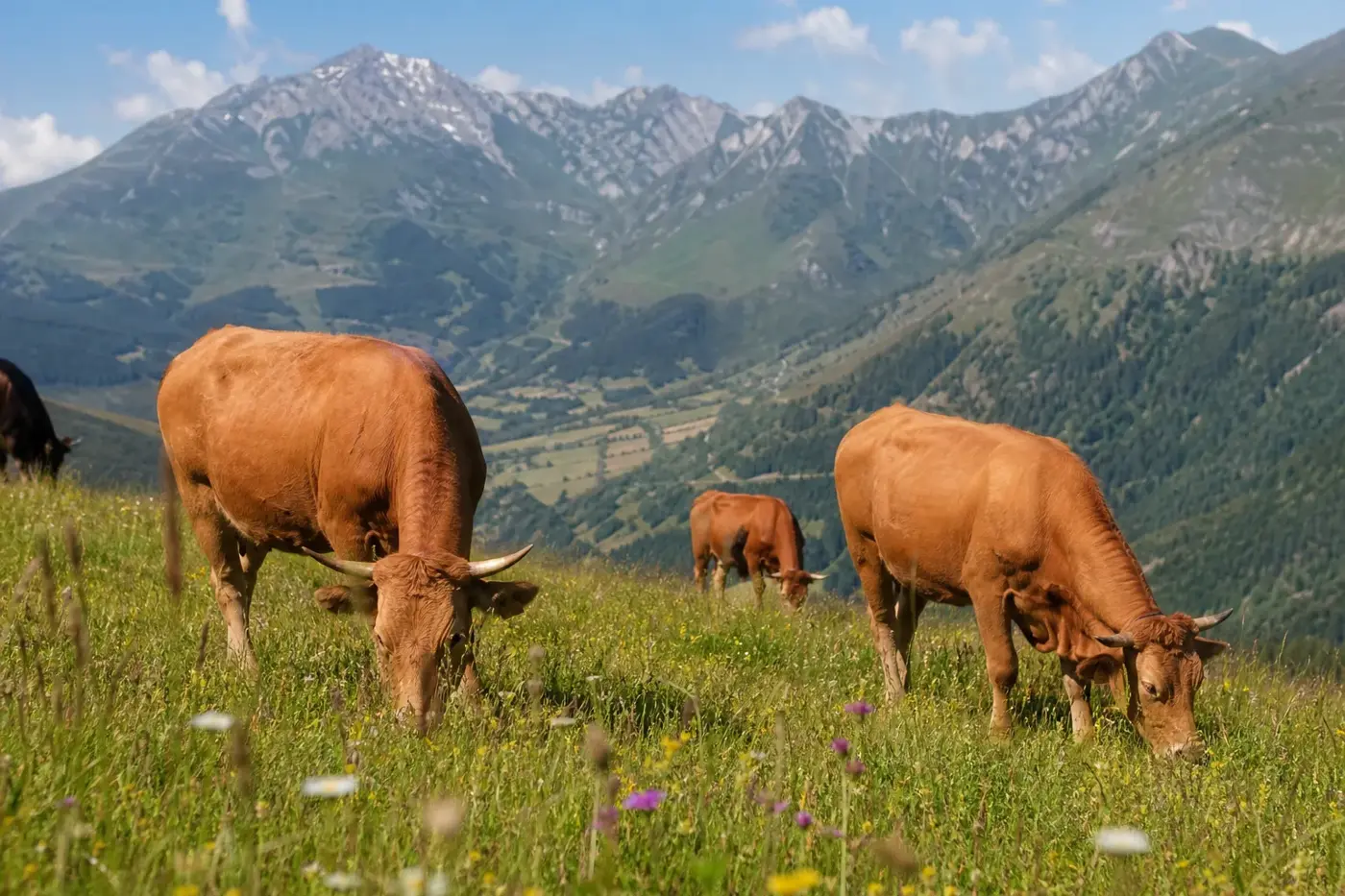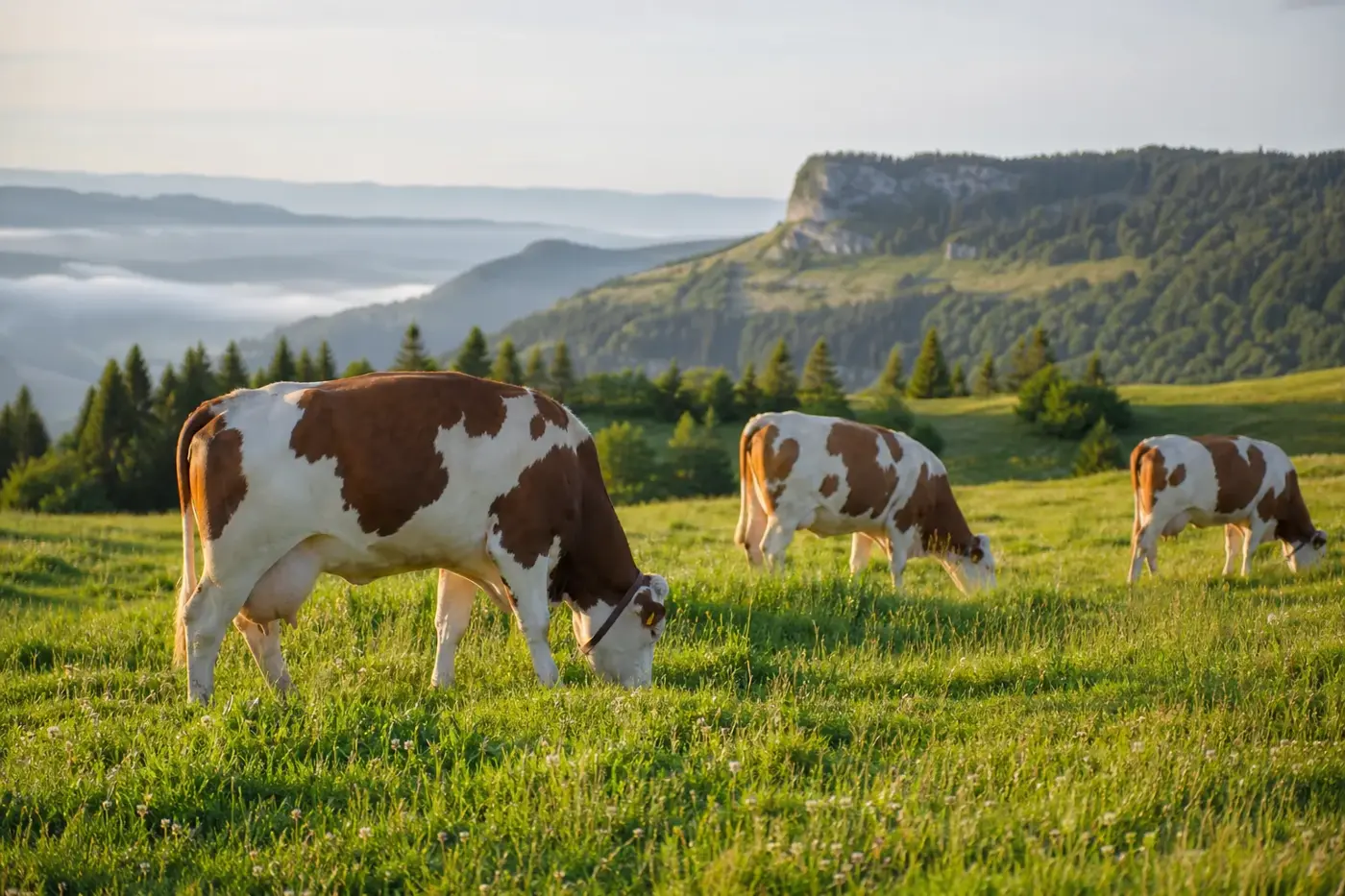
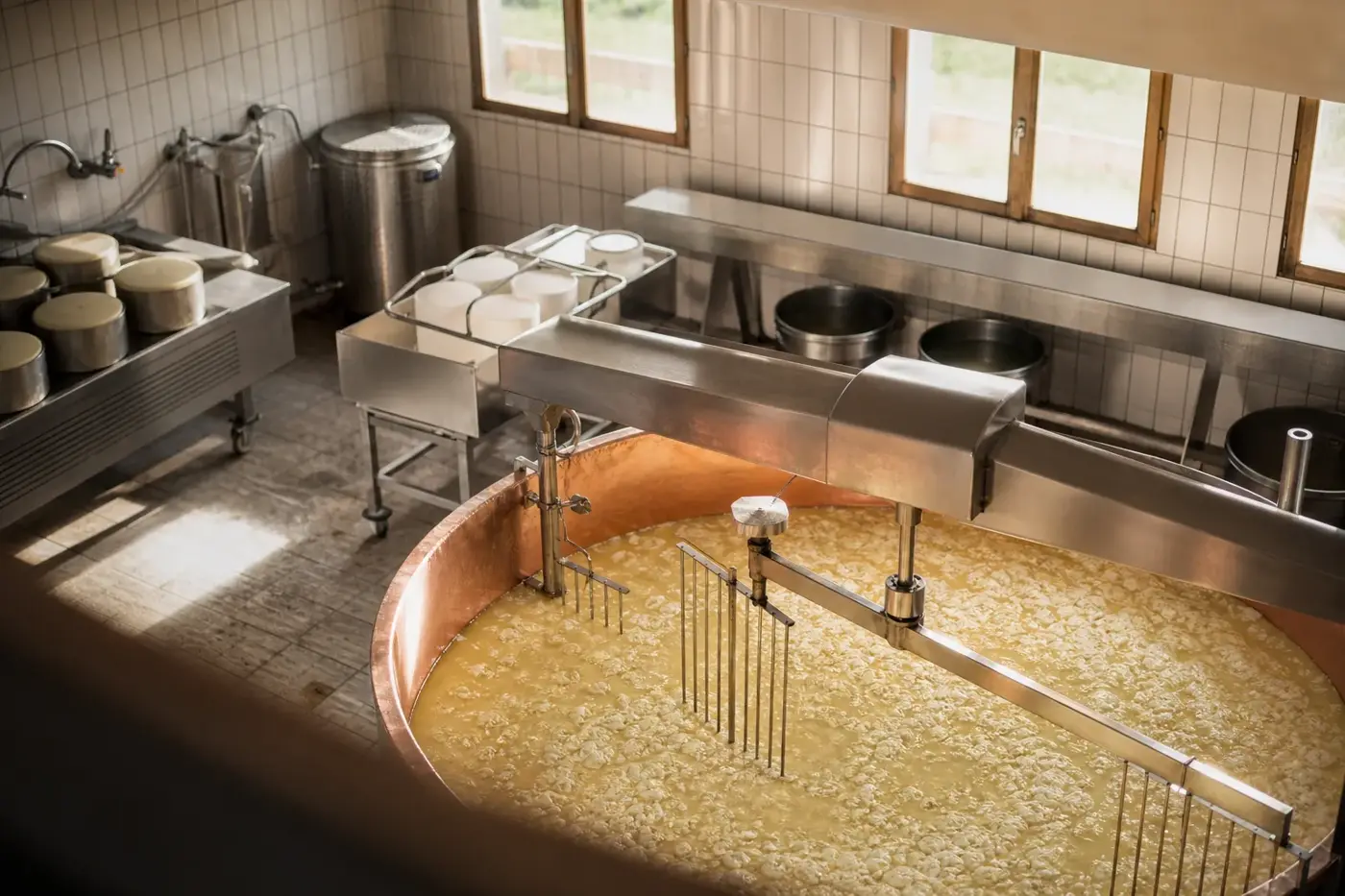
Milk meets copper in a village fruitière. Later, the wheels will rest on spruce boards, with an affineur tending their slow progress.[6][2] Follow that journey from Jura pasture to cellar and you have the Comté Route, officially Les Routes du Comté. Link a farm, a working dairy and an ageing cellar, and you begin to see just how many hands make a wheel.[1]
Choose your doorway into Comté country
There is no official starting line or finishing post. The CIGC, Comté’s interprofessional organisation, presents the route through a directory of farms, fruitières, ageing cellars, cheese museums and heritage stops. Filter by the kind of place and the département, then choose where you want the story to begin.[1]
Pick stops that introduce you to different jobs. At a farm, ask about feeding and milking; at a fruitière, see how several farms’ milk comes together; in a cellar, discover what happens after pressing. Three contrasting encounters will tell you more than a procession of shops, however persuasive their counters.
Let the pastures explain the cheese
Look beyond the name on the map. Comté belongs to the Jura massif in eastern France, not simply to the Jura département. Its legally defined production area lists communes in Ain, Doubs, Jura and Saône-et-Loire, and milk production, cheesemaking and maturation must all happen within it.[2]
INAO describes plains and grassland plateaux with strongly marked seasons. The Comté organisation connects the cheese’s diversity with fresh grass during the growing season and hay in winter. Ask your farm host which fields feed the herd, when the cows graze and how winter forage is gathered. The view outside starts to explain the milk arriving at the dairy.[3][4]
Montbéliarde and French Simmental are the milk breeds identified by INAO. Admire the herd, then ask how many farms supply the dairy, what the cheesemaker needs from their milk and how the partners discuss changes through the year. Those conversations put people into the cooperative story.[3]
Meet the neighbours behind the fruitière
At a fruitière, farmers’ milk comes together to become cheese. In the cooperative model, neighbouring milk producers share the enterprise rather than each making and maturing cheese alone. INAO explains the name through this pooling of the farmers’ work, their milk, to make cheese.[3]
Begin with a simple question: “Whose milk becomes this wheel?” Then ask: “Which affineur takes the cheese next?” The CIGC describes farmers, cheesemakers and affineurs as connected professions, with the affineur choosing care according to the cheese’s origin. Follow those relationships and each stop leads naturally to the next.[5]
If you would like the wider story before setting out, read the comté guide.
See the mighty wheel behind your little wedge
That modest piece on your tasting plate began as something rather substantial. A finished Comté wheel weighs 32 to 45 kilograms. Your cheese board is getting the edited version. In France, the specification also requires raw cow’s milk and at least 120 days of maturation.[2]
The route’s fruitière directory follows milk into copper vats, through coagulation and stirring, then into moulds for pressing. Coagulation means the milk sets into curd, the solid part separated from the liquid whey. Before booking, ask which stages you will catch and whether you will watch through a viewing window or follow a guided explanation.[6]
Ask about milk collection, too. Where does today’s milk come from, and how is its arrival organised? The CIGC describes a daily connection between farms and fruitières. Read the guide to how cheese is made for the basic vocabulary before you encounter it in French.[5]
Step into the affineur’s world
Once the cheese is made, another craft begins. The affineur cares for the wheels through changing conditions and judges how each develops.[5] In France, the Comté specification requires spruce ageing boards and equipment to manage temperature and humidity.[2]
At Fort Saint-Antoine, in the uplands between Lac Saint-Point and Métabief, Marcel Petite offers a guided cellar visit, a meeting with a cellar specialist and an educational tasting. The operator describes its approach as slow maturation. Visit after a fruitière and you can follow the wheel into its next chapter, beyond the cheesemaking room.[7]
Ask how the team assesses progress, what tasting reveals and how they decide a wheel is ready. Age alone cannot tell you everything. The CIGC describes care adapted to the individual cheese and its intended customer, with the affineur’s judgement guiding the work.[5]
Bring the story together at the Maison du Comté
At the Maison du Comté in Poligny, three working worlds meet: the farm and milk producer, the fruitière and cheesemaker, and the cellar and affineur. Interactive displays, models and films explain their connections before you meet people at work. You will find it at 1 rue de la Maison du Comté, 39800 Poligny.[8][9]
The venue describes sensory activities involving hay, milking and the sound of a wheel being tapped. A guided comparison of two Comtés of different ages follows. Give yourself permission to find your own words: firm or yielding, fleeting or persistent, milky or roasted.[8]
Before choosing a date, consult the venue’s website and booking page for its annual closure notice and any workshop arrangements. This makes a useful orientation stop. Leave time afterwards to see a working dairy.[9]
Take two days, and leave room for Pontarlier
Allow two days, or a third if you want to visit a farm. Begin in Poligny, choose a fruitière in one of the surrounding villages, then head towards the Haut-Doubs for a cellar visit near Pontarlier. Book the dairy and cellar first, fitting the museum and unhurried meals around those appointments.
| When | Where to go | What to arrange |
|---|---|---|
| First day | Poligny and the Maison du Comté | Check admission, then begin with the exhibition and tasting.[8][9] |
| Next appointment | A village fruitière outside Poligny | Confirm that the visit covers production, rather than just the shop.[6] |
| Second day | Uplands towards Pontarlier, stopping at Fort Saint-Antoine | Reserve your guided visit through the operator’s booking route.[7] |
| Optional third day | A farm from the official route directory | Agree the activity, arrival point and visit conditions with your host.[1] |
Keep the afternoon after your dairy visit flexible. A second tasting, a village walk and time to jot down what you learnt can give you more than another appointment. With children, carry one question through the trip: what happens to the milk next?
When booking, note each stop’s meeting point, contact number and cancellation instructions. Confirm whether tasting is included and whether an explanation in English needs a separate arrangement. Keep your confirmations handy, as arrival at a production site can be less straightforward than at a museum with a clearly marked public entrance and reception.
Ask for the experience you have in mind
A farm, a fruitière and a cellar offer different encounters. Ask a farm whether you will learn about the herd, feeding or milking, and which areas you can access. At a fruitière, find out whether you will see manufacturing and have a guided explanation.
For a cellar, ask whether you will enter the ageing rooms, discuss how cheese is assessed and have a comparative tasting. The route directory separates these site types, but each host determines the experience.[1][6][7] Specific questions help you find the visit you actually want.
Before booking, confirm the language, group size arrangements, step-free access, toilets and suitability for children. Ask separately about photography. “Are you open?” is only the beginning: a shop, an exhibition and a production visit can each need different arrangements.
Sort the last mile and bring a warm layer
Poligny and Pontarlier both have stations listed by SNCF TER. Use its current journey planner for your dates, then arrange the final leg to each rural site separately. A car or prearranged transfers make this itinerary simplest to join up, so compare the full door-to-door journey before choosing accommodation.[10]
Calculate travel time using exact addresses and booked slots. Leave room for parking and arrival formalities, and check road and weather conditions before driving into the uplands. If you are travelling without a car, settle the return journey before confirming any rural visit.
Check seasonal and holiday arrangements with every host. Fort Saint-Antoine’s operator specifies appointment-only guided visits and asks you to bring warm clothing and closed shoes. Pack a layer even in summer, and ask ahead about steps, walking surfaces and any mobility requirements.[7]
Give your taste buds more than an age label
Put two ages side by side and give yourself something to compare. Note the fruitière, season of manufacture and affineur as well as the maturation period. The Maison du Comté builds its tasting around contrasting ages; the specification describes fruity, lactic and roasted notes across the cheese’s sensory range.[8][2]
Taste each cheese plain first. Notice how readily it breaks, how it feels as you chew and which aroma stays after swallowing. Then try a small piece with local bread or a slice of apple. Keep your travel tasting accompaniments simple, so you can return to the cheese and still recognise the differences.
If you are an adult of legal drinking age and choose wine, ask your host for a small Jura wine pairing suited to that particular cheese. The Comté organisation includes Vin Jaune among its published pairings and suggests black tea with powerful Comté. Keep water alongside, so you can easily return to tasting the cheese on its own.[11][12]
For the broader principles, turn to the cheese and wine pairing guide.
Be a welcome guest on a working farm
Agree where to arrive, then stay on your host’s visitor route. Ask before entering a barn, approaching livestock or opening a gate. Follow footwear and hygiene instructions, keep children close and check the policy on dogs before setting out. Give machinery, deliveries and the people handling milk plenty of room.
Let the working day set the pace. Save longer questions for the explanation or tasting rather than interrupting a task. Before leaving, ask which fruitière receives the farm’s milk. That name gives your next stop a human connection and makes the cooperative system easier to remember.
Take home a cheese with a story
Ask which fruitière made your cheese, who matured it and when it was made. Keep those details with your tasting notes. For another comparison at home, choose portions you can identify separately and retain their wrapping or labels. The guide to reading a cheese label explains which details are worth keeping.
For transport within France, follow the French agriculture ministry’s consumer guidance: buy refrigerated food at the end of your shopping, use an insulated bag and limit transport time.[13] Follow the packaging’s storage information. For cheese cut to order, ask the seller for the storage temperature and keeping instructions. These transport and storage points reflect the guidance as at November 2026.[13]
Arrange refrigeration at your accommodation before buying cheese to keep for later. The guide to storing cheese at home takes you through the next stage. If you are crossing a border, consult the destination and transit authorities’ current personal import rules before purchasing. Use France as the origin and check your full route.
General information only, not medical advice: follow the official guidance where you live.
Questions people ask
What is the Comté Route?
Officially known as Les Routes du Comté, it is a network of places to visit, including farms, fruitières, ageing cellars and museums. There is no compulsory beginning or end.
What is a fruitière?
A fruitière brings farmers’ milk together to make cheese. In the cooperative model, neighbouring milk producers share the enterprise.
Where is Comté made?
Comté belongs to the Jura massif in eastern France, not just to the Jura département. Milk production, cheesemaking and maturation must all take place within its legally defined production area.
How long should I allow for the Comté Route?
The suggested itinerary takes two days, beginning in Poligny and continuing towards Pontarlier. Allow a third day if you want to include a farm.
Can I visit the Comté Route without a car?
Poligny and Pontarlier both have stations listed by SNCF TER. Arrange the final leg to each rural site separately and settle the return journey before confirming a visit.
Sources
[1] Comité Interprofessionnel de Gestion du Comté, Les sites des Routes du Comté, undated live visitor directory, retrieved November 2026. Site categories and directory filters.
[2] French Ministry of Agriculture, Cahier des charges de l’appellation d’origine « Comté », homologated by the arrêté of 18 December 2025, published in the Bulletin officiel, number 2026-02, 8 January 2026. Read with the arrêté published on Légifrance. Sections 2, 3 and 5.4.
[3] Institut national de l’origine et de la qualité, Comté, undated official product record and specification links, retrieved November 2026. Territory, breeds and fruitières.
[4] Comité Interprofessionnel de Gestion du Comté, Portrait d’un grand fromage, undated, retrieved November 2026. The industry organisation’s account of seasonal feeding and cheese diversity.
[5] Comité Interprofessionnel de Gestion du Comté, Une filière organisée et solidaire, undated, retrieved November 2026. Published descriptions of milk producers, cheesemakers and affineurs.
[6] Comité Interprofessionnel de Gestion du Comté, Les sites des Routes du Comté: fruitières, undated live directory, retrieved November 2026. Copper vats, coagulation, stirring, pressing and contacting working dairies.
[7] Fromageries Marcel Petite, Visiter le Fort Saint-Antoine, undated operator information, retrieved November 2026. Location, visitor experience, appointments and clothing. The operator has a commercial interest in the visits and cheese described.
[8] Maison du Comté, Parcourir l’exposition, undated venue information, retrieved November 2026. Exhibition themes, interactive activities and comparative tasting.
[9] Maison du Comté, Préparer ma visite and venue homepage, live visitor information retrieved November 2026. Address, booking links and seasonal notices.
[10] SNCF TER Bourgogne-Franche-Comté, Gare de Poligny and Gare de Pontarlier, live station information retrieved November 2026.
[11] Comité Interprofessionnel de Gestion du Comté, Shot de Vin Jaune au Comté, undated pairing entry, retrieved November 2026. Used only to establish the organisation’s published pairing suggestion.
[12] Comité Interprofessionnel de Gestion du Comté, Comté puissant et thé noir, undated pairing entry, retrieved November 2026. Used only to establish the organisation’s alcohol-free pairing suggestion.
[13] French Ministry of Agriculture, Sécurité sanitaire des aliments: tout sur la chaîne du froid, 23 June 2026. Consumer transport guidance and storage information for packaged and counter-cut foods.
This desk-researched guide combines the official specification, the Comté organisation’s visitor information, venue and operator records, SNCF information and French consumer food-handling guidance.
Last checked: November 2026
Last checked November 2026.
The editors suggest you read next
Cheese Travel: Visiting Dairies and Caves
Milk moves through the vats at La Maison du Gruyère in Pringy, Switzerland.