Bread on the table. Tomatoes, cucumbers, olives, then a slice of white cheese: pull up a chair at a Turkish breakfast. Beyaz Peynir belongs in this everyday ritual. Its name means white cheese, but different milks, moisture levels and maturation take this Turkish brined family from gentle breakfast companion to assertive pastry filling. Your first slice is only the beginning. [1]
| At a glance | Your quick guide |
|---|---|
| Cheese style | Turkish white brined cheese family [1] |
| Milk | Cow, sheep or goat milk, including mixtures [1] |
| Maturity | Fresh and matured examples [1] |
| Where to use it | Breakfast, salads, börek, gözleme and pide [1] |
| Current Turkish statutory requirements | Not established here |
| Minimum maturation across the family | Not established here |
One name, plenty of personalities
Think of Beyaz Peynir as a family name rather than a single recipe. It makes room for different milks and stages of maturity. Read the milk declaration, maker’s description and maturation information together, and you will discover much more about your pack than the broad name can tell you. [1]
Before choosing, give your cheese a job. Perhaps you want clean, firm breakfast slices, or pieces that break up easily for a filling. The family name points you towards the shelf; the individual cheese’s character tells you whether it belongs in your dish.
There is more to this white block
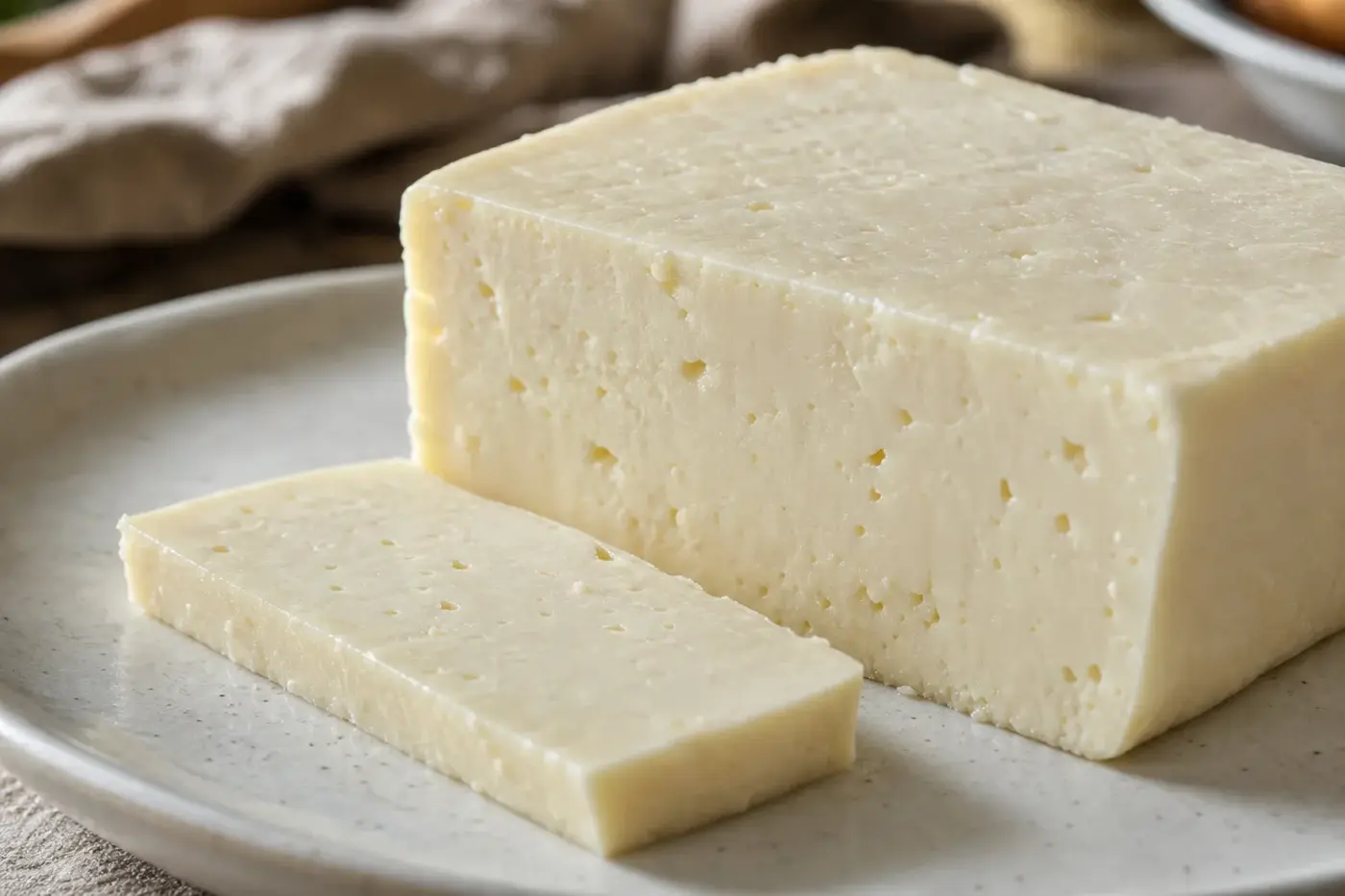
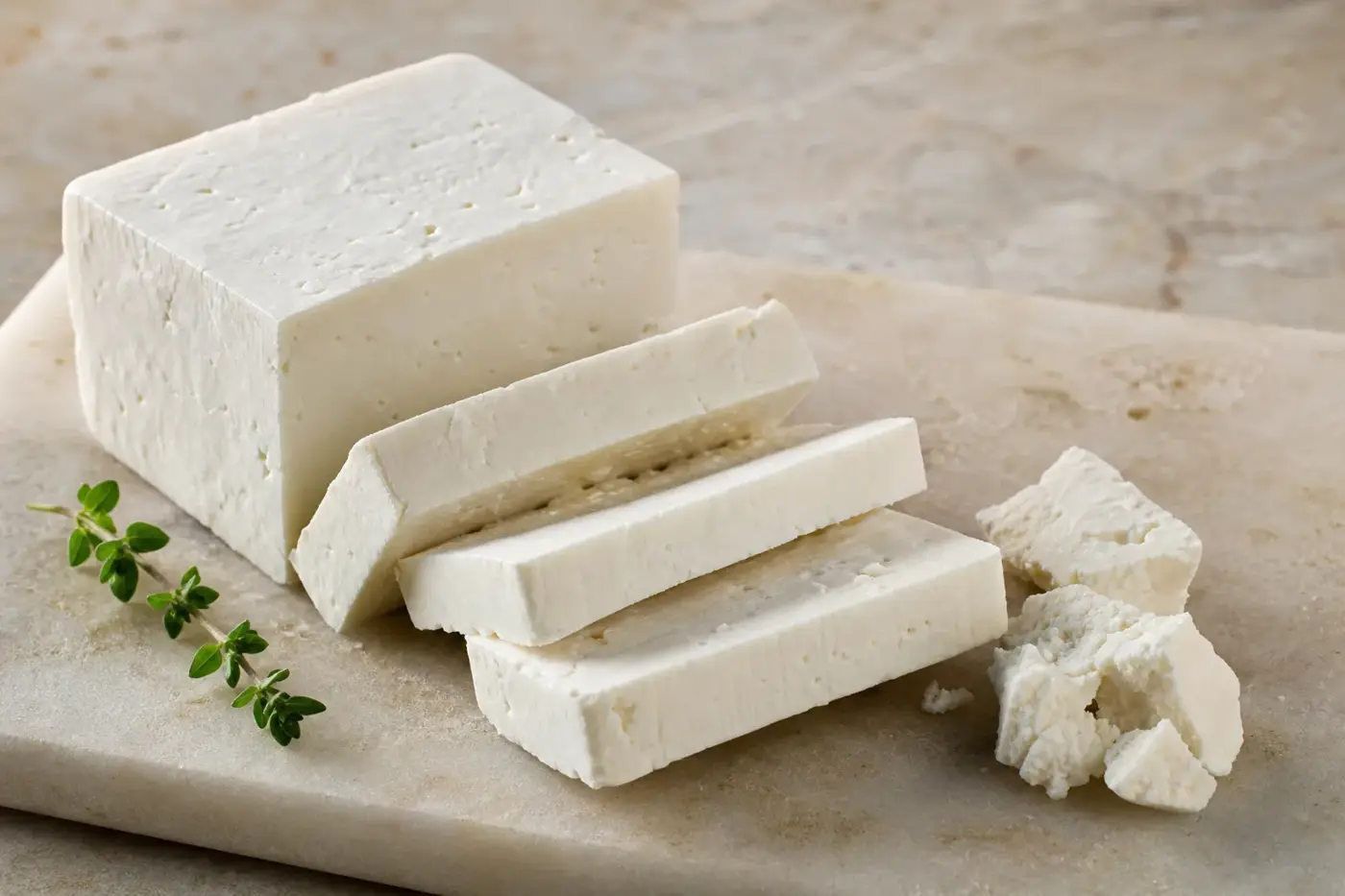
You will often see a white block, sometimes with a slightly grainy cut face. Cut into different examples and the texture might be soft and yielding, or firm and crumbly. Flavour strength varies with the cheese and its maturity, too. [1]
For a more precise regional picture, look at Ezine Peyniri. Its published geographical indication description specifies a rindless cheese, white to light yellow, with a semi-hard or firm texture and small holes. That describes Ezine, not a compulsory appearance for every Beyaz Peynir. [3]
Ask about texture as well as taste. Firm is promising for slices; crumbly is useful for scattered pieces. A photograph of the cut cheese can tell you more than a handsome unopened container, however ready it looks for its magazine cover.
Start with the milk, then follow the clues
Cow, sheep and goat milk give makers several starting points, used alone or in mixtures. Before the description on the front wins you over, read the species declaration. Mixed milk is quite at home in this family. [1]
If you are looking for richness, milk species tells only part of the story. Check the finished cheese’s fat content and moisture, comparing nutrition declarations on the same basis, preferably fat per 100 g of cheese. Fat in dry matter is different: it measures fat as a proportion of the cheese once its water has been excluded.
The 2023 published application for Ezine Peyniri describes seasonal proportions of 35 to 45% sheep milk, at least 40% goat milk and no more than 25% cow milk. Its sensory description offers cooked milk and butter aromas, followed by salty, sour and mildly sweet tastes. These details come from that published application rather than a statement of the current specification. [3]
When you choose, gather those clues together. The milk declaration, maker’s description and maturation information each have something useful to tell you. No single detail needs to do all the work.
From milk to curd to a briny resting place
Brine sits at the heart of Beyaz Peynir. The family belongs to the wider tradition of cheeses formed into blocks and salted in brine. Milk coagulation, draining, portioning and salting form the broad sequence, followed by ripening for matured versions, although production details vary between cheeses. [1]
Coagulation turns milk into curd. Draining separates that curd from whey, the liquid released during cheesemaking; the amount removed helps shape a yielding or more substantial cheese. You can follow these stages more closely in how cheese is made.
Brine is simply the salt water surrounding the cheese during part of production or storage. Ezine’s published description specifies at least eight months of brine maturation, animal-derived rennet, sea salt and no added starter culture. Those details tell you considerably more than the family name alone. [3]
This is where regional specifications become especially useful. If the coagulant matters to your dietary choices, ask about the individual product. Beyaz Peynir as a name cannot answer that question for you.
Fresh or matured: find your kind of character
Both fresh cheeses and strongly matured examples belong to the Beyaz Peynir family. Maturation gives you useful buying information, rather than simply another word to admire on the label. Read it with your next meal in mind. [1]
Look for descriptions of saltiness, tang and texture. Is the cheese gently milky or more pronounced? Will it slice, spread or crumble? Those answers help you choose a companion for breakfast, a salad or a filling.
Ezine’s published description brings salty and sour tastes together with mild sweetness, despite its extended maturation. Read age alongside the whole flavour description. It need not make your decision single-handedly. [3]
At the counter, tell your cheesemonger what you are making. Ask for breakfast slices or a börek filling, rather than simply the oldest cheese. You will have given them a much clearer idea of what you need.
Pull up a chair for breakfast
Breakfast is one of Beyaz Peynir’s established everyday settings, alongside salads and cooked dishes. Serve slices or broken pieces with bread, tomatoes, cucumber and olives. It is a simple arrangement, and none of the ingredients needs a performance review. [1]
Leave the components separate so everyone can build their own mouthfuls. Taste the cheese first, then try it with bread or vegetables. You can find your preferred balance of salt and tang without committing the whole plate.
Pay attention to temperature, too. In England, Northern Ireland and Wales, follow the Food Standards Agency’s current guidance on keeping chilled food cold. [6]
Bring it into börek, salads and more
Börek, gözleme, pide and menemen all have a place for Beyaz Peynir, and salads are another familiar home. This cheese has plenty to do beyond looking inviting on a breakfast plate. Choose its texture with the dish in mind. [1]
For pastry fillings, break the cheese into small, reasonably even pieces before adding it to the other ingredients. That makes it easier to distribute. A large block is harder to incorporate once everything else is already mixed.
Drain only the portion you need for your salad or filling. Keep the rest under the storage conditions on the pack. For distinct pieces in a salad, add them towards the end; earlier mixing can give you a coating of fine crumbs instead.
When substituting, consider the job rather than just the colour. Another white brined cheese may work, but compare moisture, salt and texture first. Taste an edible ingredient mixture before adding more salt; if raw ingredients are involved, follow the recipe’s handling instructions.
A good result in one pastry filling does not promise an identical result in another. Start with the recipe’s specified cheese wherever possible. Change one ingredient at a time, so you can judge the difference it makes.
Beyaz Peynir, Feta and Sirene: meet the neighbours
These cheeses share the broad white brined tradition, but their names take you to different places. Beyaz Peynir describes a Turkish family, while Sirene identifies a Bulgarian tradition. Feta has an EU protected designation of origin, with defined production requirements. [1][2][4]
| What to compare | Beyaz Peynir | Feta PDO, EU | Bulgarian Sirene |
|---|---|---|---|
| Milk | Cow, sheep, goat or mixtures [1] | Sheep milk, with up to 30% goat milk [4] | Cow, sheep, goat, buffalo or mixtures [2] |
| Maturation | Depends on your chosen product [1] | At least two months [4] | Check the individual product [2] |
| Where to start | Milk and maturity details | PDO product information | Milk and product details |
The European Commission describes Feta PDO production using milk from native sheep and goat breeds, followed by maturation in two stages. If you would like the fuller story, including the protected name, turn to Feta. [4]
Back in your kitchen, compare the actual cheeses in front of you. Their shared tradition offers useful context, but their names cannot promise how they will behave in your recipe. Texture, moisture and flavour still deserve your attention.
Ezine Peyniri: a place you can taste through its cheese
Ezine Peyniri gives white brined cheese a specific regional identity. Its published geographical indication document defines an area in Çanakkale Province covering Ezine, Bayramiç and Ayvacık districts, plus named villages in Çan and Merkez districts. Here, geography is part of the cheese’s story. [3]
The document links the cheese to locally supplied milk and fodder, a prescribed mixture of three milks and at least eight months of brine maturation. It also requires production stages to happen inside that defined area. Those stages run from pasturage and milk production through to cheese maturation. [3]
That precision helps when you are choosing. A broad family name and a regional name offer different levels of information. The requirements described in the Ezine Peyniri application belong to that cheese, not to every Beyaz Peynir.
Choose your pack with the meal in mind
Start with the milk species, then read the producer’s description of texture and maturation. For breakfast slices, ask about firmness. For a filling, find out how readily the cheese crumbles and how pronounced its saltiness is. You are turning a broad family name into a practical choice.
Milk treatment needs a separate look. Find the pasteurised or unpasteurised declaration on the packaging, and ask the supplier if it is unclear. The NHS specifically advises checking packaging to establish whether dairy products are pasteurised. [7] You can explore the terms in raw, thermised and pasteurised cheese.
For pregnancy guidance in the UK, turn to the NHS advice on cheese, milk and other dairy products. This includes its guidance on unpasteurised products and soft cheeses. [7]
UK health authorities identify pregnant people, older people and people with weakened immune systems as particularly vulnerable to listeriosis. Keep that guidance in mind when making your choice. [8]
Give it a chilled home and follow the pack
Refrigerate Beyaz Peynir and follow the producer’s instructions for its brine and use after opening. In England, Northern Ireland and Wales, the FSA advises a domestic fridge temperature between 0 and 5 °C. It also says dairy products should be refrigerated according to their packaging instructions. [6]
If the producer tells you to retain the brine, keep it with the cheese as directed. Ask the supplier before replacing or altering it. Follow the stated opening period and date instructions, rather than using a storage time given for another white cheese.
If your cheese comes in a metal tin, the FSA advises transferring unused contents to a covered storage container after opening and refrigerating them. [6] For more practical guidance, see how to store cheese at home.
General information only, not medical advice: follow the official guidance where you live.
Questions people ask
What is Beyaz Peynir?
Beyaz Peynir means white cheese and describes a Turkish family of brined cheeses, rather than a single recipe. It can be made from cow, sheep or goat milk, including mixtures, and sold fresh or matured.
Is Beyaz Peynir the same as Feta?
Both belong to the white brined cheese tradition, but Beyaz Peynir describes a Turkish family while Feta has an EU protected designation of origin. Feta PDO is made from sheep milk with up to 30% goat milk and is matured for at least two months.
What can I use Beyaz Peynir for?
It is eaten at Turkish breakfast with bread, tomatoes, cucumber and olives. It is also used in salads, börek, gözleme, pide and menemen.
Can I eat Beyaz Peynir during pregnancy?
The NHS advises checking packaging to establish whether dairy products are pasteurised. Consult the NHS guidance on cheese, milk and other dairy products during pregnancy, including its advice on unpasteurised products and soft cheeses.
How should I store Beyaz Peynir after opening?
Follow the producer’s instructions for the brine and use after opening. In England, Northern Ireland and Wales, the Food Standards Agency advises a fridge temperature between 0 and 5 °C and says dairy products should be refrigerated according to their packaging instructions.
Sources
-
Wikipedia contributors. Beyaz peynir, revision dated 19 July 2026. Used for the broad family description, milk types, maturity range and culinary uses.
Read at en.wikipedia.org -
Wikipedia contributors. Sirene, revision dated 3 August 2026. Used for the limited comparison of milk species and culinary tradition.
Read at en.wikipedia.org -
European Commission. Publication of an application for registration of a name pursuant to Article 50(2)(a) of Regulation (EU) No 1151/2012, single document for Ezine Peyniri, EU No PDO-TR-02889, Official Journal C 287, 16 August 2023, pages 22 to 24.
Read at eur-lex.europa.eu -
European Commission, Directorate-General for Agriculture and Rural Development. Feta PDO, undated public information page, retrieved November 2026.
Read at agriculture.ec.europa.eu -
Republic of Türkiye, Ministry of Agriculture and Forestry. Türk Gıda Kodeksi Peynir Tebliği kamuoyu görüşüne açıldı, 26 July 2024. Consultation announcement, not an operative consolidated legal text.
Read at tarimorman.gov.tr -
Food Standards Agency. How to chill, freeze and defrost food safely, published 18 December 2017, current retrieved version November 2026. Applies to England, Northern Ireland and Wales.
Read at gov.uk -
NHS. Foods to avoid in pregnancy, current retrieved version November 2026.
Read at nhs.uk -
UK Health Security Agency. Listeria: guidance, data and analysis, updated 24 April 2025, retrieved November 2026.
Read at gov.uk
This desk-researched draft brings together official regional product documentation, public food guidance and secondary descriptions of the wider cheese family.
Last checked: November 2026
Last checked November 2026.
The editors suggest you read next
Tulum
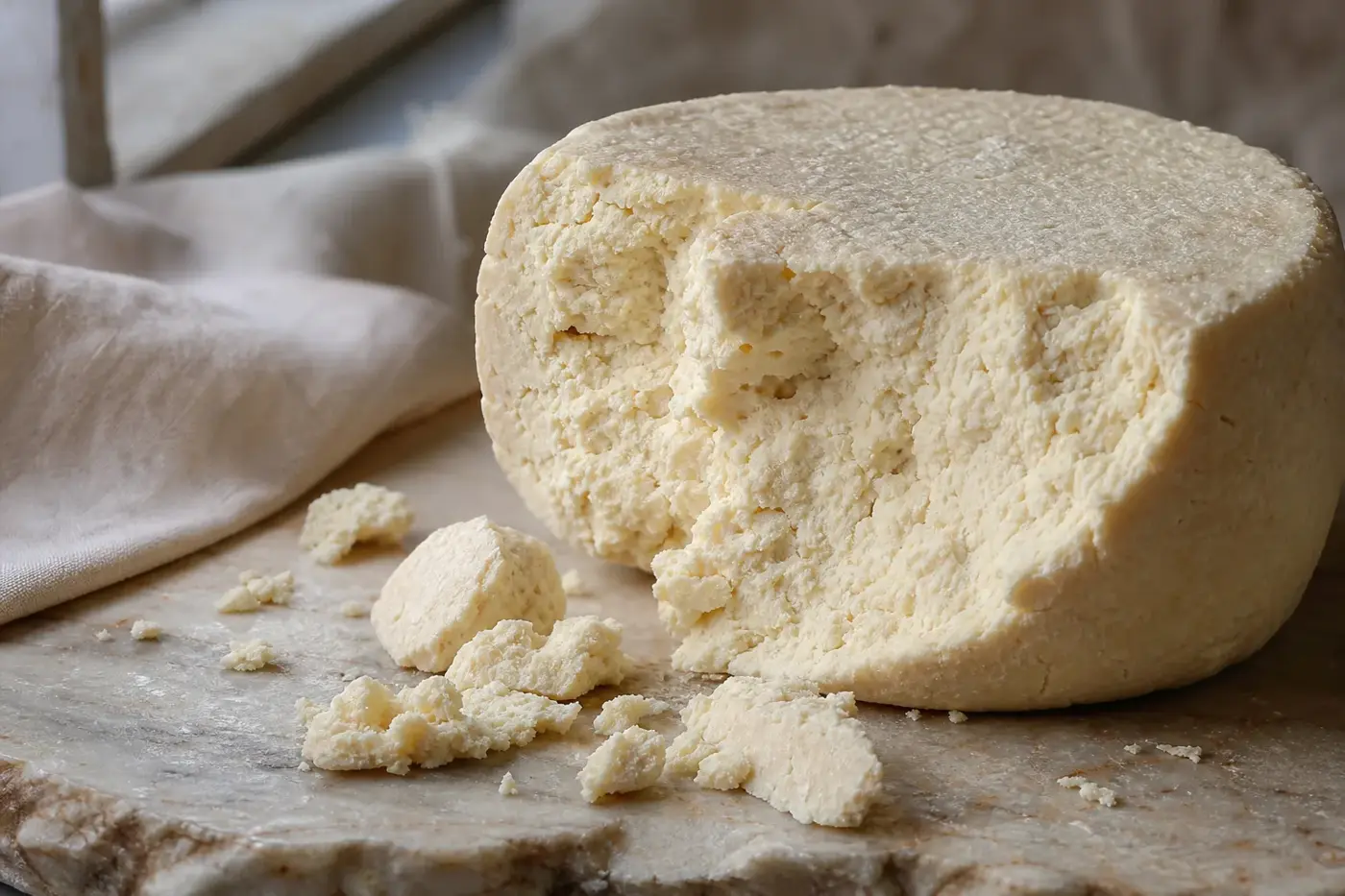
Break into tulum and you might meet pale, tightly packed cheese from Erzincan’s plateaux, at 1,500 metres and above.