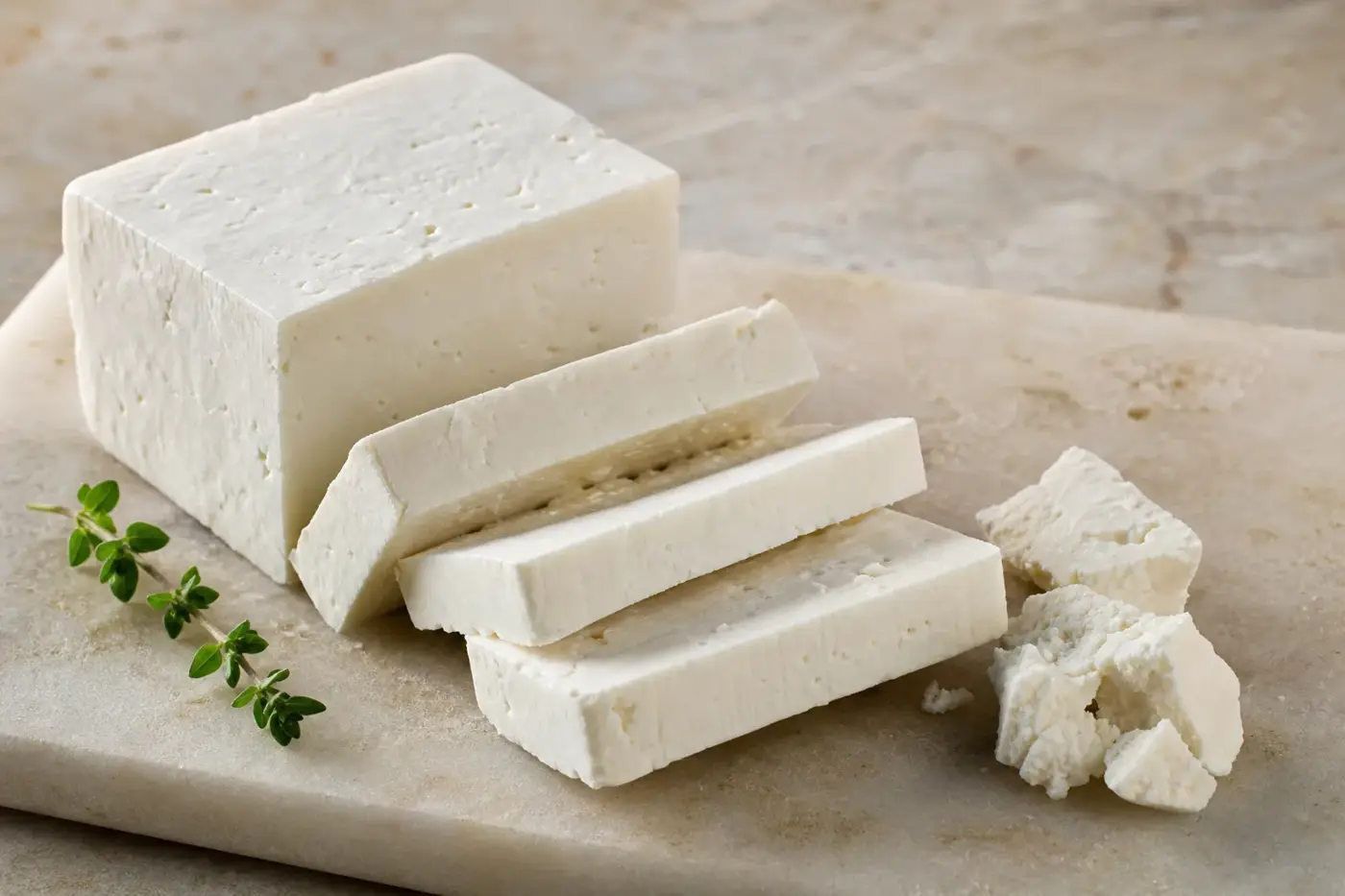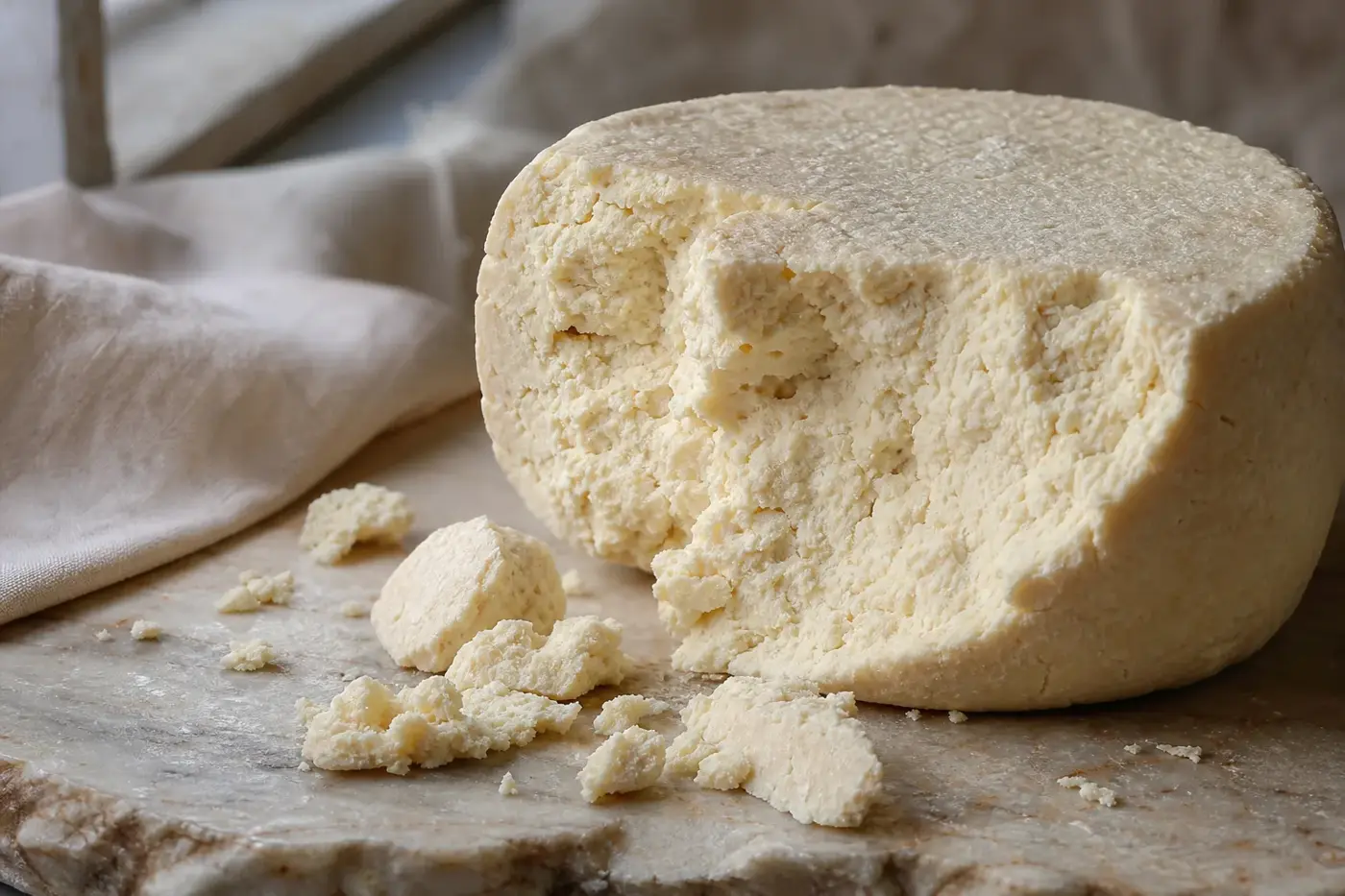
Finely cut curd slips into hot salted water. In Kars, hands knead the softened pieces into a smooth mass: this is where Kaşar, Turkey's stretched-curd cheese, takes shape. Young, it bends into supple slices; aged, it cuts more firmly and tastes more deeply savoury. Your first decision is taze or eski, a choice best made with lunch in mind.[1][2][3]
Your first taste of Kaşar
| What to know | The useful details |
|---|---|
| Name | Kaşar, also written kaşar peyniri.[2] |
| Style | Heated, stretched-curd cheese, available fresh or matured.[2] |
| Milk | Cow, sheep or goat milk, including blends; check the individual product's declaration.[2] |
| Turkish framework | Consult the current applicable instrument. |
| Age terminology | Consult the current legal minimum for the description eski. |
| Regional registration | Kars Kaşarı, TÜRKPATENT registration 190, menşe adı; protection date 14 February 2014.[3] |
| Current Turkish register status | Consult the current Turkish register. |
Meet the fresh and the deeply savoury
Put taze and eski beside each other and you meet two distinct characters. Taze means fresh: expect pliable slices and a gentler flavour, leaving room for whatever else is on your plate. Eski means old: choose it when you want the cheese to take the lead, particularly at breakfast or alongside bread.[2][3]
Neither is a promotion from the other. They offer different pleasures from the same making tradition, and your toast and breakfast plate are perfectly entitled to disagree about their favourite.[2][3]
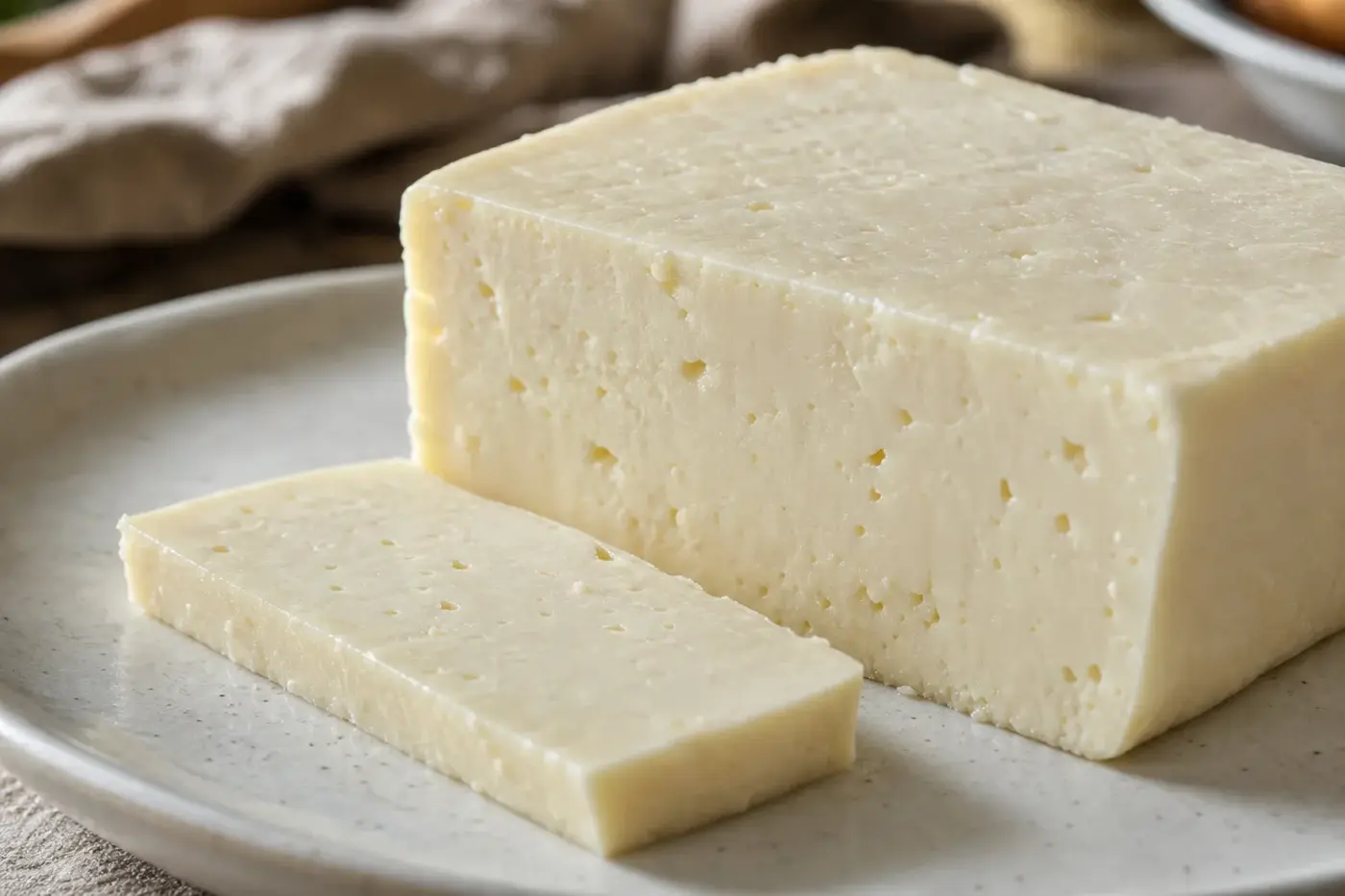
The familiar wheel is generally yellowish, with a close body rather than the open holes of an eye-forming cheese. You may find it as a wedge at the table or in a packet that gives away nothing of its original shape. For clues to the flavour, look at the age and milk information, not the silhouette.[2]
Give time a place at the table
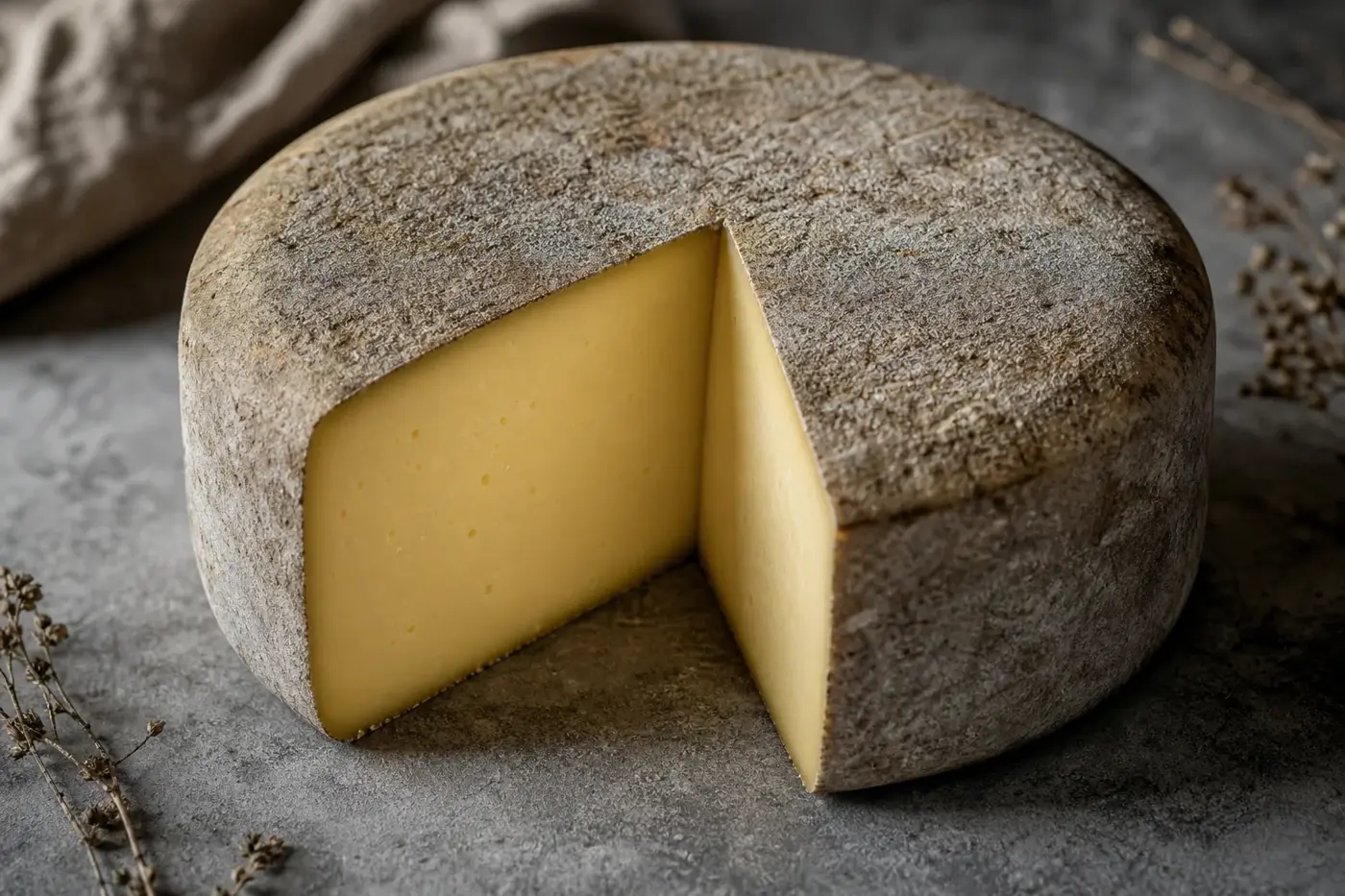
Newly made Kaşar is whitish, mildly salty and milk-like in taste, according to the Kars registration document. A yellowish rind develops as it dries. With age, the rind becomes greyish, the interior yellowish cream, the body firmer and the aroma more concentrated.[3]
There is more happening here than moisture quietly leaving the cheese. Researchers following vacuum-packed Kaşar for 90 days measured increasing signs of protein and fat breakdown, alongside changes in sensory properties. Those reactions help explain why aged Kaşar is more than a drier version of its younger self.[4]
Protein breakdown is called proteolysis; fat breakdown is lipolysis. In that experiment, measurements differed between the middle and inner parts of the cheese. Even within the piece on your board, maturation can progress at different speeds.[4]
When you compare two cheeses, take slices from similar positions. A dry outer edge and a protected centre do not make a fair comparison. Give each cheese an equal chance to show you what it has.[4]
Age does not explain every difference in texture, either. Another study followed cheeses from four Kars producers for 90 days, measuring texture instrumentally and analysing volatile compounds. Ripening changed the texture, but the cheeses did not all behave alike: milk, moisture and maturation conditions matter alongside the age on the pack.[5]
For the legal meaning of eski, consult the current Turkish minimum age requirement. Keep that requirement separate from the maturation period a maker gives you. They answer different questions.
Let the milk tell its story
There is no single milk recipe running through all of Kaşar's regional traditions. Turkey's vocational cheesemaking manual describes traditional production with sheep milk, cow and sheep milk blends, and additions of goat milk in some districts. It also records cow-milk production in Kars and around Adapazarı, and mixed-milk production in Kırklareli.[2]
Your most useful question is a simple one: which milk went into this cheese? Read the ingredients or ask for the producer's specification, especially when you are buying a blend. The regional name opens the conversation; the declaration on your particular cheese supplies the answer.
Milk species and milk treatment are separate matters. Ask about both, rather than allowing one answer to stand in for the other. For the wider differences between treatment terms, see raw milk, thermised and pasteurised cheese.
Watch the curd come together
Before any kneading, there is setting, draining, acidification, heating and working, followed by shaping and salting. Rennet helps the milk set into a gel. Whey, the liquid portion, drains away, leaving the solid material you know as curd.[2][3]
Then comes Kaşar's defining move. The drained curd acidifies; in the Kars method, the maker tests its readiness, cuts it finely and immerses it in hot salted water. Under kneading hands, those softened pieces become a smooth mass.[2][3]
Here is Kaşar's connection with pasta filata, the stretched-curd approach you also find in mozzarella. Shaping gives you the wheel, while the way salt enters the cheese depends on the production method. That smooth finish rests on a whole sequence of decisions, not merely a good final knead.[2][3]
Fresh cheese heads towards sale without the extended maturation used for eski. Aged cheese enters controlled storage, where its body and aroma develop. The dairy or factory's decisions about moisture, salting and maturation all leave their mark on what you eventually eat.[2][4][5]
Head to Kars for pasture and skilled hands
Seasonal milk and upland pasture sit at the heart of the Kars Kaşarı registration document's account. Its area covers Kars and Ardahan localities, including their villages and upland pastures. The milk comes from the May to August grazing season, and the recorded method includes hot water working and hand kneading.[3]
For the present legal position, consult the current registration status and any subsequent amendments. The registration document gives you the regional account. Current registration details are a separate matter.[3]
Look beyond Kars and the vocational manual places Kaşar particularly in Thrace, central Anatolia and eastern Anatolia. It highlights Kırklareli's mixed-milk tradition and cow-milk cheeses associated with Tonya and Muş. Your curiosity has plenty of ground to cover.[2]
Use those places as starting points, not promises that every cheese from a region will taste alike. Ask your cheesemonger about the milk and the dairy. Those details get you closer to the character of the particular cheese waiting on the counter.[2]
Kaşar, Kashkaval or Kasseri? Read beyond the name
When a recipe asks for Kashkaval, first establish which cheese the writer means. A presumed relationship with Kaşar is not enough to choose your substitute. Compare the actual product's milk, age and texture before deciding what belongs in your dish.
Kasseri has defined requirements of its own. An official EU single document published in January 2026 describes Κασέρι / Kasseri as a protected designation of origin. It specifies sheep milk, allowing goat milk up to 20% by weight.[7]
The area comprises Macedonia, Thessaly, Lesvos and Xanthi, and ripening must last at least three months. Consult the current register status and full specification for the complete requirements. These details belong to Kasseri, not to any cheese whose name sounds similar.[7]
Think of Kasseri as a related comparison with its own milk and origin requirements, not another spelling for any Turkish Kaşar. If you substitute one for the other, name the cheese you actually use. The guide to protected names explains how geographical protection attaches to a defined name and jurisdiction.[7]
Tell the cheesemonger what's for lunch
Begin with what you want to eat. For sandwiches and hot toast, ask for young Kaşar with a pliable body. For breakfast, or a plate where you want a more pronounced cheese flavour, compare an aged example.
If you want to explore the milk's character, keep the cheeses similar in age. Change several things at once and you make it harder to tell which difference you are tasting. Even an enthusiastic cheese investigation benefits from a little restraint.
Take these four questions to the counter:
- How old is it? Ask for a stated maturation period, not simply a word such as strong.
- Which milk or blend went into it? Read this product's declaration rather than relying on another maker's recipe.
- Was the milk pasteurised? Get a clear answer from the label, seller or producer.
- What do you need it to do? Tell the seller whether you want slices, grated cheese or a filling for hot food.
Keep the original packaging information until you have finished the cheese. The producer's name, ingredients, milk treatment declaration and storage instructions tell you more than a handsome picture of a wheel. For help with the small print, see how to read a cheese label.
Make room at breakfast, on toast and in the oven
Breakfast, pastries, soups and cooked dishes all feature among Kaşar's uses in Turkey's vocational manual. The suggestions below draw on those uses and the contrast between young and aged cheese. Let the particular cheese you have guide your final choice.[2]
At breakfast, serve slices beside bread, tomatoes, cucumber and olives. Young Kaşar leaves more room for the other ingredients; aged Kaşar brings its own flavour to the front. Cut only what you plan to serve and keep the rest refrigerated.
For toast, start with thin slices of taze Kaşar and judge the balance between bread and filling. If you want a more savoury result, add a little aged Kaşar alongside it. Adjust the blend to your cheeses rather than working to a fixed formula.
For pastries, try grated Kaşar in a savoury filling, using a complete pastry recipe for quantities and cooking method. Taste the cheese before you add salt. The filling may need less seasoning than you first thought.
In hot dishes, try Kaşar over vegetables or as the finishing layer on a baked dish. Choose the age for the flavour you want, then notice how that particular product behaves. The name alone cannot tell you the whole story.
For a revealing tasting, give young and aged Kaşar the same plain bread. Notice how readily each slice bends, how quickly it breaks down as you chew, and whether its aroma lingers. You will discover more that way than the words mild or strong can offer.
Keep it cool, with the label close by
For home storage in England, Wales and Northern Ireland, the Food Standards Agency recommends a fridge between 0 and 5 °C and following the packaging's storage instructions. Keep the remaining cheese covered and return it promptly after taking a portion. Follow the individual pack's directions on refrigeration and use after opening.[8]
Before you prepare or serve cheese in England, Wales and Northern Ireland, consult the Food Standards Agency's current advice on keeping chilled food out of the fridge. Include that advice in your serving plans.[8]
For milk treatment, look for an explicit statement that the cheese was made with pasteurised milk. If the label is unclear, or your cheese is cut at a counter, ask the seller for the producer's information. Age, rind colour and the word Kaşar cannot answer that question for you.
If you are buying a cut portion, ask the cheesemonger to copy the product's storage and milk information onto the wrapping. Alternatively, photograph the original label with their permission.
General information only, not medical advice: follow the official guidance where you live.
Questions people ask
What is Kaşar cheese?
Kaşar is a Turkish cheese made by heating and stretching curd. It can be fresh or matured and is also written kaşar peyniri.
What is the difference between taze and eski Kaşar?
Taze means fresh, while eski means old. Young Kaşar has pliable slices and a gentler flavour; older Kaşar is firmer, with a more concentrated aroma.
What milk is Kaşar made from?
Kaşar can be made from cow, sheep or goat milk, including blends. Check the ingredients or ask for the producer's specification for the particular cheese.
Is Kaşar made with pasteurised milk?
The hot water used to stretch the curd does not establish whether the milk was pasteurised. Look for an explicit statement on the label or ask the seller to check the producer's information.
How should Kaşar be stored?
For home storage in England, Wales and Northern Ireland, the Food Standards Agency recommends a fridge between 0 and 5 °C and following the packaging's storage instructions. Check the Food Standards Agency's current advice on keeping chilled food out of the fridge.
Sources
-
Turkish Ministry of Agriculture, Kahramanmaraş provincial directorate. Türk Gıda Kodeksi Peynir Tebliği (Tebliğ No: 2015/6), explanatory notice, 23 February 2015. The retrieved official search extract states the 120-day condition for eski. Full operative legislation requires the further check recorded below.
-
Turkish Ministry of National Education. Kaşar Peyniri Üretimi, vocational education module, retrieved edition, publication year not verified. Sections 1.1, fresh production and mature production cover the style, regional milk traditions, processing and culinary uses.
-
TÜRKPATENT. Kars Kaşarı, registration document 190, published record dated 2015, protection date 14 February 2014. Definition, geographical boundary, physical characteristics and production method.
-
Journal of Central European Agriculture. Changes on physicochemical, lipolysis and proteolysis of vacuumpacked Turkish Kashar cheese during ripening, volume 7, issue 3, 2006. Retrieved journal abstract; DOI 10.5513/jcea.v7i3.397.
-
International Journal of Dairy Technology, Wiley. Changes in the texture, physicochemical properties and volatile compound profiles of fresh Kashar cheese (<90 days) during ripening, first published online 27 August 2015, journal edition 2016. DOI 10.1111/1471-0307.12250.
-
Turkish Journal of Veterinary & Animal Sciences, TÜBİTAK. Microbiological and Chemical Changes throughout the Manufacture and Ripening of Kashar: a Traditional Turkish Cheese, volume 30, issue 4, 2006, pages 397 to 404. Retrieved journal abstract.
-
European Commission, Official Journal of the European Union. Publication of the communication of an approved standard amendment to a product specification of a geographical indication, Κασέρι / Kasseri, C/2026/192, 12 January 2026, including the updated single document.
-
Food Standards Agency, GOV.UK. How to chill, freeze and defrost food safely, published 18 December 2017, retrieved guidance applying to England, Northern Ireland and Wales.
-
Turkish Ministry of Agriculture and Forestry. Türk Gıda Kodeksi mevzuatı, retrieved inventory dated 21 July 2025, cheese communiqué entry. The requested newer inventory redirected to this edition.
This desk-researched draft combines Turkish official documentation, published production research, the EU Kasseri document and attributed food storage guidance.
Last checked: November 2026
Last checked November 2026.
The editors suggest you read next