Ezine Peyniri
Taste past the salt and tang, and buttery, cooked-milk aromas begin to emerge.
Taste past the salt and tang, and buttery, cooked-milk aromas begin to emerge. Behind them lies grazing country between Mount Ida and the Aegean Sea, where thyme and sage grow. The animals feeding here supply the milk for Ezine Peyniri, a rindless Turkish white cheese that spends at least eight months in brine. [2]
This cheese has a very particular address. Its identity brings together this corner of Çanakkale, a prescribed blend of locally produced sheep, goat and cow milk, and a method that sets it apart within the wider family of beyaz peynir. [1][2]
| What you want to know | The essentials |
|---|---|
| Familiar and registered name | Ezine Peyniri. [1][2] |
| Where it comes from | Defined districts and villages in Çanakkale Province, Türkiye. [1] |
| EU registration authority | European Commission. [3] |
| Great Britain protection status | Not specified here. |
| Northern Ireland protection status | Not specified here. |
| Türkiye registration | TÜRKPATENT, menşe adı, registration No. 86; registered 10 April 2007, effective from 5 August 2006. [1] |
| EU registration | PDO-TR-02889; registered through Implementing Regulation (EU) 2023/2746, in force from 27 December 2023. Status as of November 2026. [2][3] |
| The milk blend | Sheep milk 35 to 45%; goat milk at least 40%; cow milk no more than 25%. [1] |
| How the milk is treated | Heated at 67 °C for 30 minutes in the registered Turkish method. [1] |
| What sets the milk | Animal rennet; no added starter culture. [2] |
| Minimum maturation | Eight months in brine. [2] |
| Usual commercial maturation beyond the minimum | Not specified here. |
| Shape and packaging | Rindless blocks packed in tins or subsequently vacuum-packed. [1][2] |
A cheese that belongs to its landscape
Pasture, milk blend and brine maturation belong together in Ezine Peyniri. Its protected identity ties all three to its home: every stage, from grazing and milk production through maturation, must happen within the designated area. Following the recipe elsewhere does not give a producer the right to use the geographical name. [2]
When you shop, origin deserves the same attention as ingredients and age. Look at those details before the attractive tin or pastoral picture catches your eye. A familiar dairy name tells you which business sells the cheese; the geographical indication identifies cheese made to a particular specification.
Those details answer different questions, and both are useful to you. The guide to protected names explains how a geographical designation differs from a commercial brand.
Follow the pastures towards Mount Ida
Ezine, Bayramiç and Ayvacık districts form the heart of the production area in Çanakkale Province. The boundary also includes specified villages in Çan and Merkez districts. In Çan, these are Şerbetli, Etili, Ahlatlıburun, Küçüklü, Alibeyköy and Söğütalan; in Merkez, Karacaören, Kurşunlu, Şerbetli and Kirazlı. [1]
The EU description places the principal districts between the Kaz Mountains, also known as Mount Ida, and the Aegean Sea. It connects the character of the local milk with grazing on aromatic vegetation, including thyme and sage. Locally supplied fodder is required too. [2]
Those herbs are part of the pasture story, rather than ingredients scattered into the cheese. What an animal eats and what a cheesemaker adds are different things. It is a useful distinction to keep in mind when you read a label describing Ezine’s origins.
Season also matters in the milk supply described by the Turkish and EU documents. If you want the precise collection period, read each document in the context of its own description. [1][2]
Three milks, one carefully balanced blend
Goat milk must make up at least 40% of the blend, while cow milk can account for no more than 25%. Sheep milk must sit between 35 and 45%. [1] These limits apply within one blend totalling 100%, rather than three separate quantities to add together.
So pause if a shop describes a product simply as “sheep cheese” or “goat cheese”. Ask for the full description and ingredient information. Giving one animal star billing can leave the mixed-milk nature of the cheese rather less obvious.
When you find a cheese you enjoy, note its declared blend and maturation period. Keep the producer’s name too. Next time, you will have something more useful to go on than “strong”, “traditional” or a hazy memory of a handsome tin.
Watch warm milk become blocks of curd
In the registered Turkish method, animal rennet sets the heated milk at 32 to 34 °C. The liquid becomes a gel, which is cut into curds, the solid pieces, releasing the surrounding liquid whey. After initial drainage, pressing with the help of cloth gathers the curd together, ready for cutting into blocks. [1]
Each step has a purpose. Cutting releases whey, while draining and pressing bring the curd towards its finished form. Even before the long maturation begins, you can see why Ezine Peyniri differs from loose fresh curds.
This is the registered commercial process, not a recipe for your kitchen. If you would like the wider story, how cheese is made follows the relationship between coagulation, whey drainage, salting and ripening.
Inside the tin, a long wait begins
An Ezine Peyniri tin does more than carry your cheese home. Blocks go into sea-salt brine, are arranged in tins and receive dry salt. Released liquid is removed before the tins are filled, topped with brine and sealed. [1]
Then the waiting begins. The Turkish specification requires at least eight months of maturation at 2 to 4 °C, with the maturation period printed on the label in months. [1] Before you buy, that number is one of the most useful details to find.
Look for the actual months, rather than a reassuring word such as “aged”. The number tells you more precisely what you are choosing. Even the most handsome adjective cannot do its job.
Keep this commercial maturation separate from storage at home. An unopened maturation tin and an opened container in your kitchen serve different purposes. The producer has finished the ageing; your pack’s instructions explain how to look after the cheese now.
Give the salt a moment, then taste beyond it
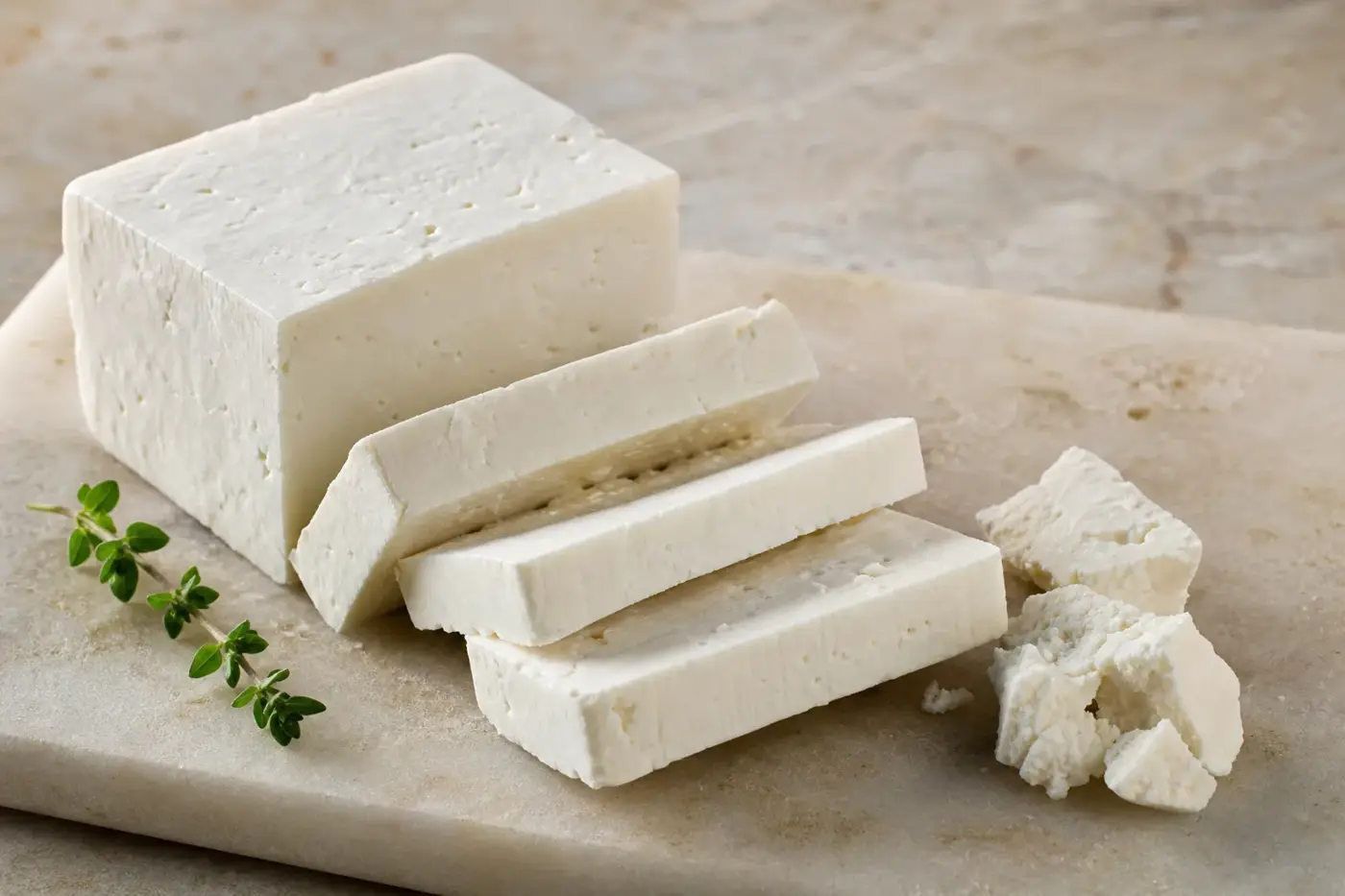
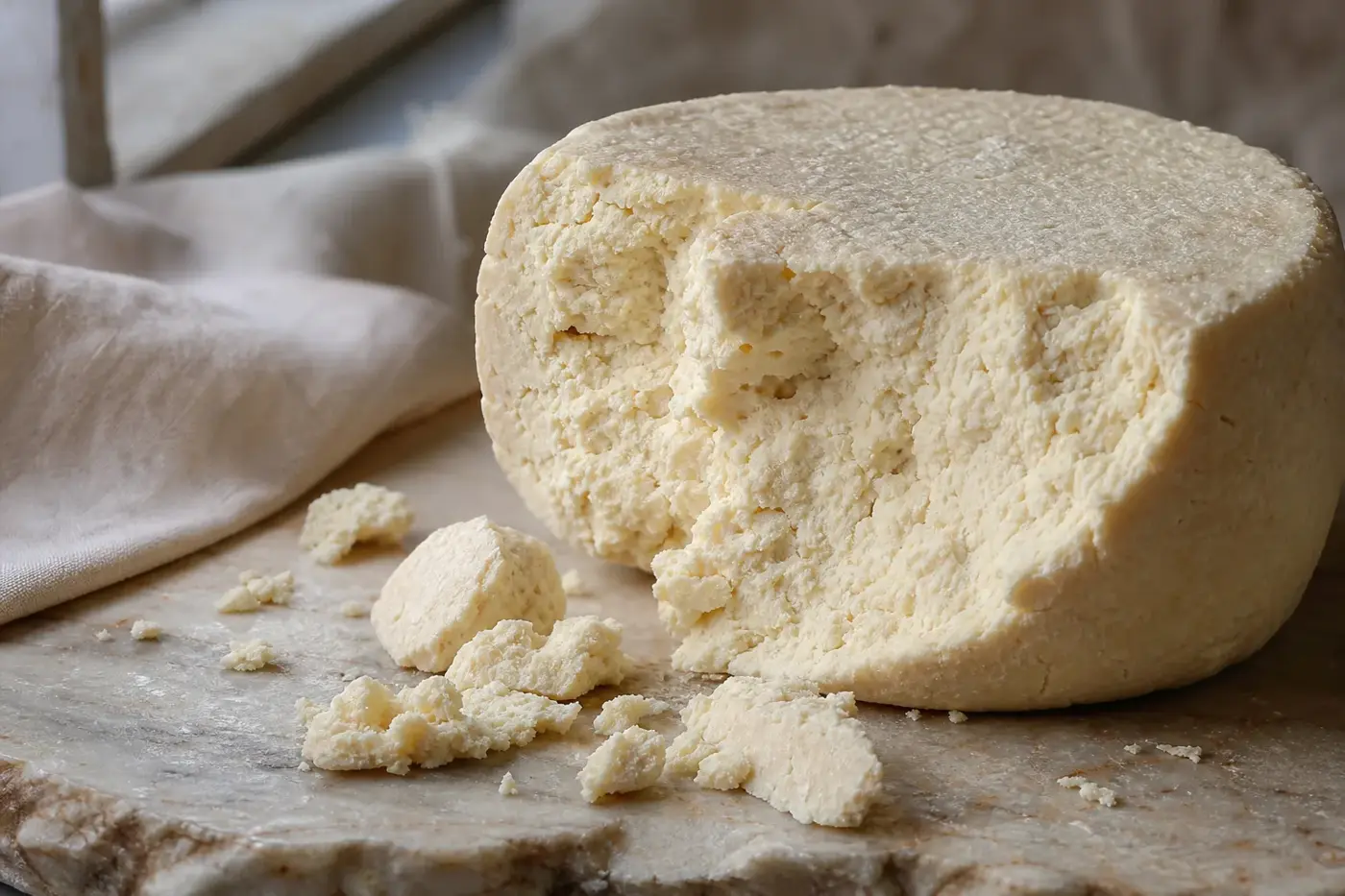
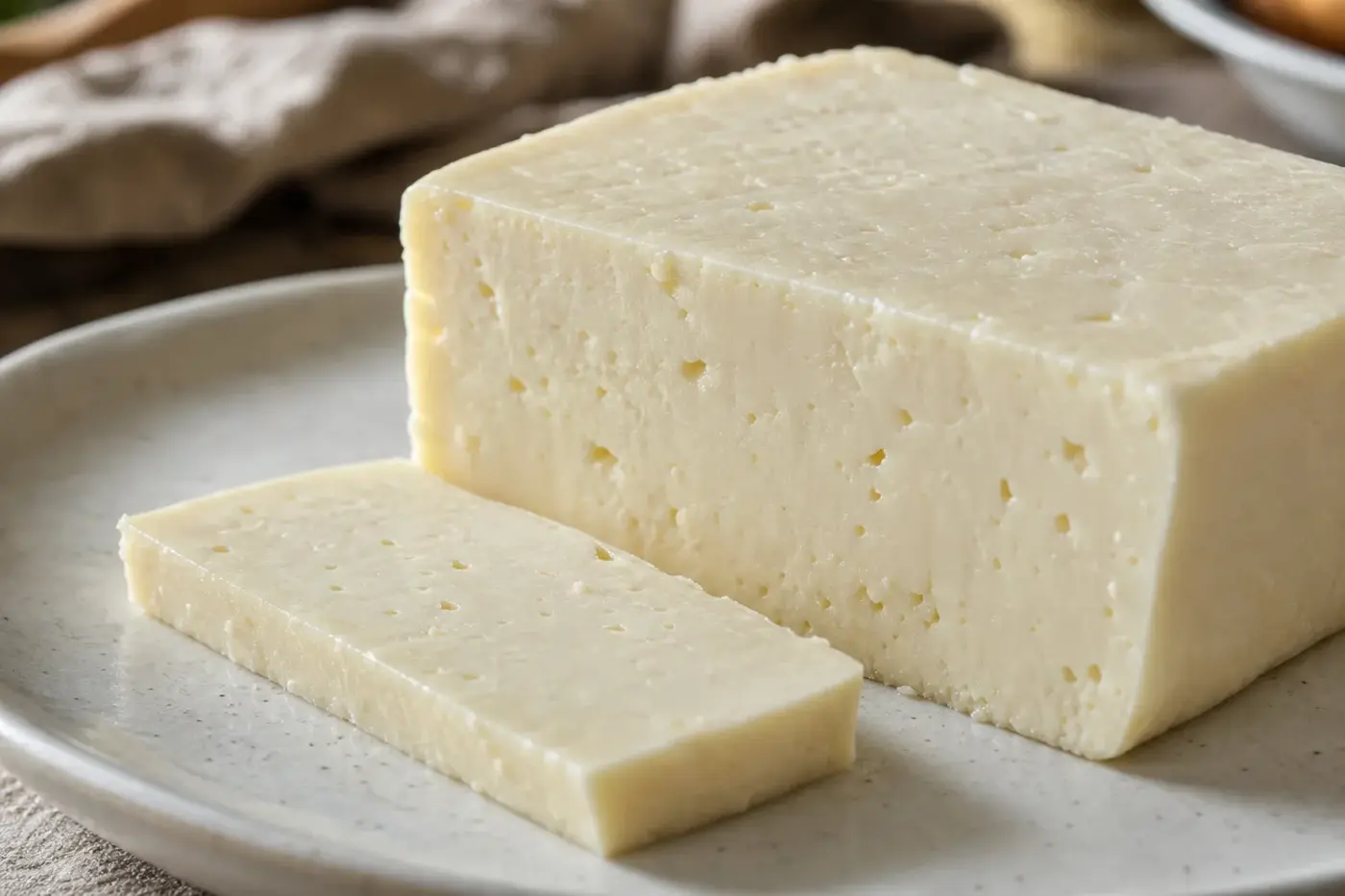
Look for a white to light-yellow paste, small openings and no rind. The official EU description records a semi-hard or firm texture, with buttery and cooked-milk aromas. Salty, sour and mildly sweet tastes complete the picture. [2]
Give your first small piece a moment on its own, before bread, fruit or dressing joins it. Notice its firmness, then try to separate the salt from the tang. Can you find a sweeter dairy note behind them?
You do not have to tick off every published descriptor. This is cheese, not an exam, and nobody needs to collect your tasting notes afterwards. Your own clear words are more useful than borrowed praise.
If you want to keep a tasting note, record appearance, texture, aroma, salt, acidity and finish. Be concrete, especially when comparing purchases. “Firm enough to slice neatly” tells you more about serving a cheese than a string of approving adjectives.
Let the label tell you the full story
In Türkiye, Ezine Peyniri is registered as a menşe adı, a designation of origin. The national document requires both the Ezine Peyniri logo and the designation-of-origin emblem. [1] Look for those details alongside the name when you read the label.
EU registration involved several distinct legal steps. The regulation was adopted on 30 November 2023, published on 7 December and entered into force on 27 December 2023. Its current EUR-Lex record identifies it as in force. [3]
Start with the complete registered name. Then read the producer information, milk declaration and maturation statement together. At a counter, ask to see the original container or label rather than relying only on a handwritten card beside a cut piece.
Türkiye’s agriculture ministry advises looking at dates, packaging condition, stated storage requirements and the establishment identification mark on animal foods. [7] Look for that mark and, where applicable, the geographical designation. They tell you different things.
The practical question is straightforward: can the seller connect your piece of cheese to a clearly identified, labelled product? The guide to reading a cheese label helps you put that question into practice.
Ezine, beyaz peynir and Feta: know what you are choosing
Beyaz peynir means white cheese. It is the broader category under which the Turkish registration places Ezine Peyniri. [1] As you compare labels, separate that general description from the complete registered geographical name.
Feta offers another point of comparison. The European Commission describes it as cheese made from sheep and goat milk. [5] It has its own identity, just as Ezine does.
Comparisons help when you are planning a salad or pastry. Names still matter: if you substitute one cheese for another, describe the ingredient you actually use. A useful swap does not need to pretend to be the original.
To choose between particular products, compare their salt impression, firmness and age. Nationality alone cannot tell you exactly how a cheese will behave in your dish. The dedicated Feta guide takes a closer look at that cheese’s identity.
Make room at breakfast, lunch and in pastry
Breakfast, salads and baked goods are established places to start. Türkiye’s education ministry includes Ezine among breakfast cheeses and notes these uses. [6] They give you a chance to get acquainted without surrounding the cheese with too many competing ingredients.
For a Turkish-style breakfast, try sliced cheese with tomatoes, cucumber, olives and plain bread, with tea alongside. Keep the cheese separate at first, so everyone can build the combinations they like. Taste before adding salt to the vegetables.
For a salad, begin with larger pieces over tomatoes, cucumber and parsley. Give yourself a chance to taste before dispersing everything through a dressing. Add olive oil first, then decide how much lemon or vinegar suits the cheese you have bought.
Fruit and bread make another simple first plate. Try melon or a pear with an unflavoured loaf, tasting each combination separately before adding more. Several preserves at once make it harder to keep your attention on the cheese.
For pastries, use Ezine as the cheese component in an established börek recipe. Follow its quantities and baking instructions, and name the substitution accurately. Taste a little cheese before seasoning the filling, so you can judge how much extra salt it needs.
Keep it cool, with the instructions close by
Keep dairy products refrigerated and follow their packaging instructions. The Food Standards Agency’s household guidance for England, Northern Ireland and Wales, as of November 2026, recommends a fridge temperature of 0 to 5 °C. It also advises keeping chilled food out for the shortest possible time during preparation. [4]
Read the opening and storage instructions, including anything about the brine. If you have a vacuum-packed portion, follow the guidance on that label. Instructions for a different product are not a substitute.
After opening a tin, transfer unused contents to a suitable storage container, cover and refrigerate, following the FSA’s advice for opened cans. Keep the label or photograph it. You will still need the dates and opening instructions after the packaging has gone. [4]
Choose a pack size that fits your plans. A breakfast, a salad and a pastry filling give the contents somewhere to go, but a large container still needs attention. The guide to storing cheese at home covers the wider handling principles.
Choosing vegetarian cheese? Start with the rennet
The registered method specifies animal-sourced rennet. [2] Ezine Peyniri made to this specification is therefore unsuitable for vegetarians who avoid animal rennet.
Do not assume that a white, rindless cheese uses microbial coagulant. Read the particular product’s information, and if a vegetarian claim appears beside the protected name, ask the producer to explain the discrepancy before choosing it. The guide to rennet explains the different sources.
General information only, not medical advice: follow the official guidance where you live.
Questions people ask
Where is Ezine Peyniri made?
It is made in defined districts and villages in Çanakkale Province, Türkiye. Every stage, from grazing and milk production to maturation, must take place within the designated area.
What milk is used in Ezine Peyniri?
It is made from a blend of sheep, goat and cow milk. The blend must contain 35 to 45% sheep milk, at least 40% goat milk and no more than 25% cow milk.
What does Ezine Peyniri taste like?
It has salty, sour and mildly sweet tastes, with buttery and cooked milk aromas. Its texture is firm, and it has no rind.
Is Ezine Peyniri suitable for vegetarians?
The registered method specifies animal rennet. Ezine Peyniri made to that specification is unsuitable for vegetarians who avoid animal rennet.
How should I store Ezine Peyniri after opening it?
Follow the product’s opening and storage instructions, including any guidance about its brine. The Food Standards Agency advises transferring unused contents from an opened tin to a suitable container, covering and refrigerating them.
Sources
- TÜRKPATENT. Ezine Peyniri, registration No. 86, specification incorporating the amendment announced on 2 November 2020. National registration, boundary, milk, manufacture and labelling. Official specification.
- European Commission. Single document: Ezine Peyniri, PDO-TR-02889, published in Official Journal C 287, 16 August 2023, pages 22 to 24, notice 2023/C 287/07. Product description, geographical link and production characteristics. Official document.
- European Commission. Commission Implementing Regulation (EU) 2023/2746 of 30 November 2023 entering a name in the register of protected designations of origin and protected geographical indications (Ezine Peyniri (PDO)), published 7 December 2023. Articles 1 and 2 and EUR-Lex document information. Official regulation and status.
- Food Standards Agency. How to chill, freeze and defrost food safely, published 18 December 2017, current page retrieved November 2026. Household refrigeration, label instructions and opened cans; applies to England, Northern Ireland and Wales. Official guidance.
- European Commission, Directorate-General for Agriculture and Rural Development. Feta PDO, undated current explanatory page, retrieved November 2026. Milk treatment and maturation comparison. Official account.
- Türkiye Ministry of National Education. Yemek gruplarının servisi, teaching text, 2025 online edition, page 86, Ezine Peyniri entry. Used only for documented culinary uses. Official teaching text.
- Türkiye Ministry of Agriculture and Forestry. Güvenilir Gıda, undated current consumer guidance, retrieved November 2026. Packaging, dates, storage and establishment identification. Official guidance.
Researched from official registration documents, published government guidance and an official teaching reference; serving combinations are editorial suggestions, with no site tasting or recipe test claimed.
Last checked: November 2026
Last checked November 2026.
The editors suggest you read next