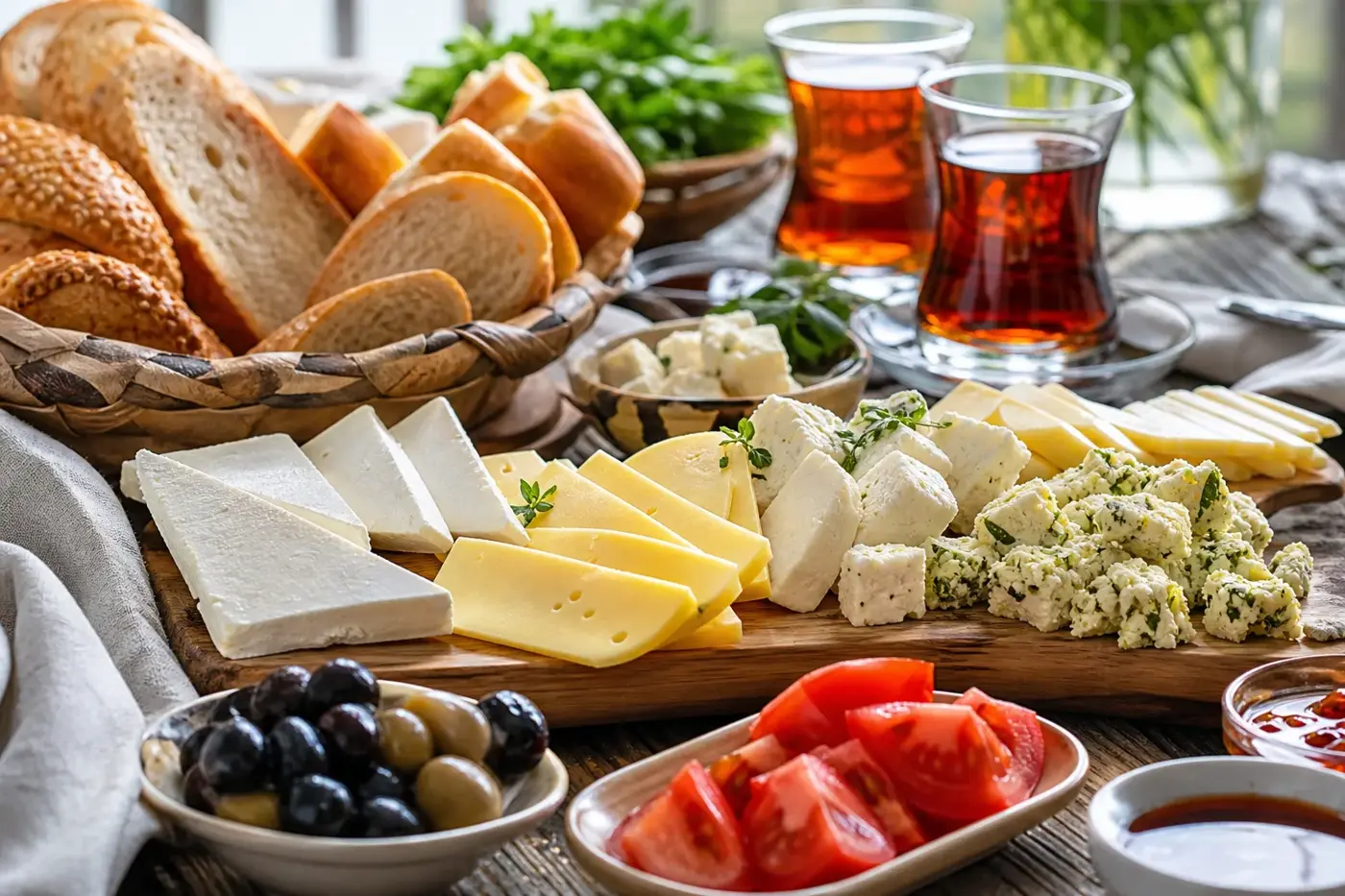
Bread within reach. Tea on the breakfast table, olives and tomatoes beside white slices from brine, a piece of kaşar, perhaps crumbly tulum or cheese flecked with herbs from Van.[1][2] You could be forgiven for letting breakfast run on a little. Start tasting and Türkiye’s cheese traditions unfold, from fresh curds to aged wheels.
Some have taken their time getting here. Ezine alone spends at least eight months in brine, developing the balance of salty, sour and mildly sweet tastes described in its EU application document.[3]
Pull up a chair at breakfast
Breakfast opens the door, but Turkish cheese has plenty to do after the tea is finished. The Turkish Ministry of Culture and Tourism records civil in börek and omelettes, lor in savoury preparations and desserts, and Mihaliç alongside meals. There is cheese for the rest of your day, too.[1]
For your first tasting, choose different methods rather than several similar white cheeses. Put a brined cheese beside kaşar, then add tulum or an herb cheese. The Ministry of Agriculture and Forestry’s traditional cheese inventory likewise suggests white cheese and kaşar together, with regional styles as additions.[2]
You need no elaborate arrangement. Keep the cheeses separate, put bread within reach and let your guests find their own combinations. A few clearly identified pieces offer more pleasure than a crowded plate that tells you nothing about milk, origin or maturity.
Start with the milk, then follow the making
Milk matters, but it is only the beginning of the story. Ezine’s specification combines sheep, goat and cow milk in defined proportions, while Van’s allows sheep, cow or goat milk, or mixtures. Brining, herbs and maturation turn those starting materials into distinct textures and flavours.[3][4]
Read the milk declaration rather than assuming a familiar cheese name means one species. Mixed milk can bring several milk characteristics together. That alone does not tell you exactly what each species contributes to a particular cheese’s flavour or texture.
Ask two questions together: “Which milk?” and “How was it made?” Goat milk alone cannot tell you whether your cheese will crumble, stretch or slice. Milk and method together give you a more useful starting point, as how to tell cheese styles apart explains.
Meet beyaz peynir, then linger over Ezine
A white block can hold plenty of regional character. Beyaz peynir means white cheese, but it names a broad family rather than one uniform product. Türkiye’s tourism agency describes differences in milk, texture and production practice, and associates this breakfast staple particularly with places including Edirne and Çanakkale.[5]
Within that family, give Ezine a little attention. The EU application document published in 2023 describes a mixture of 35 to 45% sheep milk, at least 40% goat milk and no more than 25% cow milk. Then comes at least eight months’ maturation in brine, the salt solution surrounding the cheese.[3]
The proposed production area covers Ezine, Bayramiç and Ayvacık districts in Çanakkale province, plus specified villages in Çan and Merkez districts. The document describes a rindless, semi-hard or firm cheese with small holes and cooked milk aromas. Salty, sour and mildly sweet tastes find their balance here.[3]
That gives you more to go on than colour alone. Ask for the exact product name, producer and milk declaration, along with the current registration status and operative specification. For the distinction between a regional name and a general cheese family, turn to protected names explained.
Kaşar: make room for young and aged
Kaşar begins with a method called pasta filata. The curd, the solid portion separated from milk, is acidified, heated and kneaded. The Turkish agricultural inventory explains this technique and records several regional kaşar cheeses: a shared method, but not an identical finished texture.[2][6]
Choose your kaşar with its destination in mind. Ask for a younger cheese for slicing and hot sandwiches, or an aged cheese to eat in pieces. Get the actual maturation period, because “old” on a label does not describe one identical cheese or tell you precisely what flavour to expect.
| What to look for | Younger kaşar | Aged regional kaşar |
|---|---|---|
| How it feels | Yielding and easy to slice | Firmer, good for thinner slices |
| Where it comes from | Ask where your cheese was made | Muş Eski Kaşarı and Malkara Eski Kaşar Peyniri are classified as hard in the agricultural inventory.[6] |
| Before you cook | Ask about melting and moisture | Ask how its firmness will affect your dish |
| At the table | Compare milk and salt declarations | Compare milk, maturation period and rind treatment |
Treat age as something to explore, not an automatic promotion. Younger cheese has nothing to apologise for, especially when a hot sandwich is involved. A small piece of each lets you compare how readily the cheese bends, breaks and coats your palate.
For hot dishes, ask about the particular product. Do not assume everything called kaşar melts alike.
Tulum: the container has a story, too
With tulum, the vessel belongs in the story. Its name leads you to an animal skin: Türkiye’s tourism agency describes eastern tulum cheese being pressed and kept in goat or sheep skins. That is a different approach from holding white cheese beneath brine, and a useful clue to what you are choosing.[5]
The regional differences show up in the cheese itself. The agricultural inventory lists Erzincan Tulum Peyniri as crumbly and semi-hard. İzmir Tulum Peyniri is also semi-hard, but has an open, holed structure, so one family name takes you to substantially different cheeses.[7]
At the shop, ask whether the container on sale was also used for maturation. A tub, bag or vacuum pack tells you how the cheese reaches you, not what happened before packing. Ask the producer about maturation methods and the relevant regional specification.
Let the texture guide your serving. Scatter small pieces of crumbly tulum over bread or a salad, or slice a firmer example if it holds together well. Your first tulum need not set the rules for every one that follows.
Follow Van’s garlic and wild herbs
Garlic and thyme lead the aroma of Van Otlu Peyniri, according to its specification. Moderately firm and salty, it has geographical indication registration in Türkiye, number 405, with a production area covering Van and Hakkari provinces, as of November 2026.[4][8] Sheep milk has a particular place in regional production, although the specification permits sheep, cow or goat milk, or mixtures.[4]
Six required herbs appear under their local names: sirmo or şirik, mendo, heliz, wild mint, kekik and siyabo. Optional plants are listed too. Those identities belong to the documented method, so you are tasting something more specific than white cheese with a scattering of greenery.[4]
Spring brings milk production and herb gathering together. Preserving the herbs in brine allows their use beyond that season. Try the cheese first with plain bread, then add tomato or cucumber, giving its garlic and herbal character room rather than crowding it with other flavours.[4]
Mihaliç: give salt and texture their moment
Cut into Mihaliç and you find a firm body with an open interior, not a smooth block of white cheese. It belongs to the cheese traditions around Balıkesir and Bursa in southern Marmara. The agricultural inventory classifies it as hard, yellowish-white, holed and brine-ripened.[5][9]
The Ministry of Culture and Tourism describes a sharp, salty taste and records its use with salads, baked foods and other dishes. It also records versions made with goat or cow milk. Read the milk declaration rather than assuming a traditional milk source from the name alone.[1]
For your table, Türkiye’s tourism agency suggests dried fruit, almonds and summer watermelon with Mihaliç. There is your simple serving direction: firm cheese, something juicy or dried, and bread. Keep the fruit alongside, rather than mixing everything together, so you can judge the saltiness mouthful by mouthful.[5]
Pull apart civil, strand by strand
Among blocks and crumbs, civil brings something different: strands. Both Bayburt Civil Peyniri and Erzurum Civil Peyniri appear as fibrous cheeses in the agricultural inventory. Erzurum gives civil an eastern Anatolian association, taking its story beyond the Black Sea coast.[10]
The Ministry of Culture and Tourism describes civil made from skimmed milk, with a lightly sour taste. Its recorded uses include breakfast, börek, pasta and omelettes. Pull the strands apart before tasting and you have a particularly clear illustration of what cheesemaking method can do.[1]
Planning kuymak? Ask specifically for cheese intended for that preparation. Seek reliable culinary guidance on the cheeses used and their melting properties.
Lor and çökelek: look beyond those pale curds
Pale, broken curds may look much alike, yet start with different ingredients. Türkiye’s tourism agency identifies lor as a whey cheese. Whey is the liquid separated during cheesemaking, and recovering its remaining proteins produces something different from setting another vat of milk.[5]
With çökelek, let the regional detail lead you. The Van Otlu Peyniri specification describes a local cacık or çökelek preparation beginning with milk fermented into yoghurt, then churned to remove butter. That documents a fermented-milk route, not a recipe for every cheese sold as çökelek.[4]
Ask whether your product begins with whey, milk, yoghurt or a mixture, and whether salt has been added. The culture ministry describes lor as readily crumbled and unsalted, used in pastries, at breakfast and in sweets. Before salting a filling, taste your cheese: starting material and seasoning tell you more than pale looks alone.[1]
Keep the table simple and the cooking purposeful
Bread, olives, tomatoes and tea give you a starting point; add fruit if you like. For börek, decide whether you want distinct crumbles in the filling or something that holds together more closely, then choose your cheese. For künefe, ask for cheese intended for the dessert, paying particular attention to salt and melting behaviour.
When substituting, match the job first. Ricotta is an option for a loose lor-style filling, a brined white cheese for a beyaz peynir role, and a suitable melting cheese for young kaşar. Check moisture and salt before cooking: these choices can do the practical work, but your finished flavour will change.
Bring Turkish cheese home in the UK
Start with the producer, production country, milk species, milk treatment and maturation period. Buying cheese loose? Request the original product information, and use how to read a cheese label to distinguish the maker’s details from those of an importer or retailer.
For pregnancy in the UK, the NHS says you can eat hard cheeses made with pasteurised or unpasteurised milk. Its November 2026 guidance advises against soft cheeses made with unpasteurised milk unless cooked until steaming hot all the way through. Mould ripened soft cheeses and soft blue cheeses also need cooking until steaming hot all the way through; consult the current NHS pregnancy guidance.[11]
Older people and people with weakened immunity are among the groups the NHS identifies as at greater risk from listeriosis. Its listeriosis guidance, dated here to November 2026, advises refrigeration at 5 °C or below, observing use-by dates and following storage instructions. Consult it when choosing cheese for someone at higher risk.[12]
Once you open the cheese, keep the original label and follow its instructions, including any directions about brine. Buy only as much as you can use within the stated opening period. For wrapping and handling different textures, continue with how to store cheese at home.[12]
General information only, not medical advice: follow the official guidance where you live.
Questions people ask
What is Ezine cheese made from?
The EU application published in 2023 describes a mixture of 35 to 45% sheep milk, at least 40% goat milk and no more than 25% cow milk. The cheese matures in brine for at least eight months.
What is the difference between young and aged kaşar?
Younger kaşar is yielding and sliceable, making it a choice for slicing and hot sandwiches. Aged regional kaşar is firmer and suited to thinner slices or eating in pieces.
Are all tulum cheeses crumbly?
No. The agricultural inventory lists Erzincan Tulum Peyniri as crumbly, while İzmir Tulum Peyniri has an open, holed structure.
What gives Van Otlu Peyniri its flavour?
Garlic and thyme dominate its aroma, according to its specification. The cheese contains six required herbs, and the specification also lists optional plants.
What is the difference between lor and çökelek?
Türkiye’s tourism agency identifies lor as a whey cheese. The Van Otlu Peyniri specification describes a local cacık or çökelek preparation that starts with milk fermented into yoghurt, then churned to remove butter.
Sources
- Turkish Ministry of Culture and Tourism, Türkiye’nin Peynirleri, undated web edition. Sections on breakfast, civil, lor and Mihaliç. Source.
- Turkish Ministry of Agriculture and Forestry, Türkiye Geleneksel Peynir Envanteri, undated web edition. Homepage sections on breakfast and pasta filata. Source.
- European Commission, Single document: “Ezine Peyniri”, EU No PDO-TR-02889, published 16 August 2023, Official Journal C 287, pages 22 to 24. This is the published application document, used here for its product description. Document.
- TÜRKPATENT, Van Otlu Peyniri: Coğrafi İşaret Sicil Belgesi, registration 405, 31 December 2018, retrieved specification. Specification.
- Türkiye Tourism Promotion and Development Agency, GoTürkiye, Türkiye’s rich cheese culture captivates visitors, undated web edition. Used for attributed cultural descriptions and serving suggestions, not its health claims. Source.
- Turkish Ministry of Agriculture and Forestry, Türkiye Geleneksel Peynir Envanteri: Pasta-Filata Tipi Peynirler, undated database category. Source.
- Turkish Ministry of Agriculture and Forestry, Türkiye Geleneksel Peynir Envanteri: Tulum, Küp, Çanak, Testi, Ahşap vb Materyallerde Olgunlaşan Peynirler, undated database category. Erzincan and İzmir entries. Source.
- TÜRKPATENT, Van Otlu Peyniri, current register display, registration 405. Register entry.
- Turkish Ministry of Agriculture and Forestry, Türkiye Geleneksel Peynir Envanteri: Salamurada Olgunlaşan Peynirler, undated database category. Mihaliç entry. Source.
- Turkish Ministry of Agriculture and Forestry, Türkiye Geleneksel Peynir Envanteri: Isıl İşlem Görmüş Peynirler, undated database category. Bayburt and Erzurum civil entries. Source.
- NHS, Foods to avoid in pregnancy, live web edition retrieved November 2026, cheese and dairy section. Guidance.
- NHS, Listeriosis, page last reviewed 10 November 2023, live edition retrieved November 2026. Risk groups and prevention sections. Guidance.
This desk-researched draft brings together Turkish official cultural and agricultural records, a published EU product document, a Turkish geographical indication specification and UK NHS guidance.
Last checked: November 2026
Last checked November 2026.
The cheeses of Türkiye
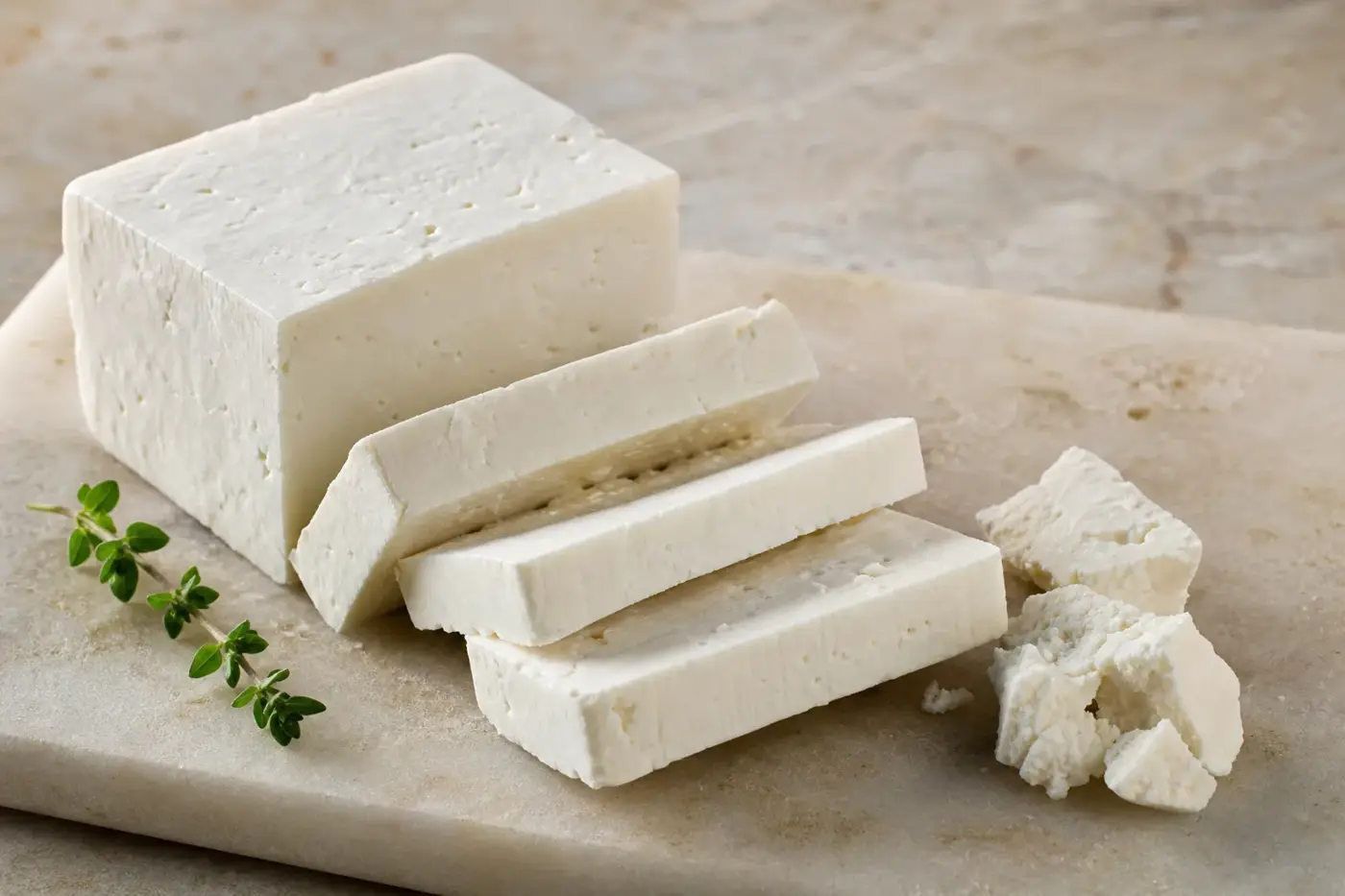
Beyaz Peynir
Bread on the table.
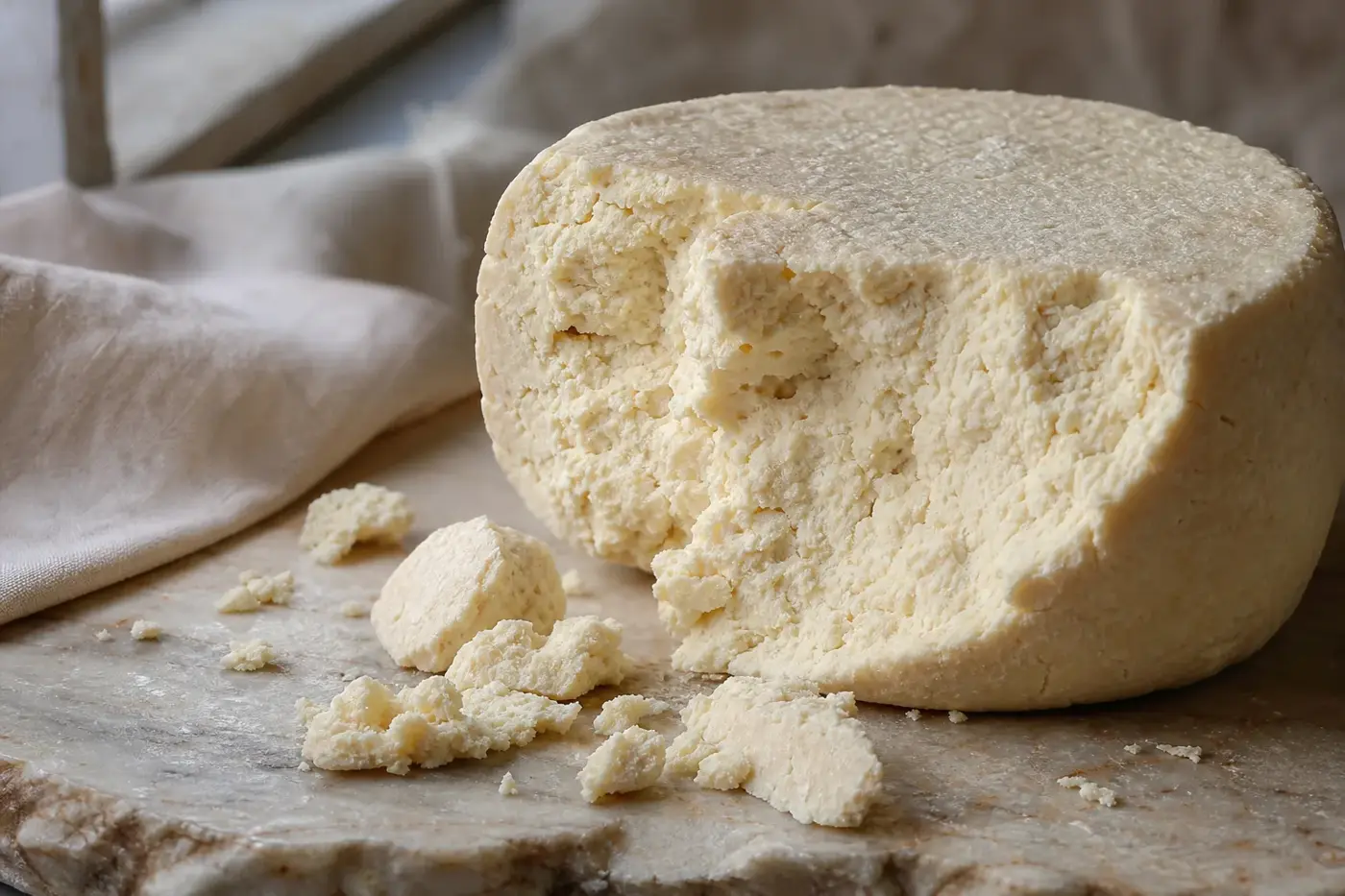
Tulum
Break into tulum and you might meet pale, tightly packed cheese from Erzincan’s plateaux, at 1,500 metres and above.
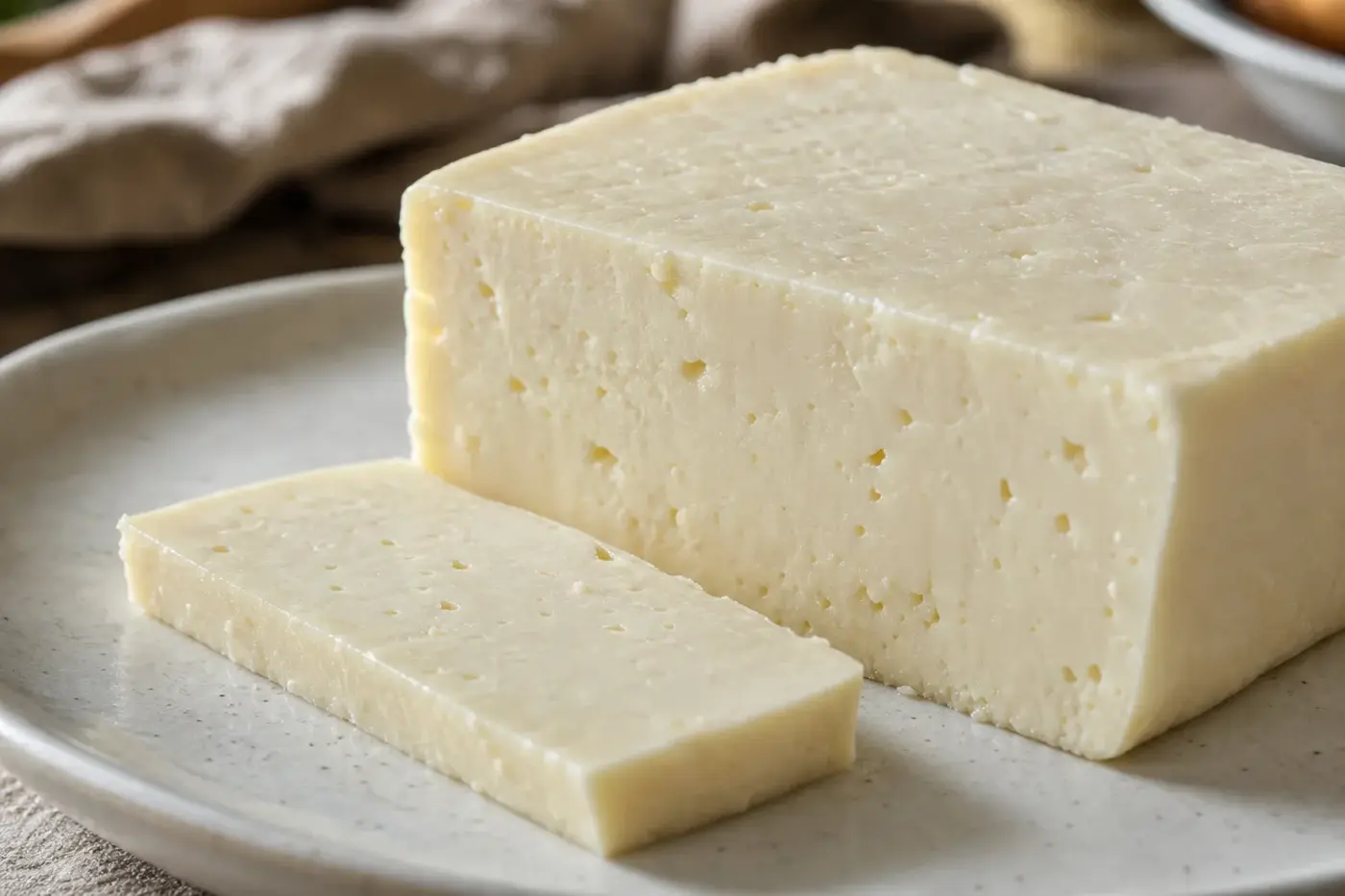
Ezine Peyniri
Taste past the salt and tang, and buttery, cooked-milk aromas begin to emerge.
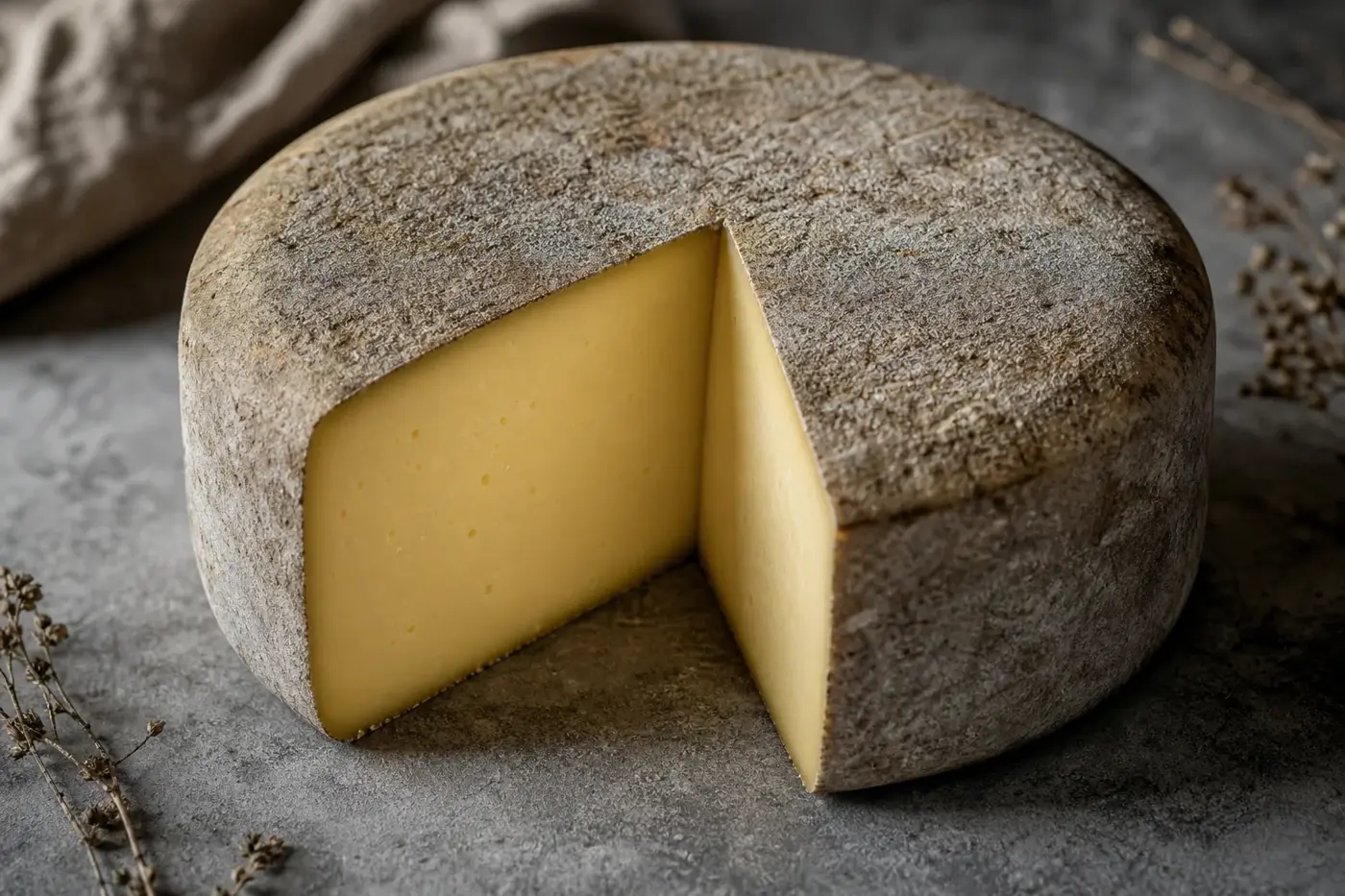
Kaşar
Finely cut curd slips into hot salted water.
The editors suggest you read next
French Cheese: The Complete Guide
Picture Normandy’s pastures, then follow the milk towards the Loire’s goat dairies, the Jura’s shared cheesemaking traditions and the sheep country of the Pyrenees.