Tulum
Break into tulum and you might meet pale, tightly packed cheese from Erzincan’s plateaux, at 1,500 metres and above.
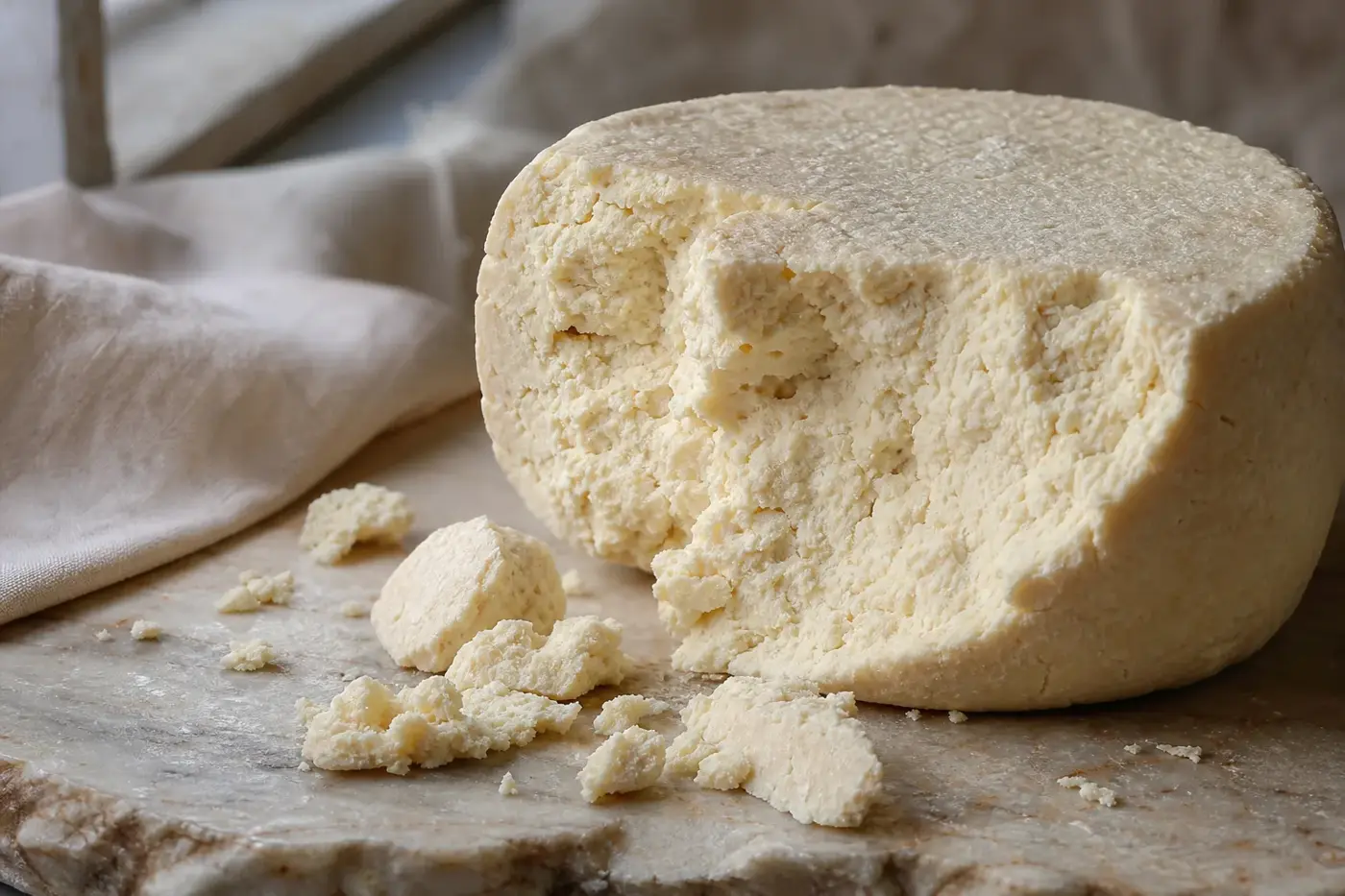
Break into tulum and you might meet pale, tightly packed cheese from Erzincan’s plateaux, at 1,500 metres and above. Or your knife might find İzmir’s registered style: brittle, cream-yellow blocks matured in tins with brine. Two very different textures share a name borrowed from an animal skin, the traditional vessel in which the cheese ripens. Tulum is not a name that likes to be pinned down.[1][2][3]
| At a glance | Your quick guide |
|---|---|
| Family | Turkish cheeses in dry-packed or brined regional styles.[4] |
| Exact registered regional names | Erzincan Tulum Peyniri; İzmir Tulum Peyniri.[2][3] |
| Turkish registration authority and IDs | Turkish Patent and Trademark Office: Erzincan, No. 30, menşe adı; İzmir, No. 1006, mahreç işareti.[2][3] |
| EU protection | Erzincan Tulum Peyniri: registered PDO from 16 June 2025; status as of November 2026.[5][6] |
| Milk across the family | Sheep, goat and cow milk; the mixture depends on the regional style.[2][3][7] |
| Minimum maturation for the two registered styles | At least four months for both Erzincan and İzmir.[2][3] |
| UK pregnancy guidance | NHS advice distinguishes milk treatment and cheese type; guidance as of November 2026.[8] |
An animal skin gives the cheese its name
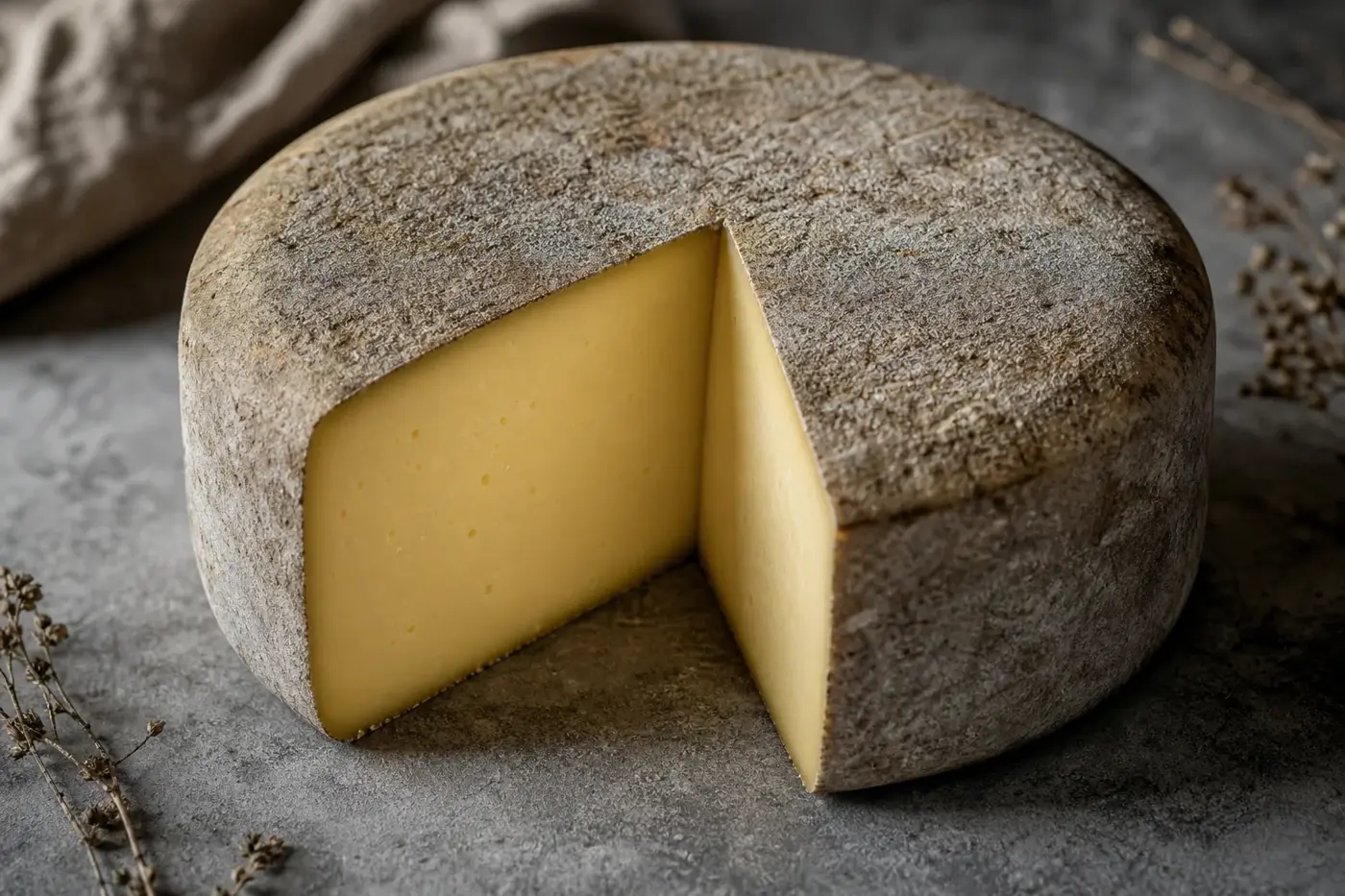
Before tulum named a cheese, it described a container. The Turkish Language Association defines it as an animal skin removed whole, without splitting the front, and used to protect certain foods and drinks. The name tells you about the traditional vessel, then, rather than promising a particular milk or texture.[1]
That helps explain why two cheeses called tulum can look so different. A regional development agency describes Turkish tulum production in both dry-packed and brined forms, using traditional and modern methods. When you are choosing a cheese, its regional name tells you much more than tulum alone.[4]
For a little help with the wider cheese family, start with how to tell cheese styles apart.
Three milks, and room for regional character
Sheep, goat and cow milk all have a place in tulum. Their proportions change across the family, although a registered regional specification may insist on a particular mixture. You cannot read the recipe from the name alone.[2][3][7]
In Erzincan, raw Akkaraman sheep’s milk takes centre stage. The specification permits a limited addition of Morkaraman sheep’s milk or goat’s milk, while İzmir’s registered recipe calls for all three milks. For the pack in your hand, the producer’s ingredient declaration is your starting point.[2][3]
Ask about milk species and heat treatment as separate questions. “Sheep’s milk” tells you where the milk came from; “pasteurised” tells you how it was treated. The Turkish agriculture ministry’s cheese inventory identifies İzmir’s treatment as thermisation, a useful distinction to keep clear at the counter.[7]
Follow the curd down two different paths
Both styles begin with the same broad stages: coagulation, drainage, salting, packing and maturation. Coagulation sets milk into curd, the solid portion that separates from liquid whey. From there, the two regional methods go their own ways.[9][7]
Erzincan: drain, break and pack it tightly
Erzincan’s curd needs repeated drainage and handling before it is ready for tight packing. The agriculture ministry describes draining it in cloth bags, then working through successive stages of breaking up, salting and pressing. Only after that does the curd enter its final maturation container.[9]
The registered method uses rennet prepared from lamb or calf stomachs. This enzyme preparation sets the milk into curd. For its role and the alternatives, take a look at rennet explained.[2]
İzmir: blocks tucked into tins of brine
İzmir takes a different route, keeping its cheese in blocks. The ministry’s inventory describes cutting the set curd into chickpea-sized pieces, draining off the whey and pressing the curd before cutting it into blocks. Those blocks are turned, dry-salted and placed in tins.[7]
Next comes whey-based brine, and the sealed tins are turned during maturation. It leaves you with a difference you can see: İzmir keeps its block structure, while Erzincan’s curd is broken down for tight packing.[7]
These are commercial production methods. To follow the shared stages and make sense of the terminology, turn to how cheese is made.
The ripening skin has a part to play
The traditional skin does more than hold everything together. The ministry’s Erzincan inventory identifies both raw milk and the skin as sources of the mixed microorganisms involved in maturation. Each contributes to what happens as the cheese ripens.[9]
Wrapped around the packed cheese throughout ripening, the skin forms part of its production environment. It cannot account for every flavour difference on its own, though. Milk, drainage, salting and maturation conditions all help shape what you eventually taste.[9]
Nor does every modern tulum have to reach the shop in a skin. Erzincan’s registered specification allows suitable food-contact packaging as well as goat or sheep skins. İzmir matures in tins and may be sold in those tins or as vacuum-packed portions.[2][3]
Ask what your cheese matured in, then ask how it is packaged now. Those are two different chapters in its life, and both are worth knowing.
Get to know Erzincan and İzmir side by side
Set the regional specifications beside each other and you can see two distinct cheeses taking shape. This comparison follows the Turkish registered requirements as of November 2026. It describes these named products, rather than every cheese that belongs to the tulum family.[2][3]
| What makes each one distinct | Erzincan Tulum Peyniri | İzmir Tulum Peyniri |
|---|---|---|
| Defined Turkish production area | Erzincan province’s plateaux at 1,500 metres and above | Aydın, Balıkesir, İzmir and Manisa provinces |
| Specified milk | Akkaraman sheep’s milk; up to 5% Morkaraman sheep’s milk or goat’s milk | 50% sheep, 25% goat and 25% cow milk |
| Maturation container | Goat or sheep skin, or suitable food-contact packaging | Tins holding blocks and whey-based brine |
| Specified mature character | White to cream, semi-hard, homogeneous, distinctly acidic | Cream-yellow, semi-hard, brittle, evenly porous, with an astringent finish |
Both cheeses need at least four months’ maturation. Erzincan spends that time tightly packed after breaking and draining. İzmir matures as blocks sitting in brine.[2][3]
Their Turkish registrations differ, too: Erzincan is recorded as menşe adı, İzmir as mahreç işareti. Erzincan also appears in the EU register as a protected designation of origin, or PDO, under Regulation (EU) 2025/1013.[2][3][5][6]
A family name is not the same thing as a legally protected name. To understand how that distinction works within a particular jurisdiction, see protected names explained.
Watch the crumble, then follow the finish
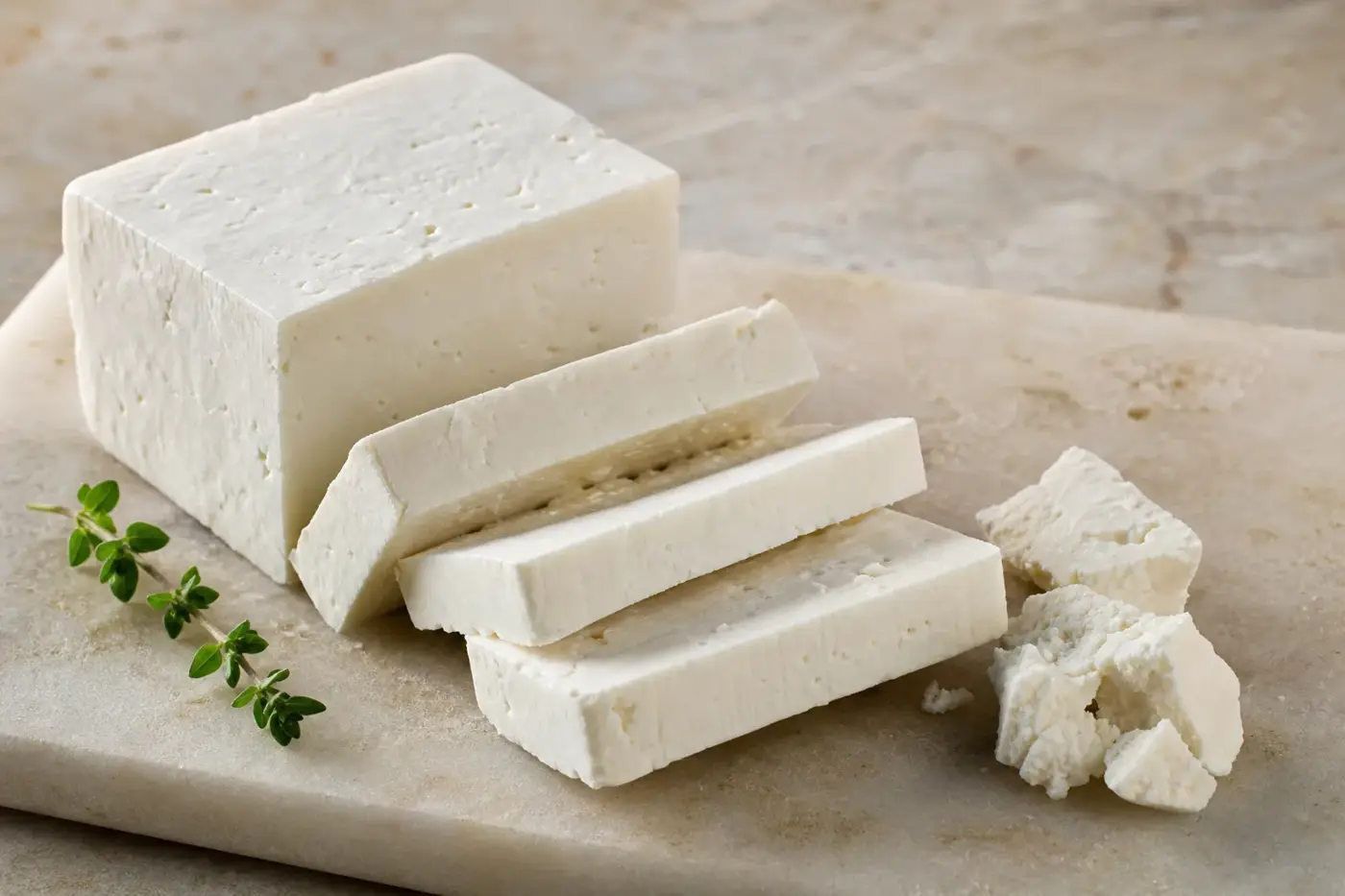
Picture Erzincan as pale and crumbly. The ministry’s inventory describes a white to cream, semi-hard cheese that can crumble, with a butter-like aroma. You are reading the inventory’s description here, rather than a fromage.co.uk tasting note.[9]
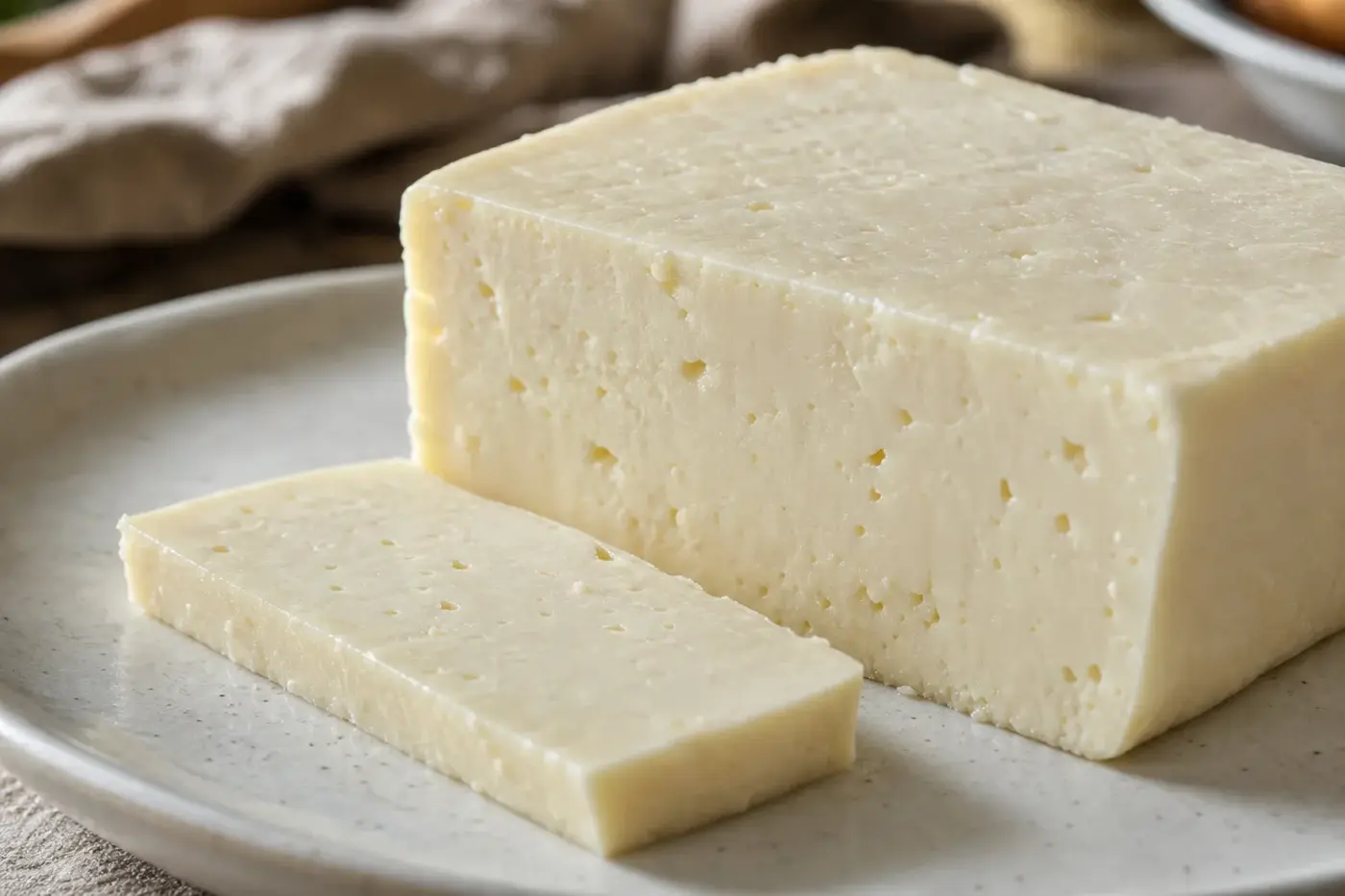
İzmir brings a different set of clues: cream-yellow cheese, a brittle structure and small, evenly distributed pores. Its registered description also specifies an astringent sensation in the mouth. Think of a drying or puckering impression, distinct from acidity.[3]
Put those profiles beside the maker’s information about age and maturation. Four months is the minimum production requirement, not necessarily the age of the portion you are buying. Ask when your cheese was made or packed, rather than expecting every mature tulum to have the same intensity.[2][3]
If you have two cheeses to compare, begin with colour. Watch how the paste breaks, whether into loose pieces or fractured slices. Then pay attention to the balance between acidity and the finish that stays with you.
Bread, grapes and a little breathing room
Erzincan tandır bread and Cimin grapes are documented companions for Erzincan tulum in the Turkish agriculture ministry’s account. Bread, fruit and cheese give you a natural starting point. Your plate need not audition for a still life.[9]
For breakfast, set out bread, a modest portion of cheese and fresh grapes. Add cucumber or tomato if you fancy it. Simple accompaniments give you room to enjoy the cheese’s acidity and texture.
For a salad, break tulum over tomatoes, cucumber and herbs, then taste before salting your dressing. With a firmer block, aim for small fractured pieces rather than perfect slices. These are serving ideas, not a prescribed regional dish.
Water or unsweetened tea makes a straightforward alcohol-free choice alongside bread and fruit. Serve a small portion of cheese and replenish it from the fridge as needed. FSA advice for England, Wales and Northern Ireland is to keep chilled food out for the shortest possible time during preparation, with a maximum of four hours.[10]
Make your cheese-counter questions count
Choose by regional style, milk declaration and handling information, rather than the word tulum alone. Ask about the maturation container, milk treatment and age. Those details are especially useful when the retailer cuts your portion from a larger cheese.
Turkey’s agriculture ministry advises choosing labelled, packaged foods and avoiding torn or damaged packaging. Check date marks, follow the stated storage conditions and look for refrigerated foods held under appropriate conditions. Proper handling matters alongside the cheese itself.[11]
For a cut portion, ask for the original product information and the retailer’s storage instructions. Keep the label or take a photograph. Once you are home, the product name, batch details and date are more useful than a half-remembered conversation at the counter.
Keep your tulum comfortably chilled
Keep dairy products refrigerated, with your fridge set between 0 and 5 °C. That is FSA consumer guidance for England, Wales and Northern Ireland. Follow any more specific storage conditions given on the pack.[10]
Keep the original packaging while it remains suitable, and follow the producer’s resealing instructions. If your portion has been freshly cut, ask the retailer how to wrap or contain it. Ask how long you should keep it after opening, too.
A use-by date concerns safety; a best-before date concerns quality. UK government guidance makes that distinction clear. It also stresses that incorrect storage can make food unsafe before its use-by date.[12]
For official advice about mould and spoilage, consult the food safety authority in your country. You can find related guidance in mould on cheese.
Know the milk treatment in your portion
Erzincan’s registered method uses raw milk, while the ministry identifies İzmir’s heat treatment as thermisation. Read the declaration on your individual product. A regional name is not a reason to assume pasteurisation.[2][7]
The UK NHS lists dairy products made from unpasteurised milk among foods associated with listeria. It identifies pregnant people, people with weakened immunity and older people as groups at greater risk of serious illness. Your own circumstances matter when seeking advice.[13]
During pregnancy, NHS advice varies with cheese type, milk treatment and preparation. Consult its current guidance for the specific product you are considering. If you are uncertain about a cheese, discuss it with your midwife or doctor.[8]
Both regional specifications require maturation, but NHS pregnancy guidance still distinguishes milk treatment and cheese category.[2][3][8] Take the actual label to your healthcare professional when seeking personal advice. For help understanding the terminology, read raw milk, thermised and pasteurised cheese.
General information only, not medical advice: follow the official guidance where you live.
Questions people ask
What is the difference between Erzincan and İzmir tulum?
Erzincan tulum is broken down and tightly packed, while İzmir tulum matures in blocks in tins with whey brine. Erzincan is white to cream and distinctly acidic; İzmir is cream yellow, brittle and astringent.
How long is tulum matured?
Both registered styles require at least four months of maturation. That is a minimum requirement, not necessarily the exact age of a portion on sale.
Does tulum always mature in an animal skin?
No. Erzincan’s registered specification permits suitable food contact packaging as well as goat or sheep skins. İzmir’s specification describes maturation in tins.
Is tulum suitable for vegetarians?
Erzincan’s registered method uses rennet prepared from lamb or calf stomachs. For an individual pack, check the producer’s ingredient declaration.
Can you eat tulum during pregnancy?
NHS advice during pregnancy varies with cheese type, milk treatment and preparation. Check the current NHS guidance for the specific product and discuss an uncertain product with your midwife or doctor.
Sources
- Turkish Language Association, Güncel Türkçe Sözlük, entry “tulum”, live edition, accessed November 2026. Dictionary entry.
- Turkish Patent and Trademark Office, Erzincan Tulum Peyniri, registration No. 30, registered 29 August 2001, specification incorporating the amendment published 15 October 2021. Registered specification.
- Turkish Patent and Trademark Office, İzmir Tulum Peyniri, registration No. 1006, 24 January 2022. Registered specification.
- Northeast Anatolia Development Agency, Erzincan Tulum Peyniri Sektörü Mevcut Durum Tespiti ve İyileştirme Önerileri, report discussing the sector through 2024; publication year not verified. Agency report.
- European Commission, Commission Implementing Regulation (EU) 2025/1013, adopted 26 May 2025, published 27 May 2025, Articles 1 and 2. Official legal text.
- European Union Intellectual Property Office, GIview, Erzincan Tulum Peyniri, file PDO-TR-03056, registered status, accessed November 2026. Register record.
- Turkish Ministry of Agriculture and Forestry, Türkiye Geleneksel Peynir Envanteri: İzmir Tulum Peyniri, live inventory, publication year not stated. Inventory entry.
- NHS, Foods to avoid in pregnancy, live guidance, accessed November 2026. Official pregnancy guidance.
- Turkish Ministry of Agriculture and Forestry, Türkiye Geleneksel Peynir Envanteri: Erzincan Tulum Peyniri, live inventory, publication year not stated. Inventory entry.
- Food Standards Agency, How to chill, freeze and defrost food safely, published 18 December 2017, live guidance accessed November 2026. Applies to England, Northern Ireland and Wales. Official chilling guidance.
- Turkish Ministry of Agriculture and Forestry, Güvenilir Gıda, consumer guidance, live edition accessed November 2026. Official consumer guidance.
- UK Government, Understanding food labelling: Best before and use-by dates, live guidance accessed November 2026. Official date-mark guidance.
- NHS, Listeriosis, live guidance accessed November 2026. Official listeriosis guidance.
Researched through Turkish registered specifications, official cheese inventories, the EU registration instrument and published national consumer and health guidance.
Last checked: November 2026
Last checked November 2026.
The editors suggest you read next