Brânză de Măgura
Cut into a pale cream block, past its gently rounded edge, and you may find a few small openings inside.
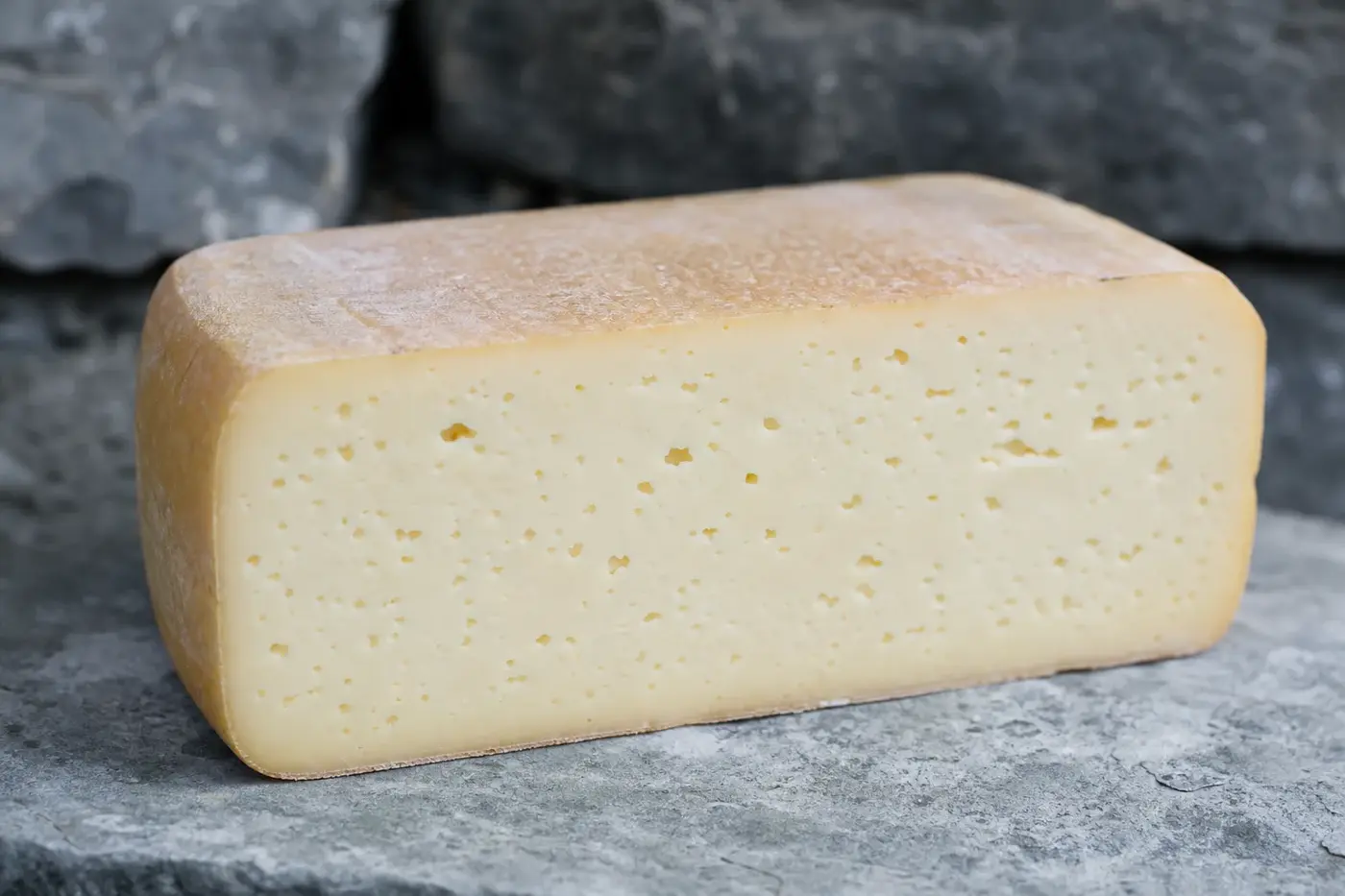
Cut into a pale cream block, past its gently rounded edge, and you may find a few small openings inside. Its name leads you to a mound near Slobozia-Măgura, in northern Moldova. Here, a village farm and its processing dairy give Brânză de Măgura a very particular home: the milk and every stage of cheesemaking belong within its registered production area. [1, 4, 5]
You can meet this lightly pressed, pasteurised goat’s milk cheese fresh or matured. It is the same named cheese at different stages of its life. Knowing which is on your plate is where both the pleasure and the practicalities begin. [3, 4]
| What to know | The detail |
|---|---|
| Familiar name | Brânză de Măgura. [1] |
| Exact registered name | BRÂNZĂ DE MĂGURA, Moldova. [1] |
| Registration authority and identifiers | AGEPI; registration DO-13; application DO-0019. [1] |
| Moldovan protection | Protected appellation of origin; registered 17 February 2020. Status date: November 2026. [1] |
| Great Britain protection | Registered PGI from 25 July 2025 under a UK trade agreement. Status date: November 2026. [2] |
| EU and Northern Ireland status | Unestablished |
| Where it calls home | Slobozia-Măgura, Bursuceni commune, Sângerei district, Moldova. [1] |
| Milk and treatment | Entirely goat’s milk; pasteurised. [4] |
| What you can expect | Lightly pressed, semi-hard; pale cream paste and lactic aroma. [4] |
| Time to mature | Fresh version after brining; matured version matures for more than 30 days. [3] |
Follow Măgura home to its village
First, put your finger on the right part of the map: Moldova, not one of Romania’s similarly named places. In a November 2017 account of regional foods, Moldova’s intellectual property agency, AGEPI, linked the cheese to the farm at Slobozia-Măgura. The nearby Măgura mound, it explained, gave the cheese its name. [5]
That village connection becomes remarkably precise in the registration. AGEPI names PRISVIO S.R.L. as the applicant and confines production to its processing unit in the village. Obtaining the raw material and carrying out the entire technological process must also happen within the defined geographical area. [1]
At the counter, look beyond Măgura alone. You want the village, country and producer together. Cheese deserves a proper address, not just a promising surname.
Fresh or matured? Start with that question
Both forms begin with the same cheesemaking and salting stages. Then their paths separate: the matured version spends a further period in brine. Ask which you are being offered, because colour and firmness tell you less than a clear account of maturity. [3, 6]
The registration connects a particular product to a particular production site. Whether independent producers use the name for other local products remains unestablished. Keep that distinction in mind if you encounter the name elsewhere. [1]
“Fresh” needs a little translation here. In the published process, it means cheese released after brining, not an unsalted curd. If you are planning a sweet filling, find out exactly what is on offer before buying: the answer matters as much in your recipe as at the counter. [6]
Meet the goats behind your cheese
Saanen, French Alpine or Anglo-Nubian goats from the farm supply the milk specified in the published summary. Milk from other animals is excluded. The finished cheese you take home is made from pasteurised milk. [4]
You may also encounter raw goat’s milk in the documents. The distinction is straightforward: the milk arrives raw, then undergoes pasteurisation during manufacture. When comparing this cheese with another, focus on the treatment of the milk used in the finished product, rather than its condition on arrival at the dairy. [4, 6]
Keep three questions ready for the seller. Which animal supplied the milk, how was it treated, and is the cheese fresh or matured? For help with the treatment vocabulary, turn to raw, thermised and pasteurised milk.
From the press to the brine
Rennet sets the milk; draining and pressing give the cheese its form. The published sequence moves through milk preparation, rennet coagulation, draining, cutting and salting, followed by either packing or further maturation. The solid mass is curd, while the liquid that drains away is whey. [3, 6]
| Step | What happens |
|---|---|
| Get the milk ready | Filtering, cooling and pasteurisation come before cheesemaking. [6] |
| Set the milk | Rennet is mixed into the milk and left to set. The full specification allows natural or artificial rennet. [3] |
| Drain and press | Curd drains in cloth or moulds under a press for 3 to 6 hours. [3] |
| Bring in the salt | Cut portions receive dry salt, then enter brine. [3] |
| Give it time to mature | The matured version remains in brine for more than 30 days. [3] |
Pressing and maturation do different jobs. Pressing helps form the cheese; maturation is the later stage reserved for the matured version. One term cannot stand in for the other.
When comparing packets, ask about maturity and packing medium separately. Together, those details help explain differences between cheeses. Age is not always the whole story.
Cut a piece and take your time
Start with the shape: square-based or rectangular blocks with slightly rounded edges. Inside, the summary specification describes a uniformly pale cream, semi-hard paste. You may find a few fermentation holes and small openings associated with pressing; rind details remain uncertain. [4]
For flavour and aroma, the same document gives you moderate salt and a lactic aroma. Begin there: pressed, salted cheese with milk as its documented aromatic reference. Mushroom, smoke and blue mould do not feature in that published description. [4]
Try a small piece on its own before adding anything else. Notice how readily it cuts and whether it breaks into fragments. Then pay attention to the salt and how long the milk aroma stays with you.
These are things to notice, not extra tasting claims about this cheese. Let the piece in front of you have its say. If you need words for what you find, telling cheese styles apart offers a useful vocabulary.
A family dairy, a village and a wider circle
Behind the production details sits a working farm enterprise. Vilador, a family dairy business established in 2014, places the cheese at Slobozia-Măgura. A June 2025 account by the United Nations Development Programme names Brânză de Măgura among its products and describes locally grown feed and milk processing at the farm. [7]
The same account places the farm in the Dealurile Măgurii tourism cluster. Producers, tourism businesses and public authorities take part alongside it. It gives you a dated glimpse of the dairy’s regional relationships, beyond the boundaries and processes set out in the cheese specification. [7]
AGEPI’s earlier account presented the cheese as part of a traditional regional food culture and repeated a claim of a centuries-old recipe. That heritage claim belongs to the agency’s account. The firm dated record for this particular named product begins with AGEPI’s 2017 report, followed by registration. [5, 1]
One cheese, two kinds of protection
In Moldova, BRÂNZĂ DE MĂGURA is protected as an appellation of origin. AGEPI records registration DO-13, dated 17 February 2020. In Great Britain, the classification is different: Brânză de Măgura became a registered protected geographical indication, or PGI, on 25 July 2025. [1, 2]
Each term belongs to its own register. The Great Britain entry names Moldova as the country of origin and a UK trade agreement as the reason for protection. Read its PGI classification and date alongside the Moldovan record and terminology, rather than as a replacement for them. [2]
Two neighbouring names help keep the map clear. Brînză de Popeasca has its own UK register entry, also identifying Moldova; Telemea de Sibiu’s entry identifies Romania. Similar-looking dairy names are not interchangeable, so keep the full name, country and individual registration together. [8, 9]
If you want to separate a product’s name from its legal protection, there is a useful next step. Protected names explained takes you through that wider distinction.
Bring the cheese home with its details
Begin with the full cheese name, country of manufacture and producer. Next, ask whether it is fresh or matured, and whether it comes vacuum-packed or in brine. Both packing formats appear in the published documentation, so give the packing medium its own question. [4, 6]
Buying a cut portion rather than a whole packet? Ask to see the information on the original container. Note the product description and storage instructions before the cheese is wrapped, so the important details come home with you.
The product summary specifies refrigerated storage at 1 to 6 °C. Follow your actual packet’s instructions, including its date and directions after opening. Keep those details available for as long as you have the cheese. [4]
If you live in England, Wales or Northern Ireland, the Food Standards Agency advises a home fridge temperature of 5 °C or below. Consult its current chilled-food handling guidance and follow the packaging’s storage instructions. The guidance date here is November 2026. [10]
For the broader practicalities, see reading a cheese label and storing cheese at home. Both help you keep the useful information attached to what you buy.
Give your first slice a simple plate
Let the cheese lead before assembling an elaborate plate. These suggestions take their cue from the specification’s moderate salt, lactic aroma and semi-hard paste. Adjust them to the particular cheese in front of you. [4]
Begin with slices, plain bread and cucumber. Keep the bread unseasoned for your first taste. You can judge the cheese’s salt before olives, pickles or a dressing join the conversation.
For a vegetable plate, try tomatoes, roasted peppers or cooked beetroot. Put the cheese alongside rather than mixing everything straight away. You and anyone sharing can choose the balance, while separate tastes reveal how each accompaniment changes the experience.
Plain crackers and pear offer another comparison. Taste the cheese, then the fruit, then both together. Sparkling water or an unsweetened herbal infusion gives you an alcohol-free drink without committing the plate to a particular wine style.
Cooking with it? Give a little piece an audition before offering the whole portion a leading role. Try it in a vegetable filling or as a finishing garnish, then assess what happens. A small trial is more useful than assuming how it will melt.
Let the next cheese answer a new question
Named origin, goat’s milk, pressing and two maturity forms make Brânză de Măgura a useful reference point within the hub’s fresh and brined cheeses. Those details give you more to compare than appearance alone. They also keep this cheese connected to its documented identity. [1, 3, 4]
As you explore the regional guide, change one question at a time. Does another cheese use milk from a different animal, and is its curd pressed? How does salt enter the process, and is maturation part of it?
Keep each complete name attached to its own evidence. You will have a clearer comparison, and a better reason to linger over the next piece.
General information only, not medical advice: follow the official guidance where you live.
Questions people ask
Where does Brânză de Măgura come from?
It comes from a village in Bursuceni commune, Sângerei district, Moldova. The milk and the entire cheesemaking process must stay within the defined geographical area.
What milk is Brânză de Măgura made from?
It is made entirely from goat’s milk, supplied by Saanen, French Alpine or Anglo-Nubian goats from the farm. The milk arrives raw and is pasteurised during manufacture.
What is the difference between fresh and matured Brânză de Măgura?
The fresh cheese is released after brining. The matured version spends more than 30 days in brine.
Is Brânză de Măgura a protected cheese name?
Moldova registered it as a protected appellation of origin on 17 February 2020. Great Britain registered it as a protected geographical indication on 25 July 2025.
How should I store Brânză de Măgura?
The product summary specifies refrigerated storage at 1 to 6 °C, and the page says to follow the packet’s instructions. For readers in England, Wales and Northern Ireland, the Food Standards Agency advises a home fridge temperature of 5 °C or below; consult its current guidance on handling chilled food.
Sources
- AGEPI, Date bibliografice: BRÂNZĂ DE MĂGURA, current online register record, registration DO-13, checked November 2026. Official register record.
- Department for Environment, Food & Rural Affairs, Brânză de Măgura, protected food name register, published 25 July 2025. UK register entry.
- PRISVIO S.R.L., product specification deposited with AGEPI, DOP BRÂNZĂ DE MĂGURA, undated document associated with application DO-0019, particularly sections 1.4 and 1.7. Full specification.
- PRISVIO S.R.L., Summary Technical Specification, version linked from the UK register in November 2026, publication date not stated in the document. Product specification.
- AGEPI, În Moldova ar putea apărea noi produse cu indicație geografică, 22 November 2017. Regional food account.
- AGEPI, Buletin Oficial de Proprietate Intelectuală, issue 8/2019, pages 149 to 150, single document for application DO-0019. Official bulletin.
- United Nations Development Programme, În Slobozia-Măgura, o afacere de produse lactate îi cucerește pe turiști prin gustul autentic al brânzeturilor, 25 June 2025. Regional enterprise account.
- Department for Environment, Food & Rural Affairs, Brînză de Popeasca, protected food name register, published 25 July 2025. Separate register entry.
- Department for Environment, Food & Rural Affairs, Telemea de Sibiu, protected food name register, published 4 January 2021. Romanian cheese register entry.
- Food Standards Agency, How to chill, freeze and defrost food safely, published 18 December 2017, current text checked November 2026. Official storage guidance.
Researched through official registers, deposited production documents, an attributed regional enterprise account and published food storage guidance; serving suggestions are editorial proposals.
Last checked: November 2026
Last checked November 2026.
The editors suggest you read next
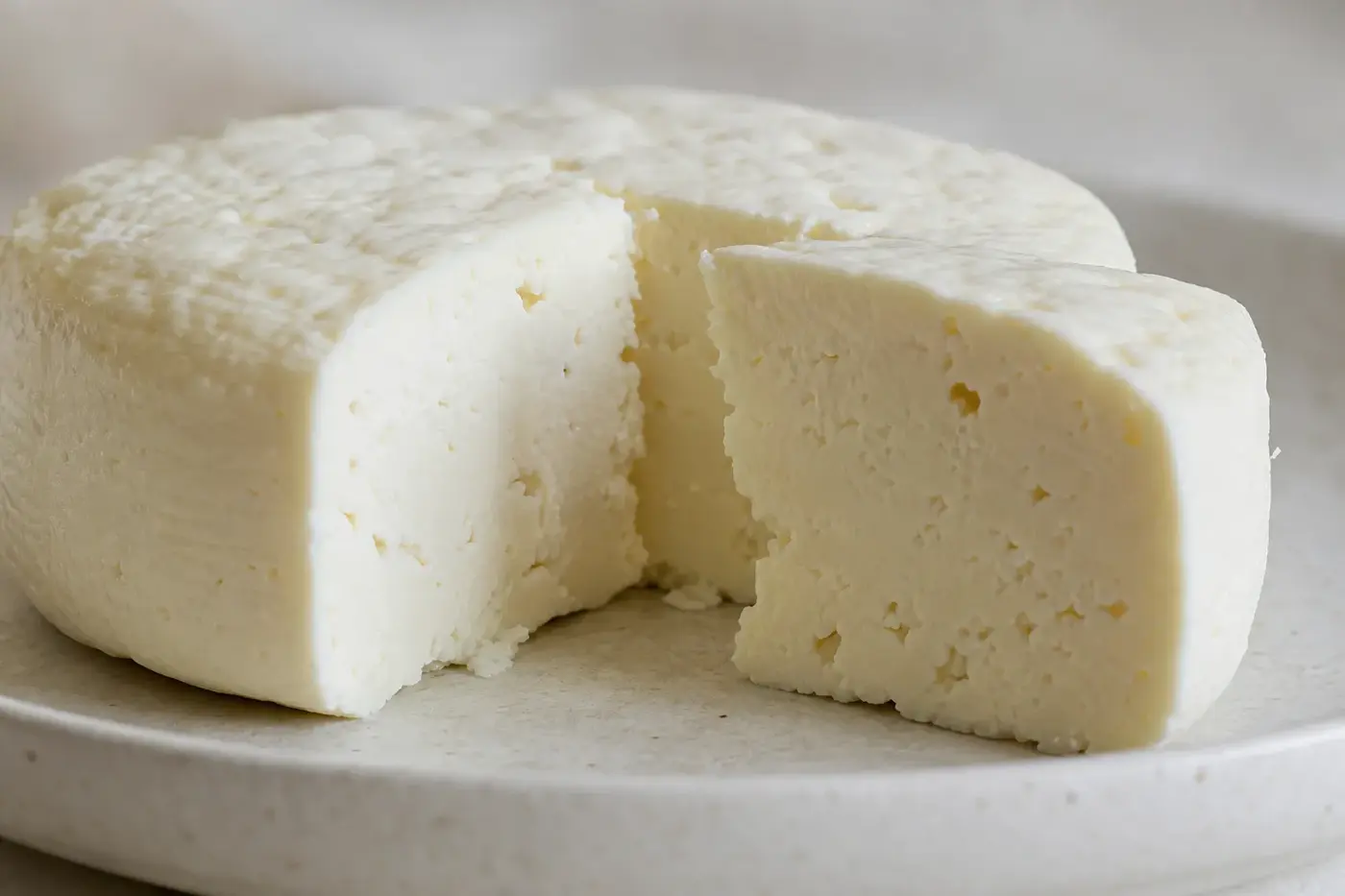
Brînză de Popeasca
Bread, tomatoes and a pale piece of cheese that crumbles slightly as you break it: a modest plate, with plenty to say.