Moldovan Cheese
Soft mămăligă, cool sour cream, a piece of salted cheese: pull up a chair and you can begin exploring Moldova without leaving the table.
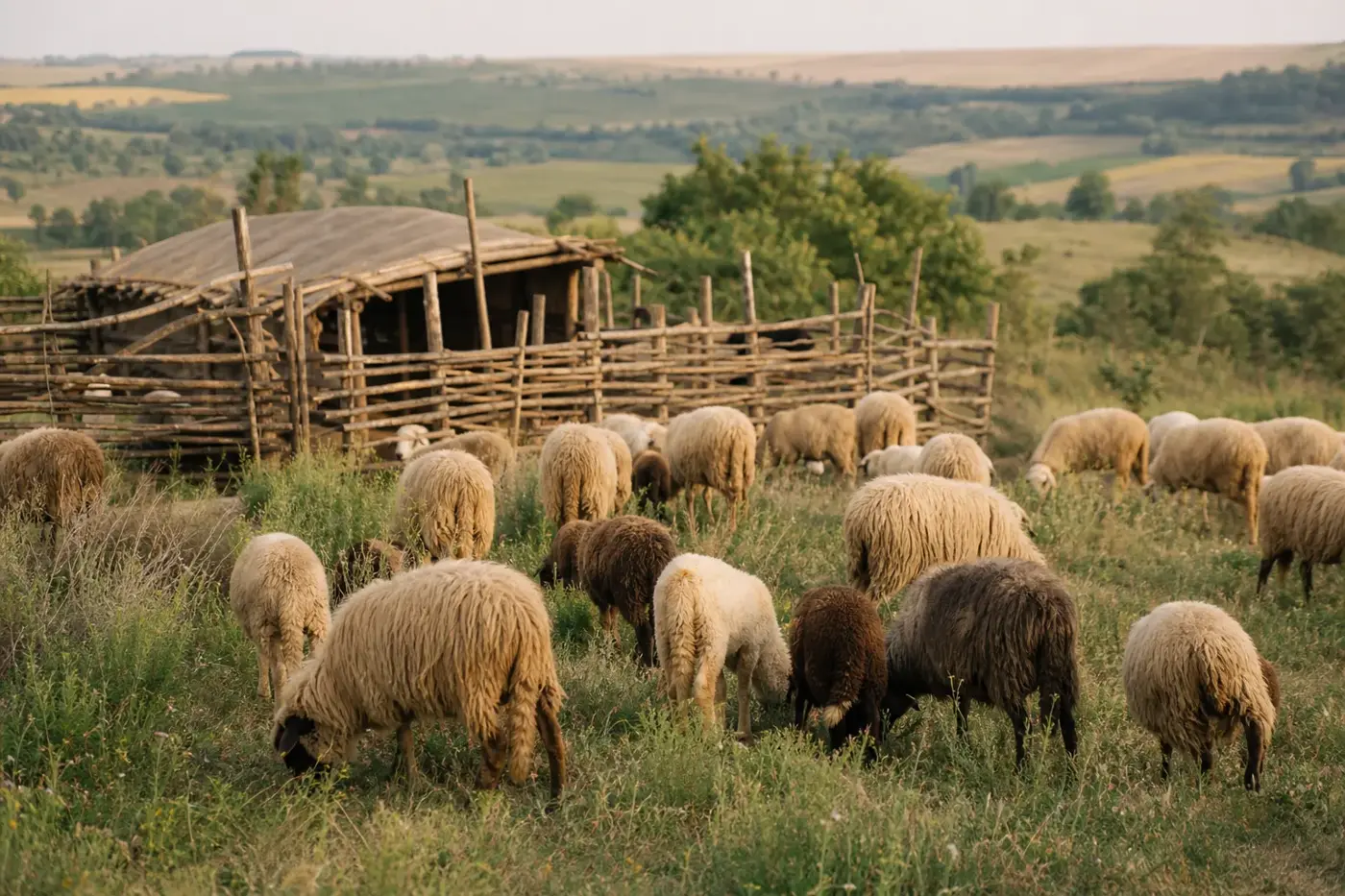
Soft mămăligă, cool sour cream, a piece of salted cheese: pull up a chair and you can begin exploring Moldova without leaving the table.[11] Follow the cheese south-east to Popeasca, where Brînză de Popeasca is white to slightly yellowish, compact and slightly crumbly, made with sheep's milk and permitted additions of goat's milk. This registered Moldovan appellation of origin links seasonal flocks and village dairies with cheese tucked into plăcinte or served beside mămăligă. Geography is rather more inviting with lunch attached.[1][2][9][11]
| Get your bearings | What you need to know |
|---|---|
| Country | Republic of Moldova.[15] |
| Main cheese traditions | Fresh curd, salted sheep's milk cheese, whey cheese and cașcaval.[9][10] |
| Registered Moldovan names | Brînză de Popeasca, DO-10, application DO-0017; Brânză de Măgura, DO-13, application DO-0019.[1][3] |
| Responsible authority | State Agency on Intellectual Property, AGEPI.[1][3] |
| Status reference date | November 2026.[1][3] |
Start in a village, with a map beside you
Popeasca gives you a good place to begin. Its protected name ties a defined territory and local milk to a particular brining tradition. Beyond it, households and dairies make cheeses whose names you will also meet in Romania and the wider region.[1][2][15]
Keep that map handy when reading older food accounts. The Republic of Moldova is the independent country between Romania and Ukraine, with Chișinău as its capital. Historical Moldavia reaches beyond those borders, including into north-eastern Romania, so “Moldavian cheese” may refer to that broader cultural territory.[15]
Within today's republic, the national heritage inventory records local cheese names, both fresh and salted. It follows them into everyday meals and festive occasions, too. You find a collection of local practices here, rather than one national recipe followed everywhere.[10]
Follow the flock through the seasons
At a traditional stână, the seasonal sheepfold outside the village, shelter and cheesemaking space form one working settlement. Picture it in Moldova's cultivated, rolling countryside, among fields, orchards, vineyards, meadows and grazing land. The climate is continental, with hot summers and a drier south.[11][15]
Popeasca's specification gives this seasonal life a precise rhythm. It records about eight months of grazing on natural pasture, followed by winter housing during December to March. Winter feed includes lucerne hay, maize residues, straw and agricultural by-products. That is Popeasca's pattern, not a calendar you should assume every Moldovan dairy follows.[2]
Sheep's milk is central to salted cheese traditions, while cow's milk supplies fresh household curd and dairy processing. Goats have their part, too: Brânză de Măgura uses goat's milk exclusively. Milk mixtures, heat treatment and handling vary by product, so ask the maker which milk went in. Colour alone will not tell you.[4][8][9]
Households remain a major force in dairying. Official preliminary figures for 2025 put milk production of all types at 282,500 tonnes, with households accounting for 76.6%. On 1 January 2026, households also held 91.6% of sheep and goats. Those figures exclude districts on the left bank of the Nistru and Bender municipality, a boundary to remember when you picture the country.[7]
Get to know the names on your plate
Brânză is a useful word, but it cannot do all your ordering for you. It is an umbrella term, not a promise of one milk or texture. The heritage inventory distinguishes cow's milk curd, sheep's milk cheese in salted slices, and crumbled salted cheese. Ask two questions: is it fresh or brined, and which animal supplied the milk?[10]
Caș brings you to the beginning of the sheep's milk cheesemaking sequence. The heritage account describes milk set with rennet, the coagulating preparation, then drained through cloth. You can eat the resulting caș fresh or use it as the starting point for salted cheese. Follow the process in how cheese is made.[9]
Urdă brings the whey side of the dairy into the kitchen. Whey is the liquid left when curd separates, and urdă recovers cheese from that stream. Moldovan field research on alivancă, a baked preparation, records versions containing urdă as well as sheep's milk brânză. Both have a place in the dish's story.[12]
Cașcaval is the firmer category. The national inventory associates it with heating, homogenising and drying, sometimes with smoking, and distinguishes it from fresh caș and salted brânză. These names form a shared regional vocabulary, with local interpretations. Moldova has its own versions, not exclusive ownership of the words.[10][15]
Two protected names, two distinct stories
Popeasca and Măgura make the connection between cheese and place unusually precise. AGEPI, Moldova's intellectual property authority, records both as protected appellations of origin. Look at their milk rules and production areas and you meet two markedly different cheeses.[1][3]
| Cheese to look for | Moldovan registration | Where it comes from | Milk and making | EU status, November 2026 |
|---|---|---|---|---|
| Brînză de Popeasca | DO-10; registered 23 October 2016.[1] | Popeasca, Ermoclia, Talmaza, Feștelița, Slobozia, Copceac and Volontiri.[1] | Sheep's milk, with up to 25% goat's milk; lamb rennet; at least 30 days' brine maturation.[2] | |
| Brânză de Măgura | DO-13; registered 17 February 2020.[3] | Slobozia-Măgura, Bursuceni commune, Sângerei district.[3] | Exclusively goat's milk; pasteurised and lightly pressed; fresh and matured forms.[4] |
Popeasca's specification allows both raw and pasteurised milk routes. Expect a compact, slightly crumbly texture, with colour ranging from white to slightly yellowish. The sensory description records low acidity and moderate saltiness. Lamb rennet and brine maturation are central to the cheese's defined character.[2]
Măgura offers you something different: a semi-hard cheese with a pale cream paste, a lactic aroma and a salty taste, according to its specification. Its milk must come from the specified local goat farm. Both raw material sourcing and production must remain within the defined area. The source names Saanen, French Alpine and Anglo-Nubian goats.[4]
Both names have protection beyond Moldova, too. The Great Britain register lists them as registered protected geographical indications (PGIs) from 25 July 2025 under the UK trade agreement. That is a different recorded category from Moldova's appellation of origin. For help with the terminology, protected names explains the distinction.[5][6]
Pull up a chair at the Moldovan table
With plăcinte, cheese goes inside the dough rather than waiting politely for the end of the meal. The national heritage record lists cheese among the ingredients for these filled pastries, coiled învârtite, clătite pancakes and colțunași dumplings. Before you choose a cheese filling, ask whether it is sweet or savoury, and whether herbs are involved.[9]
Mămăligă puts dairy at the centre of an everyday plate. This maize porridge comes with cheese and smântână, or sour cream; ethnographic accounts also describe cheese with eggs and mămăligă. You get a plate of contrasts: soft porridge beside curd or salted cheese, with sour cream adding another texture.[11]
Popeasca's specification suggests cheese with tomatoes, radishes, sweet peppers and spring onions, as well as in traditional pies.[2] Fieldwork on alivancă opens the kitchen door further, recording cheese and urdă alongside versions with dill, spring onion and other plants. Ask about a family or village recipe. It can tell you more than a single standard restaurant description.[12]
Meet the people behind the cheese
Village cheesemaking has never been only a household affair. Ethnographic accounts describe sheep owners joining together to establish seasonal stâne. Milking, setting curd, draining and salting part of the production shaped household and village dairying. The heritage record describes fresh caș eaten directly, with salted cheese prepared for household use and sale.[9][11]
Household production remains substantial in independent Moldova, while registered names set out more formalised systems. Popeasca's application came from a district association of sheep and goat breeders; Măgura's came from a company. Here you can see two routes into geographical protection: a breeders' association on one side, a specified farm and processing operation on the other.[1][3][4][7]
Find your cheese and ask the good questions
Build your cheese visit around three settings: a food market, a rural guesthouse meal and a restaurant serving Moldovan dishes. Moldova.travel's gastronomy material gives you a starting point; follow it with direct contact with your host or venue. Ask specifically about local cheese. “Traditional food” alone tells you little about the milk, maker or dish.[14]
At a market, let a conversation guide your choice. Ask who made the cheese, where it was made, which milk was used, and whether it is fresh curd or cheese matured in brine. For a protected name, compare the spelling on the pack with the registered name and ask for the producer's details. Keep reading a cheese label handy for those distinctions.
At a rural guesthouse, ask whether the household makes its cheese, gets it from a neighbour or buys it from a dairy. Request a meal built around local serving traditions, perhaps mămăligă with cheese or cheese-filled plăcinte, rather than expecting a formal tasting board. The cheese need not stand in a line to make an impression. Confirm which ingredients and dishes will be available on your intended date.
In a restaurant, ask which cheese goes into your dish and whether the kitchen can identify its maker. Before visiting a farm or dairy, confirm public access, booking arrangements, language, accessibility, and whether direct sales or tastings are offered. Check opening and availability shortly before travelling. Find out whether you need to arrange a meal in advance, too.
One of the most revealing questions is also one of the simplest: when was the cheese made? If it is brined, ask how long it has matured, then find out how the household normally serves it. Freshness, maturity and serving custom tell you different things; fresh curd for pastry and brined cheese for the table can have quite distinct roles. Let the maker or cook explain the local name, especially where spellings and recipes differ between communities.[9][10]
Follow your curiosity a little further
- How to Tell Cheese Styles Apart: Milk, Rind, Texture and Method: explore what separates fresh, brined and firmer cheeses.
- Raw Milk, Thermised and Pasteurised Cheese: get to know the milk treatments a maker may describe.
Questions people ask
What kinds of cheese are made in Moldova?
Moldovan traditions include fresh curd, salted sheep's milk cheese, whey cheese and cașcaval. Brânză is an umbrella word that does not specify one milk or texture.
What is the difference between caș and urdă?
Caș is fresh curd made by setting milk with rennet and draining it through cloth. Urdă is recovered from whey, the liquid left after curd separates.
What is Brânză de Măgura made from?
Brânză de Măgura is made exclusively from goat's milk from a specified local farm. It is pasteurised and lightly pressed, and comes in fresh and matured forms.
How is cheese eaten in Moldova?
Cheese is served with mămăligă, a maize porridge, and smântână, or sour cream. It is also used in filled pastries called plăcinte, pancakes and dumplings.
Where can I find Moldovan cheese?
Food markets, rural guesthouses and restaurants serving Moldovan dishes are places to look. Ask who made the cheese, where it was made, which milk was used and whether it is fresh or matured in brine.
Sources
- AGEPI. BRÎNZĂ DE POPEASCA, national register record. Registration DO-10, application DO-0017; registered 23 October 2016; live record checked November 2026.
- Department for Environment, Food & Rural Affairs. Brînză de Popeasca: summary technical specification. Version accompanying the UK register entry published in 2025; underlying Moldovan registration decision dated 23 September 2016.
- AGEPI. BRÂNZĂ DE MĂGURA, national register record. Registration DO-13, application DO-0019; registered 17 February 2020; live record checked November 2026.
- Department for Environment, Food & Rural Affairs. Brânză de Măgura: summary technical specification. Version accompanying the UK register entry published in 2025; underlying Moldovan registration decision dated 16 December 2019.
- Department for Environment, Food & Rural Affairs. Brînză de Popeasca. Protected food names register, published 25 July 2025; checked November 2026.
- Department for Environment, Food & Rural Affairs. Brânză de Măgura. Protected food names register, published 25 July 2025; checked November 2026.
- National Bureau of Statistics of the Republic of Moldova. Activitatea agricolă în anul 2025. 2026 release, preliminary agricultural production figures for 2025 and livestock at 1 January 2026, tables 3 and 4 and accompanying notes.
- National Bureau of Statistics of the Republic of Moldova. Moldova in figures, 2025. Agriculture section, livestock and milk production tables.
- Republic of Moldova intangible cultural heritage inventory. Preparate din lapte. Inventory entry dated 23 November 2010, drawing partly on ethnographic expeditions from 1981 to 1990.
- Republic of Moldova intangible cultural heritage inventory. Capitolul VII. Food traditions inventory, entries VII.54 to VII.60; undated web edition checked November 2026.
- Institute of Cultural Heritage, PRO PATRIMONIU CULTURAL. Patrimoniul etnologic. Published ethnographic material, sections on animal husbandry, pastoral settlements and dairy foods; web edition checked November 2026.
- Technical University of Moldova, contribution to Tradiții și procese etnice, second edition. Revitalizarea alivencei moldovenești: tradiții și experiențe de preparare. 2021 proceedings, article beginning on page 181.
- Against Single Stories of ‘Left Behind’ and ‘Triple Win’: On Agricultural Care Chains and the Permanent Subsistence Crisis. 2021 research article, PubMed Central record. Limited retrieved passage concerning rural families' recollections of expropriation and decollectivisation.
- Moldova.travel. Gastronomy: Explore Moldovan Food. Updated 16 July 2024; checked November 2026.
- Elsevier. Food, nutrition, and health in Moldova. Chapter 15 of Nutritional and Health Aspects of Food in the Balkans, 2021, particularly sections 15.2 to 15.4.
This desk-researched article brings together official registration records, published specifications, agricultural statistics and Moldovan ethnographic accounts.
Last checked: November 2026
Last checked November 2026.
The cheeses of Moldova
The editors suggest you read next

French Cheese: The Complete Guide
Picture Normandy’s pastures, then follow the milk towards the Loire’s goat dairies, the Jura’s shared cheesemaking traditions and the sheep country of the Pyrenees.


