Brînză de Popeasca
Bread, tomatoes and a pale piece of cheese that crumbles slightly as you break it: a modest plate, with plenty to say.
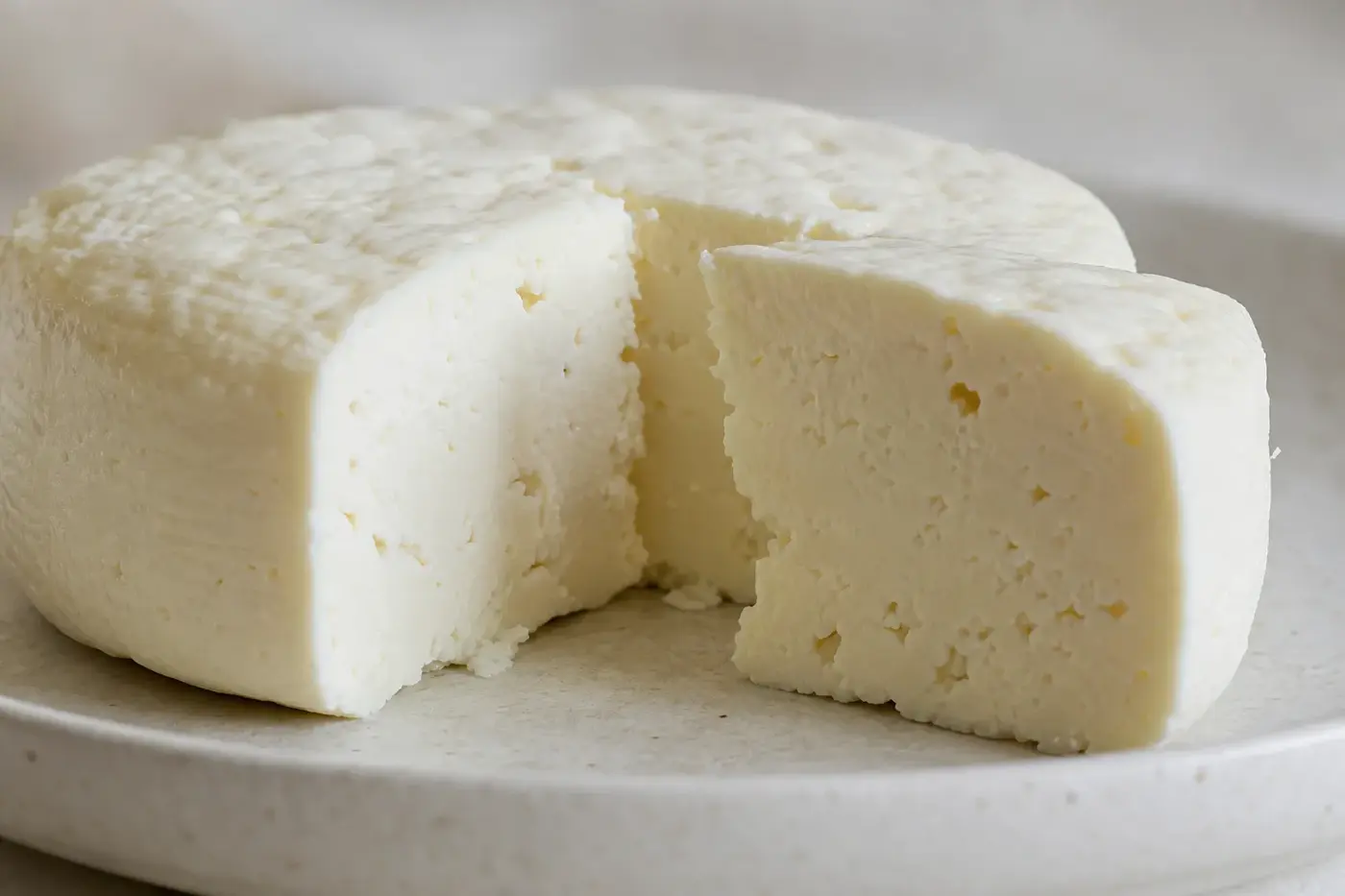
Bread, tomatoes and a pale piece of cheese that crumbles slightly as you break it: a modest plate, with plenty to say. Brînză de Popeasca brings a gentle tang and moderate salt, after maturing in brine. Behind its Moldovan village name are sheep and goat breeders in Ștefan Vodă district, working with sheep’s milk, sometimes goat’s milk, and lamb rennet. Their cheese has a place in the official register as well as on your bread. [1][2][3]
| What you might want to know | The details |
|---|---|
| Name to look for | Brînză de Popeasca; Moldova’s register displays BRÎNZĂ DE POPEASCA. [1] |
| Where it comes from | Moldova: Popeasca, Ermoclia, Talmaza, Feștelița, Slobozia, Copceac and Volontiri, all in Ștefan Vodă district. [1] |
| Milk in the cheese | Sheep’s milk, with up to 25% goat’s milk permitted. [2][3] |
| Milk treatment | Raw and pasteurised production routes documented. [2][3] |
| What sets the milk | Natural lamb rennet. [2][3] |
| Minimum maturation in the production flow | At least 30 days. [2][3] |
| Protection in Moldova | Protected appellation of origin, registration DO-10, registered 23 October 2016; record status November 2026. [1] |
| Protection in Great Britain | Registered as a PGI on the UK register, dated 25 July 2025; record status November 2026. [4] |
| Pregnancy guidance, UK | Consult NHS guidance on foods to avoid in pregnancy; guidance date November 2026. [9] |
Meet the people behind the village name
Follow Brînză de Popeasca back to its people and you arrive among sheep and goat breeders. Moldova’s State Agency on Intellectual Property, AGEPI, names the applicant as the public association of sheep and goat breeders of Ștefan Vodă district, based in Popeasca. The official record ties the cheese to the village and the people who keep its livestock. [1]
Popeasca is only part of the picture, though. Seven settlements make up the registered area, so you are looking at a defined local territory rather than a single village address. Cheese made in another of those recorded settlements can still sit within Brînză de Popeasca’s geographical boundary. [1]
That boundary changed during registration. AGEPI’s September 2016 bulletin replaced an earlier, broader description covering both Căușeni and Ștefan Vodă districts with the seven named settlements in Ștefan Vodă. The current register follows that correction, giving you the map to use when tracing your cheese’s origin. [1][5]
Two spellings to recognise at the counter
You will find Brînză de Popeasca in Moldova’s register and the UK protected-name entry. Other official publications use Brânză de Popeasca, including Moldova’s agriculture ministry’s specification index and a World Intellectual Property Organization announcement. Both spellings refer to the same cheese. [1][4][6][7]
Use the registered spelling when identifying the protected name. If your keyboard objects to the accents, Brinza de Popeasca is a useful search alias. Keep the accents in the displayed name, though: the keyboard can have the afternoon off, but the name cannot.
The name identifies the geographical product, not the maker of every piece. The registration names the applicant association; your package should also identify the actual producer. Those details have different jobs, and the association’s name cannot replace the maker’s details on your cheese. [1]
Sheep’s milk leads, with room for goat
Your piece may be made entirely from sheep’s milk, or it may contain up to 25% goat’s milk. The published description includes both raw and pasteurised production routes, too. Neither “always raw” nor “always pasteurised” gives you the full picture. [2][3]
Ask your cheesemonger two straightforward questions: does this batch contain goat’s milk, and was its milk pasteurised? The production framework permits those choices; the label or maker can tell you which apply to your piece. For help with the terminology, turn to the guide to milk treatments.
Follow the curd into its brine bath
Natural lamb rennet sets the milk into curd. The published sequence begins with milk reception, cleaning, cooling and checks, followed by setting, curd handling, draining, cutting, wet salting and maturation. Rennet is the coagulant: it forms the solid curd that is separated from the liquid whey. [2][3]
Once drained, the fresh curd is cut into pieces and salted in liquid before maturing in brine. The production flow allows at least 30 days for salting and maturation. The Romanian publication describes rectangular or square pieces, sometimes with slightly rounded edges, as well as smaller pieces with less regular outlines. [2]
Microbiological and composition checks also belong to this manufacturing sequence. You can follow the underlying stages in how cheese is made. This outline is not a recipe: making Brînză de Popeasca requires a separate, validated method with appropriate safety controls.
There is more to brine than salt
Brine helps both mature and preserve the finished pieces. The published account specifies non-iodised salt and locally drawn well water, so the liquid has its own place in the story alongside the milk and lamb rennet. It is more than a salty backdrop. [2][3]
Your opened pack at home is a separate matter from that manufacturing process. Ask whether the cheese should remain in its supplied liquid, then follow the package instructions for handling, refrigeration and any limit after opening. Traditional preservation in brine does not, by itself, provide a household storage timetable.
Get to know that pale crumble
Before you taste it, take a look. The specification describes a white to faintly yellow cheese with no rind, or only a barely apparent soft rind. Inside, the paste is uniform, reasonably compact and slightly crumbly, with a few round, oval or irregular fermentation openings permitted. [3]
The recorded flavour is lightly acid and moderately salty, with no foreign taste or smell. That gives you a useful first impression to work with: brined cheese, gentle tang, moderate salt. Grassy aromas, a pungent finish and flavours associated with particular herbs do not appear in its published description. [3]
Use those characteristics as a starting point, not a script for your taste buds. Ask the maker about the milk mixture and age, then distinguish your own impressions from the qualities recorded in the specification. You can respect the cheese’s identity while noticing what is particular to the piece on your plate.
Make room for bread, vegetables and pies
Bread, tomatoes, radishes, sweet peppers and spring onions give this cheese an inviting place at the table. The published account records Brînză de Popeasca served on bread or among appetisers, particularly with those vegetables, and used in traditional pies. These are serving details attached to this cheese, not borrowed from a regional neighbour. [3]
For a simple plate, put a small portion beside fresh vegetables and plain bread. Keep it separate at first so everyone can choose how much to add, including the person whose idea of “a little cheese” needs its own plate. If a pie is calling, use a complete, reliable recipe and read your cheese’s instructions before adapting the filling.
Similar names deserve a closer look
Start with the milk when comparing Brînză de Popeasca with Slovenská bryndza. The European Commission’s Slovak representation describes Slovenská bryndza as made from sheep’s lump cheese or a mixture of sheep’s and cow’s cheeses. Brînză de Popeasca instead permits goat’s milk alongside sheep’s milk, so “Bryndza” needs a more precise name before the comparison becomes useful. [2][3][8]
That ingredient difference comes before questions of texture or cooking. Similar-looking names cannot tell you the milk or method behind the cheese in front of you. For that, you need the product’s own details.
Feta is a helpful starting point if you are exploring brined cheeses. When substituting in a recipe, though, judge the actual cheese’s salt, moisture and consistency. Keep each cheese’s own name when discussing origin, and call a replacement a substitution rather than giving it another cheese’s identity.
Choose a piece with a clear trail home
Begin with the details connecting your cheese to its maker: the name, producer or responsible supplier, batch identifier, milk information and storage directions. If loose cheese has lost its original packaging, ask for that information. Three questions do much of the work: who made it, what milk was used, and how should you keep it?
Match the stated production locality to the registered area, and ask directly about milk treatment. A farmhouse presentation does not tell you whether the milk was pasteurised. Nor does the cheese’s appearance, especially when both raw and pasteurised routes are documented for Brînză de Popeasca. [1][2][3]
Keep the packaging information when you get home, and follow its instructions. The guide to storing cheese at home gives you the broader handling framework. If the supplier cannot establish a storage period after opening, ask before buying more than you can use promptly.
If you are pregnant in the UK, consult NHS guidance on cheeses made with pasteurised and unpasteurised milk, including its advice on cooking particular soft cheeses. Read the actual product information and ask your midwife or doctor about your circumstances. The guidance date for this page is November 2026. [9]
Find your way around the protected name
Moldova protects Brînză de Popeasca through appellation-of-origin registration DO-10. The application was dated 15 April 2016, and registration followed on 23 October 2016. These are separate stages, with the November 2016 official bulletin confirming the registration. [1][10]
In Great Britain, the name is registered as a PGI through a trade agreement, dated 25 July 2025. That classification differs from Moldova’s appellation of origin. For Northern Ireland, the status remains unestablished here. [4]
The cheese also appears in WIPO’s July 2024 announcement of Moldova’s accession to the Geneva Act of the Lisbon Agreement. WIPO used it as an example when explaining access to that international protection system. For the operative protection of this individual name, consult the record for the jurisdiction concerned. [7]
Taken together, these records give you a documented local identity, a recorded production framework and protection in named jurisdictions. The categories matter, but they need not stand between you and getting to know the cheese. For the wider picture, see protected names explained.
General information only, not medical advice: follow the official guidance where you live.
Questions people ask
Where does Brînză de Popeasca come from?
It comes from a defined area in Moldova’s Ștefan Vodă district. The area includes Popeasca, Ermoclia, Talmaza, Feștelița, Slobozia, Copceac and Volontiri.
What milk is Brînză de Popeasca made from?
It is made from sheep’s milk, with up to 25% goat’s milk permitted. Both raw and pasteurised production routes are documented, so check the particular cheese.
How is Brînză de Popeasca made and matured?
Natural lamb rennet sets the milk into curd, which is drained, cut and salted before maturation in brine. The published production flow specifies at least 30 days for salting and maturation.
What does Brînză de Popeasca taste and look like?
It is white to faintly yellow, with a reasonably compact, slightly crumbly paste. Its recorded flavour is lightly acid and moderately salty.
How is Brînză de Popeasca served?
The published account records it served on bread or among appetisers, particularly with tomatoes, radishes, sweet peppers and spring onions. It is also used in traditional pies.
Sources
- AGEPI. Date bibliografice: BRÎNZĂ DE POPEASCA, live register, registration DO-10, checked November 2026. Official register entry.
- AGEPI. Buletin Oficial de Proprietate Intelectuală, No. 5, 2016, printed pages 110 to 112, application DO-0017 and single document. Official bulletin.
- Public association of sheep and goat breeders from Ștefan Vodă district. Summary technical specification: Brînză de Popeasca, undated English summary published by Defra, retrieved November 2026. Published specification.
- Department for Environment, Food & Rural Affairs. Brînză de Popeasca, protected food-name register entry, published 25 July 2025, checked November 2026. UK register entry.
- AGEPI. Buletin Oficial de Proprietate Intelectuală, No. 9, 2016, printed page 189, geographical-area correction for DO-0017. Official correction.
- Ministry of Agriculture and Food Industry, Republic of Moldova. Caietele de sarcini omologate, index listing Order No. 81 of 11 April 2016, checked November 2026. Ministry index.
- World Intellectual Property Organization. Republic of Moldova Joins the Geneva Act of the Lisbon Agreement, 24 July 2024. Official announcement.
- European Commission Representation in Slovakia. Doma v EÚ, section on Slovenská bryndza, retrieved November 2026. Commission account.
- NHS. Foods to avoid in pregnancy, current online guidance, checked November 2026. Official pregnancy guidance.
- AGEPI. Buletin Oficial de Proprietate Intelectuală, No. 11, 2016, registered appellations table, entry DO-10. Registration publication.
This desk-researched article compares Moldova’s registration record and original publication with the specification published by Defra, official protection records and attributed NHS guidance.
Last checked: November 2026
Last checked November 2026.
The editors suggest you read next
Brânză de Măgura
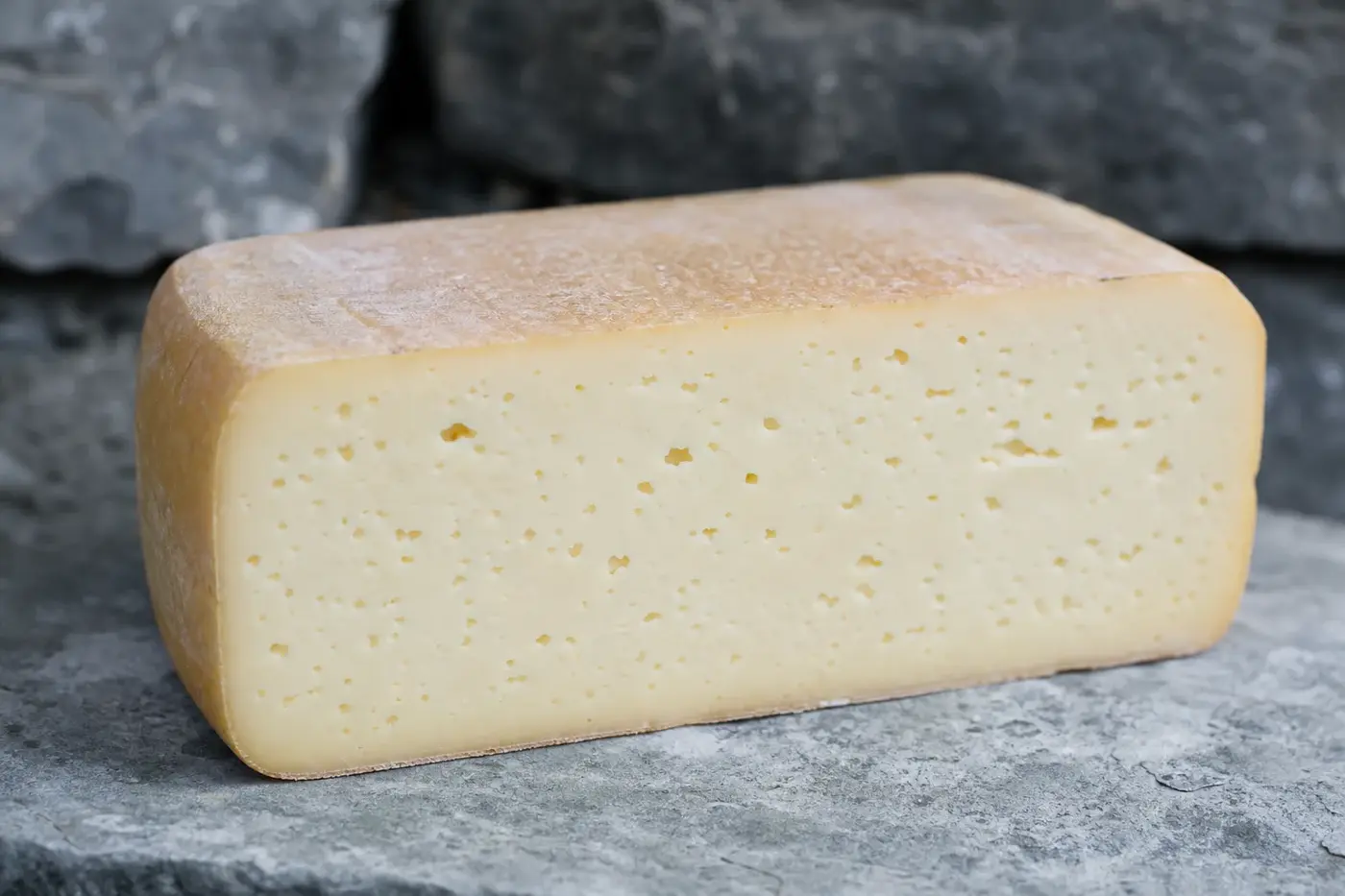
Cut into a pale cream block, past its gently rounded edge, and you may find a few small openings inside.