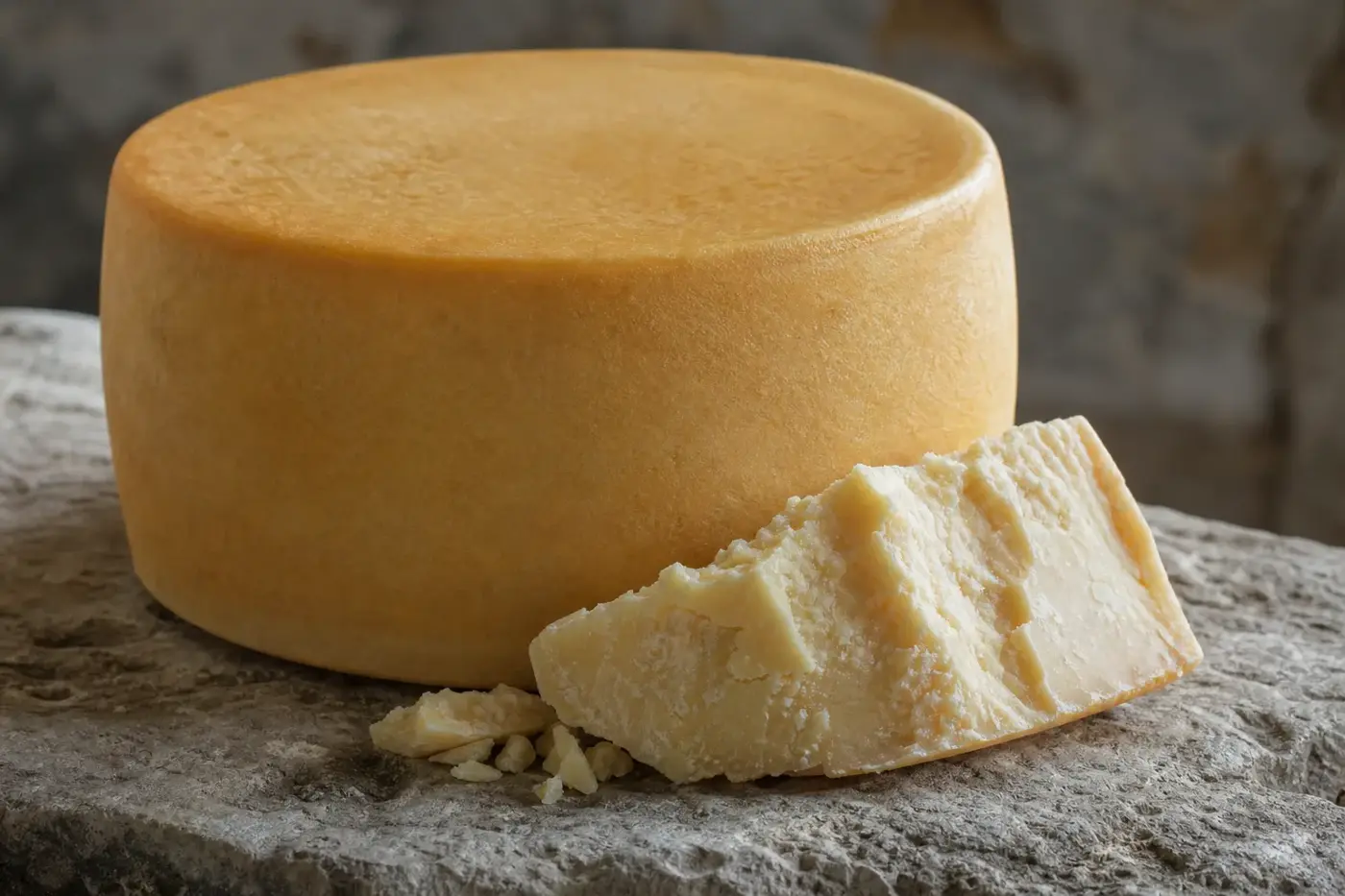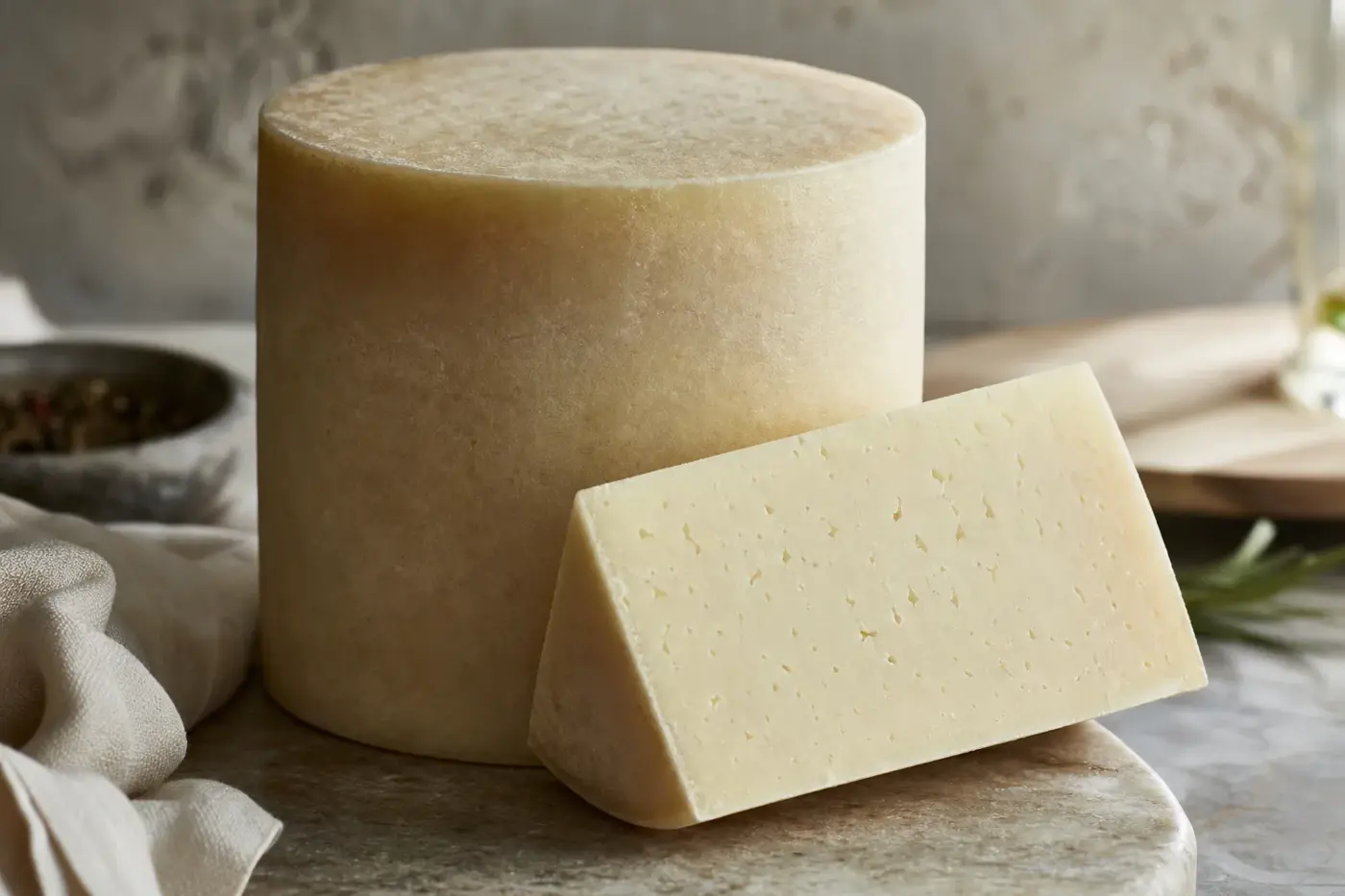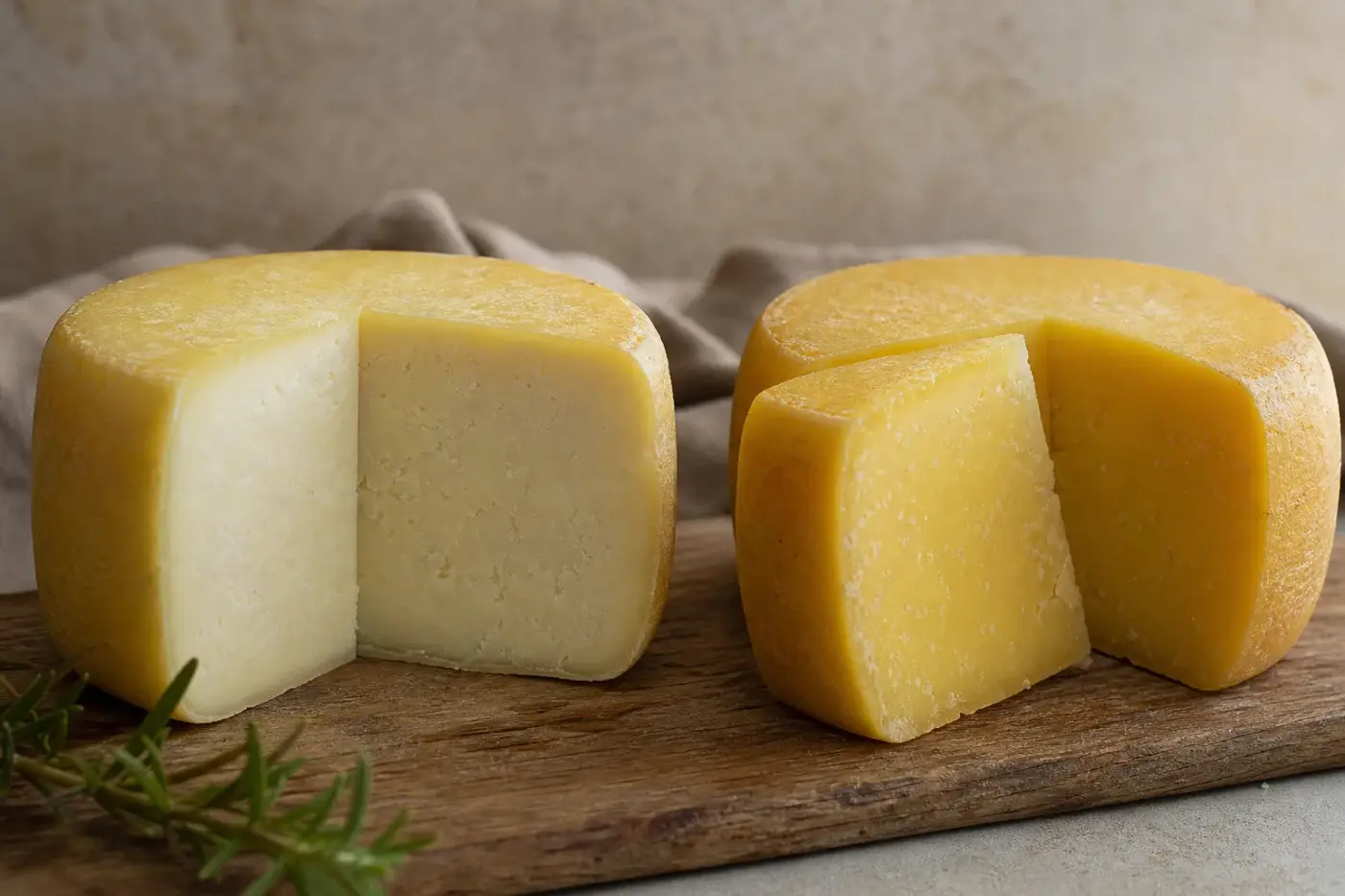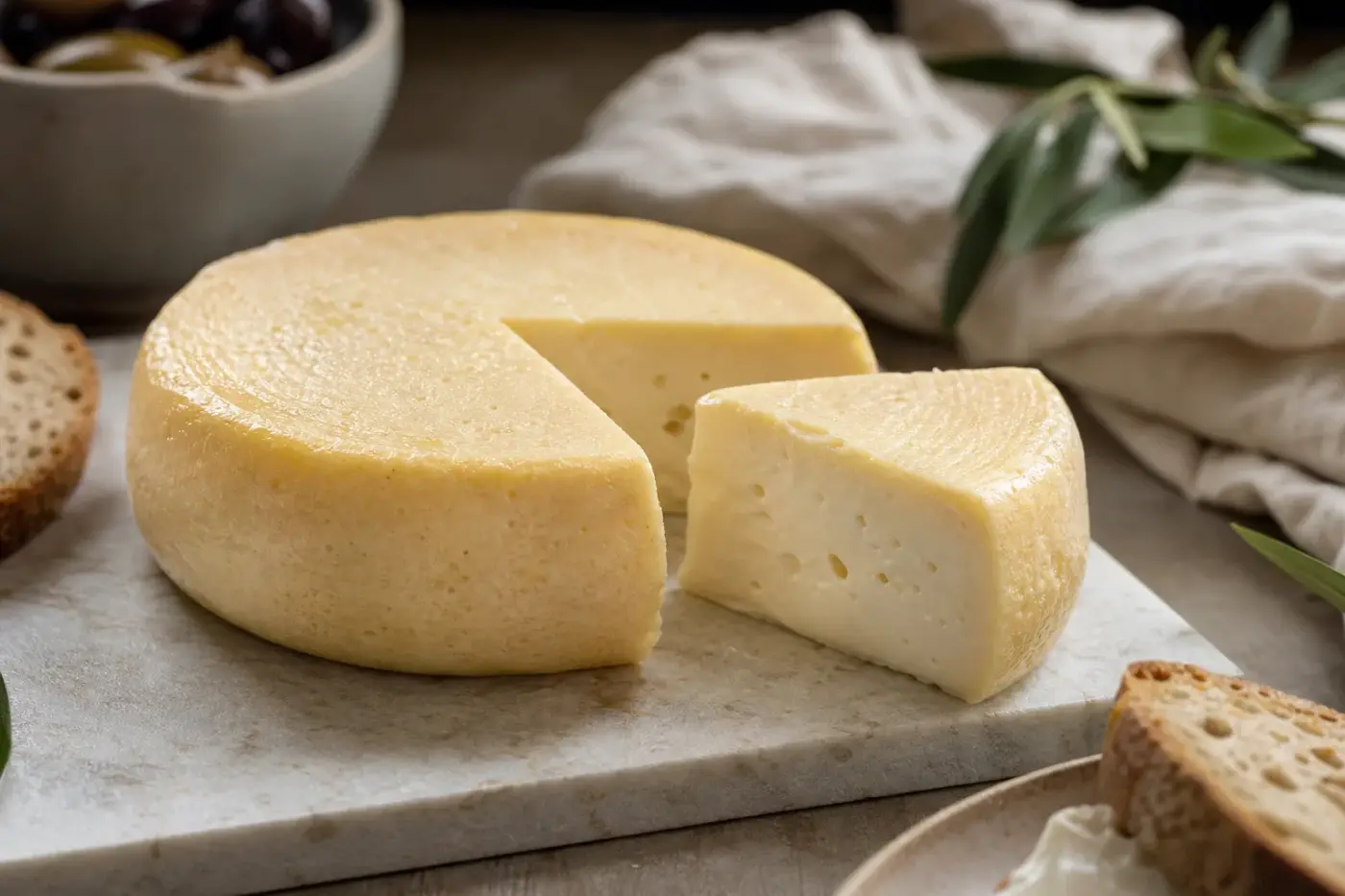
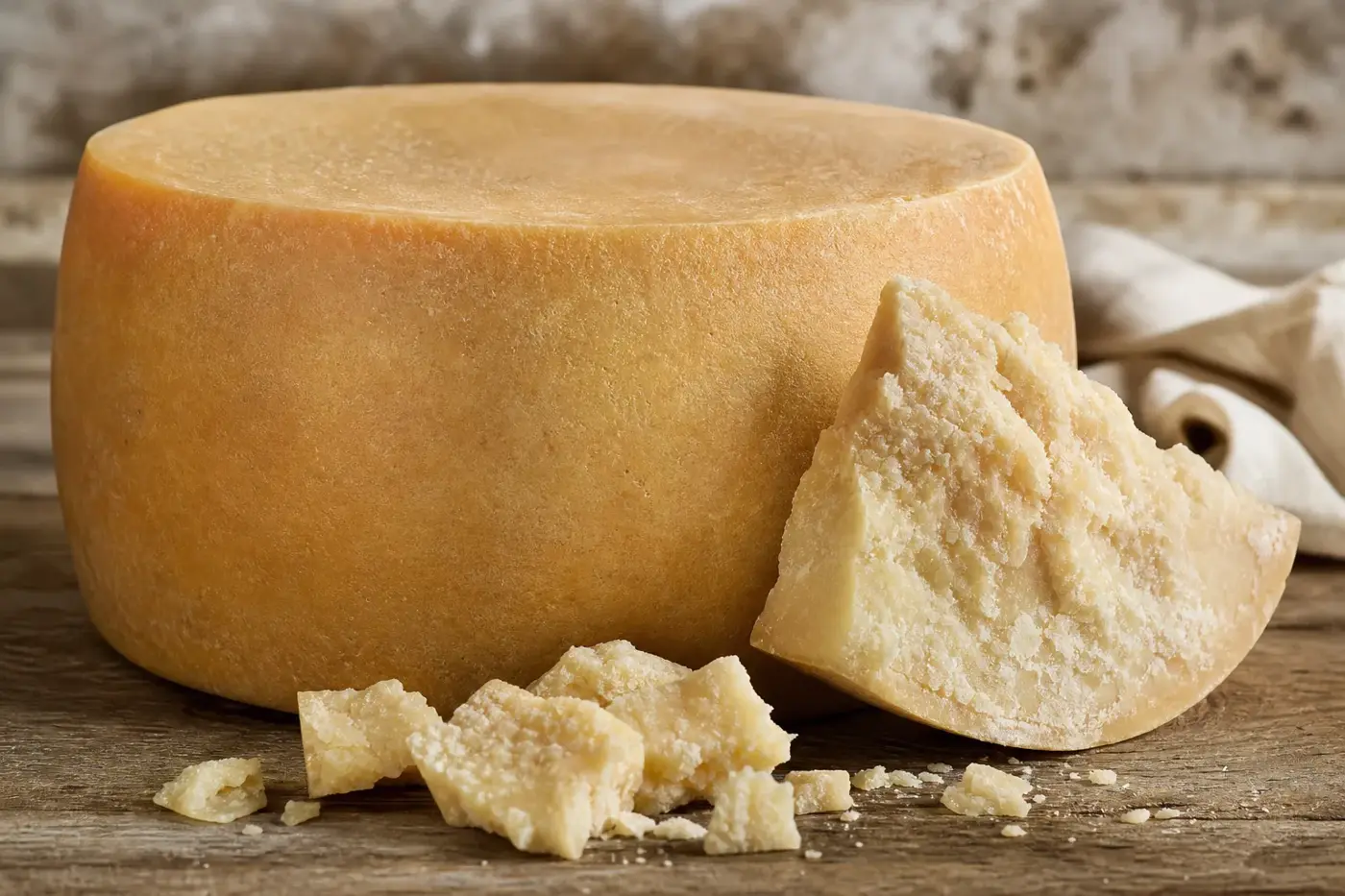
Your knife slips into a small, low Italian wheel. Inside, you might find a supple, mild cheese ready for the table, or a firmer paste with a more savoury character. That is caciotta’s charm: a whole family rather than one recipe, with cow’s, sheep’s, goat’s and mixed milks taking different paths through making and ageing. These often round cheeses have rather more variety than their modest outlines suggest. [1,2]
Family: Caciotta, with recipes shaped by regions and producers. [1]
Legal definition in Italy: Unconfirmed.
Customary associations: Central Italy, with examples farther north too. [1,4]
Milk: Cow, sheep, goat or mixed milk; treatment depends on the cheese. [1,2,3]
Typical shape: Small cylinders; rind, paste and maturity vary. [1,2]
Related registered name: Casciotta d’Urbino, PDO in Great Britain. Current EU status: Unconfirmed. [6]
Casciotta specification: 70 to 80% sheep’s milk, with 20 to 30% cow’s milk; raw or pasteurised. [7]
Follow the little wheels across Italy
Picture a modestly sized cheese made for your table. The Casciotta d’Urbino consortium, an industry body, describes caciotta broadly as low and rounded, commonly around a kilogram, made from several milk types and usually sold relatively young. Shape and purpose hold this family together. A single production specification does not. [1]
Begin in Central Italy, where the name has much of its character. Marche’s regional inventory records caciotta across the region, especially Montefeltro, while Tuscany documents a matured cow’s milk version from Cutigliano in the Pistoia area. Farther north, a Veneto producer makes a truffled caciotta with milk from Vicenza, Verona and Padua. You need more than one regional boundary to contain these little wheels. [2,3,4]
Start with the milk, not the name
Do not let “caciotta” send you straight towards cow’s milk. The family embraces sheep’s milk, cow’s milk, goat’s milk and blends, with no universal ratio for mixed milk versions. In Marche’s description, varying amounts of sheep’s or goat’s milk join cow’s milk. The milk declaration is your most useful starting point. [1,2]
Next, ask how that milk was treated. Trinei’s published Caciotta vaccina sheet specifies pasteurised whole cow’s milk; Marche’s traditional account describes a raw milk process, and Tuscany’s Cutigliano entry describes thermisation. Read the label or ask your cheesemonger. The family name cannot answer this one for you. [2,3,8]
You can explore those differences in raw milk, thermised and pasteurised cheese. If you are choosing between two caciotte, ask about age and texture too. Together, those details give you a clearer idea of how each cheese is intended to be eaten.
Watch the milk become a wheel
Rennet turns milk into a gel, beginning the small wheel’s journey. This milk coagulating preparation allows the curd to be cut, gathered into moulds and drained of whey, the liquid it releases. Salting and maturation follow. Local methods differ, including further heating of the curd and how the wheels receive their salt. [2,7]
For a precise example, look to the Casciotta d’Urbino consortium’s published specification. Raw or pasteurised sheep’s and cow’s milk is coagulated with liquid or powdered rennet, with starter cultures optional. The curd drains in moulds before salting, either dry or in brine, a salt solution. Maturation lasts 15 to 30 days. [7]
Those steps explain the family resemblance, but each recipe shapes the finished cheese’s character. If you would like to follow the milk setting and the whey draining away, take a closer look at how cheese is made.
Find your favourite, from sweet to savoury
Imagine a low cylinder with a thin rind and a pale interior. The consortium’s broad description allows a soft paste and variable small openings, known as eyes. Trinei describes an ivory paste with openings; Tuscany’s matured Cutigliano example has a rough rind and a semi-hard, slightly chalky interior. You can see why the name alone leaves quite a lot unsaid. [1,3,8]
For a gentle introduction, look towards younger caciotta. Trinei gives its cow’s milk cheese 15 to 30 days’ ageing and describes a soft texture and sweet taste. Tuscany’s matured example is savoury, with a slightly acidulous aroma. These are useful words to take to the counter, whether you want supple and mild or firmer and more assertive. [3,8]
Some wheels take a longer route to your plate. Marche records Montefeltro caciotta aged for two to six months, contrasting its more savoury character with sweeter, tangier examples eaten younger around Fermo. Ask about age, then milk mixtures and local methods. Each gives you another clue to what you taste. [2]
Let the milk speak, or invite the truffle
A plain caciotta gives you room to explore the milk and maturation first. If herbs, pepper or truffle catch your eye, ask where the ingredient sits: through the paste, on the surface or supplied as flavouring. That small question helps you understand the label and decide what belongs alongside.
Barbarano’s technical sheet offers a precise truffle example. Its pasteurised milk cheese contains 0.5% ground summer truffle, appearing as streaks through a white paste, with a soft, uniform texture. The maker identifies the rind as inedible. Always read each product’s rind instructions, however thin and familiar that coating looks. [4]
Meet Casciotta d’Urbino, extra letter included
That extra letter matters when you shop. Caciotta is the family; Casciotta d’Urbino is a particular name registered as a PDO, protected designation of origin, in Great Britain. The British register records UK scheme registration on 31 December 2020 and original EU registration on 21 June 1996. Current EU status: unconfirmed. [6]
The consortium’s published specification calls for 70 to 80% sheep’s milk, with cow’s milk supplying the remaining 20 to 30%. Its defined area covers Pesaro and Urbino province and seven municipalities in Rimini province. The specified cheese is tender and slightly crumbly, with small eyes and a sweet taste. Its rind is inedible. [7]
Look for the complete name if this is the cheese you want to bring home. For more on the difference between a broad style and a registered designation, turn to protected names explained.
Give your cheese the right kitchen job
A young, yielding caciotta and a hard grating cheese have different jobs in your kitchen. If your recipe calls for pecorino, establish that cheese’s intended age, salt level and firmness before reaching for caciotta. Compare the cheeses themselves, not just their names.
Think about what you need: supple sandwich slices, a cheese with documented melting uses for a baked dish, or something firm for fine grating. If the recipe specifies Parmigiano Reggiano, consult that cheese’s own characteristics. Being an Italian wheel is not a qualification for every Italian cheese job.
Bring home a slice worth lingering over
At the counter, ask four questions: which milk, which treatment, how much ageing and what rind treatment? Then tell the cheesemonger what you have in mind. “A mild cheese to slice into a sandwich” is much more useful than “caciotta”, especially when several local recipes share the name.
For a simple tasting, start with plain bread, then pear or apple, with water or unsweetened tea alongside. Taste a small piece of cheese alone before deciding what else your plate needs. With a truffled version, hold back the extra herbs or strongly flavoured chutney at first. Truffle rarely needs help getting your attention.
For cooking inspiration, the Casciotta d’Urbino consortium offers recipes featuring the cheese melted with almonds, in a courgette tart and in artichoke lasagne. They suggest directions for suitable caciotte, from baked vegetables and savoury pastry to layered pasta. Choose your particular cheese for its texture, then follow a complete recipe for quantities and cooking instructions. [9]
Keep your remaining cheese cool
Start with the product’s storage instructions, including any shorter limit after opening. In England, Northern Ireland and Wales, Food Standards Agency guidance from November 2026 advises keeping your fridge at 5 °C (41 °F) or below. It also advises leaving chilled food out for the shortest possible time during preparation. [10]
Take out only what you plan to serve and leave the rest chilled. For wrapping and organising cut pieces, turn to how to store cheese at home. A soft young caciotta and a longer matured wheel may need different handling, so keep the individual label handy.
This page summarises published guidance from the official sources it cites. It is not medical advice. Guidance differs between countries and changes over time, so check the current source for where you live, and ask your doctor, midwife, pharmacist or dietitian about your own circumstances.
Choose carefully during pregnancy or for vulnerable diners
If you are pregnant, the individual cheese’s type and milk treatment determine which guidance applies. UK NHS guidance from November 2026 lists pasteurised semi-hard cheeses and specified pasteurised soft cheeses among foods you can eat. It says foods made from unpasteurised milk must be thoroughly cooked, while separately allowing pasteurised or unpasteurised hard cheeses. [11]
Mould-ripened soft cheeses and soft blue-veined cheeses require thorough cooking, whether pasteurised or not. Cheese cooked until steaming hot can be eaten. Read these distinctions alongside the details of the cheese you are choosing. [11]
Check the label for milk treatment and cheese type, and ask the seller if either is unclear. Take unresolved questions to your midwife or other clinician. Caciotta covers too many textures and methods for the name alone to identify the relevant NHS category. [1,11]
The NHS also identifies newborn babies, people with weakened immunity and older people as groups at greater risk of serious illness from listeriosis. Its guidance stresses keeping chilled ready-to-eat foods cold, observing use-by dates and separating them from raw foods. Consult the current NHS guidance for your circumstances. [12]
Questions people ask
What milk is caciotta made from?
Caciotta can be made from cow’s, sheep’s or goat’s milk, or a mixture. The milk may be raw, thermised or pasteurised, so check the label or ask the cheesemonger.
What is the difference between caciotta and Casciotta d’Urbino?
Caciotta is a family of cheeses rather than a single recipe. Casciotta d’Urbino is a particular name registered as a PDO in Great Britain, with a specification requiring 70 to 80% sheep’s milk and 20 to 30% cow’s milk.
Can you eat the rind of caciotta?
Check the instructions on the individual product. The rinds of Casciotta d’Urbino and Barbarano’s truffled caciotta are described as inedible.
Can you eat caciotta during pregnancy?
The NHS says the relevant guidance depends on the cheese type and milk treatment, so the name caciotta alone is not enough to identify the category. Consult current NHS pregnancy guidance and ask your midwife or another clinician if the cheese type or milk treatment is unclear.
How should caciotta be stored?
Follow the product’s storage instructions, including any shorter limit after opening. In England, Northern Ireland and Wales, the Food Standards Agency advises keeping the fridge at 5 °C or below and chilled food out of the fridge for the shortest possible time during preparation.
Sources
- Consorzio Tutela Casciotta di Urbino DOP, La DOP, undated webpage, section “Mille caciotte, una Casciotta”. Industry account of the broader family, attributed accordingly. Source.
- Regione Marche, Schede prodotti tradizionali, 2017 edition, entry “Caciotta”, product description and production account. Historical regional documentation, not evidence of an individual producer’s present practice. Source.
- Regione Toscana, I Prodotti Tradizionali Toscani: Caciotta stagionata, undated database entry, product ID 277. Source.
- Caseificio Barbarano, Scheda tecnica caciotta con tartufo, revision 3, September 2020. Manufacturer’s declared ingredients, characteristics and rind instructions. Source.
- European Commission, Casciotta d’Urbino: amendment application and single document, Official Journal C 223, 7 July 2020, EU reference PDO-IT-0005-AM01. This publication records an amendment application, not its subsequent approval. Source.
- Department for Environment, Food & Rural Affairs, Casciotta d’Urbino, UK protected food names register, published 4 January 2021, live entry checked November 2026. Source.
- Consorzio Tutela Casciotta di Urbino DOP, Disciplinare di produzione della denominazione di origine protetta “Casciotta d’Urbino”, undated PDF hosted in the website’s October 2025 directory, Articles 2, 3 and 5. Source.
- Società Agricola Trinei, Scheda tecnica: Caciotta vaccina, Mod. 19, revision 01, 20 November 2020. Manufacturer’s account, used for this named example only. Source.
- Consorzio Tutela Casciotta di Urbino DOP, Le ricette della Casciotta, undated webpage. The consortium promotes the named cheese and has a commercial interest in its use. Source.
- Food Standards Agency, How to chill, freeze and defrost food safely, published 18 December 2017, live guidance checked November 2026. The publication specifies England, Northern Ireland and Wales. Source.
- NHS, Foods to avoid in pregnancy, live guidance, cheese and dairy section, checked November 2026. Source.
- NHS, Listeriosis, last reviewed 10 November 2023, live guidance checked November 2026. Source.
Researched through regional agricultural records, published specifications, manufacturer technical sheets and official UK food safety guidance; serving suggestions are editorial recommendations rather than recorded tasting observations.
Last checked: November 2026
Last checked November 2026.
The editors suggest you read next
Parmigiano Reggiano
Break into a wheel of Parmigiano Reggiano and flakes fall away, revealing a finely granular cheese, pale straw to straw in colour.