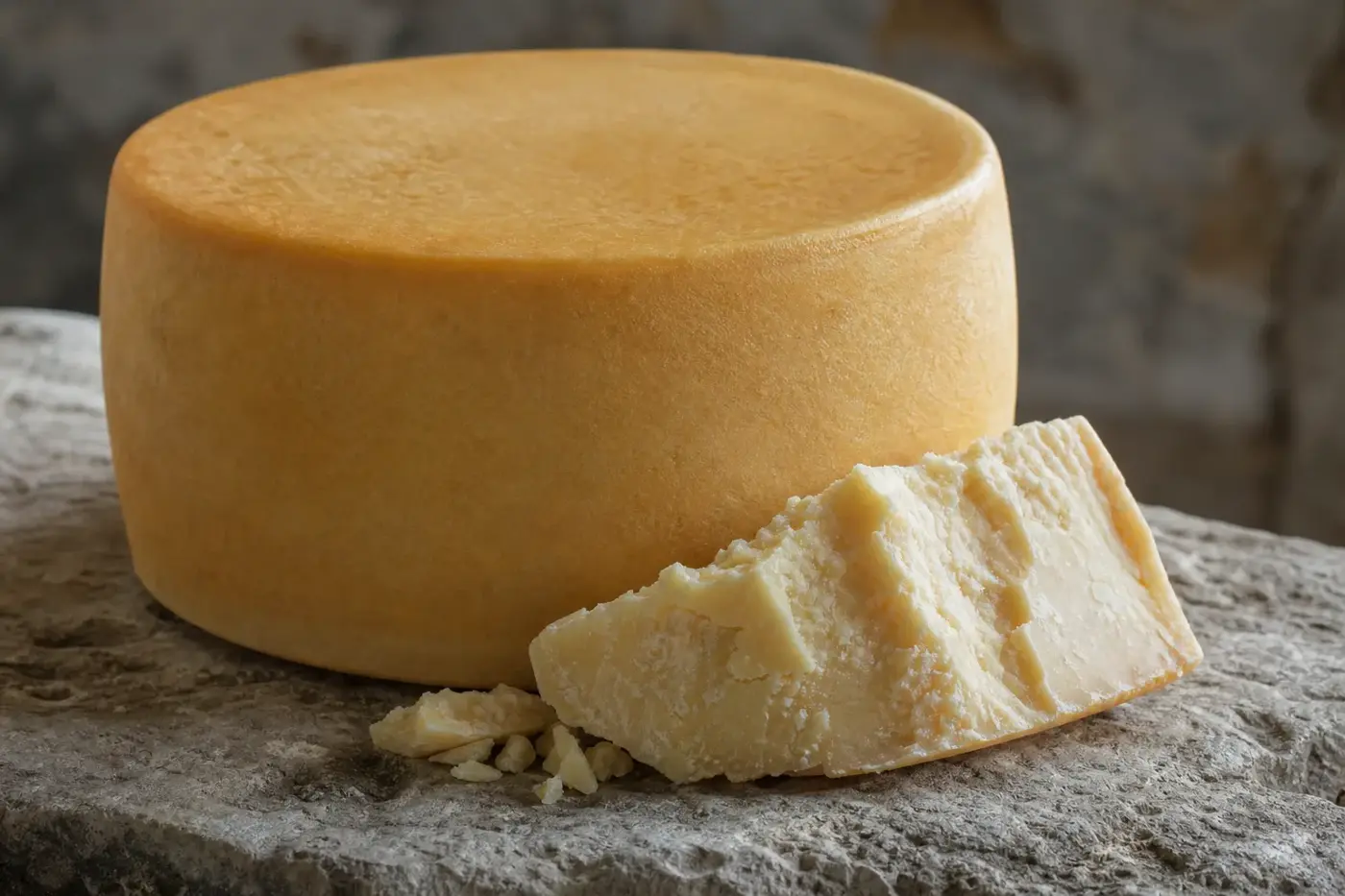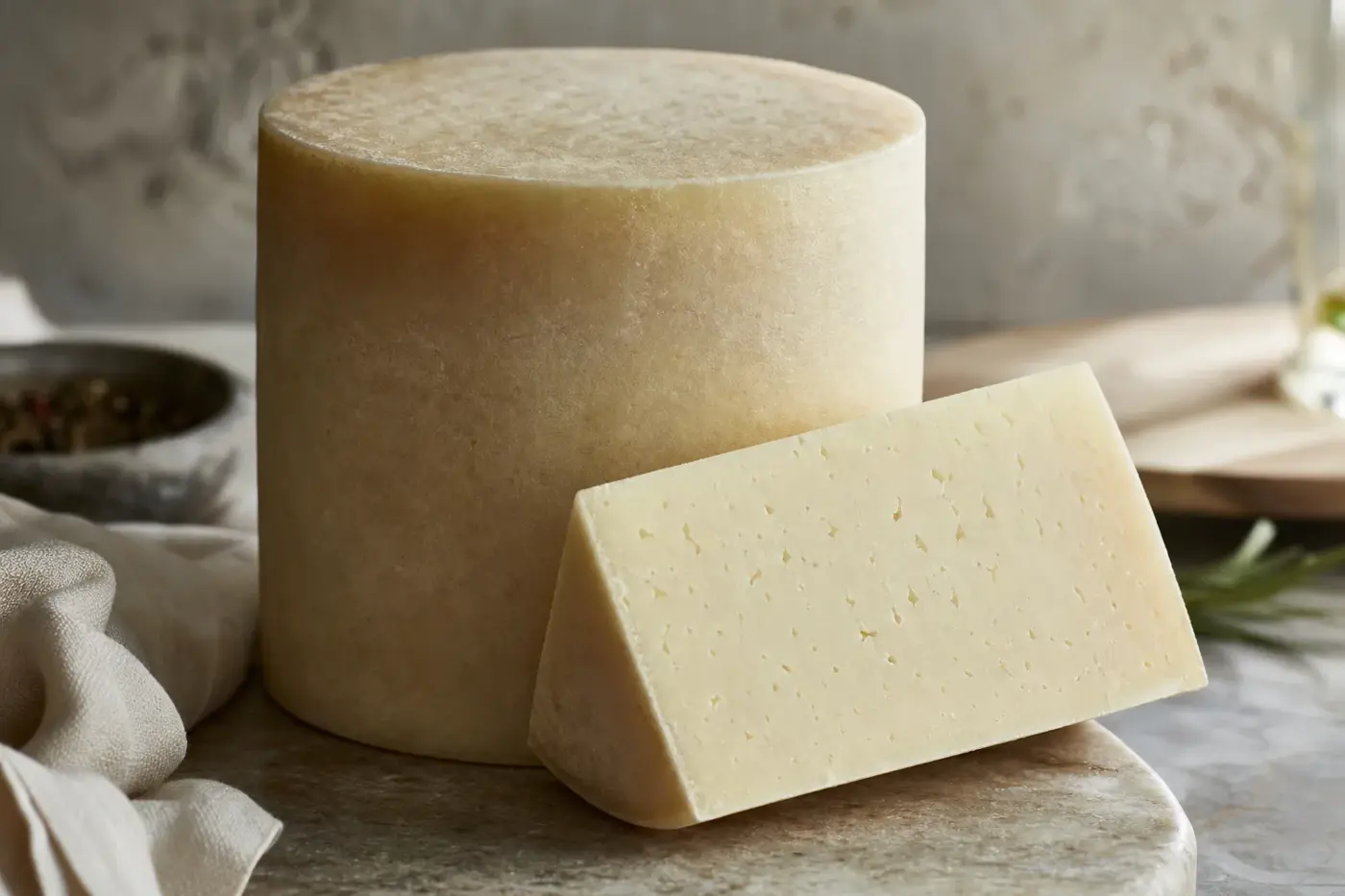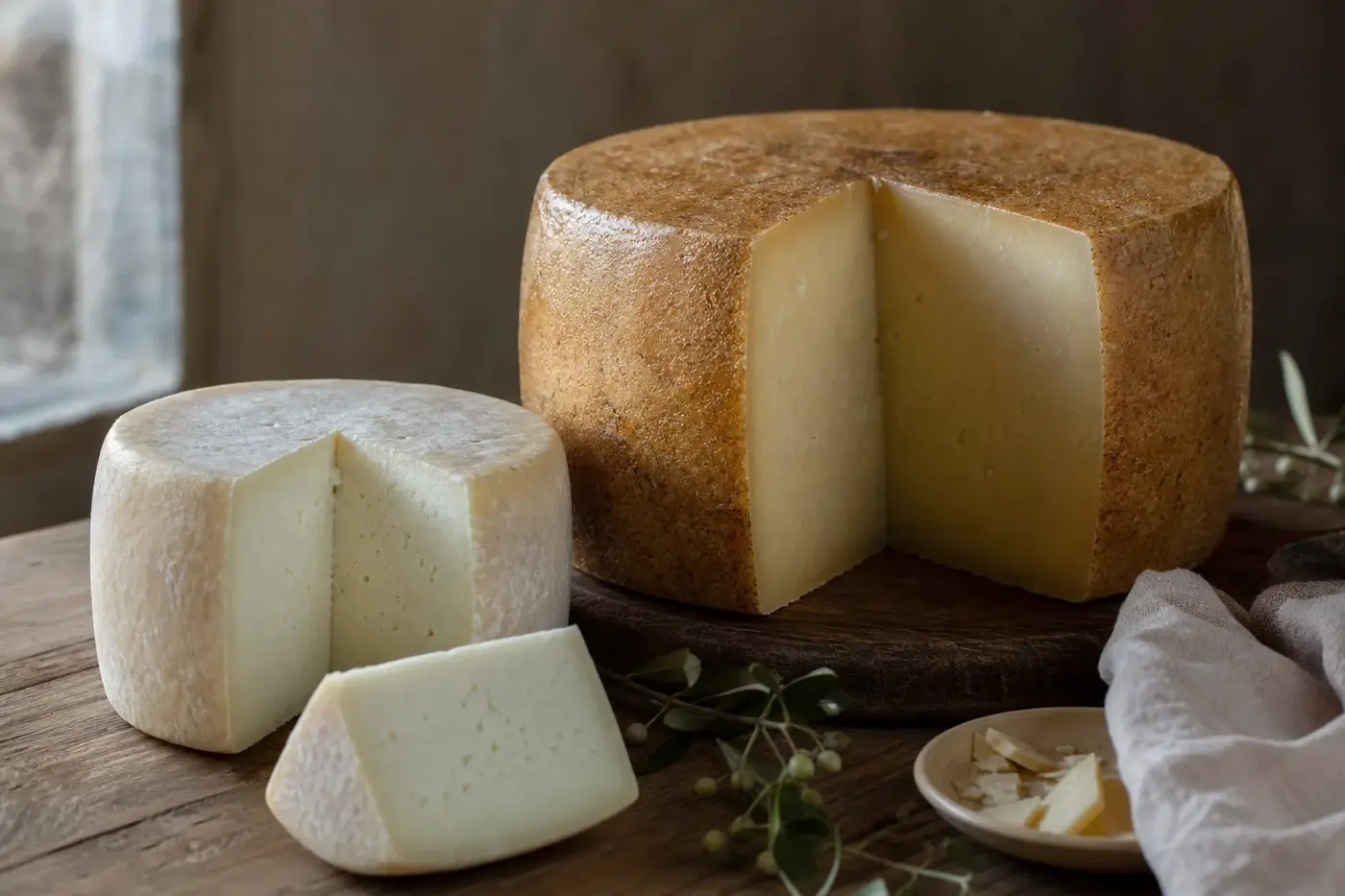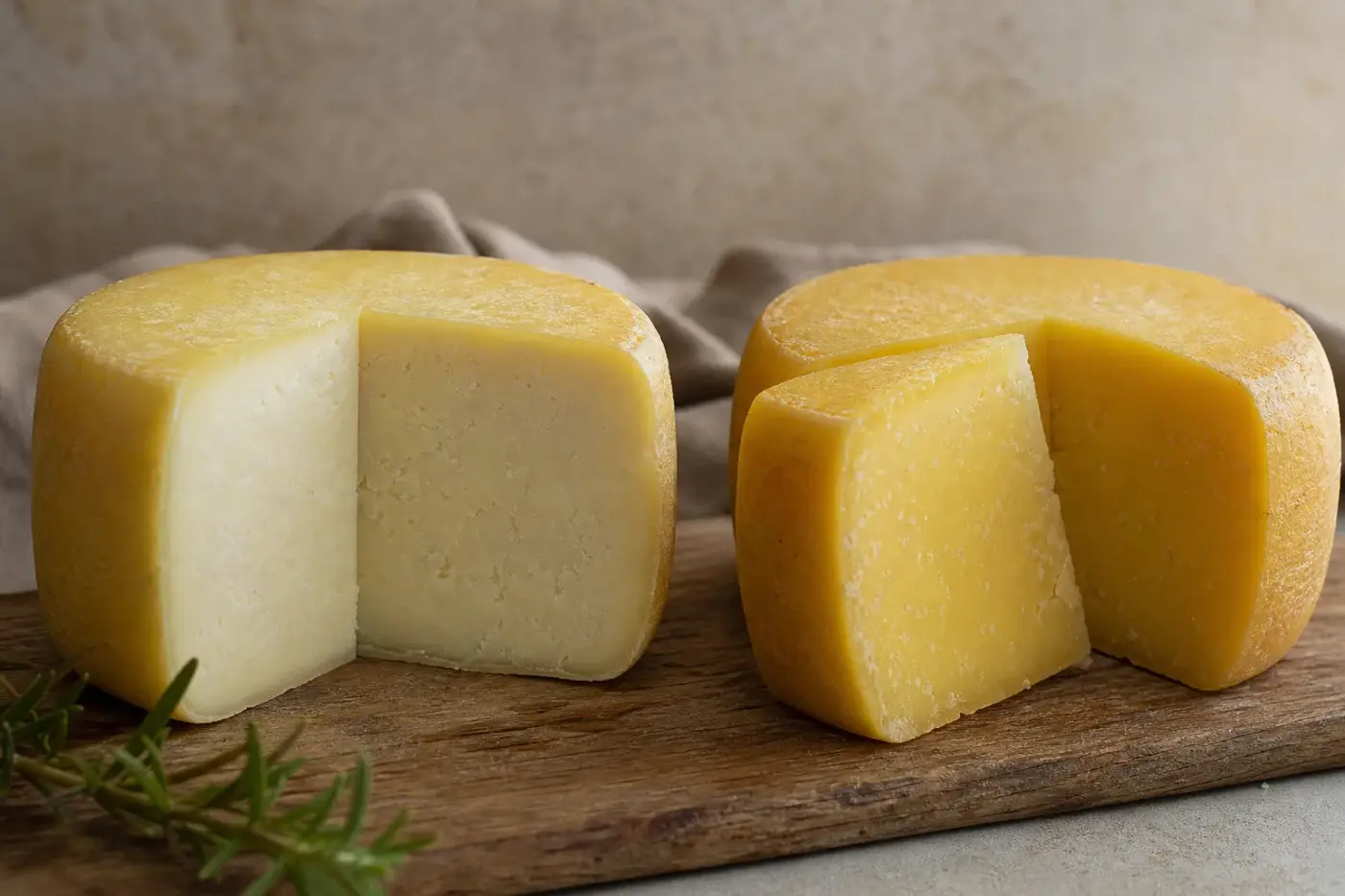
Your knife glides through a young Pecorino Toscano. Try an aged piece and it pushes back: this is cheese for shaving and grating, rather than supple slices. Two pleasures, both beginning with whole sheep’s milk from a defined area centred on Tuscany, and both carrying the same European Union protected designation of origin, or PDO. [1,6]
Get acquainted with Toscano
| What you want to know | The detail |
|---|---|
| Registered name | Pecorino Toscano [1] |
| EU registration | European Commission; PDO-IT-0020 [2] |
| EU status | Registered PDO from 2 July 1996; checked November 2026 [1,3] |
| Great Britain status | Registered PDO from 31 December 2020; checked November 2026 [3] |
| Legal production text | Italian decree of 16 October 2025, Annex 1, Articles 2 to 9 [1] |
| Milk | Whole sheep’s milk; raw or heat-treated up to pasteurisation [1] |
| Rennet | Calf or vegetable rennet [1] |
| Minimum maturation | Tender: 20 days; aged: four months [1] |
| Wheel | Cylindrical, flat faces, slightly convex sides; 0.75 to 10 kg [6] |
Follow Toscano beyond Tuscany
Tuscany is the heart of this cheese’s home, but the story crosses its borders. The Italian specification published in 2025 defines the area for milk production, cheesemaking and maturation as all of Tuscany, plus specified municipalities in neighbouring Umbria and Lazio. [1,4]
In Umbria, you find Allerona and Castiglione del Lago. In Lazio, the map takes you through Acquapendente, Onano, San Lorenzo Nuovo, Grotte di Castro, Gradoli, Valentano, Farnese, Ischia di Castro, Montefiascone, Bolsena and Capodimonte. [4]
Behind those precise boundaries lies a pastoral history. The geographical account published with the specification connects the cheese with natural grazing and farming on land less suited to other agriculture. Its story follows a tradition spreading through the Maremma, where local cheeses gradually gathered under one shared identity: Toscano. [5]
At the cheese counter, those boundaries matter. A Tuscan association is broader than a protected origin, so look for the full name Pecorino Toscano. Not every sheep’s milk cheese from Tuscany is this cheese; find your bearings with protected names explained.
Step inside the dairy
The milk becomes curd at 33 to 38 °C, set with calf or vegetable rennet. The specification also permits local lactic cultures, natural or selected. Makers have choices within this protected name, which gives you a good reason to read their product information. [1]
For the aged style, the curd is broken more finely, with optional further heating. Next comes draining, salting dry or in brine, and maturation. Each stage belongs to the making of the cheese you eventually take home. [1]
At the counter, ask two straightforward questions: what milk treatment was used, and which rennet? If either matters to you, ask for the producer’s product information. The PDO permits different approaches; the maker’s answer tells you about the particular piece you are buying. [1]
Keep those questions separate. Milk treatment tells you nothing about the coagulant, and “aged” answers neither question. Find a clear explanation in raw milk, thermised and pasteurised cheese and rennet explained.
Young or aged? Let your knife decide
Cut into the cheese and the difference becomes clear. The specification describes a tender interior when young, and a compact paste that resists cutting when aged. Its colour moves from white with a slight straw tint towards straw yellow, sometimes with small holes scattered irregularly through the paste. [6]
You may also meet two more maturation terms. Semistagionato requires at least 60 days; riserva requires at least eight months. These give you useful milestones when choosing a piece. [1]
Do not assume age means a peppery ambush. The specification’s geographical account emphasises a sweet character rather than an aggressively piquant one. If you are choosing between Toscano and a more forceful pecorino, ask about intensity as well as maturity. [5]
If you spot young and aged versions from the same producer, try them side by side, plain. Notice how a slice bends, how it breaks as you chew, and how long the flavour stays after swallowing. Choose what you enjoy, rather than treating the oldest piece as the inevitable winner.
Look past the rind
The classic wheel has flat faces and gently bulging sides. Its specified dimensions are 15 to 30 cm across and 7 to 20 cm high, with variation allowed for production reasons. Non-cylindrical forms are permitted specifically for prepacked slices, cubes or grated cheese. [6]
The rind comes in shades of yellow, and surface treatments can affect its colour. An external treatment against mould is permitted. Ask your seller whether you should remove the rind on the particular cheese you are taking home. [6]
When choosing your style, the cut face tells you more than rind darkness alone. For sandwich slices, look for the young cheese’s yielding texture; for shavings over a dish, ask for a firmer aged cut. Suppleness and firmness offer different pleasures, not different grades of quality.
Toscano, Romano or Sardo? Meet the family
Sheep’s milk gives these cheeses a shared starting point, not an interchangeable identity. In its joint promotional account, the Romano consortium describes Pecorino Romano as aromatic, Pecorino Sardo Dolce as mild and delicate, and Pecorino Sardo Maturo as sharper. [7]
| What you might compare | Available detail |
|---|---|
Look at the actual pieces as well as their names. Tender Toscano offers a supple texture; aged Toscano gives you a more resistant cut. Ask for equally thin samples of Romano and Sardo, then compare how they break and how firm they feel, especially when their maturation ages differ. [6]
Your dish gets a say, too. The cheese you want in slices may not be the one you want for a final grating. If a recipe specifies Romano or Sardo, keep that identity in mind: “pecorino” alone cannot tell you which cheese will give the intended result.
Find your favourite, then remember its name
Look for Pecorino Toscano DOP on the label. DOP is the Italian abbreviation corresponding to PDO. According to the consortium, tender cheese receives its origin mark in ink, while aged cheese is marked with heat; the identification system also includes a producer number. [8]
Only buying a small wedge? Ask to see the original wheel’s identification or its labelled packaging, and record the producer’s name and maturation age if you would like the same style again. A label photograph is more useful than the heartfelt recollection that it was “the really lovely one”.
Tell the cheesemonger what you have in mind before choosing. Ask for tender cheese for slices, a firmer cut for shavings, or a mature piece that grates cleanly. Then match its actual age, milk treatment and rennet to the maker’s information.
Bring bread, pear and a little restraint
Begin with a plain piece of cheese. With the young style, try plain bread alongside, then a bite with ripe pear. Keep honey on the side so you can add a little without covering every slice. Give the cheese a chance to introduce itself before the honey takes over the conversation.
For an aged piece, start with a few shavings, pear and bread, then try a little honey. Taste the combination both ways: fruit alone may be enough beside a cheese with plenty of character. Small, separate dishes let you explore without making sweetness the starting point for the entire board.
For wine, try a dry Vermentino with the younger style or Chianti with an aged piece. These suggestions are for adults of legal drinking age, in small servings; offer water or an alcohol free drink alongside. People who are pregnant, driving, taking medicines that interact with alcohol or recovering from alcohol dependence should not drink. Consult current NHS or equivalent national guidance and see the cheese and wine pairing guide.
Young Pecorino Toscano suits slices in a bread roll or pieces added to a salad. An aged piece can become shavings over cooked vegetables, or a final grating over pasta at the table. Start with a little, taste, and only then decide whether your dish needs more.
Before you reach for the grater, save a few plain pieces of that aged wedge. It deserves a place at the table in its own right. On your first encounter especially, tasting it alone gives you a clearer memory of its texture than meeting it only as seasoning.
Keep it chilled and serve just enough
Keep the main piece refrigerated and take out only the portion you intend to serve. For UK households, the Food Standards Agency advises keeping a home fridge at 5 °C (41 °F) or below. Follow the product’s storage instructions, too. [9]
Think about timing before bringing your cheese to the table. UK households should consult the FSA guidance on keeping chilled food out of the fridge before deciding when to serve it. [9]
When you unwrap the cheese, save the label. Its date and any instructions about use after opening belong to that particular product, rather than every wedge in your fridge. Follow those details: the FSA specifically advises following packaging instructions and date labelling. [9]
Treat storage and serving as separate jobs. Today’s portion may be much smaller than the piece you bought, so cut what you need before bringing it to the table. Leave the rest refrigerated, with its label, for next time.
For wrapping and fridge organisation, turn to how to store cheese at home. If unexpected mould appears, consult mould on cheese: when to cut and when to bin. Different rinds and textures need different consideration.
General information only, not medical advice: follow the official guidance where you live.
Questions people ask
How long is Pecorino Toscano matured?
Tender Pecorino Toscano must mature for at least 20 days, and aged cheese for at least four months. Semistagionato requires at least 60 days, while riserva requires at least eight months.
Is Pecorino Toscano made with pasteurised milk and vegetarian rennet?
The PDO permits whole sheep’s milk that is raw or heat treated up to pasteurisation, and either calf or vegetable rennet. Ask to see the producer’s product information to find out which were used.
What does Pecorino Toscano taste and feel like?
The young cheese has a tender interior, while the aged style is compact and resistant to cutting. The specification’s geographical account emphasises a sweet rather than aggressively piquant character.
How can I serve Pecorino Toscano?
Try young cheese in slices with bread or ripe pear, with honey on the side. Aged cheese can be shaved over cooked vegetables or grated over pasta.
How should I store Pecorino Toscano?
The Food Standards Agency advises UK households to keep their fridge at 5 °C or below and follow the product’s storage instructions. Consult the FSA guidance on keeping chilled food out of the fridge, and follow the packaging instructions and date labelling.
Sources
- Ministero dell’agricoltura, della sovranità alimentare e delle foreste. Decreto 16 ottobre 2025: Modifiche ordinarie al disciplinare di produzione della denominazione di origine protetta «Pecorino Toscano», including the consolidated specification and single document. Published in Gazzetta Ufficiale, Serie generale No. 251, 28 October 2025; decree effective 29 October 2025. Official publication.
- Ministerio de Agricultura, Pesca y Alimentación, Spain. Unión Europea, geographical indications listing dated 5 August 2024; Pecorino Toscano row records identifier PDO-IT-0020. Official listing.
- Department for Environment, Food & Rural Affairs. Pecorino Toscano, Great Britain protected food names register, published 4 January 2021; live entry consulted November 2026. Register entry.
- Consorzio tutela Pecorino Toscano DOP. Il Disciplinare di produzione, undated web summary, consulted November 2026. Used for its account of the production area. Consortium summary.
- Ministero dell’agricoltura, della sovranità alimentare e delle foreste. Domanda di modifica ordinaria del disciplinare di produzione della denominazione di origine protetta «Pecorino Toscano», Gazzetta Ufficiale, Serie generale No. 180, 5 August 2025. The geographical-link account is used here as an attributed explanation of tradition and character; the later approved text in source 1 governs production requirements. Official publication.
- Consorzio tutela Pecorino Toscano DOP. Disciplinare della produzione della Denominazione di origine protetta «Pecorino Toscano», reproduction of the specification approved by decree of 16 October 2025, particularly Annex 1, Article 2. Specification PDF.
- Consorzio per la Tutela del Formaggio Pecorino Romano. 3 Pecorini present extraordinary portfolio of P.D.O cheeses at Speciality and Fine Food Fair this September, undated promotional statement, consulted November 2026. Sensory descriptions are attributed to the consortium. Published statement.
- Consorzio tutela Pecorino Toscano DOP. Il marchio, undated identification guidance, consulted November 2026. Identification marks.
- Food Standards Agency. How to chill, freeze and defrost food safely, current consumer guidance consulted November 2026. Official guidance.
Researched through official publications, the Great Britain register, consortium documents and UK consumer food-safety guidance, with serving suggestions identified as editorial judgement.
Last checked: November 2026
Last checked November 2026.
The editors suggest you read next
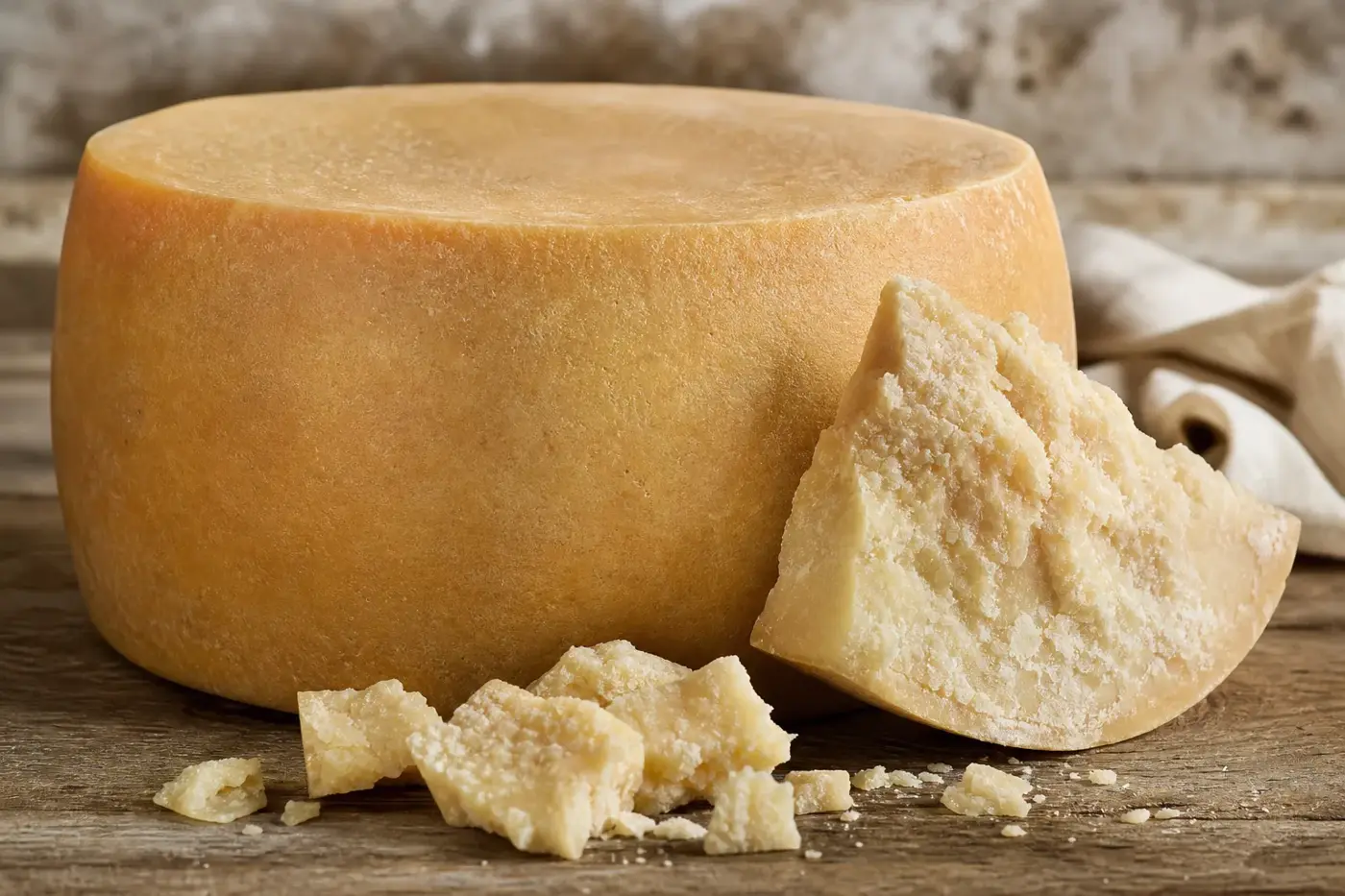
Parmigiano Reggiano
Break into a wheel of Parmigiano Reggiano and flakes fall away, revealing a finely granular cheese, pale straw to straw in colour.