Calcium Chloride in Cheesemaking
Your knife goes into the curd.
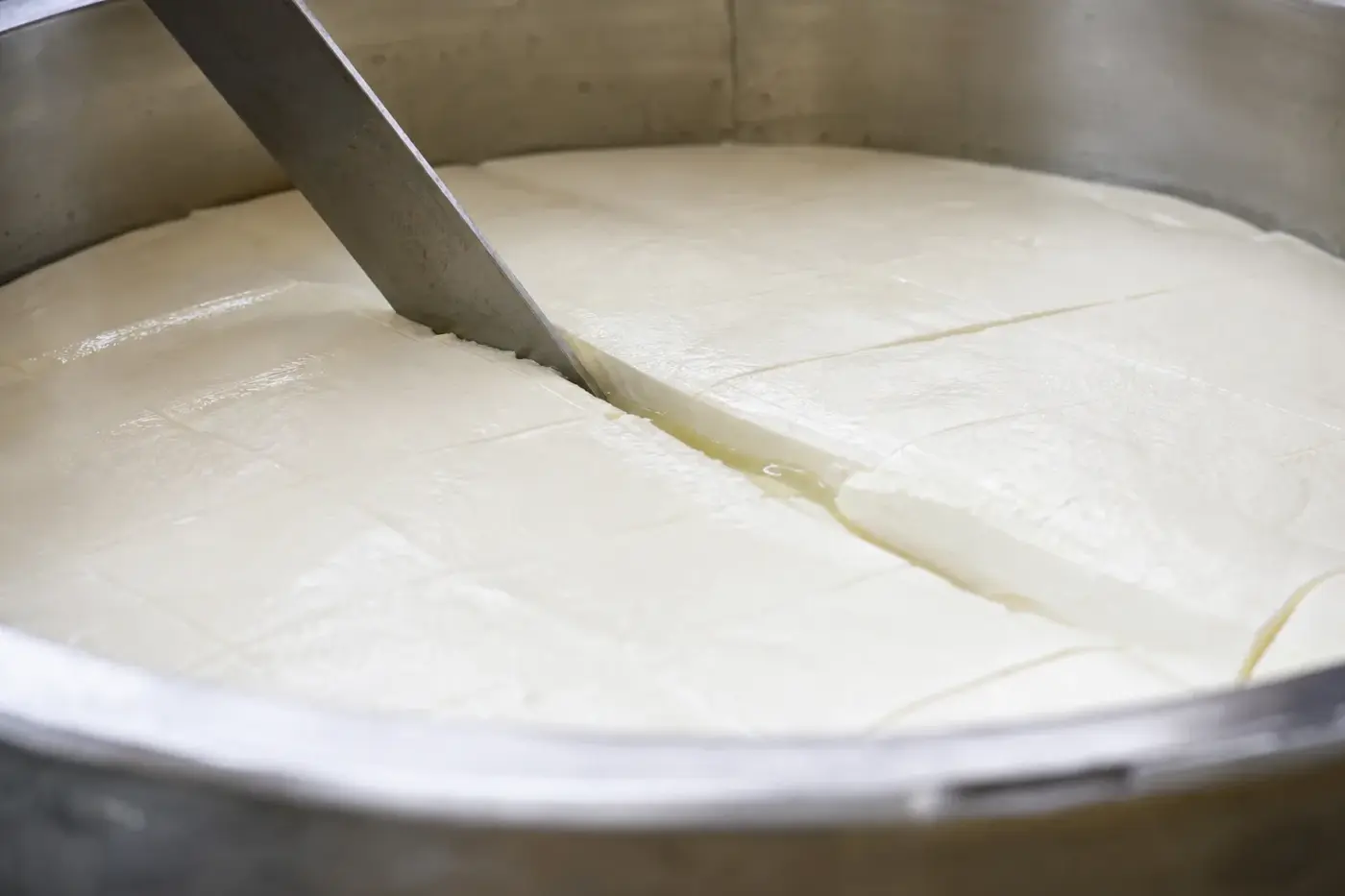
Your knife goes into the curd. You expect a clean cut; instead, the delicate set gives way. In pasteurised milk, calcium chloride can help build a firmer rennet network by increasing the calcium available for coagulation. But milk, acidity, temperature and the cheese you are making all matter: calcium is only part of a successful set. [1, 2]
Meet the salt behind a firmer curd
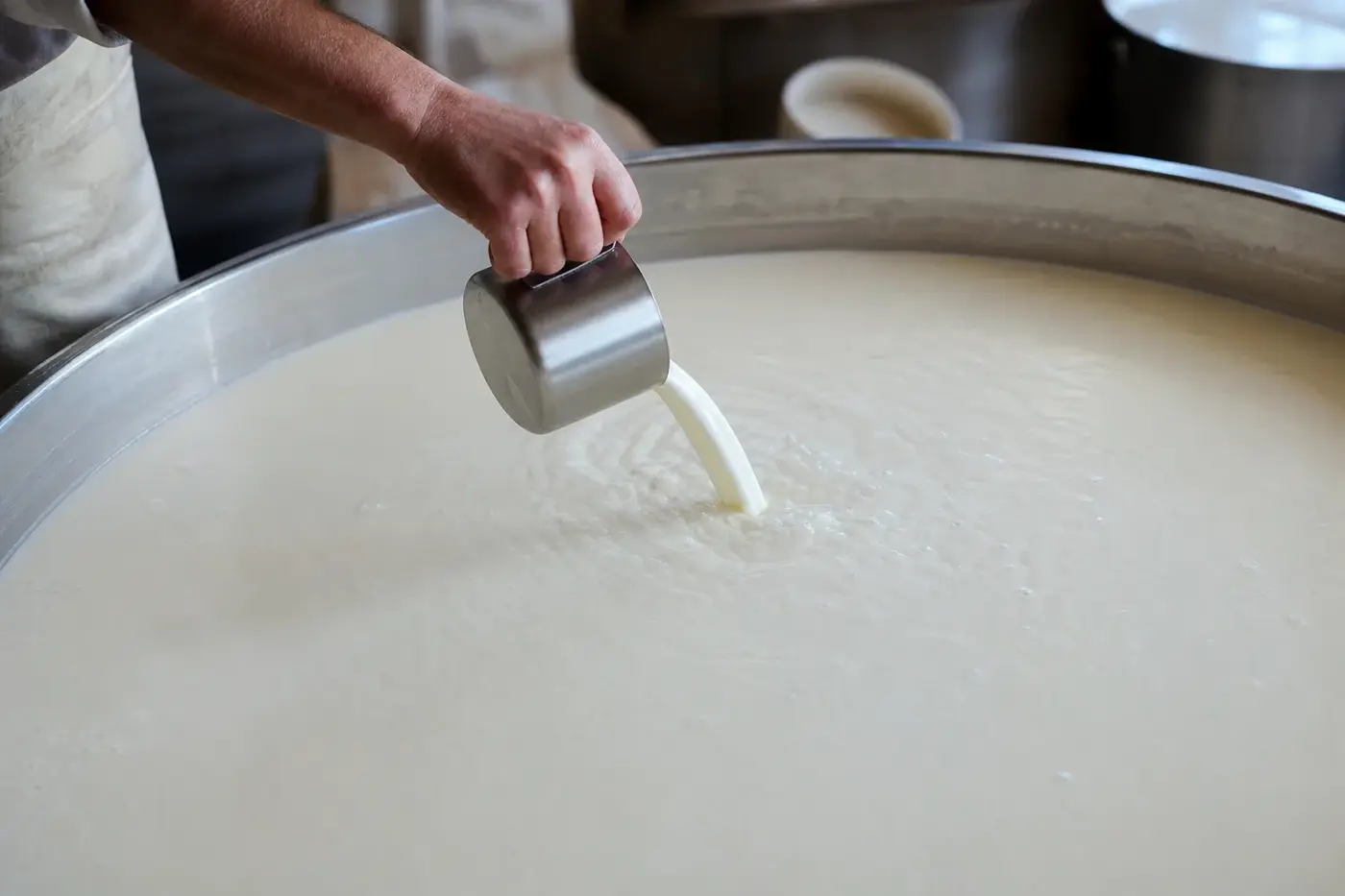
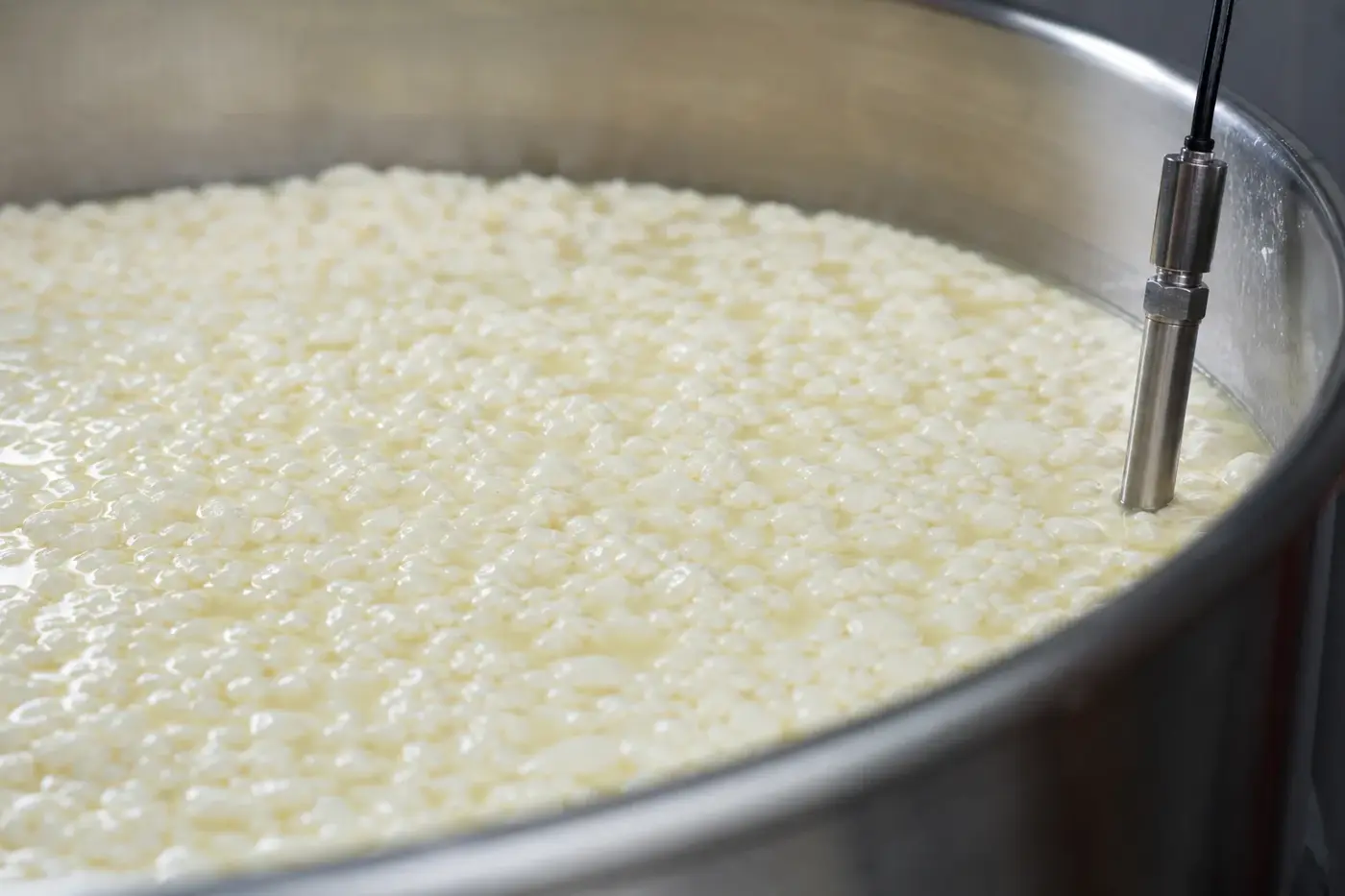
Calcium chloride, written chemically as CaCl₂, comes as a liquid preparation or powder for cheesemaking. It helps milk form a firmer rennet curd: the protein network that holds moisture and fat. Cutting and draining then separate that curd from the liquid whey. [1]
When you choose a product, the chemical name alone is not enough. In Great Britain, the Food Standards Agency identifies calcium chloride as additive E 509 and links its specifications to assimilated Regulation (EU) No 231/2012. Look for a preparation explicitly supplied for food use, with its strength and instructions stated. An industrial product is not a substitute. [3]
Want to see where it fits into your make? Follow the milk through preparation, setting and draining in how cheese is made.
Inside the curd, calcium finds its place
A cohesive curd begins with milk proteins joining into a connected gel and developing firmness. These proteins, called caseins, are organised into particles known as micelles. Rennet, a preparation containing milk-clotting enzymes, acts on their protective surface protein, κ-casein. Once that protection is sufficiently disrupted, the particles can gather together. [1, 4]
Here is the detail to keep in mind: where the calcium sits matters as much as how much is there. Some is dissolved in the milk’s liquid phase; some is associated with the micelles. A total calcium figure alone cannot tell you that important part of the story. [4]
In a primary study using reconstituted skimmed milk, researchers altered micellar calcium through acidification or a calcium-binding agent. They measured gel development using rheology, the study of deformation and flow. Removing too much micellar calcium produced weaker gels. They concluded that insoluble calcium helps maintain the structural integrity needed for strong rennet gels. [4]
Calcium chloride adjusts the conditions in which this protein network forms. Think of it as working alongside acidity and enzyme action, rather than arriving to take over everyone else’s job.
Why pasteurised milk may appreciate the help
A firmer rennet curd is why cheesemaking suppliers commonly recommend calcium chloride for pasteurised milk. New England Cheesemaking Supply describes this benefit for its preparation. It also says fresh raw milk usually does not need the addition. [5, 6]
Pasteurisation changes calcium availability; it does not strip all the calcium from milk. Heat treatment can alter the relationships between milk’s minerals and proteins. Adding calcium chloride addresses the calcium side of coagulation, without reversing every change associated with heating. [1, 7]
Your milk and process still shape the result. In a goat milk experiment, researchers compared raw milk with milk heated at 65 °C for 30 minutes. The pasteurised samples received calcium chloride, and some combinations produced firmer pasteurised milk gels. Because those samples also received calcium, the comparison cannot isolate pasteurisation’s effect alone. [7]
For a closer look at what happens along the way, read raw, thermised and pasteurised cheese.
Does your milk need a helping hand?
Use calcium chloride when your rennet-based recipe calls for it, the preparation’s instructions suit the milk, and you want a firmer set. Pasteurised milk is a common application. Fresh raw milk may coagulate adequately without supplementation, although New England Cheesemaking Supply also identifies cold-stored raw milk among possible uses. [5, 6]
Milk treatment alone makes a poor dosing rule. A successful set needs several conditions working together, so give a weak curd a closer look before reaching for more calcium.
One study examined milk with good and poor coagulation characteristics. Researchers varied enzyme concentration, pH and temperature, with and without added calcium chloride. Under one combination of suitably adjusted conditions, the addition was unnecessary for adequate curd firmness. The useful lesson for your make: consider the whole process before treating every weak set with extra calcium. [2]
If your recipe already gives you the intended curd, more calcium introduces another variable. It is not an automatic improvement, however tempting another small adjustment may be.
Cultures, rennet and calcium each have a job
Starter cultures produce acid; rennet supplies the enzymatic action that begins a rennet set. Calcium chloride supports the conditions for gel development. They work together, but you cannot swap one for another. [1, 2]
Starter cultures contain microorganisms selected to produce acid and, depending on the culture, contribute to flavour and texture. Acidification simply means lowering pH. That can happen through fermentation or through the direct addition of acid. [1]
| Ingredient or process | Its job in your set |
|---|---|
| Starter culture | Produces acid through fermentation. [1] |
| Acidification | Changes protein charge and mineral distribution as pH falls. [4, 7] |
| Rennet | Acts on κ-casein, allowing aggregation. [1, 7] |
| Calcium chloride | Adjusts calcium availability and can improve gel development. [1, 2] |
In an experiment that varied several factors and measured clotting and firmness, pH had the greatest influence on clotting time and gel-firming rate. Temperature contributed most strongly to predicting firmness. That helps explain why increasing a single ingredient can disappoint: different conditions influence different parts of the set. [8]
You can explore the different sources of milk-clotting enzymes in rennet explained.
Making acid-set cheese? Take the other route
In an acid-set cheese, falling pH does the main work of destabilising the casein particles. Acidification changes their electrical charge and dissolves calcium phosphate associated with the micelles. A rennet set takes another route: it removes the particles’ surface protection while enough calcium remains to support a cohesive network. [4, 7]
That makes calcium chloride generally less central to a primarily acid-set method. Start with your recipe’s intended acidity and setting method. An addition that helps one cheese does not automatically belong in another.
The two methods can overlap, too. Some cheeses combine acidification with a small rennet addition, so “acid-set” and “rennet-set” describe the dominant mechanism, not entirely separate processes. The American Cheese Society’s technical guide recognises combined acid and enzyme coagulation. Follow your method’s own formulation rather than borrowing an addition from another cheese. [1]
First, get to know your bottle
Start with the instructions for the bottle or powder in front of you. New England Cheesemaking Supply, for example, lists its liquid preparation at a concentration of 30 to 32%. That describes the supplied product’s strength. It is not the concentration you should create in the milk. [5]
A spoonful of solution and the same spoonful of dry calcium chloride contain different quantities of the salt. Nor can you simply transfer instructions for one liquid strength to another. Note whether the supplier gives its dose by mass or volume, and keep those units consistent through calculation and measurement. [1, 5]
Scale the stated dose to your measured milk volume. If the supplier specifies an amount per litre, multiply that amount by the litres you are using. Measure the preparation before adding dilution water. Dilution helps spread the measured dose through the milk, but does not reduce the quantity of calcium chloride added.
Write down both the product strength and the amount used in your make notes. Your next batch will be easier to plan with both details to hand.
Dilute, mix, then make room for rennet
Even distribution deserves your attention. The American Cheese Society recommends diluting calcium chloride in clean water immediately before addition and distributing it evenly through the milk. Incomplete mixing before the coagulant goes in can leave you with an uneven curd. [1]
Use the water your supplier specifies. New England Cheesemaking Supply calls for cool, non-chlorinated water for its product and directs addition before the culture. Its separate guidance says to add calcium chloride before heating and never after adding rennet. These directions are product-specific, so follow the sequence supplied with your own preparation and recipe. [5, 6]
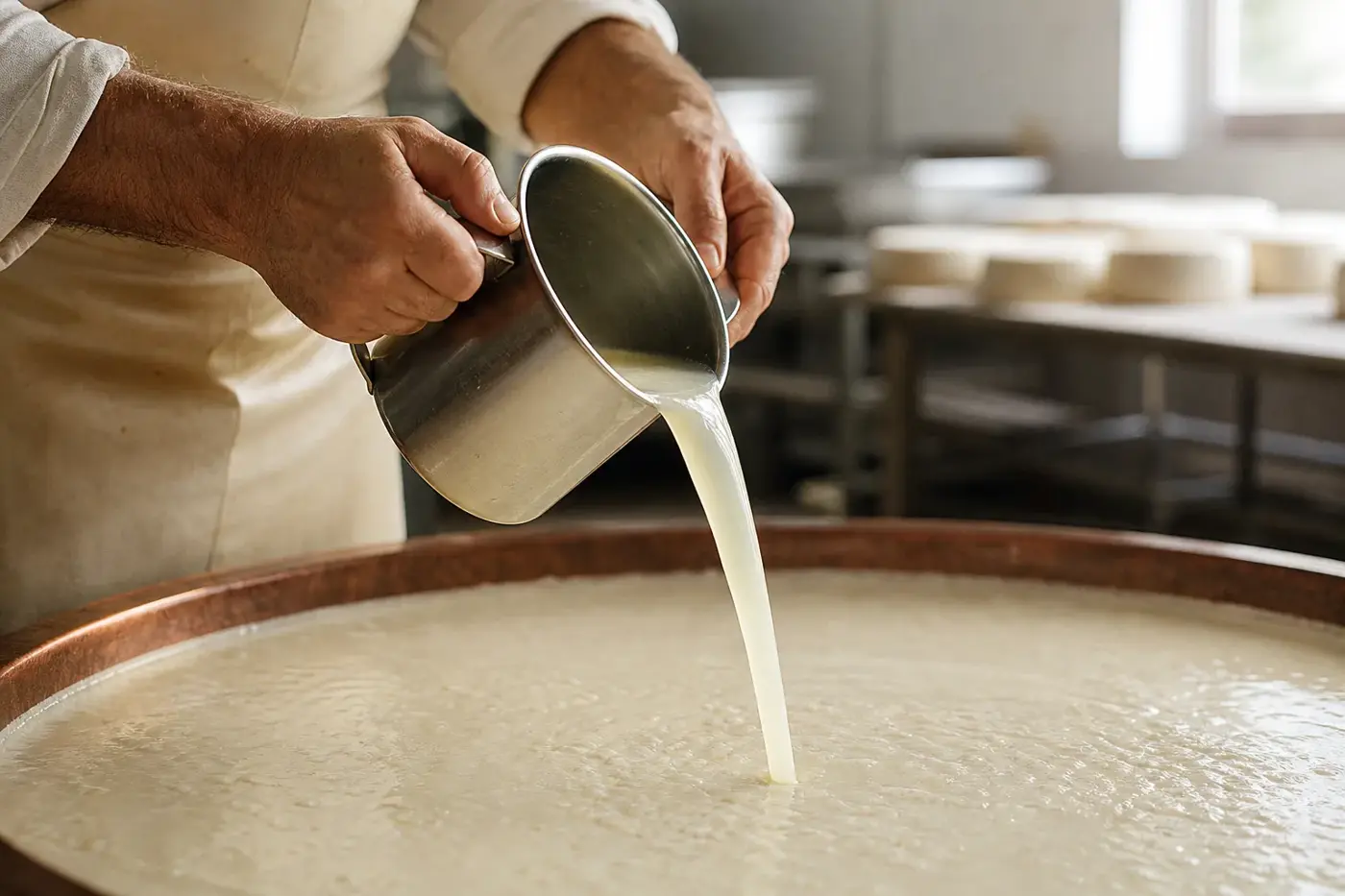
The practical sequence is straightforward: measure the required preparation, dilute it as directed, add it at the specified stage, and stir it through the milk before adding rennet. Distribute it throughout the vessel, rather than leaving it concentrated near the surface. Careful mixing is part of the addition, not an optional flourish. [1]
A firmer curd is not the whole story
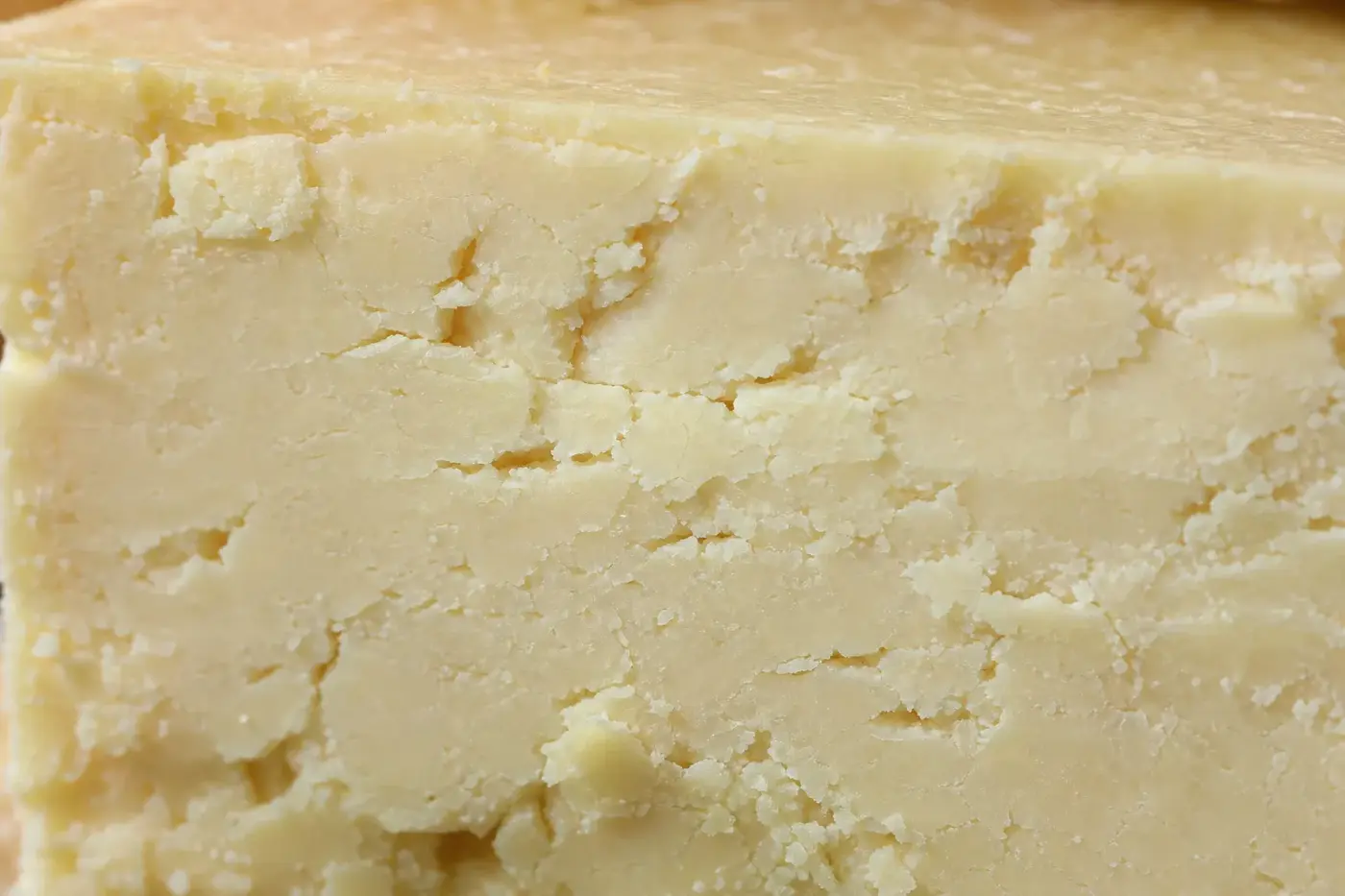
A curd can be too firm as well as too weak. New England Cheesemaking Supply warns that excessive calcium chloride can cause bitterness or make curd too hard to manipulate successfully. That warning concerns its product; it does not set a universal sensory threshold. [6]
Firmness, yield and flavour deserve separate attention. In primary trials on fresh white cheese made from frozen-thawed cow’s milk, researchers compared three calcium chloride concentrations. Some composition measurements differed, but sensory characteristics and product yield did not differ significantly among treatments. [9]
So a higher addition does not necessarily give you a detectable improvement in flavour or yield. That finding belongs to the trial’s particular milk, cheese and treatment range. A firmer curd alone cannot tell you everything about the finished cheese.
Put it away properly, then learn from your make
Follow your preparation’s storage instructions. New England Cheesemaking Supply specifies a cool, dark location and says its solution does not need refrigeration. Keep those directions with the original container, so you have the strength and storage requirements ready for your next make. [5, 6]
After a disappointing batch, look at the milk treatment, actual setting temperature, acidification, rennet preparation and recorded quantities before changing the calcium chloride dose. Experimental work shows that pH, temperature and enzyme concentration can all alter coagulation. Calcium chloride addresses only part of that system. [2, 8]
In your make notes, distinguish a slow set from one that forms on time but stays weak. Researchers measure clotting time and firmness separately because they describe different properties. Recording both gives your next adjustment a clearer purpose, rather than treating every setting problem as the same fault. Your notebook may not make glamorous reading, but it can earn its place beside the vat. [8]
Making cheese in the United Kingdom? Start with the rules
The FSA identifies E 509 as authorised in England, Scotland and Wales. Its published additive guidance distinguishes the assimilated legislation used in Great Britain from EU additive legislation applicable in Northern Ireland. Permission depends on the relevant food category. An E number appearing on an approved list is not enough on its own. [3, 10]
| Where you make cheese | Additive framework that applies | What to establish for your cheese |
|---|---|---|
| Great Britain | Assimilated Regulation (EC) No 1333/2008, Annex II. [3] | Establish the permission for your cheese category. |
| Northern Ireland | Regulation (EC) No 1333/2008, Annex II, under the applicable Northern Ireland framework. [10] | Establish the permission for your cheese category. |
If you produce cheese commercially, establish the applicable cheese-category permission and any additional product requirements before adopting a formulation.
General information only, not medical advice: follow the official guidance where you live.
Questions people ask
Why add calcium chloride to pasteurised milk?
Pasteurisation changes calcium availability, which can affect coagulation. Calcium chloride can help produce a firmer rennet curd, but it does not reverse every change caused by heating.
How much calcium chloride should I use?
Follow the instructions for your particular preparation and scale its stated dose to the measured milk volume. Product strengths differ, and the same spoonful of liquid and powder contains different quantities of the salt.
When should calcium chloride be added?
The American Cheese Society recommends diluting it in clean water immediately before addition and distributing it evenly through the milk. Follow your preparation and recipe for the timing, and mix it through before adding rennet.
Can too much calcium chloride spoil a cheese?
New England Cheesemaking Supply warns that excessive use of its product can cause bitterness or make curd too hard to manipulate. A firmer curd does not necessarily mean better flavour or yield.
Is calcium chloride permitted in cheese in the UK?
The Food Standards Agency identifies calcium chloride as E 509 and says it is authorised in England, Scotland and Wales. Permission depends on the food category, and the page has not verified the current cheese specific conditions for Great Britain or Northern Ireland.
Sources
- American Cheese Society. Best Practices Guide for Cheesemakers, 2025 edition. Sections “Method of Coagulation”, “Acid Production” and “Calcium Chloride”. Publisher PDF.
- American Dairy Science Association. Interactions of Calcium, pH, Temperature, and Chymosin During Milk Coagulation, Journal of Dairy Science, 1985. Publisher abstract, DOI 10.3168/jds.S0022-0302(85)81218-2. Publisher record.
- Food Standards Agency. Authorised Regulated Food and Feed Products for Great Britain: Calcium chloride, E 509, record updated 1 April 2025. Authorisation record.
- American Dairy Science Association. Effect of insoluble calcium concentration on rennet coagulation properties of milk, Journal of Dairy Science, volume 90, pages 2612 to 2623, 2007. Abstract retrieved through the US National Library of Medicine. PubMed record.
- New England Cheesemaking Supply Company. Calcium Chloride, undated product documentation, retrieved November 2026. Commercial supplier documentation for its own preparation. Product documentation.
- New England Cheesemaking Supply Company. Calcium Chloride, knowledge-base guidance, updated 29 June 2023. Commercial supplier advice. Supplier guidance.
- MDPI. Fermentation, volume 8, article 291, 2022. Primary experimental paper on goat milk coagulation, identified here by its journal and article number. Publisher PDF.
- Elsevier. Effects of pH, temperature, CaCl2 and enzyme concentrations on the rennet-clotting properties of milk: a multifactorial study, Food Chemistry, volume 80, pages 345 to 352, 2003. Publisher abstract. Publisher record.
- University of Southern Mindanao. Effects of varying concentrations of calcium chloride (CaCl2) on the quality of Filipino white cheese (kesong puti) made from frozen-thawed cow’s milk, Journal of Agricultural Research, Development, Extension and Technology. Publisher PDF retrieved November 2026. Research paper.
- Food Standards Agency. Approved additives and E numbers, published 25 June 2026. Official guidance.
Researched through primary experimental reports, the American Cheese Society’s technical guidance, official additive records and explicitly attributed supplier instructions.
Last checked: November 2026
Last checked November 2026.
The editors suggest you read next