Non Starter Lactic Acid Bacteria and Ripening
Inside a maturing Cheddar, the first rush of acidification is over.
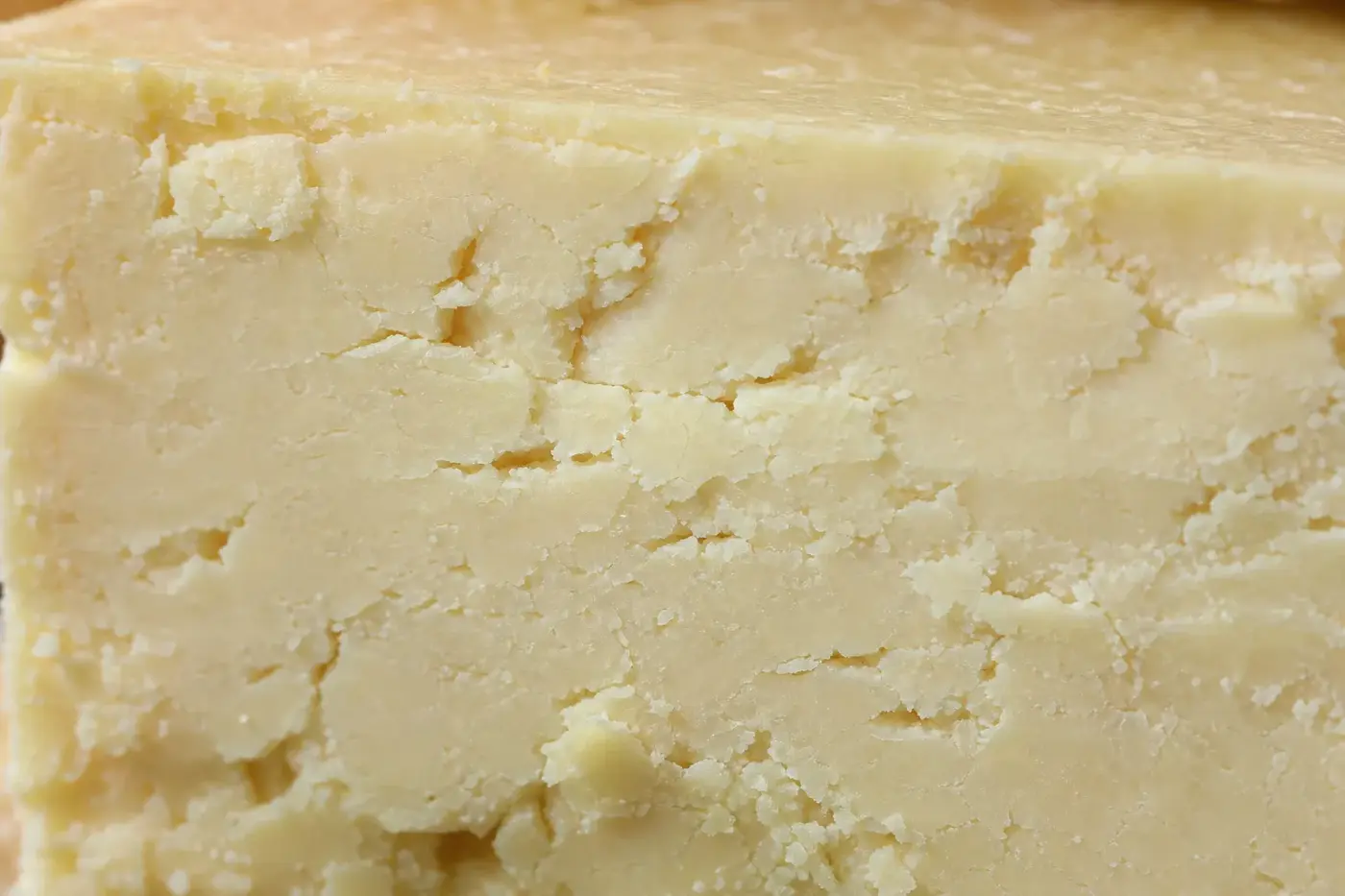
Inside a maturing Cheddar, the first rush of acidification is over. But the bacterial cast has not finished its work. Organisms that were scarce at the start can become influential as the cheese ages. These non starter lactic acid bacteria, or NSLAB, transform peptides and other available nutrients, changing flavour compounds according to the strain and conditions inside the cheese.[1,7]
Meet the cheese’s quieter workers
Think of starter cultures as the cheesemaker’s acidifying team. Chosen chiefly for that job, they turn lactose, the milk sugar, into lactic acid during manufacture. NSLAB sit outside this primary culture and, though often scarce initially, are better known for their ripening work. The distinction tells you their role, not their place on the bacterial family tree.[1,8]
An adjunct culture arrives by invitation, deliberately added for a purpose such as ripening. A cheesemaker can select bacteria associated with the non starter community and introduce them alongside the acidifying starter. That changes how they enter the cheese, not necessarily what they do once inside.[6,8]
Want to follow the manufacturing sequence? You can start with how cheese is made.
From milk and wooden vats to the cheese
The ripening community can begin in milk, on equipment or in the wider dairy environment. In traditional raw milk farmstead cheesemaking, researchers followed microbes through milk, curd, cheese and environmental surfaces. Their analysis of 118 samples linked the community’s assembly to sources including the animals, a wooden vat and processing tools.[4]
A larger plant has microbial residents of its own. One Cheddar investigation recovered NSLAB from equipment biofilms, communities of cells attached to a surface. If you count only the bacteria in incoming milk, you miss part of the journey. Contact with equipment during manufacture can introduce another population.[5]
How ripening changes the neighbourhood
Fresh curd and mature cheese are very different places to live. Acidification lowers pH, drainage removes whey and moisture, and salting changes the salt concentration in the remaining water. Cooling then slows microbial activity. Together, these changes determine which organisms persist and which can multiply.[1]
In one commercial Cheddar study, non starter lactobacilli rose from approximately 100 to 1,000 colony-forming units per gram after two weeks to 100,000 to 10 million after three months. Those units count cells, or clumps of cells, able to grow under the test conditions. It is a striking increase, but not a ripening timetable you can apply to every Cheddar.[6]
Oxygen and the associated oxidation-reduction conditions shape the community, too. The interior has a low-redox environment, favouring organisms suited to those conditions. Rind and interior need not develop alike. In the raw milk farmstead study, the paste remained relatively stable while the rind showed clearer succession.[4,6]
Get to know the names, then the strains
Two names you may encounter are Lacticaseibacillus paracasei and Lactiplantibacillus plantarum. In older cheese papers, you will usually find Lactobacillus paracasei and Lactobacillus plantarum instead. The List of Prokaryotic names with Standing in Nomenclature records the current combinations, reflecting the reorganisation of the former Lactobacillus genus. Even bacteria occasionally need their address book updated.[2,3]
A species name only takes you so far, though. A strain is a particular genetic lineage within a species, and strains can differ in enzyme activities and metabolic capabilities, with consequences for ripening. In an Irish survey of mature Cheddar, DNA fingerprinting revealed several strain groups within individual cheeses. Those patterns were also associated with the manufacturing site.[1]
Starter cells have more to give
Starter bacteria keep influencing cheese after their main acidifying job ends. During autolysis, their own enzymes break the cells down, making intracellular enzymes and cellular material accessible to the surrounding community. A falling count of living starter cells can therefore conceal a continuing biochemical contribution. Retirement, it seems, is not entirely on the cards.[1]
Released materials can supply nutrients, while starter enzymes continue helping to break down peptides. NSLAB encounter a food supply partly prepared by other organisms. Which strains benefit depends on what they can use, and what their neighbours have already released or consumed.[1,7]
To untangle these contributions, controlled Cheddar experiments compared cheeses made with and without starter bacteria, and with and without added lactobacilli. This takes you beyond a link between bacterial presence and a flavoursome cheese. It helps establish what the bacteria actually do.[7]
Smaller pieces, bigger flavour possibilities
NSLAB often make their clearest contribution late in protein breakdown. Proteolysis begins when caseins, the main milk proteins, are cut into peptides: shorter chains of amino acids. Peptidases trim these further, releasing smaller peptides and free amino acids. NSLAB commonly help at these later stages rather than attacking intact casein.[6,7]
That distinction matters when you taste and feel a cheese. Breaking down its protein network is different from trimming soluble peptides, so more free amino acids need not mean an equally large structural change. In experimental Cheddar, added lactobacilli increased free amino acids without significantly changing casein breakdown.[6]
Butteriness, crystals and the paths between
Lactate does not necessarily remain unchanged after acidification. Some NSLAB can shift its balance between the L and D forms, which share a chemical composition but have different spatial arrangements. Under suitable conditions, that can favour calcium lactate crystallisation. The visible result is a quality defect.[5]
Other pathways lead towards aroma. During laboratory screening for the Cheddar experiment, isolate R21#2 used citrate and produced diacetyl and acetoin, compounds associated with buttery dairy aromas. Most other isolates showed little or none of that activity. Even closely related bacteria can give you quite different flavour possibilities.[6]
Amino acid metabolism has several possible destinations, too. Some bacterial pathways can produce aroma compounds; others involve decarboxylation, the removal of a chemical carboxyl group, which can convert histidine into histamine. The available pathways depend on the strain and conditions in the cheese.[9,11]
What two isolates achieved together
In the same Cheddar study, a blend of two isolates produced the strongest increase in total free amino acids. Researchers selected the isolates, tested them separately and together, and compared the cheeses with a control. After six months, the adjunct cheeses received improved sensory scores. Both isolates were provisionally identified as close to the paracasei group.[6]
The telling detail is that the combination behaved differently from either isolate alone. You can see why a species name is a poor predictor of ripening performance. For the broader style and its manufacture, explore Cheddar.[6]
When a strain brings an unwanted capability
Not every capability in the non starter community is welcome. Calcium lactate deposits can create a quality problem, while biogenic amine formation is a separate concern. To assess either, you need to examine particular strains rather than label the whole community beneficial or undesirable.[5,9]
In experimental cheeses made with four histamine-producing isolates, researchers varied the inoculum in pasteurised milk and the curd cooking conditions. They followed bacterial growth and amine accumulation during ripening. Histamine formation depended on those manufacturing variables, connecting the initial microbial population with the conditions used to process it.[9]
A separate low-salt Cheddar experiment shows why counts alone cannot tell you the outcome. The inoculated strain St2A multiplied during ripening, yet histamine stayed comparatively low. Researchers attributed this chiefly to limited proteolysis and the low ripening temperature. Growth, substrate availability and metabolic activity all belong in the picture.[11]
Look beyond pasteurisation
You can find NSLAB in cheese made from pasteurised milk. Pasteurisation changes the starting microbial population, but a commercial plant investigation detected NSLAB after milk treatment and recovered them from equipment surfaces. Some organisms can survive treatment. Others arrive later during manufacture.[5]
For a dairy, milk treatment and environmental hygiene therefore address different entry points. Biofilms on food contact surfaces can contribute microbes even when milk has been heat treated. Research comparing early and late production found corresponding changes in equipment and aged-cheese communities.[8]
You can explore that distinction further in raw, thermised and pasteurised cheese. During ripening, the important question is which organisms reach the curd and remain active there, alongside any cultures the cheesemaker deliberately adds.[5,8]
Choosing the right company for the vat
Useful selection begins with identifying organisms and testing their behaviour. Plate counts reveal those able to grow on the chosen medium, while genetic fingerprinting helps distinguish strains. Community DNA sequencing offers a wider view. It is especially useful when samples from milk, equipment and cheese are compared through production and ripening.[1,4,8]
Before cheese trials, researchers can screen isolates for specific enzyme activities or unwanted metabolic capabilities. One study examined 431 dairy isolates lacking the screened amine-forming decarboxylase genes. Of these, 94 degraded biogenic amines in a defined laboratory medium. Selected isolates were subsequently tested as adjuncts in cheese.[10]
A laboratory screen reveals a capability; a cheese trial asks whether it matters in a real food matrix. Measurements of peptides, amino acids, volatile compounds and sensory properties help connect microbial activity with the finished cheese. Comparison with an unmodified control reveals the effect of adding a strain.[6,10]
For consistent results, the culture must suit the whole process: starter, composition, salt, moisture and ripening conditions. Following that community through time tells a cheesemaker more than choosing a bacterium by its name alone. When you want to understand ripening, the name is only the beginning.[1,8,10]
Questions people ask
What is the difference between starter bacteria and NSLAB?
Starter cultures are chosen chiefly to acidify milk during cheesemaking. NSLAB are lactic acid bacteria outside that primary acidifying culture and are better recognised for their activity during ripening.
Can NSLAB be found in cheese made from pasteurised milk?
Yes. Some organisms can survive treatment, while others enter later during manufacture, including through contact with equipment surfaces.
How much can NSLAB multiply as Cheddar ripens?
In one commercial Cheddar study, non starter lactobacilli rose from approximately 100 to 1,000 colony forming units per gram after two weeks to 100,000 to 10 million after three months. These figures describe the cheeses studied, not every Cheddar.
How do NSLAB contribute to cheese flavour?
NSLAB commonly help break down peptides into smaller peptides and free amino acids during ripening. Some bacterial pathways can produce aroma compounds, although the amino acid to aroma pathway and its citation require verification against primary research before publication.
Can NSLAB cause crystals in cheese?
Some NSLAB can alter the balance between the L and D forms of lactate. Under suitable conditions, this can favour calcium lactate crystallisation, producing a visible quality defect.
Sources
- American Society for Microbiology. Phenotypic and Genotypic Characterization of Non-Starter Lactic Acid Bacteria in Mature Cheddar Cheese. Applied and Environmental Microbiology, volume 65, issue 8, 1999.
- Leibniz Institute DSMZ. Species: Lacticaseibacillus paracasei. List of Prokaryotic names with Standing in Nomenclature, live database entry, checked November 2026.
- Leibniz Institute DSMZ. Species: Lactiplantibacillus plantarum. List of Prokaryotic names with Standing in Nomenclature, live database entry, checked November 2026.
- American Society for Microbiology. Composition, Succession, and Source Tracking of Microbial Communities throughout the Traditional Production of a Farmstead Cheese. mSystems, 2021.
- American Dairy Science Association. Nonstarter Lactic Acid Bacteria Biofilms and Calcium Lactate Crystals in Cheddar Cheese. Journal of Dairy Science, volume 89, issue 5, 2006.
- American Dairy Science Association. Isolation, Characterization, and Influence of Native, Nonstarter Lactic Acid Bacteria on Cheddar Cheese Quality. Journal of Dairy Science, volume 84, issue 1, 2001. Full paper also retrieved through its DOI.
- EDP Sciences. Contribution of starter lactococci and non-starter lactobacilli to proteolysis in Cheddar cheese with a controlled microflora. Le Lait, volume 77, issue 4, 1997.
- American Society for Microbiology. Nonstarter Bacterial Communities in Aged Cheddar Cheese: Patterns on Two Timescales. Applied and Environmental Microbiology, volume 88, issue 1, 2022.
- Elsevier. Influence of the inoculum level of Lactobacillus parabuchneri in vat milk and of the cheese-making conditions on histamine formation during ripening. International Dairy Journal, volume 113, article 104883, 2021. The bacterial name in the title is the paper’s nomenclature.
- American Society for Microbiology. Selection of Amine-Oxidizing Dairy Lactic Acid Bacteria and Identification of the Enzyme and Gene Involved in the Decrease of Biogenic Amines. Applied and Environmental Microbiology, 2016.
- International Association for Food Protection. Histamine Production in Low-Salt Cheddar Cheese. Journal of Food Protection, volume 54, issue 11, 1991.
This desk-researched article combines original cheesemaking experiments, microbial source-tracking studies and authoritative bacterial nomenclature records.
Last checked: November 2026
Last checked November 2026.
The editors suggest you read next