Bacteriophages: Why Starter Cultures Fail
The pH curve starts falling, then loses momentum.
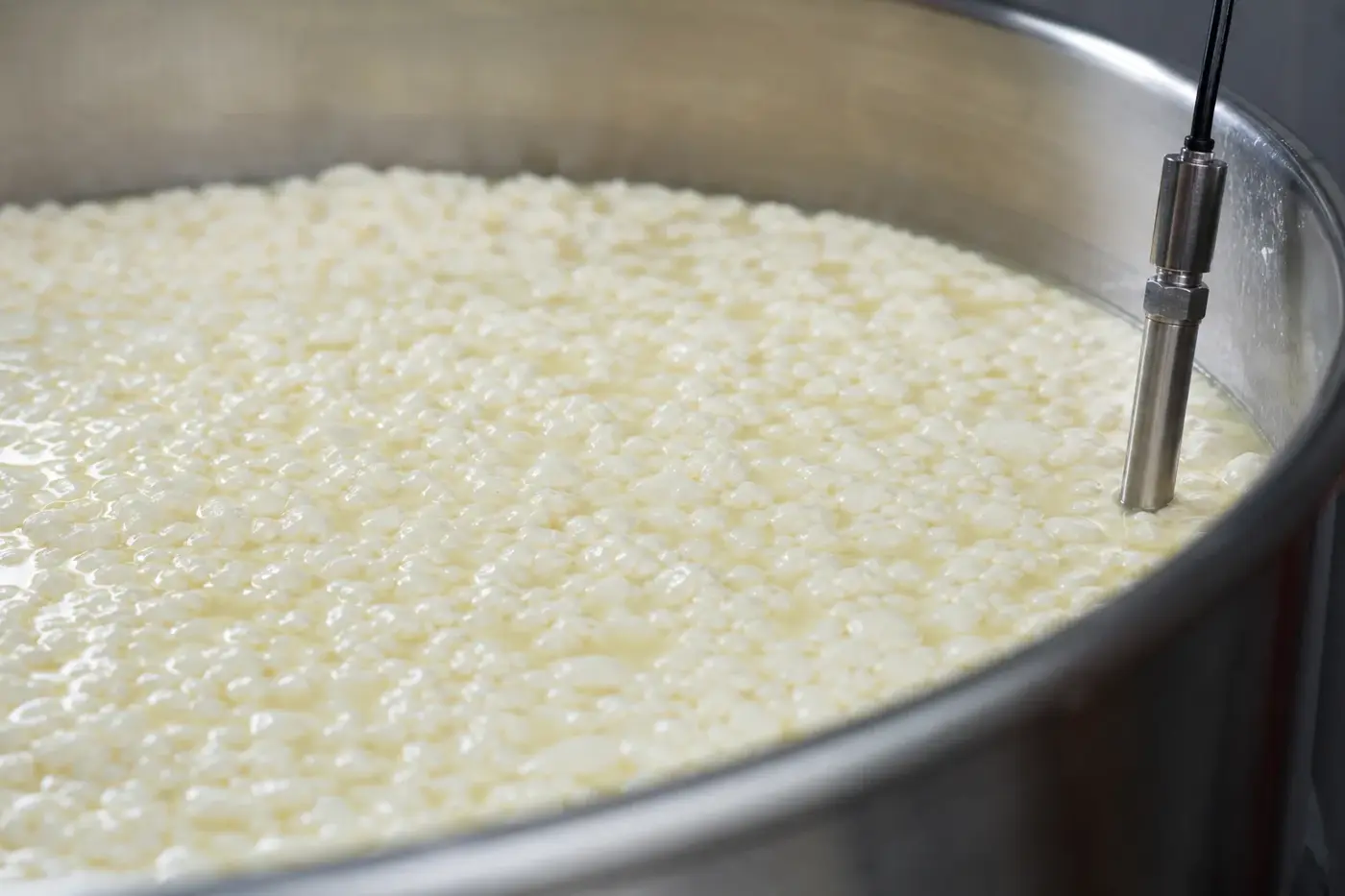
The pH curve starts falling, then loses momentum. In a Danish factory, the same mixed starter worked for more than 11 years before serious phage attacks inhibited acid production in its curd. Phages had gradually appeared that could infect more of the starter’s bacterial isolates. Long service, it turned out, came with no immunity. [12]
If you are watching the vat, that stalled curve deserves your attention. Bacteriophages are viruses that infect bacteria, including the starter organisms that produce acid. Protecting your cultures means interrupting the viruses’ routes through the dairy and investigating a slow batch before choosing the next starter. [2,11]
When your pH curve stops playing along
A falling pH lets you watch your starter at work. This community or selected mixture of bacteria drives fermentation: its acid-producing bacteria turn lactose, the milk sugar, into lactic acid. Plot pH against elapsed time and you can follow their progress as acidity develops and pH falls. To see where this fits into the wider make, visit how cheese is made. [8]
A suspicious curve can start normally, then flatten. The American Cheese Society describes initial acid production followed by slowing or stopping as a characteristic phage pattern. Compare your batch with the expected curve for that cheese and culture. Its eventual finishing pH cannot tell you the whole story. [2]
Timing matters as much as the destination. Acidification accompanies curd formation, whey removal and further processing. Your benchmark is the dairy’s validated process for that product.
Meet the viruses with a taste for your starter
Bacteriophages, usually shortened to phages, have bacteria as their hosts. The dairy starter phages discussed here infect susceptible bacterial cells, not people or the cheese itself. Their importance lies in what they can destroy: the organisms you rely on for steady acid production. [11]
Milk can carry them into the factory. In a 2004 investigation, researchers tested 900 raw milk samples and recovered lactococcal phages from 83. Heat resistance differed between phage groups, and some dairy phages survive pasteurisation, so you cannot rely on that treatment to eliminate them all. [7] For the treatments themselves, see raw, thermised and pasteurised milk.
Inside a cell, trouble gathers pace
The destructive sequence has a name: the lytic cycle. A phage attaches to a susceptible cell, a stage called adsorption, then delivers its genetic material. Inside, phage DNA is copied and new virus components are made and assembled. Finally, the cell breaks open through lysis, releasing progeny phages that can infect further susceptible bacteria. [3]
Researchers have followed this sequence in lactococcal phages using DNA analysis and electron microscopy. They observed attached phages, intracellular DNA and structures associated with new phage heads, followed by cell lysis and release. In cells carrying the defence mechanism AbiK, however, the sequence was interrupted. Attachment did not necessarily lead to a successful infection. [3]
Back in your vat, the workforce is shrinking. With fewer active starter cells, less lactose is fermented and acid develops more slowly. Unaffected strains in a mixed culture may keep working. That can make the difference between a delayed make and complete fermentation failure. [10]
Look beyond the species name
A species name alone will not tell you whether your starter is susceptible. What matters is the particular bacterial strain and the phage it faces. In a Canadian factory study spanning 2001 to 2020, researchers tested selected phages against industrial Lactococcus strains. They found narrow and broader host ranges, although most phages attacked only a small subset of strains. [4]
Finding phages, then, does not automatically explain a failed vat. A 2021 study of natural whey starters in Italian dairies recovered numerous phages, yet every starter investigated acidified successfully. The researchers suggested that bacterial diversity and differing susceptibilities helped keep the cultures working overall. [9]
Before you blame phages, gather the clues
A flattened curve calls for investigation, not a snap verdict. Temperature errors can impair starter activity, antibiotic or sanitiser residues can inhibit bacteria, and poor handling can weaken the starter itself. The American Cheese Society distinguishes the familiar phage pattern from residual antibiotics, which may prevent acid development from the outset. Patterns guide your enquiries; laboratory evidence separates causes with overlapping effects. [2,10]
Put your pH record beside the temperature record, starter identity and milk results. Did the trouble follow one culture, one milk delivery, one vat or a particular point in the production day? Those comparisons help you choose useful samples and laboratory comparisons, rather than simply collecting more of everything. [1,7,11]
Follow the whey, not just the vat
Whey is an important vehicle for phages. The University of Wisconsin Center for Dairy Research identifies movement of this liquid separated from curd, spills and airborne whey aerosols as routes through a cheese plant. Put starter preparation beside whey handling and contamination has a route into the very room intended to build a healthy bacterial population. [6]
Plant sampling shows how far the problem can reach. A Canadian investigation used surface swabs and five types of air sampler, followed by quantitative PCR to detect two groups of lactococcal phages. Researchers found phage DNA on most sampled surfaces and in the air. The picture reached well beyond a single vat. [5]
Look at equipment, working surfaces and traffic between rooms, alongside milk and starter. Then read environmental results for what they actually measure: PCR detects genetic targets, while culture-based tests examine infection. A DNA signal answers a different question from evidence that a phage can still infect the culture you are using. [4,5]
Give your next batch a better beginning
Keep starter preparation and storage away from whey processing. Look closely at how staff, clothing and equipment move between those areas. The Center for Dairy Research also recommends attention to airflow, dry floors and sanitation of vats and affected equipment using products effective against phages. [6]
The American Cheese Society recommends removing whey from cheesemaking premises and cleaning and sanitising during and after production. It also advises working with culture suppliers to select suitable combinations of starter strains. These are practical conversations worth having before the next difficult make. [2]
Direct vat cultures can reduce the contamination opportunities that come with propagating a bulk starter. Storage and handling must still meet the product’s requirements. Agree sanitation conditions with your supplier and the dairy’s technical team. A heat treatment or chemical recipe borrowed from another plant is no substitute for that work. [6,7]
Keep your starter rotation moving
Strain rotation changes the hosts available to a phage. A virus that multiplies well on today’s starter may find tomorrow’s strains unsuitable. The Canadian factory study used host-range information to improve its rotation schedule. That gives you a practical reason to ask suppliers about phage susceptibility profiles as well as acidification performance. [4]
Resistance adds another layer of protection. In a 1998 experimental study, researchers combined several naturally occurring phage defence systems in a lactococcal strain, including interference with attachment, restriction of incoming genetic material and abortive infection. The resulting strain worked successfully as a single-strain starter in industrial Cheddar manufacture. Combining defences had delivered a practical benefit. [8]
Those defences act at different stages, so assess resistance against the phages actually challenging your culture. Work on AbiK found different molecular effects in different phages, even when they could infect the same bacterial host. Resistance is a tested biological relationship, not a permanent promise. It needs continued monitoring. [3,8]
Mixed cultures can spread the risk. In the Italian whey-starter survey, researchers linked successful acidification despite phage presence to a varied bacterial community. That interpretation supports investigating diversity. Your culture choice must still preserve the cheese’s required fermentation characteristics and be assessed against the relevant phages. [9]
Repeatedly using a susceptible strain gives a matching phage repeated chances to multiply. The 2004 milk-and-whey investigation proposed that incoming milk continually supplies diverse phages, while a susceptible starter allows one to become prevalent. Rotation changes that opportunity. Surveillance tells you whether the current arrangement still works. [7]
Remember the Danish factory and its more than 11 years with the same mixed culture. As phages gained the ability to infect more starter isolates, that familiar culture suffered serious attacks. Recent trouble-free makes are a reason to value your culture, not a reason to stop reviewing its resistance and rotation. [12]
Give the laboratory a useful story
Keep both the story of your make and material from it. Contact your culture supplier or a specialist laboratory while documenting the incident, so your sampling plan matches the tests available. The questions below help organise the evidence. Let the laboratory guide the method. [6,11]
| What to keep | What it can help you discover |
|---|---|
| Timed pH and temperature records | When did your batch leave its expected path? [10] |
| Starter identity, batch and handling record | Was one culture or its preparation linked to the problem? [2,10] |
| Milk and cleaning records | Could inhibitory residues or processing errors explain the slowdown? [10] |
| Whey and relevant environmental samples | Can the laboratory find phages able to infect your starter? [5,10] |
A plaque assay tests infectivity on a selected bacterial host. Phages create clear areas, called plaques, in a lawn of susceptible bacteria; counting them estimates infectious units under the assay conditions. The Canadian longitudinal study used plaque assays to isolate phages from whey, then tested host range. That connected detection with the strains that mattered in production. [4]
Quantitative PCR measures targeted phage DNA and can map contamination across air and surfaces. Read a positive result alongside host susceptibility and fermentation performance. A negative result is limited by the targets and samples examined. Neither replaces the different information an infectivity assay supplies. [5]
Specialist approaches can also look directly at infected cells. A 2007 study used flow cytometry, which measures properties of individual cells passing through an instrument, to detect changes in infected Lactococcus cultures. Researchers observed altered cell chaining and, later, a population with reduced cell-wall density. Such methods can add evidence about infection before investigators have a complete account of every phage involved. [11]
A slow vat changes more than your timetable
Slow acid production makes moisture control difficult and extends manufacture, according to a University of Idaho bulletin on starter failures. Its historical comparison tables show acid development and bacterial populations diverging between phage-contaminated and control makes. You are dealing with more than a delay. Curd processing is continuing with an acidification history different from the one intended. [10]
When acidification falls outside validated limits, your dairy should follow its food safety procedures. For the broader controls, see cheese food safety.
Keep exploring the whole make
- How Cheese Is Made: From Milk to Cheese: follow acidification’s place in the complete production sequence.
- Raw Milk, Thermised and Pasteurised Cheese: separate milk treatments from control of starter phages.
- Cheese Food Safety: The Complete Guide: explore the wider questions of process control and contamination.
General information only, not medical advice: follow the official guidance where you live.
Questions people ask
What are bacteriophages and why do they matter in cheesemaking?
Bacteriophages are viruses that infect bacteria, including the starter organisms that produce acid. When susceptible starter cells are destroyed, acid can develop more slowly.
How can a cheesemaker spot a possible phage attack?
A suspicious pH curve may fall at first, then flatten as acid production slows or stops. Temperature errors, residues and poor starter handling can also impair starter activity, so laboratory evidence helps distinguish the causes.
Does pasteurisation eliminate bacteriophages?
Some dairy phages survive pasteurisation. The treatment cannot be relied upon to eliminate them all.
How do bacteriophages spread through a cheese plant?
Milk can carry phages into a factory, while whey, spills and airborne whey aerosols can spread them through the plant. The University of Wisconsin Center for Dairy Research recommends keeping starter preparation and storage away from whey processing and paying attention to airflow, dry floors and sanitation.
How are phages tested for in a dairy?
A plaque assay tests whether phages can infect a selected bacterial host. Quantitative PCR detects targeted phage DNA and can map contamination across air and surfaces, but it supplies different information from an infectivity assay.
Sources
- New Zealand Ministry for Primary Industries. Food Safety Template for Cheesemakers, 14 May 2018. Sections on process design, controlling pH and corrective action. Official document.
- American Cheese Society. Best Practices Guide for Cheesemakers, 2025 edition, chapter 6, starter cultures and bacteriophages. Published guide. Industry guidance, not regulatory advice.
- Microbiology. Microbiological and molecular impacts of AbiK on the lytic cycle of Lactococcus lactis phages of the 936 and P335 species, volume 146, issue 2, 2000. Research record.
- Applied and Environmental Microbiology. Longitudinal Study of Lactococcus Phages in a Canadian Cheese Factory, 2023. Original study.
- Applied and Environmental Microbiology. Detection of Airborne Lactococcal Bacteriophages in Cheese Manufacturing Plants, volume 77, issue 2, 2011. Original study.
- University of Wisconsin Center for Dairy Research. Understanding and Preventing Bacteriophage, Dairy Pipeline, volume 29, number 2, 2017. Technical guidance.
- Applied and Environmental Microbiology. Milk Contamination and Resistance to Processing Conditions Determine the Fate of Lactococcus lactis Bacteriophages in Dairies, volume 70, issue 12, 2004. Original study.
- Applied and Environmental Microbiology. Design of a Phage-Insensitive Lactococcal Dairy Starter via Sequential Transfer of Naturally Occurring Conjugative Plasmids, volume 64, issue 11, 1998. Original study.
- Frontiers in Microbiology. Massive Survey on Bacterial-Bacteriophages Biodiversity and Quality of Natural Whey Starter Cultures in Trentingrana Cheese Production, volume 12, 2021. Original study.
- University of Idaho Agricultural Experiment Station. Suggestions for Preventing Cheese Starter Failures, bulletin 253, February 1956. Historical bulletin.
- Applied and Environmental Microbiology. Detection of Bacteriophage-Infected Cells of Lactococcus lactis by Using Flow Cytometry, 2007. Research record.
- International Journal of Food Microbiology. Development of lytic Lactococcus lactis bacteriophages in a Cheddar cheese plant, volume 50, issue 3, 1999. Publisher abstract.
This desk-researched article combines original dairy microbiology studies, documented factory investigations, university technical guidance and attributed New Zealand food safety guidance.
Last checked: November 2026
Last checked November 2026.
The editors suggest you read next