Wild Cultures vs Commercial Starters
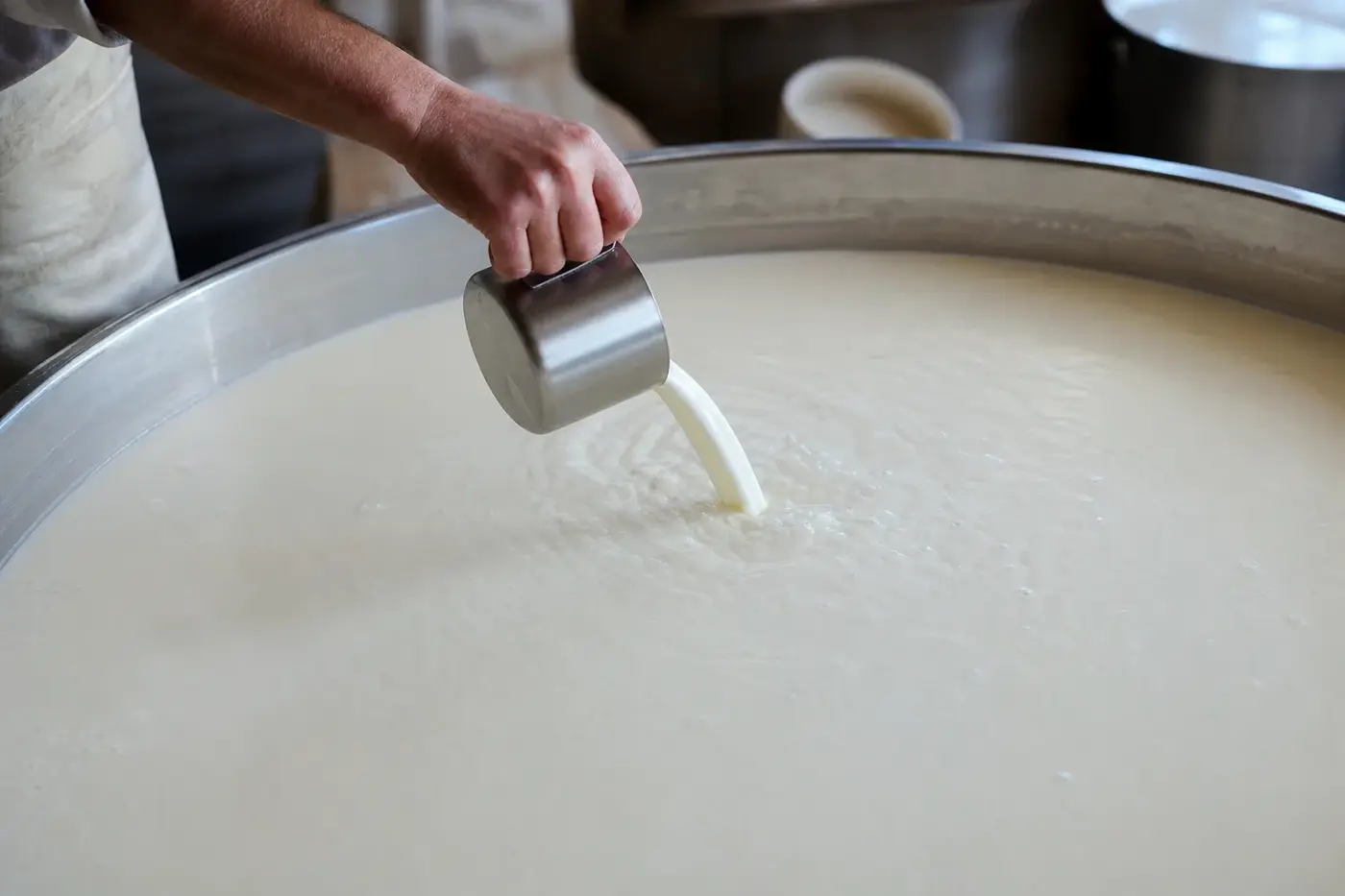
Yesterday’s whey slips into today’s vat, carrying a dairy’s living culture with it.
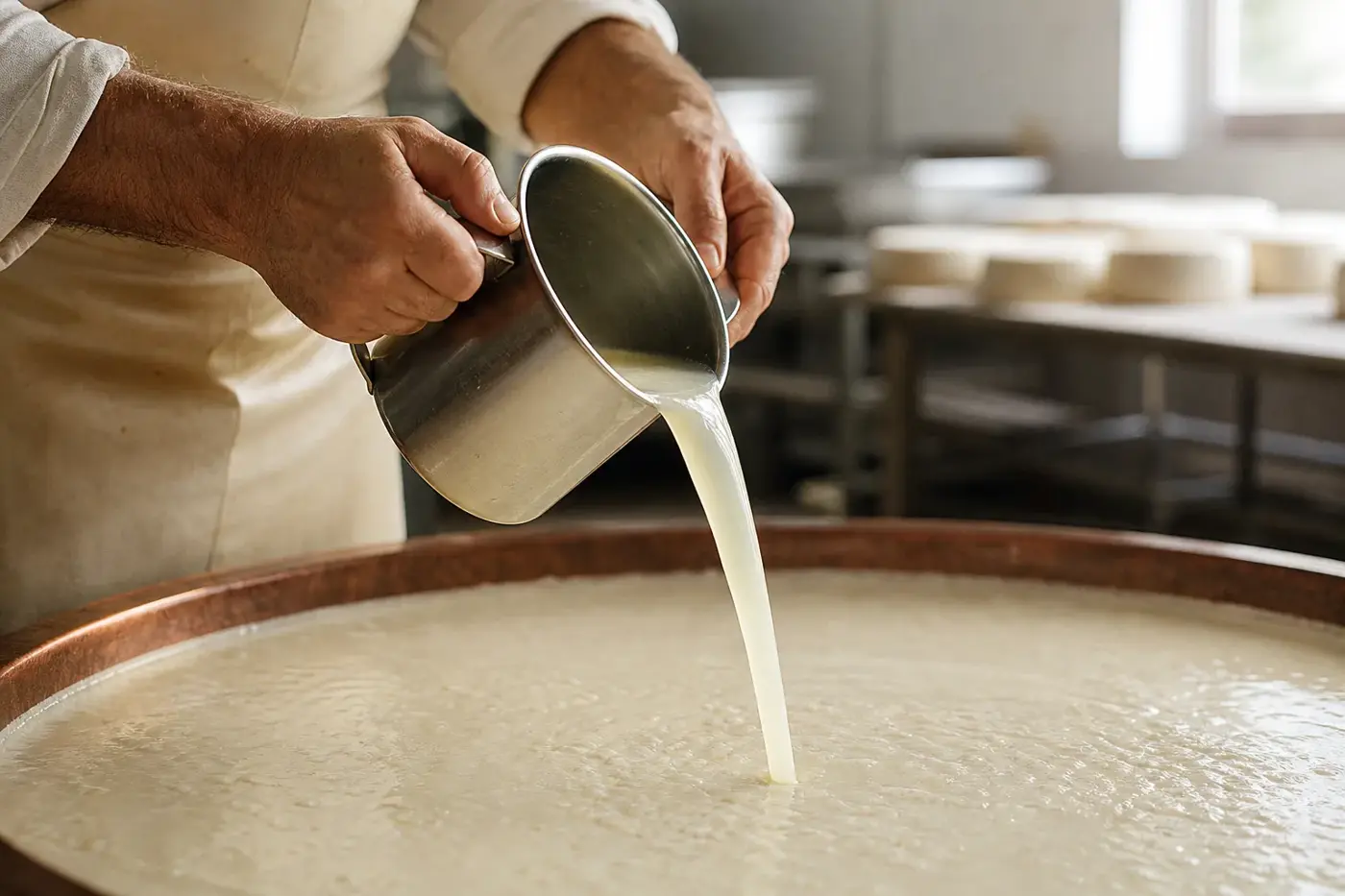
Yesterday’s whey slips into today’s vat, carrying a dairy’s living culture with it. Elsewhere, a cheesemaker opens a sachet of selected bacteria. You might see tradition on one side and technology on the other. Look closer: both makers are tending microbial communities. [1,3]
Wild cultures develop from naturally occurring microbes; commercial starters are prepared and supplied for particular jobs, especially reliable acidification. The interesting difference lies in how those organisms are selected, maintained and controlled. The packaging tells you only so much. [1,3]
Meet the tiny workers getting the vat moving
A starter culture gets fermentation going and guides its progress. In most cultured cheeses, these microorganisms have a central job: turning lactose, the sugar in milk, into lactic acid. As that acid builds up, pH falls. First the milk, then the curd, becomes more acidic. [2,3]
There is much more happening here than a developing sour note. Acidity works alongside coagulation, when milk sets into a gel, and its timing and rate can affect how curd releases whey and retains moisture. Those changes help shape texture. Acidification also influences which other microbes can grow, preparing the conditions for the rest of the make. [2,5]
You can follow the sequence from setting to draining in how cheese is made. For the enzymes that coagulate the milk, turn to rennet explained.
Yesterday’s whey has another day’s work ahead
A wild culture is a naturally occurring microbial community, rather than a standardised ingredient. Its members may arrive in the milk, come from equipment or the dairy environment, or travel into the next batch in retained whey, the liquid separated from curd. Several of these routes can operate in one dairy. [1,7]
Carrying a culture forward this way is called backslopping, a name unlikely to trouble the perfume industry. The practice itself is deliberate cultivation: each round of incubation favours organisms that can grow in that particular milk or whey. A traditional culture is selected too, shaped by the process rather than assembled strain by strain. The maker maintains a community, rather than waiting for microbes to turn up. [1,2]
That community can shift its balance from batch to batch. Researchers studying blends derived from a complex dairy starter followed propagation over 152 generations. Bacteriophages, viruses that infect bacteria, helped change the proportions of bacterial lineages. So continuity does not mean an identical microbial cast every time. [8]
Open the sachet and meet the culture
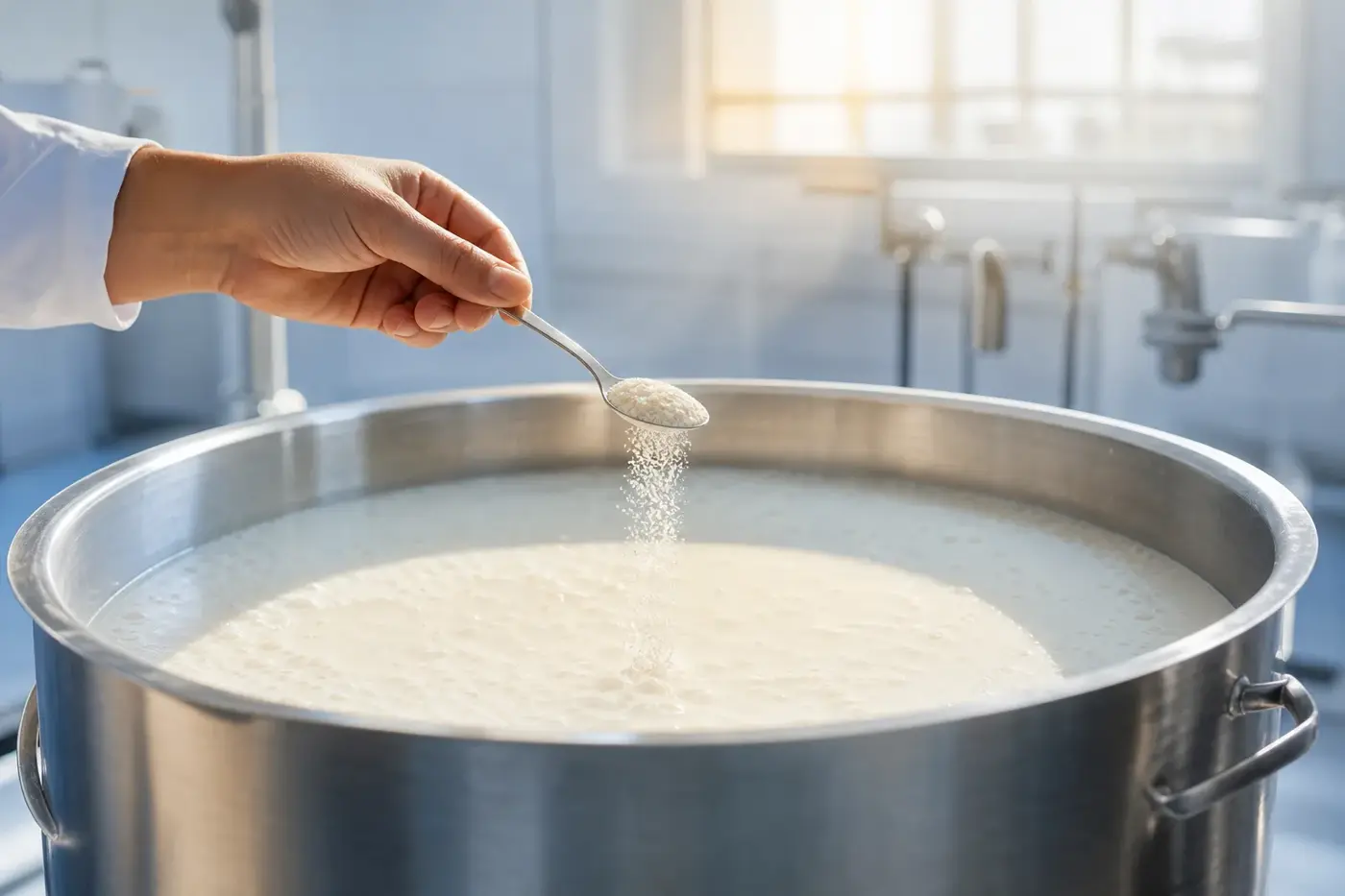
A commercial starter gives the maker a specified culture with documented intended performance. Suppliers select organisms for useful characteristics, including acidification, flavour development and compatibility with the production process. They grow the bacteria under controlled conditions and supply concentrated cultures, commonly frozen or freeze-dried. These go straight into the vat or are multiplied further as a bulk starter. [3,4]
You may be looking at a designed community, not a lone organism. Commercial cultures can contain several strains, distinct variants within a bacterial species. Tetra Pak’s processing handbook describes combining strains with complementary properties, including temperature preference and salt tolerance. [3]
IFF’s technical sheet for one freeze-dried cheese starter specifies its bacterial composition and an acidification test under stated laboratory conditions. That gives the cheesemaker a defined reference for assessing performance. IFF also requires users to assess suitability for their own process. A laboratory profile still has to work with the dairy’s particular milk and equipment. [4]
A traditional dairy might be in the family tree
The organisms in a commercial sachet may have ancestors from a traditional dairy. Isolating a useful bacterium, checking its properties and growing it separately changes how it is supplied, not where it originally came from. Traditional origins and controlled propagation can sit quite comfortably together. [3,6]
A pilot study of cultures for traditional cheesemaking brings that connection into focus. Researchers screened 65 strains, identified them genetically and selected 12 for experimental combinations. During cheesemaking trials, they monitored bacterial growth and pH, and some combinations acidified the curd rapidly under winter production conditions. These were useful organisms selected from an existing dairy community, not microbes invented outside it. [6]
Watch the acid, not just the clock
Commercial starters are chosen to make the acidification curve more predictable. Yet a well-maintained retained culture can hold an active population already adapted to the process, so wild need not mean slow. Changes within a mixed culture can also alter early acidification even when the eventual pH looks similar. [1,3]
You can see the distinction in a 2023 experiment combining enriched milk communities with natural whey cultures. The experimental adjuncts slowed acidification during the first hours, yet the cheeses reached similar pH values after 24 hours. A similar destination, then, but a different journey. Looking only at the endpoint missed part of the fermentation story. [2]
For the curd, acid development and moisture belong in the same conversation. An experimental comparison of raw and pasteurised milk cheeses measured differences in moisture and texture alongside microbial changes. Milk treatment, culture composition and the make all influence the result. There is no single useful timetable dividing ‘wild’ from ‘commercial’ cultures. [5]
| What to look for | Retained mixed culture | Selected commercial starter |
|---|---|---|
| Who is in the culture? | A community maintained by repeated propagation. [1] | Specified organisms or strains, sometimes blended. [3,4] |
| How does the acid develop? | Depends on community activity and maintenance. [1] | Tested against a documented performance profile. [4] |
| What needs watching? | The culture’s history and current activity. [1] | The product specification and actual vat performance. [4] |
Follow the aroma, then ask about place
A longer microbial guest list does not automatically make a better cheese. There is no prize for fitting the most names on the invitation. What the organisms do matters more: a larger cast allows more possible interactions and different metabolic activities, but conditions inside the curd determine which become influential and when. Diversity opens possibilities; it makes no promises. [7,10]
In the selected-culture pilot study, gas chromatography and mass spectrometry detected substantial differences in volatile compounds between the experimental cheeses and the control. That connects microbial choice with aroma chemistry under those particular combinations and production conditions. The detail matters as much as the diversity. [6]
A cheese’s regional character can include the continuity of dairy practice. Think of the milk community, the organisms repeatedly carried forward and the conditions that select them. The European farmhouse dairy hygiene guide describes indigenous whey cultures as contributing to product typicity. Attributing a particular aroma to a place, though, takes more than calling its culture ‘wild’. [1,6]
A study of fresh cheeses shows you how much can hide behind a production label. Using bacterial DNA sequencing, researchers compared products made with starter cultures, direct acid addition and undeclared acidification systems. One acidifying species dominated the starter-inoculated cheeses. Other systems had different, sometimes broader communities. [10]
Differences associated with the starter system helped distinguish dairies, while some contaminating organisms varied more between batches. The findings connect microbial composition with production choices. They tell you about the communities in those cheeses, not which cheese you will prefer. [10]
The starter opens the story; ripening takes it further
Starter bacteria lead early acidification, but other organisms can become important later. These include non-starter lactic acid bacteria and surface communities. Selected additional microbes, often called adjunct cultures, are added for ripening functions rather than the main acidification. Their jobs can include flavour development, rind changes and gas formation. [2,3,7]
Researchers following three batches of surface-ripened cheese used bacterial DNA sequencing to track microbial succession during production and storage. The community changed over time, with contributions from the production environment. Organisms dominating the milk did not simply appear in the same proportions in the finished cheese. [7]
A starter’s ingredient list therefore gives you only part of the microbial story. To understand the ripening bacteria, follow the cheese beyond its initial fermentation. It becomes a different habitat, and its community changes with it. [7]
Raw or pasteurised? Give the milk its say
Raw milk brings its own microbial community, but that community varies. In the 2023 enrichment study, raw milk samples differed in richness and diversity. Subsequent treatment and incubation selected a narrower community. Raw milk alone tells you neither the exact starter organisms present nor how strongly they will acidify a vat. [2]
Pasteurisation reduces the microbial population and changes the balance available for cheesemaking; it does not sterilise milk. In the surface-ripened cheese study, researchers still detected a varied bacterial community in pasteurised milk. Those milk-associated organisms, however, contributed little to the later cheese community. [7]
The experimental comparison of raw and pasteurised milk cheeses also found different bacterial communities during ripening. Yet the added starter genera predominated in both. Milk treatment and starter choice are separate decisions whose effects meet in the cheese. You can explore that distinction in raw milk, thermised and pasteurised cheese. [5]
Good cultures need careful hands and clear controls
Safety depends on the whole cheesemaking process, not the culture label. For England, Wales and Northern Ireland, the Food Standards Agency’s November 2026 guidance tells food businesses to maintain food safety procedures based on hazard analysis and critical control points, known as HACCP. This approach identifies hazards and the controls needed to reduce them. [9]
For cheesemaking, the European farmhouse dairy guide recommends checking culture condition and acidification, keeping equipment clean and matching the culture to the production process. Retained cultures need managed preparation and storage. Purchased cultures need the supplier’s handling conditions. The tasks differ, but both need a functioning fermentation. [1,4]
For raw milk cultures, the farmhouse guide specifically places cultivation in an environment where pathogens and spoilage organisms are controlled. Maintaining a useful dairy community and preventing contamination belong together. The culture’s origin does not change that requirement. [1]
The FSA also requires current records and regular reviews of procedures. Culture performance belongs in that documented process, alongside supplier checks and hygiene. It cannot stand in for the wider system of controls. [9]
Bacteriophages give cheesemakers another reason to watch performance in the vat. The propagation experiment found different phage resistance even among closely related strains. Diversity can shape resilience, but the practical test is whether the culture does its job in that dairy. [8]
For wider controls around pathogens, hygiene and production, follow the official sources. You can also explore the cheese food safety guide.
Back in the dairy, the approaches come together
Cheesemakers often combine these tools rather than pick a side. A dairy can maintain a retained whey culture, propagate a purchased starter as a bulk culture, or use selected adjuncts alongside its main acidifying population. Each arrangement answers two distinct questions: what will deliver the necessary fermentation, and which other microbes are wanted during ripening? [1,3,6]
The 2023 enrichment experiment tested a related approach, adding a cultivated natural community to the usual whey culture. Early microbial diversity increased, but the effect diminished during ripening. More organisms at the beginning did not mean they all remained influential at maturity. [2]
When you want to understand a cheese, ask three questions. Where did its acidifying culture come from, how is that culture maintained, and which additional microbes shape maturation? Those answers reveal more about everyday cheesemaking than treating ‘wild’ and ‘commercial’ as opposing grades of quality.
There is more to explore in starter cultures, ripening bacteria and bacteriophages. Each takes you further into the communities at work in cheese, from yesterday’s whey to the cheese you eventually taste.
General information only, not medical advice: follow the official guidance where you live.
Questions people ask
What is the difference between wild cultures and commercial starters?
Wild cultures are naturally occurring microbial communities that can come from milk, equipment, the dairy environment or retained whey. Commercial starters contain specified organisms selected and supplied for particular jobs, including reliable acidification.
What is backslopping in cheesemaking?
Backslopping means carrying a culture forward into the next batch, for example in retained whey. Each round of incubation favours organisms able to grow in that milk or whey.
Are wild cultures slower than commercial starters?
Not necessarily. A well maintained retained culture can contain an active population already adapted to the cheesemaking process.
Can pasteurised milk contain bacteria used in cheesemaking?
Pasteurisation reduces the microbial population and changes its balance, but does not sterilise milk. In one study, researchers detected a varied bacterial community in pasteurised milk, although those organisms contributed little to the later cheese community.
Is cheese made with wild cultures safe?
Safety depends on the whole cheesemaking process, not the culture label. The Food Standards Agency advises food businesses in England, Wales and Northern Ireland to maintain food safety procedures based on hazard analysis and critical control points. See the agency's guidance for current requirements.
Sources
- Farmhouse and Artisan Cheese & Dairy Producers European Network. European Guide for Good Hygiene Practices in the Production of Artisanal Cheese and Dairy Products, European Commission-hosted edition, 2016. Section III, “Cultures”, printed pages 24 to 26. Source document.
- Frontiers in Microbiology. “Selective enrichment of the raw milk microbiota in cheese production: Concept of a natural adjunct milk culture”, original research, 2023. Introduction, methods and results, including culture diversity and cheese acidification. Full text.
- Tetra Pak. Dairy Processing Handbook, chapter 12, “Cultures and starter manufacture”, online edition accessed November 2026; chapter revision date not stated. Manufacturer technical reference, a commercial source. Technical chapter.
- IFF. CHOOZIT MA 14 LYO 50 DCU, product description PD 205505-13.0EN, valid from 15 May 2024. Manufacturer technical documentation, retrieved from a distributor-hosted copy. Technical sheet.
- Food Science of Animal Resources. “Microbiological Characteristics of Gouda Cheese Manufactured with Pasteurized and Raw Milk during Ripening Using Next Generation Sequencing”, original research, 2019. Retrieved abstract and indexed results summary. Research record.
- University of Palermo institutional research repository. “Development of an ad hoc natural whey starter culture for the production of Vastedda della valle del Belìce cheese”, research contribution, 2013. Repository abstract describing strain screening, pilot trials and volatile analysis. Research record.
- “Microbial Succession in the Cheese Ripening Process-Competition of the Starter Cultures and the Microbiota of the Cheese Plant Environment”, original research, 2023. Retrieved indexed discussion describing three production batches and bacterial sequencing. Research record.
- American Dairy Science Association, Journal of Dairy Science. “Strain diversity and phage resistance in complex dairy starter cultures”, volume 98, issue 8, 2015. Abstract describing 102 isolates and experimental propagation over 152 generations. Research abstract.
- Food Standards Agency. Managing food safety, live guidance accessed November 2026. “Managing food safety procedures”, “Food hygiene” and “Suppliers”. Official guidance.
- International Journal of Food Microbiology. “The microbiota of high-moisture mozzarella cheese produced with different acidification methods”, 2016, published online in 2015. Retrieved abstract describing bacterial sequencing and comparisons between acidification systems. Research abstract.
This piece was researched through published experimental studies, manufacturer technical documentation and official food safety guidance, with findings distinguished from editorial synthesis.
Last checked: November 2026
Last checked November 2026.
The editors suggest you read next