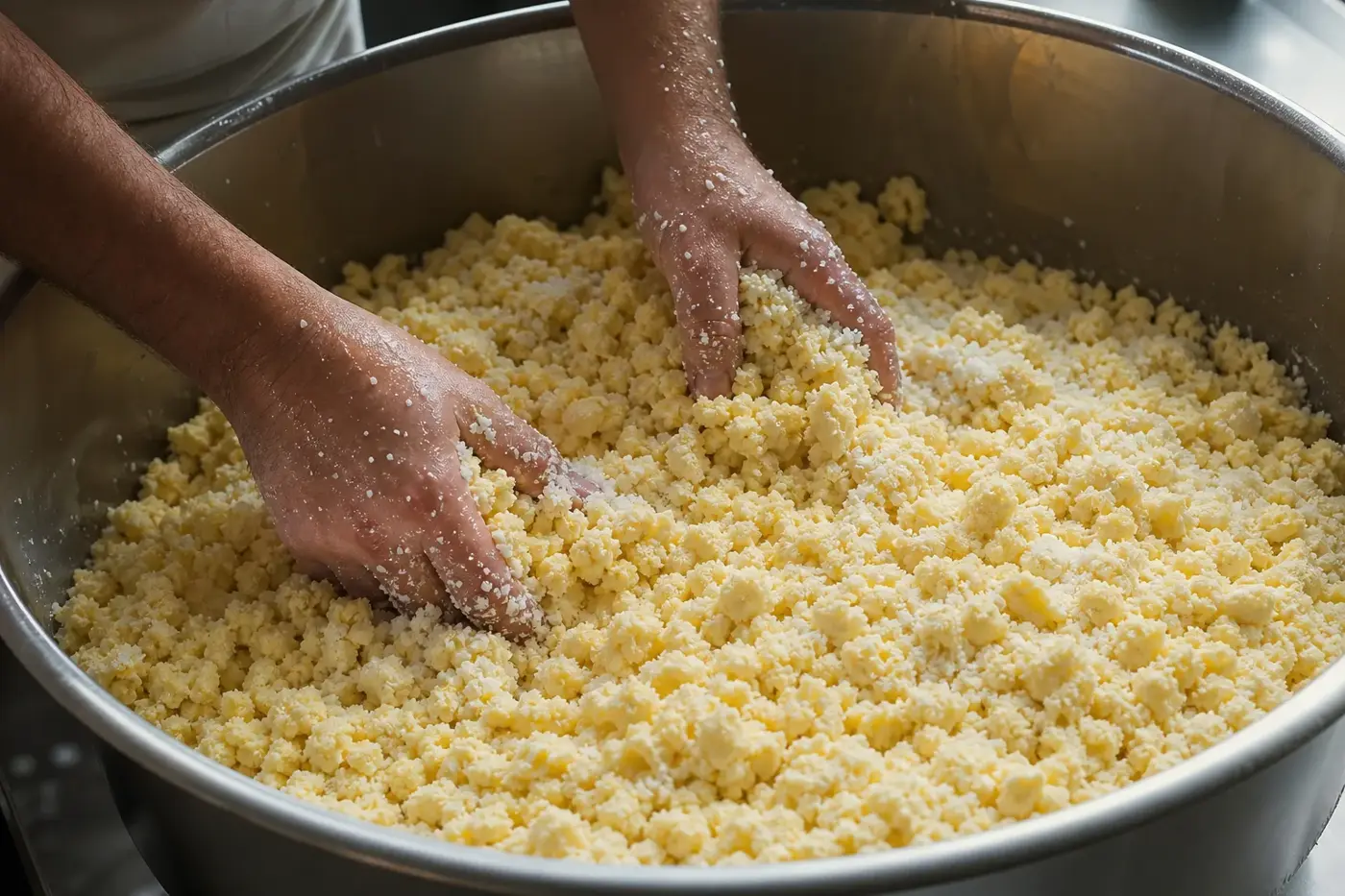
Cheese and Health: What the Evidence Says
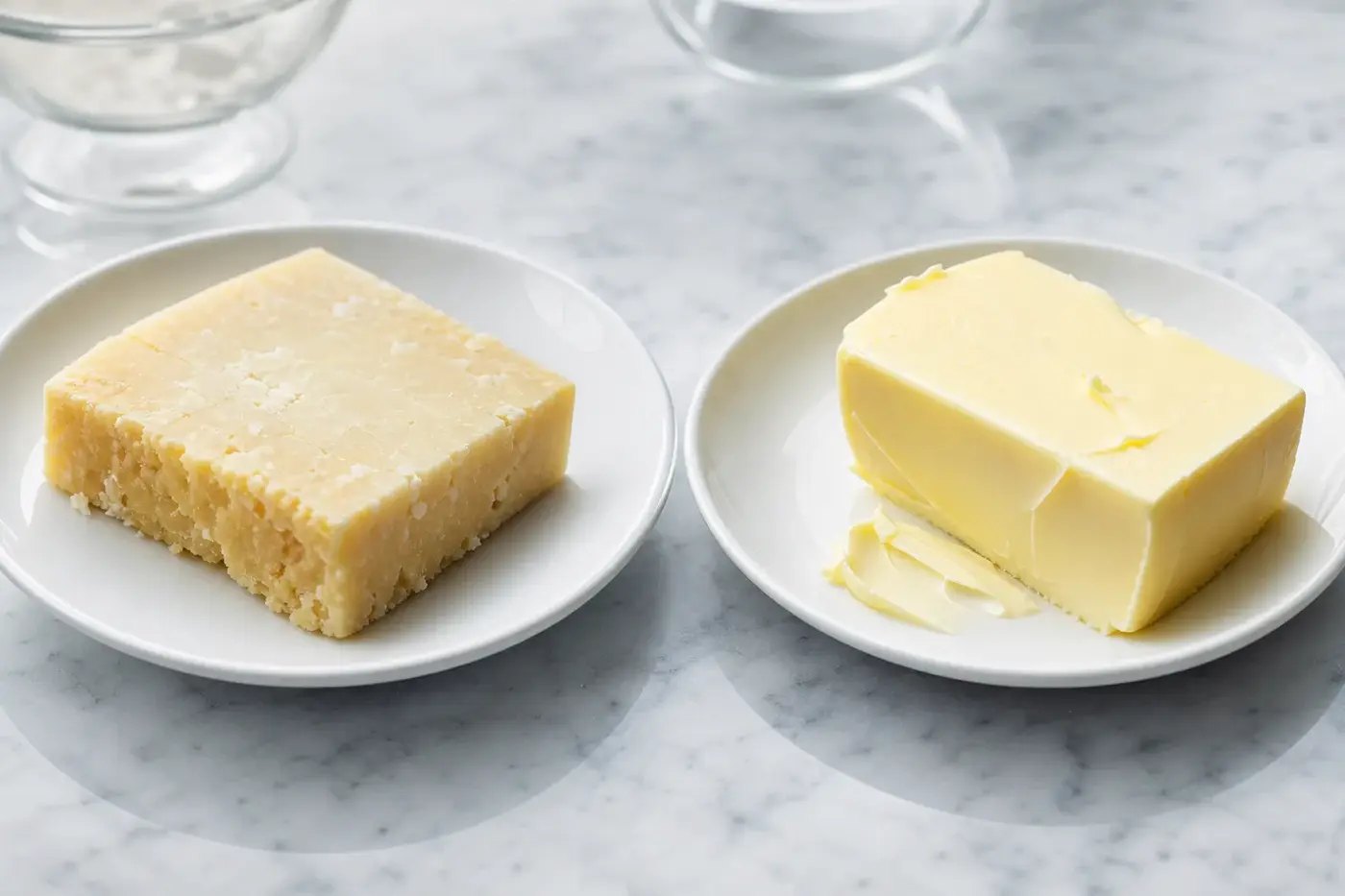
Put cheese and butter side by side on your plate.
Put cheese and butter side by side on your plate. Give each the same amount of fat, and you might expect a matching cholesterol result. Yet in a 2011 trial, LDL cholesterol was lower after cheese than after butter. The label tells you about calcium and saturated fat; trials and longer studies ask what eating the food means for your health. [1,2,3]
Give the label a closer look
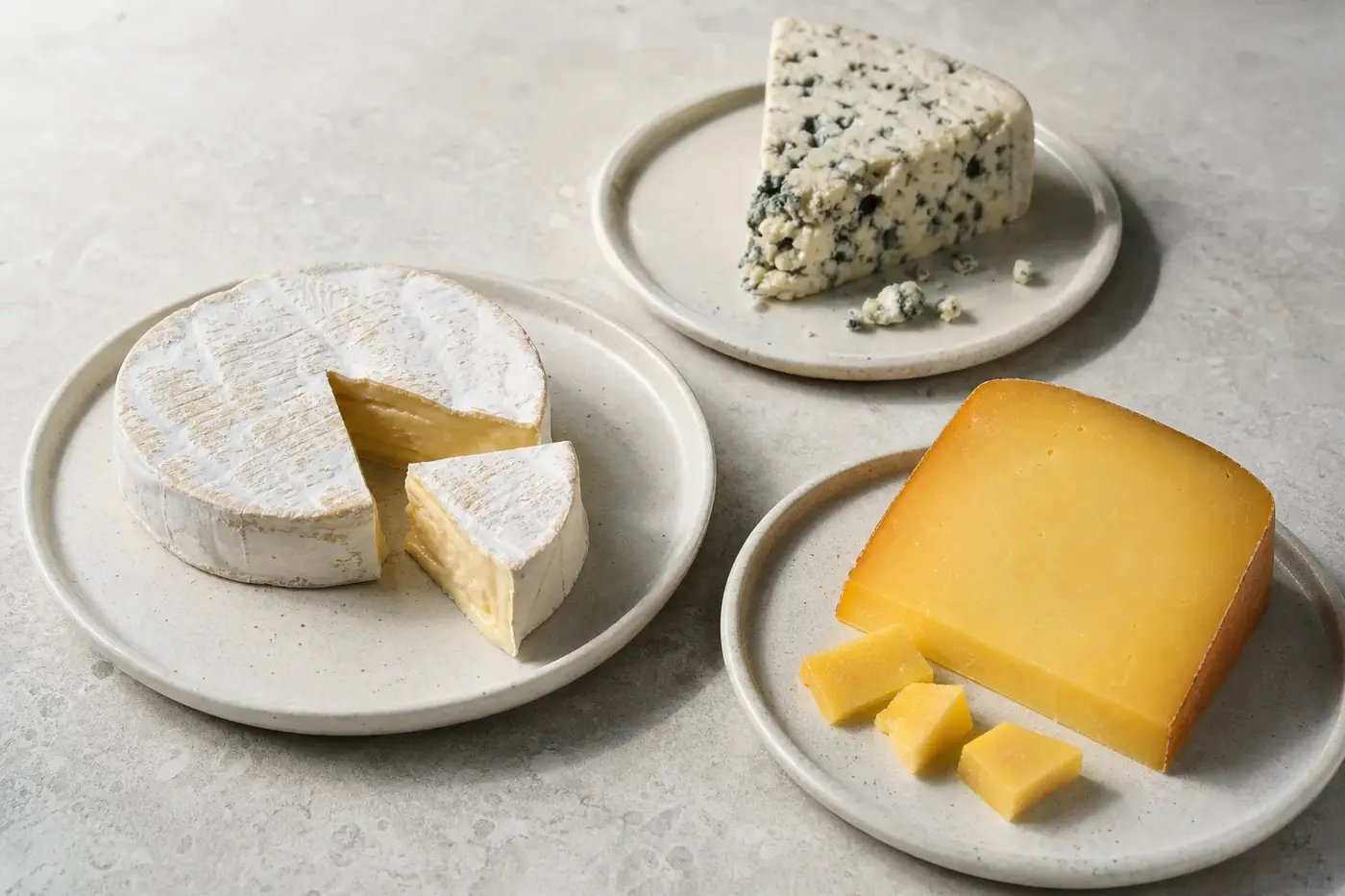
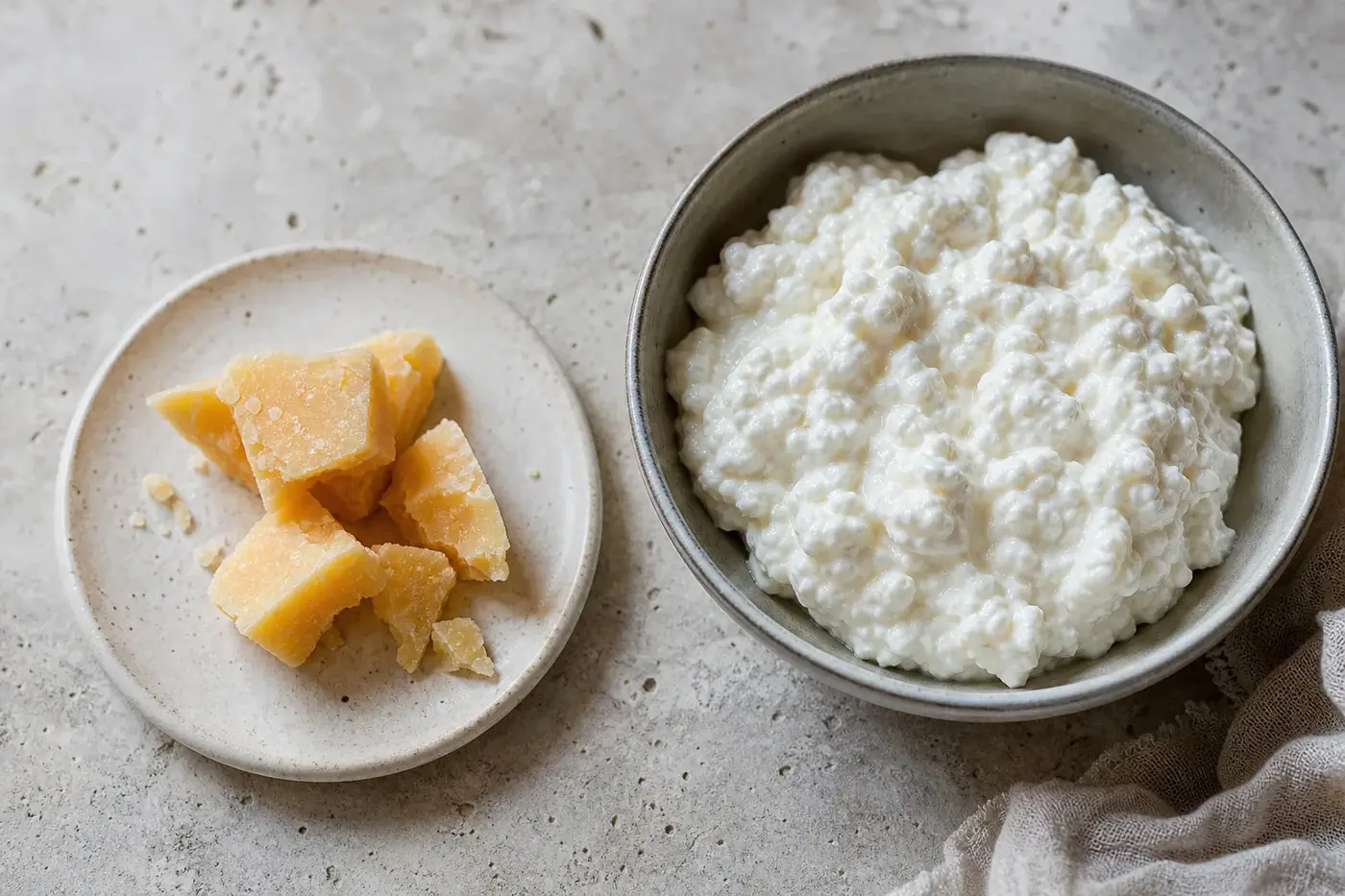
Cheese brings protein and calcium to your plate, but there is plenty of variety behind the counter. According to the NHS, many familiar cheeses contain 20 to 40 g of fat per 100 g. Reduced-fat cottage cheese and quark can contain 3 g or less per 100 g. That single word, “cheese”, covers quite a nutritional range. [1]
Compare fat, saturated fat and energy separately. Less total fat may help you reduce energy intake, but it tells you little about salt, which needs its own comparison. Start with the figures per 100 g to compare fairly. Then look at how much actually lands on your plate. [1,4]
Protein and calcium help explain cheese's place in the dairy group of the UK's Eatwell Guide. Both are useful, but neither tells the whole story of your meal. The guide also includes vegetables, fruit, higher-fibre starchy foods and varied sources of dietary protein. Dairy belongs within that broader pattern, rather than above it. [5]
For average food composition, your official UK reference is CoFID. Its published 2021 dataset brings together nutrient data for foods eaten in Britain. An average entry cannot describe your individual packet, so use product labels for specific cheeses. For a closer look at each nutrient, see Cheese Nutrition: Protein, Calcium and Fat. [6]
Read the research, not just the headline
In randomised trials, people are assigned to different diets so researchers can compare results under controlled conditions. Cheese trials often measure cholesterol over weeks, not heart attacks over decades. They can help you understand short-term blood changes. The bigger question of long-term disease remains open. [2,7]
Prospective observational studies follow people's recorded diets through to later illness or death. That longer view captures outcomes that short trials cannot readily study. But people choose their own food, and cheese eaters may also differ in smoking, exercise, income, body weight and other foods eaten. Those differences make any association harder to interpret. [3,8]
Statistical adjustment helps account for measured differences, but cannot perfectly capture a lifetime of eating and living. Food questionnaires introduce measurement error, too. Read across study types, paying particular attention to what cheese replaced. A plausible biological explanation is not the same as a demonstrated effect on disease in people. [8,9]
Cheese or butter? Ask what is being swapped
The 2011 randomised crossover trial put cheese and butter in direct comparison, supplying the same amount of fat. Forty-nine participants completed two six-week dietary periods. LDL cholesterol, often called bad cholesterol, was lower after cheese than after butter. Keep that result attached to those foods, under the study's conditions and timescale. [2]
A 2017 crossover trial took the comparison further. It assigned 92 adults with abdominal obesity to five diets, each lasting four weeks. After the cheese diet, LDL cholesterol was 3.3% lower than after butter. But it was higher than after diets richer in either monounsaturated or polyunsaturated fats, or carbohydrate. [7]
Even when energy intake is controlled, the replacement food changes the answer. Swapping butter for cheese is not the same decision as swapping unsaturated fats for cheese. The NHS still recommends replacing some saturated fat with unsaturated fat. You can read that advice alongside these trial results without a contradiction. [7,10]
Look inside cheese: structure matters too
Fat does not arrive alone in cheese. It sits within the dairy matrix, the structure holding together the food's fat, protein, minerals and other components. Researchers propose that this structure influences digestion and how fat is handled. Calcium interactions and the physical protein network may contribute, although their relative importance remains under investigation. [11]
A 2018 six-week trial tested that idea. Intact cheese produced lower LDL cholesterol than butter, protein powder and calcium supplied separately. The main analysis included 127 participants who followed the protocol, although differing dropout and adherence patterns limit certainty. You can explore the comparison in Cheese, Saturated Fat and the Dairy Matrix: What the Evidence Says. [11]
Structure matters, but it does not remove saturated fat from the picture. In the 2017 trial, LDL cholesterol remained higher with cheese than with the unsaturated-fat diets. Nor does a favourable cholesterol result establish fewer heart attacks. Those distinctions make matrix research worth following without overturning UK dietary advice. [7,10]
This page summarises published guidance from the official sources it cites. It is not medical advice. Guidance differs between countries and changes over time, so check the current source for where you live, and ask your doctor, midwife, pharmacist or dietitian about your own circumstances.
What the longer view tells you about heart health
A 2023 umbrella review and updated meta-analysis found higher cheese intake associated with modestly lower rates of cardiovascular disease, coronary heart disease and stroke. It pooled prospective studies of cheese and health outcomes. These are population patterns, carrying the limitations of observational research and differing definitions of intake. They are not a forecast for your own health. [3]
For all-cause mortality, the same review reported a small inverse association: a relative risk of 0.95 between the highest and lowest intake categories. That is a relative comparison, not a five-percentage-point change in your chance of dying. The underlying observational studies remain vulnerable to confounding and errors in measuring diets. [3]
What did cheese replace? Pooled results often leave that unclear, yet eating it instead of processed meat may reflect a different dietary pattern from adding it to existing meals. Substitution models explore this statistically, while randomised comparisons test it directly over shorter periods. Both help you make sense of the broader associations. [7,9]
Give salt its own place in the conversation
Too much salt can raise blood pressure and increase cardiovascular risk. NHS advice for UK adults is no more than 6 g of salt daily, including salt already in food. Cheese contributes alongside bread, sauces, processed meats and anything you add during cooking. Your whole day's total matters. [12]
The 2017 five-diet trial found no significant blood-pressure differences between diets. Its four-week periods, however, offer limited evidence about long-term hypertension. For everyday choices, compare salt separately from fat and consider your whole meal. Salt in Cheese explains why salt is used and how its content differs between products. [7,12]
For strong bones, look beyond calcium alone
Calcium helps maintain bones, and dairy foods also provide protein. UK dietary guidance recognises both contributions. But fractures involve more than nutrient intake alone. Bone strength, falls, ageing and underlying health all help determine whether someone breaks a bone later in life, beyond the calcium measured in their diet. [5,13]
A two-year Australian trial measured fractures and falls directly. Residential care facilities were randomised to provide extra milk, yoghurt and cheese or their usual menus. It involved 7,195 residents, with an average age of 86, whose initial calcium and protein intakes were low. Fractures and falls fell in the intervention group during follow-up. [13]
That finding takes you beyond a blood test or bone-density measurement. It supports improving inadequate calcium and protein intake in that residential-care setting. But milk, yoghurt and cheese arrived together, so the trial cannot isolate cheese's contribution. Nor can a study in this specific population establish the effect in younger adults. [13]
Ask whether your overall diet meets your needs, rather than whether a particular cheese has a bone-strengthening reputation. The Eatwell Guide places dairy alongside other food groups. If you have diagnosed osteoporosis, recurrent fractures or concerns about nutrition, discuss your circumstances with a healthcare professional. They can consider your needs individually. [5,13]
Think about your day, not just one helping
Cheese's energy content counts towards your day's total. The NHS notes that excess energy from higher-fat dairy foods can contribute to weight gain. Much depends on how cheese fits into your meals. Replacing another food is different from adding it to everything you already eat throughout the day. [1,10]
In the 2018 matrix trial, changes in body weight and body fat did not differ significantly between groups over six weeks. Participants were asked to eat study foods, and cholesterol was the focus. Those weight findings offer little insight into intentional weight loss. They also tell you little about maintaining body weight over years. [11]
Diabetes: keep blood markers and diagnoses distinct
The EPIC-InterAct study followed dairy intake and subsequent type 2 diabetes across eight European countries. After adjustment for lifestyle, body size and dietary factors, the highest cheese-intake group had an estimated hazard ratio of 0.88 compared with the lowest. The 95% confidence interval, 0.76 to 1.02, included no association. [8]
There was a suggestive inverse trend across intake categories, though this remains an observational finding. An EPIC InterAct analysis also modelled replacing red and processed meat with other foods. Substitution with cheese was associated with lower diabetes incidence. That brings you back to the comparison food, without establishing what a trial would find. [8,9]
Blood glucose and diagnosed diabetes answer different questions. In the 2011 trial, glucose concentrations were higher after cheese than after butter, even though LDL cholesterol was lower. Markers can move in different directions within the same experiment. Establishing whether a change affects diabetes incidence requires evidence about diagnosed disease itself. [2]
Make room for cheese in the bigger picture
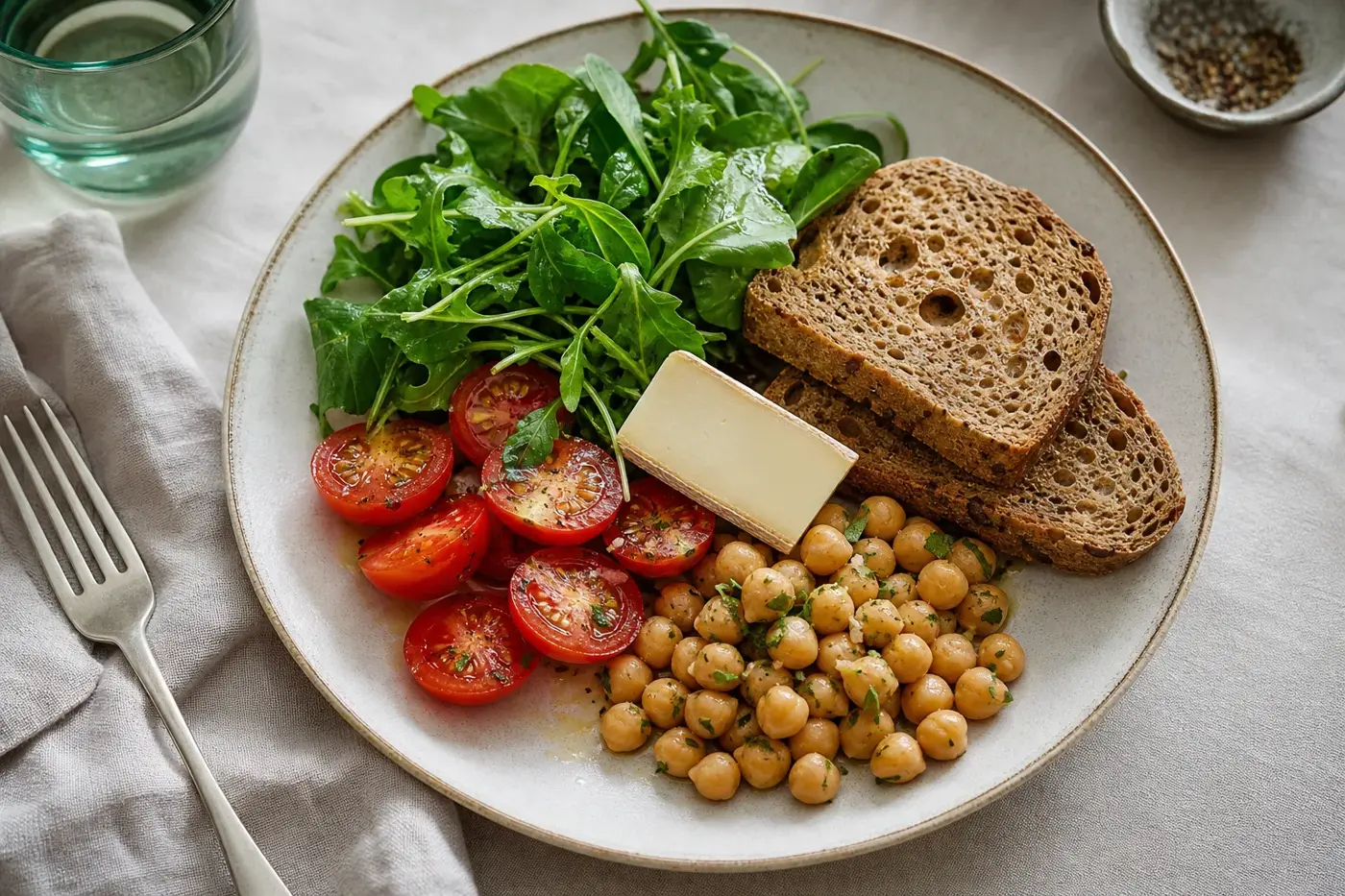
Start with your whole pattern of eating. The UK Eatwell Guide recommends some dairy or alternatives, choosing lower-fat and lower-sugar options within a varied diet. You can achieve balance over a day or week, rather than at every meal. Cheese can sit alongside vegetables and wholegrain bread without taking over your plate. [5]
Weigh your usual helping once, then compare it with the packet's stated serving. The arithmetic is straightforward: 30 g contains 30% of the nutrients listed per 100 g. Use the amount you actually eat, not the suggested serving. That gives you a clearer picture of what your meal contributes to the day's overall food intake. [4]
Count how often you eat cheese, too. Grated cheese at lunch and another helping at dinner both contribute. The NHS advises keeping track of how much you eat and how often. Its advice offers flexibility rather than a fixed weekly number of cheese servings for every adult. [1]
NHS saturated-fat limits for UK adults are 30 g for men and 20 g for women. Those cover your whole diet, including butter, meat, pastries and dairy. Reduced-fat cheese can help you meet that guidance. Compare saturated-fat figures on labels rather than judging a cheese by its appearance. [10,14]
Lower fat does not mean lower salt, so compare both figures separately. If a clinician has given you a specific salt or saturated-fat restriction, follow that individual plan. Ask how cheese can fit within it. [12,14]
Pregnancy and children: find the guidance that fits
During pregnancy, UK cheese advice depends on cheese type and milk treatment. For November 2026, the NHS guidance lists pasteurised or unpasteurised hard cheeses, pasteurised semi-hard cheeses and specified pasteurised soft cheeses among options you can eat. Compare both the category and your packet with the examples on its page. [15]
The NHS advises against soft cheeses made from unpasteurised milk during pregnancy unless cooked until steaming hot. That cooking requirement also applies to mould ripened soft cheeses with a white rind and soft blue cheeses, whether made from pasteurised or unpasteurised milk. Check the NHS examples. Ask your midwife if anything is unclear. [15]
Children's dietary needs differ from adults', and their NHS salt limits are lower. Check current NHS advice for your child's age and discuss individual needs with a health professional. Cheese for Babies and Children covers age specific choices. For handling and higher risk circumstances, follow guidance linked from the cheese food safety guide. [4,12]
Allergy, lactose and penicillin: know which question to ask
Food allergy and lactose intolerance need different assessments. The NHS describes food allergy as a reaction to food that can be serious, and advises seeing a GP if you suspect one. Start with cheese allergy vs lactose intolerance to separate the questions before considering an exclusion diet or seeking advice. [16]
Lactose intolerance means difficulty digesting lactose, the sugar in dairy foods. NHS advice describes reducing portions or avoiding foods that trigger symptoms, with guidance where needed. The guide to lactose in cheese explores differences between cheeses. Difficulty digesting lactose needs a different assessment from an allergic reaction to milk. [17]
Penicillin allergy is a separate issue again: the NHS discusses it as an allergy to an antibiotic that can cause serious reactions. Blue Cheese and Penicillin Allergy addresses this specific concern. If you have a recorded allergy, ask your pharmacist, doctor or allergy specialist for a personal decision about eating blue cheese. [18]
Questions people ask
Is cheese better than butter for cholesterol?
In a 2011 trial, LDL cholesterol was lower after cheese than after butter when both supplied the same amount of fat. In a 2017 trial, LDL cholesterol was lower after cheese than after butter, but higher than after diets richer in unsaturated fats. The NHS advises replacing some saturated fat with unsaturated fat; see its saturated fat guidance.
Which cheeses can I eat during pregnancy?
The NHS lists hard cheeses, pasteurised semi hard cheeses and specified pasteurised soft cheeses among options that can be eaten. It advises against soft cheese made from unpasteurised milk unless cooked until steaming hot. The same cooking advice applies to mould ripened soft cheese with a white rind and soft blue cheese, whatever the milk treatment. See the NHS pregnancy guidance for examples.
How much salt in cheese is too much?
The NHS advises UK adults to have no more than 6 g of salt a day, including salt already in food. Cheese is only one contributor to that daily total. See the NHS salt guidance.
Can I eat cheese if I am lactose intolerant?
Lactose intolerance means difficulty digesting lactose, the sugar in dairy foods. NHS advice describes reducing portions or avoiding foods that trigger symptoms, with guidance where needed. See the NHS guidance on lactose intolerance.
Does cheese help prevent fractures?
An Australian trial found fewer fractures and falls among residential care residents given extra milk, yoghurt and cheese. Their initial calcium and protein intakes were low, and the trial could not isolate cheese’s contribution. It also did not establish the effect in younger adults.
Sources
- NHS. Dairy and alternatives in your diet. Live guidance, checked November 2026. Sections on nutrient variation, cheese and frequency.
- American Journal of Clinical Nutrition. Cheese intake in large amounts lowers LDL-cholesterol concentrations compared with butter intake of equal fat content. 2011;94:1479 to 1484. Original randomised crossover trial, published abstract.
- Advances in Nutrition. Cheese consumption and multiple health outcomes: an umbrella review and updated meta-analysis of prospective studies. 2023. Published abstract retrieved through search.
- Public Health England. The Eatwell Guide booklet. 2018 version. Sections on labels, saturated fat and children.
- NHS. The Eatwell Guide. Live guidance, checked November 2026.
- Public Health England. Composition of foods integrated dataset (CoFID). 2021 release, publication page updated 19 March 2021.
- American Journal of Clinical Nutrition. Comparison of the impact of SFAs from cheese and butter on cardiometabolic risk factors: a randomized controlled trial. 2017. Original trial, published abstract retrieved through search.
- American Journal of Clinical Nutrition. The amount and type of dairy product intake and incident type 2 diabetes: results from the EPIC-InterAct Study. 2012;96:382 to 390. Original prospective analysis, published abstract.
- Diabetes Care. Replacement of Red and Processed Meat With Other Food Sources of Protein and the Risk of Type 2 Diabetes in European Populations: The EPIC-InterAct Study. 2020;43:2660 to 2667. Original prospective substitution analysis.
- NHS. Fat: the facts. Live guidance, checked November 2026.
- American Journal of Clinical Nutrition. Dairy matrix effects: response to consumption of dairy fat differs when eaten within the cheese matrix, a randomized controlled trial. 2018;108:667 to 674. Original trial, full paper.
- NHS. Salt in your diet. Live guidance, checked November 2026.
- BMJ. Effect of dietary sources of calcium and protein on hip fractures and falls in older adults in residential care: cluster randomised controlled trial. 2021;375:n2364. Original trial, full paper.
- NHS. How to eat less saturated fat. Live guidance, checked November 2026.
- NHS. Foods to avoid in pregnancy. Live guidance, checked November 2026. Section on cheese, milk and other dairy.
- NHS. Food allergy. Live guidance, checked November 2026.
- NHS. Lactose intolerance. Live guidance, checked November 2026.
- NHS. Side effects: antibiotics. Live guidance, checked November 2026. Section on antibiotic allergic reactions.
- Food Standards Agency. Food and allergy alerts. Live alert index, inspected November 2026 for the editorial safety check.
Research combined original trial reports, prospective analyses, a systematic evidence synthesis and current UK dietary and safety guidance.
Last checked: November 2026
Last checked November 2026.
The editors suggest you read next
Cheese Nutrition: Protein, Calcium and Fat
On your plate sits a 30 g piece of Cheddar beside a full 100 g helping of plain cottage cheese.