Cheese Rituals and Folk Traditions: Documented Practices
A wheel rolls across Pienza’s square, heading for a scoring target.
A wheel rolls across Pienza’s square, heading for a scoring target. On Cooper’s Hill, another hurtles downhill with competitors in pursuit. In Switzerland’s Justistal, the wheels stay put: stacked, counted and ready to divide among Alpine rights holders, they hold a summer’s milk, measured cow by cow. Cheese brings farming, local allegiance and competition into public view, each with its own rules and rhythms. [1, 3, 5]
Look closer and you find more than a spectacle. The clearest records often tell you more about what people do today than how it all began. The action is vivid; the origin story has a habit of slipping out of reach. [1, 3, 5]
Before the first roll, get to know the records
A photograph catches a waiting crowd. A programme sets out the day’s activities, while a municipal report tells you what happened. Each opens a different window onto a tradition. A modern event description might explain every rule but tell its origin story from a much later vantage point.
That distinction gives you more to enjoy, not less. A relatively recent festival can celebrate much older work, while a traditional game can make room for new teams, junior competitions and tourists. Start with the action: what people do, how they organise it and which moments have dated evidence behind them. [2, 5, 6, 8]
Cooper’s Hill: one cheese, one slope, quite a chase
Release a cheese down Cooper’s Hill, near Brockworth in Gloucestershire, and competitors follow it over the steep ground. The format is stark: an ordinary regional food becomes the centre of an extraordinary downhill pursuit. A secondary account identifies the cheese as Double Gloucester. [2, 3]
For a quieter view, turn to Gloucestershire Archives. A photograph is captioned as spectators awaiting cheese rolling in the early 1900s, and the accompanying account says nobody knows when or why the event began. That waiting crowd gives you a historical foothold, but not a starting date. [2]
If you are thinking of visiting, the hillside and crowd demand serious consideration. In its statement of 12 May 2026, Tewkesbury Borough Council’s multi-agency Safety Advisory Group declared the event unsafe because it lacked an official organiser and formal safety plans. The group also reported previous injuries requiring emergency treatment, and prolonged difficulty getting emergency vehicles to the site. [4]
That warning applies to watchers as well as racers: spectators and prospective participants were both asked to consider the risks. Before planning a future visit, read the council’s latest statement and local police information, including access and traffic arrangements. The statement above concerns the 2026 event, so do not treat it as guidance for every future gathering. [4]
Justistal: a summer’s milk, a carefully counted share
At the Chästeilet in Switzerland’s Justistal, celebration begins with careful arithmetic. Different farmers’ cows have grazed on the Alp, their milk becoming cheese through the summer. At the season’s end, the cheese is divided according to the cows’ recorded milk production. Swissmilk, the producers’ organisation, describes music and celebration accompanying the distribution: accounting with a rather splendid soundtrack. [7]
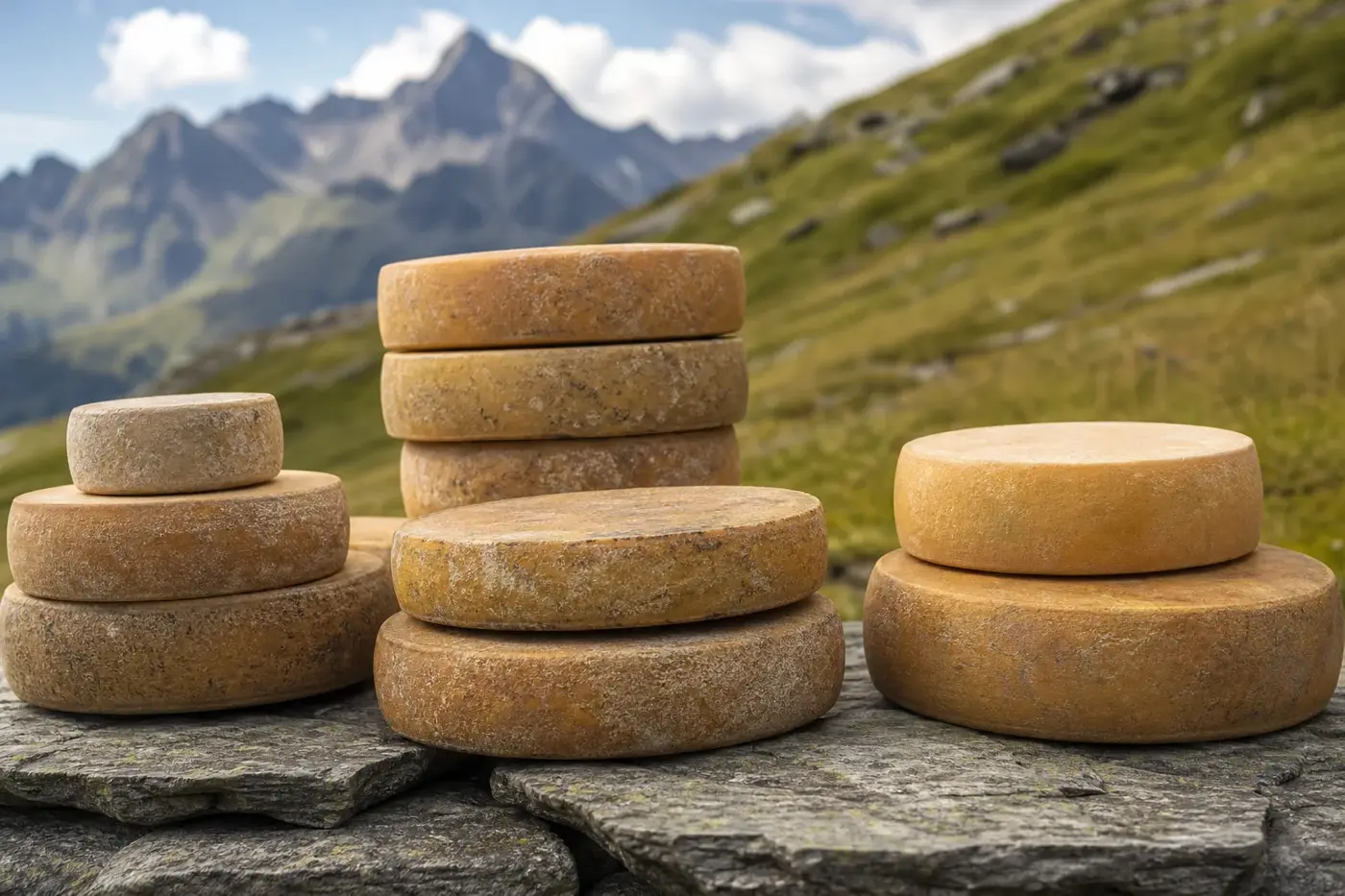
The Swiss inventory of living traditions takes you through the sums. A Saum represents 200 litres of milk; four Säume, or 800 litres, make a Los, the allocation unit. The responsible officials calculate entitlements and write them on wooden tablets called Brittli. [1]
Then you can watch the arithmetic take physical shape. Officials arrange lots to balance both weight and the mix of older, middle-aged and younger wheels. Drawing the tablets determines who receives which lot. [1]
The inventory reports an attestation of the Justistal practice in 1739, through its account of the underlying record. It places the gathering in September, around the Swiss federal day of thanksgiving, repentance and prayer. Its interpretation gets to the heart of the occasion: private ownership gives way to collective summer management, then returns to individual entitlement. In those stacks, you can see both the shared work and each farmer’s share. [1]
Pienza: a steady hand in the square
In Pienza’s Piazza Pio II, speed is not the point. At the Palio del Cacio al Fuso, you need control: competitors roll a wheel of cacio, the local word for cheese, towards a target within concentric scoring circles. The organiser’s description centres on that action, rather than a complete set of rules for the current edition. The wheel becomes a playing piece in a contest between town districts, or contrade. [5, 6]
The municipality’s report, published on 7 September 2026, records the previous day’s contest as the festival’s 64th edition. Players knelt on a carpet in the square, and the principal competition ended in a tie, settled by extra rounds. A junior competition had taken place the preceding evening. You get a wonderfully concrete picture of a living game: where to kneel, how to settle a draw and how younger players join in. [5]
In its 2026 regional heritage application, the Pro Loco organiser described the first festival as probably held in 1962, with more structured organisation following in 1966. It also described older players teaching children the technique. District identity passes between generations through the practical business of learning to roll a wheel. Then the square becomes the place to celebrate it. [6]
The application also compares the contest with an older illustrated ball game, while acknowledging uncertainty about a direct local connection. A resemblance is not the same as a dated chain of transmission. Keep that distinction in mind and you can appreciate both stories: the modern festival’s records and its proposed older ancestry. [6]
Sogliano: when the cheese pits open
In Sogliano al Rubicone, the moment to watch is the reopening of the cheese pits. The municipality gives 25 November, St Catherine of Alexandria’s day, as the traditional opening date. It places the fair on the last two Sundays of November and the first Sunday of December, and dates its establishment to 1974. Before you travel, look for your edition’s confirmed programme rather than relying on that customary pattern. [8]
The town’s account roots the opening in the farming year. Farmers came to reclaim cheese entrusted to the pits after autumn harvesting, sowing, winemaking and olive pressing. The modern fair commemorates that retrieval, with stored food returning to its owners as field work slowed for winter. Behind the celebration is the practical business of collecting what belongs to you. [8]
Below ground, the setting is distinctive: flask-shaped cavities dug into sandstone, with cheese enclosed in cloth bags. The municipality calls the specialist pit operators infossatori. Their work ties the cheese to the town’s underground spaces, where maturation does more than storage alone. [9]
An EU document published in January 2025 describes the production of Formaggio di Fossa di Sogliano. For the current legal production area and maturation requirements, the operative specification and register remain the essential references. [10]
The specification gives you a taste of that underground maturation: a friable paste and persistent aromas recalling undergrowth, mould and truffle. Those descriptions connect the cheese’s character to its time below ground. Remember, though, that the local celebration and the formally defined cheese are distinct subjects, especially when you read about protected names. [10]
Aubrac: follow the herds, then gather round the aligot
In Aubrac, the ascent to summer pasture opens a new grazing season. This is transhumance, the seasonal movement of livestock between grazing areas, and the regional natural park identifies 25 May, St Urban’s day, as the traditional ascent date. Its 2026 programme put herd passages through Aubrac village on 24 May, alongside a market, music, cheese making and communal meals. Farming calendar and festival meet here, but you need to look up their dates separately. [11]
At the table, watch the space between spatula and dish. The Aubrac territorial website describes aligot as mashed potatoes combined with sliced fresh tome, worked until long threads stretch between the two. You can see the cheese becoming part of the potatoes as it stretches. That elastic texture is the serving’s defining spectacle, and a persuasive reason to pay attention to the spatula. [12]
Traditions en Aubrac, the organiser, presents the festival meal as a chance to share and talk with producers and neighbours. Its published menu includes aligot made with fresh tome. The dish is something to prepare and eat, certainly, but also a reason to linger together. The organiser makes that connection explicitly. [13]
The 2026 programme also included a mobile buron, recalling the mountain buildings associated with seasonal cheese making, and a demonstration of making tome. Both bring the work behind your meal into public view. For the dairy process itself, turn to how cheese is made. Here, the pleasure lies in seeing how that work is remembered and shared. [14]
Look for the season, the rules and the place
Cheese makes seasonal change tangible. Justistal’s division closes the Alpine summer; Aubrac’s ascent opens the grazing season; Sogliano’s pit opening belongs to the approach of winter. Making, dividing, retrieving and eating cheese mark different stages of the working year. That is the first of three connections you can follow through these documented practices. [1, 8, 11]
The second is shared organisation, which sounds dry until you see what it makes possible. Justistal reconciles pooled summer production with individual rights, while Pienza turns neighbourhood membership into a contest. The relationships differ, but both depend on procedures that participants recognise. [1, 5]
The third is local identity. Councils, the heritage inventory and organisers describe these occasions through particular valleys, squares, skills and foods. Place is not simply a backdrop. It helps you understand why people gather and why the occasion matters. [1, 5, 13]
Those connections should not flatten the differences. Entitlement governs the Swiss division, scoring governs the Italian game, and producers and diners meet around the Aubrac meal. Once you understand each local purpose, you have more to notice: the calculation behind an allocation, the contest’s procedures or the conversation around a dish. Each is more than an unusual thing people do with cheese. [1, 5, 13]
Age deserves the same care. The early twentieth-century photograph establishes an English gathering by that period; the Swiss inventory reports an attestation in 1739; Sogliano’s municipality dates its modern fair to 1974. An attestation, an organiser’s retrospective account and a festival’s foundation date are different historical markers. Keep them distinct and you leave room for traditions to change, rather than giving them an artificially seamless past. [1, 2, 8]
Planning a visit? Make room for the real work
-
Find this edition’s programme, not just the customary date. Look for the municipality’s or organiser’s dated programme and confirm changes before travelling. Ask about booking, public transport, parking and accessibility, including gradients and surfaces. A traditional month or saint’s day gives you a planning lead; the edition’s programme gives you the appointment. [8, 11, 14]
-
Let local instructions guide you. Keep races, playing areas, herd routes and working entrances clear, and ask where spectators should stand and where photography is welcome. Before considering attendance at Cooper’s Hill, read the council’s public warning. Its 2026 statement identifies serious concerns for emergency access as well as participants. [4]
-
Give working people space and time. At a distribution or pit opening, let the practical business come before your photograph, and ask questions when someone is ready to answer. An invitation to watch does not necessarily include entry to a working space. Sometimes an ordinary task tells you more than a performance.
-
Ask about the work behind your cheese. If you are choosing cheese, ask who made it, where the milk came from and who matured it. Read the label rather than assuming the festival’s name establishes every product’s origin. The guide to reading a cheese label helps you turn that conversation into something useful.
Questions people ask
How is cheese divided at the Justistal Chästeilet?
Cheese is divided according to the cows’ recorded milk production over the summer. Officials balance the lots by weight and by the ages of the wheels, then allocate them by drawing wooden tablets.
What happens at Cooper’s Hill cheese rolling?
A cheese is released down the steep hill near Brockworth in Gloucestershire, and competitors follow it. The origins of the event are unknown, although Gloucestershire Archives reproduces a photograph of spectators awaiting cheese rolling in the early 1900s.
Is Cooper’s Hill cheese rolling safe to attend?
In its statement of 12 May 2026, Tewkesbury Borough Council’s Safety Advisory Group declared the event unsafe and asked spectators and prospective participants to consider the risks. Before a future visit, check the council’s latest statement and local police information.
How is the cheese rolling game in Pienza played?
Competitors roll a wheel of cacio towards a target within concentric scoring circles in Piazza Pio II. Town districts compete against one another, although the complete rules for the current edition remain to be checked.
What is aligot and why is it served in Aubrac?
Aligot combines mashed potatoes with sliced fresh tome, worked until it stretches in long threads. The festival organiser presents the meal as a chance to share food and conversation with producers and neighbours.
Sources
- Swiss Federal Office of Culture, Living Traditions in Switzerland, Teilen und Verteilen in Alpgenossenschaften, version June 2018. Official cultural inventory account.
- Gloucestershire Archives, Where We Live: education pack and resources, undated edition retrieved November 2026, “Holidays & Festivals”. Includes an archival photograph and accompanying description.
- Wikipedia contributors, Cooper’s Hill Cheese-Rolling and Wake, live edition retrieved November 2026, event description and cheese section. Secondary reference used for the identification of Double Gloucester.
- Tewkesbury Borough Council, Multi-agency statement ahead of Gloucester cheese rolling event, 12 May 2026.
- Comune di Pienza, published by Unione dei Comuni Valdichiana Senese, Pienza, la contrada Le Mura vince il Palio 2026 del Cacio al Fuso, 7 September 2026. Municipal event report.
- Pro Loco Pienza, hosted by Regione Toscana, Fiera del Cacio: relazione sullo svolgimento della manifestazione di rievocazione storica, application for the 2026 calendar. Organiser’s account, including its historical interpretation.
- Swissmilk, Chästeilet, school teaching sheet, undated edition retrieved November 2026. Producer organisation’s educational account.
- Comune di Sogliano al Rubicone, Fiera del Formaggio di Fossa, undated municipal account retrieved November 2026.
- Comune di Sogliano al Rubicone, Il Formaggio di Fossa di Sogliano DOP, undated municipal account retrieved November 2026.
- European Commission, Pubblicazione di una modifica ordinaria approvata del disciplinare di produzione di una denominazione di origine protetta o di un’indicazione geografica protetta, Official Journal C/2025/474, 22 January 2025. Includes the single document for Formaggio di Fossa di Sogliano, amendment reference PDO-IT-0580-AM01.
- Parc naturel régional de l’Aubrac, La transhumance d’Aubrac, page containing the 2026 programme, retrieved November 2026.
- Aubrac.com, Artisanat et traditions, undated territorial information page retrieved November 2026, “L’aligot”.
- Traditions en Aubrac, Se restaurer à la Fête de la Transhumance, organiser’s dining information, retrieved November 2026.
- Traditions en Aubrac, 2026: programme de la Fête de la Transhumance, 2026 programme leaflet.
Researched through desk research comparing archival material, public authorities’ accounts, organisers’ records and an official EU production document, with historical interpretation distinguished from contemporary event reporting.
Last checked: November 2026
Last checked November 2026.
The editors suggest you read next
Cheese Legends: Origin Stories and What the Record Shows
Peer into a broken pot and a cheese story begins to stir.