Double Gloucester
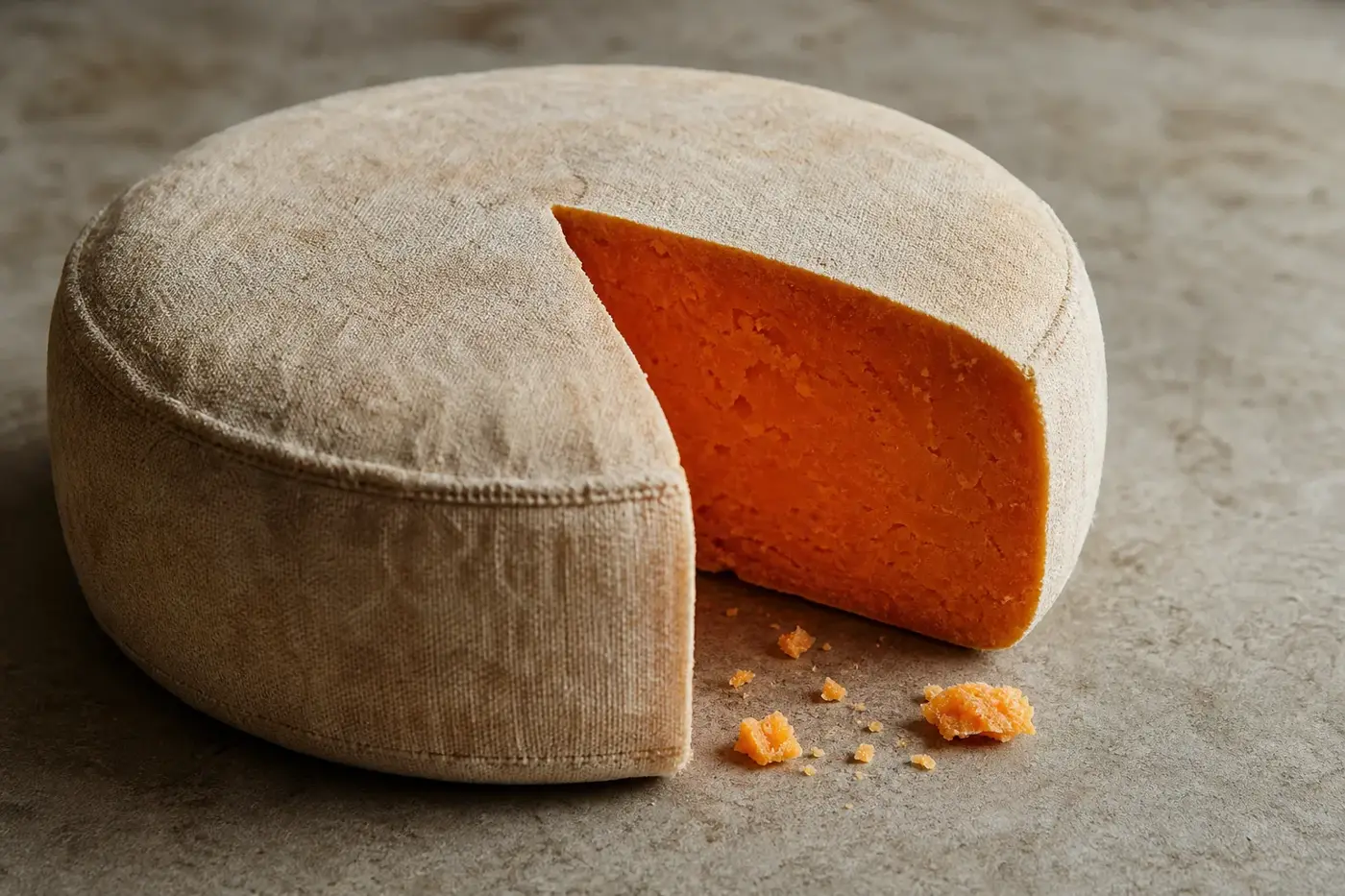
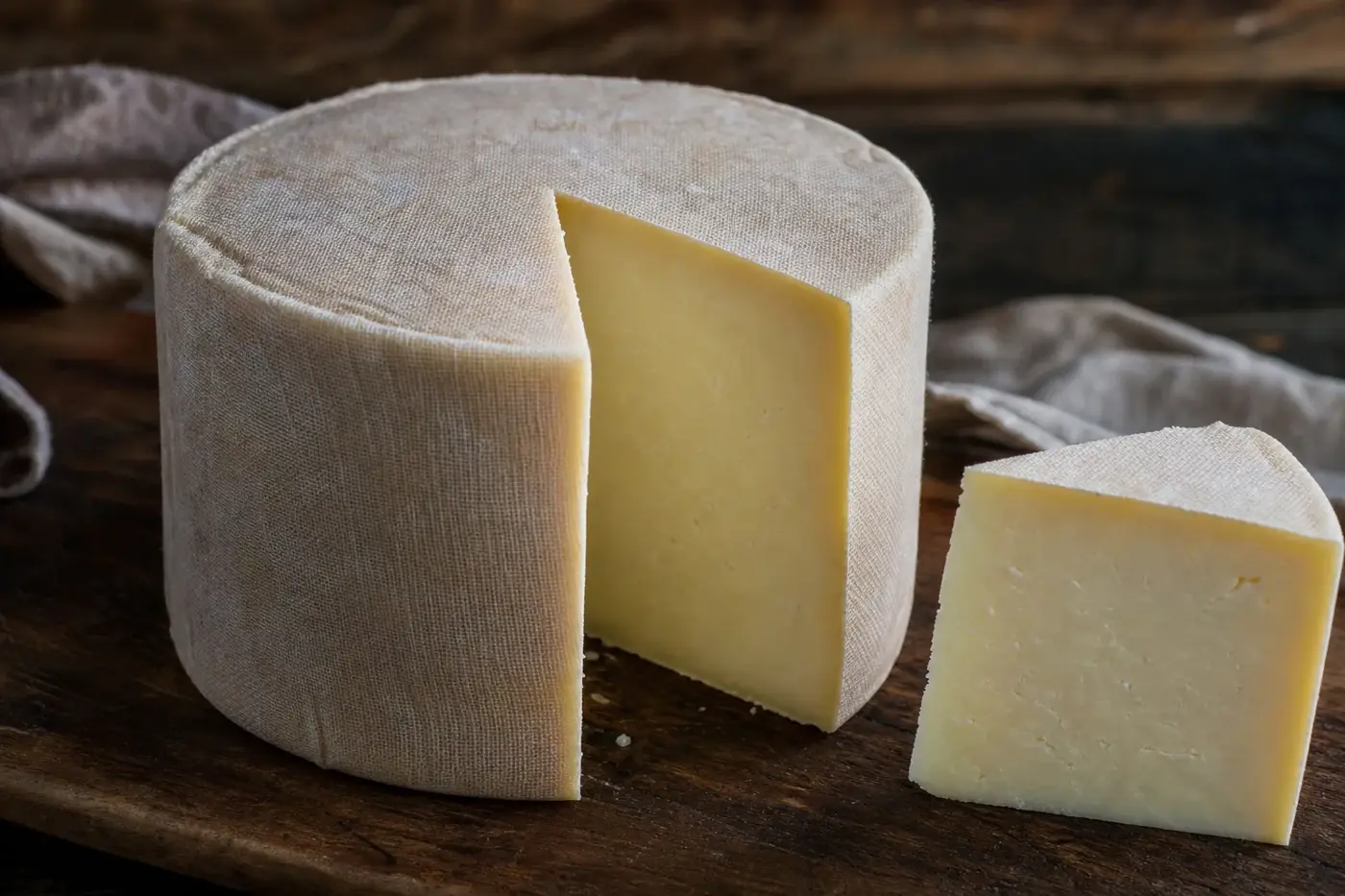
Cut into a broad wheel of Double Gloucester and the orange interior comes into view.
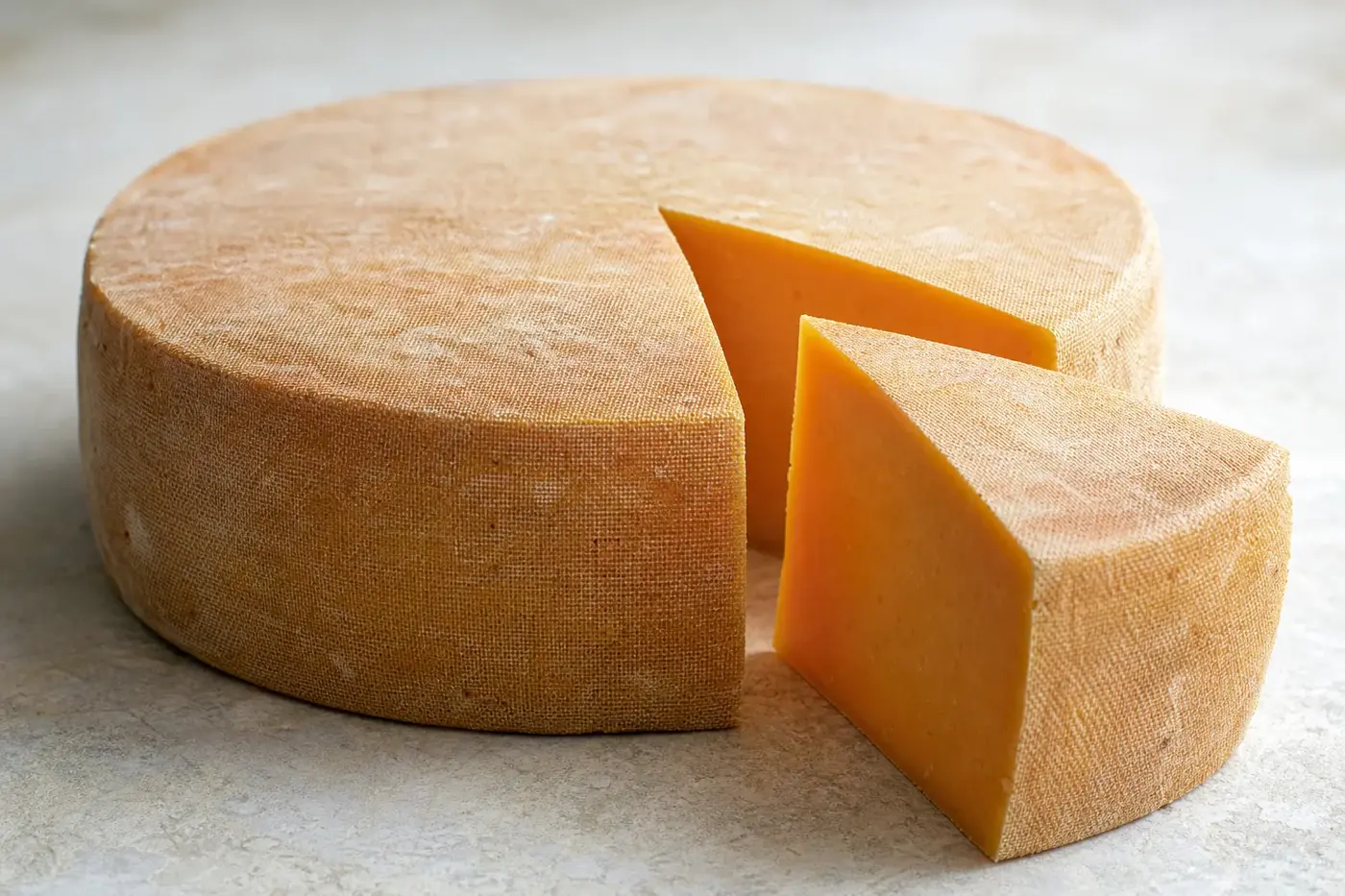
Cut into a broad wheel of Double Gloucester and the orange interior comes into view. Beneath the rind sits a smooth, close body, with buttery flavour and mellow nuttiness to follow. This firm cow’s milk cheese has its roots in Gloucestershire, but you need more than a county name to choose your wedge: maker, finish and maturation all have a story to tell. [1,2,11]
Your bearings before the first bite
- Name: Double Gloucester. [1,2]
- Customary home: Gloucestershire, England. [1]
- Milk: Cow’s milk, with both raw and pasteurised examples documented. [2,3]
- Coagulant: Animal rennet in the Appleby’s profile; Belton’s product is labelled vegetarian. [2,3]
- Colour: Annatto features in the documented examples. [2,3]
- Rind: Traditional examples may be clothbound. [3]
- Documented maturation: Appleby’s, three months upwards. [3]
- Allergen declared by Belton: Milk. [2]
Take a closer look at that orange wedge
A broad wheel cut into wedges lets you inspect the paste, the cheesemaker’s word for everything beneath the rind. Slow Food describes colours from pale orange to deeper red-orange. Belton calls its own version straw-coloured, so there is more variety here than the familiar orange might suggest. [2,3,11]
Take a bite and look for a smooth, close texture, rather than the open crumble of some British territorial cheeses. Belton describes its Double Gloucester as buttery, nutty and mellow. The producer-supplied Appleby’s profile describes a dense, close texture: two makers offering useful glimpses of the cheese’s character. [2,3]
Mellow and buttery sits at one end of the range, rather than being a promise attached to every wedge. If you fancy something more mature, ask about deeper, nuttier flavours and how that particular batch has developed. Age means most alongside the maker’s description, especially when you are comparing a wrapped portion with a clothbound wheel.
Summer milk and the puzzle of ‘Double’
Summer brought Gloucestershire farmers a practical question: what to do with surplus milk? Gloucestershire Archives describes a larger cheese that matured more slowly and kept better than the smaller Single. In that account, ‘double’ means size. [1]
A 1967 study in Gloucestershire Historical Studies takes you back to the growth of farmhouse cheesemaking in the mid seventeenth century. Its setting is particularly the heavy grassland of the Severn Vale. It describes Double Gloucester made with morning milk and some evening milk or evening cream, while Single used morning milk or skimmed evening milk. [4]
The archive exhibition brings the work a little closer. A thick-cheese recipe from a manuscript dated to around 1740 gives instructions for pressing and repeated changes of cloth. You can sense the labour behind a substantial cheese, although the recipe does not establish when ‘Double Gloucester’ first became its name. [1]
One account distinguishes the cheeses by size and season; the other by milk handling. Both lead you back to farming practice, but the original reason for the name remains uncertain. ‘Twice the cream’ and ‘two milkings’ are proposed explanations, not dependable definitions of every Double Gloucester you can buy today. [1,4]
Give Single Gloucester its own place
Single Gloucester has a precise modern identity, not merely a name that sounds like a smaller helping. The Great Britain register lists it as a registered Protected Designation of Origin, or PDO. UK scheme registration took place on 31 December 2020; original EU registration was on 21 June 1996, a separate registration event. [5]
Its official specification describes an uncoloured hard cow’s milk cheese made in Gloucestershire, using pasteurised or unpasteurised milk. Producing farms maintain registered Gloucester cattle and use milk from that breed whenever possible, with provision for milk from other breeds within the area. The cheese is ready to eat at about two months. [6]
Those historical accounts of skimmed milk can lead you astray here. Today’s Single is described as full fat, with a labelled lower-fat version permitted at the cheesemaker’s discretion, so it is not necessarily a low-fat cheese. Its recorded flavour is mild, lactic and buttery, with a smooth texture. [6]
If you want to untangle a regional cheese name from a protected designation, start with protected names explained. The distinction matters when you are choosing what to buy.
Follow the curd from vat to wheel
That close texture takes work long before the cheese reaches your plate. Belton lists milk, starter culture, rennet, salt and annatto as ingredients. Starter bacteria develop acidity, while rennet coagulates the milk into curd, leaving liquid whey; the producer-supplied Appleby’s profile describes acidification in the vat before several stages of curd handling. [2,3,4]
In that method, the curd is heated and the whey drained. Then come cutting into blocks, turning, stacking and breaking up, followed by milling into smaller pieces, salting, moulding and pressing. Clothbinding and maturation follow: the curds are worked and pressed together, rather than left to drain loosely, helping explain the close texture you meet in the finished cheese. [3]
To follow the whole journey, turn to how cheese is made. For the differences between the principal coagulants, try rennet explained.
Orange tells you colour, not strength
Annatto gives the documented examples of Double Gloucester their orange colour. Belton identifies it as a plant extract; the Appleby’s account records its addition and describes clothbound maturation. The colour belongs to the maker’s style, not a cheese strength chart, so a darker orange tells you little about which wedge will taste stronger. [2,3]
At the edge of a clothbound wedge, look for the difference between developed rind and any remaining cloth. Ask your cheesemonger what to remove and whether the rind is intended to be eaten. Remove cloth and any wax or plastic coating before serving, then follow the producer’s directions for the rind itself.
With a prepacked piece, look at the finish in front of you rather than expecting a traditional wheel’s rind. Intended rind development is one thing; unexpected mould after opening is another. For that second question, see mould on cheese.
Let the maker guide your choice
The individual product tells you how your Double Gloucester was made. Belton uses pasteurised cow’s milk and labels its cheese vegetarian. The Appleby’s profile records raw cow’s milk, animal rennet and production at a Shropshire farm: Gloucestershire is the historical home, but documented production reaches beyond the county. [1,2,3]
Compare the maker’s stated age, and at a counter ask when the wheel was cut as well as how long it matured. If your cheese is mostly destined for toasties, melting performance may matter most. For a cheese board, you might prefer the character and rind of a matured wheel. Neither choice needs an apology.
On an individual pack, look for the ingredient list, milk treatment, vegetarian statement and storage instructions. How to read a cheese label helps you make sense of those details and what they say about the cheese you are buying.
Watch a wheel roll at Cooper’s Hill
At Cooper’s Hill, near Gloucester, competitors follow a wheel of Double Gloucester down the steep hillside. Cheese rolling has become a conspicuous part of the cheese’s public identity. Enjoy the spectacle, but choose your lunch by quieter measures: maker, maturity and condition tell you more about what belongs on your plate. [9]
Find your favourite mouthful with bread, apples and pickle
Taste the cheese plain first, giving yourself a moment with its texture and flavour. Then try bread with a substantial crust, a crisp apple and a small spoonful of pickle, adding each accompaniment separately. Bread keeps the cheese centre stage; apple brings freshness and crunch, while pickle lets you adjust acidity and sweetness mouthful by mouthful.
For an alcohol-free accompaniment, try water, sparkling water or an apple drink, keeping sweetness modest. With a more mature wedge, pause before reaching for the pickle. Give the cheese a chance to show you how much accompaniment it needs.
If you are cooking, Belton recommends its Double Gloucester for melting and cheese toasties, and suggests grating it into cheese and onion soup. [2] You could also try a jacket potato, a baked vegetable topping or a sandwich with sliced apple. When adapting a familiar dish, start with a small amount and adjust the seasoning to suit your cheese.
Bring a good wedge home, then look after it
Three questions will take you a long way at a cheese counter: who made it, how long did it mature and what finish does it have? If sampling is offered, taste it plain before deciding. A named maker and a clear account of maturation tell you more than orange colour alone.
Curious about everyday portions and traditional wheels? Buy small pieces with contrasting finishes and jot down the maker, milk treatment, stated age, texture and finish. Your next purchase can build on a deliberate comparison, rather than another round of choosing by the orange alone.
At home, follow the individual label, including instructions after opening. The Food Standards Agency’s consumer guidance for England, Northern Ireland and Wales advises keeping the fridge between 0 and 5 °C and refrigerating dairy products. Keep your cheese covered in suitable food packaging or a container, and retain its identifying label. [8]
When serving, cut only what you expect to eat and let that portion move towards room temperature during brief preparation. The same FSA guidance says chilled food should spend the shortest possible time out of the fridge during preparation, with a maximum of four hours. Return the remaining cheese promptly and follow any stricter pack instructions. [8]
Cutting wedges from a wheel? After removing any wrapping, give each person some centre and some outer portion, then taste the paste before deciding about an edible rind, following the maker’s advice. For longer storage decisions, including packaging and opening dates, see how to store cheese at home.
General information only, not medical advice: follow the official guidance where you live.
Questions people ask
Why is it called Double Gloucester?
Gloucestershire Archives describes a larger cheese made during the summer milk surplus, so in that account ‘double’ means size. The original reason for the name remains uncertain.
What is the difference between Single and Double Gloucester?
Single Gloucester has a protected designation and is an uncoloured hard cheese made in Gloucestershire. Double Gloucester is traditionally orange, and documented production extends beyond the county.
Why is Double Gloucester orange?
Annatto gives the documented examples their orange colour. A darker orange does not tell you which cheese will taste stronger.
Is Double Gloucester vegetarian?
It depends on the cheese. Belton labels its Double Gloucester vegetarian, while the Appleby’s profile records the use of animal rennet.
How should I store Double Gloucester?
Follow the instructions on the individual pack, including those for after opening. The Food Standards Agency advises keeping the fridge between 0 and 5 °C and refrigerating dairy products.
Sources
- Gloucestershire Archives. Food Glorious Gloucestershire Food!, online exhibition, undated, section “A thick cheese”, including collection reference D6/F157. Accessed November 2026.
- Belton Farm. Double Gloucester, undated product information, ingredients, tasting notes and serving suggestions. Accessed November 2026. Commercial producer’s account of its own product.
- Academy of Cheese. Double Gloucester, Appleby’s, Cheese Library, undated current page. The entry identifies information supplied by the cheesemaker as its reference. Accessed November 2026.
- Gloucestershire Historical Studies. Cheese Making and Cheese Chambers in Gloucestershire, volume 1, 1967, pages 5 to 10. Accessed November 2026. Historical scholarship, rather than a contemporary production specification.
- Department for Environment, Food & Rural Affairs. Single Gloucester, official Great Britain register entry, published 4 January 2021. Accessed November 2026.
- Department for Environment, Food & Rural Affairs. Product specification: Single Gloucester, version linked from the official register, undated document. Sections 4.2 to 4.6. Accessed November 2026.
- Department for Environment, Food & Rural Affairs. Protected geographical food and drink names, official Great Britain register interface. Accessed November 2026; Double Gloucester-specific verification remains incomplete.
- Food Standards Agency. How to chill, freeze and defrost food safely, published 18 December 2017, current retrieved text. Applies to England, Northern Ireland and Wales. Accessed November 2026.
- Wikipedia contributors. Gloucester cheese, revision retrieved November 2026, section “Cheese-rolling”. Secondary corroboration only; local primary-source verification remains an editorial requirement.
- Food Standards Agency. Alerts, live official alert index, accessed November 2026. Product-specific recall checking remains incomplete.
- Slow Food in the UK. Artisan Single and Double Gloucester Cheese, Ark of Taste entry, undated. Accessed November 2026.
Researched through desk review of archival interpretation, historical scholarship, the Single Gloucester register and specification, producer information and official food-storage guidance.
Last checked: November 2026
Last checked November 2026.
The editors suggest you read next
West Country Farmhouse Cheddar Cheese
Large pieces of curd turn and stack under the cheesemaker’s hands.