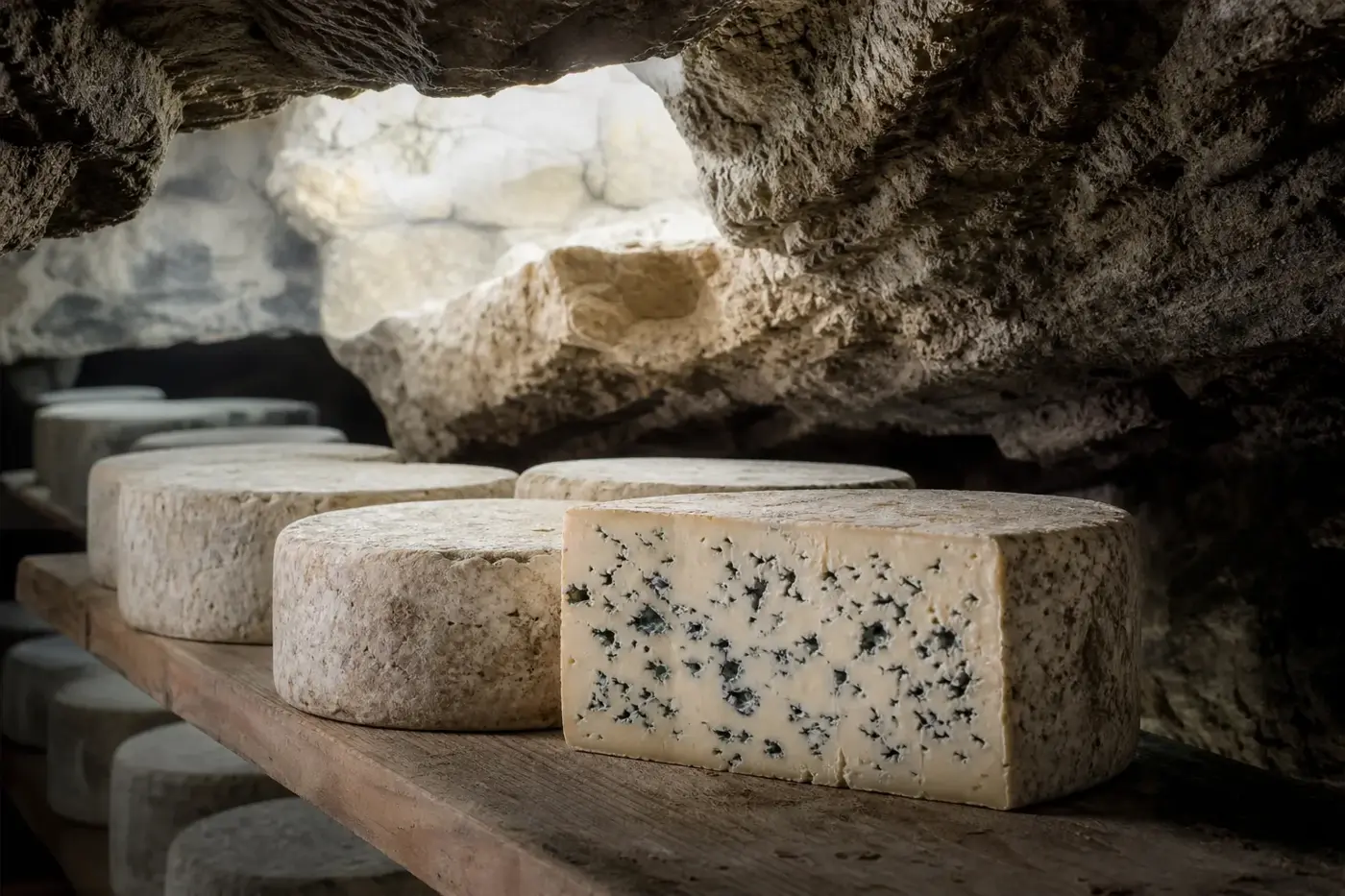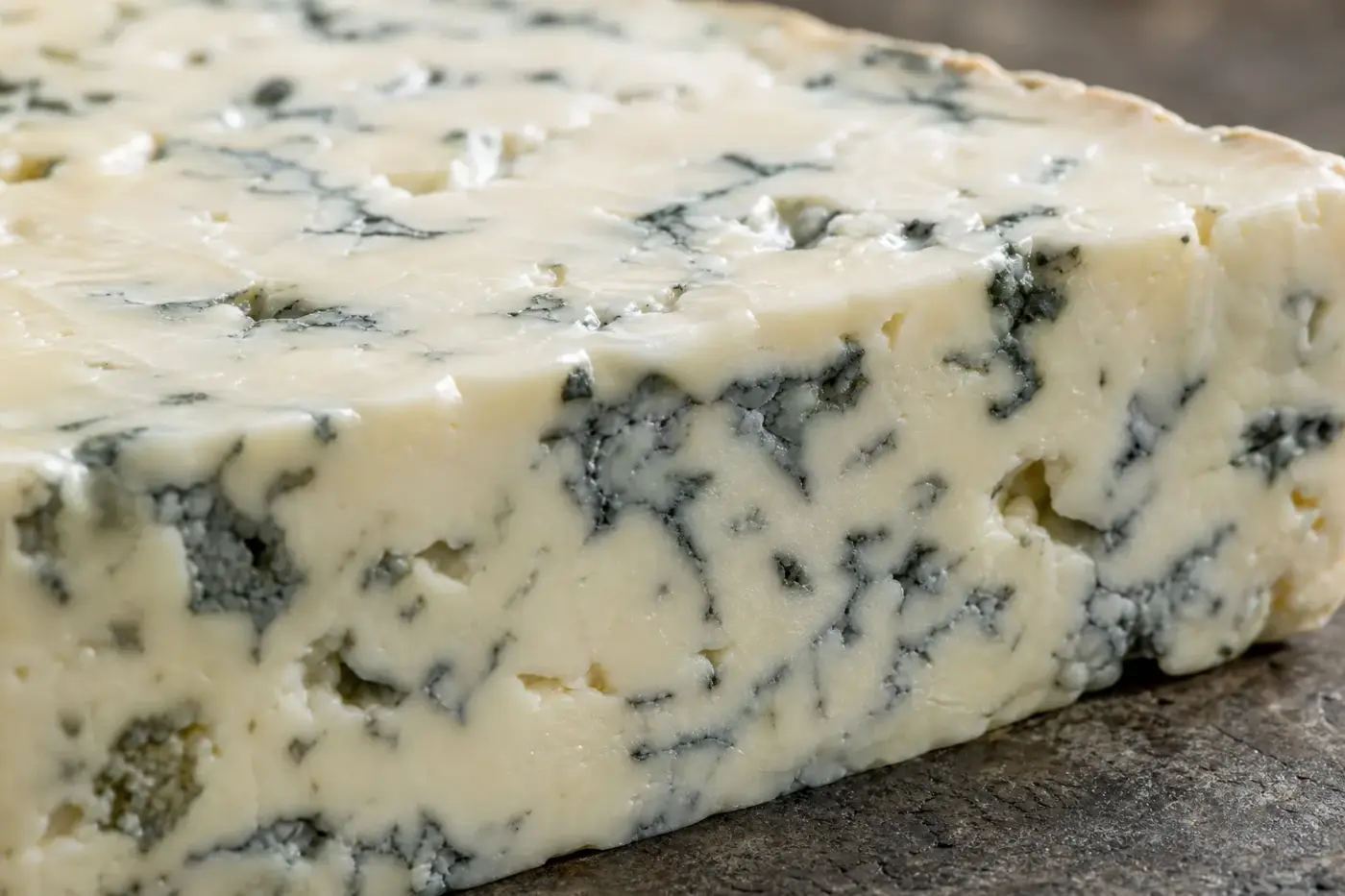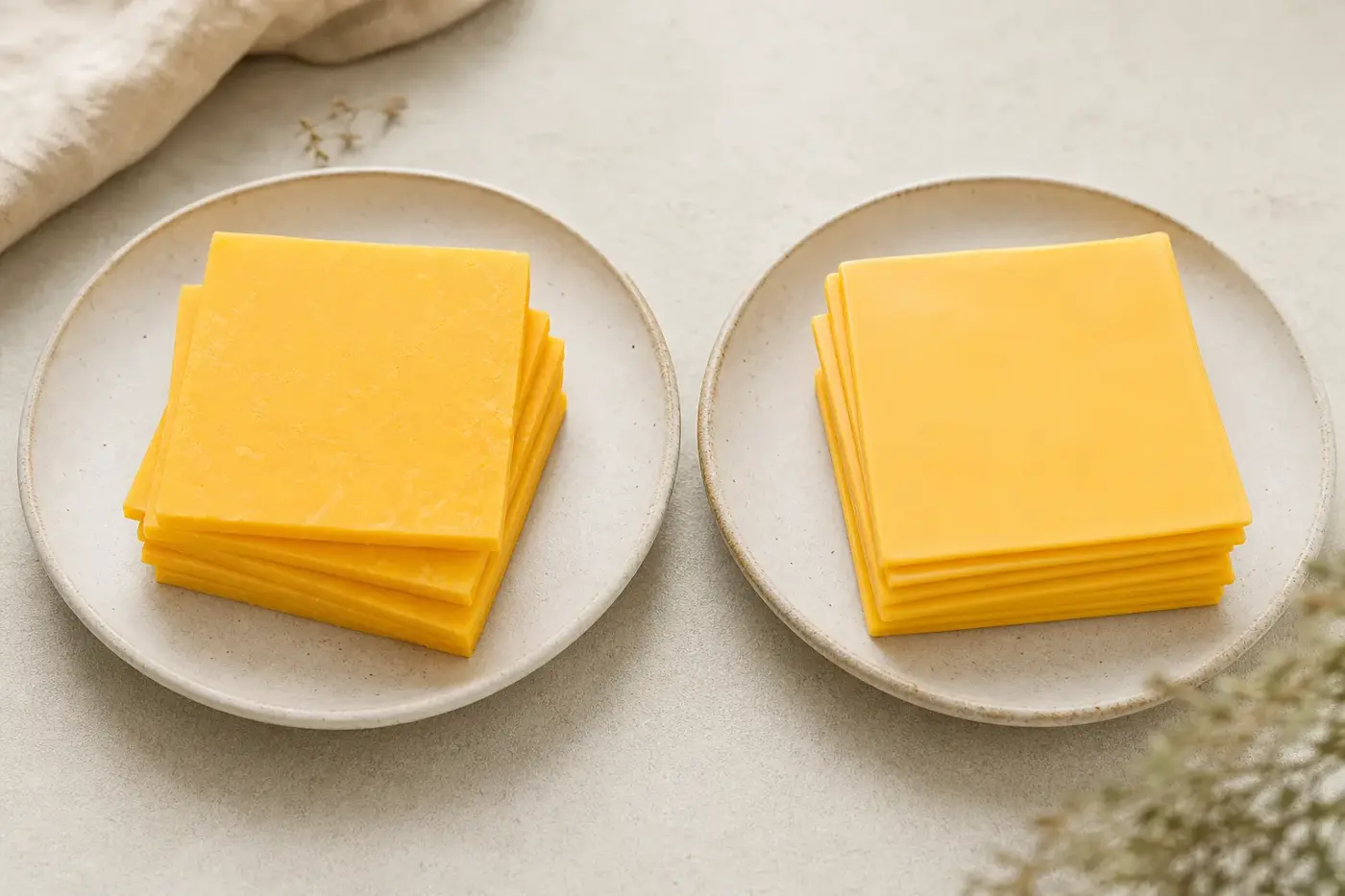
Cut the curd. Let the whey drain away, then salt and press: you’re following documented steps in making West Country Farmhouse Cheddar.[13] Now swap that scene for two almost identical packets of yellow slices. One holds cheese; the other, a blend of cheese, milk ingredients and emulsifying salts.
You’ll find the difference in the legally required name and ingredients list, not necessarily on the smiling front of the packet. “Cheese product” has no single worldwide meaning. Its meaning depends on where the food is sold.[1][3][4][5]
Follow the milk from curd to packet
Cheesemaking gathers milk into curd, the coagulated material, and separates out whey. Rennet, an enzyme preparation, can help that coagulation along; cultures develop acidity. The next steps, including draining, pressing and ripening, depend on the cheese you’re making.
The documented West Country Farmhouse Cheddar process takes you through cutting the curd, removing whey, salting and pressing.[13] You can follow the wider journey in how cheese is made.
From here, four distinctions help you read the packet. Cheese made by coagulation and drainage is often called natural cheese when contrasted with processed cheese. Adding herbs or other ingredients is different from blending existing cheese with heat and emulsifying agents. Replace milk constituents with non-dairy fats, and you introduce another naming question.[2][4]
“Natural cheese” makes a useful contrast, but the required name for that food in that market carries the legal weight. Nor does “cheese with added ingredients” automatically mean “processed cheese”. The permitted name depends on the recipe and the rules where it is sold.[1][4]
First, find your place on the map
In England, Scotland and Wales, the general food information framework is the assimilated version of Regulation 1169/2011. Northern Ireland generally follows the EU version, as the Food Standards Agency explains. If your business moves retail goods from Great Britain, consult the applicable Windsor Framework arrangements too.[3][10]
| What you’re looking at | Where it applies | Legal source | Position at |
|---|---|---|---|
| Choosing the food name | Great Britain | Assimilated Regulation 1169/2011, Article 17 [1] | November 2026 |
| General food information | Northern Ireland | EU Regulation 1169/2011, subject to applicable arrangements [3][10] | November 2026 |
| Processed cheese categories | United States | 21 CFR 133.169, 133.173 and 133.179 [4][5][6] | November 2026 |
| Naming imitation foods | United States | 21 CFR 101.3 [7] | November 2026 |
Dairy naming adds another layer, particularly when vegetable oil or other non-dairy ingredients enter the recipe. You need the naming rules and exceptions for the market where the food is sold. The part of this section covering applicable dairy naming provisions and exceptions in Great Britain and Northern Ireland remains on hold, pending legal review before publication.
Look past the branding for the real name
The brand catches your eye, but it does not give you the food’s legal identity. Article 17 sets out a sequence for Great Britain: use the legal name where one exists; otherwise use a customary name, or a descriptive name if there is no customary name or it is not used. A brand or fanciful name cannot replace it.[1]
A customary name is one consumers understand without further explanation. A descriptive name tells you enough to identify the food’s nature. The grand invented name gets the spotlight; the smaller description does the paperwork. Turn the packet until you find the wording that identifies the actual food.[1][3]
You’ll find other compulsory particulars, including the date mark and responsible business information, in how to read a cheese label. For now, remember this: a convenient phrase such as “cheese product” must still identify the food accurately under the applicable rules.[1][3][7]
Read the recipe hiding in the ingredients
Start at the top of the ingredients list. In Great Britain, ingredients generally appear in descending order of their weight when used in manufacture. A recipe beginning with cheese tells you a different story from one beginning with water and vegetable oil.[8] Read the cheese’s bracketed ingredients too, alongside those added to the final blend.
Look separately for milk, cream, whey, milk powders, added fats and emulsifying agents. Whey comes from milk; vegetable oil supplies fat from a different source. The US process cheese standard permits emulsifying agents including sodium citrate and several phosphates, alongside other optional ingredients.[4] These tell you about the formulation, not its nutritional merits.
Sometimes, a cheese can lawfully have no ingredients list. Article 19 exempts certain cheeses made with only the specified dairy products, enzymes and essential cultures, plus, for cheeses other than fresh and processed cheese, the salt needed for manufacture. You still need to consider allergen requirements separately.[8][9]
In the US, read right through to “food” or “spread”
On a US packet, similar-sounding cheese names can lead you to separate standards of identity. These regulations define what a food must contain and how it is made. Their exact legal titles use the American spelling “pasteurized”. A packet bearing one must meet its standard, not simply look the part.[4][5][6]
| US legal name | What you need to know about the cheese | Selected composition limits, November 2026 |
|---|---|---|
| Pasteurized process cheese | Permitted cheese varieties blended with heat and an emulsifying agent | Fat and moisture limits depend on the cheese varieties used. [4] |
| Pasteurized process cheese food | At least 51% cheese by weight | Maximum 44% moisture; minimum 23% milkfat in the whole food. [5] |
| Pasteurized process cheese spread | At least 51% cheese by weight | More than 44% and up to 60% moisture; minimum 20% milkfat in the whole food. [6] |
Here, moisture means water as a percentage of the whole food. It is different from fat in dry matter, which expresses fat as a proportion of the solids left after water is excluded. When you compare foods, use the nutrition panel’s fat figure on the same weight basis for both.[4][5][6][11]
That 51% cheese minimum belongs to the cheese food and cheese spread standards in the table. It does not apply to every packet described as a “cheese product”. Read the whole name, including “food” or “spread”, to find out which standard applies.[4][5][6][7]
For manufacturers, publication and legal application are separate milestones. The FDA published a salt-substitute rule on 13 October 2026, with an effective date of 14 December 2026, subject to its provisions on objections concerning dairy standards. In November 2026, those remain separate events.[14]
When a US label must say “imitation”
You cannot settle this one by appearances. Under 21 CFR 101.3, a substitute resembling another food is an imitation if it is nutritionally inferior to that food. The comparison concerns essential nutrients present in measurable amounts. Lower fat or fewer calories alone do not establish nutritional inferiority.[7]
Where required, “imitation” must immediately precede the name of the food imitated, in lettering of the same size and prominence. A resembling substitute that avoids nutritional inferiority can instead use a truthful common or usual name, or an appropriate descriptive term, subject to the regulation’s conditions.[7]
“Measurable” has a precise meaning here. Generally, it means at least 2% of the applicable daily reference amount per reference amount customarily consumed, with specified nutrient exceptions. The decision rests on that regulatory comparison, not what you can see through the wrapper.[7]
Let a protected name take you to the West Country
Dorset, Somerset, Devon and Cornwall: you’ll find those places in the specification for West Country Farmhouse Cheddar Cheese. In November 2026, it appears on the Great Britain register as a registered protected designation of origin, or PDO. Its specification also requires at least nine months’ maturation. That gives the name requirements the general word “cheese” cannot convey.[13]
A general cheese description and a protected geographical name answer different questions. If a protected cheese appears as an ingredient, the label must distinguish that ingredient from the identity of the finished food. Follow the relevant scheme’s ingredient-use rules; protected names explained explores the wider distinction between protection of origin and general product naming.[1][13]
Put the contents side by side
For allergens, start with the market’s rules rather than familiar typography. In Great Britain, Article 21 requires listed allergens to be emphasised within an ingredients list. Where no list is required, “contains” information is generally used, unless the food name itself clearly identifies the allergen. The FSA’s technical guidance explains how these provisions apply in England, Wales and Northern Ireland.[9][10]
The FDA identifies milk as one of the major allergens covered by US packaged-food labelling requirements. Its guidance explains that the food source can appear in the ingredient name, in parentheses following it, or in a nearby “Contains” statement.[12] US presentation rules differ, so bold type alone is not a reliable guide across markets.
For nutrition, compare equal quantities before you compare slices. The GB mandatory declaration includes energy, fat, saturates, carbohydrate, sugars, protein and salt, expressed per 100 g or 100 ml, with applicable exemptions. US Nutrition Facts normally gives amounts per serving and lists sodium rather than salt.[11][15]
Look at the serving weight in grams. Two products may both call a serving “one slice” while giving it different weights. To compare a US serving figure with a GB figure per 100 g, divide the amount by the serving weight in grams, then multiply by 100.[11][15]
Sodium and salt are different measures, so consult the official conversion before comparing them. The legal category identifies the food; the nutrition figures tell you something different about it.[11][15]
For the separate clinical distinction, see cheese allergy vs lactose intolerance and the official guidance it cites. With a diagnosed allergy or an uncertain ingredient, follow the relevant agency’s current information and seek individual advice from your clinician.[10][12]
Give your label-reading eye a little practice
These label-reading exercises are teaching example, not a real label. Each belongs to the deliberately fictitious “Example Dairy”, batch 0000, date 00/00/0000. You’re seeing selected wording and ingredient clues, not complete labels. A final legal description would require the full recipe and the market’s rules.
Example 1: cheese with herbs. Ask two questions first: which cheese is used, and how are the herbs declared? Herbs alone do not establish that the cheese has undergone the heat-and-blending process in the US process cheese standard. In Great Britain, the description and ingredient information must accurately identify the food.[1][4][8]
Example 2: pasteurized process cheese food. On a US teaching pack, that complete phrase points you to section 133.173. The cheese ingredient must meet the 51% minimum, alongside the standard’s other requirements. An advertising phrase such as “sandwich slices” tells you less than that regulated identity, so read both the principal display panel and the ingredients.[5][7]
Example 3: slices made with vegetable oil. A fragment reading “water, vegetable oil, starch” sends you looking for the full descriptive name, any milk-derived ingredients and the nutrition declaration. “Cheese product” alone leaves those questions unanswered. For plant-based naming questions, consult a dedicated guide to the market’s dairy designations and exceptions before borrowing wording from an overseas pack.[1][2][7][8]
General information only, not medical advice: follow the official guidance where you live.
Questions people ask
How can I tell what is in a packet of cheese slices?
Look for the name that identifies the food, rather than relying on the brand. Check the ingredients list too: in Great Britain, ingredients are generally listed in descending order of their weight when used in manufacture.
Does cheese with herbs count as processed cheese?
Adding herbs does not automatically make cheese processed. Herbs alone do not establish that the cheese has undergone the heat and blending process in the US process cheese standard.
What is the difference between US process cheese food and cheese spread?
Both must contain at least 51% cheese by weight. Process cheese food has a maximum of 44% moisture and a minimum of 23% milkfat, while process cheese spread has more than 44% and up to 60% moisture and a minimum of 20% milkfat.
When must a US cheese substitute be labelled imitation?
A substitute that resembles another food is an imitation if it is nutritionally inferior to that food under the regulatory comparison. Where required, the word “imitation” must immediately precede the name of the food imitated, in lettering of the same size and prominence.
How is milk identified as an allergen on cheese labels?
In Great Britain, listed allergens must be emphasised within an ingredients list. In the US, the FDA says the food source can appear in the ingredient name, in parentheses after it, or in a nearby “Contains” statement.
Sources
-
UK legislation publisher, Regulation (EU) No 1169/2011, Article 17: Name of the food, assimilated text, 2011, as amended. Official text.
-
UK legislation publisher, Regulation (EU) No 1308/2013, Article 78 and Annex VII, Part III, 2013. Retrieved indexed extracts covered versions dated 31 January 2020 and 22 July 2022. Current-text verification remains an editorial hold recorded below.
-
Food Standards Agency, Packaging and labelling, current online guidance retrieved November 2026. Official guidance.
-
US Food and Drug Administration, 21 CFR 133.169: Pasteurized process cheese, eCFR text current through 5 November 2026. Official text.
-
US Food and Drug Administration, 21 CFR 133.173: Pasteurized process cheese food, eCFR text current through 5 November 2026. Official text.
-
US Food and Drug Administration, 21 CFR 133.179: Pasteurized process cheese spread, eCFR text current through 5 November 2026. Official text.
-
US Food and Drug Administration, 21 CFR 101.3: Identity labeling of food in packaged form, eCFR text current through 5 November 2026. Official text.
-
UK legislation publisher, Regulation (EU) No 1169/2011, assimilated text, 2011, as amended: Article 18, List of ingredients, and Article 19, Omission of the list of ingredients.
-
UK legislation publisher, Regulation (EU) No 1169/2011, Article 21: Labelling of certain substances or products causing allergies or intolerances, assimilated text, 2011, as amended. Official text.
-
Food Standards Agency, Food allergen labelling and information requirements technical guidance, online publication updated 3 November 2026, applying to England, Wales and Northern Ireland. Official guidance.
-
UK legislation publisher, Regulation (EU) No 1169/2011, assimilated text, 2011, as amended: Article 30, Content, and Article 32, Expression per 100 g or per 100 ml.
-
US Food and Drug Administration, Food Allergies, current online information retrieved November 2026. Official information.
-
Department for Environment, Food and Rural Affairs, West Country Farmhouse Cheddar Cheese, GB protected-name register entry, and West Country Farmhouse Cheddar, linked product specification, retrieved November 2026. Register entry; product specification.
-
US Food and Drug Administration, Use of Salt Substitutes To Reduce the Sodium Content in Standardized Foods, final rule, Federal Register, 13 October 2026. Published rule.
-
US Food and Drug Administration, 21 CFR 101.9: Nutrition labeling of food, eCFR text current through 5 November 2026. Official text.
This desk-researched draft compares official legislation, FDA standards, FSA guidance and a protected-name specification; outstanding legal verification is recorded in the editorial evidence log.
Last checked: November 2026
Last checked November 2026.
The editors suggest you read next
Cheese Law Around the World: The Complete Guide
GRUYERE reached an American legal border and lost its exclusivity.