West Country Farmhouse Cheddar Cheese
Large pieces of curd turn and stack under the cheesemaker’s hands.
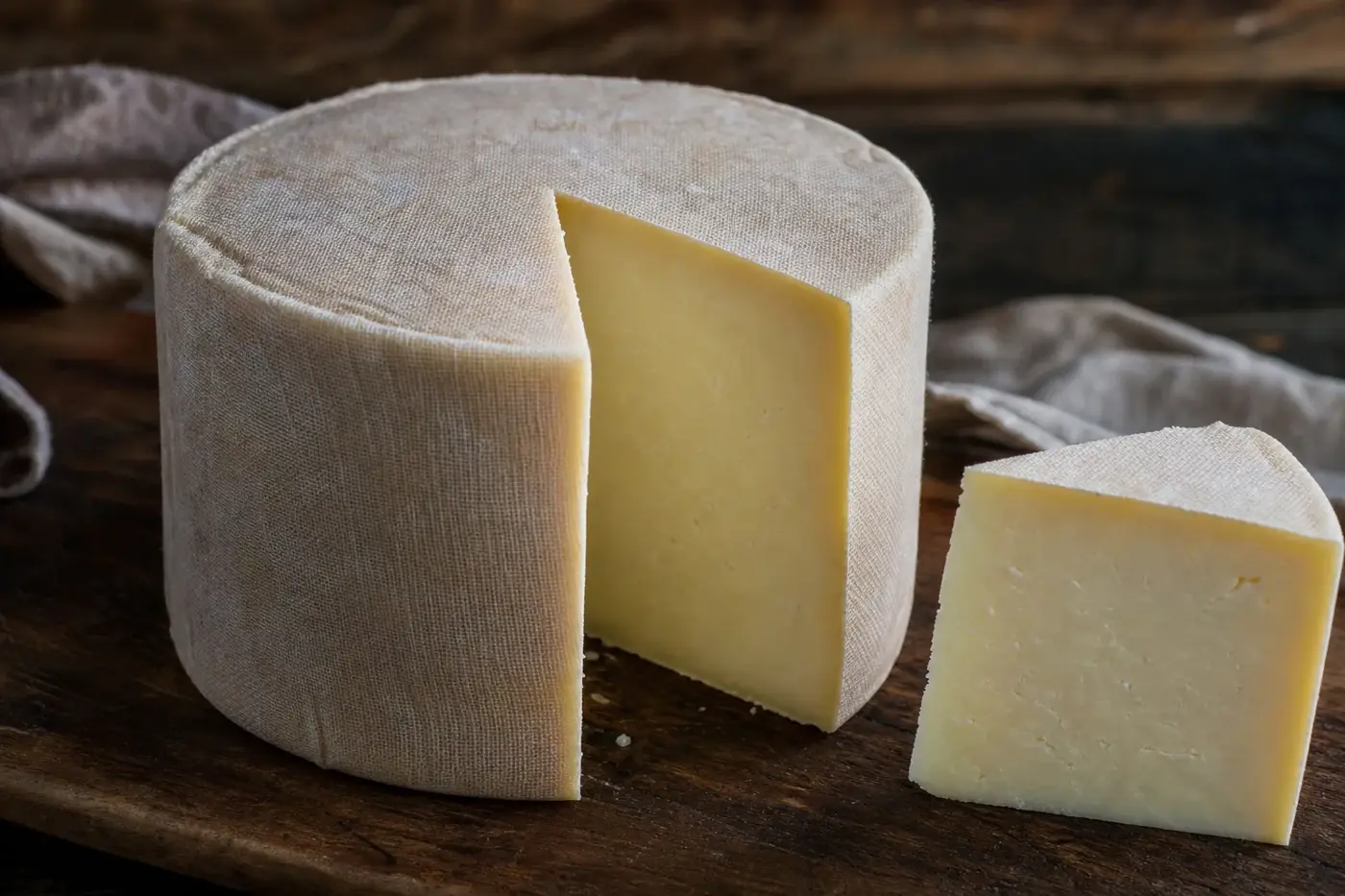
Large pieces of curd turn and stack under the cheesemaker’s hands. Here is the work at the heart of West Country Farmhouse Cheddar, made with predominantly West Country cows’ milk and matured for at least nine months. You might find it as a clothbound cylinder or a rindless block. Both fit the protected specification, giving makers room to find their own balance of roundness, sharpness and savoury depth. [2,5]
Your essentials for the cheese counter
| What to look for | What you need to know |
|---|---|
| Registered name, Great Britain | West Country Farmhouse Cheddar Cheese [1] |
| Registered name, EU | West Country farmhouse Cheddar cheese [3,11] |
| Authorities and EU file number | Defra; European Commission; PDO-GB-0279. [1,3] |
| Great Britain status | Registered PDO, November 2026. [1] |
| EU and Northern Ireland status | Registered PDO under the EU scheme, November 2026. [3,4] |
| Switzerland status | Status not established here. |
| United States status | Status not established here. |
| Original EU registration instrument | Regulation (EC) No 1107/96, Annex. [11] |
| Where it is made | Somerset, Dorset, Devon and Cornwall, historical county boundaries. [2,13] |
| Milk and treatment | Cows’ milk, pasteurised or unpasteurised. [2] |
| What sets the milk | Natural animal or vegetable rennet. [2] |
| Composition | At least 48% fat in dry matter; no more than 39% moisture in the whole cheese. [2,10] |
| Minimum time to mature | Nine months. [2,10] |
| Shapes you will find | Cylinders or blocks; sizes vary. [2,10] |
| Required maturation location | Requirement not established here. |
Get to know the whole West Country name
You know Cheddar. The full name, though, ties that familiar cheese to a particular place and way of making it. West Country Farmhouse Cheddar has a protected designation of origin, or PDO. In Great Britain and the EU, including Northern Ireland under the EU scheme, the registered name identifies cheese made to the approved specification. [1,3,4,5]
Cheddar itself is a much wider family. Sharing a method is not the same as sharing a defined origin. A cheese labelled simply Cheddar may be excellent, but that word alone does not identify these four counties or this specification. If origin matters to you, start with the full registered name, then explore the maker, age and maturation style through the guide to Cheddar.
The PDO belongs collectively to qualifying producers, not to one cheesemaker. Defra requires anyone using a registered GI to follow its specification and meet producer verification requirements. Read the regional name alongside the producer’s name: one gives you provenance and production rules, the other a particular interpretation. Remember both, and that lovely piece becomes much easier to find again. [4]
Follow the milk through four counties
Somerset, Dorset, Devon and Cornwall make up the designated area, using historical county boundaries as defined in 1955. Cheesemaking takes place on farms within that area. Cheddar village has its place in the story, but Somerset does not have the designation to itself. You can find cheeses from Devon, Dorset and Cornwall that meet the same protected specification. [2,13]
The milk is predominantly local, with some flexibility in the rules. During shortages, the published specification permits supplementary supplies and specifically names the bordering counties of Gloucestershire and Wiltshire. Every drop need not always come from within the four counties. If you want the story of your particular cheese, ask its producer about the milk supply. [2]
Meet Somerset’s makers, clocks and thermometers
Step into the record of Somerset dairies in 1854 and you find thermometers, clocks and practical judgement working together. An agricultural delegation visiting western English dairies found organised Cheddar making there. The 1860 Encyclopaedia Britannica reproduces an extract from its report. It gives you a glimpse of working dairies rather than an invention story. [6]
These makers were controlling a process, not simply following an old recipe unchanged. The report describes farmers explaining their methods to others, showing how regional knowledge could travel. Today’s PDO keeps farm production and hand cheddaring while allowing differences in equipment, milk supply and presentation. [2,6]
The legal milestones came much later. The original EU registration instrument was adopted on 12 June 1996 and published on 21 June. The British register records original EU registration on 21 June 1996, then registration under the UK scheme on 31 December 2020 at 23:00. [1,11]
Ask what goes into your farmhouse cheese
“Farmhouse” tells you something, but it cannot answer every question at the counter. Both pasteurised and unpasteurised cows’ milk are allowed, so raw milk is a producer’s choice rather than a requirement. The specification does not separately set out a thermisation category. Ask which milk treatment your cheese received. [2]
Rennet, the enzyme preparation that sets milk into a gel, deserves a question of its own. The specification permits natural animal rennet or what it calls vegetable rennet. If you want vegetarian cheese, ask about the coagulant and, for a clothbound cheese, the fat used on the cloth. Bandaging can involve lard, so you need two separate answers. [2]
Watch the curd pass through the maker’s hands
Now for that turning and stacking. During cheddaring, large pieces of curd are repeatedly moved by hand, draining further whey as acidity develops. Before any of that can happen, the maker must turn milk into curd and bring it to the right stage for handling. [2,5,13]
Starter cultures begin by developing acidity in the milk. Rennet forms a gel, which is cut into curds, the solids, and whey, the liquid. Heating and stirring encourage the curds to release whey before the liquid is drained away. This is the cooked curd stage, not the maturation that comes later. [2,5]
After cheddaring, the maker judges when the curd is ready to be milled into smaller pieces. Those pieces are salted and mixed, put into moulds and pressed. Pressing draws out more moisture and brings the pieces together into a cheese. [2,5,13]
The sequence is shared, but the decisions belong to the maker. Timing, acidity and pressing all demand judgement. Those choices help cheeses carrying the same regional name develop characters of their own. [2]
Give it nine months, then find your style
Nine months is the minimum maturation period, not a finishing line where every cheese must stop. Makers can age their cheeses longer and choose between the specification’s two distinct formats. Clothbound cylinders develop a hard rind and lose moisture as they mature. Rindless blocks wear a food grade membrane, with the make adjusted for their different moisture behaviour; both belong within the designation. [2]
Ford Farm describes surface mould developing on its own cheeses during ageing. Brushing and removal of the bandages follow before cutting. Its cheeses are also graded regularly, with its own graders deciding when to release them. Time matters, but so does the judgement of the people tending the cheese. [7]
At the counter, ask whether your cheese matured in cloth or as a rindless block, then ask its age in months. Those answers tell you more than shape alone. A cylinder is not necessarily older, and the longest matured cheese need not suit your meal best. Age is useful information, not a competitive sport.
Start with nuttiness and stay for the finish
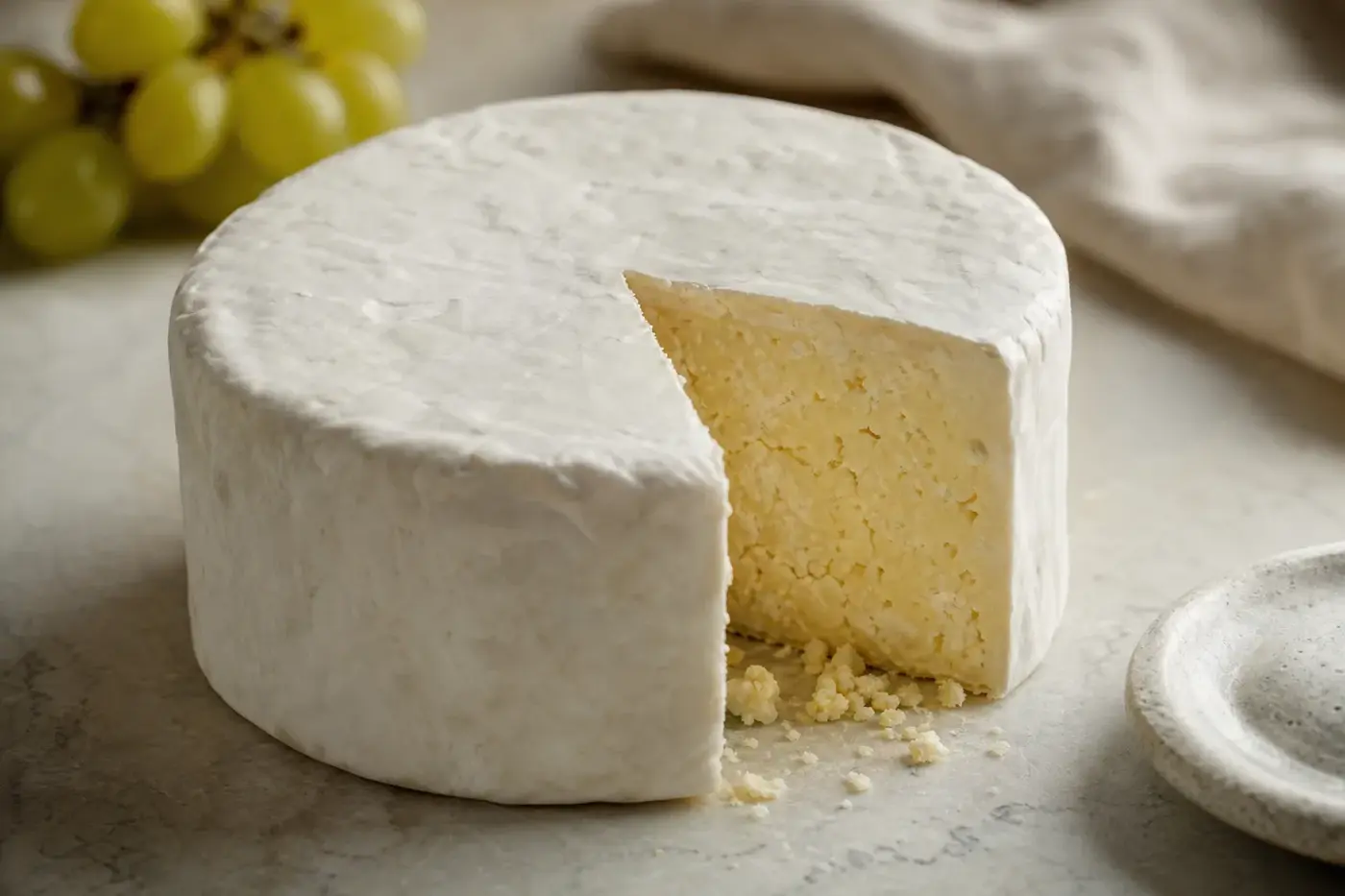
Look for a creamy yellow interior and a firm body with a slightly open texture. The specification’s flavour reference is rounded and nutty, with a hint of sharpness. Cylinders and blocks should have a regular shape without cracks, although individual pieces vary within that description. There is no established typical aroma given here for the designation. [2,10,13]
For clothbound Cheddar more broadly, the Academy of Cheese describes mature examples as firm and brittle, with deep savoury flavours. It also emphasises the influence of maker and maturation, giving you useful starting points for tasting. Does your piece bend or fracture, feel smooth or granular? Does it finish sharply, or leave a longer savoury impression? [5]
Before you reach for mustard or chutney, smell a freshly cut piece. Ask the monger to describe that batch’s aroma and compare it with your own impression. With a clothbound wedge, taste the pale centre and darker outer edge separately at first. There may be differences to explore within the same piece.
The specification also calls for at least 48% fat in dry matter and no more than 39% moisture in the whole cheese. Fat in dry matter means fat as a proportion of the cheese once its water is excluded, not the fat per 100 g on a nutrition declaration. Neither figure is a strength rating. Let texture and flavour lead you towards the piece you actually want to eat. [2,10]
Find the wedge you will want again
Start with the complete protected name, then spend a moment with the maker’s information. Presentation tells you only part of the story. Ask who made it, how old it is, which milk treatment was used and what rennet set it. For vegetarian clothbound cheese, ask about the bandaging fat too.
Give your monger something to work with: neat sandwich slices, a firm wedge for the table, or cheese to grate into a dish. If sampling is offered, taste it plain before deciding. Keep a note of the producer and age. Your next successful purchase need not rely on a detailed description of a wrapper you have already thrown away.
Want to sharpen your preferences? Change one variable at a time: compare two ages from one maker, or similarly aged cheeses from different makers, noticing texture and finish. Ask whether they matured in the same way before putting every difference down to age. Next time, you will have something more useful to request than “strong Cheddar”.
Keep it cool and cut what you need
Keep dairy products refrigerated and follow the pack’s storage instructions. The Food Standards Agency’s advice for England, Wales and Northern Ireland, as at November 2026, is to keep your fridge between 0 and 5 °C (32 to 41 °F). For a cut piece, follow the maker’s directions, including instructions after opening. One storage life does not fit every farmhouse Cheddar. [8]
At the table, cut only what you expect to serve and return the rest to the fridge. Keep the label with the cheese, so its identity and storage directions stay close at hand.
For wrapping and fridge organisation, turn to the home storage guide. If you find an unexpected patch of mould, consult mould on cheese and the official guidance cited there.
Make a little room at your table
Start with bread or a plain cracker, then try a crisp apple or a little pear. Taste your cheese first and add the accompaniment afterwards to find your balance. Keep strongly seasoned chutney to one side. It can be lovely company without chairing the entire meeting.
For an alcohol free pairing, try sparkling water or an unsweetened apple drink. Put two glasses beside the same piece of cheese and compare them. These are starting points, not a test. The useful answer is the combination you enjoy.
There is room for West Country Farmhouse Cheddar in your baking, too. Ford Farm publishes recipes using its cave aged Cheddar in a leek tart and cheese scones. Choose a cheese you enjoy plain, then try a little in a familiar dish before committing the whole wedge. [9]
For sandwiches or cheese on toast, let texture guide your preparation. Choose a piece that cuts the way you want for slices; grate a crumbly piece for a topping. The Academy of Cheese identifies sandwiches and melting on toast or pasta as established Cheddar uses. [5]
Follow the label to your next discovery
- Protected Names Explained: PDO, PGI and TSG: get to know the schemes behind the label.
- How to Read a Cheese Label: bring origin, milk treatment and product information together.
General information only, not medical advice: follow the official guidance where you live.
Questions people ask
Where is West Country Farmhouse Cheddar made?
It is made on farms in Somerset, Dorset, Devon and Cornwall. During milk shortages, the specification allows supplementary supplies and specifically names Gloucestershire and Wiltshire.
Is West Country Farmhouse Cheddar made with raw milk?
It can be made with either pasteurised or unpasteurised cows’ milk. Ask the producer which treatment was used, as the word farmhouse does not answer that question.
Is West Country Farmhouse Cheddar vegetarian?
The specification permits natural animal rennet or vegetable rennet, so ask which coagulant was used. For a clothbound cheese, also ask about the bandaging fat, as the wrapping method can involve lard.
What is cheddaring?
Cheddaring involves repeatedly turning and stacking large pieces of curd by hand. This drains further whey as acidity develops.
How long is West Country Farmhouse Cheddar matured?
It must mature for at least nine months, although producers may age it longer. It can mature as a clothbound cylinder with a hard rind or as a rindless block wrapped in a food grade membrane.
Sources
-
Department for Environment, Food & Rural Affairs. West Country Farmhouse Cheddar Cheese. Great Britain protected food name register entry, published 4 January 2021; retrieved November 2026. Register entry.
-
Department for Environment, Food & Rural Affairs. Protected food name: West Country Farmhouse Cheddar. Product specification linked from the current Great Britain register; document revision date not stated in the retrieved text. Sections 4.2 to 4.7. Product specification.
-
European Union Intellectual Property Office, GIview. West Country farmhouse Cheddar cheese. EU register based record, file number PDO-GB-0279; retrieved November 2026. GIview record.
-
Department for Environment, Food & Rural Affairs. Protected geographical food and drink names: UK GI schemes. Current online guidance retrieved November 2026, particularly territorial coverage and requirements for using registered names. Scheme guidance.
-
Academy of Cheese. Level One: 25 Cheese Profiles. 2020 edition, profiles “Block Cheddar” and “Cloth-bound Cheddar”, pages 19 and 20. Descriptions concern those wider styles unless expressly identified as PDO requirements. Cheese profiles.
-
Encyclopaedia Britannica. Dairy. Eighth edition, 1860, including a reproduced extract from the report of an agricultural delegation visiting English dairies in 1854. Historical transcription hosted by an academic historical editions project. Historical article.
-
Ford Farm. About us. Undated producer account, sections “Provenance & Heritage” and “Handmade”; retrieved November 2026. A commercial producer’s description of its own production and grading. Producer account.
-
Food Standards Agency. How to chill, freeze and defrost food safely. Published 18 December 2017, current online version retrieved November 2026; applies to England, Northern Ireland and Wales. Official chilling guidance.
-
Ford Farm. Recipes. Undated recipe index, retrieved November 2026, including “Leek, Cave Aged Cheddar and Green Peppercorn Tart” and “Cave Aged Cheese Scones”. Commercial producer source, used to document suggested applications rather than a site tested recipe. Recipe index.
-
Japan Ministry of Agriculture, Forestry and Fisheries. Notice of designation, designation number 73: West Country farmhouse Cheddar cheese. Updated 4 January 2021. Official description corroborating format, colour, flavour, composition and minimum maturation. Official product description.
-
European Commission. Commission Regulation (EC) No 1107/96 of 12 June 1996 on the registration of geographical indications and designations of origin under the procedure laid down in Article 17 of Council Regulation (EEC) No 2081/92. Original published text, Official Journal L 148, 21 June 1996, Annex. Original registration instrument.
-
Food Standards Agency. Alerts. Live official alert index, retrieved November 2026. Used for the preliminary recall check recorded below. Official alert index.
-
Wookey Hole Cave Aged Cheddar. PDO. Undated producer explanation, retrieved November 2026. Used as corroboration for county boundaries, hand cheddaring and stated reference characteristics; its simplified milk sourcing statement is not used in place of the official specification. Producer PDO explanation.
This desk researched article combines the published specification, official registration records, a contemporary historical account and attributed producer descriptions with clearly identified editorial serving suggestions.
Last checked: November 2026
Last checked November 2026.
The editors suggest you read next
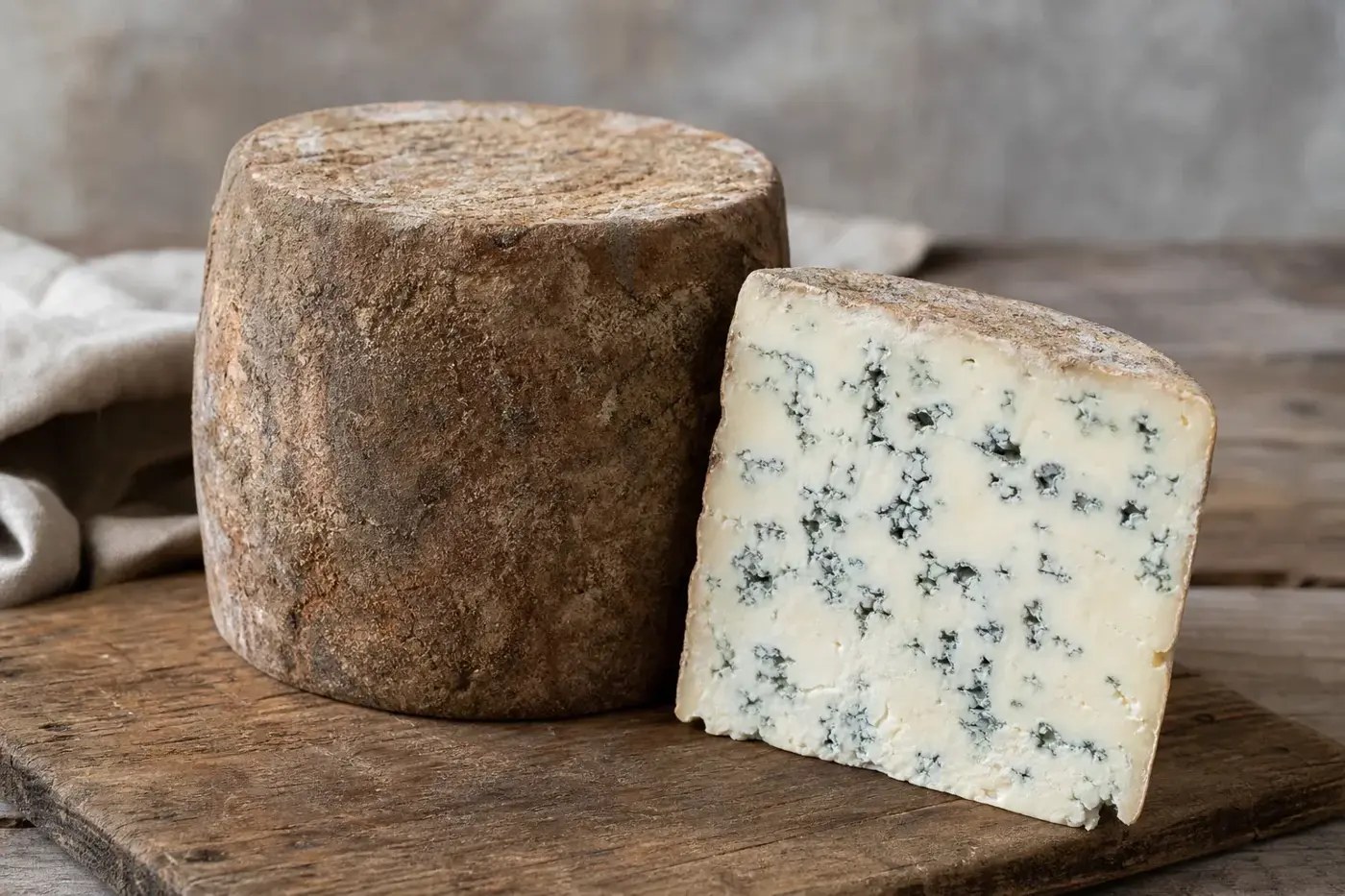
Stilton
Cut into a cylinder of Blue Stilton and pale paste opens beneath your knife, threaded with blue-green mould.