France, 1876. A monk from Scourmont has come to learn the craft of semi-soft cheese. Follow him home and you’ll find a story that connects an abbey in southern Belgium, a working dairy at nearby Baileux and farms around the monastery.[2][19]
Today, monks oversee the Trappist undertaking, while dairy employees make the cheese. Brewing belongs to the same wider group, but beer doesn’t appear in every variety. Even here, it hasn’t managed to get into everything.[1][2][3][4]
| Get to know Chimay | The useful details |
|---|---|
| Name | Chimay, a range of cheeses and beers.[2] |
| Who makes the cheese | Chimay Fromages S.C., named in the Chimay group’s published structure.[3] |
| Where you’ll find the dairy | Baileux, near Chimay, Belgium.[2][18] |
| The monastic connection | Notre-Dame de Scourmont Abbey; production is under monastic supervision.[1][12] |
| How ownership works | The foundation is the group businesses’ reference shareholder. Brand owner by market and effective date: Unconfirmed.[3] |
| Where the milk comes from | Regional milk collected through the Coferme cooperative.[4][5] |
| How the milk is treated | Pasteurisation is included in the producer’s published manufacturing process.[4][5] |
| Certification | Listed by the International Trappist Association as carrying the Authentic Trappist Product label; November 2026.[12][13] |
Follow the monks from Scourmont to the dairy
Before there was cheese, there was a community to sustain. In 1850, monks settled on the plateau near Chimay and began developing farming and food-making activities. Scourmont belongs to the Cistercians of the Strict Observance, commonly called Trappists, whose lives bring prayer and work together.[1]
The brewery dates to 1862. Cheesemaking followed in 1876, with that monk’s journey to France. Butter-making, farming and a dairy also feature in the company’s history, each helping to support the growing monastery.[2][19]
In 1982, cheesemaking moved to the Baileux bottling site. The dairy opened with a single cheese: Grand Classique, made in 1 kg rounds. Vieux Chimay arrived in 1989, followed by Le Poteaupré in 2007.[2]
That move helps you make sense of today’s arrangement. The abbey provides monastic oversight and purpose; the nearby dairy makes the cheese. Chimay’s account places brewing within the abbey enclosure and cheesemaking at Baileux.[2][19]
Meet the people behind your cheese
Chimay Fromages S.C. makes the cheese, while Bières de Chimay S.A. handles brewing. The foundation’s current group structure lists them separately. You’re looking at distinct operations, joined by the Chimay name and a monastic connection.[3]
Fondation Chimay-Wartoise describes itself as the group’s reference shareholder. Chimay says it began in 1996 at the monastic community’s initiative. The community transferred company shares to the foundation, separating monastic life from the businesses’ financial administration.[2][3]
And who gets their hands on your cheese? Dairy staff make, ripen, check and pack it. “Trappist” describes the relationship with a living religious community and the conditions of production, not a promise that monks perform every practical task.[5][12]
Find the Chimay that suits your appetite
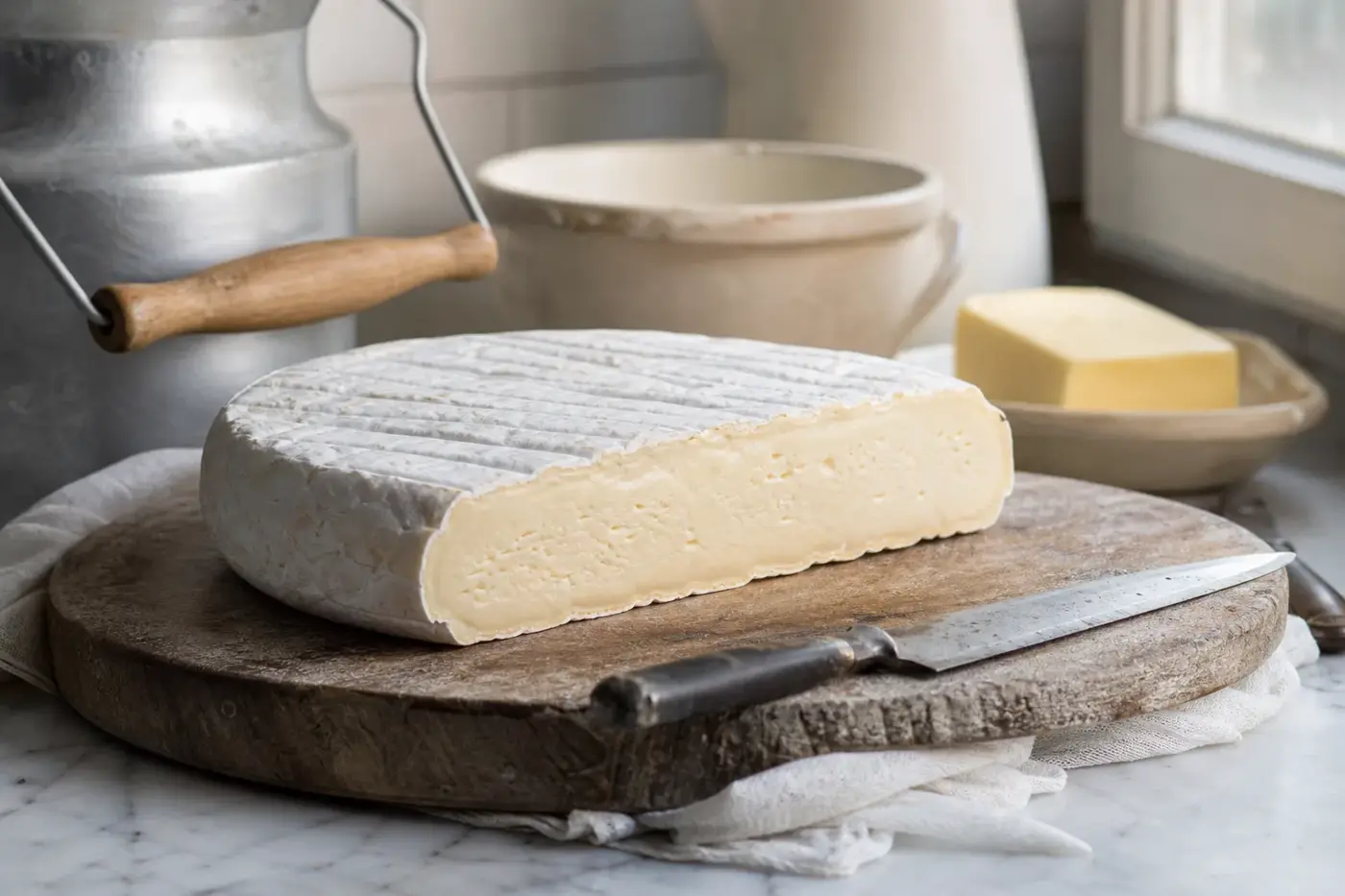
Perhaps you like your cheese mild, with flavours of bread crust and fresh milk. Perhaps you lean towards something stronger and pungent. Chimay’s published tasting notes give you both ends of that conversation, with beer taking some varieties in another direction.[6][7][8][9][11]
| Cheese | What you can expect, according to Chimay | Time to mature |
|---|---|---|
| Le 1876 | Pungent and strong, yet mellow; turned by hand as it ripens.[8] | Four weeks, according to the producer.[8] |
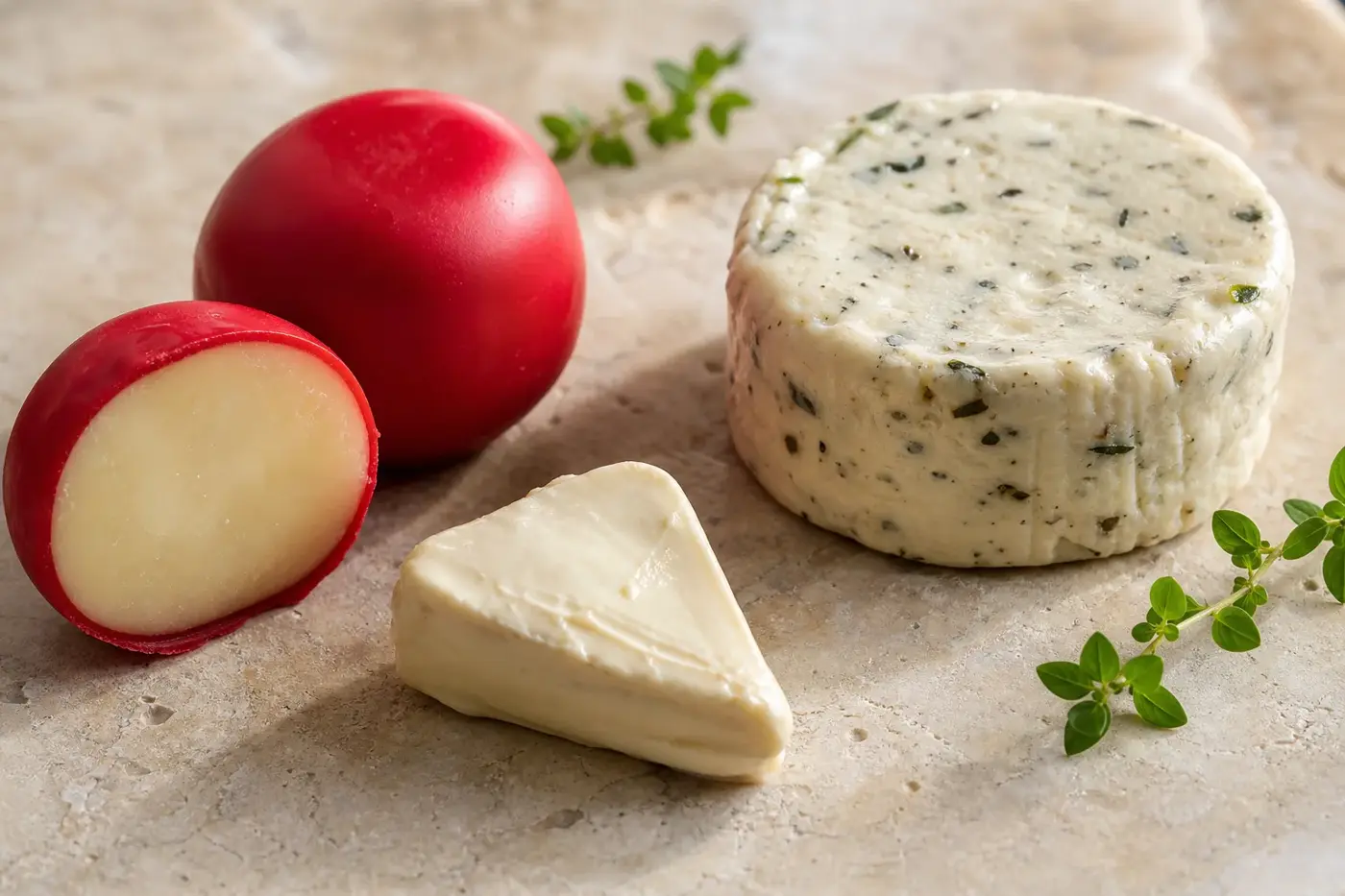
These six names appear on Chimay’s English cheese pages. The French range page also lists Raclettes. For the selection available where you live, look at the producer’s pages and the actual pack.[4][5]
For a useful first comparison, put beer-free Chimay beside Chimay à la Bière. You’ll taste the milk-and-bread-crust profile alongside a deliberate meeting of brewing and cheesemaking. Choose Le 1876 if pungent and strong sounds inviting, or Le Poteaupré for a smoother-textured contrast.[6][7][8][9]
Follow the beer into the cheese
In Chimay à la Bière, beer makes an early entrance: Chimay Blue beer is mixed directly into the milk at the beginning of production. That is the method described on the current product page. Chimay attributes the distinctive aroma to the brewery’s yeast and describes the flavour as intense.[7]
The rind has its own encounter with beer. Chimay’s general manufacturing account says its “à la bière” cheeses are washed with Chimay Trappist beer during ripening. Together, those descriptions place beer in the milk and on the surface, rather than only in the glass beside your plate.[4][5][7]
Try it alongside standard, beer-free Chimay to explore the difference. The producer describes one through fresh milk and bread crust, the other through brewing yeast and greater intensity.[6][7]
If you avoid alcohol entirely, ask Chimay for current information about the specific product before choosing the beer variety. The residual alcohol level in the finished cheese remains unclear. Choose your drink separately from the cheese’s ingredients.
Take the journey from local milk to ripening cellar
Your cheese begins with a regional milk supply, not solely an abbey herd. According to Chimay, the milk comes from farms within roughly 40 km of the abbey. Coferme, the local dairy cooperative, collects it.[4]
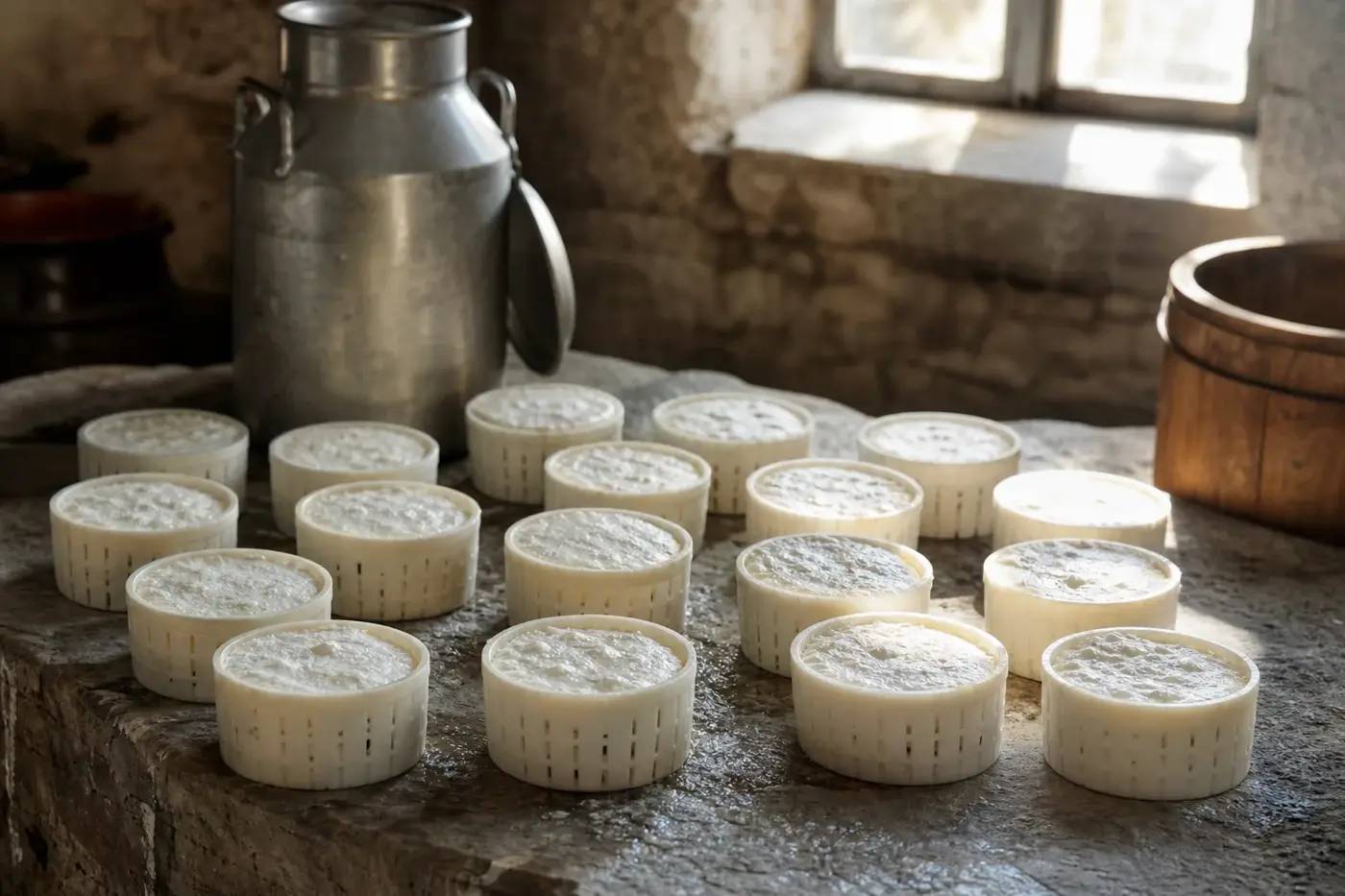
At the dairy, the producer describes pasteurising the milk and adjusting its fat content. Cultures and a coagulant turn it into curd, the solid material destined to become cheese. The liquid whey is removed, and the curd is washed with water before further draining.[4][5]
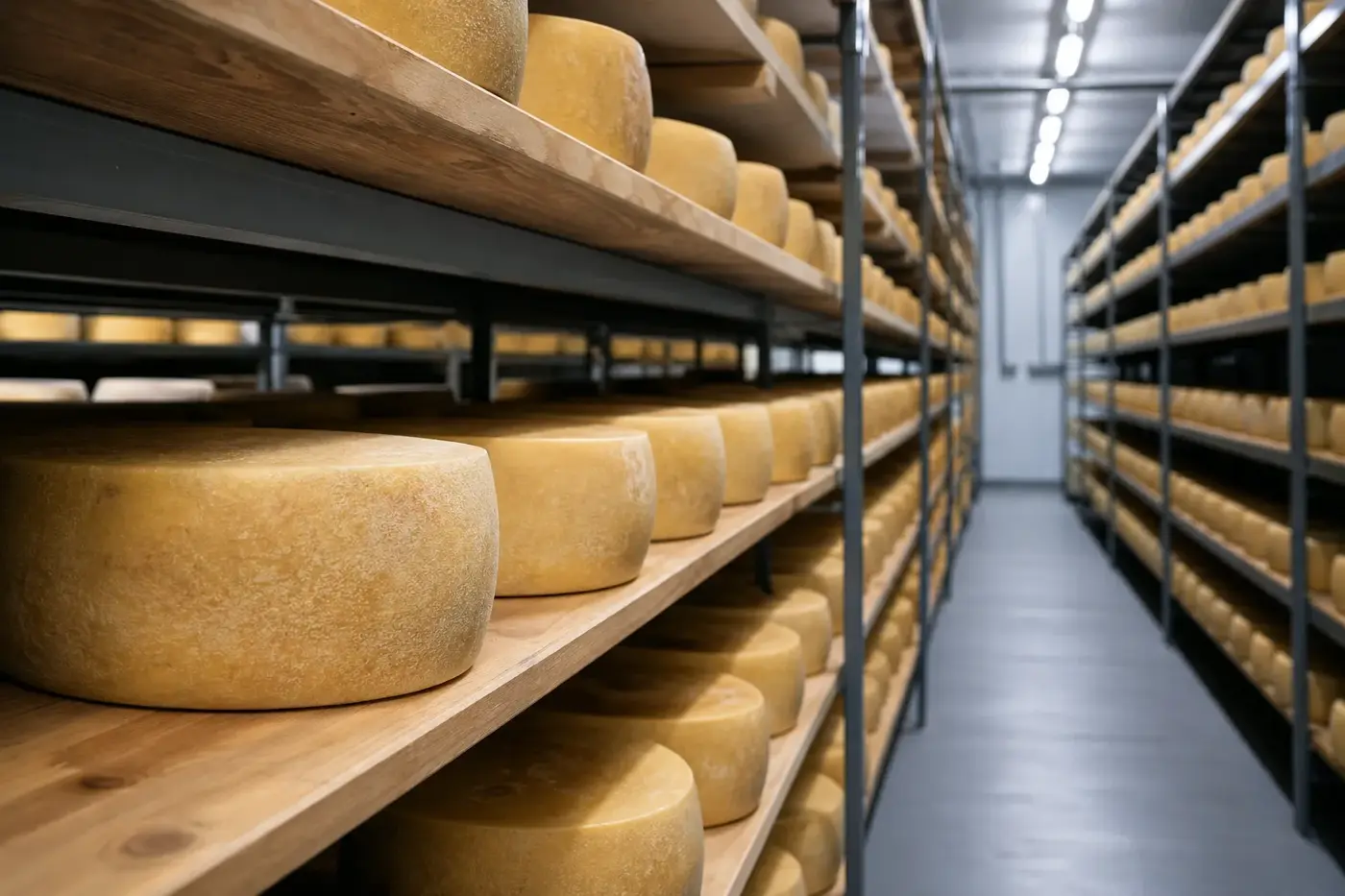
The drained curd then goes into round or rectangular moulds and is pressed into shape. After a dip in brine, a salt-water bath, it moves to the ripening cellars. Surface treatments and turning come next, followed by inspection, weighing and packaging.[4][5]
Curd washing and rind washing sound similar, but they happen at different stages. The first takes place in the dairy vat, before the cheese has its final form. The second happens during maturation, using salt water or, for the beer varieties, beer.[4][5]
If you’d like a closer look at that journey, explore how cheese is made. For the differences between milk treatments, turn to raw, thermised and pasteurised cheese.
Get to know the Trappist mark
There is more to the Authentic Trappist Product mark than its monastic association. Place of production, monastic supervision and the use of income all count. You’ll find the full requirements in the International Trappist Association’s published criteria.[12]
An application involves a dossier, a visit to the abbey and production site, and checks on quality and traceability. The association’s governing body then decides. A licence lasts five years and can cover either an individual product or a whole product category.[12]
The association lists Chimay cheese as carrying the Authentic Trappist Product mark. For authorisation covering each current variety, consult the specific cheese’s pack and the association’s current records. The range-wide listing does not settle every product detail.[13]
See what your cheese helps support
Supporting the monastic community is only part of the Trappist framework. Wider social purposes matter too. Chimay says the foundation coordinates support for regional initiatives, while the community itself and Solidarité Cistercienne support other projects.[12][14]
The published examples give you a clearer picture of that work. They include a school renovation at Momignies and work with Albatros to provide accommodation and activities for adults with disabilities.[14]
The foundation describes its role through local development and the region’s economic, social and environmental transition. Its shareholding connects those aims to the operating businesses, including the dairy and brewery.[3]
Bring Chimay home, then make a little room
Begin with the full product name. “Chimay” can mean the brand, the standard beer-free cheese or a particular beer. Le 1876 and Le Cendré identify different cheeses, so ask to see the original label when buying a cut portion, especially if ingredients or dietary requirements shape your choice.[4][6][7]
For storage, follow your pack’s temperature, date and after-opening instructions. Keep the original label with the remaining cheese so you retain its identity and handling guidance. For UK domestic storage advice, consult the Food Standards Agency guidance on chilling food.[17]
At serving time, try a small comparison: standard Chimay, the beer version and one stronger cheese. Taste each alone before adding bread or a drink. Give them a little space before the accompaniments start competing for the best seat on the plate.
Plain bread, apple or pear, and a little mustard are suggested accompaniments. For an alcohol-free drink, try water or unsweetened tea. These are serving suggestions, rather than tested pairings.
Chimay specifically recommends Chimay Red with Le 1876 and Chimay Gold with Le Poteaupré.[8][9] If you’re an adult of legal drinking age and choose beer, serve a small amount for comparison. Keep water or unsweetened tea alongside.
This page summarises published guidance from the official sources it cites. It is not medical advice. Guidance differs between countries and changes over time, so check the current source for where you live, and ask your doctor, midwife, pharmacist or dietitian about your own circumstances.
Ask the right questions about ingredients and health
Chimay’s general production account includes pasteurisation, but base ingredient decisions on the particular product and pack.[4][5] If you need vegetarian cheese, ask whether your chosen variety uses animal rennet or a non-animal coagulant. The general description says “natural coagulant” without establishing its origin; rennet explained offers more background.[5]
Milk allergy and lactose intolerance are different. Consult the UK Food Standards Agency guidance on allergy, intolerance and ingredient information, and ask a healthcare professional about your individual requirements.[16] An older manufacturer’s specification for Grand Chimay lists lysozyme extracted from egg white, so look for egg as well as milk on current packaging.[18] You can also read cheese allergy versus lactose intolerance.
For UK pregnancy guidance, consult the NHS advice on cheese and other dairy foods; the reference here is November 2026.[15] Confirm the classification of your individual Chimay variety before applying that guidance.
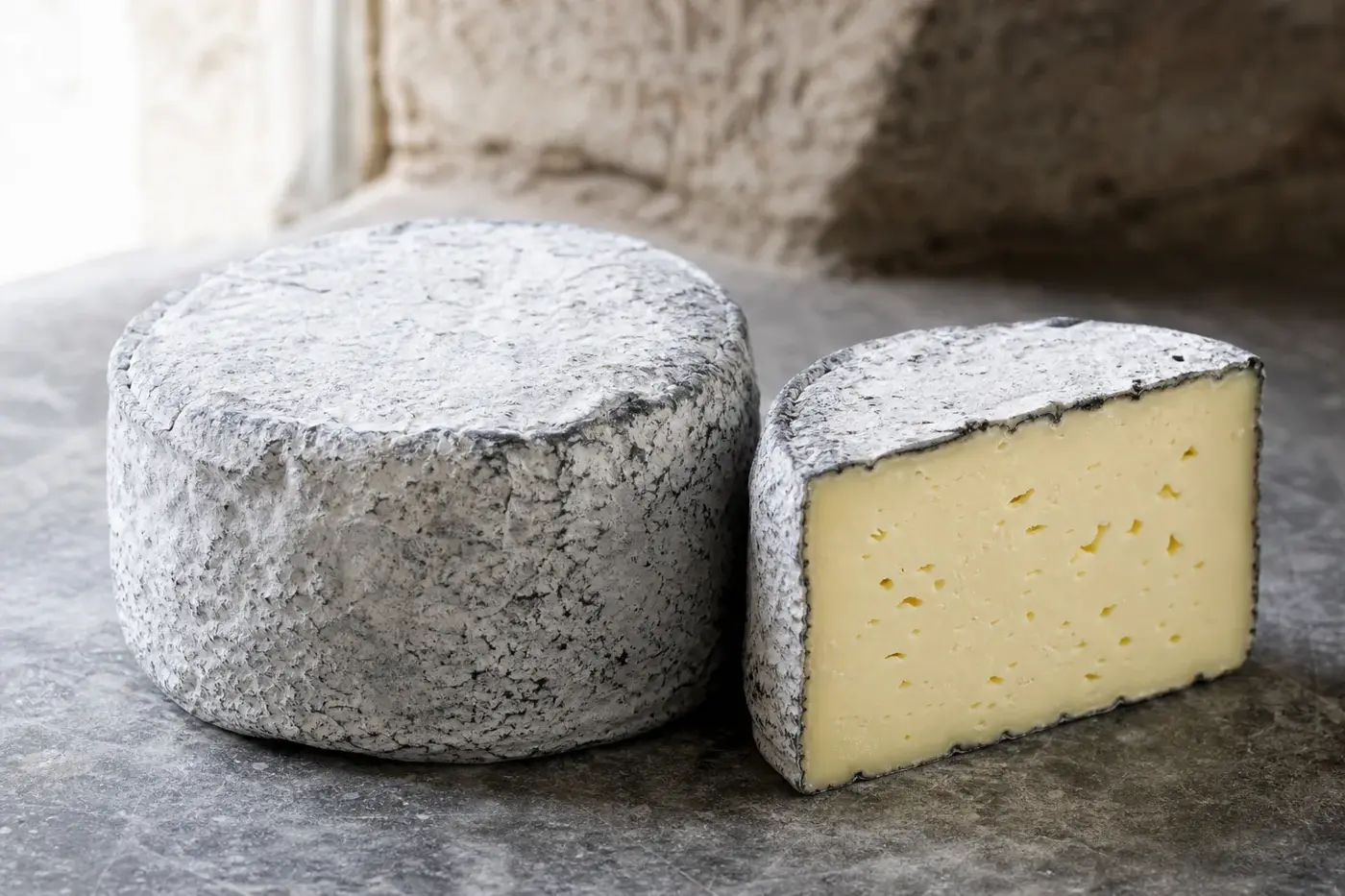
Use the actual cheese’s milk treatment and type, rather than the brand name alone. Le Poteaupré and Le Cendré have different published rind descriptions from standard semi-hard Chimay. If you’re uncertain, ask the supplier for the product classification and consult the official guidance.[6][9][11][15]
For beer-containing cheese, request the producer’s alcohol information. Discuss any personal concern with your midwife or doctor.
Questions people ask
Do the monks make Chimay cheese?
Dairy employees make the cheese at Baileux, near Chimay in Belgium. The monks supervise the Trappist undertaking.
Does all Chimay cheese contain beer?
No. Standard Chimay cheese is beer free, while Chimay à la Bière is made with Chimay Blue beer. Residual alcohol in the finished cheese has not been verified.
Is Chimay cheese made with pasteurised milk?
Chimay includes pasteurisation in its general production process. Check the particular product and pack for ingredient decisions.
Is Chimay cheese vegetarian?
The origin of the coagulant used in each current variety has not been verified. Ask whether your chosen cheese uses animal rennet or a non animal coagulant.
Can I eat Chimay cheese during pregnancy?
Consult the NHS advice on cheese and other dairy foods. Confirm the classification of the individual Chimay variety before applying that guidance.
Sources
- Chimay, Scourmont Abbey, undated current webpage. Abbey history and location.
- Chimay, Discover, undated current webpage, historical chronology and foundation account. History and organisation.
- Fondation Chimay-Wartoise, Groupe Chimay, undated current webpage. Published group structure.
- Chimay, Nos fromages, undated current French webpage. Range, milk supply and manufacturing.
- Chimay, Our cheeses, undated current English webpage. Range and manufacturing.
- Chimay, Chimay, undated current product page. Standard cheese description.
- Chimay, Chimay à la Bière, undated current product page. Beer addition and tasting notes.
- Chimay, Le 1876, undated current product page. Maturation, character and pairing.
- Chimay, Le Poteaupré, undated current product page. Rind, texture and pairing.
- Chimay, Le Gourmand, undated current product page. Format and intended use.
- Chimay, Le Cendré de Scourmont, undated current product page. Rind and texture.
- International Trappist Association, Criteria for obtaining the ATP label, current webpage, 2026. Requirements and authorisation process.
- International Trappist Association, Chimay, current cheese listing, 2026. Chimay cheese certification.
- Chimay, Social responsibility, undated current webpage. Published support arrangements and projects.
- NHS, Foods to avoid in pregnancy, current webpage, checked November 2026. Official pregnancy guidance.
- Food Standards Agency, Food allergy and intolerance advice for consumers, current GOV.UK edition, updated August 2026. Official allergy guidance.
- Food Standards Agency, How to chill, freeze and defrost food safely, current GOV.UK edition. Official chilling guidance.
- Chimay Fromages, Fiche technique fromage Grand Chimay 2 Kg pasto, reference 1000180, dated 19 September 2017, manufacturer-authored document hosted by a distributor. Archived product specification.
- Chimay, Chimay: Pères Trappistes, English press dossier, 2022. Company historical account.
Researched from producer and foundation records, International Trappist Association requirements and listings, and official UK guidance; sensory descriptions are attributed to Chimay.
Last checked: November 2026
Last checked November 2026.
The editors suggest you read next
Who Makes the World's Cheese? The Big Dairy Groups
You pick up Galbani at the cheese counter, then pause over Kerrygold.