Who Makes the World's Cheese? The Big Dairy Groups
You pick up Galbani at the cheese counter, then pause over Kerrygold.
You pick up Galbani at the cheese counter, then pause over Kerrygold. Two familiar names, two rather different stories behind the packaging. Galbani leads you to Lactalis; Kerrygold to the Irish cooperative Ornua. In November 2026, both names appear in their respective groups' brand portfolios.[1][8]
Follow those labels and you meet family-owned dairy groups, listed companies, farmer-owned cooperatives and independent makers. But ownership is only the beginning of the story. The company behind the name is not necessarily the dairy behind the pack, and brand rights can differ between markets.
Follow the milk before you crown the biggest
Before cheese reaches your counter, it can pass through several businesses. A farmer supplies milk; a dairy makes the cheese; another business may mature, cut or pack it. The brand is the name you recognise, not necessarily the business doing every job.
One group might handle several stages. Another might specialise in ingredients or sell cheese made by suppliers. Ornua, for example, separates its consumer-brand business from its ingredients business, which procures dairy products for manufacturing and foodservice customers.[8]
So “biggest” needs unpacking, preferably before anyone starts awarding imaginary cheese trophies. A company with vast drinking-milk or dairy-ingredients operations need not produce the most cheese. A cheese specialist can fill a substantial stretch of the counter yet occupy a smaller place in the wider dairy industry. Both Lactalis and Savencia report cheese separately from other dairy activities.[1][2]
| Measure | What it tells you | What to look for |
|---|---|---|
| Global dairy revenue | Sales across the activities in the group's accounts | Does the total include cheese, milk, ingredients and other foods? |
| Milk intake | Milk collected or purchased within a reporting boundary | Check the units, milk sources and treatment of purchased ingredients |
| Cheese production | Finished cheese within a stated category | Are processed cheese, joint ventures and purchased cheese included? |
| Branded cheese sales | Products sold under specified consumer names | Does the business make the cheese or buy it? |
Each measure tells you something different. Exchange rates and product mix affect revenue; milk intake includes milk destined for products other than cheese. To compare cheese tonnage, you need a shared definition and reporting period.
Before moving a company's position from one league table to another, read the category notes and consolidation boundaries.[1][2] At the counter, three smaller questions often prove more useful. Who owns this name, who made this cheese, and what connects the two?
Galbani and Lactalis: a familiar name, a wider story
Galbani belongs to the Lactalis brand portfolio. The group's activity report names it among its principal brands, alongside Président and Parmalat. Behind those names sits a business spanning cheese, drinking milk, yoghurt, butter, cream and dairy ingredients.[1]
The group's 2025 results announcement also discusses Galbani product development in Italy and the brand's development in Brazil.[3] Follow one familiar label and you soon find yourself looking well beyond a single cheese counter.
Three terms help you navigate. A parent company controls businesses within a group. A subsidiary is a separate legal company controlled by another company. A consumer brand identifies and markets products; it need not be the legal entity operating the dairy.
Galbani gives you the consumer brand; Lactalis gives you the wider group. To find the maker of an individual cheese, follow the brand website through to product information and packaging. The portfolio establishes the corporate connection; manufacturing information traces that particular product's route to your counter.[1][3]
That distinction matters when the same name appears on several cheese styles or in several countries. Look at the product and its market together. A brand name is not a factory address.
Meet the groups bringing milk to market
These groups organise the journey from milk to cheese in strikingly different ways. Treat this selection as a tour, not a production ranking. The activities below come from the companies' records.
Lactalis, France. Begin in Laval, where Lactalis was founded. It describes itself as a French family-owned dairy business, with cheese forming part of a broad dairy portfolio. Galbani and Président are among its principal consumer names, and the group also identifies raw milk cheeses among its activities.[1]
Savencia, France. Savencia SA trades with its subsidiaries as Savencia Fromage & Dairy. It is listed on Euronext Paris and controlled by Savencia Holding SCA, so a stock-market listing does not rule out a controlling shareholder. Its annual report separates “Cheese Products”, covering the manufacture and distribution of branded cheeses and cheese specialities, from “Other Dairy Products”.[2]
Bel, France. You may know Babybel, Boursin, Kiri and The Laughing Cow before you recognise Bel, the group whose portfolio contains them. Its shareholder disclosure names Unibel as the lead holding company and describes control involving the founding family group. Those familiar brands cover different cheese formats, rather than one cheese style sold everywhere.[4][5]
FrieslandCampina, the Netherlands. Here, cooperative governance meets commercial operations in a business that presents itself as farmer-owned. Its wider portfolio connects Dutch milk production, dairy processing and consumer brands. If you are following a particular cheese brand, its current allocation matters: the wider portfolio alone does not establish where each belongs.[6]
Arla, Denmark. Farmer owners sit behind this European dairy cooperative's portfolio of cheese, other dairy products and ingredients. Its first-half 2026 statement discusses branded cheese activity and a new cheese dairy at Götene in Sweden. Those international consumer businesses and substantial manufacturing investments are part of the business those farmers own.[7]
Fonterra, New Zealand. Look beyond the supermarket shelf here. Fonterra's current brand page emphasises NZMP, its business-to-business ingredients brand, and Anchor Food Professionals, its foodservice brand. Its 2026 material also identifies mozzarella production at Clandeboye. Alongside consumers, the group serves professional customers through ingredients and foodservice businesses.[9]
Saputo, Canada. Saputo describes a multinational processing business serving Canada, the United States, Australia and the United Kingdom. Its portfolio includes cheese, other dairy products and ingredients. Keep an eye on the regional operations: an international footprint does not tell you where an individual product was made.[11]
Famous labels reveal only part of the picture. Some groups build consumer recognition while supplying cheese for restaurant meals, manufactured foods or another business's product range. Those less visible journeys belong to the same cheese economy.[8][9][11]
Farmer-owned: follow the people behind the phrase
At Arla, the farmer owners both supply the business and own it. Milk supply, governance and the cooperative's overall performance are closely connected. Arla's reporting frames its activities around delivering results for those farmer owners.[7]
Amul takes you into a different structure. India's Gujarat Cooperative Milk Marketing Federation is the marketing organisation in a system linking village dairy cooperative societies, district milk unions and the state-level federation. Farmers supply through village societies; district unions collect and process milk; the federation handles marketing.
That familiar Amul identity therefore represents an organised network, rather than a single conventional dairy company.[12] The name you see on the product brings several levels of organisation together.
Ornua's members, meanwhile, are dairy processors and cooperatives. The Irish cooperative markets and sells dairy products on their behalf and, ultimately, on behalf of the farmers behind them. Its consumer brands include Kerrygold, Dubliner and Pilgrims Choice; Ornua Ingredients supplies manufacturing and foodservice customers.[8]
All three structures connect dairy businesses to farmers, but the relationships differ. To understand a cooperative, ask who holds membership, how representatives are selected, and which organisations process the milk and market the products. “Farmer-owned” tells you much more once you can follow those connections.
Get to know the regional names
Switzerland's Emmi connects a domestic dairy business with specialist cheese operations abroad. Emmi AG is listed on the SIX Swiss Exchange and headquartered in Lucerne. Its 2025 consolidated-company disclosures include Cypress Grove Chèvre and Emmi Roth in the United States.[13]
Germany's Hochland describes itself as wholly family-owned, with headquarters in Heimenkirch in the Allgäu. Its cheese-focused business reaches customers through consumer brands, private-label manufacturing, business-to-business supply and foodservice. Hochland, Almette, Grünländer and Patros are among its named brands, offering you a glimpse of those different routes to market.[14]
In the United States, Sargento describes a private, family-owned company headquartered in Plymouth, Wisconsin. Retail cheese is only part of its business: its foodservice and ingredients division serves restaurant chains and food manufacturers. Its account of acquiring Baker Cheese in 2022 shows a familiar retail business expanding its manufacturing activities.[15]
Tillamook County Creamery Association, headquartered in Tillamook, Oregon, describes itself as a farmer-owned cooperative. Its published account also identifies milk supply partners beyond its owning farming families. Even where farming identity is central to a cooperative's public presentation, ownership and milk sourcing remain separate questions.[16]
To understand these businesses, explore their products, supply relationships and routes to market. A place in a worldwide dairy ranking tells you only one part of their cheese story. The rest takes you closer to the dairy.
Natural or processed? Let the product tell you
A slice's shape will not settle this question for you. The distinction begins with how the product is made. In industry discussion, “natural cheese” commonly distinguishes cheese made through cheesemaking from products subsequently manufactured by blending cheese with other permitted ingredients.
For the underlying process, explore how cheese is made. The exact legal product name depends on the jurisdiction where the product is sold.
In the United States, 21 CFR 133.169 defines “pasteurized process cheese” through a manufacturing process involving specified cheeses, heat and an emulsifying agent. It also sets permitted ingredients and naming requirements. This is a specific US standard, not a worldwide definition of everything informally called processed cheese.[17]
A single group can offer both kinds of product. Bel's brands serve different formats and uses, including the portioned products associated with The Laughing Cow. Hochland explicitly serves retail, industrial and foodservice customers, whose products can require different specifications.[5][14]
Look for the method and legal product description, rather than clues in the wrapper or the slice. The manufacturer's size will not tell you either. Start with the product name and ingredients, then turn to how to read a cheese label for the rest of the pack.
When a familiar name changes hands
The name on your pack can stay put while the business behind it changes hands. An acquisition may bring a business or brand into a different corporate group without changing its public identity. Sargento's account of Baker Cheese documents an acquired manufacturing business becoming part of a wider organisation.[15]
A licence works differently. Permission to use a name is separate from owning it, and that permission may be limited by territory, product category and duration. A business using a brand in one market need not hold the same rights elsewhere.
First establish whether a company is acting as licensee, distributor or importer. Then look at the agreement for the market concerned. Those roles are not interchangeable.
Dates deserve your attention, too. An announcement records what the parties said they intended to do; a completion statement records that the transaction closed. Different mentions of an acquisition may describe different stages, so note the event each document records.
Keep four questions separate as you follow the trail. Who owns the brand in this market, which company sells the product, which dairy makes it, and does another business mature or pack it?
What a big business brings to your plate
Scale allows dairy groups to coordinate milk collection, manufacturing, product development and distribution across several markets. Lactalis describes a network of dairies and cheese factories. Hochland separates branded, private-label, industrial and foodservice activities, while Ornua connects member businesses with consumer and ingredients customers internationally.[1][8][14]
Think about the connections, and these structures become easier to understand. A farming business gains a route into processing; a manufacturer gains access to customers; a restaurant group can specify cheese for a particular application. Fonterra's mozzarella manufacturing and Ornua's customised cheese business offer concrete examples of production organised around professional customers.[10][18]
For farmers, ownership is one part of the relationship. Supply arrangements, collection requirements and participation in governance matter too. Each helps explain how the farmer and the business fit together.
For you, the group name identifies the business behind a product. The cheese's method, origin, maturation and individual specification offer more direct evidence about what reaches your plate. A corporate family tree is useful, but it cannot choose your lunch.
Protected names: keep the dairy in the picture
A company's ownership and a cheese's protected geographical identity tell you different things. Lactalis, for example, reports making raw milk cheeses within its international dairy portfolio.[1] To establish an individual cheese name's status and production requirements, turn to the relevant jurisdiction's register and specification.
Follow two separate trails. The applicable register and specification establish the cheese's production area, permitted milk and manufacturing requirements. Corporate records establish ownership and control. Neither can answer the other's questions.
A larger business can retain distinct dairies and product methods within its portfolio. Focus on what the particular dairy does and which requirements govern its cheese. For the distinction between a geographical name, a production specification and a consumer brand, see protected names explained.
Follow your pack back to its maker
Start with the pack in front of you and its country of sale. Then work through the evidence in this order. Keep each business's role separate as you go.
- Note the exact product and brand. Capture the legal product description, not just the largest lettering.
- Untangle each business's role. Look for wording that distinguishes manufacture, maturation, packing, distribution and import.
- Find the official brand record. Follow its corporate information to the group and look at the relevant reporting period.
- Look for ownership evidence. Prefer filings, governance disclosures and explicit completion statements.
- Get to know the cheese itself. For a protected name, consult the relevant official register and specification. For other cheeses, seek the maker's documented method and origin.
- Keep unanswered questions separate. Identifying the parent group can be useful even when the dairy responsible for a particular batch remains unknown.
A complete account connects three levels: the milk and its suppliers, the dairy and its method, and the business bringing the finished cheese to the counter. Follow all three, and you understand far more than the name on the pack.
Questions people ask
Who owns Galbani?
Galbani belongs to the Lactalis brand portfolio. Lactalis describes itself as a French family owned dairy business founded in Laval.
Who is behind Kerrygold?
Kerrygold is a consumer brand of Ornua, an Irish cooperative whose members are dairy processors and cooperatives. Ornua markets and sells dairy products on their behalf and ultimately on behalf of the farmers behind them.
Which company makes the most cheese in the world?
The page does not give a production ranking. It explains that comparisons of cheese tonnage need a shared definition and reporting period, and that a large dairy business does not necessarily produce the most cheese.
Does the company that owns a cheese brand always make the cheese?
No. A brand identifies the name presented to customers, but the company behind it is not necessarily the dairy behind the pack. Product information and packaging can help trace the maker of an individual cheese.
What is the difference between natural and processed cheese?
In industry discussion, natural cheese commonly means cheese made through cheesemaking, as distinct from products subsequently manufactured by blending cheese with other permitted ingredients. The exact legal product name depends on the jurisdiction where the product is sold.
Sources
[1] Lactalis, Activity Report 2024, published 2025. Group description, principal brands, reporting categories and manufacturing network. Report.
[2] Savencia SA, Financial Year 2025: Combined Shareholders’ Meeting, 2026. Consolidated financial statements, introductory company information and Note 3, segment reporting. Report.
[3] Lactalis, 2025 Annual Results, 16 April 2026. Galbani activity in Italy and Brazil.
[4] Bel Group, Shareholders, current website disclosure, including shareholder-agreement information updated in 2025. Disclosure.
[5] Bel Group, The Laughing Cow, current brand account; brand navigation also identifies Babybel, Boursin and Kiri. Brand account.
[6] FrieslandCampina, corporate website, current version, 2026. Farmer ownership, cooperative structure and Dutch heritage navigation. Corporate website.
[7] Arla Foods, Surging brands and strong protein demand drive Arla Foods to a standout first half, 2026. Farmer ownership, branded cheese and Götene investment.
[8] Ornua, Our Co-Operative, current website account. Membership, consumer brands and ingredients activities. Corporate account.
[9] Fonterra, Our Brands, current website account, 2026. NZMP and Anchor Food Professionals. Brand account.
[10] Fonterra, Global demand for mozzarella driving Clandeboye capability uplift, 19 May 2026. Company article.
[11] Saputo, Corporate Overview and corporate product navigation, current website versions, 2026. Overview.
[12] Government of India, Press Information Bureau, AMUL’s Co-operative Model, parliamentary written-answer material, 2024; AmulFed Dairy, Sustainability Report 2023-24.
[13] Emmi, Group Reports: Organisation, current website version; Annual Report 2025, consolidated companies. Headquarters, listing and US subsidiaries.
[14] Hochland SE, Our Company, current website account. Ownership, headquarters and business segments. Company account.
[15] Sargento Foods, Our Company, current website account. Ownership, headquarters, customer divisions and Baker Cheese acquisition. Company account.
[16] Tillamook County Creamery Association, About Us, current website account. Cooperative ownership, headquarters and milk supply partners. Company account.
[17] United States, 21 CFR 133.169: Pasteurized process cheese, current eCFR text retrieved November 2026, particularly paragraphs (a), (c), (d) and (e). Official text.
[18] Ornua, Ornua publishes Full-Year Results for 2025, 15 April 2026. Customised cheese business and manufacturing customers. Results announcement.
This desk-researched article synthesises company reports, governance disclosures, official company accounts and the US processed-cheese standard, with unresolved publication checks recorded below.
Last checked: November 2026
Last checked November 2026.
The editors suggest you read next
Lactalis
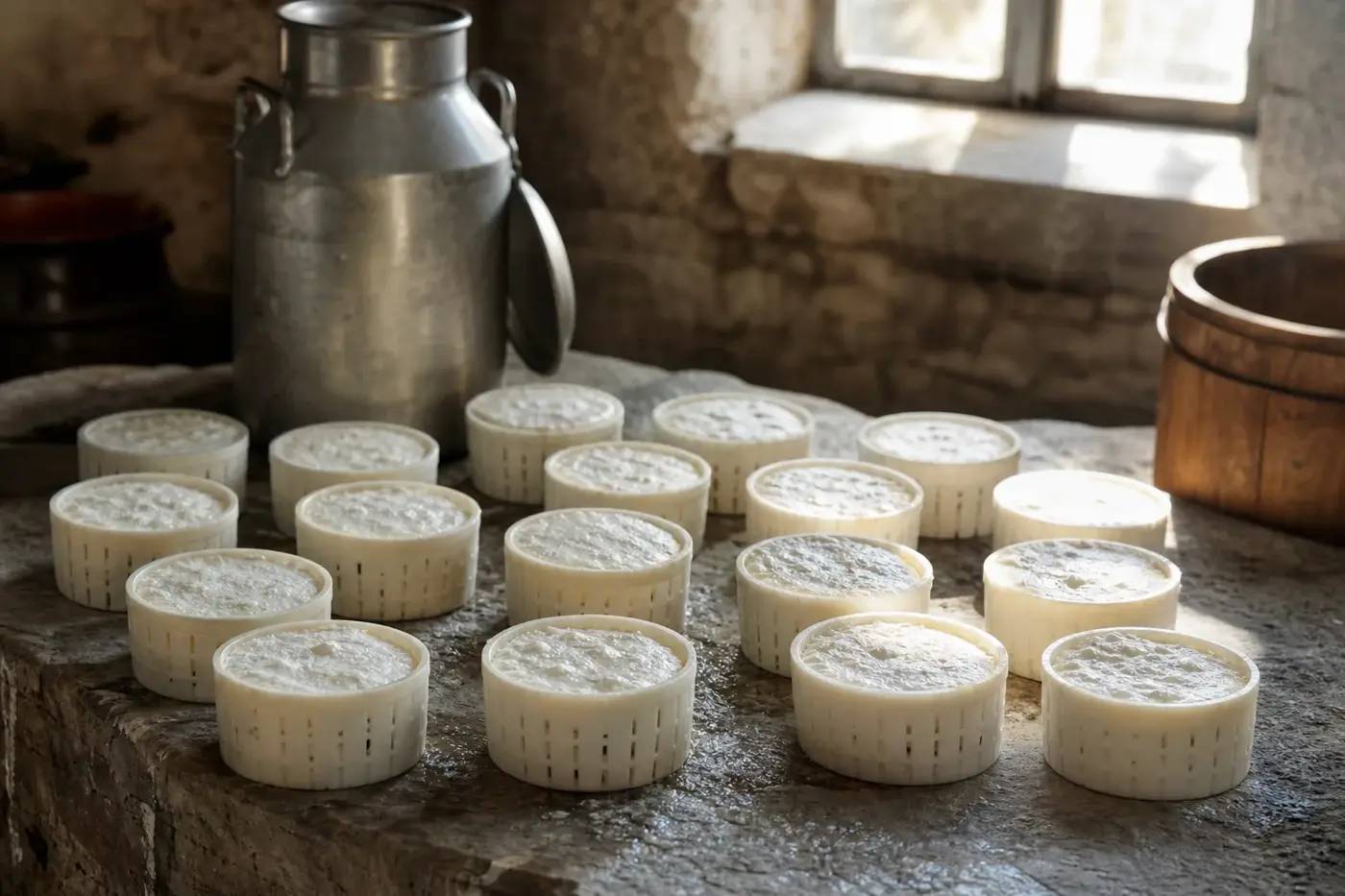
Picture seventeen Camemberts, made from 35 litres of milk collected around Laval.