Bel Group: Babybel, The Laughing Cow and Boursin
Peel back the red wax.
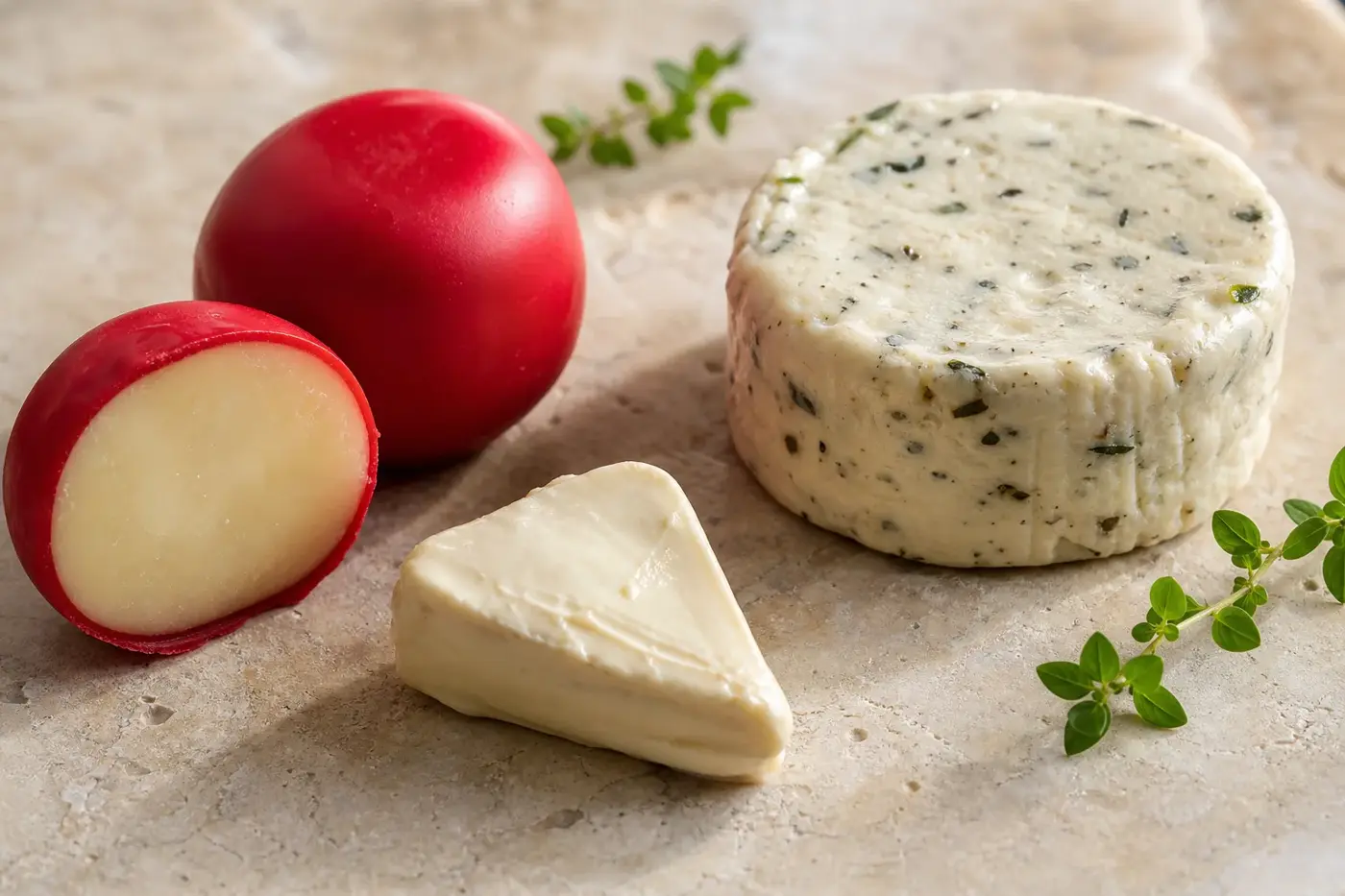
Peel back the red wax. Unwrap a foil triangle. Open a soft cheese flecked with herbs, and you have three very different invitations to eat, all from the same family-controlled French food group: Bel. The cheese drawer has been keeping a family secret.[1][2][3]
The wrapping is part of the story, too. In 1924, The Laughing Cow gained its triangular portions and familiar red cow packaging, making the outside as recognisable as the cheese within.[2] Behind Babybel, The Laughing Cow and Boursin is a business that began maturing and trading cheese in the Jura. Today, its reach includes dairy products, fruit snacks and plant-based alternatives.[1][2][3]
| Meet the company | The details |
|---|---|
| Group name | Bel Group.[2] |
| Controlling holding company | Unibel, alongside members of the founding family group.[3] |
| Ownership model | Family-controlled.[3] |
| Headquarters | Suresnes, France.[4] |
| Principal cheese brands covered here | Babybel, The Laughing Cow and Boursin.[1][5][6] |
| Ownership information date | November 2026.[3] |
Before the triangles, a beginning in the Jura
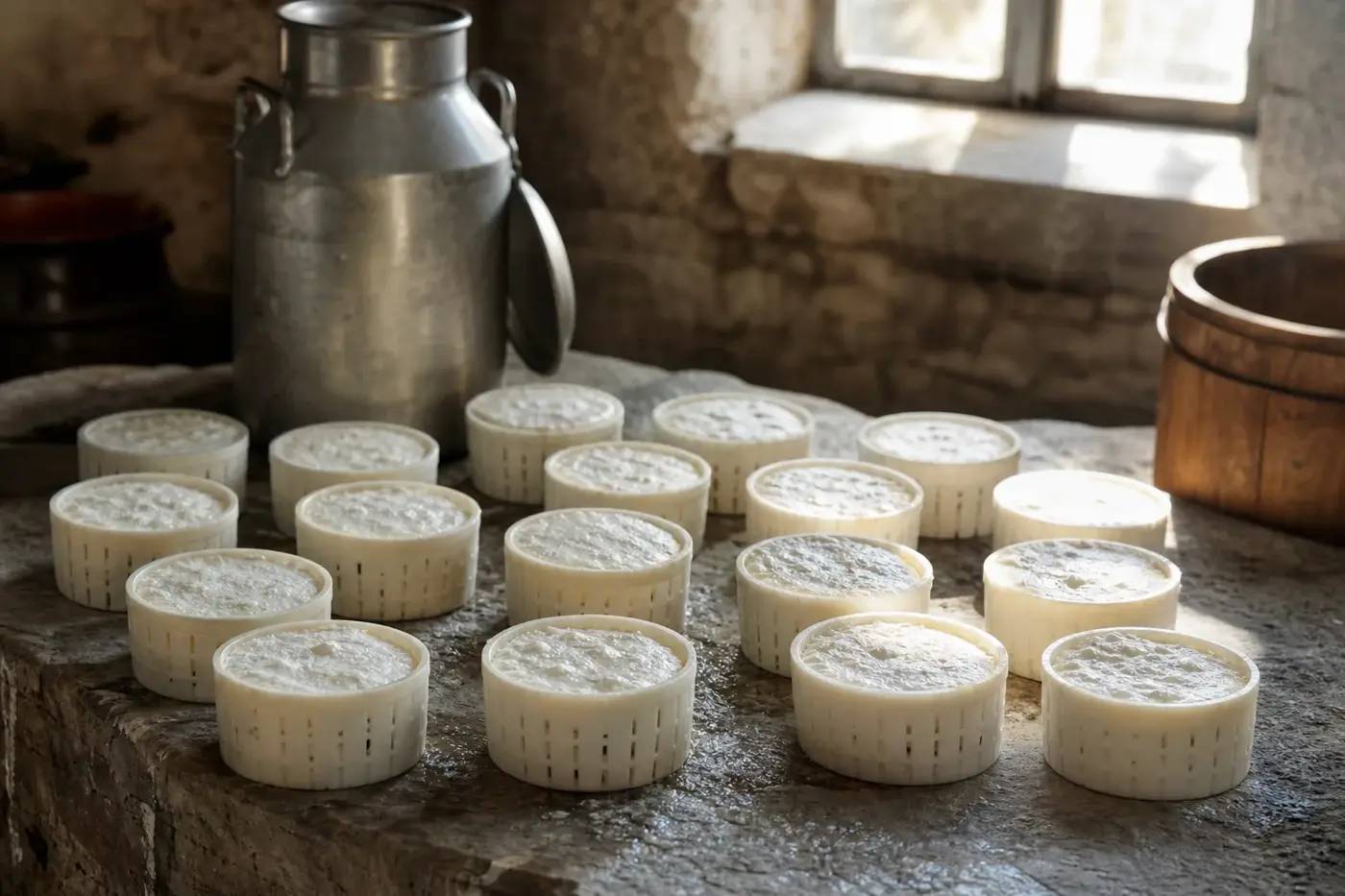
Go back to 1865, to Orgelet in France’s Jura, and you find a rather different Bel. The business matured and traded cheese, taking existing cheeses and bringing them to maturity. Those individually wrapped portions were still some way off.[1][2]
Then came the Swiss technique of melting cheese. Bel’s historical account connects it with the move towards industrial cheese production. The company registered The Laughing Cow brand in 1921, while its fuller group history dates the triangular portions and familiar red cow packaging to 1924.[2]
First came the name, then the presentation you know. A triangle inside a circular box gave the cheese an identity right down to the individual serving. Today, Bel’s British product information still centres on that partnership: mild cheese spread in separately sealed portions, ready for you to unwrap.[2][6]
The business did not stay close to home for long. In 1929, just eight years after registering The Laughing Cow, Bel established its first overseas subsidiary in Britain. Expansion into North America and Africa followed, including a Moroccan production plant in 1974.[2]
That consistent format helps explain the growth. Here was a recognisable product you could unwrap and spread, reaching different markets as manufacturing and distribution expanded. Follow that story and the distinctions become clearer: Bel’s cheeses share an owner, not necessarily a way of being made.[2][6]
Babybel: getting beneath the red wax
Babybel Original, the familiar dairy version, is a small cheese enclosed in red wax, rather than a spread sealed in foil. Bel describes its coating and round shape as inspired by Edam. There is an established cheese tradition beneath that wrapping ritual.[5]
It was not always so little, either. The larger Babybel came before the miniature: Bel UK dates Mini Babybel to 1977, while Bel Group gives 1976. The reason for that difference, including any connection with different markets, remains unresolved.[1][5]
These are separate developments within the brand’s history. When you shop, remember that the Babybel name does not promise one recipe across every product.[1]
British Babybel Original has a notably short ingredient list in Bel’s foodservice information: pasteurised milk, salt, lactic ferments and vegetarian rennet. Lactic ferments are cheesemaking cultures; rennet is the coagulant that helps milk form a curd. The manufacturer describes the cheese as made from 98% milk.[7]
That gives you a useful distinction within the cheese drawer. Babybel Original starts with milk, cultures and a coagulant, while The Laughing Cow’s manufacturer describes melting and blending cheeses with other dairy ingredients. Same corporate owner, different making process and different ways to eat.[7][8]
Then there is the wax, which rather insists on being noticed. Bel’s 2025 packaging material describes it as protective and sets out changes to the wrapping around the cheese. Keep those components separate: changing an outer wrapper does not mean replacing the wax.[9]
Boursin: make room for garlic and herbs
With Boursin Garlic & Herbs, you get a different texture altogether. Its British product page describes it as spreadable yet slightly crumbly, with garlic, parsley and chives. That combination of texture and flavour is the brand’s own description.[10]
The original format changes how you help yourself, too. Babybel gives you a separate round and The Laughing Cow a wrapped triangle, while a larger Boursin lets you take a spoonful, spread it or crumble it. Your spoon is in charge of portioning here. Portions and other formats also exist, so “Boursin” alone does not tell you exactly what is on the table.[10]
Its arrival at Bel comes with two dates to untangle. Bel UK’s historical timeline places the acquisition in 2007, while seller Unilever’s 2008 annual filing says the sale to Le Groupe Bel was completed on 3 January 2008. That explicit completion date is the more precise reference for the transaction’s close.[1][11]
Boursin took Bel’s portfolio beyond those two familiar individually portioned cheeses. Its British nutrition declaration gives you another reason to consider it separately. Garlic & Herbs has a substantially different balance of protein and saturated fat from Babybel Original.[7][10]
A shared spreadability, but different recipes
The Laughing Cow’s British FAQ describes cheeses being melted and combined with skimmed milk and other ingredients. It names Cheddar, Gouda, Edam, Emmental and Comté as examples used in the blend. Those are examples, not a fixed recipe promised in every triangle.[8]
Here, cheese becomes an ingredient in a further blending stage. Babybel Original’s published ingredients, by contrast, are milk, salt, cultures and rennet. A complete current British ingredient list for Boursin remains unavailable here, leaving the full ingredient comparison incomplete.[7][8][10]
Softness alone will not settle the question for you. A cheese spread and a soft cheese can both spread on bread while differing in ingredients and nutritional composition. Start with the precise product name, then look at its ingredient list and nutrition declaration.
For a closer look at manufacture, texture and rind, see how to tell cheese styles apart. When you are choosing between these brands, how to read a cheese label helps you make the comparison.
The family behind the familiar packs
Behind those familiar packs sit Unibel and members of the founding family group, Bel’s majority owners according to its current ownership page. Bel describes Unibel as the holding company responsible for long-term direction and major strategic decisions. This is a family-controlled group, rather than a business wholly owned by an outside dairy company.[3]
The latest integrated report available here covers 2025, and the scale is striking. It records sales in more than 120 countries and manufacturing across 30 plants. France accounted for 20% of group net sales and Europe for 50%, with the United States and Asia identified as important areas of development.[4]
Production stretches across borders, too. The Laughing Cow’s British FAQ says the product supplied to that market is made in the Jura. Babybel’s packaging dossier names manufacturing sites including Brookings in the United States, Sorel-Tracy in Canada and Michalovce in Slovakia.[8][9]
Want to know where your particular cheese came from? Turn to its pack and relevant product information. A British distributor’s address tells you who distributes it, not necessarily where it was made.
Same brand, different country, different shelf
Bel’s British foodservice portfolio also includes Kiri, Port Salut and GoGo squeeZ. Its UK history records the launch of Nurishh in 2021. Together, those names take you beyond the three cheeses here, into fruit snacks and plant-based alternatives.[1][12]
Availability, though, has borders. Bel’s group brand page records the international development of Babybel Plant-Based, while Babybel’s current British FAQ says it has been discontinued in the UK. An international brand story does not necessarily describe what you will find locally.[5][13]
Recipes and milk sourcing deserve the same attention, product by product and market by market. That four-ingredient declaration for British Babybel Original describes that cheese alone. It cannot stand in for every flavoured, reduced-fat or plant-based product carrying the Babybel name.[7]
If you have an imported pack, read its own declaration rather than borrowing details from the British website. Match product names, ingredients and serving sizes when comparing national ranges. Those are your useful identifiers, beyond the name on the front.
Put your portions side by side
Babybel Original and Boursin Garlic & Herbs have markedly different nutrition profiles. The table uses British manufacturer information dated November 2026, with values per 30 g calculated from published figures per 100 g. That 30 g is a common comparison weight, not a recommended serving.[7][10]
| British product and amount compared | Protein | Salt | Saturated fat |
|---|---|---|---|
| Babybel Original, 100 g | 22 g | 1.7 g | 15.5 g |
| Babybel Original, one 20 g cheese | 4.4 g | 0.34 g | 3.1 g |
| Babybel Original, 30 g | 6.6 g | 0.51 g | 4.65 g |
| Boursin Garlic & Herbs, 100 g | 8 g | 1.2 g | 26 g |
| Boursin Garlic & Herbs, 30 g | 2.4 g | 0.36 g | 7.8 g |
Compare equal weights and Babybel Original provides more protein, while Boursin Garlic & Herbs provides more saturated fat. Boursin has less salt per 100 g. These differences belong to the particular recipes, not to the brands’ entire ranges.[7][10]
Next, look at the amount you actually eat. One 20 g Babybel contains less salt than the illustrative 30 g of Boursin, despite Babybel’s higher salt concentration per 100 g. Both sets of figures have a purpose: equal weights compare recipes; portion values describe your amount.[7][10]
Vegetarian choices, milk and your label
Babybel Original uses vegetarian rennet, according to Bel. The Laughing Cow’s British FAQ also says its products are suitable for vegetarians. For another variety or a product from another country, turn to the pack, since those manufacturer statements concern the relevant ranges.[7][8]
Babybel’s British foodservice declaration explicitly identifies milk and milk products, including lactose. Read each product’s full ingredient and allergen information, including any accompaniments. The Laughing Cow’s FAQ, for instance, distinguishes cheese triangles from Dip & Crunch products containing breadsticks.[7][8]
For UK information on food allergy and lactose intolerance, see the NHS food allergy guidance and NHS lactose intolerance guidance.[14][15][14][15]
Neither a brand name nor a vegetarian statement tells you the lactose content. For the wider subject, turn to lactose in cheese. For the product in your hand, use the current pack.
Unwrapping the packaging changes
Paper is replacing Babybel’s individual cellophane wrapping as part of Bel’s packaging programme. Its November 2025 dossier treats the protective wax as a separate component from that outer wrapping. Look at the change piece by piece: replacing the wrapper is not the same as removing Babybel’s packaging.[9]
Bel’s 2025 integrated report sets a target to cut greenhouse gas emissions across its value chain by 25% between 2017 and 2035. It also reports a 7% reduction in production-site water withdrawals against 2017. Both are company-reported measures, with different scopes: one is an emissions target, the other a water result.[4]
Milk sourcing remains unresolved for each selected British product here. A group programme cannot tell you the milk source or environmental footprint of an individual pack.
Recycling calls for the same attention to separate parts. The Laughing Cow’s British FAQ distinguishes cardboard boxes and triangle foil from Dip & Crunch tub foil lids, which it says are not currently recyclable in the UK. Follow local collection instructions for each component. A claim about one part of one product does not cover Bel’s whole portfolio.[8]
General information only, not medical advice: follow the official guidance where you live.
Questions people ask
Who owns Babybel, The Laughing Cow and Boursin?
All three belong to Bel Group, a French family controlled food group. Unibel and members of the founding family group are its majority owners.
What is in Babybel Original, and is it vegetarian?
British Babybel Original contains pasteurised milk, salt, lactic ferments and vegetarian rennet. Bel describes it as made from 98% milk.
How is The Laughing Cow cheese made?
Its British FAQ describes cheeses being melted and combined with skimmed milk and other ingredients. Cheddar, Gouda, Edam, Emmental and Comté are examples of cheeses used, rather than a fixed recipe for every triangle.
How do Babybel Original and Boursin Garlic & Herbs compare nutritionally?
Per 100 g, Babybel Original has 22 g of protein and 15.5 g of saturated fat. Boursin Garlic & Herbs has 8 g of protein and 26 g of saturated fat per 100 g.
Is Babybel getting rid of its wax?
Paper is replacing the individual cellophane wrapping as part of Bel’s packaging programme. Bel describes the protective wax as a separate component from that outer wrapping.
Sources
- Bel UK, Bel UK & ROI History, undated corporate timeline, retrieved November 2026. Source.
- Bel Group, An International Culinary Journey: 160 Years of Innovation Serving Better Eating, corporate history, undated, retrieved November 2026. Source.
- Bel Group, Actionnariat, current ownership disclosure referring to shareholder agreements updated in December 2025, retrieved November 2026. Source.
- Bel Group, Integrated Report 2025, 2026 publication, e-access edition. Report.
- Bel Group, Babybel: Cheese Portion for Everyone, Everywhere, undated brand history and range information, retrieved November 2026. Source.
- The Laughing Cow UK, Original Cheese Triangles, undated British product page, retrieved November 2026. Source.
- Bel Foodservice UK, Babybel Original, 20 g, British product specification, undated, retrieved November 2026. Source.
- The Laughing Cow UK, FAQs and Contact Information, undated British manufacturer guidance, retrieved November 2026. Source.
- Bel Group, Babybel paper packaging press kit, November 2025, English edition. Document.
- Boursin UK, Garlic & Herbs Cheese, British product description and nutrition declaration, undated, retrieved November 2026. Source.
- Unilever, Annual Report on Form 20-F 2008, financial statements, note 26, “Acquisitions and disposals”. Report.
- Bel Foodservice UK, Discover our product range, undated British portfolio listing, retrieved November 2026. Source.
- Babybel UK, FAQs, current British product information, undated, retrieved November 2026. Source.
- NHS, Food allergy, current online edition, retrieved November 2026. Guidance.
- NHS, Lactose intolerance, current online edition, retrieved November 2026. Guidance.
Researched from corporate histories and reporting, British manufacturer product information, the seller’s acquisition record and NHS guidance, with calculated nutrition comparisons clearly identified.
Last checked: November 2026
Last checked November 2026.
The editors suggest you read next
Who Makes the World's Cheese? The Big Dairy Groups
You pick up Galbani at the cheese counter, then pause over Kerrygold.