Délice de Bourgogne
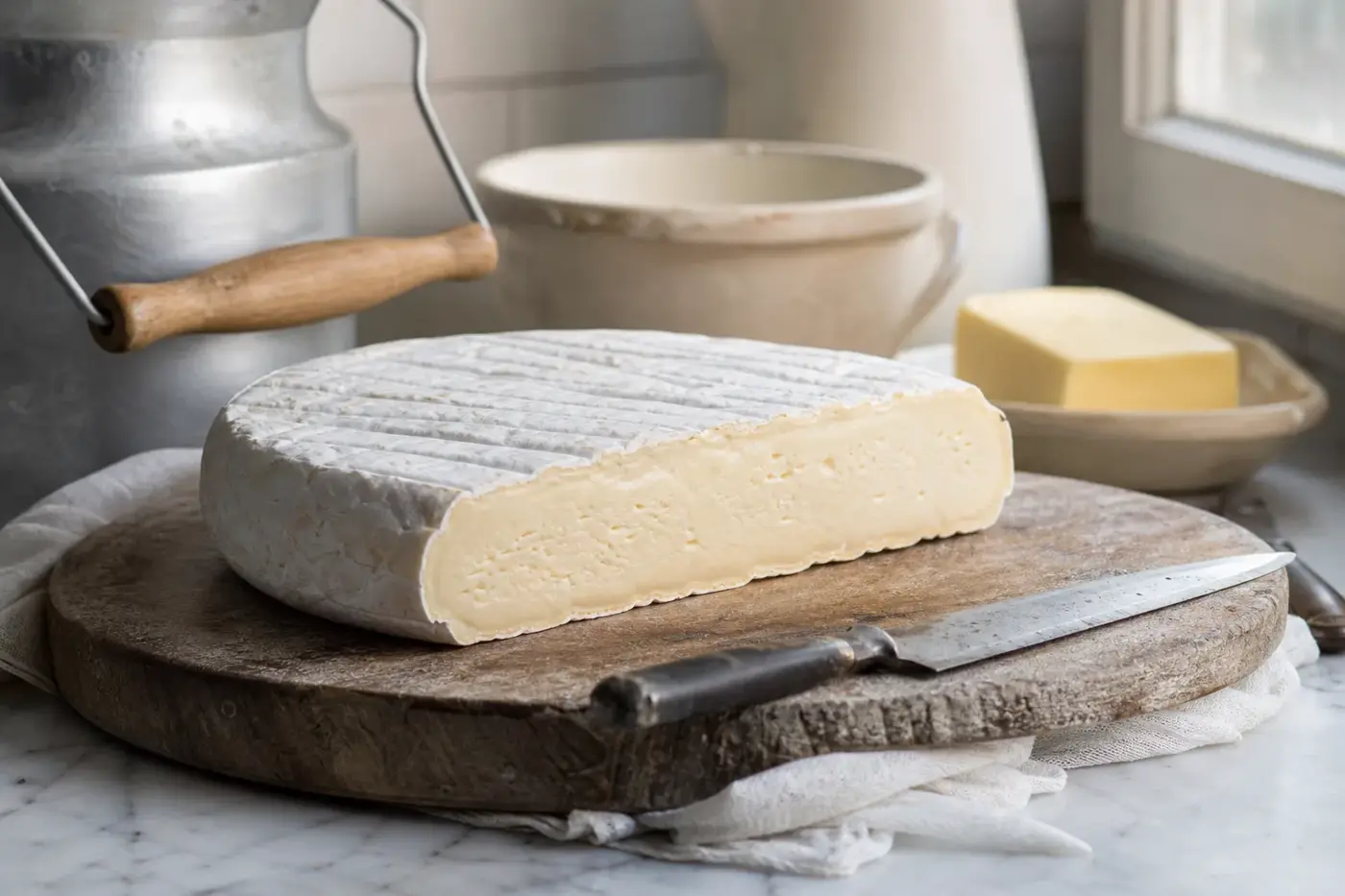
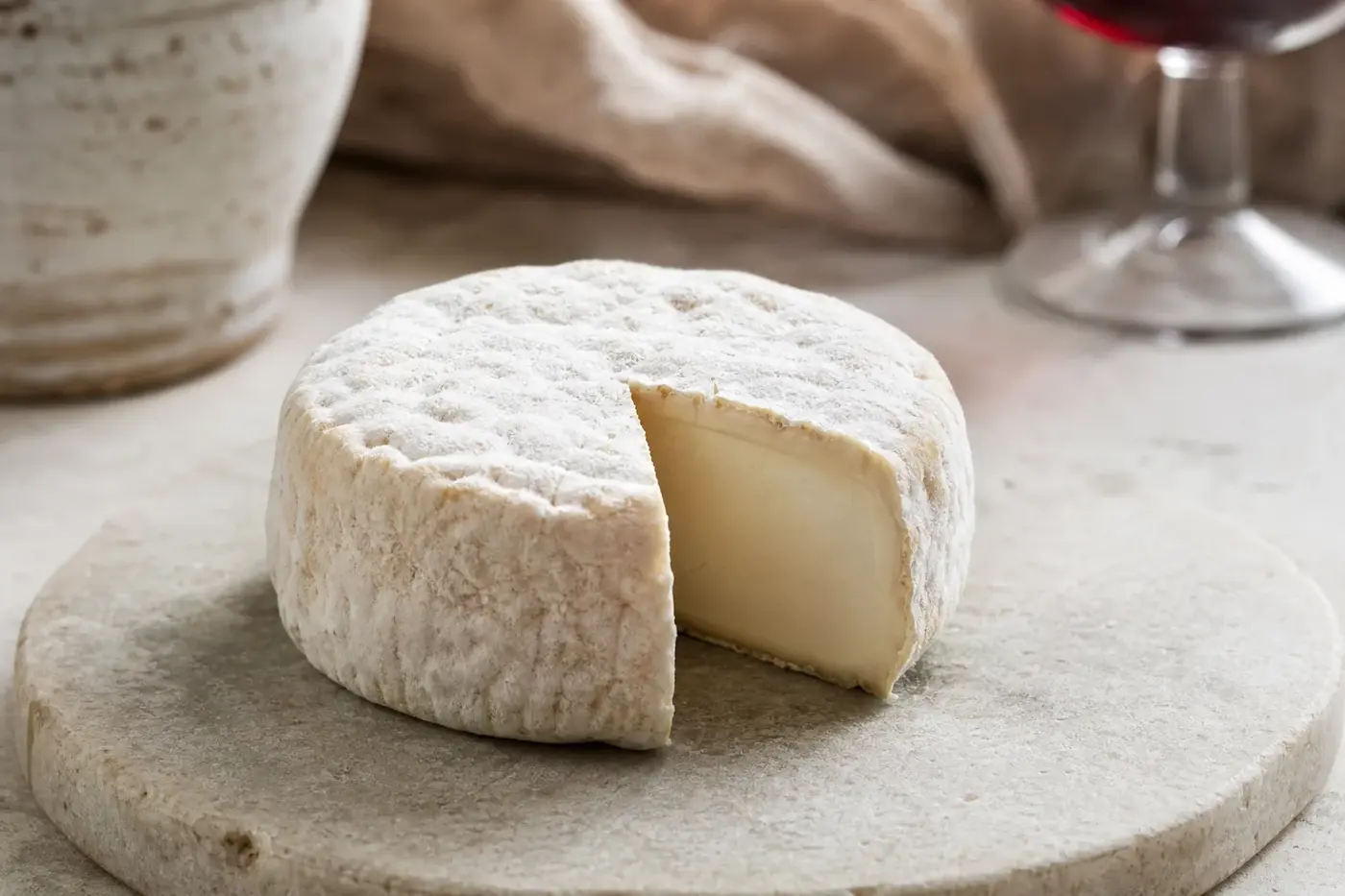
Cut through the white, downy rind and you meet an ivory centre, with aromas of cream, butter and mushroom.
Meet Délice de Bourgogne
| Field | Details |
|---|---|
| Kind | Soft cow’s milk cheese enriched with cream, with a bloomy rind. [1] |
| Producer | Fromagerie Lincet, France. [3] |
| Where it is made | Saligny, Yonne, as identified by Lincet. [3] |
| Milk treatment | Pasteurised cow’s milk and cream, according to the producer’s sheet. [1] |
| Fat figures | Bulk format sheet: 75% fat in dry matter; 40% fat in the whole cheese. [5] |
| UK pregnancy guidance | NHS guidance on mould-ripened soft cheese, November 2026. [7] |
A Burgundy story with a starting date
Some cheeses arrive trailing centuries of regional folklore. Délice de Bourgogne has a recorded beginning: 1975, within the Lincet family business. Its story starts with a particular act of cheesemaking, rather than a recipe whose origins have disappeared into the countryside. [1,2]
Lincet’s own history reaches further back, to 1895 in Gaye in the Marne. The business moved to Saligny in 1957 to gain access to milk supplies. The company says its headquarters remain there today. [1,2]
Saligny is where the Burgundy connection takes shape. Lincet identifies it as the factory making Délice de Bourgogne alongside other cream enriched cheeses, distinct from the dairies at Vaudes and Brochon. If you are tracing your cheese’s origins, that matters: this is a stated place of manufacture, not simply an office or packing address. [3]
The family business behind your cheese
Fromagerie Lincet lists Délice de Bourgogne on its current website in 200 g and 2 kg formats. The small cheese and the large wheel sold by the cut belong to the same named range. For the declarations that apply to your purchase, read the label on the cheese or portion you take home. [15]
On 6 November 2025, Sofiprotéol announced a new minority investment in Fromagerie Lincet, describing it as a family company. The statement also recorded an earlier period of involvement from 2008 to 2023. It left the current ownership structure, ultimate parent and completion date unspecified. [4]
That announcement also concerned expansion at the Gaugry dairy in Brochon. It helps to keep the places separate: Brochon’s expansion is a group development project. Saligny remains the stated production site for Délice de Bourgogne on Lincet’s manufacturing map. [3,4]
Cream at the heart, bloom on the rind
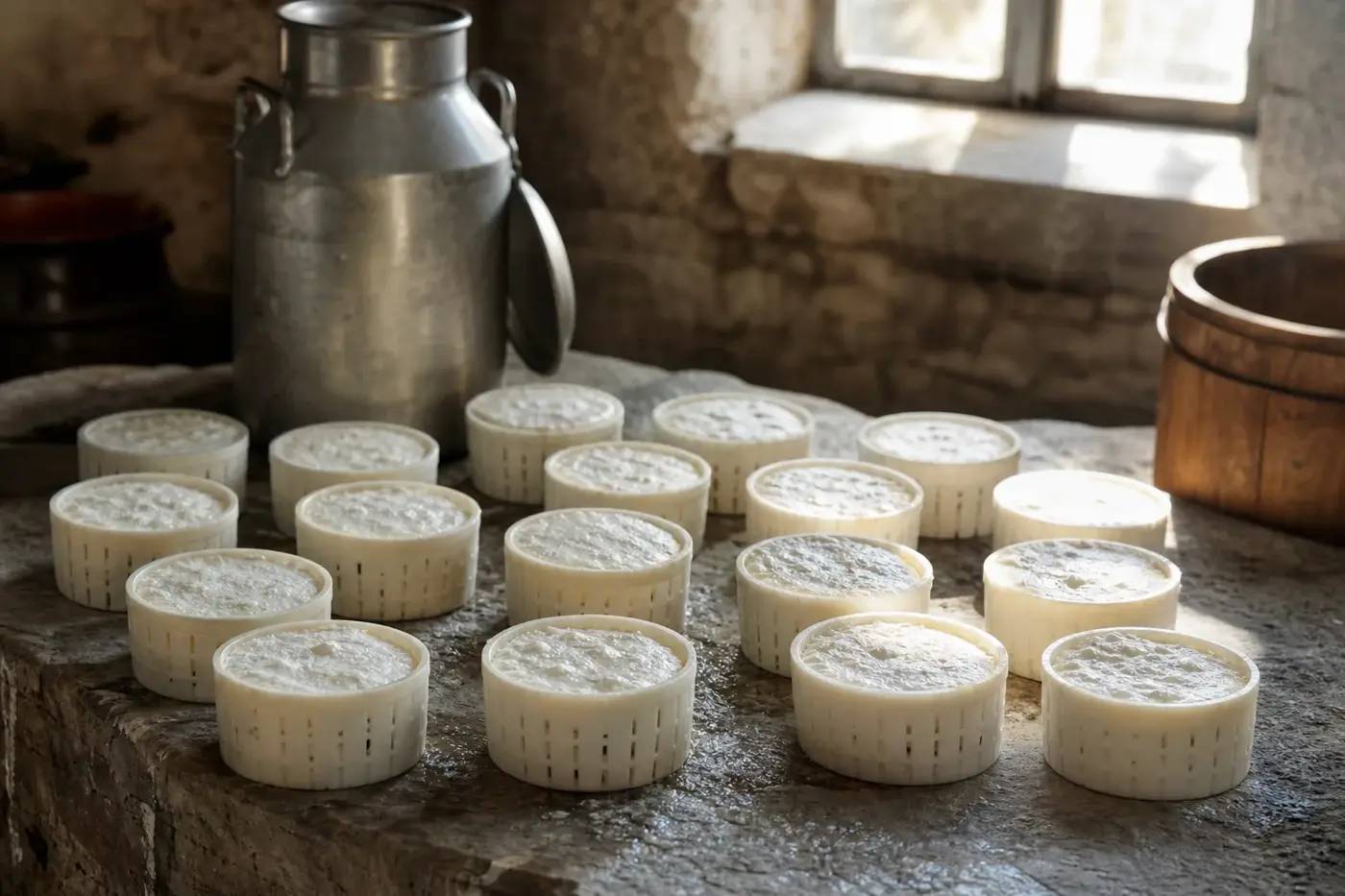
The cream goes in before the cheese is made. Lincet describes enriching the milk with fresh cream before ripening. This is cream in the cheesemaking milk itself, not a finishing flourish on top. [5]
Lincet’s general cheesemaking account describes a milk mixture containing lactic cultures, salt and rennet. The cultures are microorganisms that acidify the milk; rennet helps it form a curd, the solid that becomes cheese. The company links slow coagulation, or setting, with a fine texture. This general account provides context, while the Délice de Bourgogne product sheet specifies pasteurised milk and cream. [1,14]
That white, downy surface is the bloomy rind. Beneath it lies the ivory paste, the cheesemaking word for the interior. Lincet’s product sheet describes a mushroom smell, cream and butter flavours, and a delicate texture. These are the maker’s tasting notes, rather than an identification of ripening organisms or an account of texture changes during ripening. [1]
At the counter, ask to see the cut face. Tell the cheesemonger whether you want a firmer centre or a softer paste throughout, and when you plan to serve it. The rind cannot conduct that conversation for you. For the wider story of cultures, curd and ripening, see how cheese is made.
Triple cream, without the number muddle
Triple crème has a defined compositional meaning in France. Article 13 of Décret n° 2007-628 permits the description for cheese or a cheese speciality containing at least 75 g of fat per 100 g of product after complete drying. In English, that is usually expressed as at least 75% fat in dry matter. [6]
The important words are “dry matter”: everything left once the water has been removed. A nutrition panel measures something different, the cheese as you eat it. Lincet’s published sheet for the 2 kg format gives both figures: 75% fat in dry matter and 40% fat in the whole cheese. That second figure means 40 g of fat per 100 g of cheese, not 75 g. [5]
When comparing cheeses, put matching figures alongside each other. Compare fat per 100 g with fat per 100 g, and saturated fat with saturated fat. Triple cream describes composition under the French definition; the nutrition panel helps you understand the portion you will actually eat. [5,6]
What Burgundy and the wrapper tell you
Lincet presents Délice de Bourgogne with a registered trademark symbol in its product range. That identifies the producer’s named product. Its stated manufacturing location supplies the evidence for the Burgundy connection. [3,15]
Read the wrapper with three questions in mind: what is the cheese called, who makes it, and what establishes its origin? The triple cream description concerns fat composition under French rules. Lincet’s production information identifies Saligny. The regional name and the compositional description tell you different things. [3,6]
For geographical indication status in the EU, Northern Ireland or Great Britain, neither a product name nor a trademark symbol is enough. Treat that as a separate question from the cheese’s name and stated place of manufacture. For a clear guide to the different kinds of name, see protected names explained.
Give the label a little attention
Start with milk treatment: the producer’s product sheet specifies pasteurised cow’s milk and cream. On a French wrapper, look for lait pasteurisé. Then read the food description and any ingredients information, rather than stopping at the name on the front. [1]
Milk and cream are central to this cheese, so read the allergen information carefully. If you buy a counter-cut portion, ask for the information accompanying the original wheel. Keep the wrapper or counter label with the cheese at home so its date and storage instructions stay to hand. The UK government’s food labelling guide directs consumers to check both date and allergen information. [1,11,13]
For any ingredient or dietary question, ask about the exact product you are buying. A mention of rennet in a general cheesemaking description does not identify its source for your purchase. The cheese label guide brings these checks together. [14]
This page summarises published guidance from the official sources it cites. It is not medical advice. Guidance differs between countries and changes over time, so check the current source for where you live, and ask your doctor, midwife, pharmacist or dietitian about your own circumstances.
Pregnancy and higher risk groups: the UK advice
For pregnancy, the NHS advice turns on thorough cooking. Its November 2026 guidance says soft cheese with a white mould rind can be eaten if cooked until steaming hot all the way through, whether the milk is pasteurised or unpasteurised. Délice de Bourgogne’s soft paste and white bloomy rind place it in the class of cheese covered by this advice. [1,7]
The NHS dairy guidance, also dated November 2026 here, advises infants and young children, people over 65, and people with a long term medical condition or weakened immune system to avoid certain cheeses, including soft cheese with a mould rind. It says these cheeses may be used in cooked recipes, with the food steaming hot throughout. Follow that published guidance and ask your healthcare professional about your circumstances. [8]
Pregnancy, weakened immunity and older age are among the circumstances the NHS associates with a greater risk of serious listeriosis. Its prevention advice includes refrigeration, observing use-by dates and following storage instructions. The Food Standards Agency likewise explains that proper chilling helps stop harmful bacteria growing. [9,10]
Consult the dated official sources below for the advice that applies where you live. For the fuller UK context, read listeria and cheese safety.
Bring home the right amount
Choose a format that suits how much you will use. A whole small cheese and a slice from a large wheel offer different ways to serve Délice de Bourgogne. Match the amount you take home to the instructions on that purchase, and ask the counter to keep the product details with a cut portion. [15]
At home, the NHS advises keeping chilled ready-to-eat foods at 5 °C or below. Follow the storage instructions on the packaging, and use opened food within two days unless the packaging says otherwise. Eat, cook or freeze food by its use-by date. [9]
Put out the portion you intend to eat, rather than leaving the whole supply on the table. If you prefer the cheese less cold, let it lose some refrigerator chill briefly. Stay within the NHS advice to eat ready-to-eat food within four hours of taking it out of the fridge, and follow any stricter instructions on the pack. [9]
Keep the accompaniments simple
Start with plain bread or an unseasoned cracker, giving you room to taste the cheese. Add sliced pear, with still or sparkling water to drink, for an alcohol free accompaniment.
Questions people ask
What does Délice de Bourgogne taste like?
Lincet describes flavours centred on cream and butter, with a mushroom smell. The cheese has a delicate texture, an ivory centre and a white downy rind.
Is Délice de Bourgogne made with pasteurised milk?
Lincet’s product sheet specifies pasteurised cow’s milk and cream. On a French wrapper, look for lait pasteurisé.
What does triple cream mean?
Under the French definition, triple crème cheese must contain at least 75 g of fat per 100 g after complete drying. That is a measure of fat in dry matter, not fat in the cheese as eaten.
Can I eat Délice de Bourgogne during pregnancy?
The NHS advises that soft cheese with a white mould rind can be eaten if cooked until steaming hot all the way through, whether the milk is pasteurised or unpasteurised. Check the current NHS pregnancy guidance and ask your healthcare professional about your circumstances.
How should I store Délice de Bourgogne?
The NHS advises keeping chilled ready to eat foods at 5 °C or below and following the packaging’s storage instructions. It advises using opened food within two days unless the packaging says otherwise, and eating, cooking or freezing food by its use by date.
Sources
[1] Fromagerie Lincet. Délice de Bourgogne, 2 kg: product presentation sheet. Undated edition, retrieved November 2026. Producer’s PDF.
[2] Fromagerie Lincet. Depuis 1895. Undated company history, retrieved November 2026. Company history.
[3] Fromagerie Lincet. Sur les terres de Bourgogne et de Champagne. Undated manufacturing locations page, retrieved November 2026. Manufacturing locations.
[4] Sofiprotéol. Sofiprotéol se réengage aux côtés de la famille Lincet dans le cadre de l’extension de la Fromagerie Gaugry. Statement dated 6 November 2025. Investor’s statement.
[5] Fromagerie Lincet. Délice de Bourgogne: 2 kg, coupe. Undated commercial specification, retrieved November 2026. Producer’s specification.
[6] République française, Légifrance. Décret n°2007-628 du 27 avril 2007 relatif aux fromages et spécialités fromagères, Article 13, version effective from 1 January 2014, retrieved November 2026. Article 13.
[7] NHS. Foods to avoid in pregnancy. Live guidance retrieved November 2026. Pregnancy guidance.
[8] NHS. Dairy and alternatives in your diet. Live guidance retrieved November 2026. Dairy guidance.
[9] NHS. Listeriosis. Page reviewed 10 November 2023, live text retrieved November 2026. Listeriosis guidance.
[10] Food Standards Agency. How to chill, freeze and defrost food safely. Publication landing page, published 18 December 2017, retrieved November 2026. Applies to England, Northern Ireland and Wales. FSA publication.
[11] UK Government. Understanding food labelling: Overview. Live guidance retrieved November 2026. Food labelling overview.
[12] Department for Environment, Food & Rural Affairs. Protected geographical food and drink names. Live register retrieved November 2026. Great Britain register.
[13] UK Government. Understanding food labelling: Allergen labelling. Live guidance retrieved November 2026. Allergen labelling guidance.
[14] Fromagerie Lincet. Un savoir-faire unique. Undated company account of its cheesemaking, retrieved November 2026. Producer’s process account.
[15] Fromagerie Lincet. Nos fromages. Live product range retrieved November 2026. Producer’s cheese range.
This desk-researched article compares the producer’s records and an investor’s dated statement with French legislation and published UK guidance.
Last checked: November 2026
Last checked November 2026.
The editors suggest you read next
Who Makes the World's Cheese? The Big Dairy Groups
You pick up Galbani at the cheese counter, then pause over Kerrygold.