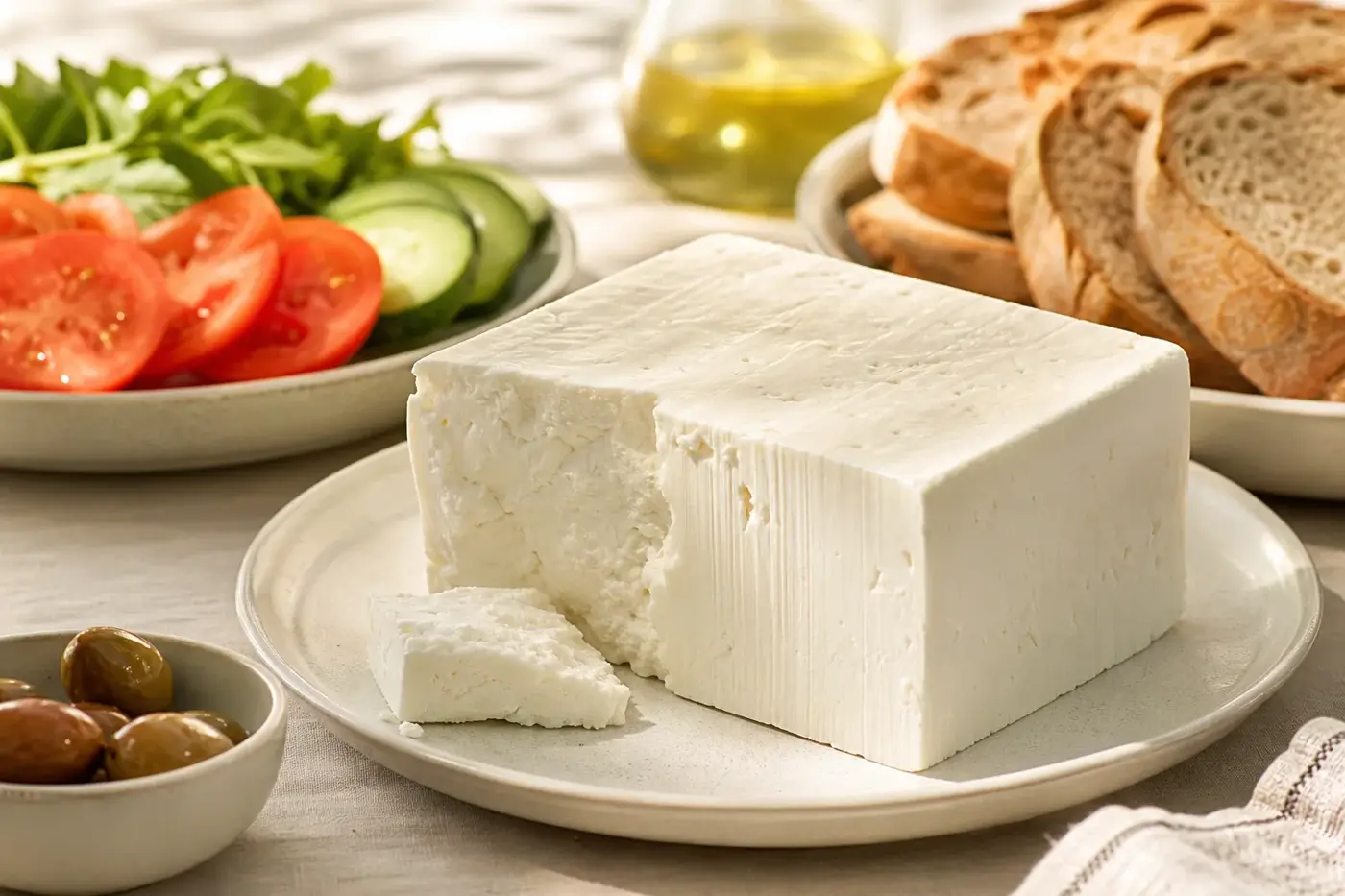
Take a bite of fresh Domiati: soft, salty, gently flavoured. Now try a matured piece, and you may find sharp acidity and pungency taking charge. This Egyptian white cheese, traditionally associated with Damietta, has an unusual beginning, too: salt goes into the milk before the rennet, while time in brine brings out its more assertive side. [1][2]
| Get to know Domiati | What you can expect |
|---|---|
| Cheese | Soft Egyptian white cheese, served fresh or matured in brine. [1][2] |
| Traditional home | Damietta, Egypt. [1][5] |
| Milk | Buffalo milk, cow's milk or a mixture. [2] |
| How it sets | Rennet goes in after the milk is salted. [3] |
| Rind and texture | No rind; a white body with a close texture. [1][5] |
| Time to mature | Enjoyed fresh or ripened; published research describes two to four months in brine. [2] |
From Damietta to tables across Egypt
Domiati's name points you towards Damietta, but its story reaches across Egypt. In 2014, the Egyptian partners behind the LACTIMED dairy project described it as made and eaten throughout the country. A Cairo University study published in 2020 also connects it with Damietta and calls it Egypt's most popular soft white pickled cheese. [1][5]
For your breakfast or a simple meal, that salty flavour offers an easy starting point. Set a small portion beside bread and fresh vegetables, and let the cheese season each mouthful. This is a serving suggestion, rather than a description of a customary Egyptian breakfast.
Meet the milk behind your cheese
You will find Domiati made with buffalo milk, cow's milk or a blend of both. A 2007 study of its bacterial communities describes whole milk, with production both with and without pasteurisation. The name cannot tell you how the milk was treated, so ask about the particular cheese in front of you. [2]
The animal's milk is only part of the story. A 1950 experimental study examined both cow's and buffalo milk, varying the salt added before renneting and measuring coagulation, whey drainage, composition and yield. Milk and method work together; species alone cannot tell you how the finished cheese will turn out. [3]
Even when the protein to fat ratio stays constant, processing matters. In a 2010 experiment, cheeses made with pasteurised milk initially held more moisture than those made with microfiltered milk, while cultures affected flavour development. Keep three useful questions in mind: which milk, what treatment, and fresh or matured? [4]
Salt makes the first move
Domiati begins with a reversal you might not expect: salt the milk, then add rennet. Egyptian dairy research recorded that sequence as far back as 1950. Rennet is the enzyme preparation that makes milk coagulate, changing liquid into a gel; here, it works in milk that is already salted. [3]
The gel becomes curd, and the liquid released as it drains is whey. Salt does more than influence that setting process: it also helps determine which microorganisms grow during production and ripening. In 2007, researchers studying eleven traditionally made Domiati samples found a diverse bacterial community, with many dominant or frequent organisms able to tolerate salt. [2][3]
You are looking at more than seasoning here. Salting shapes the cheese's keeping properties and the organisms involved in maturation, while the 1950 study explored its effects on setting, drainage and the resulting cheese. Published methods use different salt levels, but salt added to the milk and salt measured in the finished cheese are two separate things. [2][3]
If you would like to understand what makes the milk set, the guide to rennet explains the enzyme's different sources.
This page summarises published guidance from the official sources it cites. It is not medical advice. Guidance differs between countries and changes over time, so check the current source for where you live, and ask your doctor, midwife, pharmacist or dietitian about your own circumstances.
From cloth-lined moulds to a briny bath
Once the milk has set, the curd goes into moulds to drain. The LACTIMED account describes moulds lined with cloth or netting, with turning or pressure used according to the production arrangement. The drained cheese can then go straight to sale as fresh Domiati, or into containers under salted whey or brine to mature. [1]
Within that sequence, makers have choices to make. The 2010 experimental work used selected bacterial cultures and compared milk treatments over two months of pickling. Researchers tracked sensory changes alongside proteolysis, the breakdown of protein, and lipolysis, the breakdown of fat. [4]
Both milk processing and the selected cultures influenced the outcome. Brine is no retirement home: protein and fat carry on breaking down while the cheese sits in its liquid. Those measured differences between cultures help explain why two cheeses called Domiati can taste quite different to you. [4]
For the wider journey from milk to finished cheese, take a look at how cheese is made.
Taste what time brings to Domiati
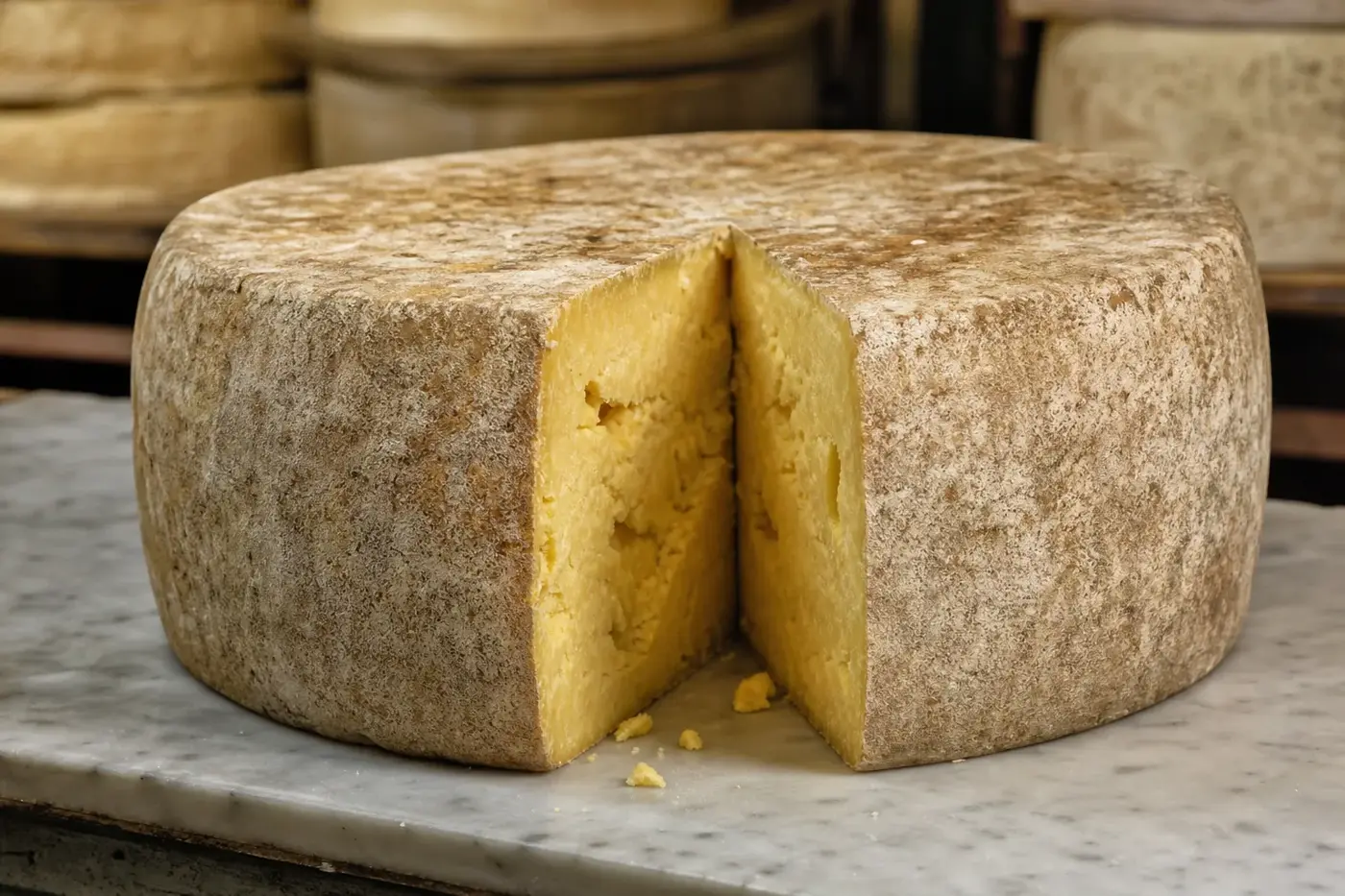
Look closely at your piece of Domiati. You will find a white, rindless body with a close texture, rather than an open network of holes. LACTIMED describes fresh cheese as soft, mild and salty, with acidity growing more pronounced as it ages; taste a little alone before adding bread or vegetables, and notice how salt and acidity balance. [1][5]
Ageing does not simply make it harder. The same account describes an initial firming in brine, followed by mellowing as proteins break down. Matured Domiati can become slightly flaky, breaking with brittleness rather than elasticity, so spoon or gently cut softer pieces and crumble those that break readily. [1]
With a long maturation, the flavour becomes more forceful. LACTIMED records pronounced acidity and, in examples aged for a year or longer, pungency compared with Egyptian mish. Choose fresh Domiati if you want a gentler companion to vegetables, or let small pieces of sharper matured cheese take on some of the seasoning. [1]
Domiati and feta: two different stories in brine
Domiati and feta both belong among white cheeses kept in brine, but follow their making and the differences emerge. For EU Feta PDO, the European Commission describes ewe's and goat's milk, with salting after moulding and draining. Domiati's documented cow or buffalo milk, and salting before coagulation, distinguish it from that process. [2][7]
That difference matters when you read labels as well as research. An Egyptian experimental comparison published in 2015 examined traditional Domiati alongside recombined cheeses described as Feta-like and Tallaga-like. Those recombined products differed in composition and sensory scoring, so read the ingredients and product description rather than relying on a family resemblance between white cheeses. [6]
You can still make a substitution work in a salad or filling. Choose according to saltiness, moisture and how readily the cheese crumbles, then adjust the rest of your dish to suit. For the Greek cheese's production and protected name, read feta.
Make room for Domiati on your plate
Begin with bread, a piece of Domiati and something fresh alongside. Its documented saltiness, and the contrast between soft fresh cheese and sharper matured examples, give you plenty to explore. Taste before seasoning anything else, especially if olives or other preserved foods are joining the plate; the combinations below are serving suggestions. [1][5]
- Tuck it into bread: put small pieces into flatbread with sliced tomato and cucumber. Add mint or parsley for a fresh herbal contrast.
- Scatter it over vegetables: crumble a firmer example over chopped tomatoes, peppers and cucumber. Dress the vegetables first, then fold in the cheese gently to keep some pieces intact.
- Set it beside fruit: serve a modest piece with watermelon or melon for a sweet and salty contrast. Leave the fruit plain so you can judge the cheese easily.
- Cook with a little: try crumbled cheese in a vegetable tart, spinach filling or stuffed peppers. Drain your portion first, then allow for its moisture when adjusting the filling.
In each case, Domiati brings salt along with flavour and texture. Keep your first attempt straightforward, adding the cheese a little at a time until the balance suits you. Bread alongside lets you taste it alone, then with the other ingredients: a perfectly reasonable excuse for another small piece.
Ask before buying, then keep it chilled
Before you buy, ask whether your Domiati is fresh or matured, which milk it contains and whether that milk was pasteurised. If you are buying it loose, request storage and opening instructions for that batch. The 2015 comparison shows why the individual product matters, with substantial differences possible between traditional and recombined white cheeses. [6]
At home in England, Wales and Northern Ireland, the Food Standards Agency advises keeping your fridge between 0 and 5 °C and following the packaging's storage instructions. Use a thermometer rather than relying on the control dial. Keep chilled cheese out only for the shortest time needed to prepare and serve it. [8]
If your cheese comes in brine, follow the producer's directions for keeping it in that liquid after opening. Retain the pack's instructions, including any after-opening limit, and ask the supplier if they are missing. The FSA advises following those instructions and distinguishes between use-by dates, which concern safety, and best before dates, which concern quality. [8][9]
Plan to finish an opened pack within the producer's storage period, not the maturation periods described in cheesemaking studies. Where a use-by date appears, the FSA says eating the food after that date could make you ill. For more practical help, see how to store cheese at home and how to read a cheese label. [8][9]
Questions people ask
Where does Domiati come from?
Domiati is an Egyptian white cheese traditionally associated with Damietta. It is made and consumed throughout Egypt.
How is Domiati different from feta?
Domiati is documented with cow's milk, buffalo milk or a mixture, and its milk is salted before coagulation. EU Feta PDO is made with ewe's and goat's milk and is salted after moulding and draining.
Is Domiati made with pasteurised milk?
Domiati has been documented both with and without pasteurisation. Check the particular cheese to establish how its milk was treated.
What does Domiati taste like?
Fresh Domiati is soft, mild and salty. As it ages in brine, its acidity becomes more pronounced, and examples aged for a year or longer can become pungent.
How should Domiati be stored at home?
For England, Wales and Northern Ireland, the Food Standards Agency advises keeping the fridge between 0 and 5 °C and following the packaging's storage instructions. See the Food Standards Agency's guidance on chilling food and date labels.
Sources
[1] LACTIMED, with the Egyptian General Authority for Investment, the Arab Academy for Science, Technology and Maritime Transport, and CIHEAM Montpellier. Developing the typical dairy products of Alexandria and Beheira: Diagnosis and local strategy. March 2014, section “DOMIATI CHEESE”, printed pages 45 to 46. Project report.
[2] American Society for Microbiology. Biodiversity of Bacterial Ecosystems in Traditional Egyptian Domiati Cheese. Applied and Environmental Microbiology, volume 73, 2007, pages 1248 to 1255. Full research paper.
[3] Cambridge University Press. 429. Studies on Egyptian Domiati cheese. Journal of Dairy Research, volume 17, issue 3, October 1950, pages 312 to 328. Published online in 2009; the research publication dates from 1950. Publisher's extract.
[4] American Dairy Science Association. Influence of microfiltration and adjunct culture on quality of Domiati cheese. Journal of Dairy Science, volume 93, issue 5, May 2010, pages 1807 to 1814. Research abstract in PubMed.
[5] International Journal of Veterinary Science. Impact of Raw Materials and Processing Techniques on The Microbiological Quality of Egyptian Domiati Cheese. Volume 9, issue 4, 2020, pages 505 to 510. Research conducted by Cairo University's Department of Food Hygiene and Control. Full research paper.
[6] Indian Dairy Association. Comparative study between traditional Domiati cheese and Recombined Feta cheese. Indian Journal of Dairy Science, volume 68, issue 5, 2015. Research from Damietta University's Dairy Department. Journal abstract.
[7] European Commission, Directorate-General for Agriculture and Rural Development. Feta PDO. Current online production overview, publication date not stated, accessed November 2026. Official overview.
[8] Food Standards Agency. How to chill, freeze and defrost food safely. Published 18 December 2017, current online text accessed November 2026. Applies to England, Northern Ireland and Wales. Official guidance.
[9] GOV.UK. Understanding food labelling: Best before and use-by dates. Current online text, publication date not stated, accessed November 2026. Official guidance.
This piece was researched through Egyptian dairy studies, a dairy development project report, an official European production overview and UK consumer food storage guidance.
Last checked: November 2026
Last checked November 2026.
The editors suggest you read next