Egyptian Cheese
First comes a little karish, fresh and gently sour.
First comes a little karish, fresh and gently sour. Then yellowish-brown mish makes its presence felt: sharp, salty and gloriously pungent. One is a curd eaten promptly; the other finds its character through fermentation and maturation. Between them sit salty white domiati and firm, aged roumy, linking everyday Egyptian meals with the enduring craft of preserving milk. [1][2]
| Your quick guide | What to know |
|---|---|
| Country | Egypt. [1] |
| Cheeses to get to know | Domiati, karish, mish, roumy, baramily and istanboli. [1][2] |
| Main milks in the cheeses studied | Cow and buffalo. [2][3] |
| Styles to explore | Fresh acid-set, soft white brined, fermented preparations and hard ripened. [1][2] |
| Other names you might spot | Karish or kareish; roumy, romy or ras; baramily or bramili; istanboli or istanbuli. [1][2][4] |
Follow the milk to find the character
Colour gives you only part of the picture. Follow the milk instead: karish begins with soured skimmed milk, domiati receives salt straight into the milk, and roumy develops through ripening. These different paths turn the cow and buffalo milk prominent in Egyptian dairy research into strikingly different things to eat. [2][3][4]
With domiati, the climate has a say before you take a bite. A primary microbiological study describes makers adjusting the salt added to milk according to the season and the temperature at which the cheese will ripen. Salt and maturation in brine belong to its production history, not simply its seasoning. [3]
Cow and buffalo milk run through accounts of modern Egyptian cheesemaking. Sheep and goat milk have their place too, including in the archaeological evidence below. For the cheese in your hand, read the producer’s declaration: the name alone cannot tell you which animal supplied the milk. [2][3][5]
It helps to keep two questions separate: which animal, and what happened to its milk? Milk species answers the first; milk treatment answers the second. You can explore that distinction in raw, thermised and pasteurised cheese.
A Saqqara jar opens a window on ancient cheese
A jar associated with a New Kingdom tomb at Saqqara held a remarkable whitish solid: material evidence of ancient dairy processing. Excavators recovered it during the 2013 to 2014 season. In 2018, researchers examined its surviving proteins using liquid chromatography and high-resolution mass spectrometry. [5]
Their interpretation was cheese made with cow milk and sheep or goat milk. Some protein fragments are shared by sheep and goats, so the analysis could not distinguish those animals precisely. Here was something more tangible than an image of food or a later description: material from the jar itself. [5]
The discovery identifies ancient cheese, but it cannot hand you a recipe, a recognisable modern variety or an uninterrupted manufacturing tradition. The authors also considered a possible bacterial identification to need further confirmation. It is a compelling glimpse of Egypt’s food history, though the wider ancient diet lies beyond this analysis. [5]
Domiati: salt gets in before the curd
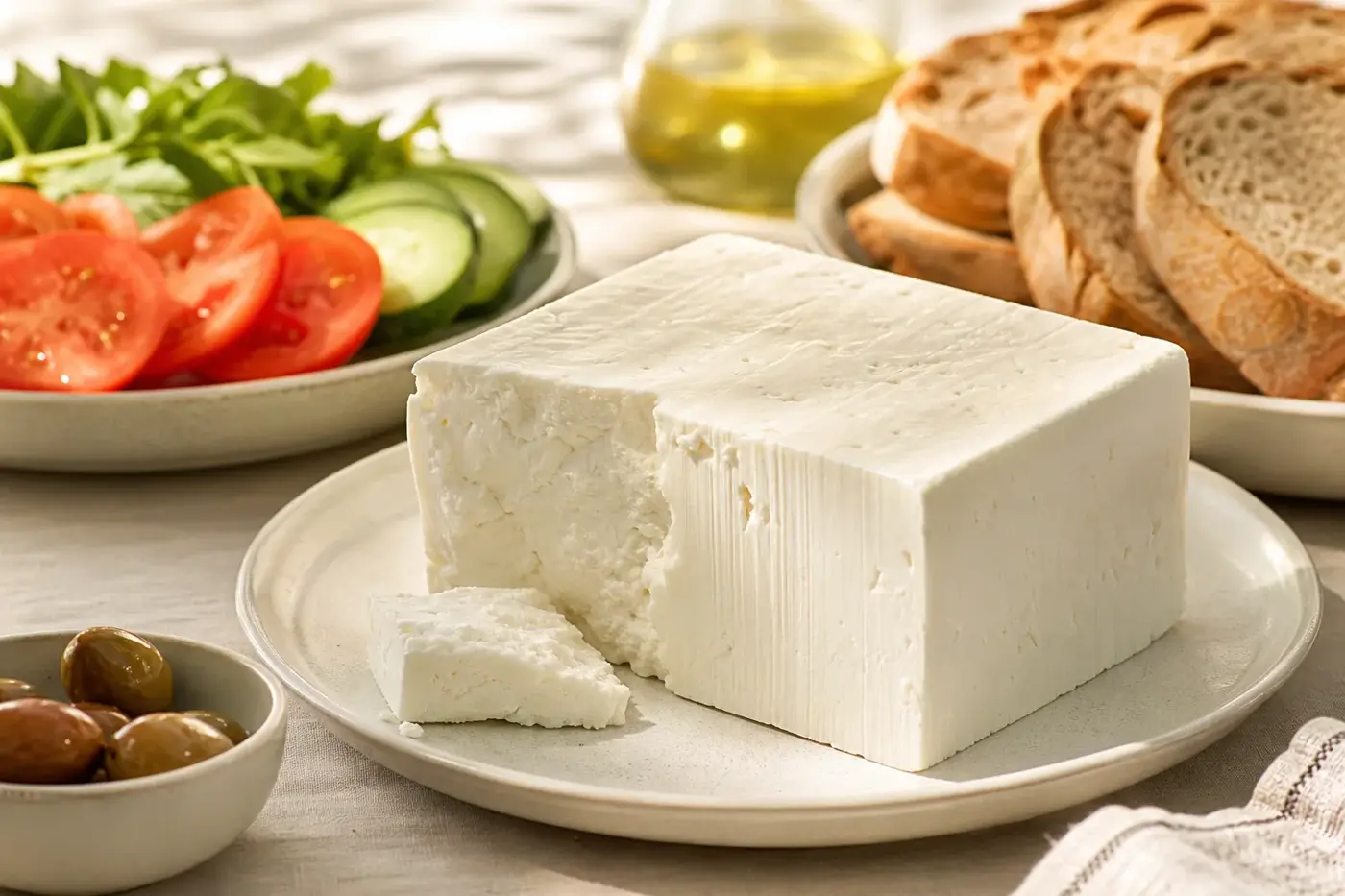
Domiati takes a distinctive turn right at the beginning: salt goes into the milk before it sets. This soft white cheese uses cow milk, buffalo milk or a mixture. Rennet, the enzyme preparation used to set many cheeses, helps form the curd, so salting is not left entirely to the finished curd. [3]
Once drained, domiati can go straight to the table or mature in salted whey or brine. Whey is the liquid released as curd separates from milk; brine is a salt solution. The primary study describes both fresh consumption and maturation over several months. [3]
“Fresh or matured?” is therefore a useful opening question when you buy it. Check the milk treatment and ingredients too. Two cheeses called domiati may have quite different jobs in your meal, and the seller’s description should help you choose.
Karish: fresh curd with a household history
Karish, also written kareish or kariesh, traditionally begins with skimmed cow or buffalo milk. Accounts also describe the use of buttermilk from sour cream. The crucial step is acidification: fermentation sours the milk, allowing its proteins to form a curd. [4]
Traditional accounts describe cream being removed, the remaining curd drained on mats, and the resulting cheese salted. You get a glimpse of household dairy economy here, with cream and the milk beneath it put to different uses. Karish is eaten fresh, without prolonged ripening. [4]
Modern makers can use controlled starter cultures and different drainage methods. A published review identifies milk treatment, cultures, drainage and handling as factors shaping the finished cheese. The name introduces the family; those choices give you the individual. [4]
At the counter, ask whether your karish is soft enough to spread or firm enough to crumble. That answer will do more for your meal planning than assuming every example has the same texture.
Mish: let fermentation have its say
Mish often begins where karish leaves off. This mature fermented preparation commonly starts with that cheese, rather than a new vat of milk. A primary study describes karish mixed with salt, milk, spices and other additions, with some mature mish introducing the existing fermentation community. [2]
After extended maturation, the study describes a yellowish-brown cheese with a sharp, salty and pungent character. Fermentation changes both the starting cheese and its possibilities at the table. Mish is not in the habit of introducing itself quietly. [2]
Offer a little alongside bread and vegetables, then let everyone add more. Keeping mish separate gives you a chance to judge how much suits the meal before its assertive character takes charge.
When buying, ask who made it, what has been added and how to store it. Mish contains ingredients beyond cheese, so give the ingredient list as much attention as the name.
Roumy: make room for a sharper slice
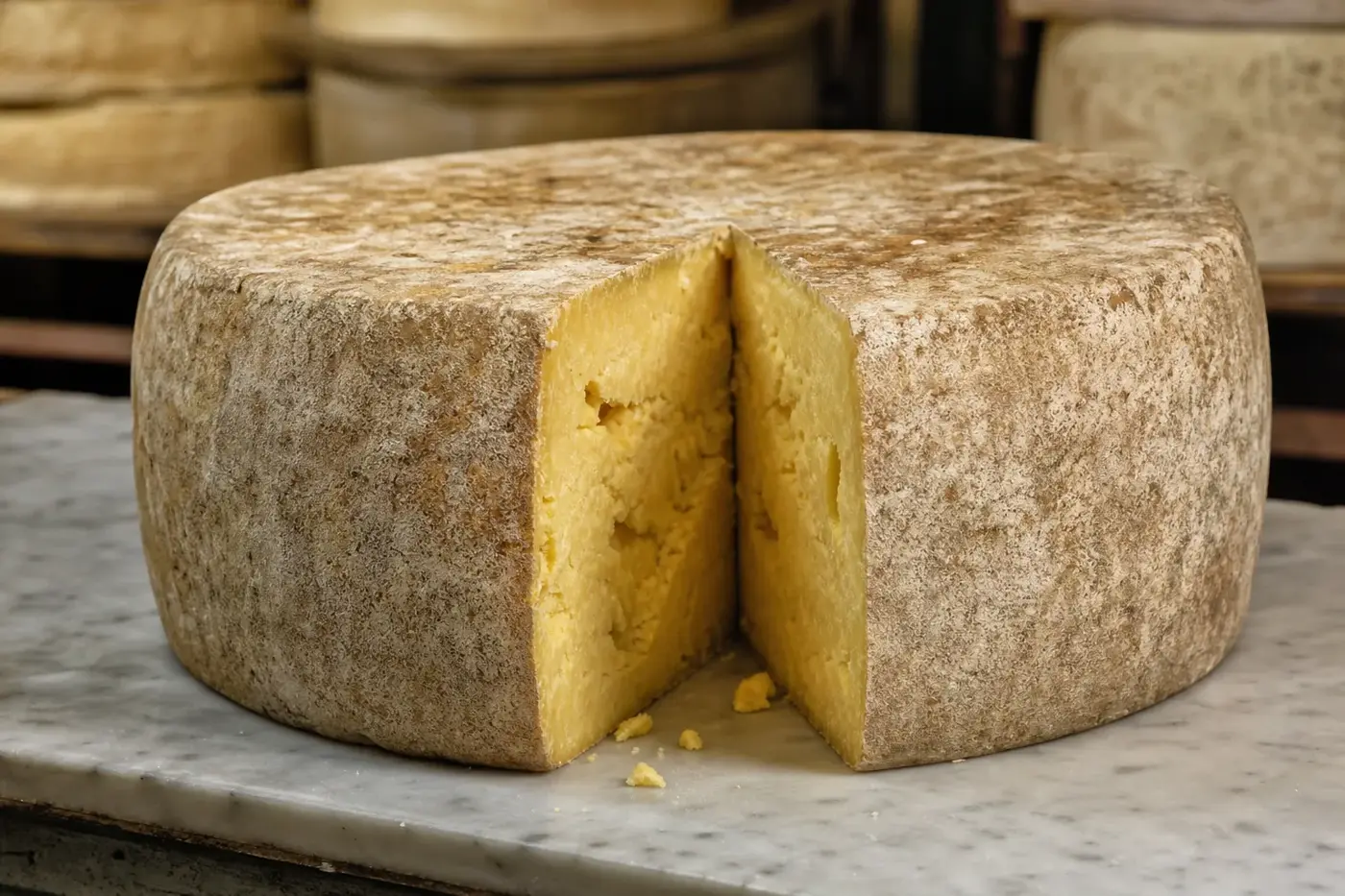
Hard, wheel-shaped and ripened, roumy offers a clear contrast to Egypt’s fresh and brined white cheeses. You may find it called romy in some sources, or ras in much dairy research. A primary study describes its characteristic flavour as sharp and salty. [2]
Check the label for the milk used, then ask about maturity and texture. A piece that slices neatly may earn a different place in your kitchen from one firm enough to grate.
Try thin slices in bread, or grate a firmer piece over a cooked dish. You need not save roumy for a separate cheese plate: let its texture suggest where it belongs.
For a sandwich, give the thickness of your slice a little thought. If you are cooking with it, taste the dish before adding more salt.
Baramily and istanboli: look beyond the white cheese
Bramili and istanbuli appear separately among Egypt’s soft white cheeses in the LACTIMED investigation of the dairy sector in Alexandria and Beheira. For the precise definitions distinguishing them, you need to turn to Egyptian standards. Their names are a starting point, not the whole story. [1]
The investigation describes an istanbuli example as white and crumbly, with a pronounced green-pepper character, and records buffalo milk being used. That gives you a useful picture of the documented cheese. It does not give you a fixed recipe for everything sold under the name. [1]
Consider recipes and commercial formulations individually. Ask which milk is used, whether peppers or other seasonings are included, and whether the cheese is fresh or matured. With baramily especially, follow the actual product description: its name cannot tell you every detail of how it was made.
Give Egyptian cheese a place at your table
Cheese is an everyday food in Egypt, spanning the soft and hard varieties examined in local market research. [2] For breakfast and beyond, let texture guide you. Spoon or crumble a fresh cheese, cut a white cheese into pieces, and slice a firm one.
The ideas below offer practical ways to bring these cheeses into your kitchen. They are suggestions, not prescribed combinations for every Egyptian household:
- Breakfast: offer karish with bread, sliced tomato and cucumber. Keep the cheese separate so everyone can assemble a mouthful.
- Bread and sandwiches: try sliced roumy, or choose a white cheese firm enough for your filling.
- Salads: crumble a suitable white cheese over vegetables. Taste before adding a salty dressing.
- Pastries: match the cheese’s moisture to your recipe, and drain it only as directed.
- Cooked dishes: finish with grated roumy, or follow a recipe written specifically for a soft white cheese.
- An assertive accompaniment: offer a little mish separately before stirring any into the whole meal.
Start with one cheese and learn how that particular product behaves. Its texture and moisture will help you find its best use; your fridge need not become a research department. For the wider principles, visit how to tell cheese styles apart.
Bring it home and keep it at its best
Start with the label, then ask a little more
Before buying, check the milk species, whether the milk was pasteurised, the ingredients, the date marking and the storage instructions. Buying loose cheese? Ask the seller for the same information, and choose a quantity you can use within the product’s stated instructions after opening.
Two further questions help you get to know an unfamiliar cheese: “What stage of maturity is this?” and “How is this particular product intended to be used?” The answers can point you towards a sandwich filling, a seasoning or a cheese best crumbled.
A name is only one part of the pack. The guide to reading a cheese label helps you separate it from the other information you need.
Keep chilled cheese comfortably in the fridge
For England, Northern Ireland and Wales, the Food Standards Agency advises keeping your fridge between 0 and 5 °C and following the storage instructions on packaging. Dairy products are among the foods its guidance says to refrigerate. Follow the pack’s instructions as well as the fridge thermometer. [7]
Follow any shorter instruction that applies after opening. Put out a modest serving and keep the rest chilled. During preparation, the FSA advises keeping chilled food out of the fridge for the shortest possible time; consult its current guidance for your particular circumstances. [7]
In hot weather, the UK Health Security Agency advises discarding perishable food left unrefrigerated for more than two hours. [8] You can find fuller handling guidance in storing cheese at home.
Pregnancy or greater vulnerability? Get to know the product
For November 2026, the following UK guidance applies: the NHS advises against soft cheeses made with unpasteurised milk. It also advises against soft cheeses with a white mould rind and soft blue cheeses unless cooked until steaming hot. Hard cheeses made with pasteurised or unpasteurised milk are listed as suitable; consult the full list of cheese types and exceptions. [9]
Compare your individual product’s milk treatment and cheese type with the current NHS pregnancy guidance. An Egyptian cheese name alone cannot give you the information needed to make that decision. [9]
The NHS identifies pregnant people, newborn babies and people with weakened immunity among those at greater risk of serious listeriosis. Its listeriosis guidance provides current risk information and advice on seeking help. If you live elsewhere, consult your own national authority. [10]
General information only, not medical advice: follow the official guidance where you live.
Questions people ask
Is domiati eaten fresh or aged?
Domiati can be eaten fresh or matured in salted whey or brine. A study describes maturation over several months.
What is the difference between karish and mish?
Karish is a fresh curd traditionally made from soured skimmed milk and eaten without prolonged ripening. Mish is a mature fermented preparation commonly made from karish, with salt, milk, spices and other additions.
What does roumy cheese taste like?
Roumy is a hard, ripened cheese with a sharp, salty flavour. It is also called romy or ras and can be sliced or grated, depending on its texture.
How should Egyptian cheese be stored?
For England, Northern Ireland and Wales, the Food Standards Agency advises keeping the fridge between 0 and 5 °C and following the storage instructions on the packaging. Its guidance says dairy products should be refrigerated.
Can I eat Egyptian cheese during pregnancy?
The NHS advises against soft cheeses made with unpasteurised milk and lists hard cheeses made with pasteurised or unpasteurised milk as suitable. Check the individual product's milk treatment and cheese type against the current NHS pregnancy guidance, which includes a full list of cheese types and exceptions.
Sources
- LACTIMED, Developing the typical dairy products of Alexandria and Beheira: Diagnosis and local strategy, March 2014. Sector investigation, classification of cheeses and Appendix 3 product descriptions. Report.
- African Journal of Food Science, “Microbial safety and biodiversity of bacterial communities in traditional Egyptian cheese types”, 2022, DOI 10.5897/AJFS2022.2214. Primary investigation of 19 commercial samples representing six cheese types. Full text.
- American Society for Microbiology, “Biodiversity of Bacterial Ecosystems in Traditional Egyptian Domiati Cheese”, Applied and Environmental Microbiology, 2007. Full text.
- Horizon Research Publishing, “History, Processing and Quality Enhancement of Traditional Egyptian Kariesh Cheese: A Review”, Food Science and Technology, volume 1, issue 1, 2013, pages 1 to 6. Full text.
- American Chemical Society, “Proteomic Analyses on an Ancient Egyptian Cheese and Biomolecular Evidence of Brucellosis”, Analytical Chemistry, volume 90, 2018, pages 9673 to 9676. Author manuscript held by the University of Trieste. Full text.
- Foods, “Peptidomics Profile, Bioactive Peptides Identification and Biological Activities of Six Different Cheese Varieties”, 2023. Production description available in the retrieved indexed extract. Article record.
- Food Standards Agency, How to chill, freeze and defrost food safely, published 18 December 2017, live guidance checked November 2026. Applies to England, Northern Ireland and Wales. Guidance.
- UK Health Security Agency, Food safety in a heatwave: advice for consumers, live guidance checked November 2026. Guidance.
- NHS, Foods to avoid in pregnancy, live guidance checked November 2026. Guidance.
- NHS, Listeriosis, live guidance checked November 2026. Guidance.
Researched through archaeological and dairy research, a regional dairy-sector investigation and official UK food-safety guidance; serving suggestions are editorial, with no site tasting or recipe testing.
Last checked: November 2026
Last checked November 2026.
The cheeses of Egypt
The editors suggest you read next
French Cheese: The Complete Guide
Picture Normandy’s pastures, then follow the milk towards the Loire’s goat dairies, the Jura’s shared cheesemaking traditions and the sheep country of the Pyrenees.