L'Etivaz
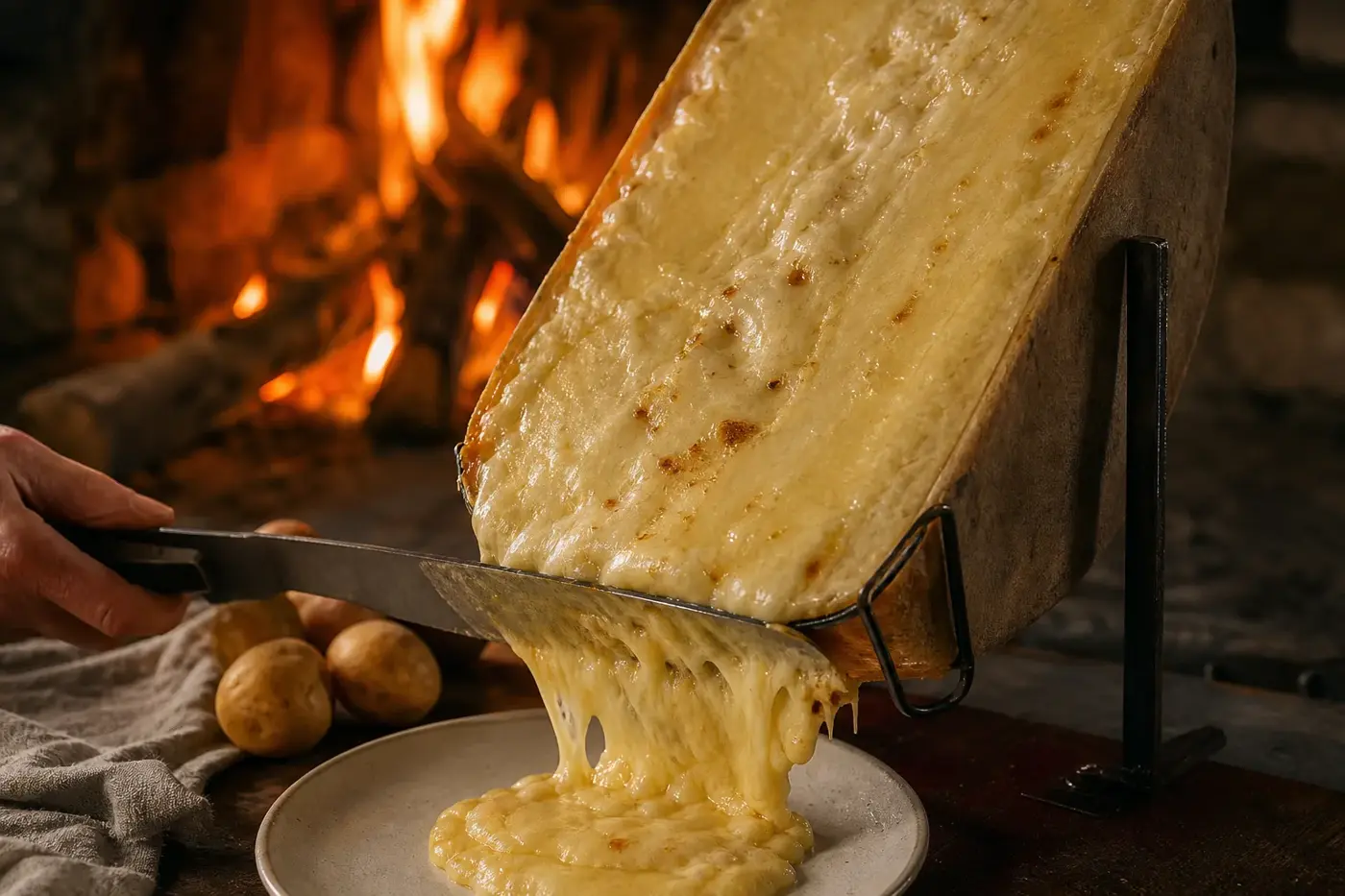
A wood fire burns beneath a copper cauldron in a mountain chalet.
A wood fire burns beneath a copper cauldron in a mountain chalet. Inside, raw cow's milk from the summer pastures of the Vaud Alps is becoming L'Etivaz. Next comes a communal cellar, where patience takes over from pasture and fire. [1, 2, 7]
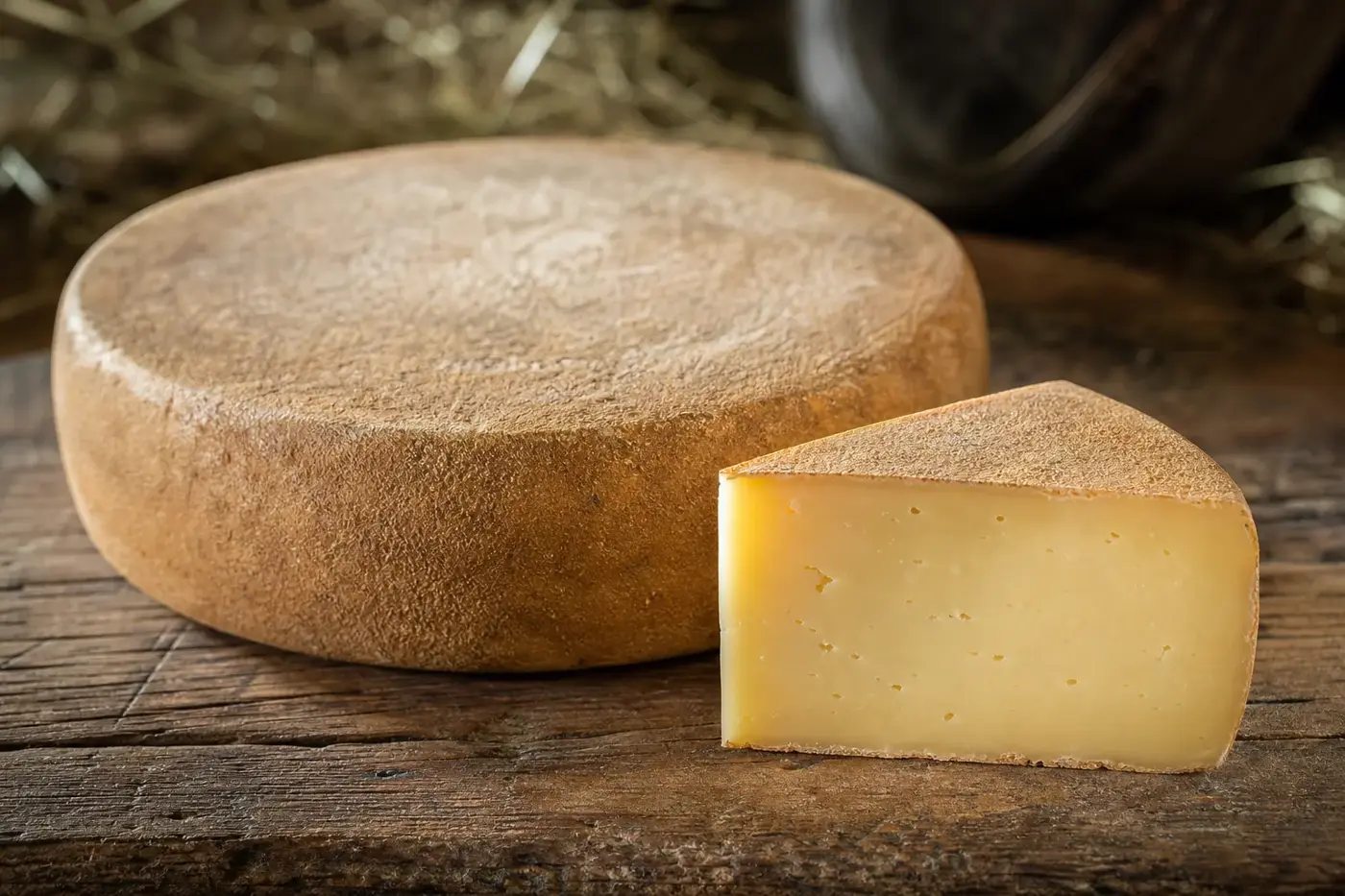
Picture the slice waiting at the end: supple, ivory-yellow and fruity, with hazelnut and a light smoky note. You can almost follow its working life through that description. This is mountain cheese with rather more to tell you than its age. [1, 2, 7]
| What to know | The useful details |
|---|---|
| Familiar and registered name | L'Etivaz; registered spelling: L’Etivaz. [1] |
| Swiss authority and register | Federal Office for Agriculture, register of appellations of origin and geographical indications. Register ID: Not verified. [1] |
| Swiss protection | Registered AOP, appellation d'origine protégée. Specification check: November 2026. [1] |
| Specification | Registration decision dated 24 September 1999; amended 17 November 2004 and 22 November 2024. [1] |
| Great Britain protection | Registered PDO under the UK-Switzerland trade agreement; register records 31 December 2020 at 23:00. Register check: November 2026. [8] |
| Where it is made | Defined summer farms in ten Vaud communes; cheesemaking chalets at 1,000 to 2,000 metres; maturation in the former Pays-d'Enhaut district. [1] |
| Milk and coagulant | Raw cow's milk; calf rennet. [1, 3] |
| Cultures | Farm starters or approved selected lactic bacterial cultures. [1] |
| Minimum time to mature | Until the cheese's 135th day of life. [1] |
| Published commercial ageing range | The cooperative describes maturation up to 24 months. [4] |
| The longer-aged form | L’Etivaz à rebibes: at least 30 months in an airy drying loft after initial maturation. [1] |
Follow the herd into the Vaud mountains
L'Etivaz takes its name from a village, but you need a bigger map to find its mountain territory. Eligible summer farms lie in Château-d'Œx, Rougemont, Rossinière, Ollon, Villeneuve, Ormont-Dessus, Ormont-Dessous, Corbeyrier, Leysin and Bex. The altitude requirement applies specifically to the cheesemaking chalets, tying production to this mountain farming system. [1]
The cooperative gives the season as 10 May to 10 October. While cattle graze the summer mountain pastures, their milk becomes cheese at the Alpine holding. Cheesemaking follows farming uphill, rather than sending milk from a wide collection area down to a valley factory. [2, 9]
Natural Alpine herbage supplies the roughage, though the feeding rules leave some practical flexibility. The specification allows concentrate supplements and, in exceptional climatic conditions, conserved forage. Silage and other fermented fodder are prohibited during the Alpine season, with a three-week interval required before the first cheesemaking. [1]
That distinction is useful when you choose a cheese. “Made from mountain pasture milk” tells you something meaningful about farming and place. “Nothing but fresh grass” promises more than the specification allows.
The shared cellar that changed the story
The trouble began with storage. Cheese production was declining in the Pays-d'Enhaut, and inadequate chalet cellars were damaging quality. Producers began organising collectively in 1932; their first communal cellar followed in 1934, with its official inauguration on 24 May 1935. [2]
The organisation took shape in stages, rather than one grand unveiling. The cooperative's November 2025 presentation identifies the association's establishment in 1932, commercial-register entry and use of the L'Etivaz name in 1934, and adoption of the cooperative form in 1974. Each date marks a different step towards the organisation you encounter today. [10]
The cheese grew from the region's cooked, pressed cheese tradition, historically connected with Gruyère. According to Swiss Culinary Heritage, producers followed an increasingly separate path after forming their association. In 1945, they gained control of marketing and production quantities outside the Swiss Cheese Union. [11]
So the people organising mattered as much as the people making cheese. Producers kept working in their chalets while developing shared facilities for the demanding maturation afterwards. When you buy L'Etivaz, you are meeting a cheese and a production community that grew together, not the result of one sudden invention.
Beside the cauldron: raw milk, copper and fire
The evening's milk rests overnight, allowing cream to rise naturally to the surface. The cheesemaker removes some, then combines that milk with the morning milking in the copper cauldron. The cooperative describes adding lactic cultures, warming gently and introducing calf rennet, the enzyme preparation that sets the milk. [3]
In the cooperative's account, the milk is ready for rennet at about 32 °C. Setting, or coagulation, turns the liquid into a gel. Cutting that gel gives you curds, the solids destined to become cheese, surrounded by whey, the liquid released during manufacture. [3]
The copper and wood fire are not there merely to improve the chalet photographs. The current Swiss specification requires copper cauldrons and direct wood-fire heating. The milk must remain raw, and pasteurising equipment is prohibited on the holding. [1]
Raw milk does not, however, mean unheated curds. The term describes the milk's treatment before cheesemaking; L'Etivaz belongs to the cooked-curd tradition, with substantial heating after setting. You can explore that distinction in raw, thermised and pasteurised milk.
Watch the cloth lift become a wheel
Fine grains of curd need constant stirring as the cauldron heats over the fire. The cooperative describes bringing curds and whey to around 57 °C, then removing the cauldron from the heat. Cutting, stirring and heating prepare those separate grains to become a single mass. [3]
Then comes a characteristic piece of chalet work. With a cloth stretched over a rod, the cheesemaker reaches beneath the grains and gathers the curd. Lifted clear of the whey, it goes into a mould for pressing and turning. [5]
A casein mark identifies the producer and the individual wheel. According to the cooperative, the cheese is turned repeatedly through the day, with pressing continuing until the following morning. Your future wedge has a traceable identity before it even leaves the mountain holding. [5]
Salting and early rind care follow. The specification allows wheels to stay at the Alpine farm for up to seven days before maturation continues in the defined cellar area. Producers deliver fresh cheeses several times a week, the cooperative explains, making the journey from scattered chalets to shared cellars a regular summer task. [1, 4]
Step inside the cellars
Reliable storage brought the cooperative into being, and maturation remains central to its work. Affinage, the managed ageing of cheese, connects individual mountain cheesemakers with the finished L'Etivaz you buy by the slice. Work begun in separate chalets now continues under a shared roof. [2, 4]
The cooperative describes a salt bath, followed by successive stages of turning, rubbing and movement between cellars. Lightly salted water tends the rind as a surface community develops. This smear, called morge in French, contributes to the aroma taking shape inside the cheese. [4]
The wheels rest on spruce boards. Legal minimum maturation runs to the cheese's 135th day of life, while the cooperative describes keeping some wheels for as long as 24 months. One figure sets the threshold; the age of your particular cheese tells you how far beyond it maturation has continued. [1, 4]
At the counter, ask how the wheel has developed, not just how old it is. Age and character together tell you more than age alone. The oldest wheel does not automatically deserve your vote, however tempting it is to treat the cheese counter as a seniority contest.
Read the rind, then look at the slice
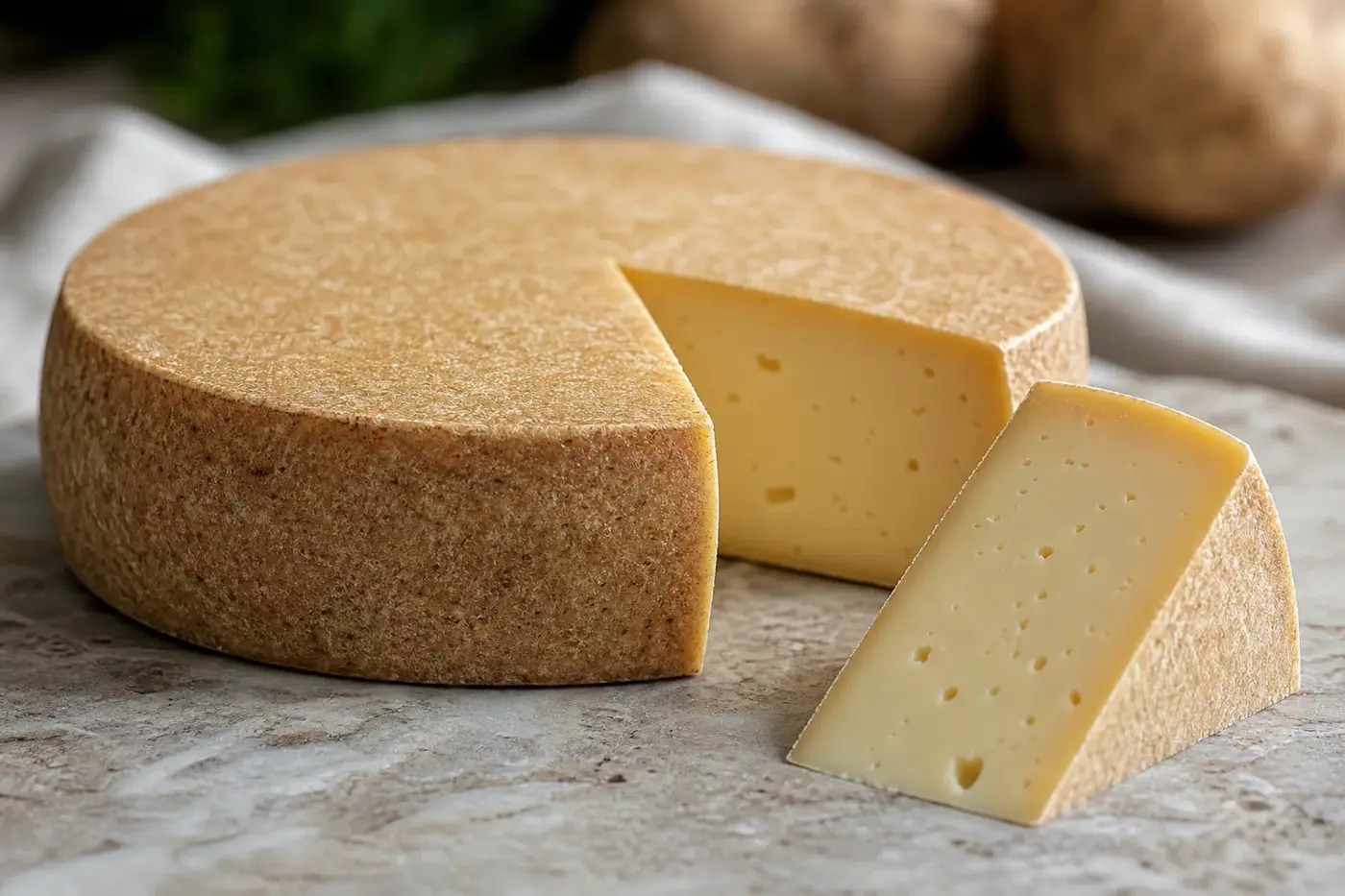
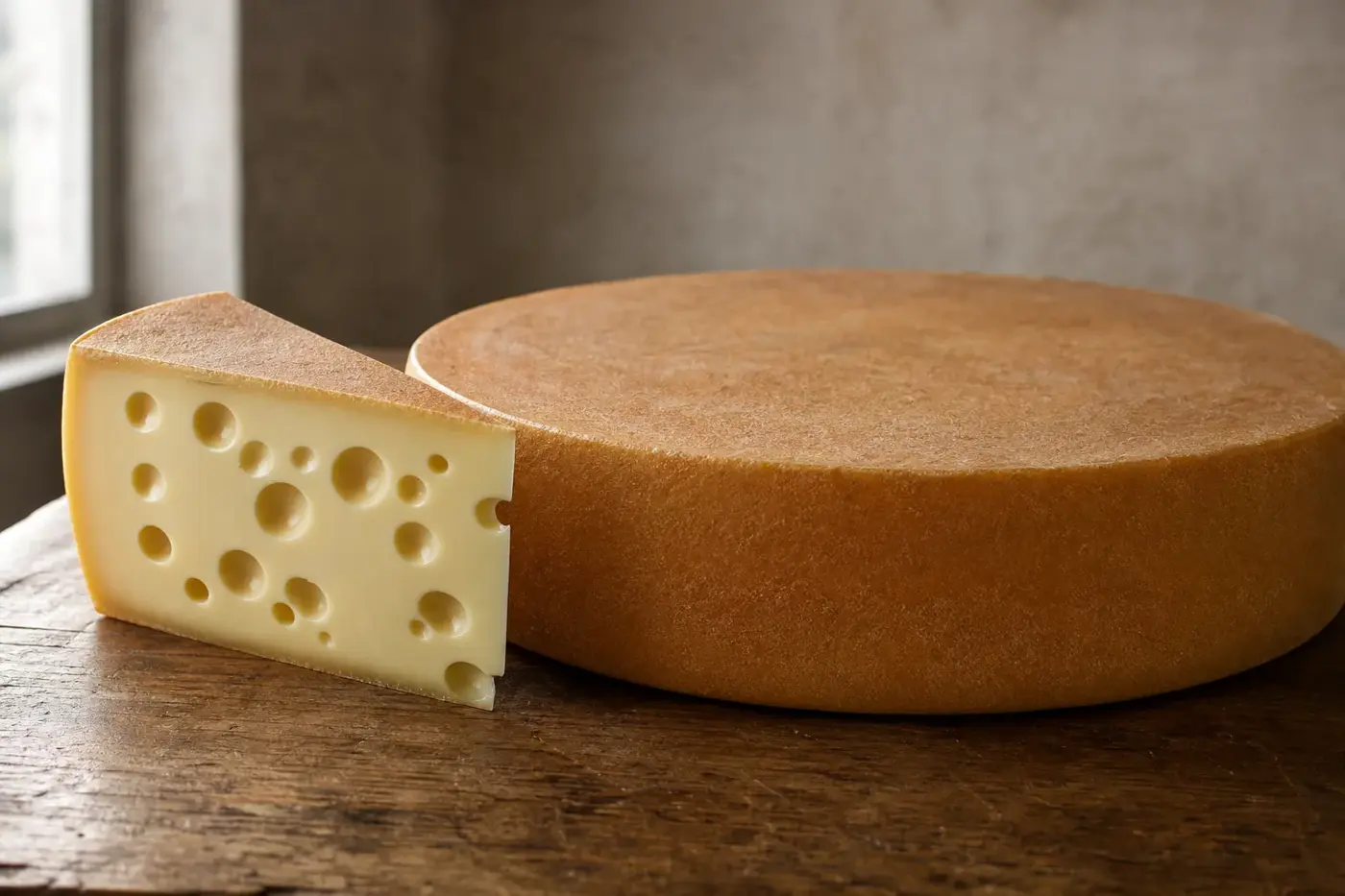
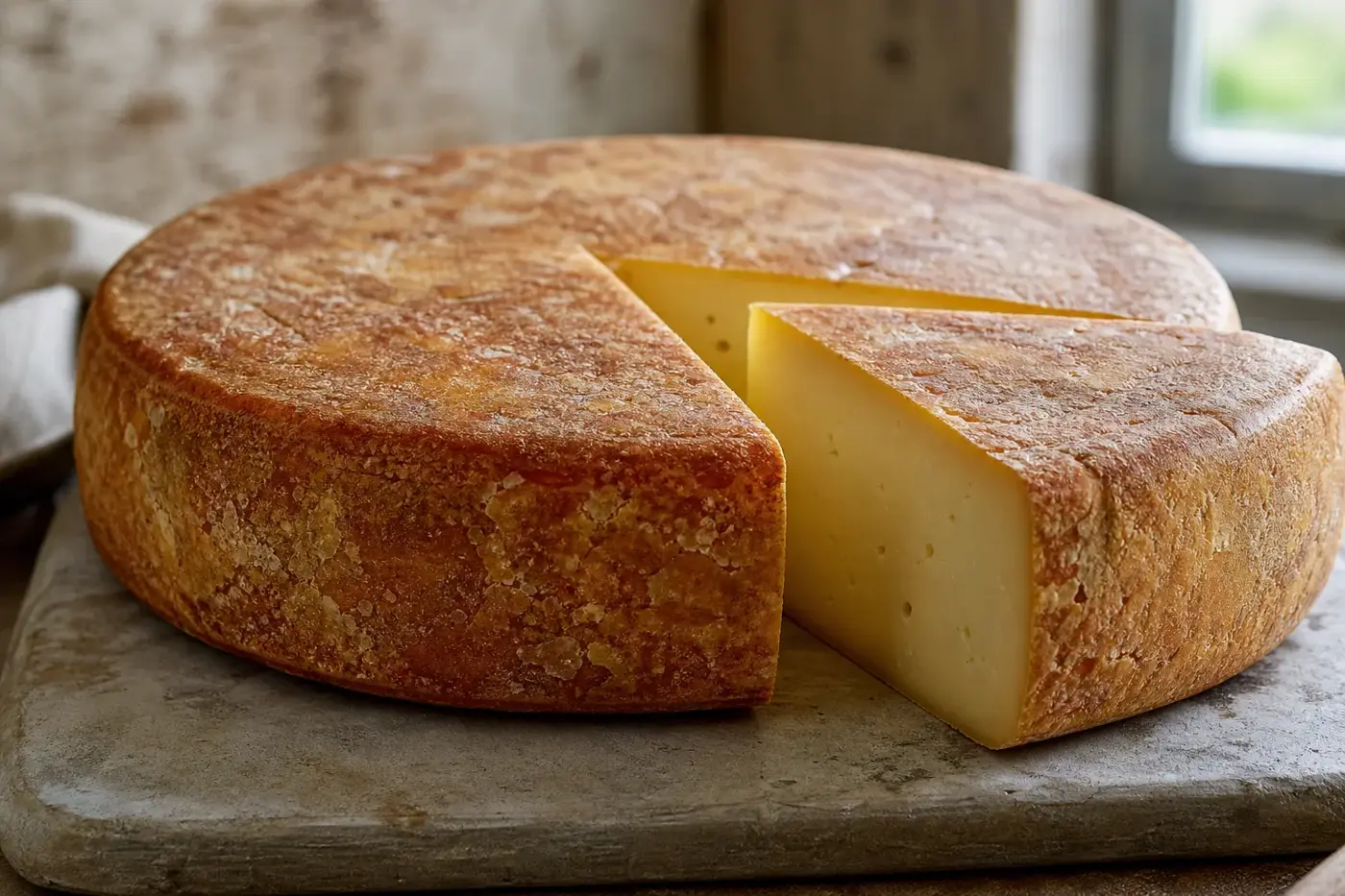
A whole L'Etivaz is a broad wheel with a slightly convex side. The specification gives a weight of 10 to 38 kg, a diameter of 30 to 65 cm and a height of 8 to 11 cm. Its natural smear rind is brownish, faintly damp and lightly granular, not waxed or brightly coloured. [1]
Cut through it and you find an ivory-yellow interior. The Swiss AOP-IGP association describes a fine, supple paste with a slight firmness. Holes are uncommon: an occasional small opening belongs here, but a network of large holes is not characteristic. [7]
When you choose a wedge, give both surfaces a moment of your attention. The rind shows the effects of surface maturation; the cut face reveals the close, worked texture of cooked-curd cheese. Together, they give you a clearer impression of what you are taking home.
Taste the fruit, hazelnut and gentle smoke
Aromatic and fruity, with hazelnut and a slight smoky flavour: that is the Swiss AOP-IGP association's description. Use it as a guide to L'Etivaz's typical character, rather than a promise that every wedge will taste identical. It gives you a starting point, with room for the individual cheese to speak. [7]
The smoke is a light note, not the forceful flavour of a deliberately smoked cheese. The official registration dossier links L'Etivaz's distinctive aromas to high-altitude herbage and manufacture over an open wood fire. Pasture and fire both have a part in what reaches your plate. [9]
Researchers have explored the Alpine grazing connection, too. Agroscope's 2015 characterisation studied ten L'Etivaz wheels and seven rebibes cheeses from different Alpine dairies, combining chemical analyses with recorded production information. They discussed Alpine grazing as an influence on milk-fat composition and the resulting cheese characteristics. [12]
Time gives you another dimension to explore. The cooperative describes the paste gaining finesse and suppleness during cellar maturation; the AOP-IGP association describes longer-dried rebibes as more pronounced in flavour. Try different ages and that range becomes clearer than any expectation of one fixed flavour. [4, 7]
Meet L'Etivaz à rebibes, made for fine curls
L’Etivaz à rebibes is the designation the Swiss specification permits for a specially matured form of L'Etivaz. Its paste is extra-hard, ready for shaving or grating. Those fine curls give you a very different experience from a supple slice of the ordinary cheese. [1]
The cooperative selects suitable wheels after six months of maturation. Their surface smear is removed, then the cheeses are washed, rubbed with sunflower oil and moved to a drying loft. There they spend at least another 30 months, according to the cooperative's account. [6]
This is a different maturation route, not simply more time in the usual cellar. Wheels stand vertically in the loft and dry naturally until firm enough for thin shavings. The specification requires an airy loft without air conditioning. [1, 6]
The resulting curls or shavings are the rebibes. You can buy them ready-cut or ask for a piece intended for shaving. Keep them thin: you want delicate folds of extra-hard cheese, not a small test of jaw strength.
Choose your piece and give it good care
Start with three questions at the counter: is this the protected cheese, how old is the wheel, and is it ordinary L'Etivaz or rebibes? If details accompany the wheel, ask about its producer or Alpine chalet. The cooperative's traceability system makes that a meaningful way to explore where your cheese began. [5]
For your first encounter, choose a piece suitable for slicing and, if available, a few rebibes alongside it. You get to compare cellar maturation with prolonged drying. That contrast tells you more about the cheese's possibilities than an age description alone.
Keep the retailer's identification and storage instructions with your cheese. Refrigerate the cut portion and follow those instructions. The Food Standards Agency explains that correct chilling helps prevent harmful bacteria from growing; its cited chilling guidance applies to England, Northern Ireland and Wales. [13]
Cut only what you intend to serve. Keep the rest covered and refrigerated. For wrapping and storage arrangements, follow how to store cheese at home, using the official advice applicable where you live.
At the table, cut an ordinary wedge into slim slices or small pieces that retain some supple texture. Pile rebibes loosely rather than compressing the curls. Taste a plain piece before adding accompaniments, giving yourself time to notice how differently the two forms feel and taste.
Find a pairing, then meet the Alpine relatives
Start simply and add one accompaniment at a time. These suggestions take their cue from the published description of fruit, hazelnut and light smoke. You have choices for both slicing cheese and rebibes. [7]
| Your cheese | Something alongside | Something to drink | What to look for |
|---|---|---|---|
| Slicing cheese | Plain bread and pear | Still water or dry white wine | A quiet starting point that lets you notice the cheese |
| More developed cheese | Walnuts and bread | Unsweetened black tea or dry cider | Firm textures and savoury contrasts |
| Rebibes | Apple slices | Sparkling water or dry white wine | Crisp fruit alongside delicate shavings |
Alcoholic suggestions are for adults of legal drinking age, in small servings. The alcohol-free choices are complete pairings in their own right. You need not treat them as substitutes for anything.
L'Etivaz brings seasonal Alpine farming, raw milk, copper cauldrons, direct wood fires and communal maturation together. Its historical relationship with Gruyère helps explain the family resemblance. Its separate name and specification identify the particular cheese in front of you, with its own production setting and maturation tradition. [1, 11]
Compare it with Le Gruyère by age and production context, rather than treating either name as shorthand for every Alpine cheese. For a revealing board, choose two clearly identified cheeses of similar maturity, then add rebibes as a separate texture. Give each one room, and you can taste what makes it distinct.
General information only, not medical advice: follow the official guidance where you live.
Questions people ask
Where and when is L'Etivaz made?
L'Etivaz is made on defined summer farms in ten Vaud communes, with cheesemaking chalets at 1,000 to 2,000 metres. The cooperative gives the production season as 10 May to 10 October.
How is L'Etivaz made?
Raw cow's milk is heated in a copper cauldron over a direct wood fire and set with calf rennet. The curds are heated, gathered with a cloth, then placed in a mould to be pressed.
What does L'Etivaz taste like?
The Swiss AOP association describes L'Etivaz as aromatic and fruity, with hazelnut and a slight smoky flavour. Its paste is fine and supple, with a slight firmness.
What is L'Etivaz à rebibes?
It is a specially matured form of L'Etivaz with an extra hard paste suited to shaving or grating. The cooperative selects suitable wheels after six months of maturation and transfers them to a drying loft.
How should I store L'Etivaz?
Keep the retailer's identification and storage instructions with your cheese, and refrigerate the cut portion. The Food Standards Agency explains that correct chilling helps prevent harmful bacteria from growing; see its chilling guidance for England, Northern Ireland and Wales.
Sources
- Swiss Federal Office for Agriculture. Cahier des charges: L’Etivaz. Registration decision of 24 September 1999, amended 17 November 2004 and 22 November 2024; official PDF issued under the 2025 filename. Articles 1 to 18.
- Coopérative des producteurs de fromages d'alpage L'Etivaz. L’Etivaz AOP, including “Histoire de la coopérative”. Undated website, retrieved November 2026. Producer organisation's account.
- Coopérative des producteurs de fromages d'alpage L'Etivaz. La Fabrication. Undated website, retrieved November 2026. Producer organisation's account.
- Coopérative des producteurs de fromages d'alpage L'Etivaz. L’affinage. Undated website, retrieved November 2026. Producer organisation's account.
- Coopérative des producteurs de fromages d'alpage L'Etivaz. Sur feu de bois et sous presse. Undated website, retrieved November 2026. Producer organisation's account.
- Coopérative des producteurs de fromages d'alpage L'Etivaz. Grenier. Undated website, retrieved November 2026. Producer organisation's account.
- Swiss Association of AOP-IGP. AOP-IGP, French product brochure, entry “L’Etivaz AOP”. Undated edition retrieved November 2026. Industry association's sensory description.
- Department for Environment, Food & Rural Affairs. L’Etivaz. Great Britain protected food names register, published 4 January 2021; retrieved November 2026.
- Swiss Federal Office for Agriculture. Résumé de la demande d’enregistrement du L’Etivaz. 24 September 1999. Historical application document.
- Coopérative des producteurs de fromages d'alpage L'Etivaz. L’Étivaz AOP: Un ancrage régional & engagement alpestre depuis 93 ans. Presentation to the Société Suisse Alpestre, November 2025.
- Swiss Culinary Heritage. L’Etivaz AOP. Online historical synthesis, undated version retrieved November 2026.
- Agroscope. Caractérisation des fromages L’Etivaz AOP et L’Etivaz à rebibes. Agroscope Science, number 18, 2015.
- Food Standards Agency. How to chill, freeze and defrost food safely. Published 18 December 2017; current publication and linked guidance retrieved November 2026. Applies to England, Northern Ireland and Wales.
Researched from the Swiss specification, official registration records, cooperative publications and scientific and historical references, with pairing suggestions identified as editorial judgement.
Last checked: November 2026
Last checked November 2026.
The editors suggest you read next