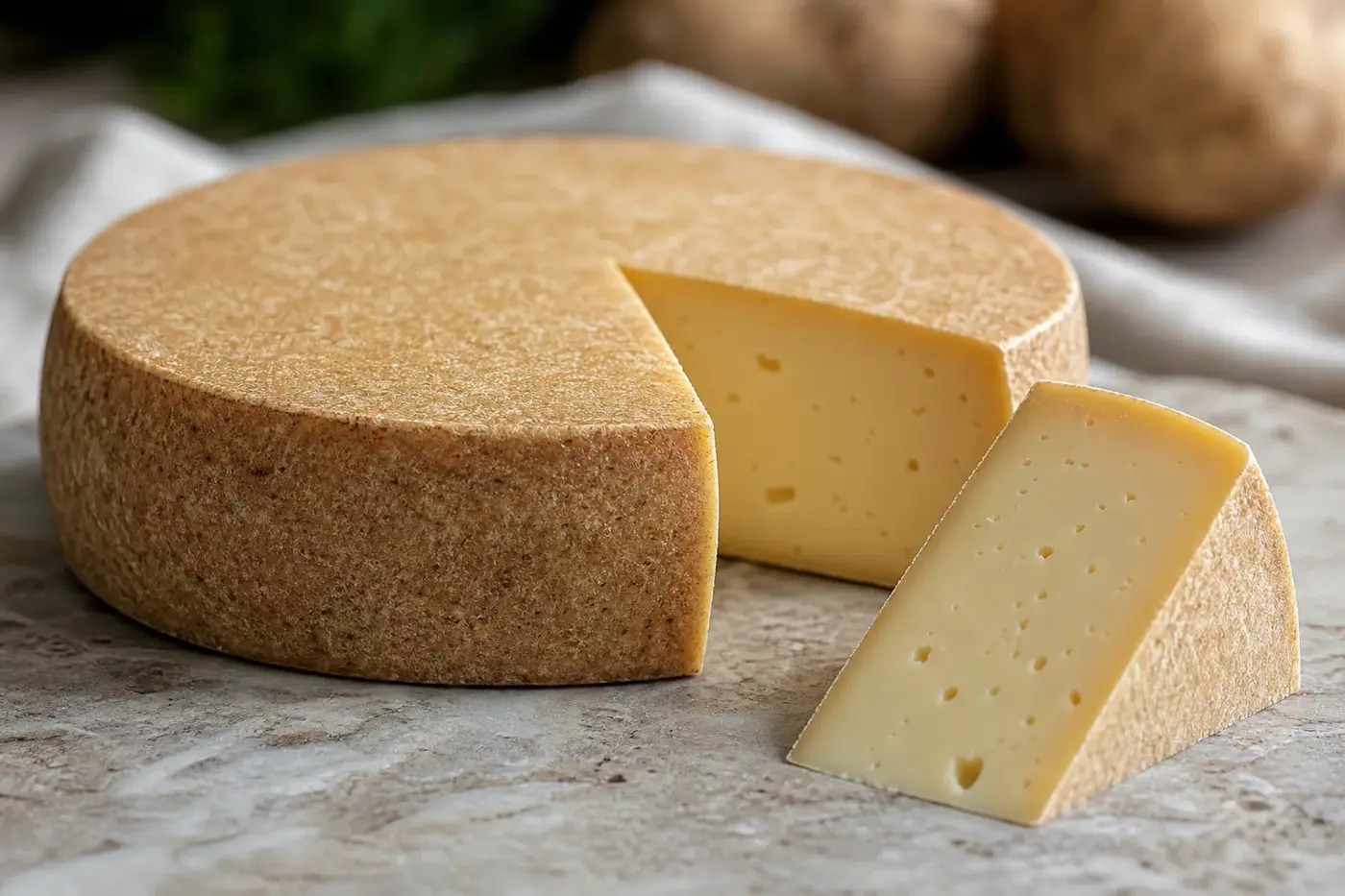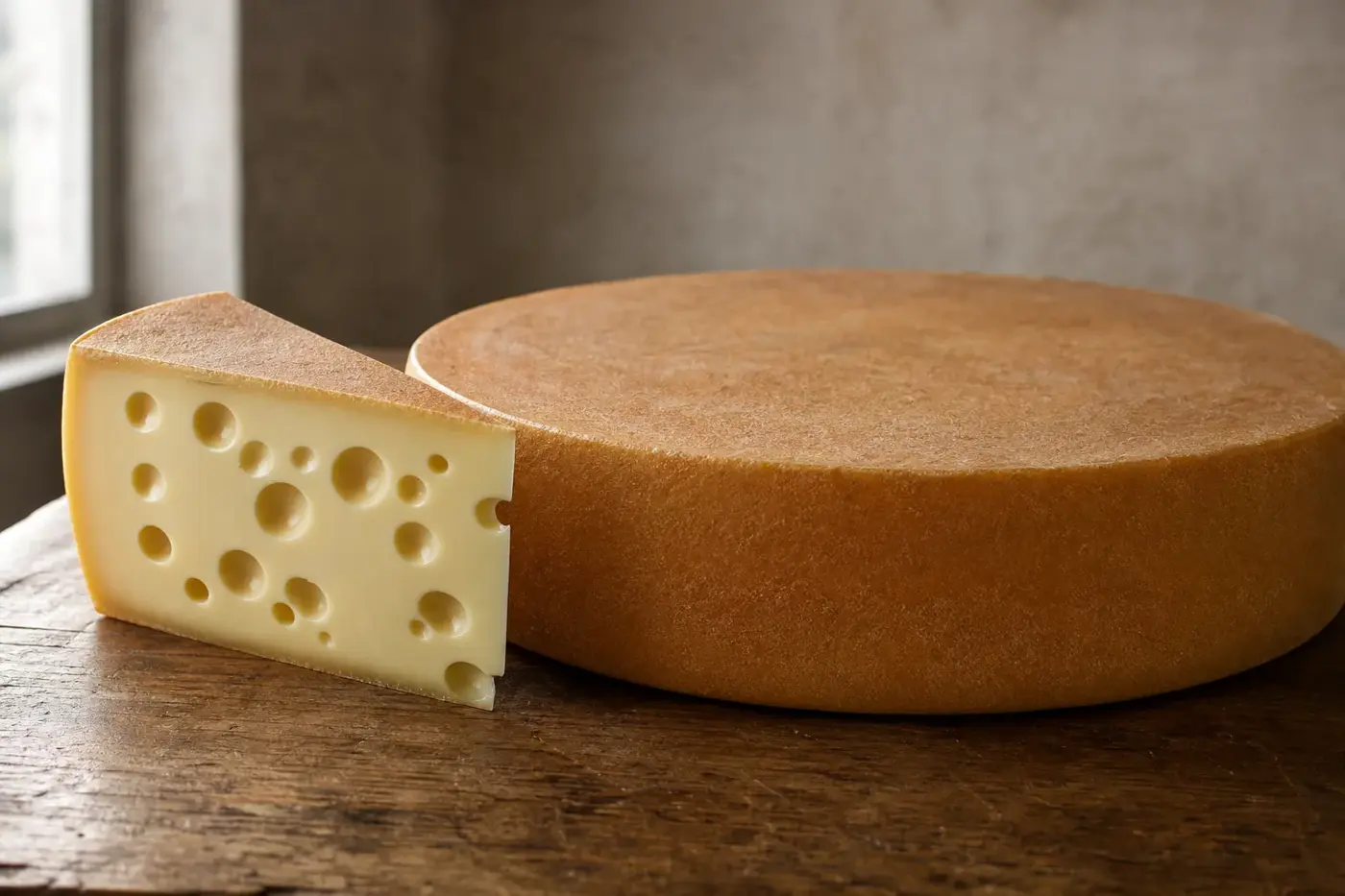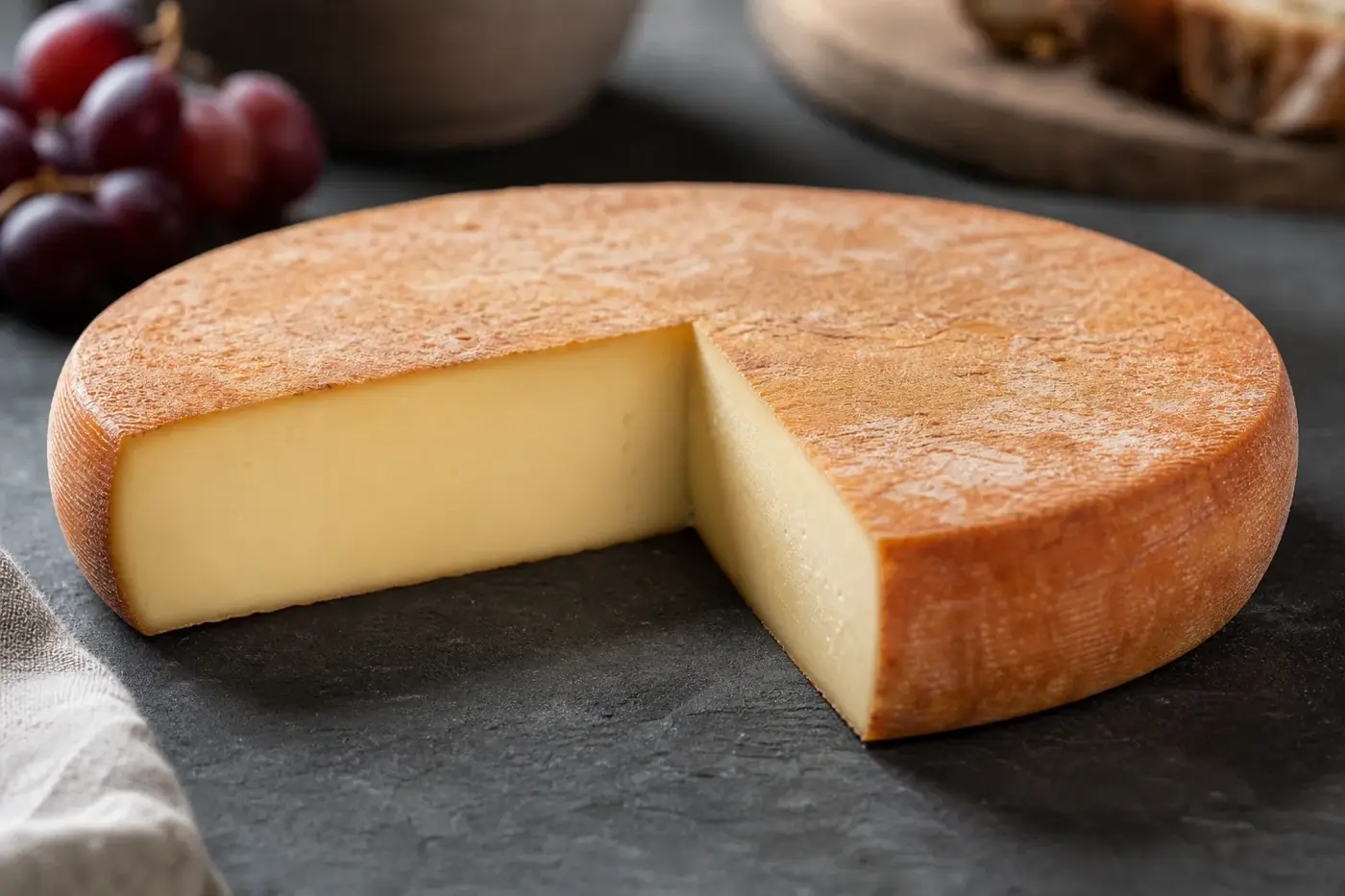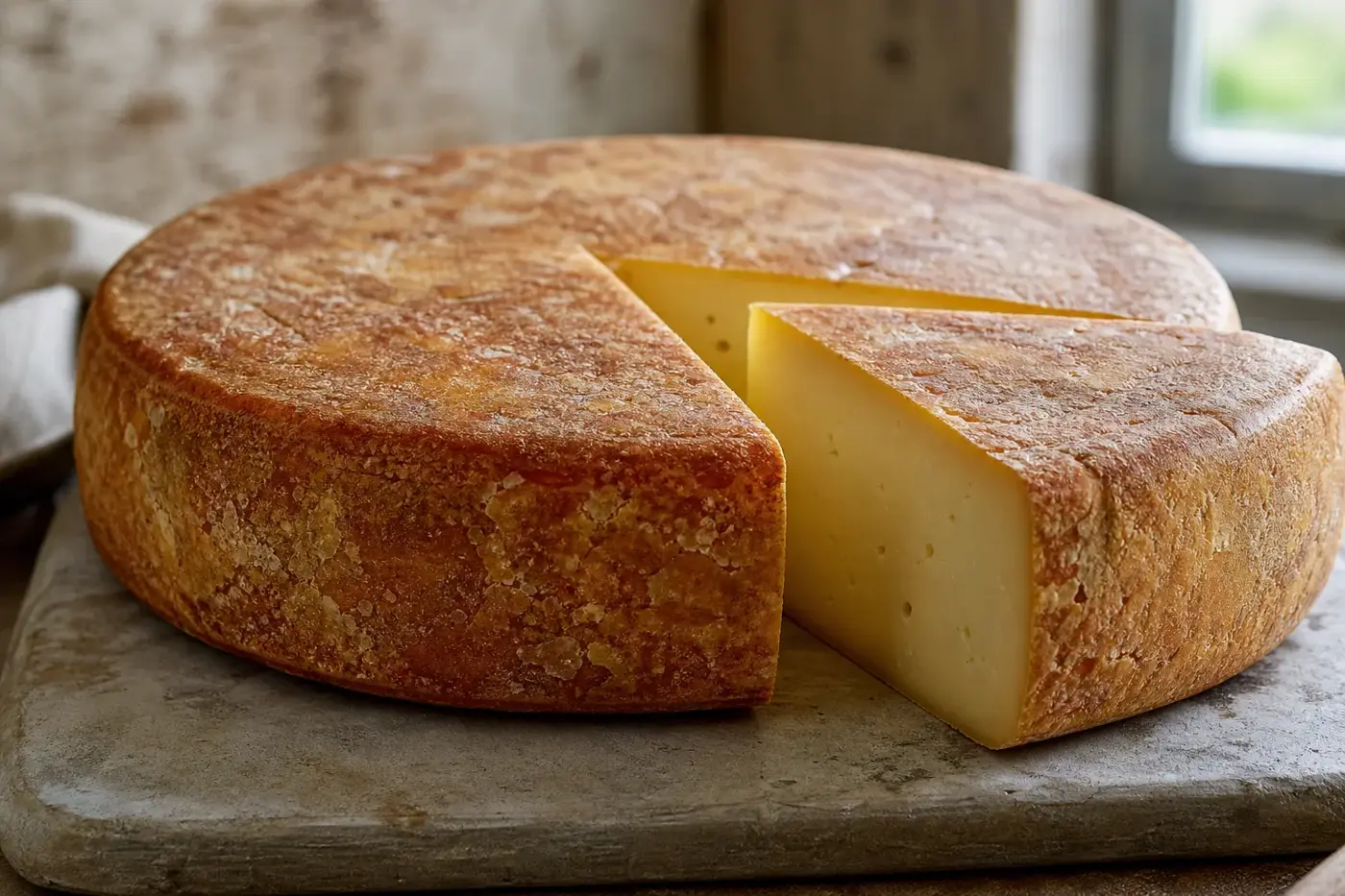
Run your eye over Appenzeller’s pitted rind. You are looking at the visible side of a secret: a closely guarded herbal brine gives this eastern Swiss cheese its characteristic tang, according to the regional tourism organisation. Firm, savoury and made from raw cow’s milk, this washed-rind cheese has quite a range, from mild Silver Label to complex, lingering Purple Label. [1][2][4]
| Appenzeller at a glance | What you need to know |
|---|---|
| Familiar name | Appenzeller. [1] |
| Name used by the cheese organisation | Appenzeller®; selections include Silver Label, Gold Label, Black Label and Purple Label. [5] |
| Geographical indication authority and register ID | No confirmed details provided here. |
| Protection status, Switzerland, EU, Great Britain, Northern Ireland and United States | No confirmed status provided here. |
| Production area named by the organisation | Appenzell Innerrhoden, Appenzell Ausserrhoden and parts of the cantons of St. Gallen and Thurgau. [1] |
| Milk declared for Silver Label and Purple Label | Raw cow’s milk. [1][4] |
| Coagulant required across the range | No confirmed requirement provided here. |
| Rind to look for | Natural and pitted; Silver Label is yellow to reddish brown, Purple Label brown to dark brown. [1][4] |
| Published maturation examples | Silver Label, three months; Purple Label, nine months. [1][4] |
| Statutory minimum ageing | No confirmed requirement provided here. |
| A typical Silver Label wheel | Round, 30 to 33 cm across and 7 to 9 cm high; average weight 6.7 kg. [1] |
| UK pregnancy guidance, November 2026 | NHS guidance distinguishes hard cheese from semi-hard cheese and milk treatment; see below. [8] |
Meet your slice, rind and all
Cut into Silver Label and you will find an ivory to light-yellow interior, with a few roughly pea-sized openings. That is the picture in the organisation’s specification. Its rind is pitted rather than smooth and glossy, and the modest openings are a reminder that not every Swiss cheese auditions for the role of holey cheese. [1]
Silver Label is described as mild and creamy. Purple Label has a darker rind, an ivory to yellowish-white interior and a complex, lingering flavour. Treat those published tasting descriptions as your first signposts, not instructions for what you must taste. [1][4]
For your first purchase, ask to compare a younger selection with an older one. Feel the firmness of the paste, notice the aroma, then pay attention to how long the flavour stays after swallowing. This small tasting ritual gives you a more useful personal reference than label colour alone.
Follow the cheese beyond Appenzell
The name points you towards Appenzell, but the cheesemaking area reaches further. Appenzeller’s stated production area includes the two Appenzell cantons and eligible parts of St. Gallen and Thurgau. As the organisation’s product sheets make clear, this is a regional cheese, not one whose every wheel must come from a dairy in a single small town. [1][3][4]
There is a long craft tradition behind your slice. The regional tourism organisation places Appenzeller within a local history stretching back more than 700 years. Its account supplies the historical setting; the product sheets tie today’s cheese to its named production area. [2][3]
At the counter, ask about the place and the person behind your piece. Which dairy made it, which selection is it, and who matured or supplied it? The selection points to the intended maturity, while the maker’s identity gives you something useful to remember when you return for more.
Ask about the milk behind the view
Raw cow’s milk sits at the heart of Silver Label and Purple Label’s documented identity. Both declare it explicitly in the organisation’s product sheets. You will also find raw milk in its German-language sheets for the younger and stronger selections. [1][3][4][6]
Grass, hay and silage deserve separate questions if you want to understand a dairy’s milk supply. Ask for the current feeding and milk-sourcing specification, including which products it covers. A requirement attached to your cheese tells you more than an evocative description of the countryside, however tempting the view.
A related name is another reason to read closely. Look at each selection’s own description rather than assuming it shares Silver Label’s milk treatment, composition or maturity. That matters when you explore unfamiliar parts of the range; for the milk-treatment distinctions, see raw, thermised and pasteurised cheese.
Read the clues in the finished wheel
The organisation’s product sheets give you their clearest picture at the finished-wheel stage. Milk treatment, production area, wheel format, rind, openings and maturation period receive more detail than the manufacturing sequence. Silver Label and Purple Label share a regional identity, but each has its own documented characteristics. [1][4]
Want to follow the journey from milk to wheel? Explore milk setting, curd formation, whey separation, moulding, pressing, salting and maturation in how cheese is made. For Appenzeller’s own production details, ask the dairy: another Swiss cheese’s temperatures or timings cannot simply fill the gaps.
If you make cheese at home, start with a specialist-reviewed method. A commercial cheese’s appearance and age describe the destination, but a reproducible method also needs reliable controls. Use the product sheet as a guide to what you are aiming for, not as a recipe.
Get close to the herbal secret
Appenzeller’s characteristic tang comes from its secret herbal brine and the care given to individual wheels, according to the regional tourism organisation. Its account describes the younger cheese receiving this treatment over at least three months. Other selections stay longer in maturation. [2]
The brine matters, but so does the tending of the wheels. The mixture remains closely guarded, with no ingredient list for you to reconstruct it. [2] You can inspect that pitted rind as closely as you like; it is not about to give up the family silver. [2]
Ask your supplier whether to remove the rind from your particular piece. For an even-textured sauce or filling, trimming it away is a straightforward choice. Keep the original wrapping or product information until you have read the handling instructions, especially with an unfamiliar selection.
Find the maturity you want to linger over
Label colour gives you a practical route through the principal selections, from mild and creamy to complex and lingering. The maturation periods below come from published product descriptions. They are separate from any statutory minimum ageing requirement. [1][3][4][7]
| Selection | Published maturation | Published flavour | Where to begin tasting |
|---|---|---|---|
| Silver Label | Three months. [1] | Mild and creamy. [1] | Start here for an introduction. |
| Gold Label | Four to five months. [3][7] | Tangy and aromatic. [7] | Taste it beside Silver Label. |
| Black Label | Six to eight months. [7] | Sharp and robust. [7] | Try this when you want more assertiveness. |
| Purple Label | Nine months in its product sheet. [4] | Complex and lingering. [4] | Give it some space on a small plate. |
Ask for the selection name as well as its age. The organisation also publishes separate sheets for cream-enriched and reduced-fat specialities. Maturity alone cannot explain every difference you will meet across the wider range. [9][10]
Explore older cheese, certainly, but give the younger selections their moment too. If possible, buy two small pieces and taste them side by side, keeping their labels beside the board. You will find it easier to recognise what you enjoy and to ask for it again.
Make sense of the name on the label
Appenzeller® is the name used by the cheese organisation. Its separate fact sheets set out each selection’s declared characteristics, including production area and milk treatment. Start with those when you want to understand the particular cheese in front of you. [1][4][5]
A geographical indication needs a different kind of enquiry. You need the exact registered wording, jurisdiction, authority and current legal record, kept distinct from brands and product descriptions. The guide to protected cheese names explains those differences and what to look for in a protected name.
Comparing Appenzeller with Le Gruyère? Begin with the individual cheese, not simply their shared Swiss origin. Choose a named product and maturity suited to the job, then consult its own production information and designation.
Bring it home and keep it well
At the counter, ask for the selection, dairy identity where disclosed, cutting date and storage instructions. With a packaged piece, keep the label and follow its storage and date instructions. The FSA’s guidance for England, Northern Ireland and Wales says to refrigerate dairy products and follow the packaging instructions. [11]
When serving, cut your wedge into modest slices so guests can compare the centre with the portion nearer the rind. Leave the rest wrapped and chilled rather than slicing the entire piece in advance. For broader wrapping and handling advice, turn to storing cheese at home.
In England, Northern Ireland and Wales, the FSA advises keeping a domestic fridge between 0 and 5 °C (32 to 41 °F). Chilled food should spend the shortest possible time out during preparation, with a maximum of four hours. [11] Bring out only the Appenzeller you intend to eat, shortly before the meal, rather than displaying the whole piece. [11]
Give your Appenzeller good company
Begin simply: bread, cheese and one accompaniment. Try fresh pear, then a sharp pickle, tasting the cheese alone between them. The contrast lets you decide which companion you prefer without crowding the plate.
For an alcohol-free drink, start with water, then try an unsweetened tea. Keep your first tasting uncomplicated, especially if you are comparing selections. Several strong accompaniments can compete for precisely the attention you want to give the cheese.
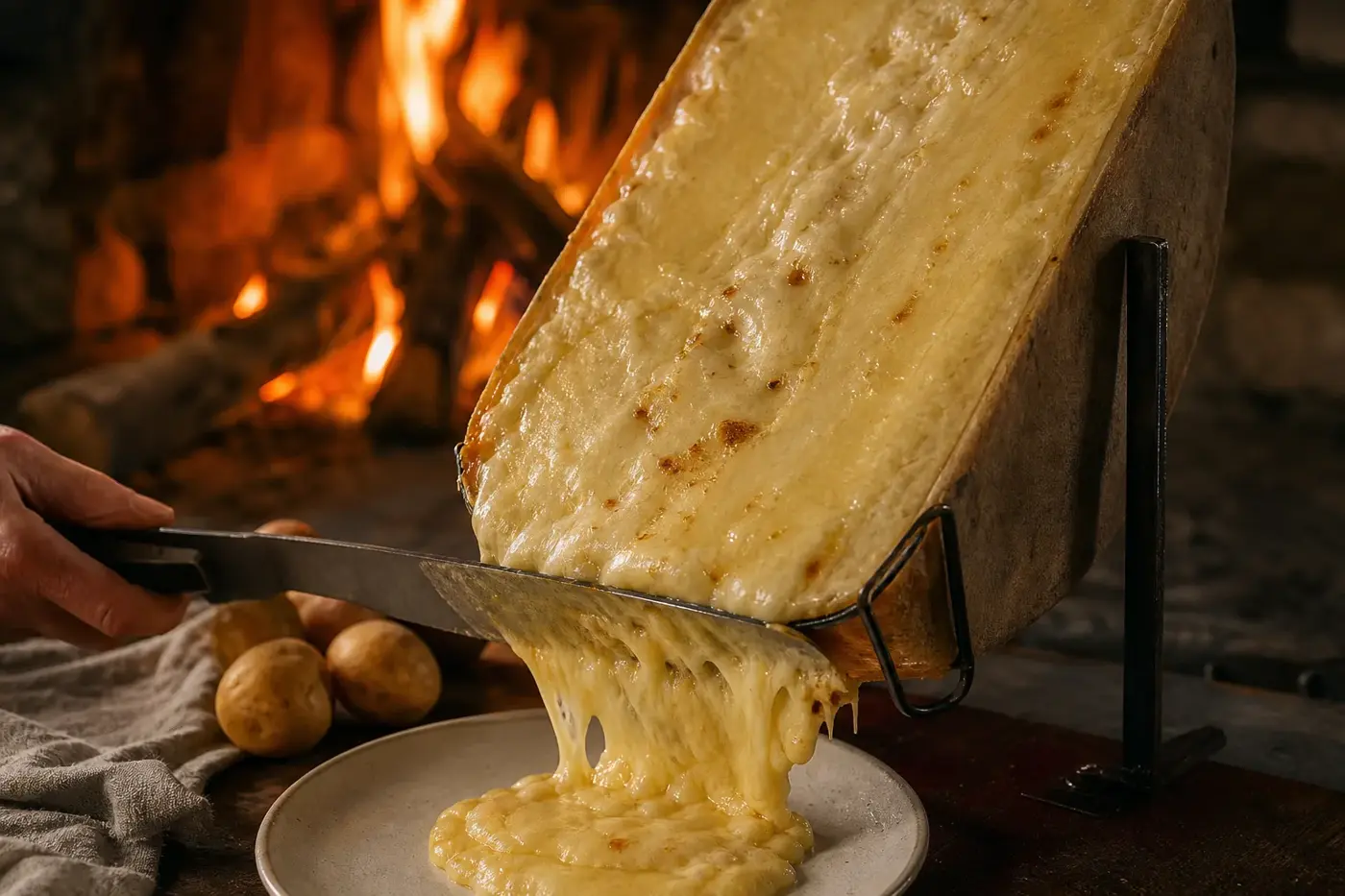
Ready to melt some? The Appenzeller organisation publishes recipes for vegetable bakes, rösti, quiche, rarebit and fondue. Those are its recommended uses for the cheese in melted dishes, giving you plenty of ways to move beyond the cheeseboard. [12]
A potato bake or toast topping makes a straightforward first cooking trial. Use a selection you already enjoy eating, then decide whether you would prefer a stronger one next time. When replacing another Swiss cheese, choose Appenzeller for its own character rather than expecting an identical result.
This page summarises published guidance from the official sources it cites. It is not medical advice. Guidance differs between countries and changes over time, so check the current source for where you live, and ask your doctor, midwife, pharmacist or dietitian about your own circumstances.
Ask clearly about rennet, milk and pregnancy
If you need a vegetarian cheese, request the coagulant declaration for the exact product. Ask whether the rennet is animal, microbial or fermentation-produced; the name Appenzeller cannot answer that for you. The guide to rennet explained sets out the distinctions.
The cited Appenzeller product sheets declare cow’s milk. For allergens, read the actual product information and ask your supplier about additional ingredients and precautionary statements. Keep that enquiry separate from the vegetarian question, even if you ask both at the same counter. [1][4]
For pregnancy in the UK, the NHS lists pasteurised or unpasteurised hard cheeses among foods that can be eaten. It lists pasteurised semi-hard cheeses separately, and also lists cheese cooked until steaming hot. Appenzeller is not named on its page. [8]
The wording on your particular cheese matters here. The organisation’s English Silver Label sheet calls it hard cheese; its German sheet calls the corresponding selection semi-hard or slicing cheese. Take that specific product information to your midwife or dietitian and consult current NHS guidance, rather than relying on a verdict based on the name alone. [1][6][8]
Questions people ask
Where is Appenzeller made?
The stated production area includes Appenzell Innerrhoden and Appenzell Ausserrhoden. It also includes parts of the cantons of St. Gallen and Thurgau.
What is the difference between Silver and Purple Label Appenzeller?
Silver Label matures for three months and is described as mild and creamy. Purple Label matures for nine months and has a complex, lingering flavour.
Is Appenzeller made with raw milk?
The product sheets for Silver Label and Purple Label both declare raw cow’s milk. Check the description of the particular selection you are buying rather than assuming every product in the range is the same.
Is Appenzeller suitable for vegetarians?
The coagulant required across the range is not verified on the page. Ask for the coagulant declaration for the exact cheese and whether its rennet is animal, microbial or fermentation produced.
Can I eat Appenzeller during pregnancy?
The NHS lists pasteurised or unpasteurised hard cheeses among foods that can be eaten, and lists pasteurised semi hard cheeses separately. Appenzeller is not named in its guidance, and the organisation’s English and German Silver Label sheets classify it differently. Consult the current NHS guidance and take the specific product information to your midwife or dietitian.
Sources
- SO Appenzeller Käse GmbH, Appenzeller® Silver Label, English product fact sheet, 2024. Production area, milk, format, rind, interior, openings and maturation. Product sheet.
- Appenzellerland Tourismus, Appenzeller cheese, undated webpage, retrieved November 2026. Regional account of herbal-brine treatment, tradition and selections. Regional account.
- SO Appenzeller Käse GmbH, Appenzeller® Kräftig-Würzig, German product fact sheet, filename edition 2021. Production area, raw milk and four to five months’ maturation. Product sheet.
- SO Appenzeller Käse GmbH, Appenzeller® Purple Label, English product fact sheet, 2024. Milk, rind, interior, flavour and nine-month maturation. Product sheet.
- Appenzeller, Appenzeller Cheese, current homepage, retrieved November 2026. Principal selection names and use of Appenzeller®. Official website.
- SO Appenzeller Käse GmbH, Appenzeller® Mild-Würzig, German product fact sheet, 2024. Raw milk and classification as “Halbhartkäse / Schnittkäse”. Product sheet.
- Appenzeller presentation hosted by Switzerland Tourism, Appenzeller’s range at a glance, undated presentation, retrieved November 2026. Principal selection ages and attributed flavour descriptions. Presentation.
- NHS, Foods to avoid in pregnancy, current webpage, retrieved November 2026. UK pregnancy advice by cheese category and milk treatment. Official guidance.
- SO Appenzeller Käse GmbH, Appenzeller® Rahmkäse, German product fact sheet, 2024. Separate cream-cheese selection. Product sheet.
- SO Appenzeller Käse GmbH, Appenzeller® ¼-fett Räss-Käse, German product fact sheet, 2024. Separate reduced-fat selection. Product sheet.
- Food Standards Agency, How to chill, freeze and defrost food safely, published 18 December 2017, current retrieved text, November 2026. Applies to England, Northern Ireland and Wales. Official guidance.
- Appenzeller, Appenzeller® cheese recipes, undated official recipe index, retrieved November 2026. Commercially interested source for the organisation’s recommended culinary uses. Recipe index.
Researched from the cheese organisation’s published product information, its recipe collection, a regional tourism account and official UK guidance; serving suggestions are editorial, with no site tasting or cooking trial.
Last checked: November 2026
Last checked November 2026.
The editors suggest you read next