Le Gruyère
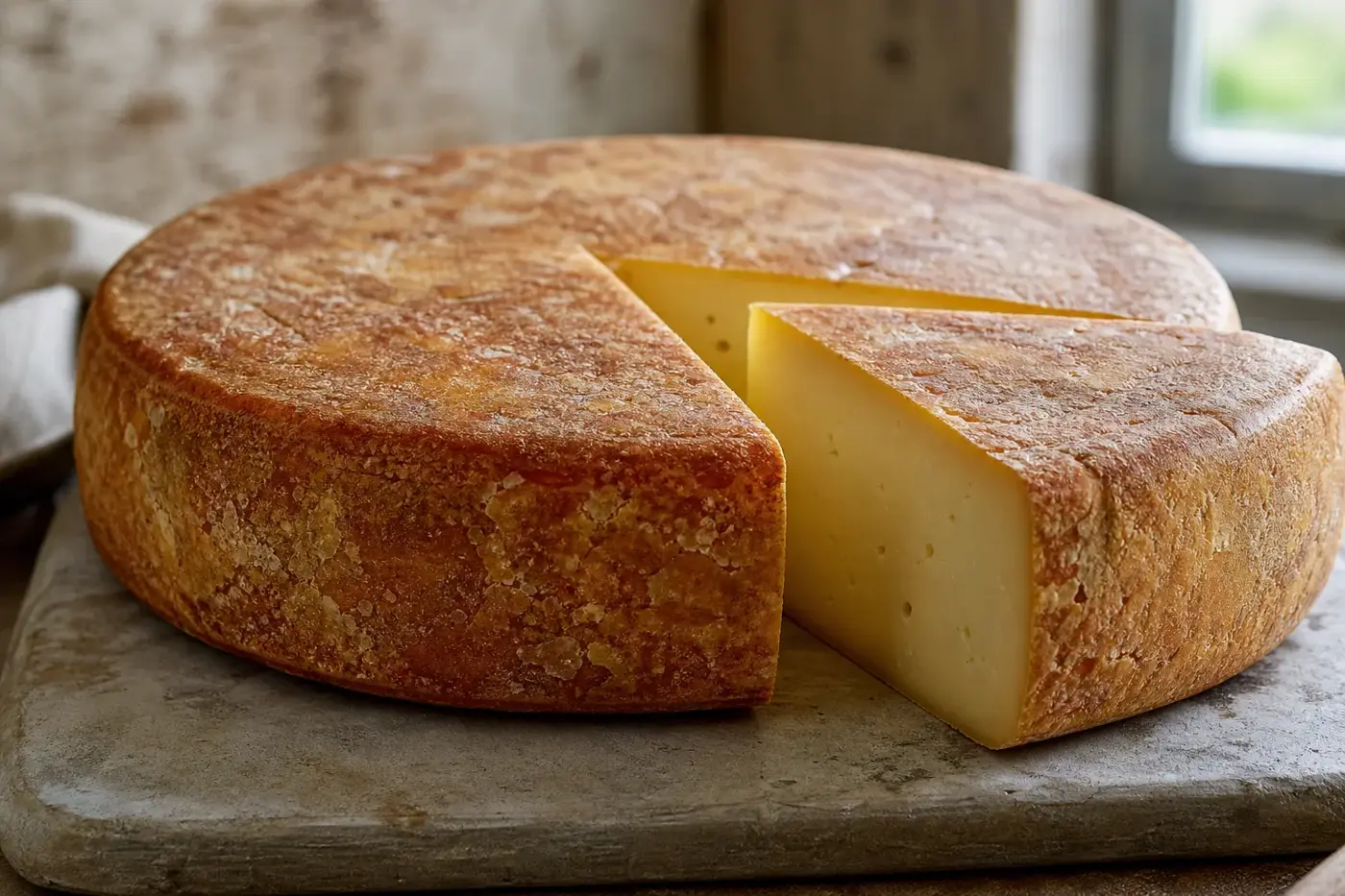
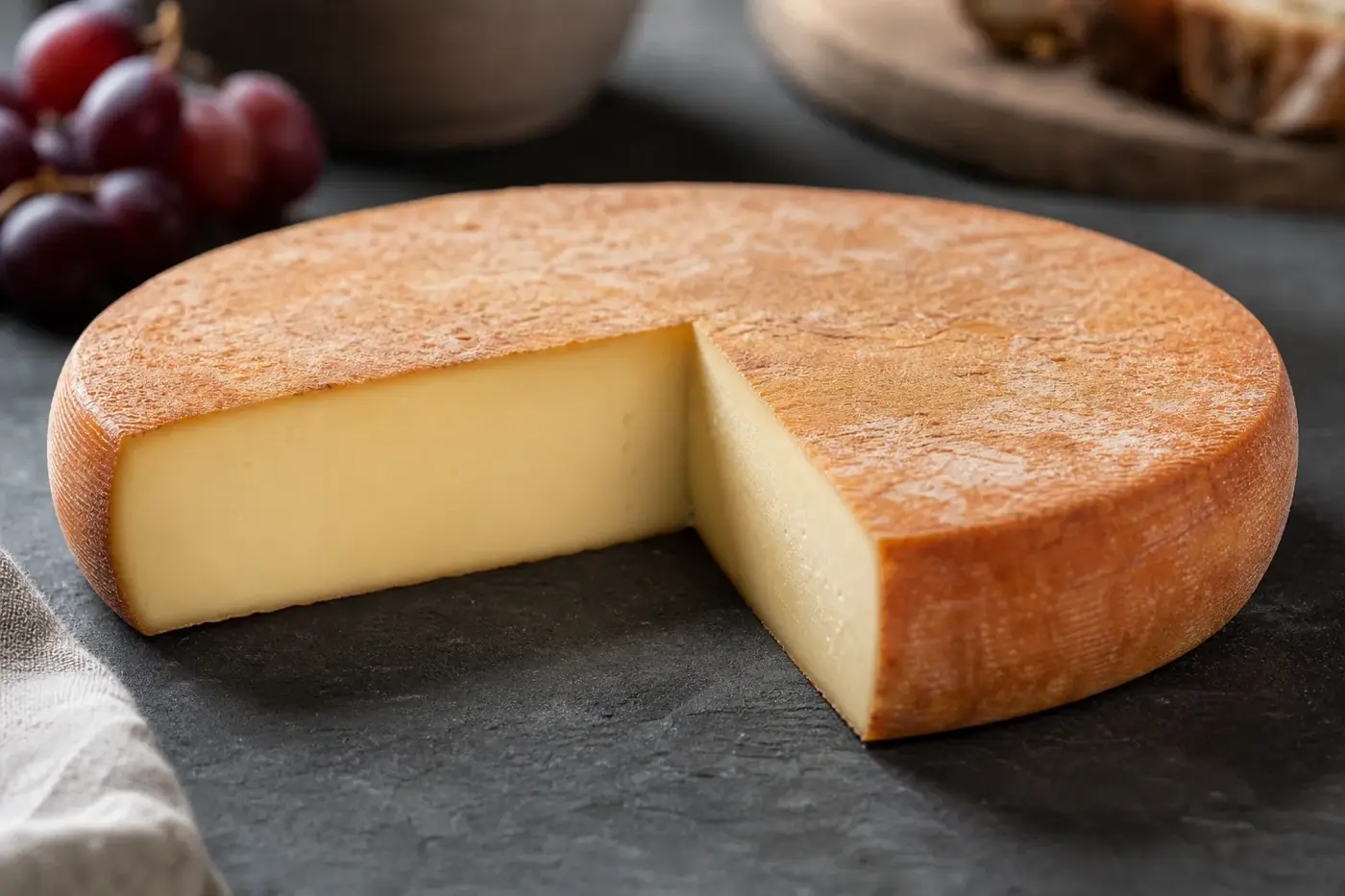
Your knife passes through the brown, grainy rind and into ivory cheese.
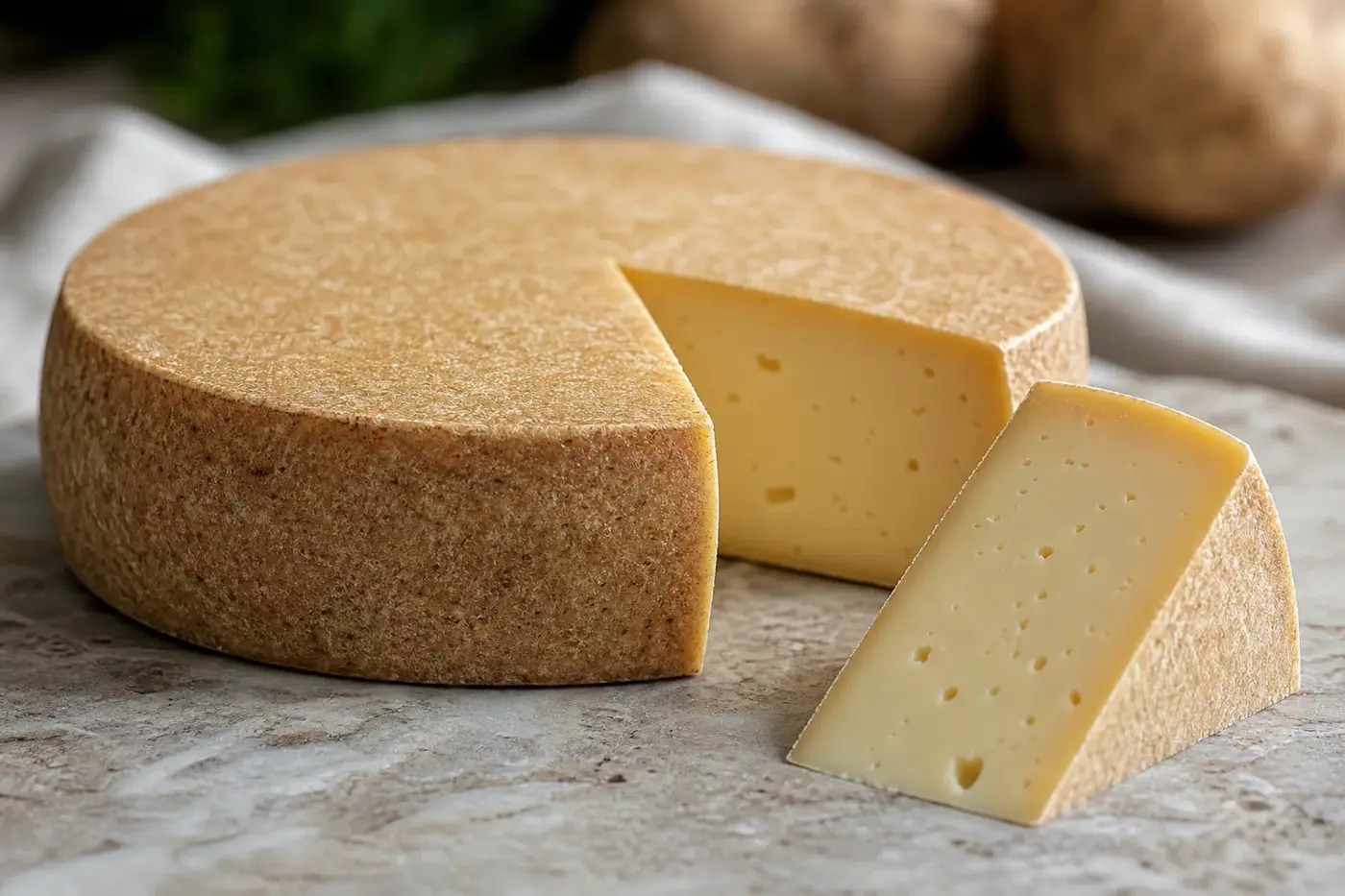
Your knife passes through the brown, grainy rind and into ivory cheese. Looking for holes? Swiss Le Gruyère has no obligation to entertain that particular Swiss cheese stereotype. Made from raw cow's milk, it follows rules tying its milk, manufacture and maturation to a defined origin. [1][2][3]
Follow the name elsewhere and the story changes. French Gruyère is a separate cheese, registered as a PGI in the EU. In the United States, a federal court held GRUYERE generic and refused the requested certification mark. Before you choose your wedge, give the label a moment. [4]
Get to know your Swiss Gruyère
| Your quick guide | Swiss Gruyère AOP, November 2026 |
|---|---|
| Familiar name | Le Gruyère. [5] |
| Registered designation | Gruyère. [1] |
| Register and status | Swiss federal AOP register; decision 6 July 2001, publication 12 July 2001. [1] |
| Where it comes from | Western Switzerland, plus named dairies and their defined milk collection areas under Article 3. [2] |
| Milk and treatment | Raw cow's milk. [2] |
| Minimum ageing | Five months altogether, including at least three months in the defined production area. [3] |
| Standard wheel | 25 to 40 kg; 55 to 65 cm diameter; 9.5 to 12 cm high. [2] |
| Rind | Brown, grainy and smear-ripened; tended during maturation. [2] |
| Health advice | UK: the NHS says pregnant people can eat pasteurised or unpasteurised hard cheeses, such as cheddar, gruyère and parmesan; advice last reviewed 15 June 2026. [15] France: ANSES advises people at risk to avoid raw milk cheeses, except cooked pressed cheeses such as Gruyère. |
Want to say it aloud? The UK pronunciation is /ˈɡruː.jeər/, roughly GROO yair; the US pronunciation is /ɡruˈjer/, roughly groo YAIR. [20]
What awaits beneath the brown rind
Expect substance rather than brittleness when you take a bite. The Swiss specification describes a supple, moderately firm cheese that is only slightly crumbly. Its pale ivory interior brings fruit-led flavours, supported by salt and shaped by surface ripening. Holes are welcome, but not compulsory. [2]
Give it time and the character shifts. The Interprofession du Gruyère, the industry organisation, presents Classic at 6 to 9 months and Réserve at more than 10 months. Its tasting notes describe younger cheese as gentler. Réserve brings fuller flavour, fruitiness and a firm, slightly crumbly texture. [5]
Choosing between two Swiss wedges? Ask their actual age, rather than letting the counter ticket do all the talking. Classic and Réserve are the Interprofession's maturity categories. The specification's minimum release age is a separate requirement: five months. [3][5]
From local milk to the copper vat
Start with the cows and their feed. The milk is untreated, comes only from cows and must be produced without silage, the fermented fodder stored for later feeding. The dairy's milk supply radius is limited to 20 km. That keeps production close to its milk supply, as the specification requires. [3]
Next comes an open copper vat, with a maximum useful capacity of 6,600 litres. Closed or larger vats already in use before 22 January 1998 have a specific exemption. They can remain in service while producing cheese of the required quality. That permission ends when they are replaced. [3]
Rennet, the preparation that clots milk, sets the milk before the resulting curd is cut, heated and pressed into wheels. Then comes maturation, also called affinage. It takes place in Switzerland, with part of that time reserved to the defined production area. [3]
Swiss or French? Look beyond the name
For the clearest visible distinction, look for holes. French Gruyère must have openings from pea to cherry size. It shares its name and raw cow's milk with the Swiss cheese, but follows its own French production specification. [8][9]
| What you're comparing | Swiss Gruyère AOP | French Gruyère PGI |
|---|---|---|
| Country | Switzerland. [2] | France. [9] |
| Milk | Raw cow's milk. [2] | Raw cow's milk. [9] |
| Holes | Desirable, not essential; mostly 4 to 6 mm. [2] | Required; pea to cherry size. [9] |
| Minimum ageing | 5 months. [3] | 120 days after rennet is added. [9] |
| Wheel height | 9.5 to 12 cm. [2] | 13 to 16 cm. [9] |
The French name entered the register through Commission Implementing Regulation (EU) No 110/2013. Adopted on 6 February 2013 and published on 7 February 2013, it became operative under Article 3 twenty days after publication, on 27 February 2013. The GB register records the original EU registration date as 7 February 2013. [8][10]
Your label should make the origin clear. In the EU, Article 2 of that regulation requires French Gruyère labels to show the country of origin in the same field of vision as the name, with letters of the same size. “Gruyère” alone does not tell you the cheese's full identity. [10]
Want to follow the French cheese further? French Gruyère has its own guide.
Where the Gruyère name has protection
Take the name across a border and its legal meaning can change. AOP is the French abbreviation for protected designation of origin, or PDO in English. PGI means protected geographical indication. For Gruyère, these identify two distinct origin schemes: the Swiss AOP and French PGI. [1][6][8]
| Where you are | Designation and status, November 2026 | Dates and details to know |
|---|---|---|
| Switzerland | Gruyère, registered AOP. [1] | Decision 6 July 2001; publication 12 July 2001. [1] |
| EU | Swiss Gruyère, PDO through Annex 12 of the agricultural agreement. [21] | Agreement published 16 November 2011, with a five year transition for Gruyère; updated list operative 1 January 2023. [6][21] |
| France and EU | French Gruyère, registered PGI. [8][10] | Regulation published 7 February 2013; operative 27 February 2013. [10] |
| Great Britain | Gruyère, Swiss PDO; Gruyère, French PGI, both registered. [7][8] | 31 December 2020. [7][8] |
| Northern Ireland | EU GI schemes apply; French Gruyère PGI. [11] | Swiss agreement-based protection: Undetermined. |
| United States | GRUYERE is generic; word certification mark refused. [4] | Fourth Circuit, 3 March 2023, No. 22-1041. [4] |
| Canada | Not listed in CETA Annex 20-A. [17] | Other Canadian rights: Undetermined. |
| Australia | DFAT says Australia will protect French Gruyère under the EU agreement, which is not yet in force. [18] | DFAT says existing producers with a continuous history of making and labelling gruyere may continue using the term. [18] |
| New Zealand | French Gruyère is protected as an EU geographical indication under the EU and New Zealand Free Trade Agreement. | Qualifying producers who used Gruyère continuously for at least five years before 1 May 2024 may continue under the prior-use exception, provided the product's geographical origin is clearly indicated. |
One distinction matters particularly in Europe. Swiss Gruyère's EU protection comes through a bilateral agreement, not the French cheese's EU registration. Decision No 2/2022 lists Swiss Gruyère as a PDO and French Gruyère as a PGI within the same protection framework. If you look only at the French register entry, you miss part of the picture. [6]
Reading an American gruyere label
In the United States, GRUYERE names a generic cheese category. On 3 March 2023, the US Court of Appeals for the Fourth Circuit affirmed that it could not be registered as the requested certification mark. Case No 22-1041 was brought by the Swiss and French industry organisations against the US Dairy Export Council and two importers. [4]
The court considered how American consumers understood the word. That included evidence of cheese sold under the name from several countries, alongside the FDA standard of identity. This legal definition sets production and compositional requirements without tying the cheese to a geographical origin. [4]
Under 21 CFR 133.149, US gruyere has small holes, at least 45% milkfat in the dry solids and no more than 39% moisture in the whole cheese. It must be at least 90 days old. Its dairy ingredients may be pasteurised. [12]
For you at the cheese counter, the distinction is straightforward. An American gruyere label identifies a cheese category; Swiss Gruyère AOP identifies production under the Swiss origin specification. The court decided the application for the word GRUYERE. Swiss, EU and Great Britain protection continues under the separate instruments above. [1][4][6][7][12]
Follow the name into the mountains
The paper trail takes you back to a founding charter from 1115. In its summary dated 24 September 1999, the federal application reports that the charter of Rougemont's Cluniac priory mentions making a cooked hard cheese. The registration dossier draws on that record to trace the region's cheesemaking tradition. [13]
By 1762, the Académie française was describing Gruyère as a cheese made in Gruyère, according to the same summary. It also cites an 1832 document describing the cheese's mountain production area. Through those records, you can follow the connection between name, place and cheese trade. [13]
Modern protection gave that association a formal specification. The Swiss registration decision came on 6 July 2001, with amendments recorded on 27 May 2014, 11 March 2015 and 14 December 2015. Those dates mark the legal milestones. The earlier documents trace the history behind them. [1][2]
Three clues for your next cheese-counter visit
Start with country and designation, then ask about age. On Swiss Gruyère AOP, Classic and Réserve indicate the Interprofession's maturity categories, but an actual age tells you more precisely. For French Gruyère PGI, look for the French origin statement and expect its own specification. [5][10]
In the United States, read the stated origin rather than assuming gruyere means Switzerland or France. Put name, origin and age together. Each answers a different question: what the cheese is, where it was made and how far it has matured. [5][12]
General information only, not medical advice: follow the official guidance where you live.
Questions people ask
What is the difference between Swiss and French Gruyère?
Both are made from raw cow's milk, but they follow separate origin specifications. Swiss Gruyère must age for at least five months, while French Gruyère must age for at least 120 days after rennet is added.
How old are Classic and Réserve Gruyère?
The Interprofession du Gruyère describes Classic as six to nine months old and Réserve as more than ten months old. Réserve is fuller in flavour, fruity, firm and slightly crumbly.
What milk is used to make Swiss Gruyère?
Swiss Gruyère is made from raw cow's milk, with no milk from other species mixed in. The cows are fed without silage, and the dairy's milk supply radius is limited to 20 km.
Can I eat Gruyère during pregnancy?
The NHS says pregnant people can eat pasteurised or unpasteurised hard cheeses, including gruyère. Check the NHS for its current guidance, as advice can change.
Does Gruyère have to come from Switzerland in the United States?
No. A US federal court held that GRUYERE is a generic name and refused the requested certification mark. The US standard does not tie the cheese to a geographical origin.
Sources
- Federal Office for Agriculture: AOP / IGP: appellations d’origine et indications géographiques, live register, Gruyère entry, page published 4 July 2025. Official register.
- Federal Office for Agriculture: Cahier des charges Gruyère, amendments through 14 December 2015, French edition hosted by the Interprofession du Gruyère. Specification.
- Federal Office for Agriculture: Gruyère Pflichtenheft, amendments through 14 December 2015, German edition. Specification.
- US Court of Appeals for the Fourth Circuit: Interprofession du Gruyère v US Dairy Export Council, No. 22-1041, opinion decided 3 March 2023. Published opinion.
- Interprofession du Gruyère: Our types of Le Gruyère AOP, undated online edition. An industry source with a commercial interest in the cheese. Maturity descriptions.
- EU and Switzerland Joint Committee on Agriculture: Decision No 2/2022 amending Appendices 1 and 2 to Annex 12, adopted 17 November 2022, published 9 December 2022, operative 1 January 2023. Binding decision and lists.
- Defra: Gruyère (Swiss), live protected food names register, published 4 January 2021. Swiss PDO entry.
- Defra: Gruyère (French), live protected food names register, published 4 January 2021. French PGI entry.
- French Ministry of Agriculture: Cahier des charges de l’indication géographique protégée « Gruyère », version date not verified. French specification.
- European Commission: Commission Implementing Regulation (EU) No 110/2013, 6 February 2013, OJ L 36, 7 February 2013. Registration regulation.
- Defra: Protected geographical food and drink names: UK GI schemes, live guidance. Jurisdiction guidance.
- US Food and Drug Administration: 21 CFR 133.149: Gruyere cheese, electronic Code of Federal Regulations, current text retrieved November 2026. Standard of identity.
- Federal Office for Agriculture: Zusammenfassung des Eintragungsgesuchs für Gruyère, 24 September 1999, section 7. Application summary.
- Intellectual Property Office of New Zealand: Absolute grounds: geographical indications, online practice guidelines, section 5.3.1. Gruyère prior-user guidance.
- NHS: Foods to avoid in pregnancy, last reviewed 15 June 2026. UK pregnancy advice.
- Canadian Intellectual Property Office: List of geographical indications, undated. GI list.
- Global Affairs Canada: CETA Annex 20 A, undated. Agreement annex.
- Australian Department of Foreign Affairs and Trade: Dairy geographical indications, undated. Dairy GI guidance.
- French Ministry of Agriculture: Le crottin de Chavignol AOP, le fromage des collines du Sancerrois, 10 February 2025. Health advice.
- Cambridge Dictionary: gruyere, online edition, undated. Pronunciation.
- EU and Switzerland: Agreement on protection of designations of origin and geographical indications, Annex 12, OJ L 297, 16 November 2011. Agreement.
This desk-researched article compares official specifications, register entries, legislation and the published US judgment, with industry descriptions attributed to their source.
Last checked: November 2026
Last checked November 2026.
The editors suggest you read next
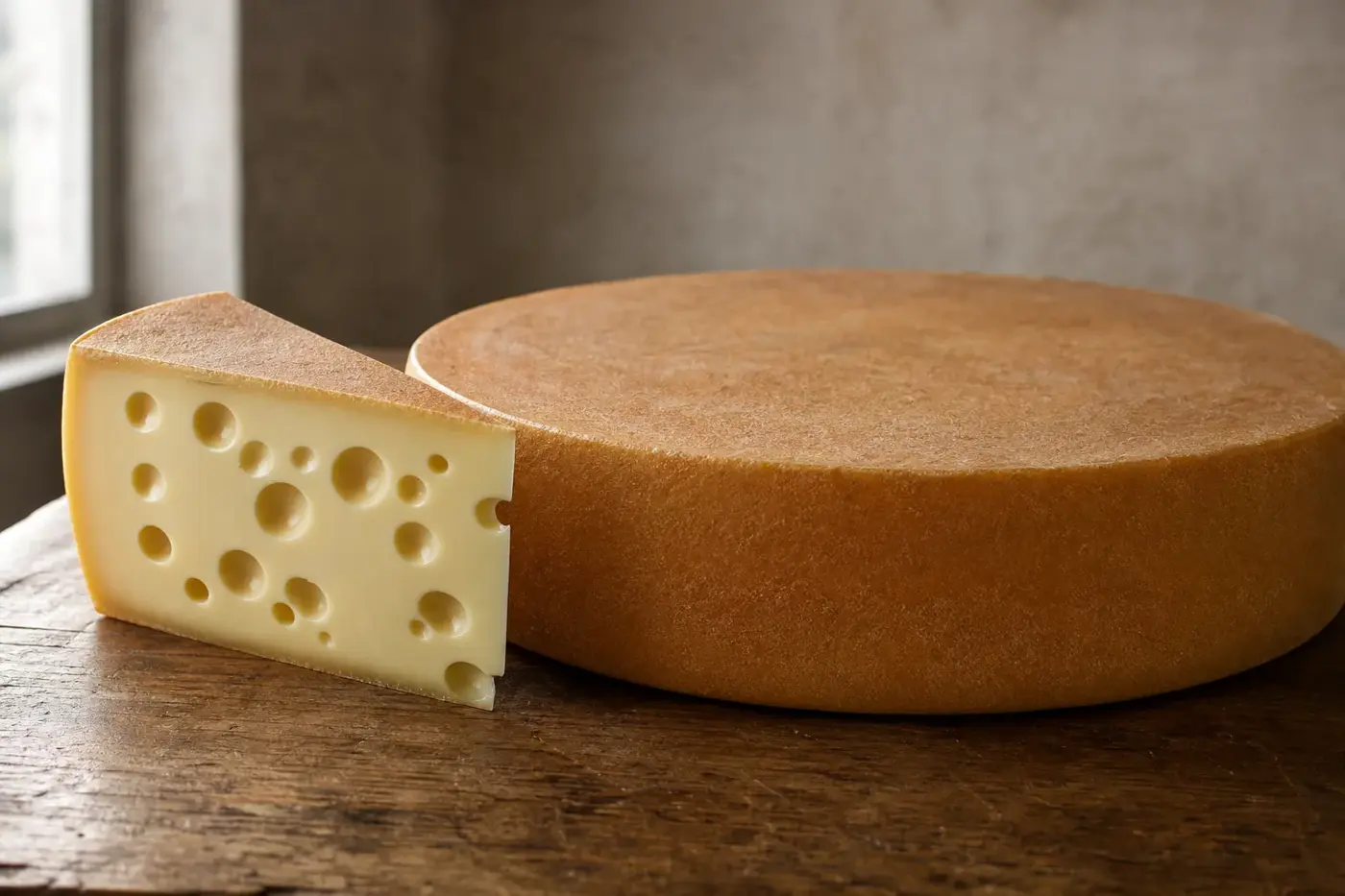
Emmentaler
Picture a whole Emmentaler on your counter: up to 120 kg of cheese, its round eyes mostly 2 to 4 cm across.