Emmentaler
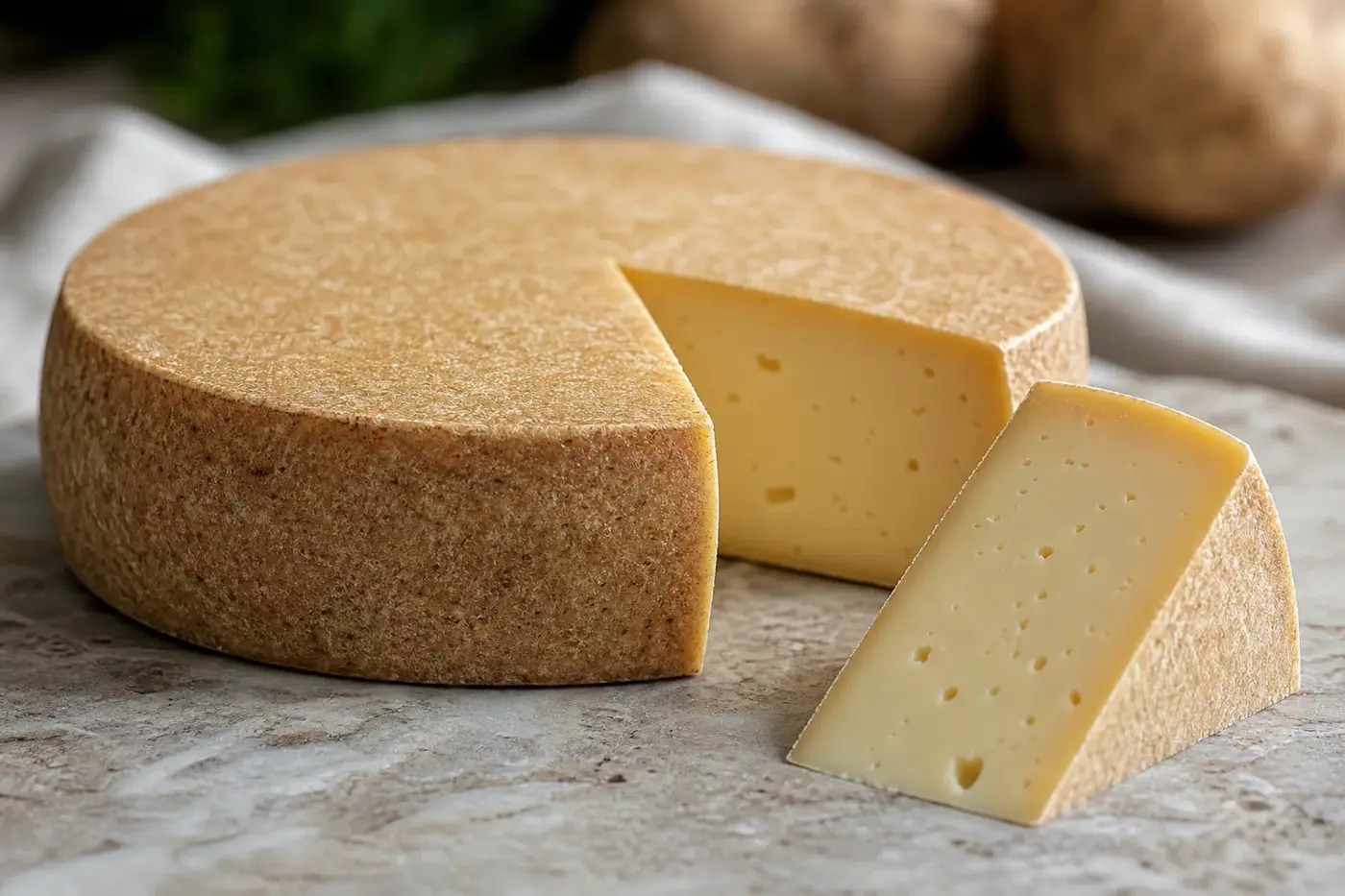
Picture a whole Emmentaler on your counter: up to 120 kg of cheese, its round eyes mostly 2 to 4 cm across.
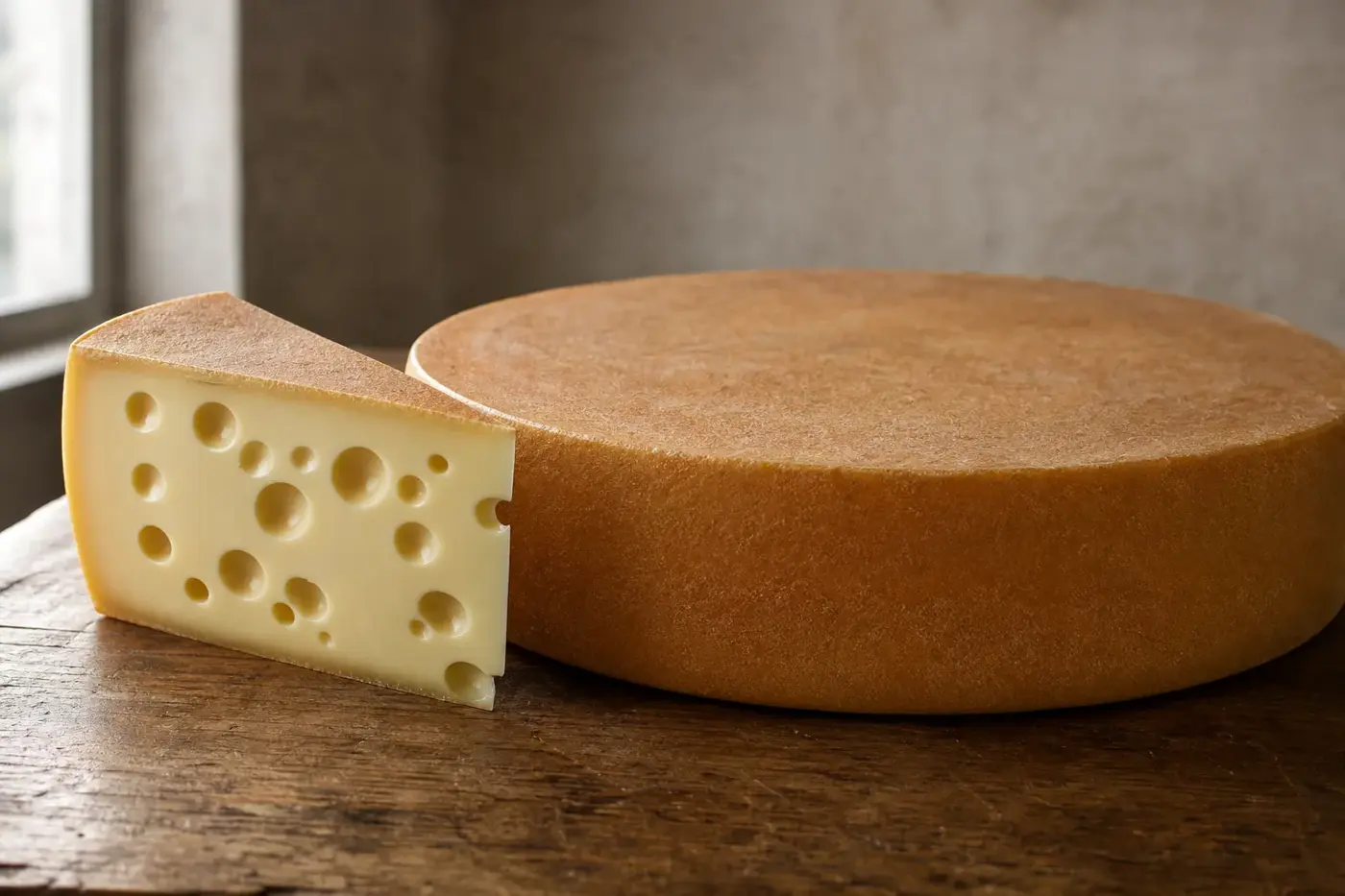
Picture a whole Emmentaler on your counter: up to 120 kg of cheese, its round eyes mostly 2 to 4 cm across. Beneath the firm rind lies an ivory to pale yellow interior. You may need to move the fruit bowl. [1, 7]
The name takes you to Switzerland’s Emmental valley. Its Swiss protected designation, Emmentaler AOP, ties this raw cow’s milk cheese to its milk, propionic fermentation and months of maturation. Those famous holes are your invitation to look a little closer. [1, 4, 7]
Get acquainted with the wheel
| What you want to know | The detail |
|---|---|
| Familiar name | Emmentaler |
| Exact registered name | Emmentaler. [1] |
| Swiss protection | Registered AOP, administered by the Federal Office for Agriculture; November 2026 information. [2] |
| EU protection | No detail available here |
| Great Britain protection | No detail available here |
| Northern Ireland protection | No detail available here |
| US protection or other rights | No detail available here |
| Register identifier | No detail available here |
| Production area | Eight Swiss cantons and two districts of Fribourg, described below. [1] |
| Milk | Raw cow’s milk. [1, 4] |
| Coagulant permitted by the specification | No detail available here |
| Reported dairy practice | Animal and microbial rennet, according to the consortium. [7] |
| Principal cultures | Lactic acid bacteria and propionic acid bacteria. [1] |
| Minimum maturation | Four months. [1, 4] |
| Longer maturation | The consortium’s range includes eight-month Réserve and twelve-month cave-aged cheese. [8] |
| Wheel | Diameter 80 to 100 cm; height 16 to 27 cm; weight 75 to 120 kg. [7] |
| Rind and interior | Firm natural rind; ivory to pale yellow interior with round eyes. [1, 9] |
Follow the cheese beyond its valley
Around 1815, valley dairies changed Emmentaler’s course. Production spread beyond Bern and became a year-round activity, rather than seasonal mountain production. Agroscope, Switzerland’s agricultural research organisation, calls this a turning point in the expansion of a cheese whose origins it traces to the thirteenth century. [4]
The name comes from the Emmental, the valley of the Emme in the canton of Bern. Yet its Swiss cheesemaking story stretches beyond a birthplace and those recognisable holes. Emmentaler belongs to a tradition of large, firm cheeses that demand considerable control during making and maturation. [4]
Agroscope singles out those imposing dimensions and the flavour that grows more pronounced with age. The size catches your eye first. Give it time, and the flavour has just as much to say. [4]
Keep the valley in mind when you read the name on your wedge, but leave room for a wider map. The Emmental remains the historical reference point. Today’s protected cheese comes from a larger, precisely defined Swiss production area.
What the AOP name means for your wedge
AOP stands for Appellation d’Origine Protégée, meaning protected designation of origin. Switzerland’s registered name is Emmentaler. Its specification governs origin, manufacture, maturation and characteristics; the official register records the current designation and amendments separately from the registration history. [1, 2]
The authorised area covers Aargau, Bern excluding the former district of Moutier, Lucerne, Solothurn, St Gallen, Thurgau, Zug and Zurich. It also includes the See and Sense districts of Fribourg. Milk production, cheesemaking and maturation must all happen within that area. [1]
You may encounter two registration dates, each marking a different stage. The initial decision was dated 26 July 2002. After opposition proceedings, publication of the registration followed on 6 October 2006. That distinction explains why accounts may give different dates. [3]
Outside Switzerland, read the name in its own context. The United States has a separate standard titled “Swiss and emmentaler cheese” in 21 CFR 133.195, distinct from the Swiss AOP specification. If you want Swiss AOP cheese, look for the designation and declared origin. Holes and the word “Swiss” cannot establish that alone. [12]
For the bigger picture, explore protected cheese names. It helps you distinguish a protected origin from a cheese style.
Look past those magnificent eyes
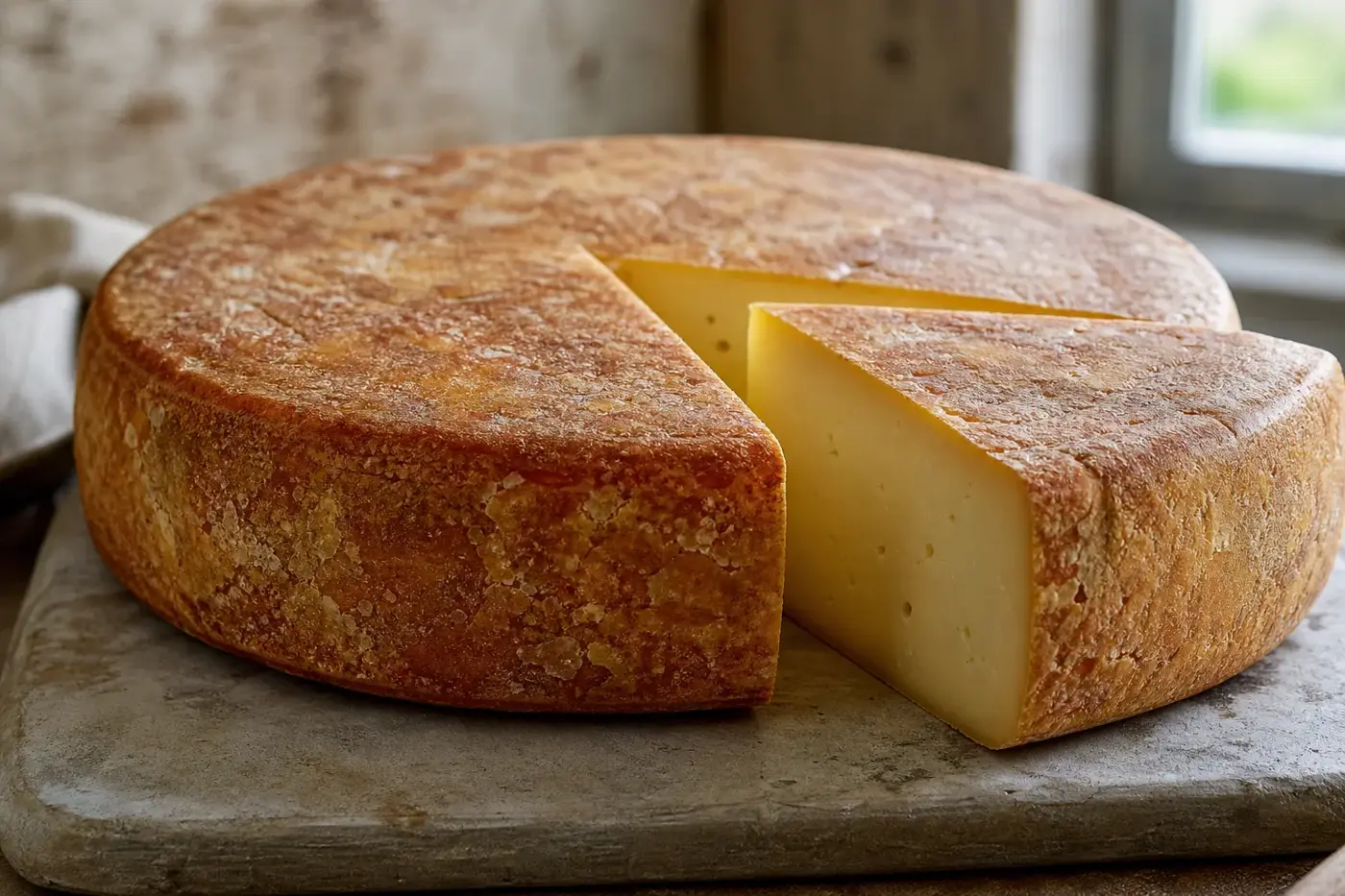
You probably meet Emmentaler as a segment. The whole wheel is another proposition: the consortium gives a permitted weight of 75 to 120 kg, with a diameter approaching a metre at the upper end. That sheer scale belongs to its character as surely as the holes do. [7]
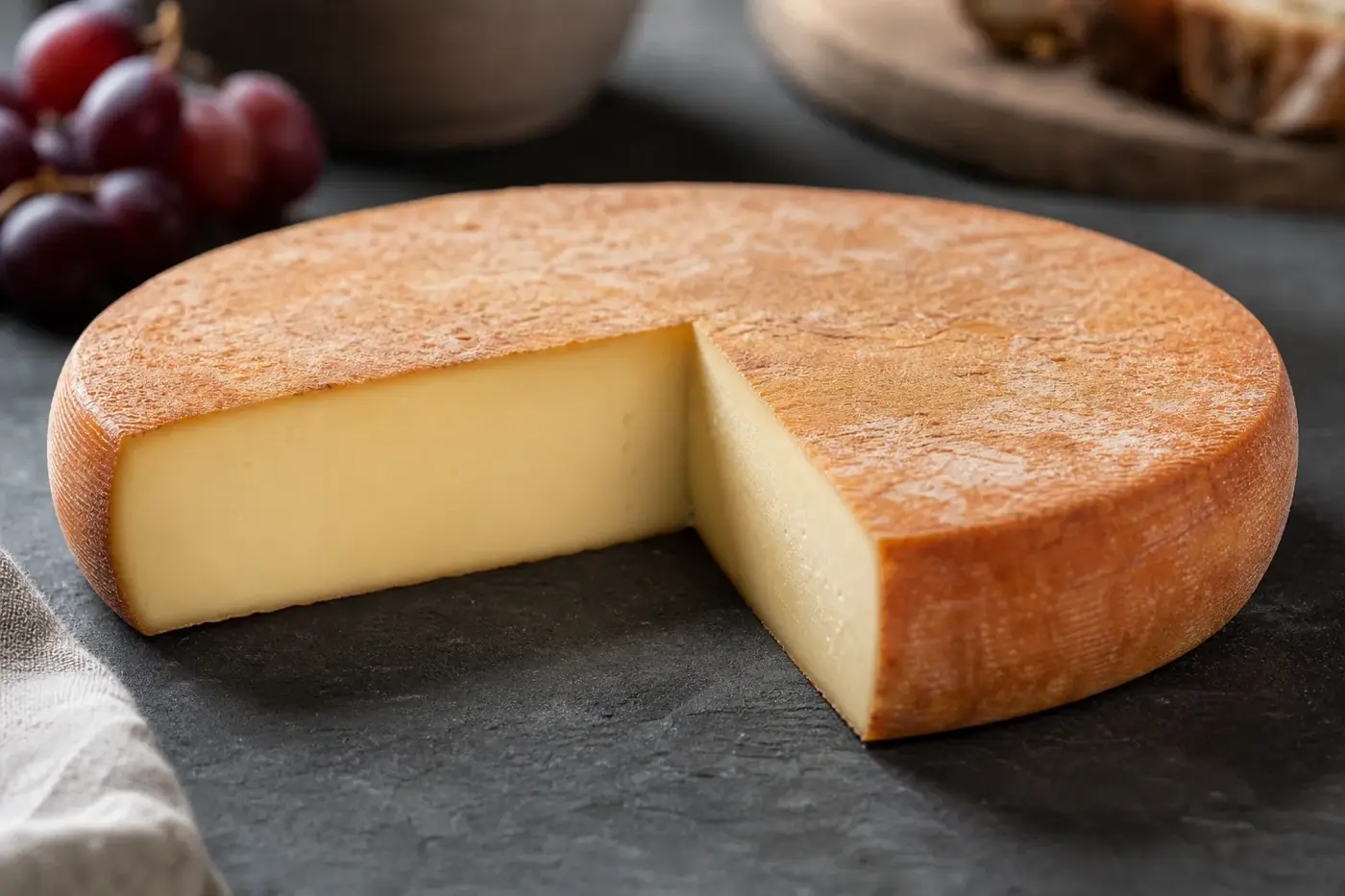
The firm rind is normally yellow-brown. Humid maturation can darken it to a brown to black patina, so a dark exterior can reflect an established maturation method. Inside, the specification describes an elastic, non-sticky paste, ivory in winter and pale yellow in summer. [1]
Then you reach the eyes: clean, round to slightly oval, mostly 2 to 4 cm across. Switzerland Cheese Marketing, an industry organisation, offers three inviting pointers for Classic Emmentaler AOP. Look for an ivory interior, cherry-sized holes and a mild, nutty aroma. [1, 9]
Step from the copper vat to the press
Emmentaler begins with raw cow’s milk in a copper vat or copper cheesemaking vessel. The specification regulates feeding too, including a prohibition on feeding silage in the milk-production building. Defined lactic and propionic bacterial cultures are permitted, alongside rennet, salt, water and an eye-forming preparation. [1]
Rennet is the milk-coagulating enzyme preparation that turns liquid milk into curd, the gel that becomes cheese. Whey is the liquid separated from it. From there, you follow a sequence of cutting, heating and stirring the curd, then moulding, pressing and brining. [10]
Heating and working help expel whey. Pressing brings the curd together into that great wheel, establishing the body in which the eyes will later develop. The cheesemaker is not simply leaving gaps between loosely packed curds. [5, 10]
Those openings form during maturation, when propionic bacteria become especially important. And “raw milk” describes the milk treatment before cheesemaking, not an absence of heat throughout production. Heating curd and pasteurising incoming milk are different stages; Milk treatments in cheesemaking explains the distinction.
Discover where every eye begins
Bacteria supply the gas that enlarges Emmentaler’s eyes. First, lactic acid bacteria ferment milk sugar, or lactose, into lactic acid. Propionic acid bacteria then use lactate, producing propionic acid, acetic acid and carbon dioxide. The carbon dioxide provides the gas. [5, 10]
But that gas needs somewhere to gather. Agroscope identified microscopic plant particles as effective starting points: tiny cavities in those particles can hold air. Carbon dioxide diffuses into that space, and an opening grows within the surrounding cheese. [6]
A later Agroscope experiment explored the mechanism with sixteen model Emmentaler cheeses and materials with controlled capillary structures. Researchers used imaging and microscopy to assess eye formation. Materials able to retain microscopic air pockets proved effective eye nuclei, supporting trapped air as the starting point. [5]
Think of it as two jobs: making gas and giving it somewhere to collect. Bacteria handle the carbon dioxide. The starting sites and the cheese’s physical structure influence the openings you eventually see.
So “bacteria make the holes” gives you a useful short answer, but leaves out some of the story. Fermentation, gas movement and cheese structure all play their part. That familiar pattern is a controlled part of maturation, not merely decoration. [5, 6]
Taste what a few more months bring
Take “mild” as your introduction, not the complete description. The specification gives Emmentaler slight acidity, sweetness, light saltiness and mild spice. Agroscope adds nuttiness, with flavour becoming more pronounced and savoury as the cheese ages. [1, 4]
The consortium describes four-month Mild/Classic as slightly sweet. At eight months, Réserve/Surchoix is finer and more tart. Its twelve-month cave-aged category brings a more intense character, giving you distinct choices within the published range. [8]
Age can leave visible traces inside the eyes too. The specification permits slight collapse and mineral deposits in fully mature cheese. These details belong to the picture of maturity, alongside the changing flavour. [1]
| Your texture question | The detail available |
|---|---|
| Comparison of texture across different ages | No detail available here |
Let your plans guide your choice. Start with a younger example for a restrained sandwich filling, or choose an older one when you want the cheese to lead the plate. You are matching character to occasion, not awarding a lifetime achievement prize.
Give those months their due
Four months is the legal minimum maturation for Emmentaler AOP. It is not the age at which every wheel goes on sale. Give the age on the label a little attention: it tells you something useful about the wedge you are buying. [1]
Certain descriptions of longer maturation come with specific requirements. Cheese carrying an additional designation for extended maturation must be at least eight months old. The designation höhlengereift, meaning cave-aged, requires at least twelve months in total, including at least six months of humid storage in a rock cellar. [1]
The consortium’s published range also includes examples matured for twelve to thirty-six months. Read the stated age alongside the dairy or affineur’s description. A dark rind can tell you something about maturation conditions, but it does not make every dark-rinded wedge the same product. [8]
Take three questions to the cheese counter
Start here: is it Swiss Emmentaler AOP, how long has it matured, and which dairy made it? The consortium explains that the dairy number on the rind identifies the responsible cheesemaker. That gives you someone specific to ask, especially when you need to know which rennet was used. [7]
Look for the specification’s familiar features: an ivory to pale yellow interior, an elastic body, and predominantly round or slightly oval eyes. Younger and fully mature cheeses can differ. Ask your cheesemonger about the particular wheel rather than expecting every wedge to look alike. [1]
For aroma, your reference points run from mild and nutty in Classic to a more pronounced character with age. If a tasting is offered, compare two ages. You will learn more about your own tastes than you would by choosing the wedge with the largest holes. [4, 9]
Buying packaged cheese? Check its declared origin, maturation information and storage instructions. Reading a cheese label helps you separate the food’s name from the other wording on the pack.
Make room for it at your table
Classic Emmentaler AOP has a place on cheese plates, at breakfast and in warm dishes, according to Switzerland Cheese Marketing. That mild, nutty character gives you a useful starting point. A few thoughtful accompaniments can be quite enough. [9]
Try bread with apple or pear, slicing the cheese thinly enough to taste sweetness and acidity together. With an older wedge, begin with a plainer accompaniment, then add fruit or nuts if you fancy them. These pairing suggestions take their cue from the published flavour descriptions.
For a drink, consider an apple drink without alcohol, sparkling water or a light tea. Give the cheese room to keep its voice. You are looking for company for its flavour, rather than something that overwhelms it.
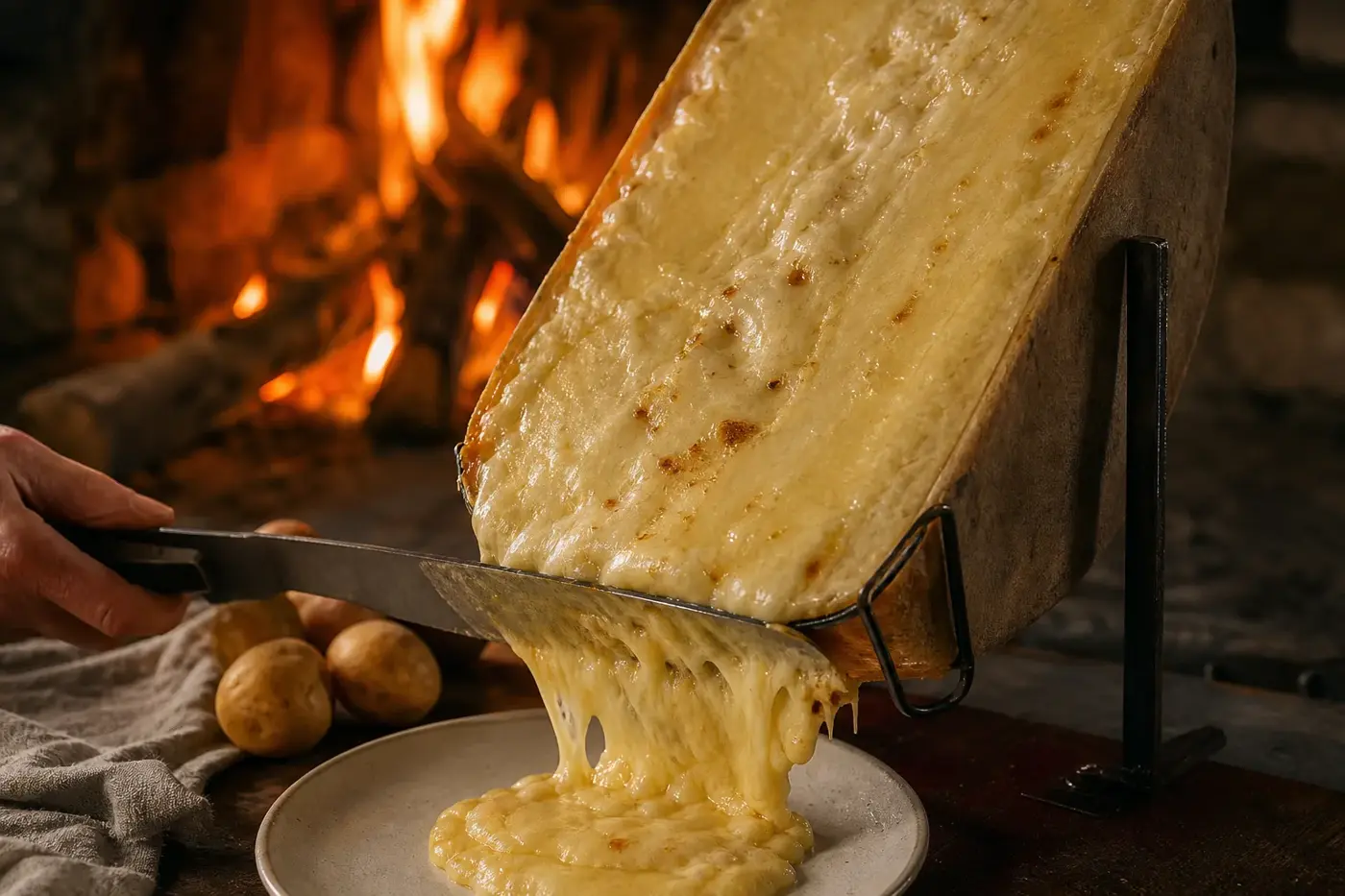
In the kitchen, consider grated Emmentaler for a toastie, potato bake or cheese sauce. Begin with a recipe specifying an Emmental-style cheese, then choose the age according to how prominent you want its flavour to be. Use these as ideas for your recipe search; the industry’s published description supports using the cheese in warm dishes. [9]
Look after the wedge you bring home
Keep your fridge at 5 °C or below, following UK Food Standards Agency advice, and follow the cheese’s own storage and opening instructions. The UK guidance referenced here is from November 2026. Your particular pack’s instructions matter too. [13]
Switzerland Cheese Marketing recommends keeping the cheese paper from counter-bought cheese and rewrapping vacuum-packed cheese once opened. Between uses, protect the cut face. Do not leave your wedge uncovered in the fridge. [11]
When serving, cut a small portion from chilled storage and leave the rest refrigerated. Thin slices are practical if you are serving it cool. For the remaining serving questions, keep these limits in mind:
| Your serving question | The detail available |
|---|---|
| Serving temperature | No detail available here |
| Applicable time limit outside refrigeration | No detail available here |
| Natural rind’s edibility | Ask the producer or cheesemonger about your particular cheese. [1] |
The natural rind helps form the wheel during maturation. Its colour can reflect the storage conditions described above. For advice about eating it, make your question specific to the cheese you have. [1]
Know what to ask about rennet and milk
Emmentaler AOP does not always use animal rennet. The consortium reports both calf rennet and microbial rennet, depending on the dairy. If that distinction matters to you, its advice is to ask the identified cheesemaker: AOP status alone does not establish vegetarian suitability. [7]
Lactose intolerance and milk allergy are different. For a specific dietary requirement, check the product declaration and consult a qualified health professional. You can also read lactose in cheese.
If you are pregnant, consult the NHS guidance on cheese, milk and other dairy for the UK, referenced here as of November 2026. If you live elsewhere, turn to your own national authority. [14]
General information only, not medical advice: follow the official guidance where you live.
Questions people ask
Where is Emmentaler AOP made?
Its name comes from the Emmental valley in the Swiss canton of Bern, but its authorised production area extends further. Milk production, cheesemaking and maturation must all take place within the defined area of eight cantons and two districts of Fribourg.
What causes the holes in Emmentaler?
Propionic acid bacteria produce carbon dioxide during maturation. The gas collects at starting sites, including tiny air pockets held in microscopic plant particles, and the openings grow within the cheese.
How long is Emmentaler matured?
Emmentaler AOP must mature for at least four months. The cave aged designation requires at least twelve months in total, including at least six months of humid storage in a rock cellar.
Is Emmentaler vegetarian?
The consortium reports that dairies use either calf rennet or microbial rennet. AOP status alone does not establish vegetarian suitability, so the consortium advises asking the identified cheesemaker.
Can I eat Emmentaler during pregnancy?
The page directs readers in the UK to NHS guidance on cheese, milk and other dairy during pregnancy. Guidance differs between countries, so readers elsewhere should consult their own national authority.
Sources
- Swiss Federal Office for Agriculture, Pflichtenheft: Emmentaler, incorporating the decision of 4 November 2025. Articles 1 to 8 establish the name, area, characteristics, manufacture and maturation requirements. Official specification.
- Swiss Federal Office for Agriculture, AOP / IGP Ursprungsbezeichnungen und geografische Angaben, current register page, Emmentaler entry, accessed November 2026. Official register.
- Swiss Federal Office for Agriculture, Emmentaler GUB/AOP/DOP: Geschichtlicher Überblick / Historique / Cronologia, registration dossier chronology, version retrieved November 2026. Official chronology.
- Agroscope, Emmentaler AOP, 23 January 2026. Agricultural reference account.
- Agroscope researchers, Nuclei carrying entrapped air are the most likely starting points for eye formation, International Dairy Journal, volume 176, article 106573, 2026. Experimental study of model Emmentaler cheeses.
- Agroscope and Empa, explanatory statement on microscopic hay particles and cheese eye formation, 2015. Official research explanation.
- Emmentaler Switzerland, Questions & answers of Emmentaler AOP, undated, accessed November 2026. Consortium statements on rennet, lactose, dimensions and dairy identification. Consortium FAQ.
- Emmentaler Switzerland, Product range, undated, accessed November 2026. Consortium maturation categories and attributed flavour descriptions. Published range.
- Switzerland Cheese Marketing, Emmentaler AOP Classic, undated, accessed November 2026. Industry description of appearance, flavour and uses. Product reference.
- Switzerland Cheese Marketing, FAQs, undated, accessed November 2026. Explanations of cultures, fermentation and rennet. Production FAQ.
- Switzerland Cheese Marketing, How to store cheese correctly, undated, accessed November 2026. Used for wrapping advice only. Storage reference.
- US Food and Drug Administration, 21 CFR 133.195: Swiss and emmentaler cheese, electronic Code of Federal Regulations, accessed November 2026. US standard.
- UK Food Standards Agency, How to chill, freeze and defrost food safely, published 18 December 2017, current page retrieved November 2026. Official guidance.
- NHS, Foods to avoid in pregnancy, current guidance retrieved November 2026. Official pregnancy guidance.
This article was researched from the Swiss register and specification, agricultural research, official UK guidance and clearly attributed cheese-industry publications; serving and pairing suggestions are editorial synthesis.
Last checked: November 2026
Last checked November 2026.
The editors suggest you read next