Swiss Cheese: The Complete Guide
A band of spruce bark cups Switzerland’s Vacherin Mont-d’Or.
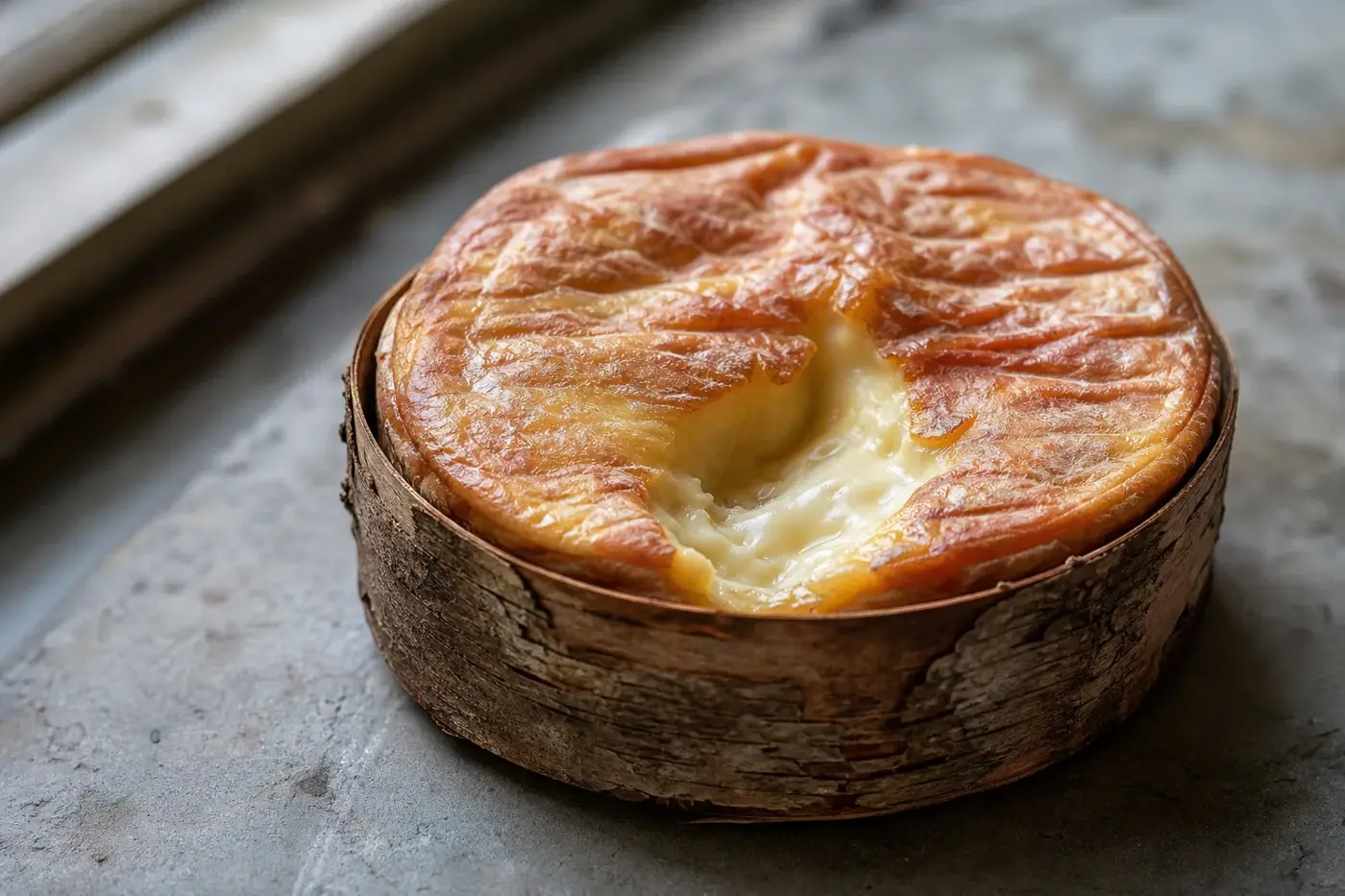
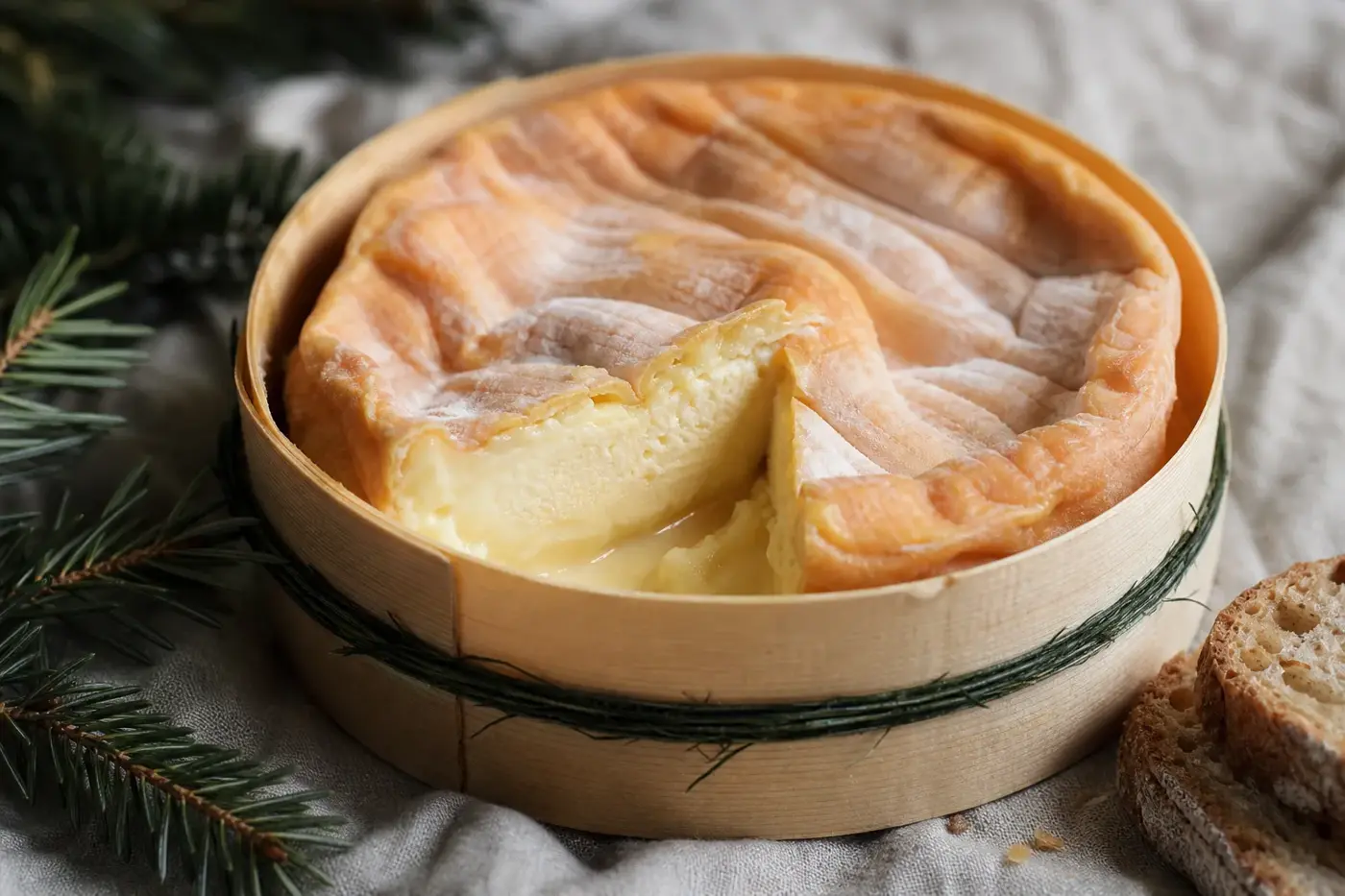
A band of spruce bark cups Switzerland’s Vacherin Mont-d’Or. Its softly undulating rind glows amber to reddish-brown, a quiet invitation to forget the holes for a moment. Swiss cheese has rather more to show you. [6]
Follow that invitation to village dairies in the western cantons, the broad Emmentaler production area, small washed-rind cheeses in the Jura and seasonal Alpine dairies in Ticino. You can travel from elastic, open-textured cheese to compact wheels built for long ageing, then to soft cheese enclosed in spruce. The pleasure is in the range. [1, 2, 3, 5, 6, 8]
| Switzerland at a glance | What you’ll find |
|---|---|
| Styles to explore | Hard, extra-hard, semi-hard and soft washed-rind cheeses. [2, 3, 4, 5, 6] |
| The milk in the wheel | Predominantly cows’ milk in these examples; Formaggio d’alpe ticinese permits up to 30% goats’ milk. [8, 10] |
| Swiss origin schemes | AOP: protected designation of origin. IGP: protected geographical indication. [1] |
| Who keeps the official register? | Federal Office for Agriculture, abbreviated BLW in German and FOAG in English. [1] |
| The industry voice | Switzerland Cheese Marketing publishes the Cheeses from Switzerland website. It is an industry organisation, not the registration authority. [10, 11] |
| Registration snapshot | November 2026. Registration statements below concern Switzerland. [1] |
Look beyond the holes on your Swiss cheese
Pick up something labelled “Swiss cheese” and you have a question to ask. Does it mean cheese made in Switzerland, or an Emmental-like style made elsewhere? Keep three things separate: where it was made, its full name and the production rules attached to that name.
Emmentaler AOP supplies the familiar picture: a large wheel with rounded eyes, the cheesemaking term for its holes. Its Swiss specification describes a raw-milk hard cheese that undergoes propionic fermentation. Gruyère and Sbrinz have quite different structures, as their specifications make clear. [2, 3, 4]
The holes have enjoyed excellent publicity, but they cannot tell you everything. Start with the country of manufacture and full product name on the label, then look for the dairy, maturity and milk treatment. The guide to reading a cheese label helps you untangle those details.
Take the scenic route through Switzerland
Start in western Switzerland, central to Gruyère. Its territory is more intricate than a town name or broad language boundary might suggest. The defined area includes Fribourg, Vaud, Neuchâtel and Jura, specified parts of Bern and additional named dairy catchments. [2]
Emmentaler takes you well beyond the Emmental valley. Its current specification includes Aargau, much of Bern, Lucerne, Solothurn, St Gallen, Thurgau, Zug and Zurich, plus the See and Sense districts of Fribourg. Sbrinz belongs principally to central Switzerland: Lucerne, Schwyz, Obwalden, Nidwalden and Zug, with specified additional milk catchments. [3, 4]
In the Jura, the scale and character change. Tête de Moine comes from a defined mountain and summer-pasture area, while Vacherin Mont-d’Or belongs to a specified area centred on the Vaud Jura and neighbouring districts. South of the Alpine watershed, Formaggio d’alpe ticinese ties cheesemaking directly to Ticino’s summering holdings. [5, 6, 8]
Altitude matters through farming and production, not as a score for flavour. Ticino’s specification requires fresh forage from the Alpine holding’s natural pastures, and permits cows’ milk alone or a proportion of goats’ milk. A mountain illustration cannot tell you either detail; the designation and label can. [8]
Follow Sbrinz over the mountain passes
Picture Sbrinz wheels travelling towards Italy over mountain passes. In 1530, merchants carried them along that route, according to Switzerland Cheese Marketing’s historical account. A firm cheese capable of travelling had a practical appeal you can readily appreciate. [11]
Follow milk from grazing animals to cheese that can be matured, moved and shared, and the roots of Swiss cheesemaking come into focus. Village dairies and seasonal pasture production answer different needs. You can still see that distinction in the separate provisions for Gruyère d’Alpage and Ticino’s defined Alpine production. [2, 8]
You can taste those differences, too. Put a long-aged, extra-hard Sbrinz beside a small, soft Vacherin and you have much more than “stronger” versus “milder”. Their moisture, structure, maturation and ways of serving belong to quite different approaches to cheesemaking. [4, 6]
Build your board around four Swiss cheeses
Choose contrasts, not just familiar names. These descriptions draw on the specifications and the named organisations’ published accounts, giving you a starting point for exploring.
| Cheese | Where it comes from | Texture and character to explore | How to enjoy it |
|---|---|---|---|
| Gruyère AOP | Western Switzerland and specified additional dairy catchments. [2] | Hard cheese with a brown rind. Turn to its specification for flavour and precise minimum age conditions. [2] | Enjoy as table cheese, then explore fondue. |
| Emmentaler AOP | Defined area across several Swiss cantons. [3] | Elastic paste and rounded eyes; the specification describes sweet, slightly acidic, lightly spicy flavour with little saltiness. [3] | Taste alone, then try in sandwiches or a melting mixture. |
| Appenzeller | Its organisation gives details of the production area. | Its organisation gives texture details and presents selections from mild to aromatic. [12] | Choose an identified selection for contrast. |
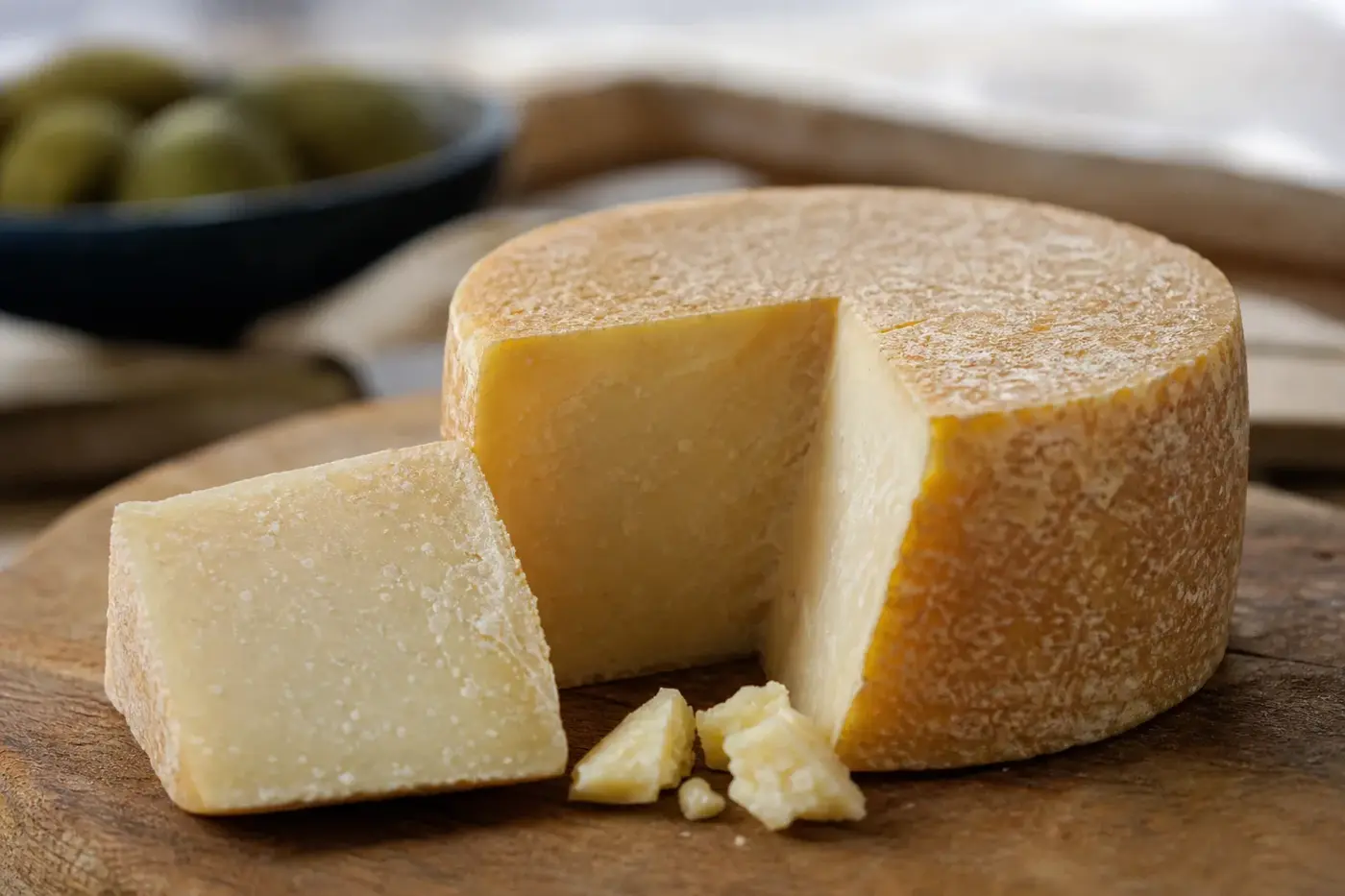
| Sbrinz AOP | Central Switzerland and specified additional catchments. [4] | Extra-hard, comparatively dry and brittle, with perceptible granular crystals; minimum maturation is 18 months. [4] | Break into pieces, shave into curls or grate. [11] |
For your first selection, ask the cheesemonger for contrasting textures rather than four similarly mature wedges. Put elastic Emmentaler beside brittle Sbrinz and the differences become immediately easier to explore.
Want to linger over western Switzerland’s best-known hard cheese? Continue with Le Gruyère.
Leave a little room for regional specialities
Tête de Moine: taste the rosette and the wedge
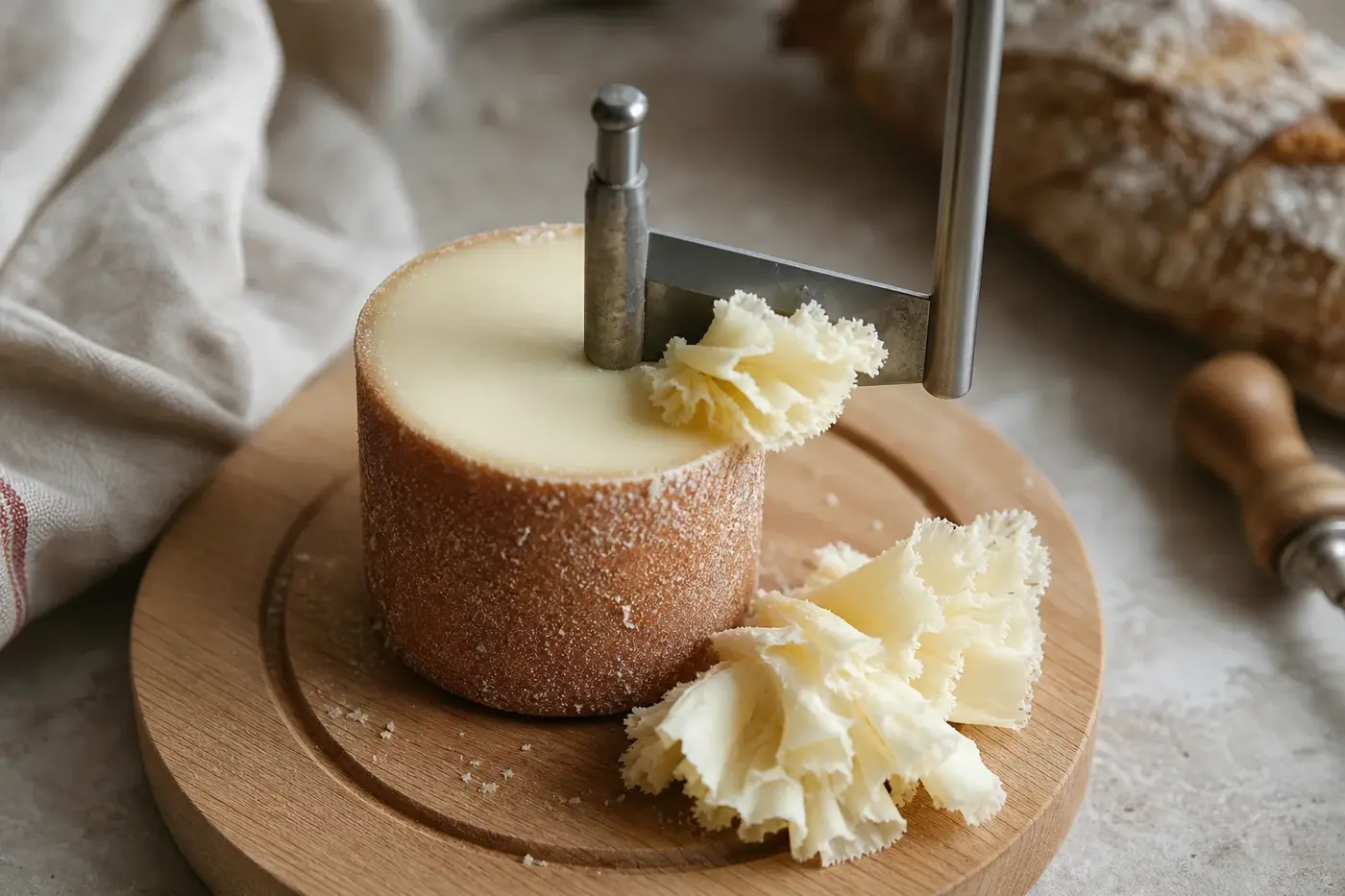
Delicate rosettes need a paste supple enough to hold together. That quality is central to Tête de Moine, whose registered names include Tête de Moine and Tête de Moine, Fromage de Bellelay. Its Swiss specification describes a raw-milk semi-hard cheese with a reddish-brown, smear-ripened rind. [5]
Rosettes made with a Girolle or similar device must hold together. Ask for some alongside a cut piece and let presentation become part of your tasting. The same cheese behaves differently scraped thinly rather than served as a wedge. [5]
Raclette du Valais: get to know the full name
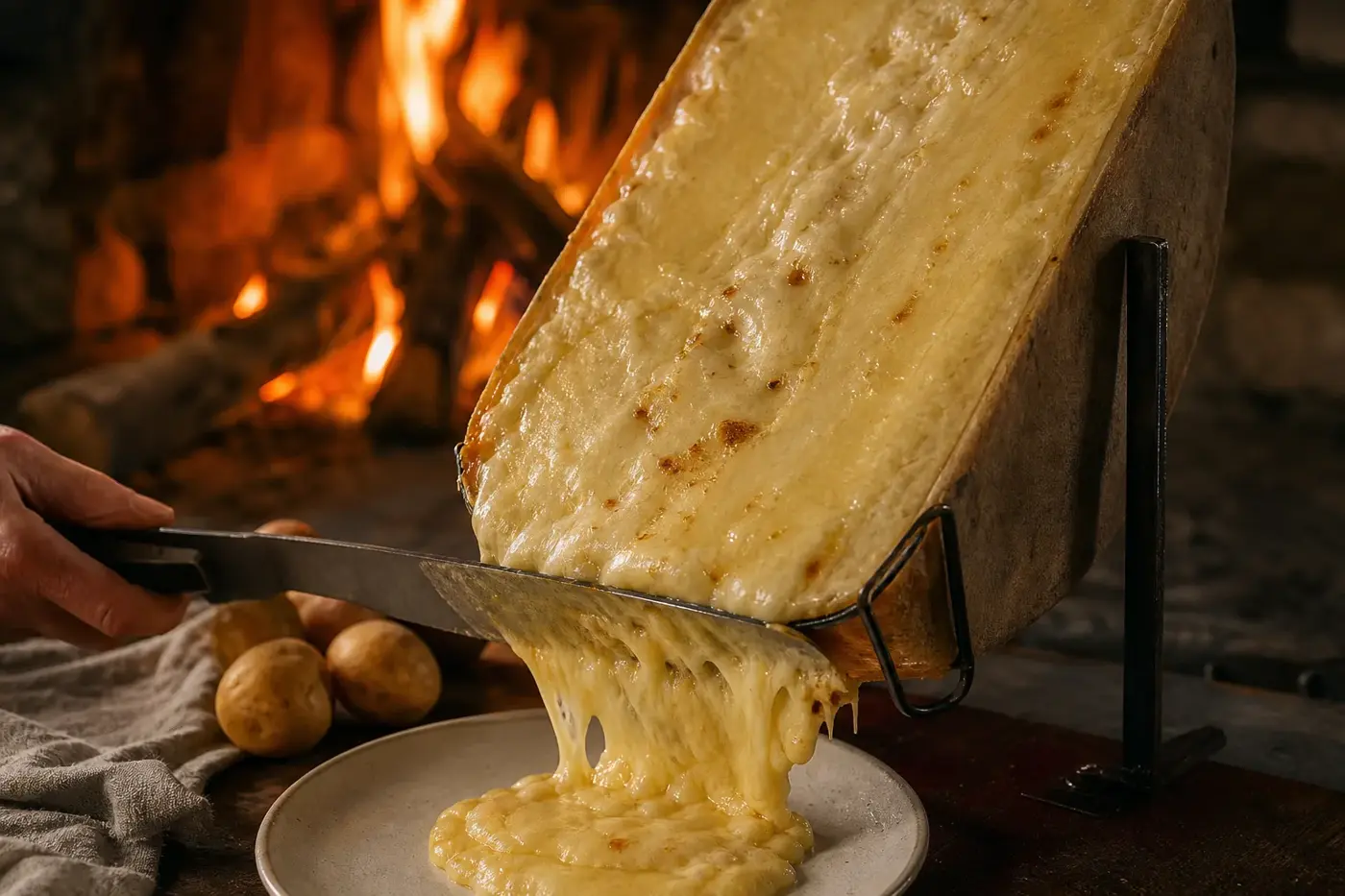
Look for Walliser Raclette or Raclette du Valais: these are protected names in Switzerland. The Swiss specification also identifies dairy and Alpine names used on the wheel’s side. Turn to it for the designated area, milk and key production requirements. [7]
When you plan your meal, distinguish that protected regional name from a general description of cheese intended for raclette. Tell the seller which equipment you will use. Then ask which cheese they recommend for it.
Ticino: follow the name back to the pasture
Formaggio d’alpe ticinese offers you a revealing introduction to southern Switzerland. It is made on Ticino summering holdings and matured within the canton. Alongside its designation, the registered cheese carries the Alpine holding’s name. [8]
The specification permits cows’ milk alone or up to 30% goats’ milk. It describes a fine, firm, compact paste, with a more pronounced, spicy character as the cheese matures. Choose by named pasture, milk composition and age: “Ticino cheese” alone cannot tell you all that. [8]
Make time for both Mont d’Or traditions
Return to that softly undulating rind and its band of spruce bark. For the Swiss cheese, the registered spelling is Vacherin Mont-d’Or. Its specification defines the washed rind, amber to reddish-brown colour and surrounding spruce bark from the geographical area. [6]
Swiss Vacherin Mont d’Or and French Mont d’Or have separate specifications. For a full comparison, turn to each specification for milk treatment and permitted production and sales seasons. Give those details your attention alongside the name.
| What to look for | Swiss Vacherin Mont-d’Or | French Mont d’Or |
|---|---|---|
| Origin | Defined Swiss area, principally in and around the Vaud Jura. [6] | See the French specification |
| Rind and band | Washed rind; specified spruce-bark band. [6] | See the French specification |
| Permitted milk treatment | See the Swiss specification | See the French specification |
| Permitted production season | See the Swiss specification | See the French specification |
| Permitted sales season | See the Swiss specification | See the French specification |
When choosing this seasonal cheese, ask for the full name, maker, manufacture date and storage instructions. At serving time, keep the wooden band separate from the edible cheese.
Follow the milk all the way into the wheel
Milk preparation, coagulation, cutting, draining, shaping, salting and maturation form the broad cheesemaking sequence. Rennet is the enzyme preparation that coagulates milk. The solid material is curd; the liquid separated from it is whey.
You can follow those stages in the milk to cheese guide. For differences in collection, pressing and maturation, turn to the sources for the particular cheese.
Within that sequence, each cheese takes its own course. Emmentaler’s specification requires propionic fermentation, while Sbrinz is defined by its extra-hard structure and long maturation. Tête de Moine’s supple, scrapeable paste is a deliberate result, not a younger version of either cheese. [3, 4, 5]
Even rind care takes different paths. Switzerland Cheese Marketing describes brine rubbing as part of developing the surface flora of cheeses including Gruyère and Appenzeller. Its Sbrinz account describes regular dry rubbing during maturation instead: Swiss wheels do not all receive the same care. [10, 11]
Discover the tiny beginnings of Emmentaler’s eyes
Those rounded eyes begin with gas. Propionic acid bacteria convert lactic acid into compounds including carbon dioxide, which contributes to the openings inside Emmentaler. But gas needs somewhere for bubbles to begin. [10]
In a 2015 experiment, researchers made eight experimental Emmental cheeses, with a replicate, using microfiltered milk and different additions of powdered hay. X-ray computed tomography showed that plant microparticles influenced the number and size of the eyes. Tiny particles made a difference you could see. [13]
Agroscope’s 2026 research account explains the importance of tiny air-bearing capillary structures as starting points. There is more to eye formation, then, than bacterial activity alone. [14]
Do not judge every Swiss cheese by Emmentaler’s openings. Sbrinz’s specification allows no eyes or small ones, and Tête de Moine has comparatively sparse small openings. Large holes belong to particular cheeses, not to a national measure of quality. [4, 5]
Find your bearings with AOP, IGP and Alpine names
On a Swiss label, AOP, Appellation d’Origine Protégée, identifies a protected designation of origin with all production stages linked to the defined area. IGP, Indication Géographique Protégée, requires at least one production stage in the area and a qualifying geographical connection. The Federal Office for Agriculture maintains the register. [1]
For Alpine cheese, look for a precise designation and a named holding. Formaggio d’alpe ticinese specifies summering holdings, pasture forage and the Alpine name on the cheese. For general Swiss mountain and Alpine claims, consult the applicable legal conditions. [8]
Keep maturity, milk treatment and origin separate as you read. A longer age tells you something different from an AOP designation. The guide to protected names explained helps you explore that distinction.
Taste slowly, then revisit your first piece
Begin with Emmentaler, move to Gruyère and a clearly identified Appenzeller selection, then finish with Sbrinz. This suggested order brings the structural differences into focus. Add Tête de Moine rosettes as a separate texture comparison.
- Taste each cheese alone first. Notice flexibility, fracture, moisture and how long the flavour stays.
- Add plain bread, then apple or pear. Keep accompaniments simple so you can compare.
- Try an unsweetened drink, such as water or tea, before sweeter accompaniments.
- Return to the first cheese after the last. Notice what seems different on your second pass.
Bring out only the portion you intend to taste. Food Standards Agency guidance for England, Northern Ireland and Wales says to keep chilled food out of the fridge for the shortest possible time during preparation, and for no more than four hours. [16]
Give your fondue and raclette a good beginning
For fondue, ask your cheesemonger for a recommended mixture containing Gruyère, with each cheese and its age identified. Choose advice that suits the recipe. Your leftover wedges may be a distinguished collection, but that does not automatically make them a fondue.
Grate or cut as directed, add the cheese gradually and control the heat. Follow a named recipe’s quantities, liquid and method. These pointers are a starting point, not a complete recipe.
For raclette, choose cheese sold for that use and portion it to fit your appliance. Melt small batches and serve promptly over potatoes, with bread and pickled vegetables alongside. Taste the cheese plain before adding the accompaniments.
Care for your cheese and choose for your needs
Follow the package’s storage instructions and use-by date. UK FSA consumer guidance recommends a fridge between 0 and 5 °C. The home storage guide covers wrapping and everyday handling. [16]
For pregnancy in the UK, the NHS lists hard cheeses, including Gruyère, among cheeses that can be eaten whether made with pasteurised or unpasteurised milk. Advice differs for some soft cheeses. Check the current NHS guidance for the particular product and its preparation. [15]
The NHS also identifies pregnancy, newborn babies and weakened immunity among circumstances associated with higher risk from listeriosis. Follow the guidance relevant to your circumstances and country. [17]
For vegetarian suitability, check the particular cheese’s coagulant: Switzerland Cheese Marketing identifies animal rennet for Sbrinz. For allergies or intolerance, read the full label and seek individual advice. These are separate questions from milk treatment or ageing. [11]
General information only, not medical advice: follow the official guidance where you live.
Questions people ask
Why does Emmentaler have holes?
Propionic acid bacteria convert lactic acid into compounds including carbon dioxide, which contributes to the openings. Tiny air-bearing capillary structures provide starting points for bubbles.
What do AOP and IGP mean on Swiss cheese?
AOP identifies a protected designation of origin with all production stages linked to the defined area. IGP requires at least one production stage in the area and a qualifying geographical connection.
Is all Swiss cheese made in Switzerland?
Swiss cheese can mean cheese made in Switzerland or an Emmental-like style made elsewhere. Check the country of manufacture and the full product name on the label.
What makes Formaggio d’alpe ticinese distinctive?
It is made on Ticino summering holdings and matured within the canton. It may contain cows’ milk alone or up to 30% goats’ milk, and carries the Alpine holding’s name alongside its designation.
How long is Sbrinz matured, and how is it served?
Sbrinz AOP is matured for at least 18 months. It can be broken into pieces, shaved into curls or grated.
Sources
[1] Federal Office for Agriculture. AOP / IGP Ursprungsbezeichnungen und geografische Angaben. Official register and explanatory guidance, live version retrieved November 2026.
[2] Federal Office for Agriculture. Pflichtenheft Gruyère. Specification incorporating amendments through 14 December 2015, retrieved from the official register. (blw.admin.ch)
[3] Federal Office for Agriculture. Pflichtenheft Emmentaler. Specification incorporating the 2025 judgment and amendment of 4 November 2025.
[4] Federal Office for Agriculture. Pflichtenheft Sbrinz. Specification incorporating amendments through 13 May 2019. (blw.admin.ch)
[5] Federal Office for Agriculture. Pflichtenheft Tête de Moine, Fromage de Bellelay. Specification incorporating the amendment of 31 March 2026.
[6] Federal Office for Agriculture. Pflichtenheft Vacherin Mont-d’Or. Specification incorporating amendments through 13 October 2020.
[7] Federal Office for Agriculture. Pflichtenheft Walliser Raclette. Specification incorporating the amendment of 6 May 2026.
[8] Federal Office for Agriculture. Pflichtenheft Formaggio d’alpe ticinese (Tessiner Alpkäse). Specification incorporating the amendment of 23 September 2025.
[10] Switzerland Cheese Marketing. FAQs. Undated industry account of production, fermentation and rind care, retrieved November 2026.
[11] Switzerland Cheese Marketing. Sbrinz AOP. Undated product and historical account, retrieved November 2026.
[12] Appenzeller. Appenzeller Cheese. Organisation’s product-range page, undated, retrieved November 2026.
[13] Guggisberg and colleagues. Mechanism and control of the eye formation in cheese. International Dairy Journal, 2015. University of Basel repository record and abstract; DOI 10.1016/j.idairyj.2015.03.001.
[14] Agroscope researchers, Agrarforschung Schweiz. Capillary Effect Confirmed: Why Hay Particles Are Key for Eye Formation in Emmentaler Cheese. 23 March 2026, research account linking the original International Dairy Journal paper.
[15] NHS. Foods to avoid in pregnancy. Live guidance retrieved November 2026. Direct URL: Not verified.
[16] Food Standards Agency, published on GOV.UK. How to chill, freeze and defrost food safely. Published 18 December 2017, live guidance retrieved November 2026; stated territorial application is England, Northern Ireland and Wales.
[17] NHS. Listeriosis. Live guidance retrieved November 2026.
Research combined Swiss federal register material and specifications, attributed industry descriptions, primary research abstracts and official UK consumer guidance; tasting and buying suggestions are editorial recommendations, not first-hand tasting observations.
Last checked: November 2026
Last checked November 2026.
The cheeses of Switzerland
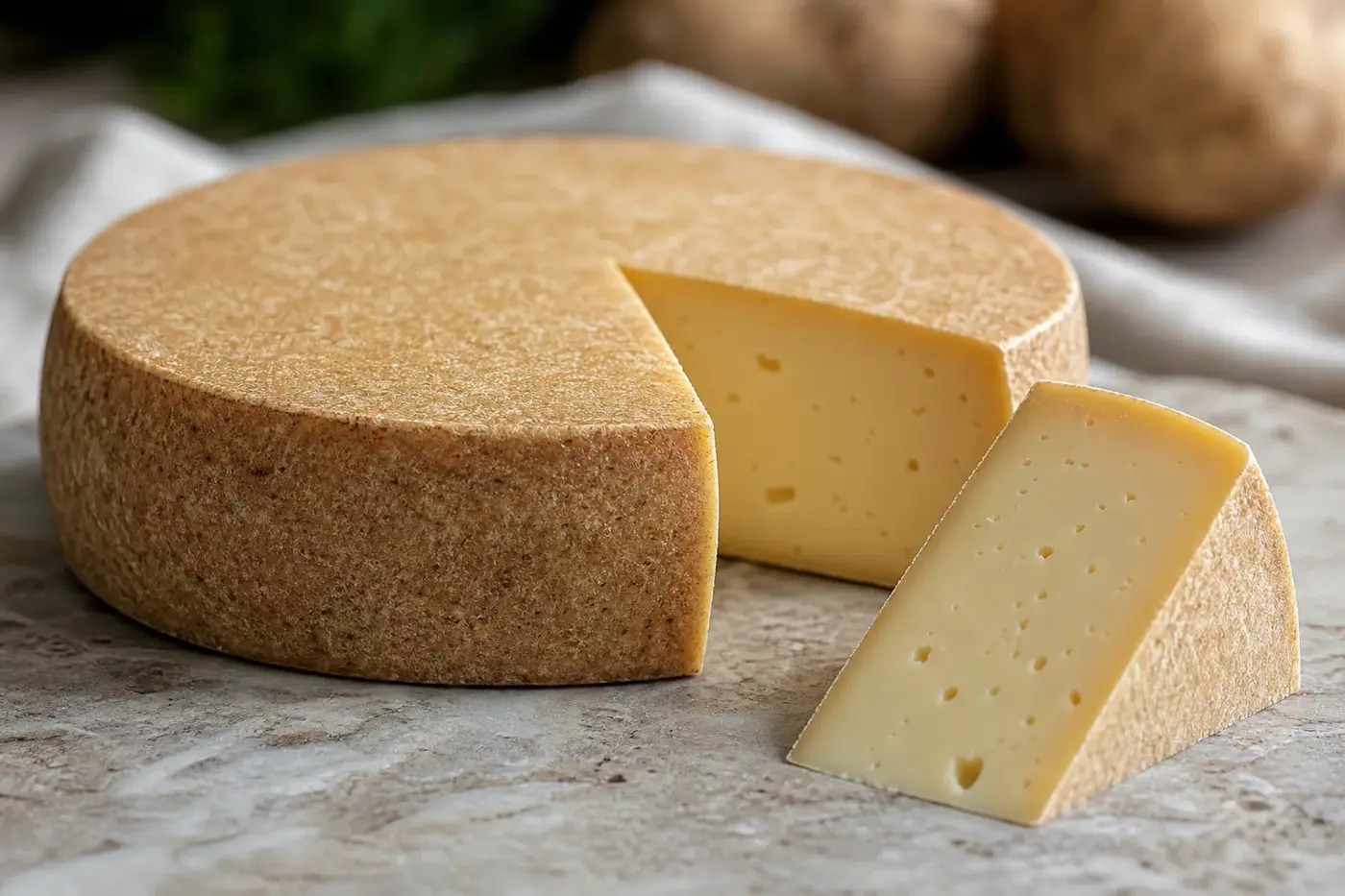
Le Gruyère
Your knife passes through the brown, grainy rind and into ivory cheese.
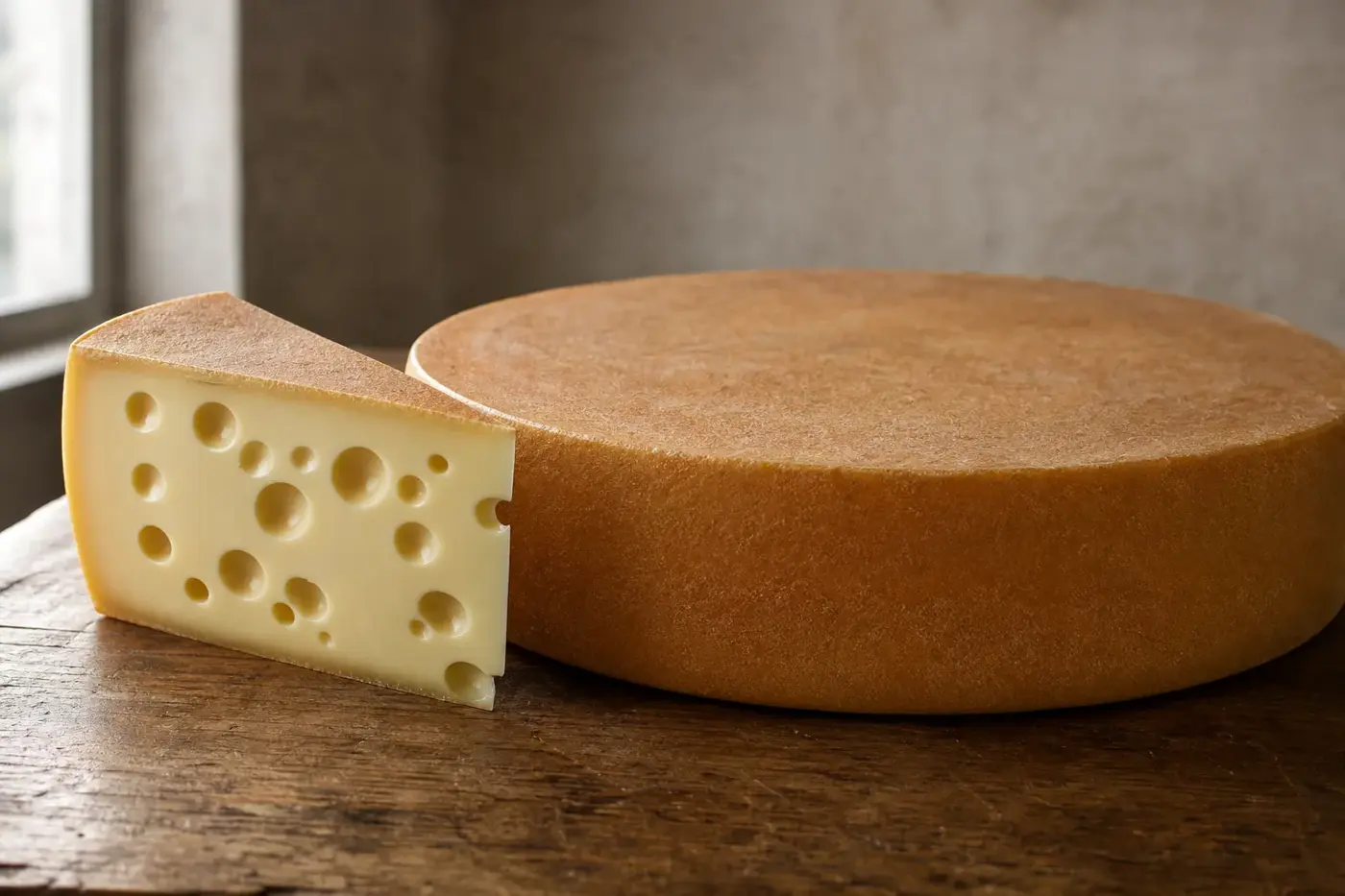
Emmentaler
Picture a whole Emmentaler on your counter: up to 120 kg of cheese, its round eyes mostly 2 to 4 cm across.
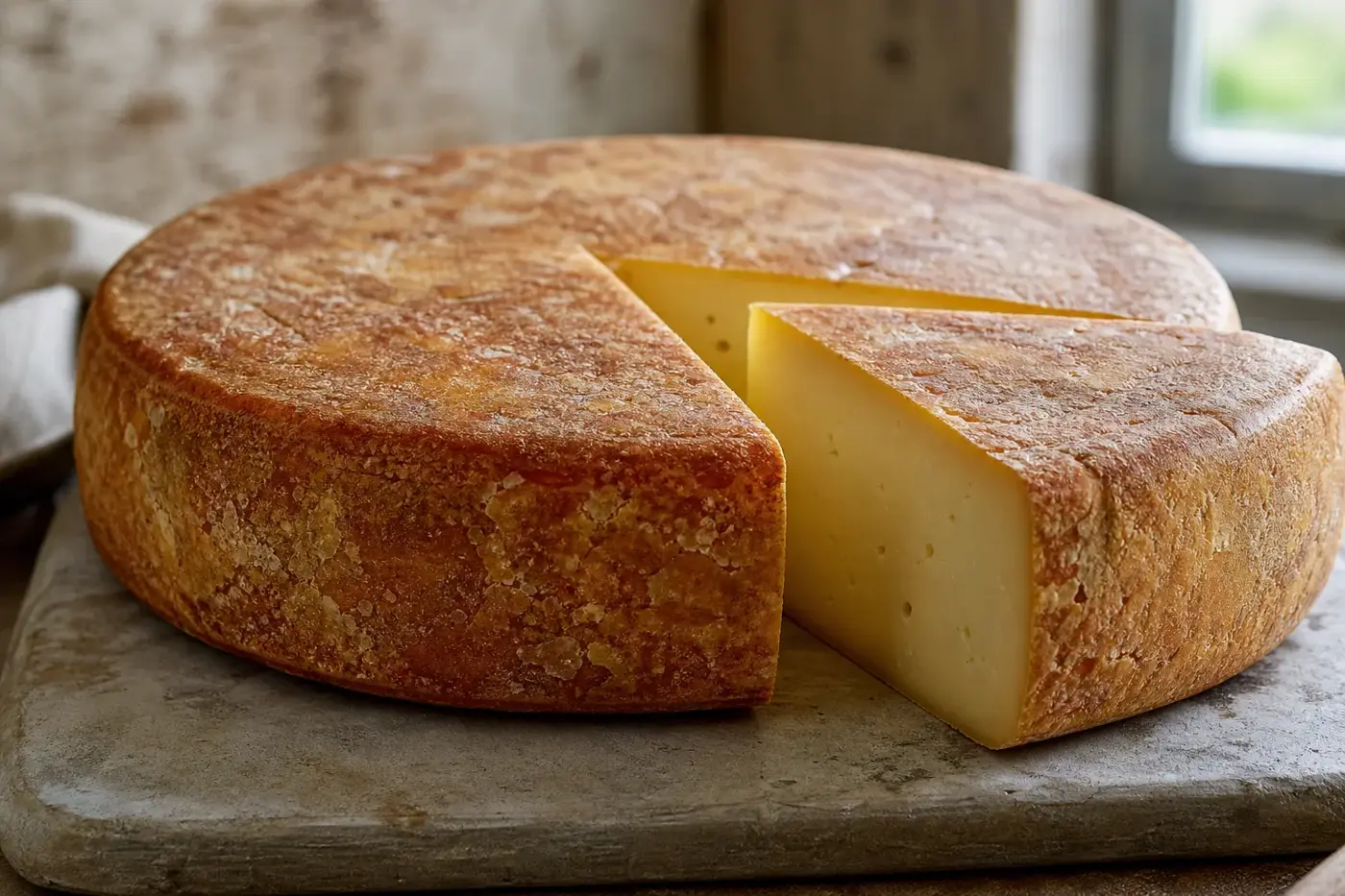
Appenzeller
Run your eye over Appenzeller’s pitted rind.
Raclette du Valais
A cut wheel faces the fire in Valais.
Vacherin Fribourgeois
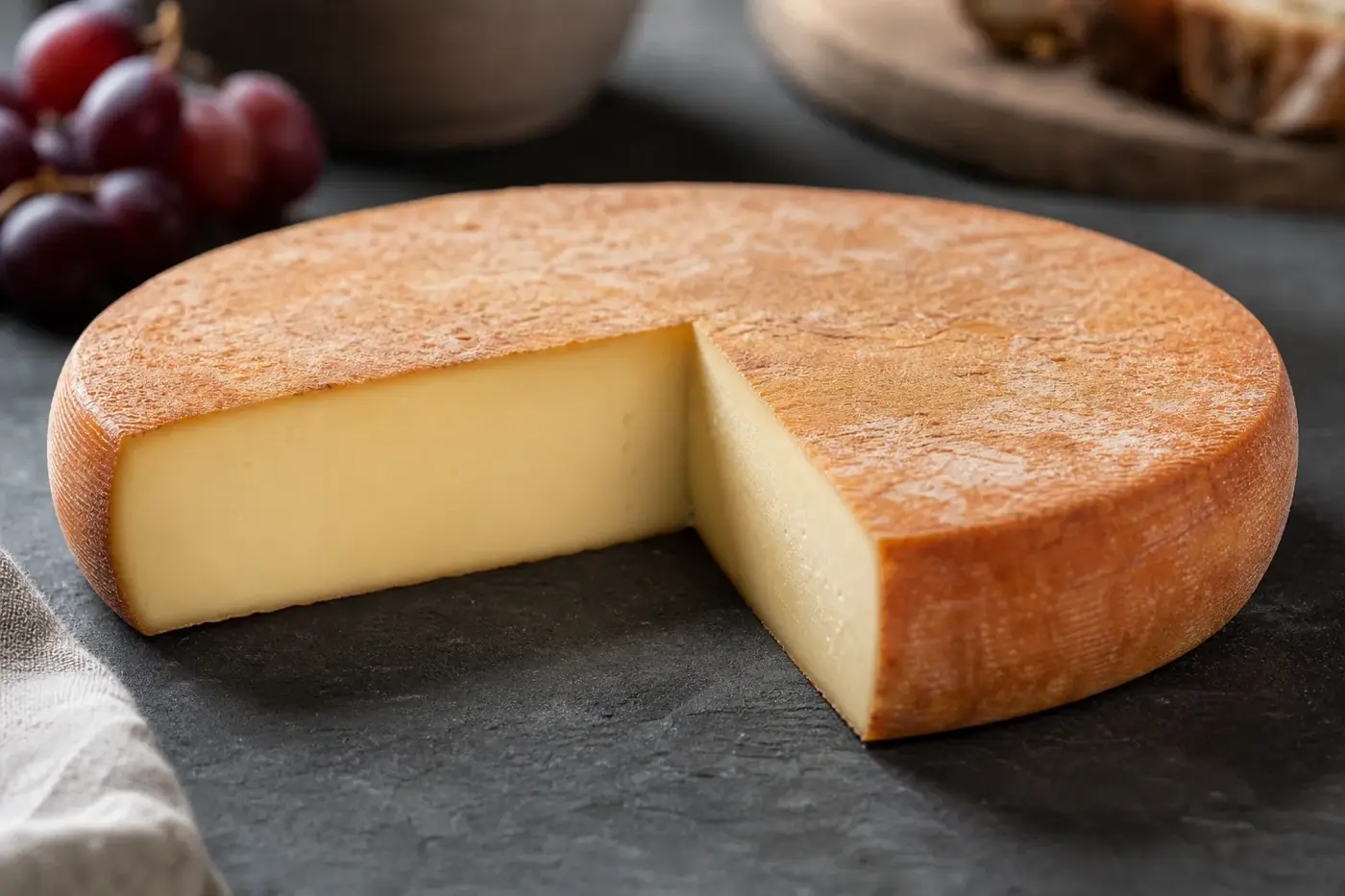
Dip into a pot of Fribourg’s moitié-moitié fondue and you meet a partnership worth lingering over.
Vacherin Mont-d'Or
Your spoon slips through the pale centre of Vacherin Mont-d’Or, while a band of spruce keeps the soft cheese in place.
Tête de Moine
Turn the blade and a ribbon of cheese rises, almost translucent, before gathering into a ruffled rosette.
Sbrinz
In a central Swiss cellar, great wheels of Sbrinz stand upright on silver fir boards, taking their time.
L'Etivaz
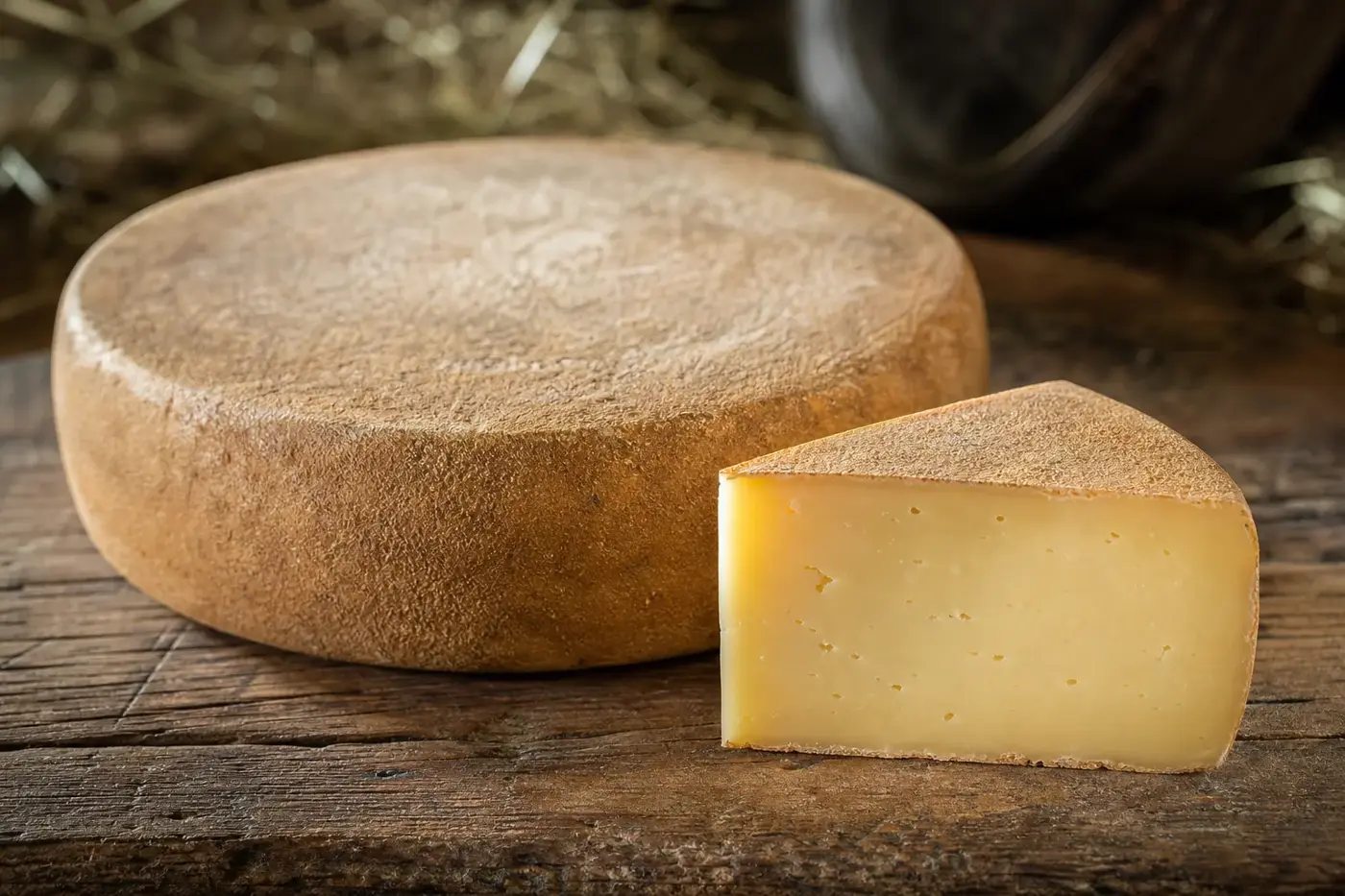
A wood fire burns beneath a copper cauldron in a mountain chalet.
The editors suggest you read next

French Cheese: The Complete Guide
Picture Normandy’s pastures, then follow the milk towards the Loire’s goat dairies, the Jura’s shared cheesemaking traditions and the sheep country of the Pyrenees.


