Late Blowing in Cheese: Clostridial Spores and Silage Management
A cheese swells.
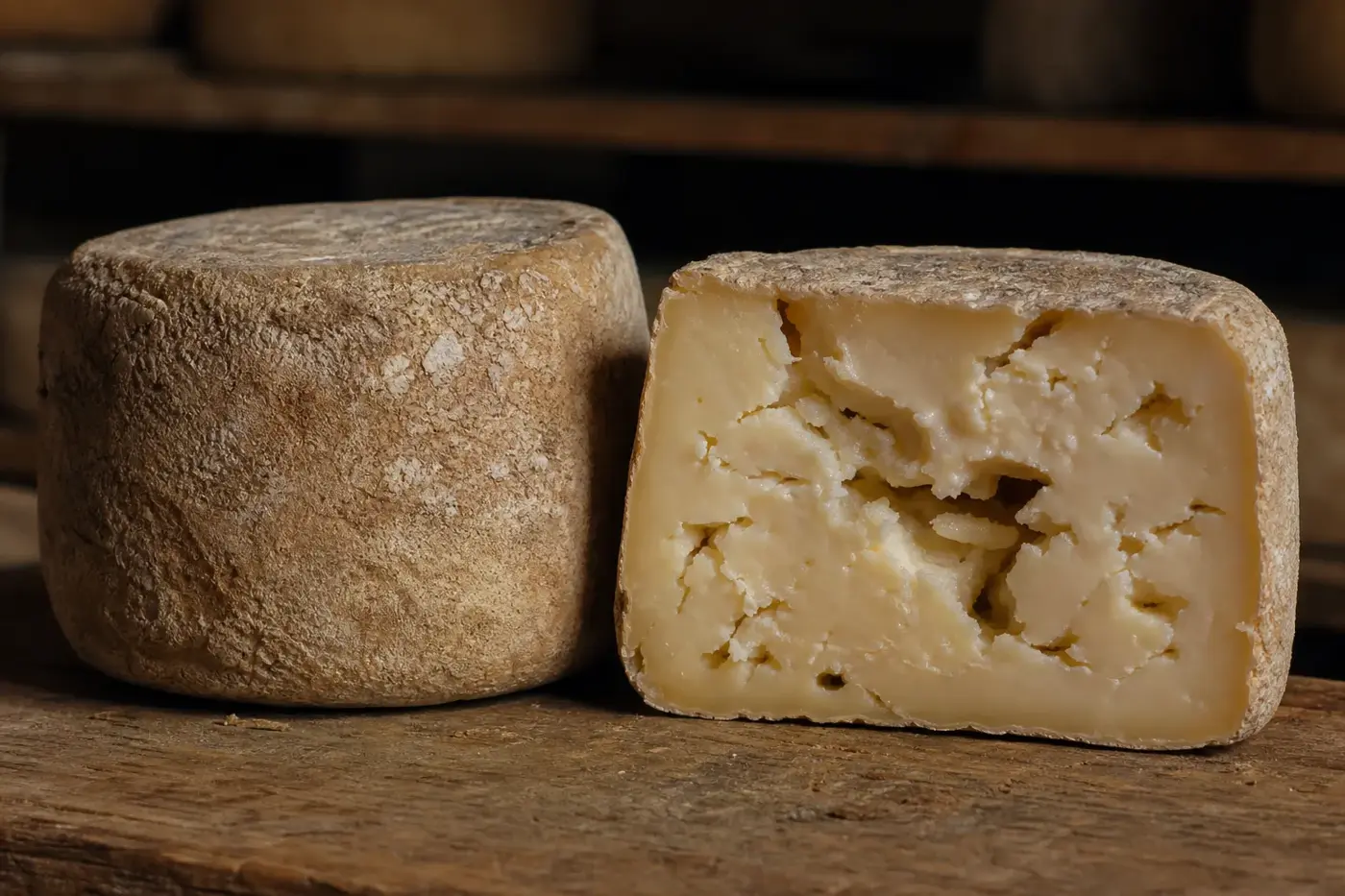
A cheese swells. Its body splits. What looked sound at the start of maturation reveals trouble that may have begun with soil at harvest, then travelled through silage, a cow’s gut and milking. When clostridia grow during maturation, they ferment lactate, producing gas and butyric acid. [2,5,6]
To understand what has happened to your cheese, you need to look beyond the cheese room. The strongest defence starts with clean forage and well-preserved silage. From there, it follows the whole contamination chain. [2,5,6]
Three things worth keeping close
- Do not count on pasteurisation alone to eliminate clostridial spores reliably. [5]
- Ask your laboratory which tests suit the relevant spores and how to interpret the results. [11]
- Late blowing is a quality defect. Appearance alone cannot establish a batch’s food safety status. [3,16]
When a cheese opens in all the wrong places
Large, irregular openings, fissures and splits can break through an affected cheese. Research descriptions link clostridial late blowing with lost structural integrity, unpleasant odours and rancid flavour. These are not the carefully controlled eyes prized in some styles: this cheese has taken liberties with the floor plan. Butyric acid is a characteristic product of the unwanted fermentation. [11]
The damage takes its time. Spores must germinate, growing cells must multiply, and gas must accumulate before you see the cheese fail. That sequence can unfold well into maturation, turning an apparently normal cheese into a damaged one. The strain and cheese environment set the pace, not a fixed number of days. [2]
Other organisms can leave similar damage, so looks give you only a starting point. Coliforms and yeasts are associated with early gas; heterofermentative lactobacilli, bacteria that produce gas during fermentation, can also cause late gas defects. Timing and appearance help direct your investigation. Laboratory evidence identifies the organism responsible. [1,3]
Meet the main suspect and its survival kit
Clostridium tyrobutyricum is the principal species to investigate. In a 1995 cheesemaking study, 28 of 32 tested strains caused late blowing. Cheeses inoculated with the tested strains of C. beijerinckii, C. butyricum and C. sporogenes showed no butyric acid fermentation under those experimental conditions. The species matters, but differences between strains matter too. [3]
You also need to distinguish a spore from a growing cell. A spore is a resistant survival form; a vegetative cell is the growing form. In a later cheese experiment, researchers heated C. tyrobutyricum spore suspensions at 80 °C for 15 minutes to eliminate vegetative cells when preparing inocula. They then recovered viable spores: the growing cells had been killed, but the resistant form remained alive. [1]
How useful acid takes an unwelcome turn
Here is the awkward twist: the acidification that helps make your cheese also supplies a substrate for unwanted fermentation later. Starter bacteria produce lactic acid as they acidify milk. Susceptible clostridia can then ferment lactate, the form of that acid present in cheese. Reported products include butyric and acetic acids, carbon dioxide and hydrogen; the gases disrupt the body, while the acids alter aroma and flavour. [4]
Ripening gives this secondary fermentation time to develop. Temperature, acidity and salt influence spore germination and cell growth, but strains respond differently to the same conditions. A comparison of 12 strains in enriched milk medium found substantial differences in gas production and organic acid conversion, including variation between replicates. You therefore need to compare laboratory broth results with the actual cheese process. [2]
Want to follow the wider sequence? Take a look at how cheese is made, from coagulation to ripening.
Follow the trail back to soil and silage
The trail starts in soil, an initial reservoir of spores. Harvesting can carry it into forage alongside manure contamination. Silage preserves forage by fermentation without air, but failed preservation can favour the multiplication of butyric acid bacteria, increasing the burden cattle subsequently eat. DAERA associates clostridia with poorly preserved silage characterised by high pH, low lactic acid and butyric acid production. [5,7]
A year-long study of 24 Dutch dairy farms brings that connection into focus. Researchers sampled silage, faeces, bedding, soil and tank milk, finding a significant association between silage and milk spore concentrations. Avoiding episodes of heavily contaminated feed mattered more than the annual average alone. For you, the practical warning is clear: a reassuring routine result can miss a contamination episode that matters to cheesemaking. [6]
Give the crop a clean cut and a timely wilt
Keep soil out before the crop reaches the clamp. Set mowers, rakes and tedders clear of the ground, allowing for uneven surfaces and manure residues. DAERA recommends a cutting height of at least 5 to 6 cm to reduce contamination. In dry conditions, when dust and soil ingress are particular concerns, AHDB advises raising this to 7 to 8 cm. [7,8]
Wilting removes water before ensiling; dry matter, abbreviated DM, is what remains when you exclude water. AHDB’s grass guidance sets targets of 28 to 32% DM for clamp silage and 35 to 45% for baled silage. Those different targets reflect different preservation systems. There is no single ideal moisture content for every forage. [8,10]
Watch the clock as well as the dryness. A rapid wilt preserves fermentable sugars, while extra time in the field brings further respiration losses and opportunities for deterioration. Drier forage is also harder to compact. Match chop length and consolidation to DM, because making the crop drier alone does not resolve clostridial risk. [9,10]
A good seal starts at the clamp edges
Even layers, effective consolidation and prompt sealing help remove trapped air. Together, they establish conditions for a rapid, desirable fermentation to stabilise the forage. Scottish Farm Advisory Service guidance emphasises an airtight seal, side sheets and careful attention to clamp edges. Poor density and air entry at those edges can undermine preservation. [9]
But if clostridia grow without oxygen, why exclude air? Air exclusion supports preservation alongside suitable moisture and acidification. Contaminated forage that is poorly acidified can still undergo undesirable fermentation inside a sealed clamp. Packing and sealing support the whole fermentation system; they do not selectively kill spores. [7,10]
Protect the cover throughout storage and repair damage. If you choose a silage additive, work with your farm adviser to match it to the crop, its DM and the identified preservation problem. Its contribution depends on those conditions. It cannot replace clean harvesting, effective consolidation or an intact seal. [9,10]
Keep the feed face tidy and spoiled forage out
At feeding, use a block cutter or shear grab to leave a tidy face without unnecessarily exposing the material behind it to air. Take only what you need, rather than leaving loose piles to heat and deteriorate. Scottish Farm Advisory Service guidance says to remove spoiled or visibly mouldy silage and not feed it. [9]
Visible mould does not tell you the level of clostridial contamination. Excluding spoiled feed follows preservation guidance; measuring the butyric spore burden requires testing. Keep feed records identifying the field, cut and part of the clamp in use. Those details help you trace changes in the ration back to their source during a milk investigation. [6,9]
Follow the feed through to the milking unit
Spores eaten in feed pass into faeces. From there, contaminated teat surfaces provide a route into milk during milking. Your controls need to connect feed and milking hygiene: reduce the feed burden, keep bedding and cows clean, and prepare clean, dry teats before attaching the milking unit. Keep contaminated material away from milk-contact equipment too. [5,11]
Review the cleaning of liners, clusters, pipelines and the tank with your dairy’s hygiene adviser. Check that the cleaning cycle actually used matches the equipment specification. Better milking hygiene is valuable, but feeding heavily contaminated silage leaves a major upstream source in place. Investigate the linked chain rather than treating each stage as a separate problem. [5,6,11]
Why pasteurisation cannot do every job
Clostridial spores can survive milk pasteurisation. Heat that removes susceptible vegetative bacteria can leave behind the inoculum responsible for late blowing. In experimental hard-cheese manufacture, researchers followed spores and cells separately in dialysis tubes through processing and ripening. Their work shows why you need to consider the two forms separately. [4,5]
Pasteurisation and spore reduction serve different process needs. For a closer look at the distinctions between treatments, see raw milk, thermised and pasteurised cheese. [5]
Ask the right test the right question
Choose a test for the relevant spores, rather than relying on a general bacterial count. A study of seven US farms used a most probable number method, estimating viable butyric acid bacteria through growth in replicate culture tubes. Discuss sampling volume, detection limits and interpretation with your laboratory. That conversation is particularly important when contamination is intermittent. [11]
Physical separation can reduce the burden, but neither method guarantees elimination. Bactofugation uses centrifugal separation; microfiltration separates microorganisms with a membrane. Validate performance on your actual milk stream, including the handling of separated fractions and any later opportunities for contamination. [12,13]
One primary microfiltration study shows why those details deserve your attention. It tested Bacillus and Geobacillus spores in skimmed milk, rather than C. tyrobutyricum. Removal depended on membrane pore size and spore surface properties, and some spores passed through the smaller membrane tested. Performance figures belong to the organism and filtration system tested, not automatically to another combination. [12]
Bring cheese-room controls and GB rules together
Look at acidification, salt distribution and ripening conditions alongside incoming milk. In a six-strain washed-curd cheese experiment, three strains caused late blowing during 160 days at 15 °C; none did at 8 °C. That temperature contrast matters. It describes the experiment, though, rather than a maturation setting you can apply to every cheese. [1]
Research also describes inhibitors including nitrate and lysozyme. Before adopting either in Great Britain, check the current authorisation, cheese category and conditions of use. Start with the GB version of Regulation (EC) No 1333/2008 and its authorised-use tables. Check product-specific production rules before changing your process as well. [4,14]
Review labelling at the same time. In Great Britain, Article 21 of the assimilated food information regulation requires relevant allergens to be identified and emphasised in an ingredients list, with provisions for foods without one. Establish the additive’s source and required declaration before use. Another cheese’s label cannot do that job for you; see how to read a cheese label. [15]
This page summarises published guidance from the official sources it cites. It is not medical advice. Guidance differs between countries and changes over time, so check the current source for where you live, and ask your doctor, midwife, pharmacist or dietitian about your own circumstances.
Investigate the damage and assess safety separately
Late blowing is a quality failure, but its appearance cannot identify every organism present or establish the batch’s food safety status. Build your investigation from affected and unaffected cheeses, milk results, manufacturing records and the history of the silage being fed. A photograph alone cannot supply that evidence. [3,6,16]
If your business is in England, Northern Ireland or Wales, consult the Food Standards Agency’s food incident guidance for reporting, withdrawals and recalls. The guidance carries an update dated 20 August 2026; the reference date for this page is November 2026. See also the cheese food safety guide. [16]
Questions people ask
What causes late blowing in cheese?
Clostridia can ferment lactate during maturation, producing gas and acids. The gas can cause large irregular openings, fissures and splits, while the acids alter the cheese’s aroma and flavour.
Can pasteurisation prevent late blowing?
Pasteurisation alone does not reliably eliminate clostridial spores. The spores can survive heat that removes susceptible growing bacteria.
How do clostridial spores get into milk?
Spores from soil can enter forage at harvest, then pass through silage and a cow’s gut into faeces. Contaminated teat surfaces provide a route into milk during milking.
How can farms reduce the risk of late blowing?
Clean harvesting and well preserved silage help reduce the burden of spores in feed. Clean bedding, cows and teats also help limit contamination during milking.
Can you tell whether a swollen cheese is safe by looking at it?
Appearance alone cannot establish a batch’s food safety status or identify every organism present. Businesses in England, Northern Ireland and Wales should consult the Food Standards Agency’s food incident guidance on reporting, withdrawals and recalls.
Sources
- Cornell University and University of Natural Resources and Life Sciences, Vienna. Clostridium tyrobutyricum strains exhibit high genetic diversity and differ in their ability to cause late blowing defect in washed-curd cheese. Journal of Dairy Science, uncorrected proof, accepted 11 August 2025. Publisher PDF.
- Microorganisms. Strain-Dependent Cheese Spoilage Potential of Clostridium tyrobutyricum, 2020. Research article record.
- Netherlands Institute for Dairy Research. Identification of Clostridium tyrobutyricum as the causative agent of late blowing in cheese by species-specific PCR amplification. Applied and Environmental Microbiology, 61(8), 1995, pages 2919 to 2924. Publisher record and abstract.
- LWT. The late blowing defect of hard cheeses: Behaviour of cells and spores of Clostridium tyrobutyricum throughout the cheese manufacturing and ripening, volume 87, 2018, pages 134 to 141. Publisher record and excerpts.
- NIZO Food Research and Wageningen University. Modelling Contamination of Raw Milk with Butyric Acid Bacteria Spores. International Grassland Congress proceedings, 2005. Institutional repository record.
- NIZO Food Research. Minimizing the level of butyric acid bacteria spores in farm tank milk. Journal of Dairy Science, 90(7), 2007, pages 3278 to 3285. PubMed abstract.
- Department of Agriculture, Environment and Rural Affairs, Northern Ireland. Minimise contamination when harvesting silage this season, 2021. Official guidance.
- AHDB. Adapting silage making to dry weather, current web guidance accessed November 2026. Agricultural guidance.
- Scottish Farm Advisory Service. Minimising Dry Matter Losses in Clamped Silage, current web edition accessed November 2026. Farm advisory guidance.
- AHDB. Making grass silage for Better Returns, Beef and Sheep BRP Manual 5, edition available online November 2026. Guidance PDF.
- Cornell University research group. Butyric acid-producing bacterial spore levels in conventional raw milk vary by farm. JDS Communications, 2023. Full research article.
- Cornell University. Efficient removal of spores from skim milk using cold microfiltration: Spore size and surface property considerations. Journal of Dairy Science, 101(11), 2018, pages 9703 to 9713. PubMed abstract.
- International Journal of Food Microbiology. Influence of milk centrifugation, brining and ripening conditions in preventing gas formation by Clostridium spp. in Gouda cheese, 2000. Publisher record and excerpts.
- UK legislation publisher. Regulation (EC) No 1333/2008 on food additives, assimilated GB version, contents and Annex II structure accessed November 2026. Official legislation.
- UK legislation publisher. Regulation (EU) No 1169/2011 on the provision of food information to consumers, assimilated GB version, Article 21, accessed November 2026. Official legislative text.
- Food Standards Agency. Food incidents, product withdrawals and recalls, updated 20 August 2026, applying to England, Northern Ireland and Wales. Official incident guidance.
Researched through primary dairy studies, agricultural advisory guidance and official GB legislative and incident-management sources, with experimental findings kept separate from proposed investigation steps.
Last checked: November 2026
Last checked November 2026.
The editors suggest you read next
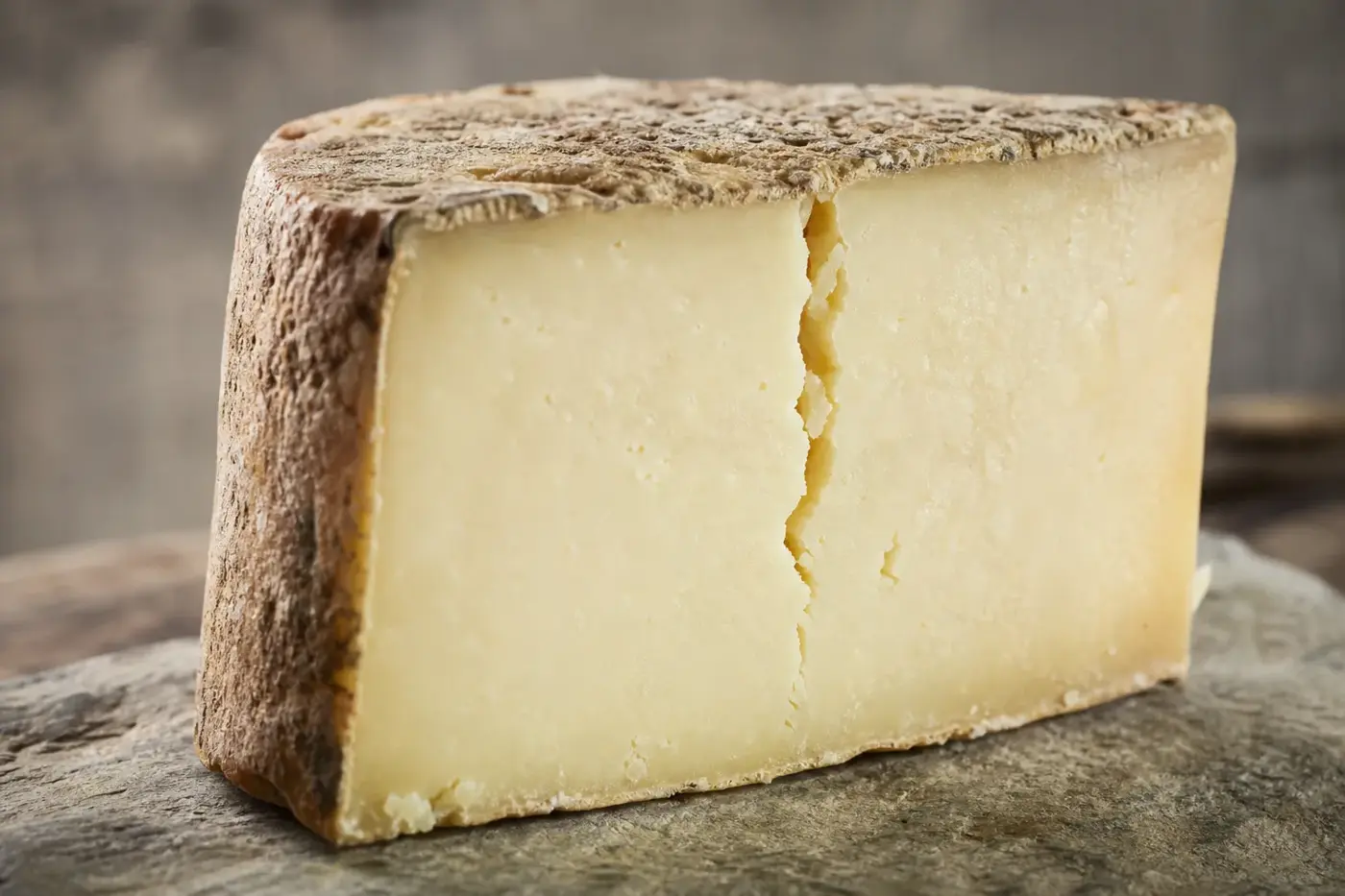
Cheese Defects: Bitterness, Cracks, Gas and Off Flavours
Tiny pinholes appear as a cheese is pressed.