Lysozyme, Natamycin and Annatto: Additives and Rind Treatments
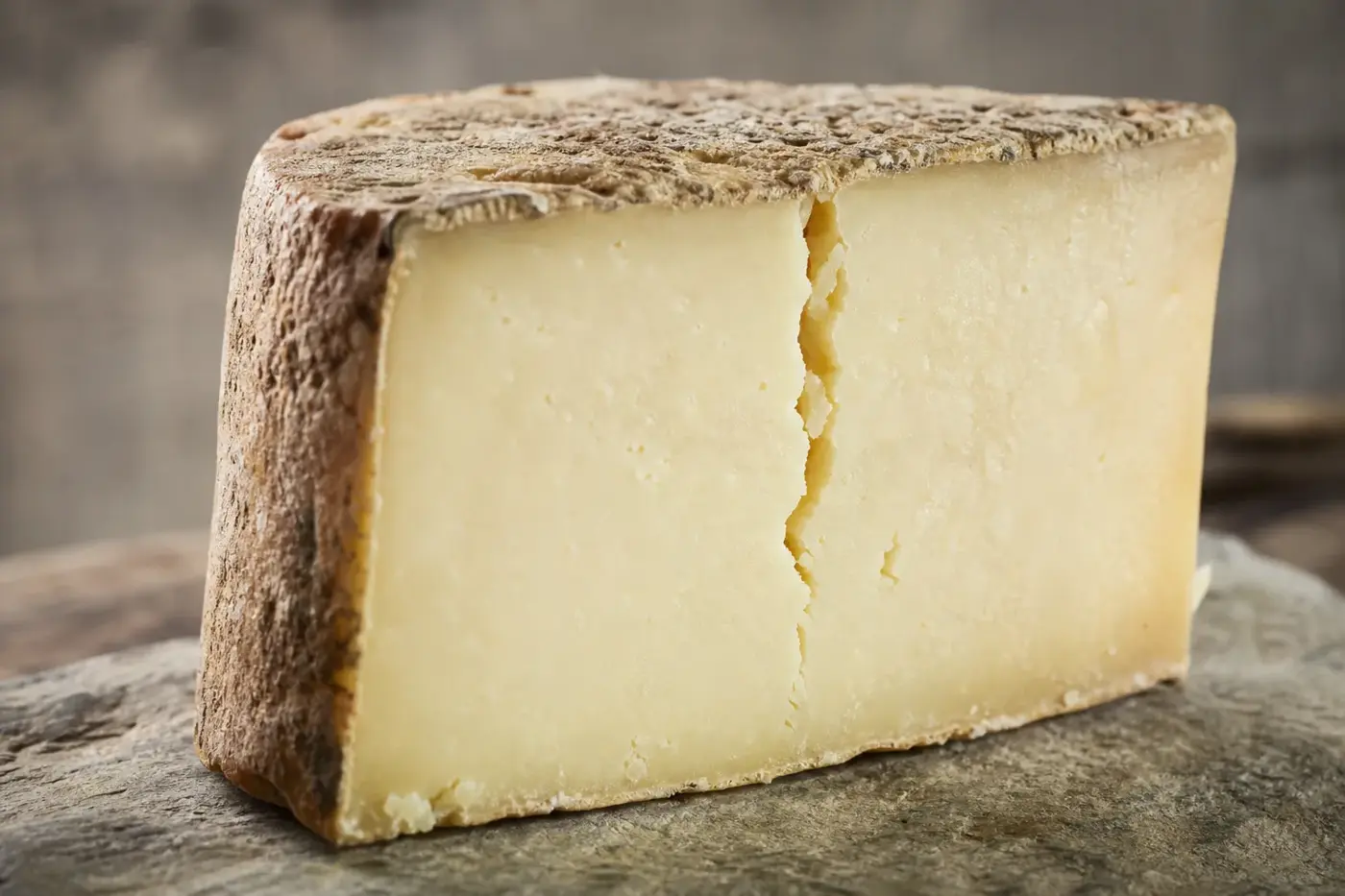
Cut into a cheese and a yellow or orange paste greets you.
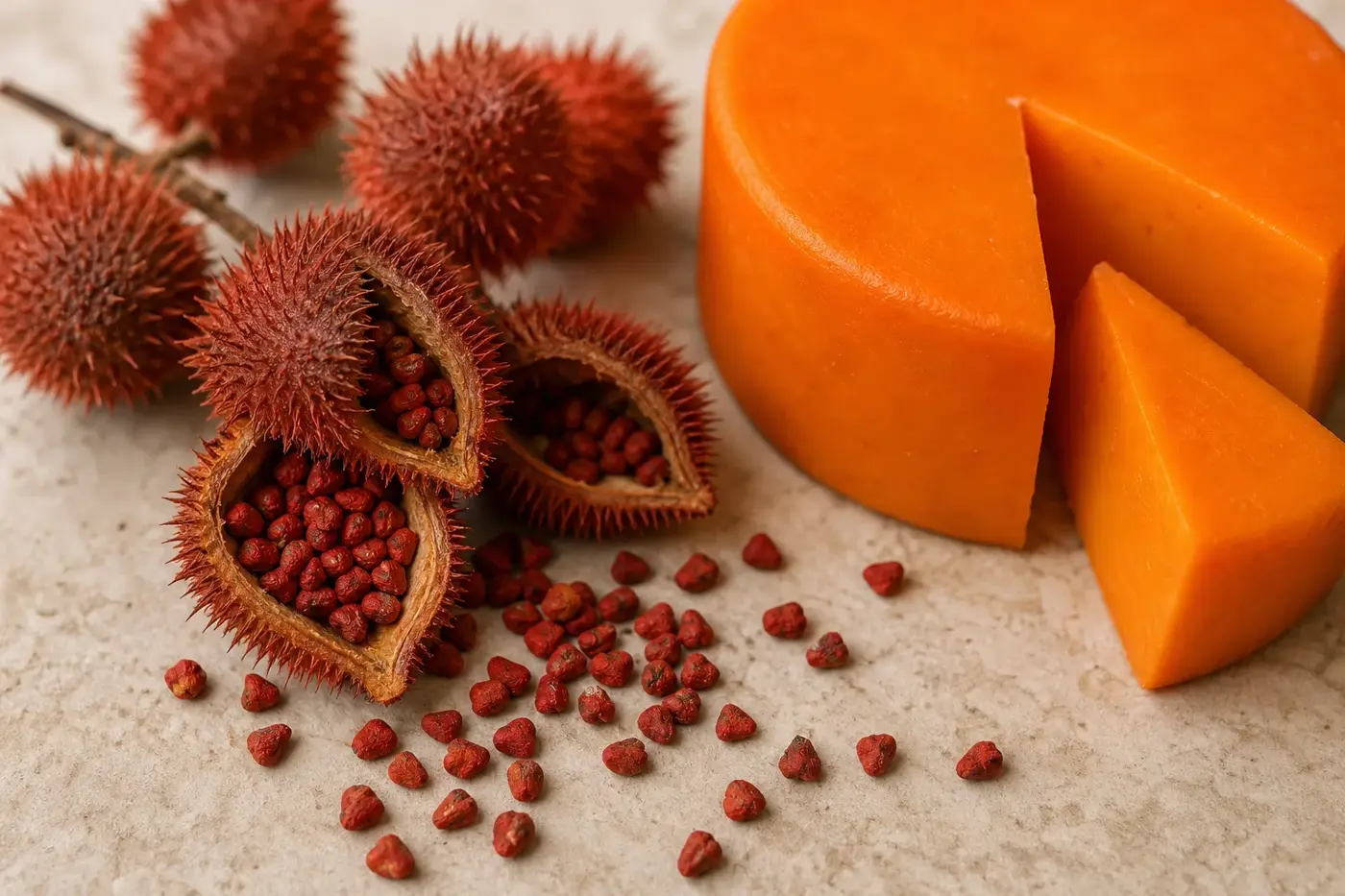
Cut into a cheese and a yellow or orange paste greets you. That colour may have begun with seeds from the achiote tree, as annatto. Elsewhere in cheesemaking, lysozyme tackles unwanted gas formation, while natamycin keeps fungi in check on the surface. [1, 3, 10, 13]
Three substances. Three quite different jobs, despite sharing the rather uninviting umbrella of “additives”. If you want to understand what each is doing in your cheese, its purpose, source and point of application tell you much more than the word alone. [1, 3, 10, 13]
Meet the job behind the name
An unfamiliar name on a label can stop you in your tracks. Start instead with what the substance does. The Food Standards Agency describes additives by their functions, including preserving food and adding colour. [1]
Then ask three questions. Does it serve a suitable purpose, is that use permitted, and does the information matter to the person eating the cheese? That gets you further than treating every additive as the same thing. [1]
| Substance | Its job | Where it works |
|---|---|---|
| Lysozyme, E 1105 | Inhibits susceptible bacteria | Within the cheese, including during ripening. [2, 3] |
| Natamycin, E 235 | Suppresses moulds and yeasts | On the treated surface. [2, 9] |
| Annatto, E 160b(i) and E 160b(ii) | Adds yellow or orange colour | In the coloured cheese. [2, 13] |
Lysozyme: protecting the long wait of ripening
A cheese can spend considerable time ripening, only for unwanted gas to damage its internal structure. This defect is called late blowing. It is linked particularly to Clostridium tyrobutyricum, a spore-forming bacterium. [4]
Even here, the species name does not tell you everything. In experimental cheesemaking, researchers provoked late blowing with 28 of 32 strains of that species. The strain matters too. [4]
Lysozyme is an enzyme, a protein that catalyses a chemical reaction. Its antibacterial action can interfere with susceptible bacterial cell walls, making it useful against this particular problem. Think targeted tool, not a cure for every maturation mishap. [3, 5]
Growing bacteria and their spores need distinguishing too. In a laboratory study involving bacteria associated with Gouda production, lysozyme inhibited growing cells of two C. tyrobutyricum isolates. Yet it stimulated their spore germination under the conditions tested: inhibiting growth is not the same as eliminating spores. [3]
For a long-matured cheese, preventing trouble after considerable ripening is especially valuable. A separate cheesemaking trial compared a control without lysozyme, a control with it and experimental bacterial cultures. Late blowing appeared only in the control without lysozyme, supporting its use as one preventive tool within a controlled process. [6]
If you want to follow this fault further, turn to the separate cheese defects and late blowing articles. They explore its underlying causes and what it does to a ripening cheese.
Lysozyme and egg: know the source
Egg white is an established source of commercial food lysozyme. The enzyme also occurs naturally in other biological materials, and researchers have investigated lysozyme-rich donkey milk as an alternative way to control late blowing. The name tells you what the molecule is; its manufacturing source tells you where it came from. [5, 7]
For cheese sold in the UK, ask whether egg used as an ingredient or processing aid remains in the finished product, even in an altered form. Where an ingredients list is required, the allergenic source must be clear and emphasised. With egg-derived lysozyme, look for egg, not just the enzyme's name or number. [8, 14]
An intentionally used allergenic ingredient is not the same as a precautionary “may contain” statement. The FSA uses the latter for unintended cross-contact, so you need to read both types of information. [8]
For personal questions about egg allergy, follow your country's official guidance and speak to your healthcare professional. You can explore the broader distinction in cheese allergy and lactose intolerance. [8]
Natamycin: looking after the outside
Natamycin acts against moulds and yeasts, rather than bacteria. Its role is quite different from lysozyme's. A surface preservative and an antibacterial enzyme answer different cheesemaking needs. [9]
The cheese's outer surface may be dipped, sprayed or brushed, or covered with a coating carrying natamycin. How it gets there matters. The coating, contact and release of the substance influence performance, a relationship investigated in a study of natamycin-containing starch coatings on semi-hard cheese and their ability to control mould. [9, 12]
EFSA's 2009 assessment concluded that the proposed uses it evaluated, on specified cheese rinds and sausage casings, did not raise a safety concern. That assessment covered defined uses and exposure. Additive rules therefore specify food categories and conditions, rather than permitting a substance everywhere. [2, 10]
Give the outside a closer look
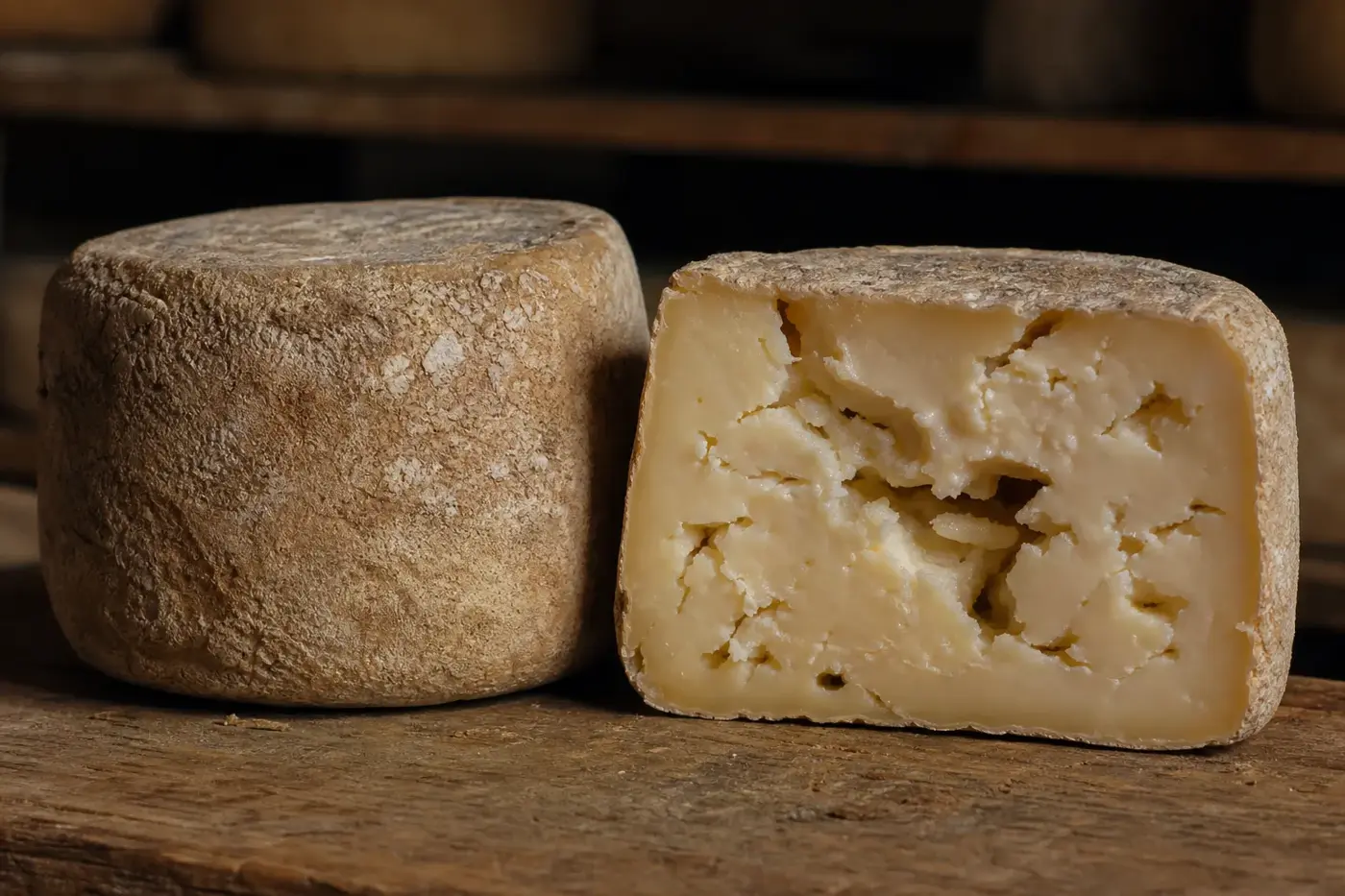
When you cut a wheel, take a moment to look at its outside. A removable coating, a natural rind and the cheese immediately beneath it are distinct parts of what you can see. A surface treatment starts outside, unlike an ingredient mixed into the cheesemaking milk, and its carrier matters too. [9, 11]
Appearance alone cannot tell you how a treatment is distributed. Research on coatings distinguishes natamycin held in a film from natamycin applied directly to cheese, and discusses migration into the outer layer. “Surface treated” tells you where treatment is directed; the product's instructions tell you how to handle those outer layers. [9, 11]
Annatto: the seeds behind the colour
Those yellows and oranges can begin with the seeds of Bixa orellana, commonly called the achiote tree. Annatto's colouring substances include bixin and norbixin. EFSA describes bixin as oil-soluble and norbixin as water-soluble, which helps explain why different colouring preparations behave differently in food. [13]
The current official additive list gives them separate names: Annatto, bixin, E 160b(i), and Annatto, norbixin, E 160b(ii). If you encounter an older reference to E 160b, it is less specific than the preparation names you may find on a modern label. [2]
Here, the intended change is colour, not preventing gas formation or suppressing surface mould. A yellow or orange paste tells you about appearance; ingredient information tells you whether a colour was added. Colour alone is a poor guide to age or flavour, however confidently your eyes nominate the next cheese for your plate. [1, 13]
Ask what the cheesemaker wants to achieve
The cheese being made sets the task. Preventing late blowing, protecting an outer surface from fungi and seeking a consistent colour are different production decisions. The studies behind these uses concern particular organisms, preparations and conditions, so each substance needs a clearly defined purpose. [3, 6, 9, 13]
Permission has two layers. First, does additive law allow that preparation in that category of cheese? For a protected name, the product specification matters too: general permission is only the starting point for establishing what a particular named cheese may use. [2]
You can explore that distinction in Protected names explained. It separates a cheese style from a registered designation.
An additive-free cheese and one made with an authorised additive can reflect different production choices. Ask the maker, “What are you trying to control, and how?” Neither the shortest ingredient list nor the longest maturation settles quality on its own.
Great Britain or Northern Ireland? Find your rulebook
Where you are matters. The FSA directs you to assimilated Regulation (EC) No 1333/2008 for additive permissions in Great Britain, and to the EU regulation for Northern Ireland. Its approved-additives list also makes a crucial distinction: appearing on the list does not establish permission in every food. [2]
Food categories, restrictions and quantitative conditions belong together. You need all three to understand a permitted use. [2]
| What you need to know | Great Britain | Northern Ireland | Source and check date |
|---|---|---|---|
| Additives framework | Assimilated Regulation (EC) No 1333/2008 | EU Regulation (EC) No 1333/2008 | [2], November 2026 |
When you compare labels across borders, keep permission and labelling separate. Additive regulation governs permitted uses; food information rules govern how ingredients and allergens are communicated. An E number identifies a substance, while the wider legal context determines how it may be used and described. [2, 14]
Let the label tell you more
Read the function alongside the name. The FSA explains that additives can be identified by their name or E number, together with their function. “Colour” describes a different job from “preservative”, so read those details alongside any statement about treatment of the outer surface. [1]
Some cheese qualifies for an exemption from an ingredients list under food information rules. The FSA describes the conditions, including the limited ingredients that may have been added. Allergen information remains a separate obligation; for the rest of the pack, see how to read a cheese label. [8, 14]
Food information law also allows certain substances, such as qualifying processing aids, to be omitted from the ingredients list. Its allergen provisions still apply. Something used during production is not necessarily listed as an ingredient, so asking about an allergenic source is more useful than asking only whether a cheese contains additives. [14]
At the counter, get specific about your cheese
You can ask for allergen information about loose cheese even without a full ingredients list. UK official guidance specifically includes cheese at a deli counter among loose foods. Businesses must provide allergen information, but a full ingredients list is not generally required. [8, 15]
The FSA recommends written allergen information supported by a conversation. Staff should know where to find accurate details. Give them specific questions to work with. [8, 15]
- Identify the exact cheese being cut, rather than relying on information about its general style.
- Name the allergen you need to check. Ask specifically whether any lysozyme is egg-derived.
- Ask staff to consult the supplier's current ingredient and allergen information.
- Ask about the rind separately. Has it been treated, is there a coating to remove, and what does the maker instruct? [8, 11, 15]
Cheese packed on the premises before you select it can fall into the separate UK category of prepacked for direct sale. Official guidance requires these products to have an ingredients list with allergens emphasised. How and when your piece was wrapped changes the information you should expect. [16]
Before the rind reaches your plate
First, distinguish rind from covering, and follow the maker's instructions for that cheese. Wax, plastic coatings and cloth are not food. European dairy-industry guidance published by the European Commission tells food businesses to remove coatings, waxes and packaging before using cheese as a raw material; those instructions address that manufacturing context. [11]
For a piece you have bought to eat, ask three concrete questions. Is the outside cheese rind or a removable covering, what treatment was used, and does the maker say to remove it? The treatment's name cannot answer those questions for every product.
If there is an instruction to remove the rind, keep it with the cheese when serving. That way, the instruction reaches the person with the knife.
Follow your curiosity to the next cheese question
- How Cheese Is Made: From Milk to Cheese: follow the stages at which production decisions are made.
- Mould on Cheese: When to Cut and When to Bin: find separate guidance on unexpected mould after purchase.
General information only, not medical advice: follow the official guidance where you live.
Questions people ask
Why is lysozyme used in cheese?
Lysozyme helps prevent late blowing, a defect in which unwanted gas damages the cheese's internal structure as it ripens. It acts against susceptible bacteria, including those associated with this fault.
Does lysozyme in cheese come from egg?
Egg white is an established source of commercial food lysozyme. The Food Standards Agency advises checking allergen information and, at a cheese counter, asking staff whether any lysozyme is egg derived.
What is natamycin used for, and can I eat a treated rind?
Natamycin suppresses moulds and yeasts on the cheese surface. Follow the maker's instructions and check whether the outside is a rind or a removable covering.
What makes cheese yellow or orange?
The colour may come from annatto, made from the seeds of the achiote tree. Ingredient information tells you whether a colour was added, as colour alone is a poor guide to a cheese's age or flavour.
Are these additives allowed in every cheese?
No. The Food Standards Agency says that an additive's listing does not establish permission in every food, so food categories and conditions must be checked. For a protected cheese name, the product specification must also be checked.
Sources
- Food Standards Agency. Food additives. Published 2018, current online edition retrieved November 2026. Official guidance.
- Food Standards Agency. Approved additives and E numbers. Current online edition retrieved November 2026. Official list.
- Influence of Lysozyme on Selected Bacteria Associated with Gouda Cheese. Original experimental study, abstract indexed by the US National Library of Medicine, PMID 31018376. Publication year: Not verified. Indexed abstract.
- Identification of Clostridium tyrobutyricum as the causative agent of late blowing in cheese by species-specific PCR amplification. Original experimental study, 1995. Research record and abstract.
- US Food and Drug Administration. Federal Register, volume 63, number 49, document 98-6571, 13 March 1998. Discussion of egg-white lysozyme and its action in cheese. Official document.
- Lacticaseibacillus casei as Anti-blowing Agents: Impact on the Evolution of Ripening and Sensory Profile of Montasio Cheese. Original cheesemaking study, 2024. Publisher record.
- Effect of jenny milk addition on the inhibition of late blowing in semihard cheese. Journal of Dairy Science, 2015. Publisher abstract.
- Food Standards Agency. Food allergen labelling and information requirements technical guidance. Current online edition retrieved November 2026. Official technical guidance.
- Corn starch-based coating enriched with natamycin as an active compound to control mold contamination on semi-hard cheese during ripening. Original experimental study, 2019. Full research article.
- European Food Safety Authority. Scientific Opinion on the use of natamycin (E 235) as a food additive. EFSA Journal, 2009, 7(12):1412. Adopted 26 November 2009; published 14 December 2009. Scientific opinion.
- European Dairy Association and Eucolait. Guidance on Cheese as Raw Material. Adopted 1 February 2018; hosted by the European Commission. Industry guidance, not legislation. Guidance document.
- World Health Organization. WHO Technical Report Series 940, natamycin discussion. Publication year: Not verified from the retrieved extract. Official report.
- European Food Safety Authority. The safety of annatto extracts (E 160b) as a food additive. EFSA Journal, 2016, 14(8):4544. Adopted 29 June 2016; published 24 August 2016. Scientific opinion.
- UK legislation publisher. Regulation (EU) No 1169/2011 on the provision of food information to consumers. Assimilated text, PDF generated 6 October 2025, retrieved November 2026. Legislative text.
- Department for Environment, Food & Rural Affairs and Food Standards Agency. Food labelling: loose foods. Published 3 January 2017, current online edition retrieved November 2026. Official guidance.
- UK Government. Understanding food labelling: Allergen labelling. Current online edition retrieved November 2026. Official consumer guidance.
Research combined official guidance, retrieved legislation, scientific opinions and experimental research, with unresolved legal checks recorded below.
Last checked: November 2026
Last checked November 2026.
The editors suggest you read next
Cheese Defects: Bitterness, Cracks, Gas and Off Flavours
Tiny pinholes appear as a cheese is pressed.