Vacherin Fribourgeois
Dip into a pot of Fribourg’s moitié-moitié fondue and you meet a partnership worth lingering over.
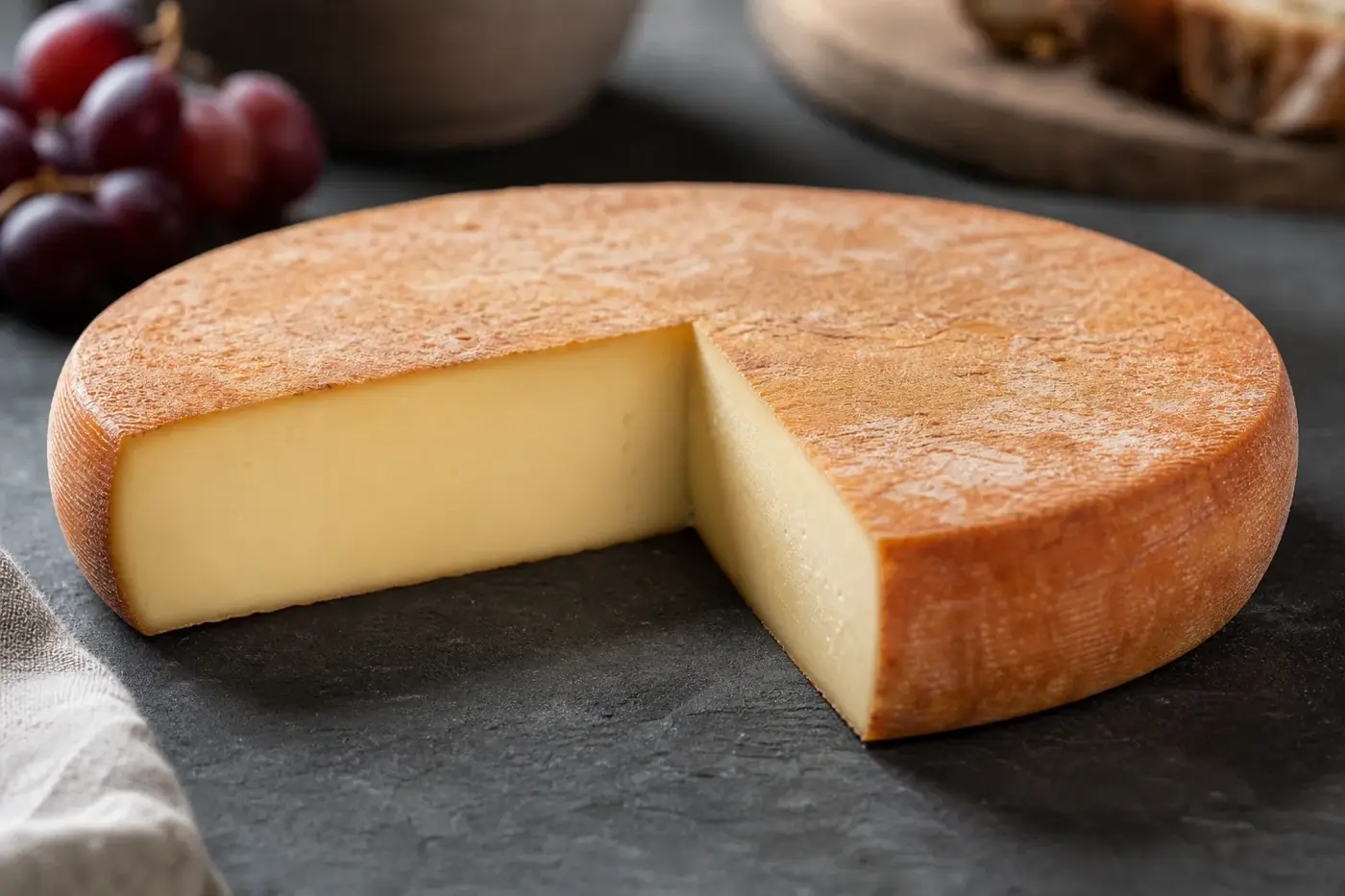
Dip into a pot of Fribourg’s moitié-moitié fondue and you meet a partnership worth lingering over. Half is Vacherin Fribourgeois, bringing that soft, flowing texture; the other half is Le Gruyère AOP.[3][4] Before you commit everything to the pot, save yourself a slice.
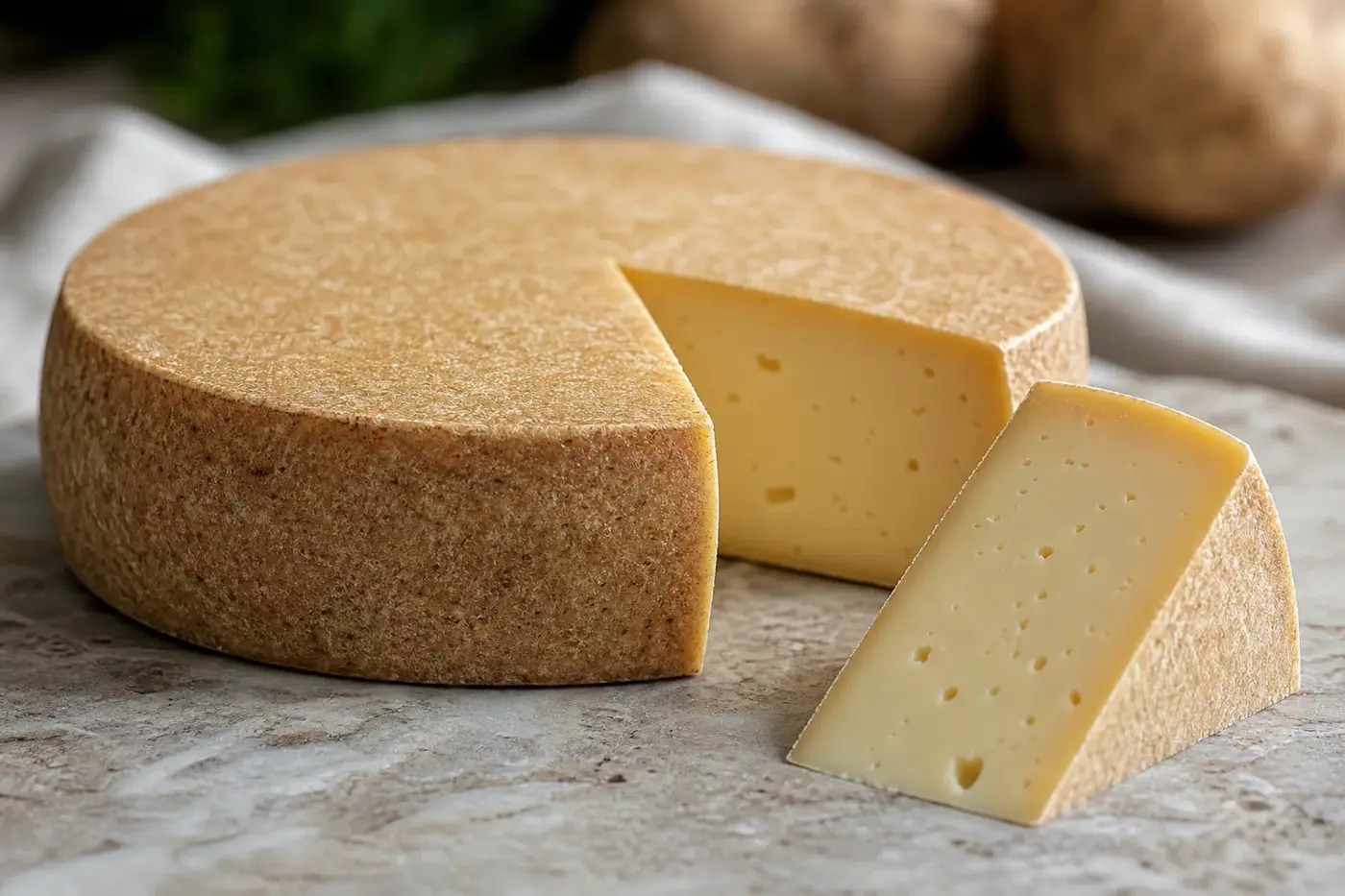
This Swiss cow’s milk cheese has a pale, supple paste that grows more pronounced with careful ripening. Registered as an appellation d’origine protégée in Switzerland, it has every reason to claim a place on your cheeseboard too.[1][3]
| Fact | The useful detail |
|---|---|
| Name you will recognise | Vacherin Fribourgeois.[1] |
| Exact registered name | Vacherin fribourgeois.[1] |
| Registration authority | Swiss Federal Office for Agriculture, federal AOP register.[1] |
| Register ID | Not established here. |
| Swiss protection | Registered AOP; November 2026.[1] |
| EU protection | Not established here. |
| Great Britain protection | Not established here. |
| Northern Ireland protection | Not established here. |
| US protection or other rights | Not established here. |
| Binding production document | Registered specification, amended through the decision of 22 February 2023.[2] |
| Milk | Cow’s milk, raw or thermised.[3] |
| Minimum ripening | Nine weeks.[2] |
| Published maturation range | Nine weeks to several months, depending on variety.[3] |
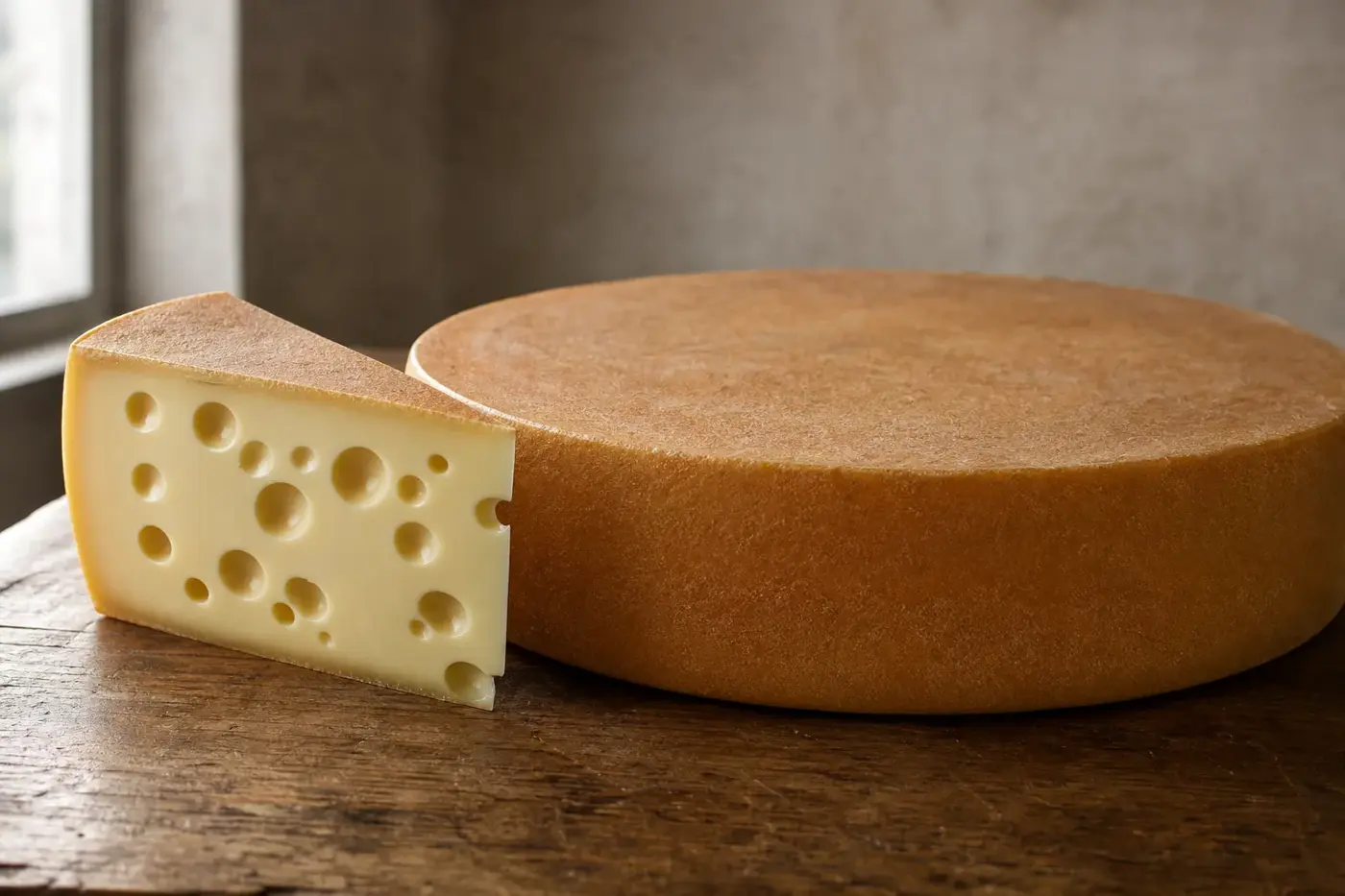
| The whole wheel | Round, 30 to 40 cm across, 6 to 9 cm high, weighing 6 to 10 kg.[3] |
| Milk allergen | Contains cow’s milk.[3] |
Follow the trail to Fribourg and its neighbour
Fribourg is home territory, but leave room on your map for the Bernese municipality of Münchenwiler. Both belong to the legally defined production area. Milk production, cheesemaking and maturation must all take place within it.[2]
Münchenwiler therefore deserves more than a passing mention. Call this simply a cheese from Fribourg and you miss an express geographical exception. The protected name ties the finished cheese to this area and its registered production method; for the wider distinction between a regional name and a manufacturing style, see protected names explained.
Two dates mark its Swiss protection. The register records the registration decision on 22 December 2005, followed by publication of the registration on 28 February 2006.[1] These are separate legal milestones, not dates for the beginning of cheesemaking in the region.
At the counter, give the cheesemonger the full name. “Vacherin” alone can take you towards another Swiss cheese, which you will meet below. For this particular board or fondue, Fribourgeois is the word to remember.
Get to know that broad, tender wheel
A whole Vacherin Fribourgeois is broad and relatively low, rather than a towering cheese drum. Cut into it and you find a paste the producer association describes as fine and sliceable, ranging from ivory to pale yellow.[3] Look closely at that cut face: its colour and the way it holds together deserve your attention.
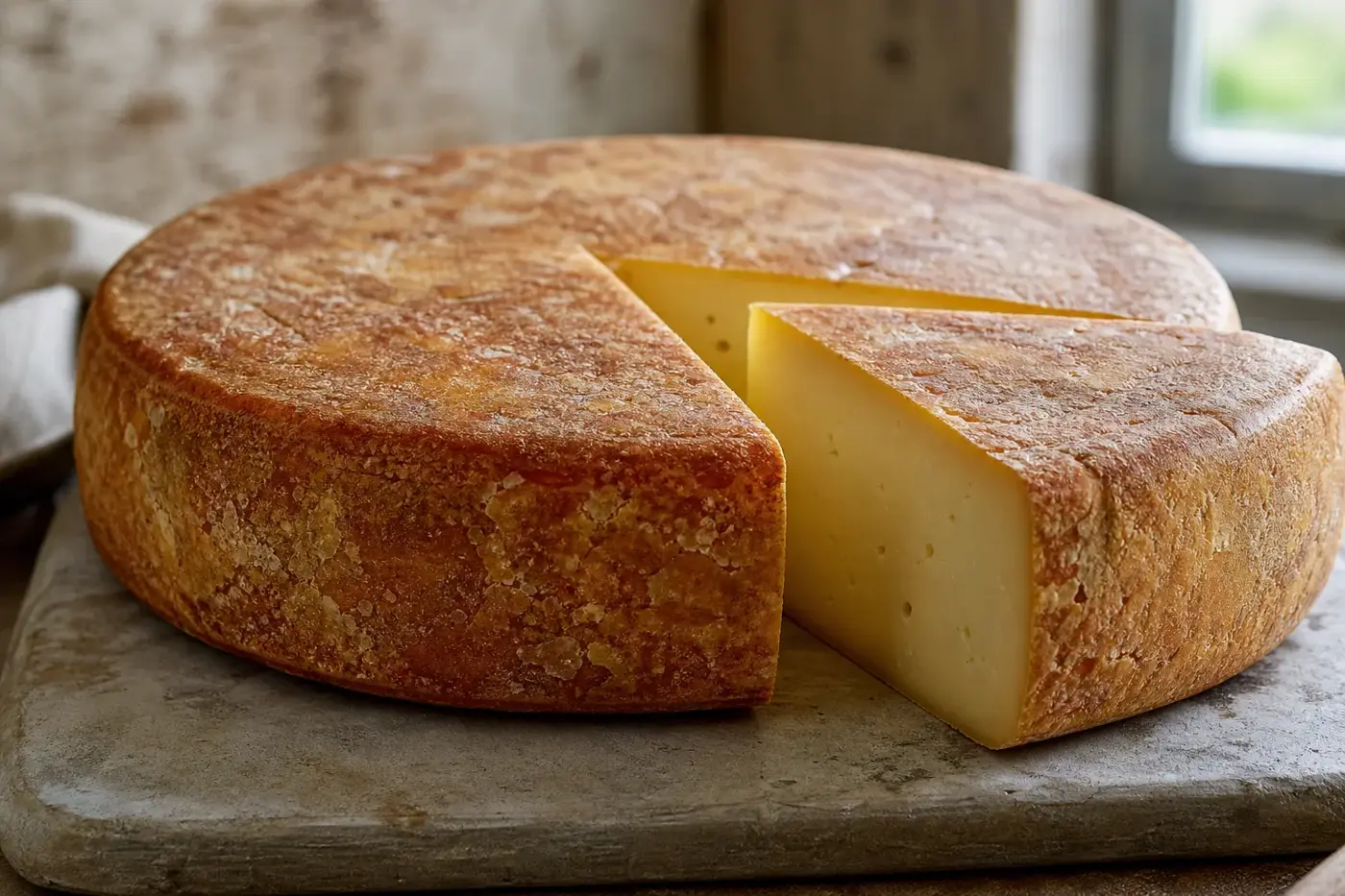
The registered specification describes a washed, smear-ripened rind in shades of yellow-brown, grey-brown and reddish-brown. Its surface can be smooth or wrinkled.[2] Neither a darker colour nor deeper folds alone tells you that one wheel is older than another.
Firmness and tenderness meet in the same slice. The association calls the paste semi-hard, but also tender and fine.[3] You can cut it neatly and still find it soft in your mouth.
Buying your first piece? Ask to see the cut surface, then ask about the variety and the wheel’s maturation time. Those answers are more useful than rind colour, or the cheese lover’s habitual request for “the strongest thing you have”.
Find the butter, then linger over the finish
Start with the aroma: buttery, becoming stronger with age. That sits at the heart of the specification’s description, alongside fruitiness, a tendency towards acidity and slight bitterness.[2] There is rather more going on here than a simple “mild” might suggest.
The Interprofession, the producer association, describes Classic as tender, fruity and gently acidic, with subtle bitterness. Extra has a more pronounced character and a lingering finish. Rustic takes the intensity further, with floral notes.[3] Treat these association tasting descriptions as useful starting points for your own mouthful.
For your cheeseboard, Classic offers a gentler introduction. Extra promises a finish that stays with you longer, while a little Rustic beside a younger example gives you a comparison. The most intense cheese need not be the most interesting choice for you.
Taste the paste first, then pay attention to the aroma and what remains after you swallow. Put two pieces alongside each other and maturation becomes something you can explore. Age gives you information, not a finishing order.
Follow the milk from farm to cellar
The rules begin before the milk reaches the cheesemaker. Silage is prohibited for the dairy cows, and 70% of their ration, calculated on a dry-matter basis, must come from the farm’s forage area.[2] Your slice has its beginnings out on the farm.
In the Interprofession’s account, cheesemaking starts with raw or thermised milk. Rennet, the enzyme preparation that sets milk into curd, is added; the curd mass is then heated, put into moulds and pressed. A casein identification mark and a marked band connect each wheel to its production record.[5]
Next comes a brine bath, then maturation on spruce boards in humid conditions, as described by the Swiss AOP-IGP association.[6] Brine simply means salt water. Maturation, also called affinage, is the period in which the cheese develops its finished texture and character.
In the cellar, the wheels are turned and rubbed with water carrying the surface smear, or with lightly salted water.[2] This washing maintains the developing rind throughout ripening. The surface you see at the counter is part of that ongoing cellar work.
The Interprofession says maturation varies with cheese type, cellar characteristics and season.[7] Ask about the actual wheel being cut for you, rather than stopping at the category on its label. For the milk treatments behind the names, see raw, thermised and pasteurised milk.
Find your favourite among six varieties
The association presents six varieties, organised around maturity or production method.[3] Read the variety name and age together, because they tell you different things. Use them to start a conversation at the counter, rather than trying to choose by name alone.
| Variety | Association’s published maturation | What to ask at the counter |
|---|---|---|
| Classic | Nine to 12 weeks | Could this be your gentler introduction or fondue choice?[3] |
| Extra | At least 12 weeks | Looking for a more pronounced cheeseboard piece?[3] |
| Rustic | Published ranges differ: the Interprofession states 12 to 25 weeks; the Swiss AOP and IGP association states 12 to 24 weeks.[3][6] | How old is this wheel, and how intense is it? |
| Montagne | Nine to 25 weeks | Ask about mountain production and this wheel’s age.[3] |
| Bio | At least nine weeks | Ask to see the product’s organic certification.[3] |
| Alpage | 12 to 25 weeks | Ask about alpine production and raw milk.[3] |
Montagne is made above 900 metres, according to the Swiss AOP-IGP association.[6] The Interprofession describes Alpage as made from raw milk collected exclusively on alpine pastures.[3] Those details speak about production; you still need to ask about age.
For your first comparison, follow one question at a time. Put Classic beside Extra to explore maturity, or choose Alpage to explore alpine production and ask how old that wheel is. If organic production matters to you, look at the product’s certification rather than relying on the Bio name alone.
Tell the cheesemonger whether you intend to slice the cheese or melt it. That small detail gives the conversation a useful direction. Six possibilities become easier to navigate when you know what is for supper.
Make room for two Fribourg fondues
Moitié moitié means half and half, and the quantities live up to the name. Fribourg’s regional account specifies equal amounts of Gruyère AOP and Vacherin. The Vacherin association identifies Classic as suitable for this fondue.[3][4]
The pleasure lies in the partnership. Vacherin brings its tender texture to the pot alongside Le Gruyère. It has a particular role here, rather than filling in as any convenient melting cheese.
At home, give the mixture gentle heat and a little patience. Stir as the cheese melts, avoid a rolling boil and turn down the heat once everything comes together. You are after a fondue, not a small volcanic event.
Keep this distinct from pure Vacherin fondue. The regional account says moitié-moitié can be served very hot and tolerates some cooking during preparation.[4] Pure Vacherin fondue, by contrast, is served lukewarm with bread or potatoes, according to the Vacherin association, which suggests combining maturities such as Classic, Extra and Rustic.[8]
Buying a prepared mixture? Ask what it already contains before you add anything. If you buy the cheeses separately, explain which fondue you intend to make, then follow a complete published recipe for the liquid and starch quantities.
These Fribourg dishes are related, but they need different handling. Choosing your cheese is only the beginning. Treating the mixture appropriately brings the intended texture to your table.
Keep a little back for your cheeseboard
Start simply with Vacherin Fribourgeois and plain bread. Put accompaniments beside the cheese rather than piling them over it. Let your first taste belong to the paste itself.
The association suggests potatoes with Extra and dark chocolate with Rustic.[3] That gives you two quite different directions to explore. Build a substantial plate around cheese and potatoes, or try a smaller tasting of assertive cheese with a little chocolate.
Give the board some breathing room. One Vacherin variety, one bread and one contrasting accompaniment leave you space to notice texture, aroma and finish. A cheeseboard need not become a census of everything in the fridge.
Serve a small chilled portion rather than putting out your whole purchase. Keep the remainder refrigerated and follow the product’s storage instructions.[9] You can choose how much to serve without bringing everything to the table.
For an alcohol free drink, offer still or sparkling water. Keep it straightforward and give the cheese your attention.
Know your Fribourgeois from your Mont-d’Or
That shared first name can send you in the wrong direction. Vacherin Mont-d’Or is a separate Swiss AOP cheese from the Vallée de Joux and the foothills of the Vaud Jura, not the Fribourg production area.[10] “Vacherin” tells you only part of the story.
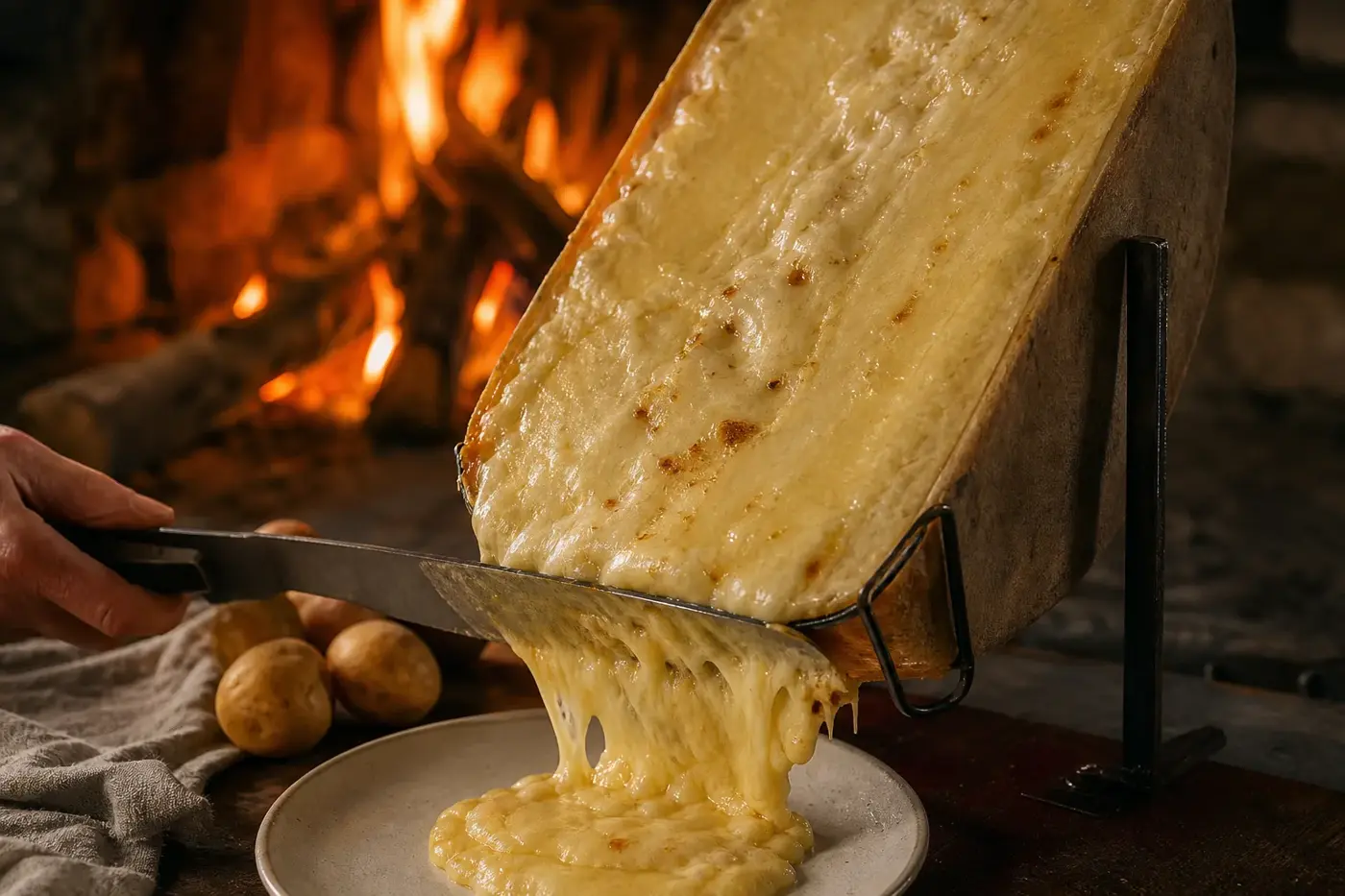
The Swiss AOP-IGP association describes Mont-d’Or as eaten at room temperature or heated in the oven and enjoyed like fondue.[10] Vacherin Fribourgeois is the sliceable wheel you have met here. It has its own varieties and its own place in moitié-moitié.
Use the complete name when you buy. If your recipe asks for Vacherin Fribourgeois, request it specifically. You should not expect another cheese called Vacherin to give the same result.
Make that distinction before you begin cooking. Read the label, look at the cut cheese and choose for the dish you intend to prepare. A shared word does not make the two cheeses interchangeable.
Bring it home with the right information
You can buy Vacherin Fribourgeois cut to order, in prepacked portions or prepared for fondue.[6] Ask about variety, maturation and milk treatment. Those questions are particularly useful when your portion comes from a larger wheel.
The Interprofession identifies the wheel’s casein mark, band and logo as traceability features.[7] Ask the seller to keep identifying information with your cut portion. For the wider details worth looking for, see reading a cheese label.
In England, Northern Ireland and Wales, the Food Standards Agency advises keeping your home fridge at 5 °C or below.[9] Follow the cheese’s storage instructions and use by date. For wrapping and everyday handling, turn to storing cheese at home.
If you are looking for pregnancy guidance in the UK, consult the NHS guidance on foods to avoid in pregnancy.[11] Keep that official advice at the centre of your decision.
Vacherin Fribourgeois may be made from raw or thermised milk.[3] Find out which treatment applies to the product you are considering, and take that information to your midwife or other healthcare professional when discussing the NHS guidance. Before choosing, consult the current official advice for your own country.
General information only, not medical advice: follow the official guidance where you live.
Questions people ask
Where is Vacherin Fribourgeois made?
Its legally defined area covers the canton of Fribourg and the Bernese municipality of Münchenwiler. Milk production, cheesemaking and maturation must all take place within that area.
What is the difference between moitié moitié and pure Vacherin fondue?
Moitié moitié contains equal quantities of Gruyère AOP and Vacherin. The Vacherin association describes pure Vacherin fondue as served lukewarm, with bread or potatoes.
How long is Vacherin Fribourgeois matured?
The minimum ripening period is nine weeks, but maturation varies by variety. Classic is matured for nine to 12 weeks, while Extra is matured for at least 12 weeks.
Can you eat Vacherin Fribourgeois during pregnancy?
The page directs readers in the UK to the NHS guidance on foods to avoid in pregnancy. Vacherin Fribourgeois may be made from raw or thermised milk, so check the treatment of the product and discuss it with your midwife or another healthcare professional.
How should Vacherin Fribourgeois be stored?
In England, Northern Ireland and Wales, the Food Standards Agency advises keeping a home fridge at 5 °C or below. Follow the cheese’s storage instructions and use by date.
Sources
-
Swiss Federal Office for Agriculture. AOP / IGP: appellations d’origine et indications géographiques, Vacherin fribourgeois register entry, current online record, checked November 2026. Records the registration decision, publication and subsequent amendments.
-
Swiss Federal Office for Agriculture. Cahier des charges: Vacherin fribourgeois, registration decision of 22 December 2005, amended through 22 February 2023. Articles 2, 3, 5, 6, 7, 16 and 18.
-
Interprofession du Vacherin Fribourgeois. Gamme, current online technical description and six-variety presentation, undated, checked November 2026. An industry source for its own product descriptions and tasting notes.
-
Fribourg regional tourism website. La fondue, moitié-moitié au Vacherin Fribourgeois, un plaisir mythique!, undated online account, checked November 2026. Proportions, ingredients, serving distinction and wine suggestion.
-
Interprofession du Vacherin Fribourgeois. Dossier de presse: Jubilé du Vacherin Fribourgeois AOP, April 2025, production account, page 9. Retrieved from AGIR’s published copy.
-
Association suisse des AOP-IGP. Vacherin Fribourgeois AOP, product leaflet, undated edition, checked November 2026. Production outline, retail formats and Montagne description.
-
Interprofession du Vacherin Fribourgeois. Savoir-faire, undated online account, checked November 2026. Traceability and factors affecting maturation.
-
Interprofession du Vacherin Fribourgeois. Fondues, undated online account, checked November 2026. Pure Vacherin fondue, maturity combinations and accompaniments.
-
Food Standards Agency. How to chill, freeze and defrost food safely, GOV.UK publication landing page, published 18 December 2017, checked November 2026. The landing page states its application to England, Northern Ireland and Wales.
-
Association suisse des AOP-IGP. Vacherin Mont-d’Or AOP, 2025 product leaflet. Production area and culinary uses.
-
NHS. Foods to avoid in pregnancy, current online guidance, checked November 2026. Dairy foods, unpasteurised products and cooking advice.
This article was researched from the Swiss register and specification, producer association publications, regional culinary information and UK official guidance, without a site tasting or recipe test.
Last checked: November 2026
Last checked November 2026.
The editors suggest you read next