Lighvan
Deep in the Sahand mountains, sheep’s milk cheese sits in brine, taking its time.
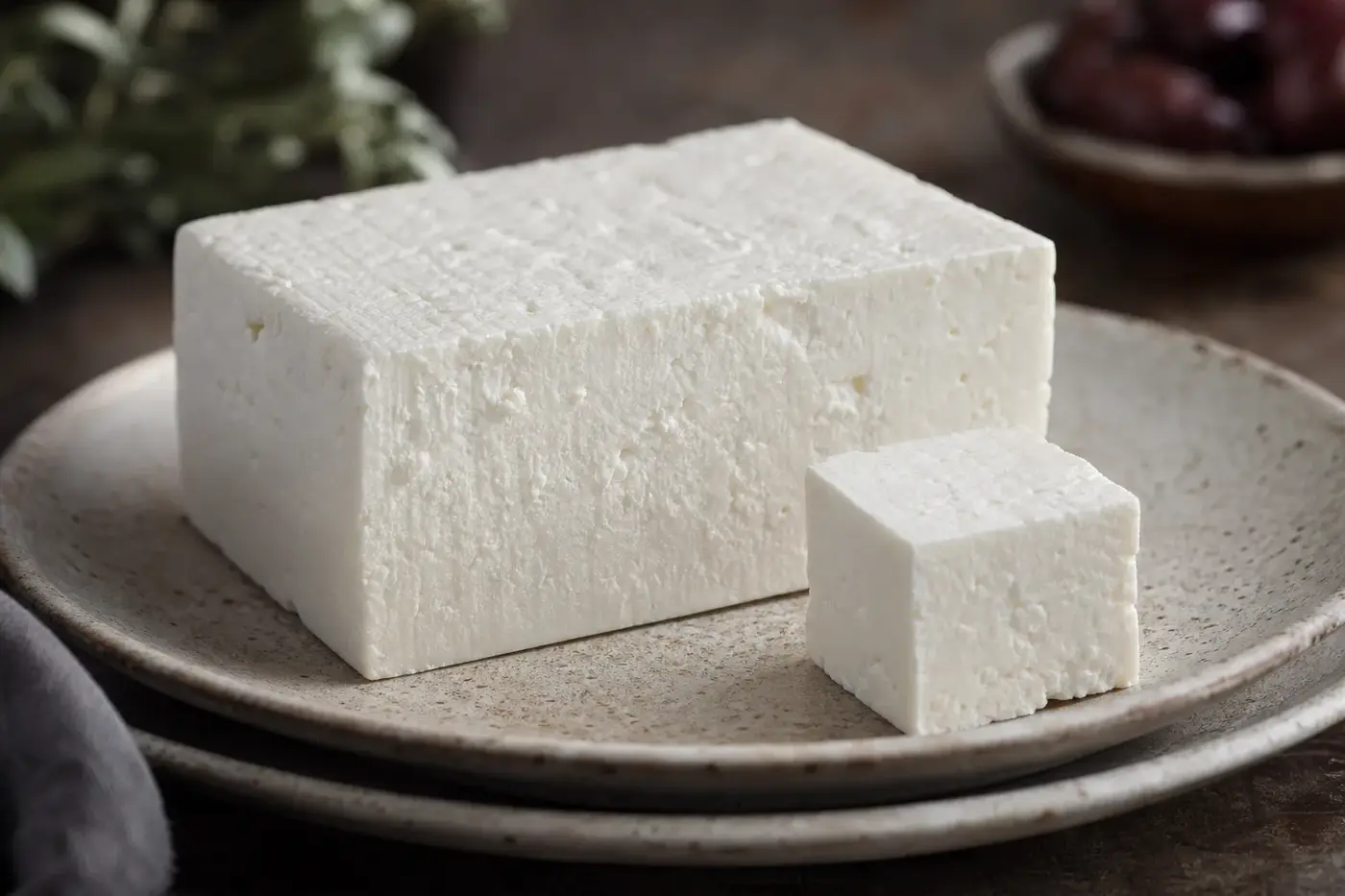
Deep in the Sahand mountains, sheep’s milk cheese sits in brine, taking its time. Published accounts describe maturation in deep natural or constructed caves around Lighvan village, near Tabriz, in Iran’s East Azerbaijan province. Here you meet Lighvan, also written Liqvan: salty, tangy and part of the white-brined family, with milk, fermentation and time shaping every piece. [1][2][6]
| What to know | A closer look |
|---|---|
| Names you might see | Lighvan; Liqvan. [1] |
| Where it calls home | Lighvan village and the Sahand mountain area, East Azerbaijan, north-western Iran. [1] |
| Its cheese family | White-brined; described in technical research as semi-hard. [2][3] |
| The traditional milk | Raw sheep’s milk; some traditional producers add goat’s milk. [2] |
| How fermentation starts | Traditionally without an added starter culture. [1][3] |
| Where it matures | In brine, with caves and refrigerated rooms documented. [1][2][3] |
| Registered name, authority and register ID | No details supplied here |
| Iranian statutory milk proportions and legal minimum ageing | No details supplied here |
| UK pregnancy guidance | NHS guidance, November 2026. [8][9] |
Meet Lighvan, the village as well as the cheese
Lighvan gives you a place name, not simply a style. Iranian geographical information puts the village in Tabriz County, while technical research places its cheesemaking in the mountainous Sahand area of East Azerbaijan. Spot “Liqvan” in a scientific publication and you have found an alternative English spelling of the same cheese. [1][6]
The mountains matter through the milk and the surroundings in which people make the cheese. Research on Liqvan’s bacterial communities connects its distinctive microbial ecology with grazing pastures, local environmental conditions and regional production methods. No single mountain herb needs to carry the entire flavour story on its shoulders. [1]
When you buy, look for the dairy and the production locality. A distributor’s address tells you where a business operates, not necessarily where the cheese was made. Ask directly: a named producer and a clear place of production offer more than a picturesque mountain description.
Begin with the sheep’s milk
Raw sheep’s milk is Lighvan’s traditional starting point. A 2024 research paper describes it as the usual milk, while recording small additions of goat’s milk by some traditional producers. If you want an entirely sheep’s milk cheese, compare the milk mixtures on the packs. [2]
That study also made experimental cheeses with five sheep-to-goat milk ratios, ranging from entirely sheep’s milk to entirely goat’s milk. These were trials exploring milk composition. They did not set out the proportions used by every commercial dairy. [2]
For your first purchase, ask three questions: which animal’s milk was used, was it pasteurised, and who made the cheese? “Sheep’s milk”, “traditional” and “unpasteurised” each tell you something different. One answer cannot stand in for the others, as raw milk, thermised and pasteurised cheese explains.
Follow the curd into the brine
The broad sequence sounds straightforward: curdle, drain, form portions, salt and ripen in brine. In the production trials reported in 2024, rennet coagulated the milk, then the curd was cut and the whey drained through cotton cloth. Rennet is the milk-clotting preparation; curd is the solid portion, and whey the liquid released from it. The resulting cheese was divided into cubes and placed in brine. [2]
An experimental study published in 2020 compared raw and pasteurised sheep’s milk cheeses made with different culture treatments. Its introductory account describes cloth drainage and pressing. An initial stronger brine came next, followed by maturation in a less concentrated brine. [3]
You can follow the shared method while keeping an eye on the differences. For an individual maker’s cheese, look for the milk treatment, culture use and maturation period, rather than stopping at “traditional”. Those details make comparisons more useful; how cheese is made takes you through the underlying stages.
Step inside the cave, or the cold room
Brine is salt dissolved in water, and it forms part of Lighvan’s maturation environment. A molecular investigation describes ripening in deep natural or constructed caves over six months. The 2020 paper records underground maturation, while the 2024 paper also describes cold room practice. Caves belong to the documented regional story, but cave ripening is not a requirement for every producer. [1][2][3]
If the caves draw you in, ask whether your particular batch matured underground, and for how long. The village’s caves tell you about the cheese’s wider history. The maker can tell you which maturation room actually held the cheese you are buying.
An age statement deserves a question too: does it measure maturation alone, or include later distribution or storage? The most useful description brings together the cheese, its maker and the production method actually used. You get both the regional story and practical information about the piece in front of you.
Taste what time and brine can do
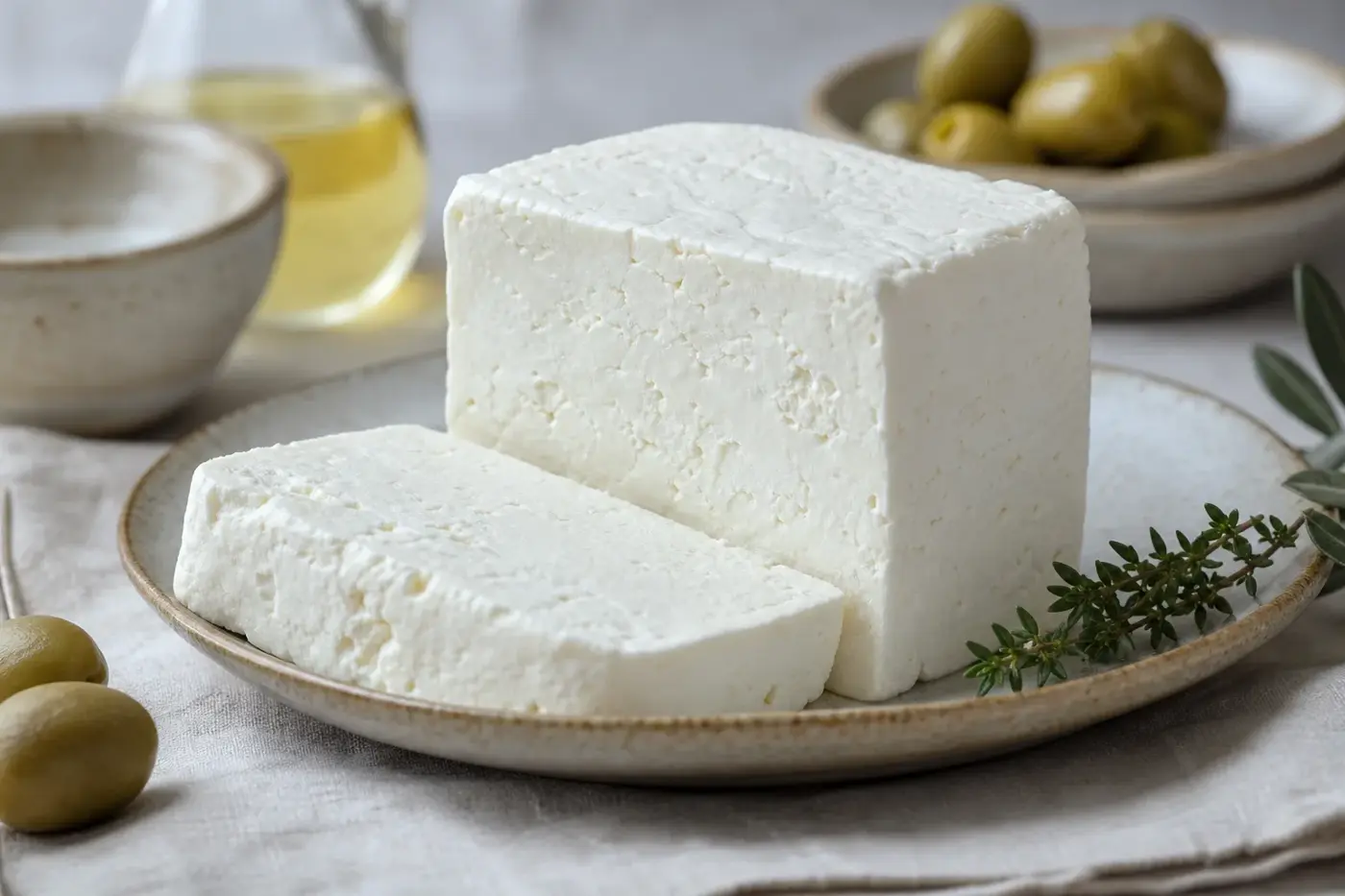
Technical publications describe Lighvan as white, with a semi-hard texture. Salt and acidity develop during maturation in brine: a study following the cheese for 90 days recorded increasing salt content and changes in several ripening measurements. Maturation stage had the greatest influence on the samples’ sensory properties. [2][4]
Give age its due when you read a tasting description. The same study measured changes in fat breakdown and protein-related ripening indicators, revealing processes at work as the cheese matured. Time in brine changes more than the date on the label. [4]
Before serving, find out how your batch behaves under the knife. Will it give you tidy slices, or break readily into crumbs? If you want small openings and a crumbly texture, ask to see the cut face: the cheese on the counter matters more than a general description of the style.
No added starter, but fermentation carries on
“Starter-free” does not mean fermentation-free. Traditional Lighvan production uses no added prepared starter culture, leaving the milk’s existing microorganisms an important role. Research on Liqvan’s lactic microflora and later work on its bacterial communities explore this part of the making process. [1][5]
The 2020 experiment compared milk treatment and culture choices over ripening. It analysed chemical and microbiological differences between the resulting cheeses. Those variables help explain why two makers might describe their cheeses differently, and give you useful questions to ask when comparing them. [3]
You need not turn your choice into a contest between methods. Look for a maker who explains the ingredients and handling requirements, then choose for your intended meal and the people eating it. Milk treatment, culture use and storage instructions each tell you something different.
Usually reach for feta? Meet another option
Feta gives you a useful reference point for serving Lighvan. If your dish calls for feta, compare the actual cheeses for milk type, firmness, salt and moisture before making the swap. Lighvan has its own documented production tradition and identity; it does not need to borrow another cheese’s name to get an invitation to dinner. [1][2]
Take the same approach with other brined cheeses. Does your recipe need a slice that holds together, a crumbly topping, or cheese to mix through a filling? Choose for the job, then adjust the dish around that particular cheese.
For a cold salad, start with less cheese and taste before adding more. For a filling, make a small trial portion before committing to the whole dish. Both habits help when you move from a familiar cheese to an unfamiliar maker’s Lighvan, whose salt, moisture and firmness may change the result.
Set the table with bread, herbs and vegetables
For your first serving, try flatbread, washed herbs, walnuts, cucumber and tomato. These simple accompaniments let everyone assemble a mouthful and decide how much cheese they want. You get a straightforward introduction to a particular maker’s Lighvan, without much fuss.
Put the cheese in its own small dish, with bread and vegetables alongside, rather than mixing everything at once. Taste your first mouthful before reaching for seasoning. Keep the walnuts separate too, particularly if your guests have different preferences or dietary requirements.
If you are cooking, try a little crumbled cheese in a vegetable filling or scattered over roasted vegetables. Treat these as starting ideas, then follow a suitable recipe for quantities and cooking instructions. When serving in the UK, follow NHS guidance that ready-to-eat foods should be eaten within four hours of removal from the fridge. [9]
Take a few good questions to the cheese counter
Start with the milk species and milk treatment. Read the ingredients, identify the producer and production locality, and look for any stated maturation period. Keep the label or photograph it, especially if your cheese is cut from a larger container, so the product information comes home with your portion.
Ask the seller to fill any gaps. Is the milk entirely sheep’s milk, was it pasteurised, and does the stated age apply to this batch? If the choice of coagulant matters to you, request the maker’s declaration rather than relying on a general description.
Before deciding how much to buy, read the refrigeration and after-opening instructions. Choose a pack you expect to finish within those directions. How to read a cheese label helps you separate specific product information from broader descriptive language, so you can compare the details that matter to you.
This page summarises published guidance from the official sources it cites. It is not medical advice. Guidance differs between countries and changes over time, so check the current source for where you live, and ask your doctor, midwife, pharmacist or dietitian about your own circumstances.
Give it good storage, and follow UK safety guidance
For home storage in Scotland, Food Standards Scotland advises keeping chilled ready-to-eat food at 5 °C or below. Follow the label’s storage instructions and use opened food within two days unless the packaging says otherwise. Keep raw and ready-to-eat foods separate, and wash your hands before preparing food. [7]
Follow the pack’s directions for both the cheese and its brine. If your portion has been repacked without instructions, ask the supplier for them in writing. Let the stated opening period and use-by date guide storage, rather than assigning a shelf life simply because the cheese is called Lighvan. [7][9]
If you are pregnant in the UK, consult NHS guidance on cheese and unpasteurised milk. It distinguishes between cheese categories and gives cooking advice for some cheeses. Compare the current guidance with your actual product, including its milk treatment and cheese category, rather than relying on the name alone. [8]
The NHS identifies pregnancy, newborn babies, weakened immunity and increasing age as factors associated with more serious listeriosis. Unpasteurised dairy products are among the foods it lists as possible carriers of Listeria. If you are in one of these groups, consult the official guidance and your healthcare professional about your own circumstances. [9]
Questions people ask
Where does Lighvan cheese come from?
Lighvan takes its name from a village in Tabriz County, in Iran’s East Azerbaijan province. Its cheesemaking is associated with the Sahand mountains.
What milk is Lighvan made from?
Traditionally, Lighvan starts with raw sheep’s milk. Some traditional producers add small amounts of goat’s milk.
What does Lighvan taste like?
Lighvan is salty and tangy, with a white, semi-hard texture. A study found that maturation stage was the main influence on the sensory properties of its samples.
Can I use Lighvan instead of feta?
Feta is a useful reference point when serving Lighvan. Before substituting, compare the actual cheeses for milk type, firmness, salt and moisture.
Can I eat Lighvan during pregnancy?
The NHS distinguishes between cheese categories and gives cooking advice for some cheeses. Check its current guidance on cheese and unpasteurised milk against the actual product, including its milk treatment and cheese category.
Sources
- Food Microbiology, “Molecular investigation of bacterial communities during the manufacturing and ripening of semi-hard Iranian Liqvan cheese”, 2017. Publisher abstract retrieved; full text was inaccessible. Publisher record.
- Food Science & Nutrition, “Influence of the Blends of Sheep’s and Goat’s Milk on the Functional Properties and Volatile Compounds of Lighvan Cheese During Ripening: A Comparative Study”, volume 12, 2024, pages 9764 to 9776. Introduction and experimental methods. Full text.
- 3 Biotech, “Bioactive characteristics of a semi-hard non-starter culture cheese made from raw or pasteurized sheep’s milk”, volume 10, article 85, 2020. Abstract and introduction. Full text.
- International Journal of Dairy Technology, “Changes in physicochemical and organoleptic properties of traditional Iranian cheese Lighvan during ripening”, volume 65, 2012, pages 64 to 70; first published online October 2011. Abstract. Publisher record.
- International Journal of Food Properties, “Lactic Microflora Present in Liqvan Ewes’ Milk Cheese”, 2008. Publisher abstract retrieved; full text was inaccessible. Publisher record.
- Irangaah, “معرفی، امکانات و مشخصات روستای لیقوان در استان آذربایجان شرقی”, undated geographical listing. Secondary Iranian source identifying Lighvan in Tabriz County. Listing.
- Food Standards Scotland, “Listeria monocytogenes”, current consumer guidance, checked November 2026. Storage, separation and hygiene advice. Official guidance.
- NHS, “Foods to avoid in pregnancy”, current guidance, checked November 2026. Cheese, milk and other dairy section. Official guidance.
- NHS, “Listeriosis”, reviewed 10 November 2023; checked November 2026. Risk groups, food sources and prevention advice. Official guidance.
- Food Standards Agency, “Alerts”, live alert index, checked November 2026. Editorial recall-screening source. Official alerts.
This desk-researched article synthesises published cheese research and official UK consumer guidance, with outstanding verification and review requirements recorded below.
Last checked: November 2026
Last checked November 2026.
The editors suggest you read next