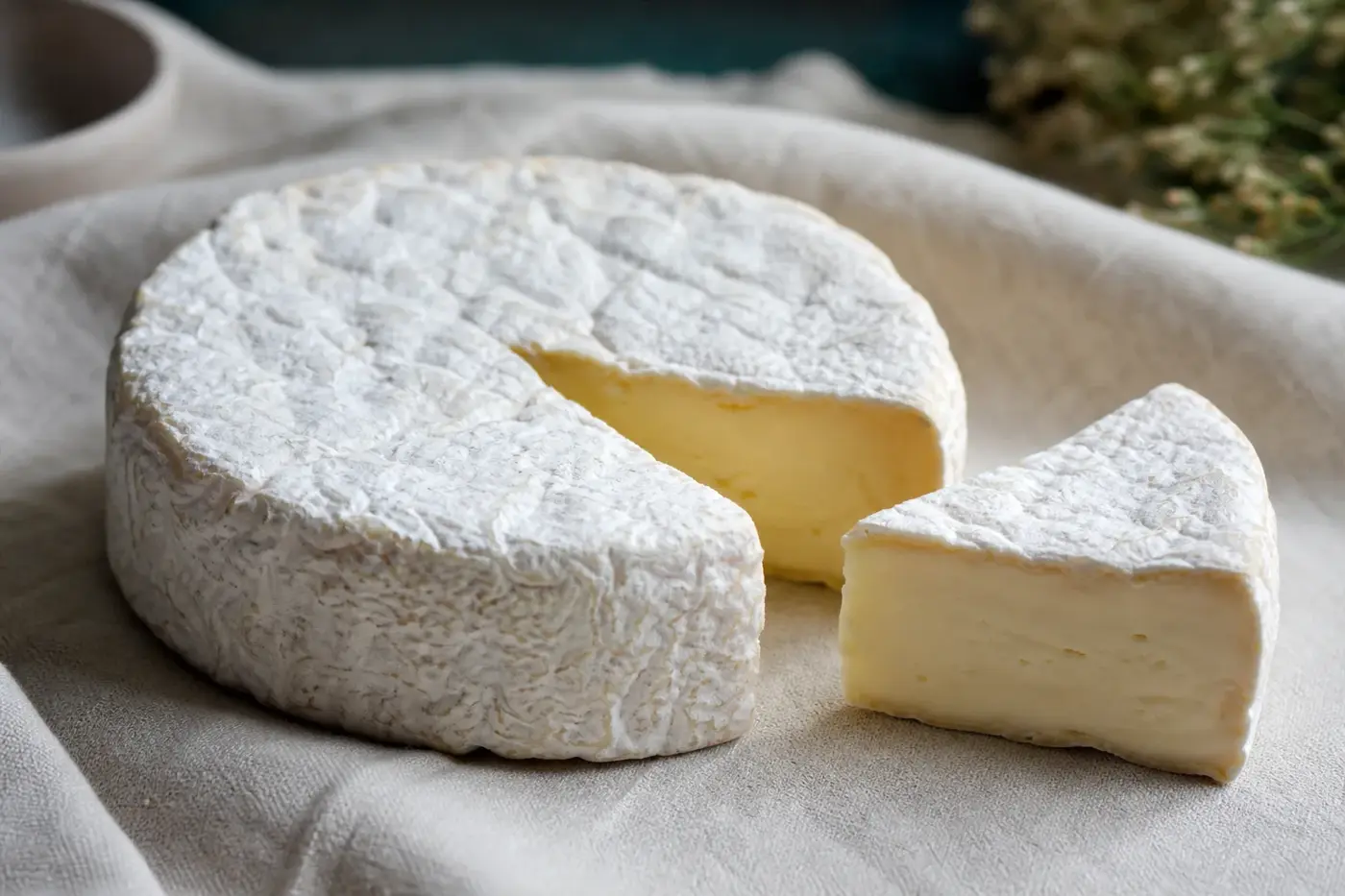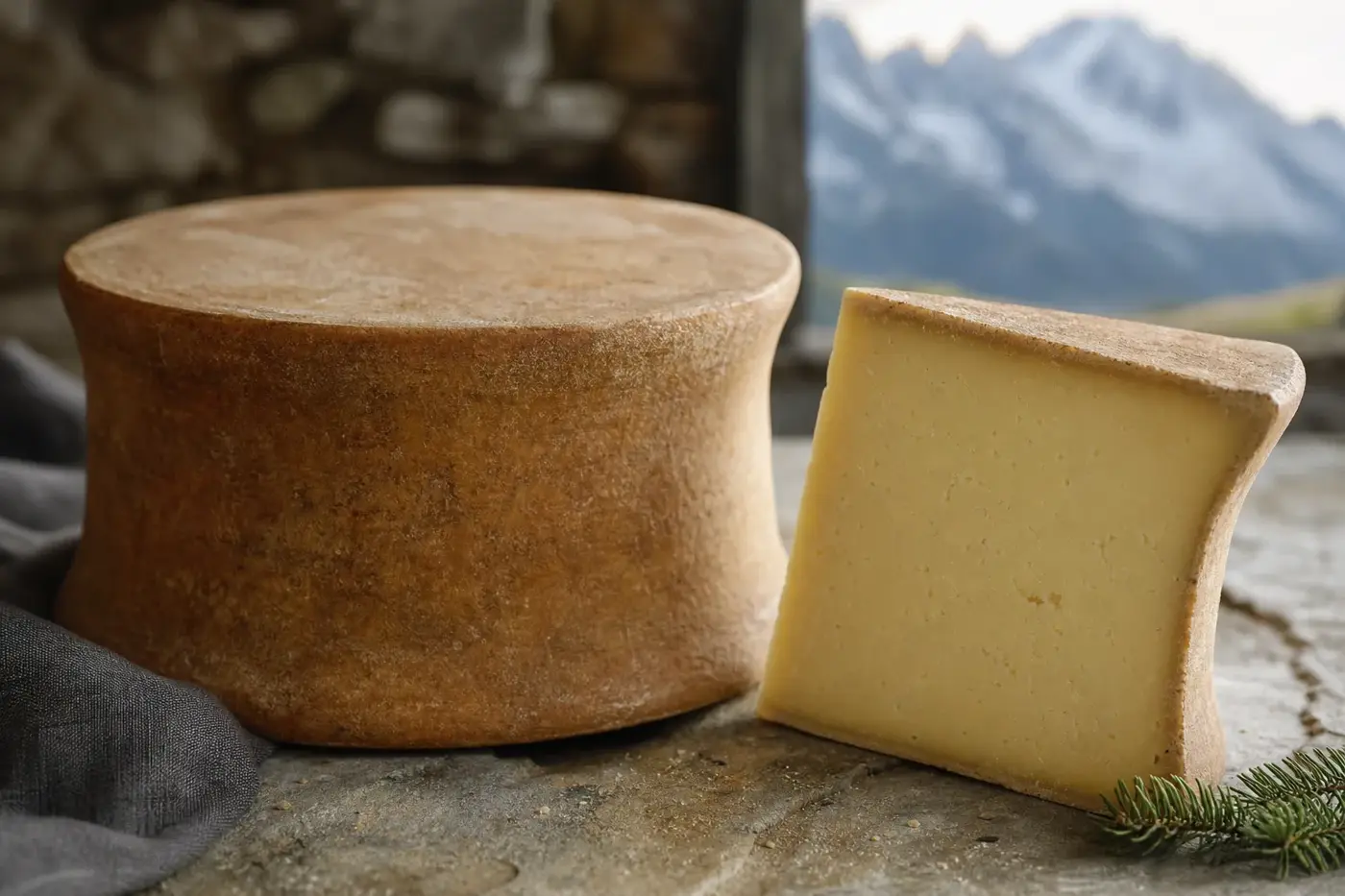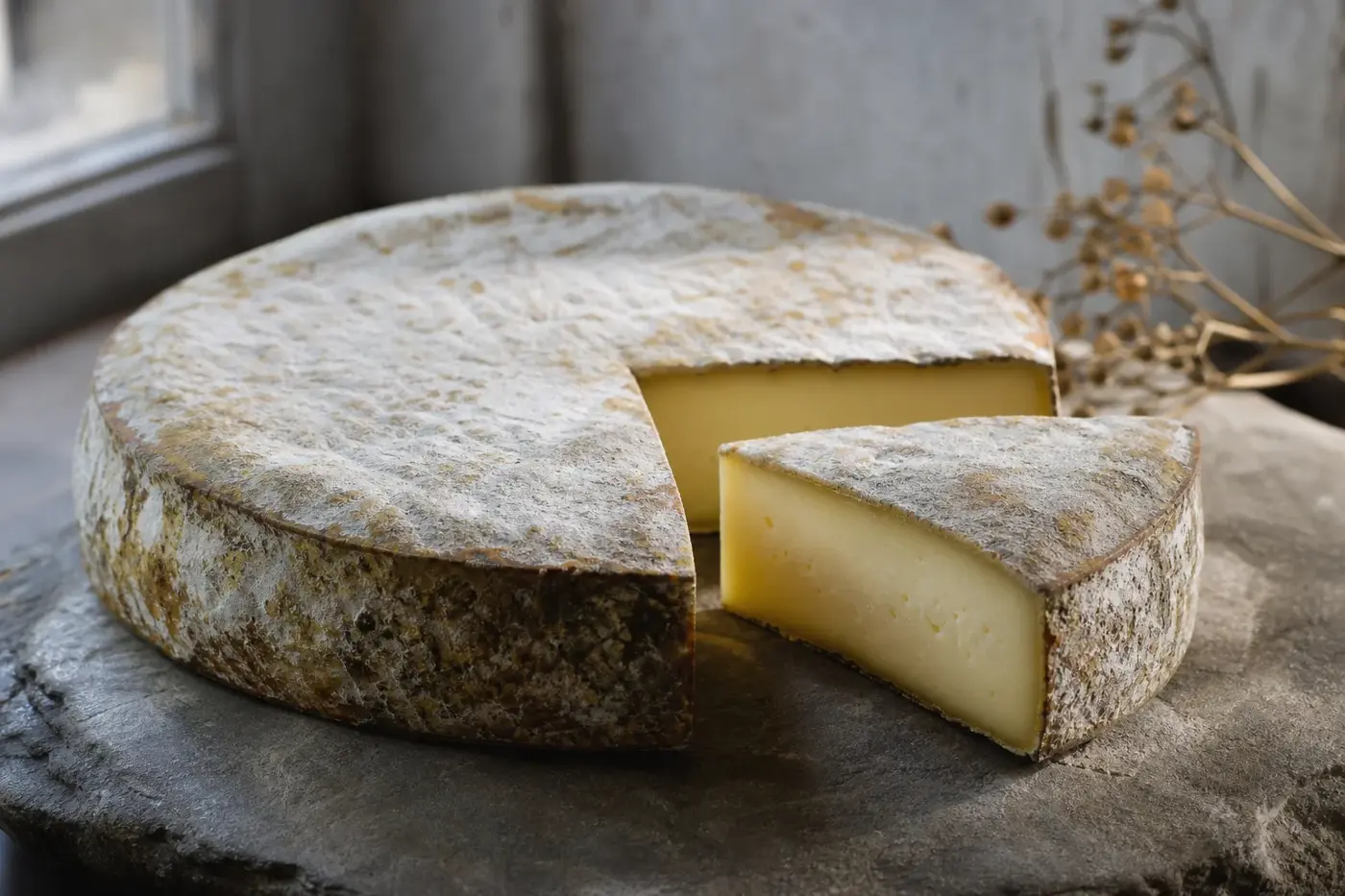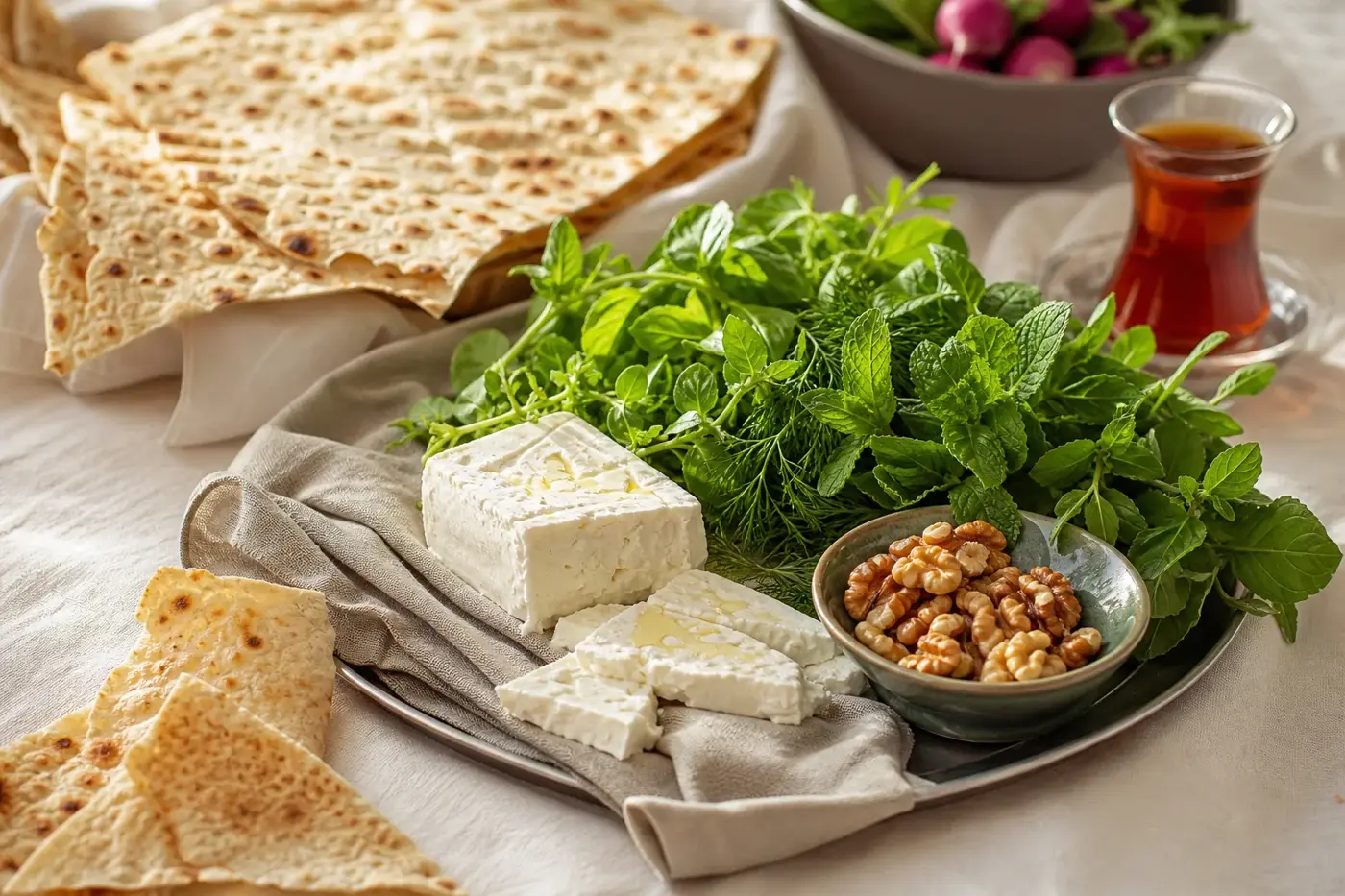
Tear off some flatbread. Add white cheese, fresh herbs and a piece of walnut, then make the next mouthful a little differently. This simple Iranian breakfast opens onto a much bigger cheese story: brine, jars, sheepskins, and the patient work of milk, local practice and time. Lighvan’s brined cheese is a good place to begin, though your breakfast need not wait for the reading.[1][2][3]
| Your quick guide to Iranian cheese | What to look for |
|---|---|
| The general Persian word | Panir, also transliterated panīr.[1] |
| Regional cheeses worth exploring | Lighvan, East Azerbaijan; pot cheese, West Azerbaijan; Siahmazgi, Gilan.[2][3] |
| Milks you will meet | Sheep, goat and cow milk feature in these traditions.[1][2] |
| What makes them different | Brine-matured, jar-matured and skin-matured cheeses.[2][3] |
| Tabrizi standard and formal name protection | Status uncertain |
Let panir open the door
When you see panir, think “cheese”, rather than one particular white block. It is the general Persian word, and the description beside it tells you more. Look there for the milk, the place, the method or the individual product.[1]
How the milk sets is one useful distinction. Rennet, an enzyme preparation, coagulates milk; acidification forms other dairy products, and Iranian traditions include both approaches. The curd, the solid portion separated from liquid whey, can then be drained, salted and kept in different ways.[1]
Brined cheese is an inviting starting point, but there is more to meet. Jar and sheepskin maturation bring different textures and regional practices, not one interchangeable family of white cheeses.[2][3] To get your bearings, explore how to tell cheese styles apart.
Follow the cheese from village to flock
Iranian cheesemaking takes you into settled village households and pastoral communities with mobile flocks. Encyclopaedia Iranica’s ethnographic account records both settings. It follows regional uses of milk and the close connections between yoghurt, butter, buttermilk and other dairy foods.[1]
Several documented traditions draw you north-west. Lighvan belongs to East Azerbaijan, while research on pot cheese includes Sardasht in West Azerbaijan. Further east, Siahmazgi brings you to Gilan in northern Iran.[2][4]
These names describe different production settings, not a single national recipe. A mountain village, a household dairy and an industrial manufacturer can all belong to Iranian cheese culture while making quite different cheeses. Ask where yours was made, which milk went into it, and how it matured.
Start with the milk, but keep asking questions
Sheep milk generally contains more fat and total solids than cow milk. Iranian dairy scholarship discusses that difference when explaining Lighvan. The precise effects of the different milks on flavour and texture remain uncertain.[2]
Goat milk appears in documented Lighvan production too, alongside sheep milk or in regional variations. Cow milk features elsewhere in Iranian dairying and in modern dairy manufacture. Milk species is only the beginning, though: drainage, salt, cultures and maturation all help shape what reaches your plate.[1][2][3]
At the cheese counter, keep two questions separate: which milk, and which treatment? Sheep milk does not automatically mean raw, and cow milk does not automatically mean pasteurised. Establish both, using raw milk, thermised and pasteurised cheese to guide you through the distinctions.
Meet Lighvan in the foothills near Tabriz
Lighvan, also written Liqvan, takes its name from a village and valley near Tabriz in north-western Iran. Iranian research places the village in East Azerbaijan, on the foothills of Mount Sahand, south-east of Tabriz. Here, a place name brings you to a particular cheesemaking tradition.[4][5]
The description gives you plenty to anticipate: white-brined cheese, a cream-coloured paste, sour taste and crumbly texture. The traditional method researchers document uses raw sheep milk, natural lamb rennet and no added starter culture. Other Iranian accounts describe mixtures of sheep and goat milk.[3][5]
A starter culture is a selected population of microorganisms added to guide fermentation. In the traditional production studied here, microorganisms already in the milk and production environment do that work instead. No added starter directs the fermentation.[4][5]
Then the cheese spends time in brine. A study following Lighvan through 90 days of brine maturation measured changes in salt, protein breakdown and fat breakdown. The ripening stage emerged as a major influence on its sensory properties.[6]
Buying Tabrizi panir? Read beyond the name
A Tabrizi name gives you a starting point, not the whole story. Read the product description and manufacturing origin: its definition as a brined cheese style, and any formal protection of the name in Iran, remain uncertain. The label alone does not establish a connection to Lighvan.
Lighvan has a documented association with a particular village and cheesemaking tradition.[4][5] That evidence belongs to Lighvan. It does not automatically apply to another packet because its name refers to nearby Tabriz.
Look for the declared milk species, raw or pasteurised treatment, ingredients, manufacturing origin and maturation details. These give you firmer ground for choosing than regional wording alone. For help making sense of the packet, see how to read a cheese label.
Discover what happens inside the jar
Picture cheese being dry-salted, ground and packed into jars, rather than left as a block beneath brine. Published accounts use the names Koozeh and Koopeh for Iranian pot cheese. One documented method puts the filled vessels underground for two to three months.[3]
Breaking down the cheese and packing it together gives maturation a different arrangement to work with. Research on Kurdish Kope cheese made from raw sheep milk records progressive protein breakdown. During the study, its structure became more open and crumbly.[7]
Siahmazgi takes you somewhere else again. Iranian dairy scholarship associates it with the village of that name near Rasht in Gilan.[2] Its milk and maturation methods remain uncertain without primary regional research.
Keep each local name attached to the method its source describes. “Pot cheese” and “skin cheese” are useful ways into the subject, but neither promises a single practice. The container offers a clue, not the complete story.
Watch milk become Lighvan
Rennet, drainage, salt and maturation form the recognisable sequence across documented Lighvan methods. Details vary between individual dairies and research protocols. Keep these stages in mind when you read a cheese description.[3][5]
- Set the milk: rennet coagulates it into a gel.
- Cut and drain: the curd is divided and whey drains away, commonly through cloth.
- Press and portion: drainage and pressure consolidate the curd before it is divided.
- Add the salt: directly, through brine, or through successive stages.
- Allow time to mature: enzymes and microorganisms change the cheese’s composition as it develops in its storage medium.[3][5]
Published accounts describe different brining arrangements and maturation periods. One has Lighvan cubes in metal tins of brine for three to four months; another records maturation in underground rooms for up to six months.[3][5] These are production practices, not one legal minimum for every cheese bearing the name.
For the wider journey from milk to finished cheese, turn to how cheese is made. It explains the general sequence behind these individual methods.
Give kashk its place by the cooking pot
A tub of kashk has a different job from a block of brined table cheese. Kashk is a fermented dairy cooking ingredient. Traditional dried kashk starts as sour buttermilk, which is heated, concentrated, salted and dried; modern liquid versions can be manufactured from yoghurt.[2]
That concentration shapes what you do with it. Disperse dried kashk into water to make a dairy sauce, while liquid products offer a ready-to-use cooking ingredient. Follow the preparation instructions for your particular product.[2]
Shop with your dish in mind, because liquid kashk and brined panir are not interchangeable purchases. Read the ingredients too. Published descriptions include variations incorporating cereal ingredients.[2]
Build breakfast one mouthful at a time
Set out flatbread, a small plate of cheese, fresh herbs and walnuts separately. You can assemble each mouthful just as you please. Adjust the cheese against the bread and accompaniments as you eat, rather than committing the whole plate at once.
Barbari is one suitable bread. The Iranian culinary source Persian Mama describes this traditional breakfast flatbread as having a crisp crust and an airy interior.[8] A soft flatbread also makes a convenient wrap for the same ingredients.
Choose herbs you enjoy: mint, basil or parsley, for example. There is no fixed formula here, and breakfast need not become an examination. Begin with bread and cheese, then add herbs and a piece of walnut until you find your balance.
Keep the serving portion small and the main cheese supply refrigerated. The storage guidance below will help you keep the practical side straightforward.[9]
Let brined cheese finish your lunch
When you want distinct pieces rather than a sauce, add brined Iranian cheese at the finish. Break it over cucumber and tomato, tuck it into flatbread with herbs, or scatter it over cooked vegetables just before serving. Let the texture guide your hand.
Taste before salting anything else. For a simple lunch, gather bread, cheese, sliced vegetables and herbs, keeping the elements separate until you eat. You can find the balance mouthful by mouthful, just as at breakfast.
Cut a firmer cheese into small pieces; scatter a crumbly one. These are kitchen suggestions, not substitutes for the packet. Its instructions govern storage and handling.[9]
This page summarises published guidance from the official sources it cites. It is not medical advice. Guidance differs between countries and changes over time, so check the current source for where you live, and ask your doctor, midwife, pharmacist or dietitian about your own circumstances.
Bring your cheese home safely in Britain
At an Iranian or Middle Eastern grocer, ask for the cheese by name, then read the packet. Look for the manufacturing location, milk species, whether the milk was pasteurised, and instructions for keeping it after opening. These details help you choose and store it.
If the milk treatment is unclear, ask the seller whether it was pasteurised. The current labelling requirements for raw milk cheese in England remain uncertain. Do not treat the milk species as an answer to the treatment question.
At home, follow the FSA guidance for England, Wales and Northern Ireland. Keep your fridge between 0 and 5 °C, refrigerate dairy products and follow packaging instructions, including date marks. Use the manufacturer’s after-opening instructions, rather than assuming every brined cheese has the same storage period.[9]
During preparation, keep chilled food outside the fridge for the shortest possible time. The same FSA guidance gives a maximum of four hours.[9]
In England, Wales and Northern Ireland, look at the cheese, bread and accompaniments individually for allergens, including precautionary statements. For loose food, ask the retailer for allergen information.[11] The precise applicable labelling requirements remain uncertain.
For personal travel directly from Iran into Great Britain, GOV.UK guidance dated November 2026 prohibits bringing in milk-based products such as cheese. Commercial supply follows a separate route, linked from the official guidance. Before departure, check the operative traveller guidance again.[12]
Questions people ask
What does panir mean?
Panir is the general Persian word for cheese, not the name of a particular white block. A description of the milk, place, method or product tells you more about the cheese.
What is Lighvan cheese made from?
The traditional method documented by researchers uses raw sheep milk, natural lamb rennet and no added starter culture. Other Iranian accounts record mixtures of sheep and goat milk.
How is Iranian pot cheese made?
The cheese is dry salted, ground and packed into jars to mature. Koozeh and Koopeh are names used in published accounts.
What is kashk and how is it used?
Kashk is a fermented dairy cooking ingredient, distinct from brined table cheese. Dried kashk can be dispersed in water to make a dairy sauce, while liquid versions are ready to use.
How should Iranian cheese be stored?
The FSA advises keeping the fridge between 0 and 5 °C, refrigerating dairy products and following packaging instructions, including date marks. Consult the FSA guidance for England, Wales and Northern Ireland, and follow the manufacturer's instructions for the cheese after opening.
Sources
[1] Encyclopaedia Iranica, “Cheese”, published 1991, updated 2015. Ethnographic account, including the contributor’s observations.
[2] Elsevier, Nutritional and Health Aspects of Food in South Asian Countries, chapter 2, “Traditional food and practices for health: Iranian dairy foods”, 2020. Sections 2.4 and 2.6, including the author’s account of Siahmazgi research.
[3] Bentham Science, “Manufacturing Method and Physicochemical Properties of Lighvan and Koozeh (Koopeh) Cheeses”, 2020. Publisher’s chapter abstract.
[4] Food Production, Processing and Nutrition, “Phenotypic and phylogenetic characterization of Lactobacillus species isolated from traditional Lighvan cheese”, 2021. Original Iranian microbiological research and geographical description.
[5] International Journal of Food Properties, “Lactic Microflora Present in Liqvan Ewes’ Milk Cheese”, 2008, volume 11, pages 407 to 416. Full research paper.
[6] International Journal of Dairy Technology, “Changes in physicochemical and organoleptic properties of traditional Iranian cheese Lighvan during ripening”, 2012, volume 65, pages 64 to 70. Research abstract, first published online in October 2011.
[7] Journal of Food Science, “Characterization of a traditional ripened cheese, Kurdish Kope cheese: Proteolysis, microstructural, and rheological characteristics”, 2025, volume 90, article e70107. Research abstract retrieved through PubMed.
[8] Persian Mama, homepage description of “Barbari Bread”, undated culinary account, retrieved November 2026.
[9] Food Standards Agency, “How to chill, freeze and defrost food safely”, published 2017, current online guidance retrieved November 2026.
[10] Food Standards Agency, Food Law Practice Guidance (England), 2020, section 7.4.10, “Labelling of cheeses made from raw milk”.
[11] Food Standards Agency, “Food allergy and intolerance advice for consumers”, updated August 2026, particularly the allergen list and advice about obtaining food information.
[12] GOV.UK, “Bringing food into Great Britain: Meat, dairy, fish and animal products”, current traveller guidance retrieved November 2026, section “From countries outside the EU”.
This piece was researched from Iranian dairy research, documented culinary and ethnographic accounts, and British official consumer guidance.
Last checked: November 2026
Last checked November 2026.
The cheeses of Iran
The editors suggest you read next
French Cheese: The Complete Guide
Picture Normandy’s pastures, then follow the milk towards the Loire’s goat dairies, the Jura’s shared cheesemaking traditions and the sheep country of the Pyrenees.