Meredith Dairy
Spread soft goat cheese onto bread and take a bite.
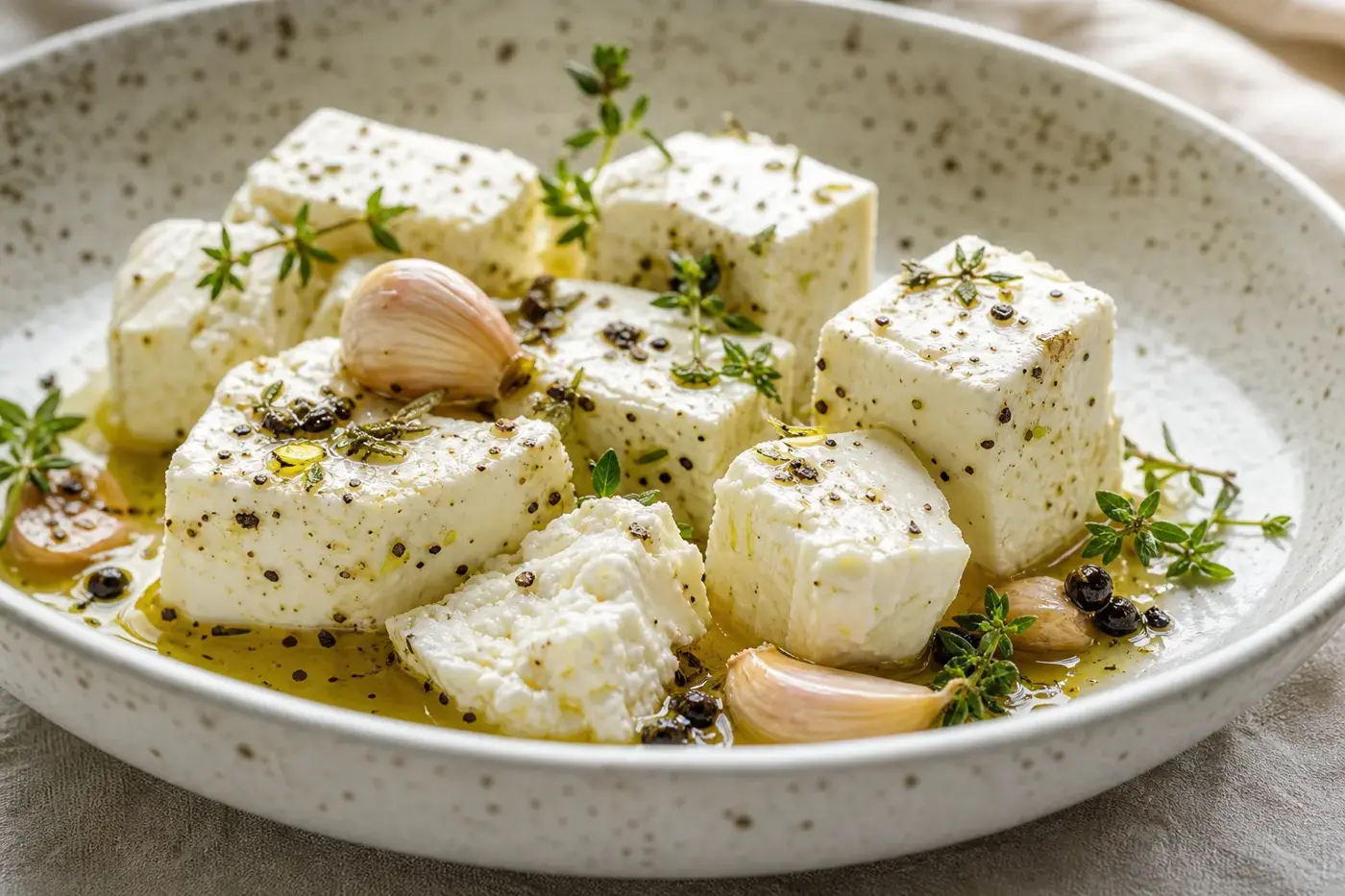
Spread soft goat cheese onto bread and take a bite. First comes a citrus-like tang, then garlic, herbs and oil: Meredith Dairy’s marinated cheese brings a family farm near Meredith in Victoria to your table.[1][7] Sandy and Julie Cameron established the Australian dairy in 1991, bringing farming and cheesemaking together. Today, sheep and goats supply milk for fresh cheeses and yoghurts, though sheep had first billing in the founders’ story.[1][2]
| Meet the producer | The details |
|---|---|
| Home | Meredith, Victoria, Australia.[1] |
| Where it began | 1991, according to the founders’ account.[2] |
| Founders | Sandy and Julie Cameron.[2] |
| Legal entity | MEREDITH DAIRY PTY LTD, ABN 92 055 430 450.[3] |
| Milk supply | On-farm supply, according to the producer.[4] |
| Business status | Active ABN registration; corporate solvency status unknown.[3] |
| Production | Producing, according to its website in November 2026.[1] |
| Visiting | Access unknown |
| Official website | meredithdairy.com.[1] |
Two careers, one decision to keep farming
Before the dairy came two people determined to stay on the land. Both Camerons grew up on farms. Sandy trained as a vet; Julie worked as an intensive care nurse. In their published account, they describe leaving those careers to farm full time in Meredith.[2]
Then came 1991, with uncertainty in traditional farming. Looking for another use for their farm produce, they began milking sheep, then goats, and making cheese and yoghurt. Sheep dairying began the story, rather than joining an established goat cheese business.[2]
You can still trace that decision through the range. Meredith’s place in Australian cheesemaking remains rooted in the farm, with fresh sheep and goat dairy products at its heart. Think unsalted curd, marinated cubes and pot-set yoghurt.[1][4]
From the paddocks to the dairy
About 120 kilometres west of Melbourne, the family farm sits on Cameron Road, Meredith. The company describes sheep grazing the pasture around the dairy, while goats live in open-walled sheds.[1][2]
Here, the journey from milk to making is a short one. Meredith says it makes its products on the family farm and milks daily. For fresh goat cheese, the milk is processed within hours of milking.[1][4]
Farm and dairy are connected working parts, not simply separate places with the same name on the jar. That closeness matters when you are making fresh cheese and cultured milk. Daily milking and making sit at the centre of the producer’s account.[1][4]
Sheep or goats? Read the whole jar
Both species contribute to Meredith’s range, but you will not find both milks in every product. Its stockist finder separates Marinated Goat Cheese from Marinated Sheep and Goat Cheese. Sheep milk yoghurt and goat milk yoghurt have separate listings too.[5]
Before you choose, read the whole name. Similar-looking jars can carry different milk declarations. The mixed-milk product’s published ingredients name pasteurised goat and sheep milk, without giving their proportions.[6]
Meredith describes control of its supply chain and an on-farm milk supply.[2][4] That does not establish whether every product uses milk exclusively from company farms.
Soft cheese, garlic and a generous helping of herbs
The familiar sight is soft cheese surrounded by seasoned oil. Meredith describes its goat-only version as spreadable, with a citrus-like tang. Garlic, herbs and extra virgin olive oil feature in the marinade; its foodservice description also names peppercorns.[4][7]
The sheep and goat version has its own formulation. A trade product sheet lists pasteurised goat and sheep milk, a garlic-infused blend of extra virgin olive oil and canola oil, salt, peppercorns, fresh herbs, non-animal rennet and cultures. It describes a smooth texture and singles out fresh thyme in the marinade.[6]
For your plate, that means cheese to spread or break over food, with garlic and herbs already bringing their own seasoning. Pay attention to the oil, too: it is a blend, not necessarily entirely olive oil. Read the jar’s ingredient list for the formulation sold in your market.[6][7]
Treat the mixed-milk and goat-only cheeses as separate products. Give a retailer the full name when asking them to find one. That is particularly useful if an overseas recipe or photograph started your search.[5]
Beyond the marinated jar
There is more to Meredith than cheese in oil. Its published fresh cheese selection includes Original, Fresh Dill, Dusted with Ash and Australian Native Pepperberry. The dairy describes the underlying fresh goat cheese as lightly textured and spreadable, with subtle salt and citrus notes.[8]
The foodservice range gives you more choices still. Curd, cheese and yoghurt each bring something different to the kitchen:
| Your choice | What the producer says |
|---|---|
| Fresh goat curd | Unsalted curd separated from whey.[4] |
| Fresh goat cheese | Soft, white cheese made with the on-farm milk supply.[4] |
| Whipped goat cheese | Lightly salted goat curd aerated with nitrogen.[4] |
| Natural yoghurts | Separate sheep or goat milk products, pot-set and unhomogenised.[4] |
Let your plans in the kitchen guide you. Unsalted curd leaves the seasoning in your hands; marinated cheese arrives with oil, garlic and herbs already at work. Whipped cheese is deliberately aerated for a lighter texture.[4]
Availability varies by market and stockist. If you have your heart set on a particular flavour, format or milk type, compare the current product list with the actual pack.[5][8]
What happens before the marinade
The oil comes later: first, there is cheesemaking. Nor is there one recipe running through the whole range. For the mixed-milk marinated cheese, the ingredients include cultures and non-animal rennet, the coagulant that helps form curd.[6]
Meredith separately describes fresh curd as separated from whey, the liquid released during cheesemaking.[4] Its goat cheese is then presented as soft cubes in a seasoned oil blend. Whipped cheese takes a different route, with nitrogen added to create its airy texture.[4]
Yoghurt follows another path altogether. Meredith describes its sheep and goat milk yoghurts as pot-set, rather than drained cheese.[4]
If you would like to follow those underlying stages, see how cheese is made. For milk treatment, coagulant and added ingredients, use the specific product’s information, as explained in how to read a cheese label.
Keeping the farm going for another generation
In Meredith’s published account, sheep graze paddocks around the dairy. Goats have shelter and fresh straw in open-walled sheds.[2] These are the husbandry arrangements described by the company.
The company says it aims to maintain the farm and dairy for another generation. It also presents environmental care as part of everyday business practice.[1]
To understand that ambition, look to the concrete details: animal management, land management and the connected farm-to-dairy operation. Measured environmental outcomes and independently certified welfare standards need dated evidence specific to those claims.
Start with bread and see where you end up
Crusty bread is a good place to begin. Meredith also suggests crackers, salads, soups and sandwiches for its marinated goat cheese. Its foodservice suggestions take you further, to roasted vegetables, pasta and pizza.[4][7]
Give the cheese one main job, then let its texture and seasoning do the work. There is no need to organise an entire supporting cast:
- On bread: spread it. This is not a cheese with ambitions to become a neat slice.
- Over vegetables: break it into pieces, leaving some distinct.
- In a salad: let it bring seasoning, then taste before adding salt.
- Alongside soup: serve it on toast, following the producer’s bread and soup suggestions.[4][7]
The mixed-milk product sheet specifically suggests using the oil as a salad dressing.[6] Spoon out only what your dish needs. Follow the jar’s refrigeration and handling instructions.[6][9]
For your first taste, try plain bread before adding stronger accompaniments. You will find it easier to notice the cheese and marinade separately.
Finding the right jar in the UK
Start with Meredith’s official stockist finder and export contact. The company says it supplies Australia and international markets. If you have a particular UK shop in mind, ask about current availability.[5]
Give your cheesemonger or specialist food retailer the exact name: Marinated Goat Cheese or Marinated Sheep and Goat Cheese. If ingredients or the milk combination matter to you, request a photograph of the current label before ordering.
Look for the named producer, product description, milk treatment and allergen information. Read the date marking and refrigeration instructions too. For delivery, ask how the retailer maintains the required chilled conditions, and what to do if your parcel arrives outside them.[9]
Follow the supplied storage instructions promptly.[9] Use the ingredients on the pack you are buying, not a photograph from another country. The mixed-milk trade sheet declares milk as an allergen; if you are managing an allergy, see cheese allergy vs lactose intolerance.[6]
Make room in the fridge
The mixed-milk product sheet directs you to keep the cheese refrigerated.[6] If you follow Food Standards Agency guidance in England, Northern Ireland and Wales, the recommended fridge temperature is between 0 and 5 °C. The agency also says to follow packaging instructions, including directions for after opening.[9]
Let the jar’s own opening limit and date marking guide you. During preparation, keep chilled food out of the fridge for the shortest possible time, as the FSA advises. Taking out just what you need makes that easier.[9]
The agency also advises refrigerating dairy products and protecting ready-to-eat food from raw meat, poultry and fish. Between servings, close the jar and follow its handling directions.[9]
For more practical help, see how to store cheese at home. Begin with your product’s instructions and the official advice for the country where you live.
This page summarises published guidance from the official sources it cites. It is not medical advice. Guidance differs between countries and changes over time, so check the current source for where you live, and ask your doctor, midwife, pharmacist or dietitian about your own circumstances.
Choosing cheese in pregnancy: the UK advice
If you are choosing cheese during pregnancy, the product details matter. The NHS lists pasteurised soft cheeses, including goats’ cheese without a white rind, among foods that can be eaten during pregnancy.[10]
Its advice differs for unpasteurised soft cheese, white-rinded mould-ripened cheese and soft blue cheese. These should be thoroughly cooked until steaming hot.[10]
For any Meredith product, compare the current pack’s milk treatment and product type with that NHS guidance as of November 2026. Ask your midwife or doctor about your own circumstances. The NHS source sets out the full advice and its exceptions.[10]
Questions people ask
What is in Meredith Dairy’s marinated sheep and goat cheese?
The published ingredient list names pasteurised goat and sheep milk, a garlic infused blend of extra virgin olive oil and canola oil, salt, peppercorns, fresh herbs, non animal rennet and cultures. It does not give the proportions of the two milks.
Can I buy Meredith Dairy cheese in the UK?
Meredith says it supplies international markets, but a current UK stockist has not been verified. Check its official stockist finder or export contact, and ask retailers for the exact product name.
How can I serve Meredith Dairy’s marinated goat cheese?
Meredith suggests serving it with crusty bread, crackers, salads, soups or sandwiches. Its foodservice suggestions also include roasted vegetables, pasta and pizza.
How should I store the marinated cheese?
The mixed milk product sheet says to keep the cheese refrigerated. The Food Standards Agency recommends a fridge temperature between 0 and 5 °C in England, Northern Ireland and Wales, and advises following packaging instructions, including those for after opening. See the agency’s guidance for details.
Can I eat Meredith Dairy cheese during pregnancy?
The NHS lists pasteurised soft cheeses, including goats’ cheese without a white rind, among foods that can be eaten during pregnancy. It advises thoroughly cooking unpasteurised soft cheese, white rind mould ripened cheese and soft blue cheese until steaming hot. Check the current pack against the NHS guidance and see that guidance for its full advice and exceptions.
Sources
-
Meredith Dairy, Home, undated, retrieved November 2026. Farm location, on-farm production and stated environmental aims.
Read at meredithdairy.com -
Meredith Dairy, Our Story & Vision, undated, retrieved November 2026. Founders’ account, 1991 beginnings, supply-chain statement and animal housing descriptions.
Read at meredithdairy.com -
Australian Business Register, Current details for ABN 92 055 430 450, record extracted 27 October 2026, retrieved November 2026.
Read at abr.business.gov.au -
Meredith Dairy, Products / Food Service, undated, retrieved November 2026. Fresh curd, chèvre, whipped cheese, yoghurt and marinated goat cheese descriptions.
Read at meredithdairy.com -
Meredith Dairy, Where To Buy, undated, retrieved November 2026. Product filters and international sales statement.
Read at meredithdairy.com -
Gourmet Foods International / Attribytes, Meredith Dairy, product 27130, Marinated Goat & Sheep Feta, undated trade product sheet, retrieved November 2026. Commercial product information, including ingredients, handling and serving suggestions. Its trade title is reproduced here for source identification.
Read at data.attribytes.com -
Meredith Dairy, Products / Marinated Cheese, undated, retrieved November 2026. Producer’s descriptions of marinated goat cheese and serving uses.
Read at meredithdairy.com -
Meredith Dairy, Products / Fresh Cheese, undated, retrieved November 2026. Published fresh cheese selection and attributed sensory descriptions.
Read at meredithdairy.com -
Food Standards Agency, How to chill, freeze and defrost food safely, published 18 December 2017, current retrieved version November 2026. Applies to England, Northern Ireland and Wales.
Read at gov.uk -
NHS, Foods to avoid in pregnancy, current retrieved version November 2026.
Read at nhs.uk
This desk-researched article brings together the producer’s published accounts, Australian business registration, commercial product information and UK official food guidance.
Last checked: November 2026
Last checked November 2026.
The editors suggest you read next
Farmhouse, Artisan and Industrial Cheesemakers Explained
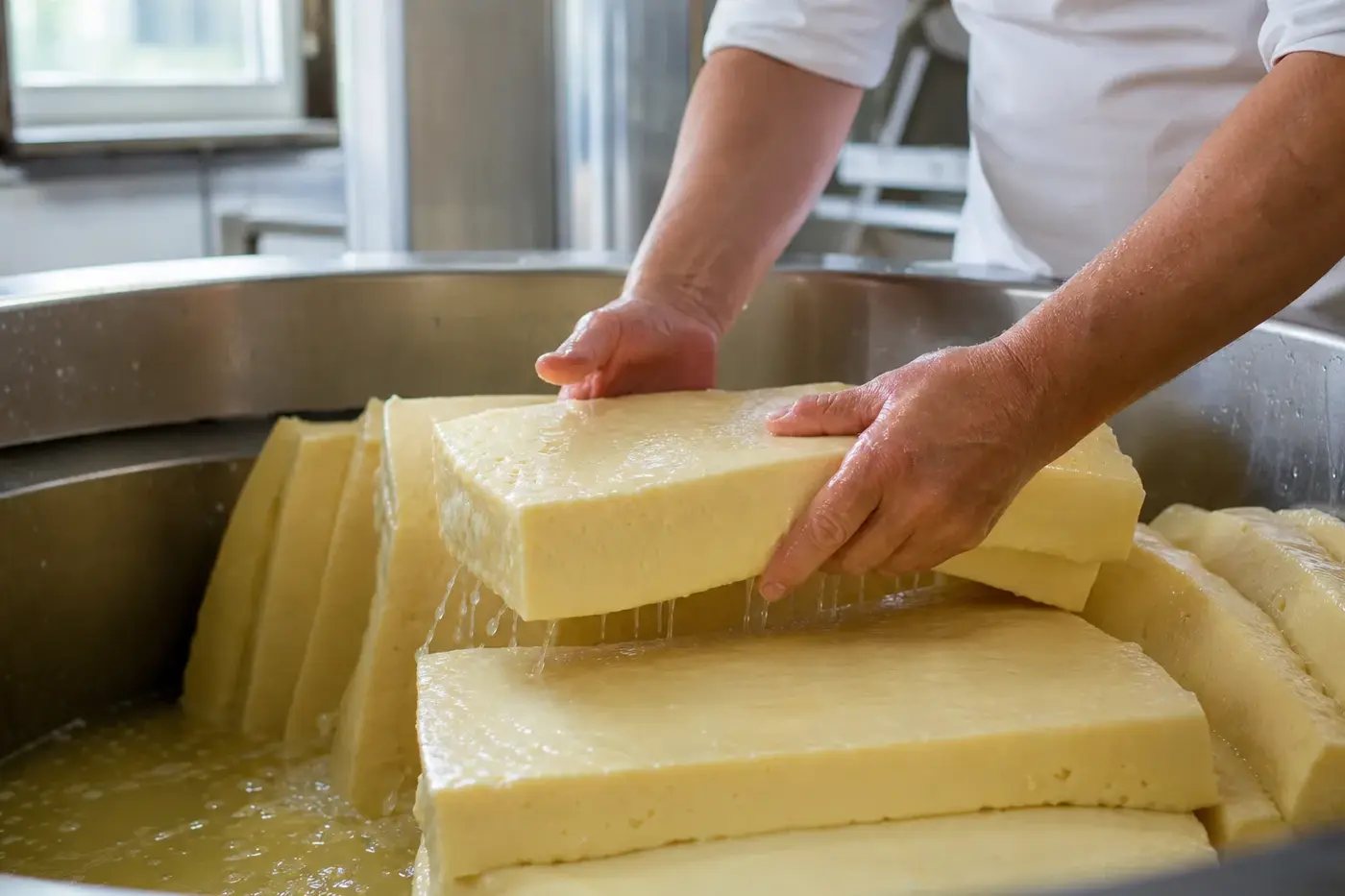
Slabs of curd are turned and stacked by hand.