Neal's Yard Dairy
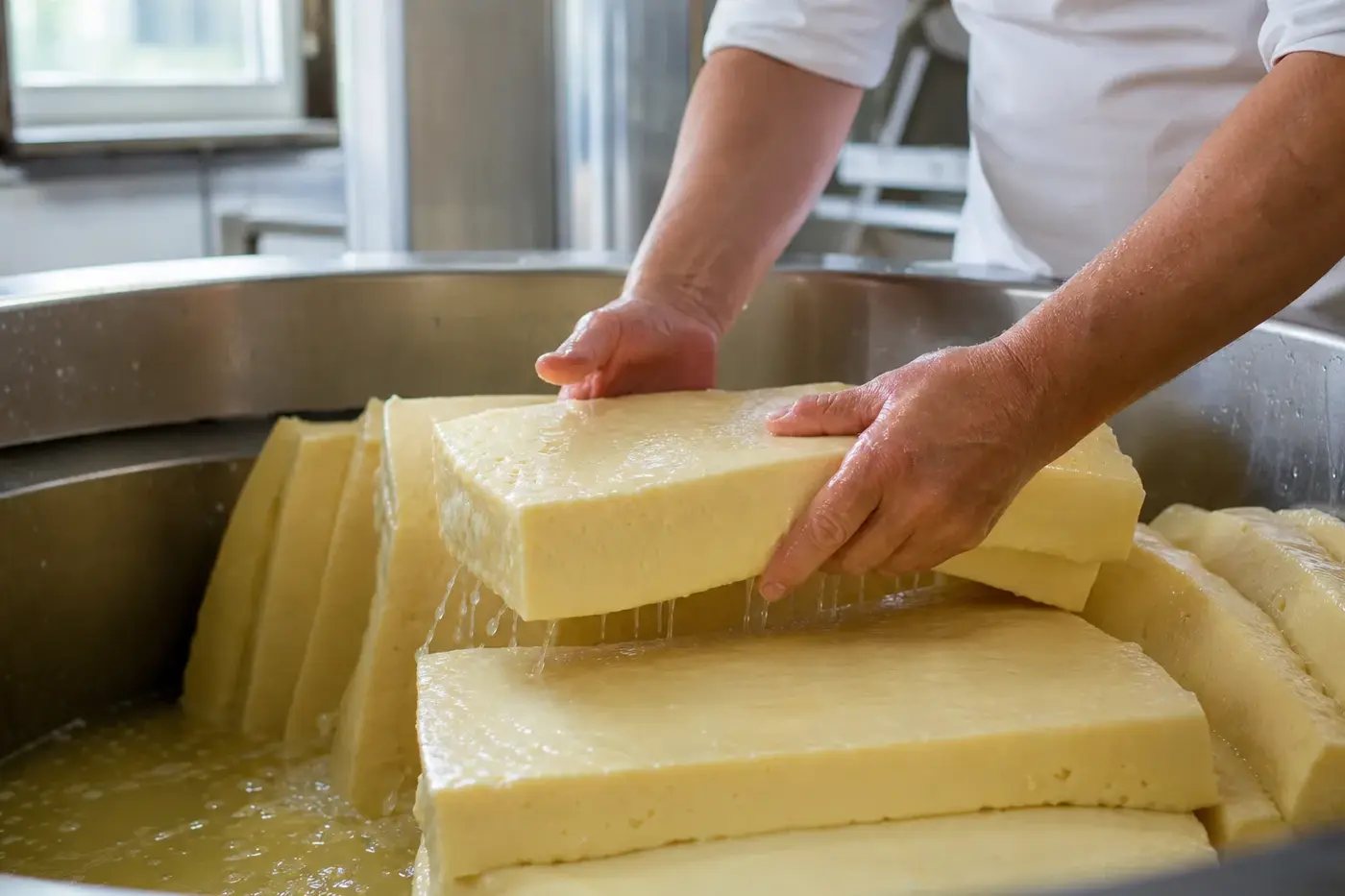
Under the railway arches in Bermondsey, cheeses are being turned, brushed and washed.
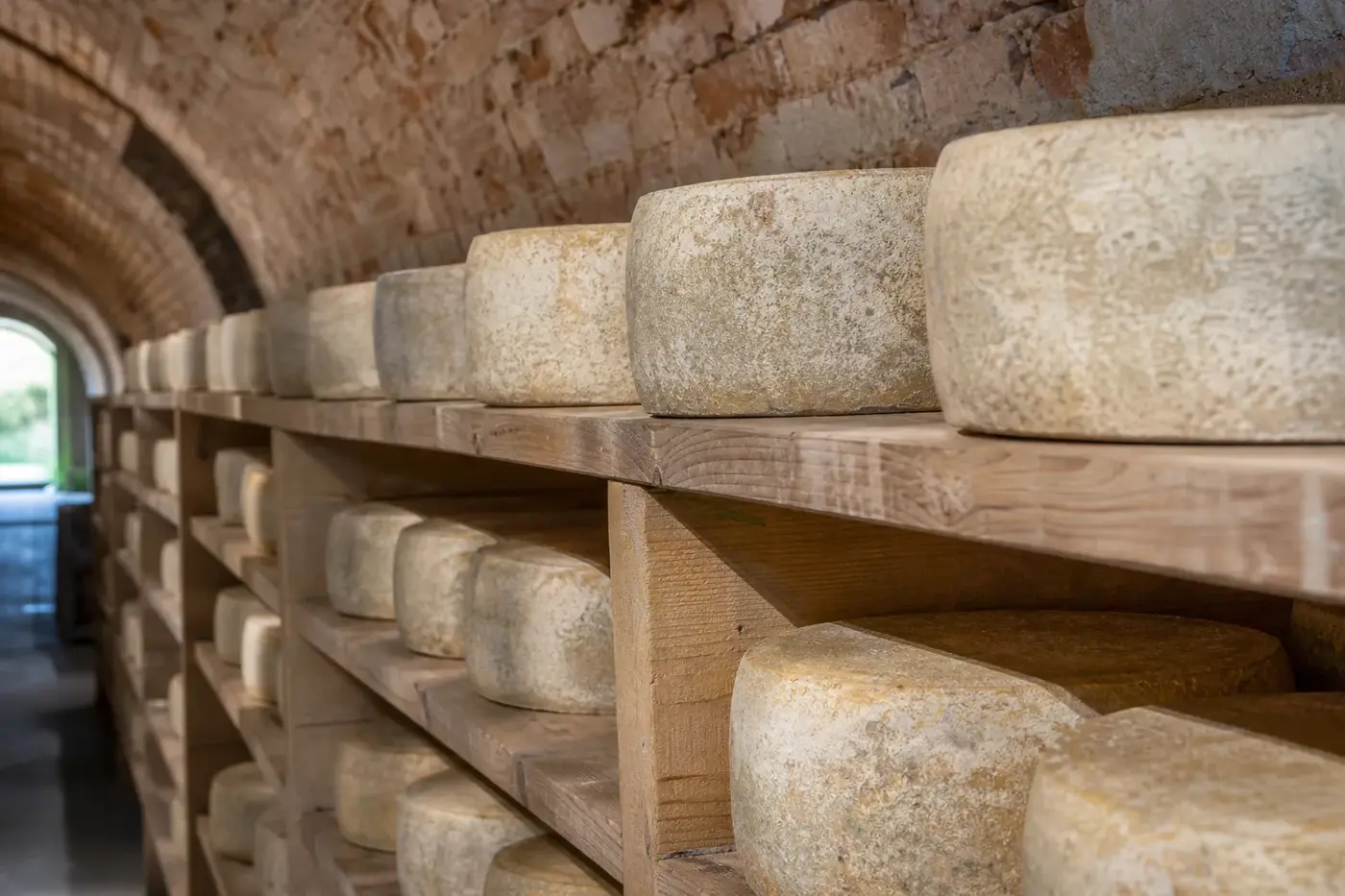
Under the railway arches in Bermondsey, cheeses are being turned, brushed and washed.[5] Before you meet a piece at the Neal's Yard Dairy counter, someone has chosen its batch, tended it and followed its progress. Founded in 1979, the business connects farmhouse makers, maturation rooms and customers, with each stage helping shape what happens next.[1][2]
| Field | Details |
|---|---|
| Founded | 1979, Neal's Yard, Covent Garden, London.[1] |
| What it does | Cheese selection, maturation, retail, wholesale and export.[2][3] |
| Where to find the shops | Covent Garden, Borough Market, Islington, Bermondsey and Barons Court, London; November 2026 shop list.[4] |
| Where cheeses mature | Railway arches in Bermondsey, London.[5] |
| A maturation project to explore | Templegall, according to Neal's Yard Dairy.[10] |
| Owner | Not specified here |
| Current activity | Retail, wholesale and export advertised by the business; November 2026.[3][4] |
| Official website | Listed in Sources.[1] |
Behind your cheese, another craft
Neal's Yard Dairy does not make the cheeses on its counter. It buys from independent makers, chooses among their production and takes responsibility for how particular cheeses develop afterwards. Its published quality system centres on direct contact with cheesemakers, farms, cheeses and customers.[2][6]
Choosing a batch expresses a preference. Maturing it develops what is already there, while a conversation at the counter helps you recognise the result. Together, these activities explain its influence on British and Irish cheese: a route to market for makers, and a way for you to discover what makes their work worth noticing.[2][6]
First came yoghurt, crème fraîche and farm visits
The original shop offered Greek-style yoghurt, crème fraîche and a small selection of cheeses. Founded in 1979, it belonged to the community of food businesses gathering in Neal's Yard during the 1970s. According to the company's history, visits to cheesemakers, and the cheeses brought home, gradually set its course.[1]
Who made a cheese became as important as its name. At the counter, you could discover what made it different, while the shop built a continuing relationship with its maker. The company describes those early visits as the beginnings of an approach that still guides its work.[1]
Then another London food district joined the story. In the 1990s, Borough Market records Neal's Yard Dairy among the early retailers moving into the area's empty warehouse spaces. Its growth linked the small food businesses around Covent Garden with the emerging specialist food trade around Borough.[5]
The familiar name needs a little untangling. Neal's Yard Dairy says it is no longer affiliated with the other businesses bearing the Neal's Yard name. They do, however, share an association with that original community of businesses.[2]
One cheese name, plenty to discover
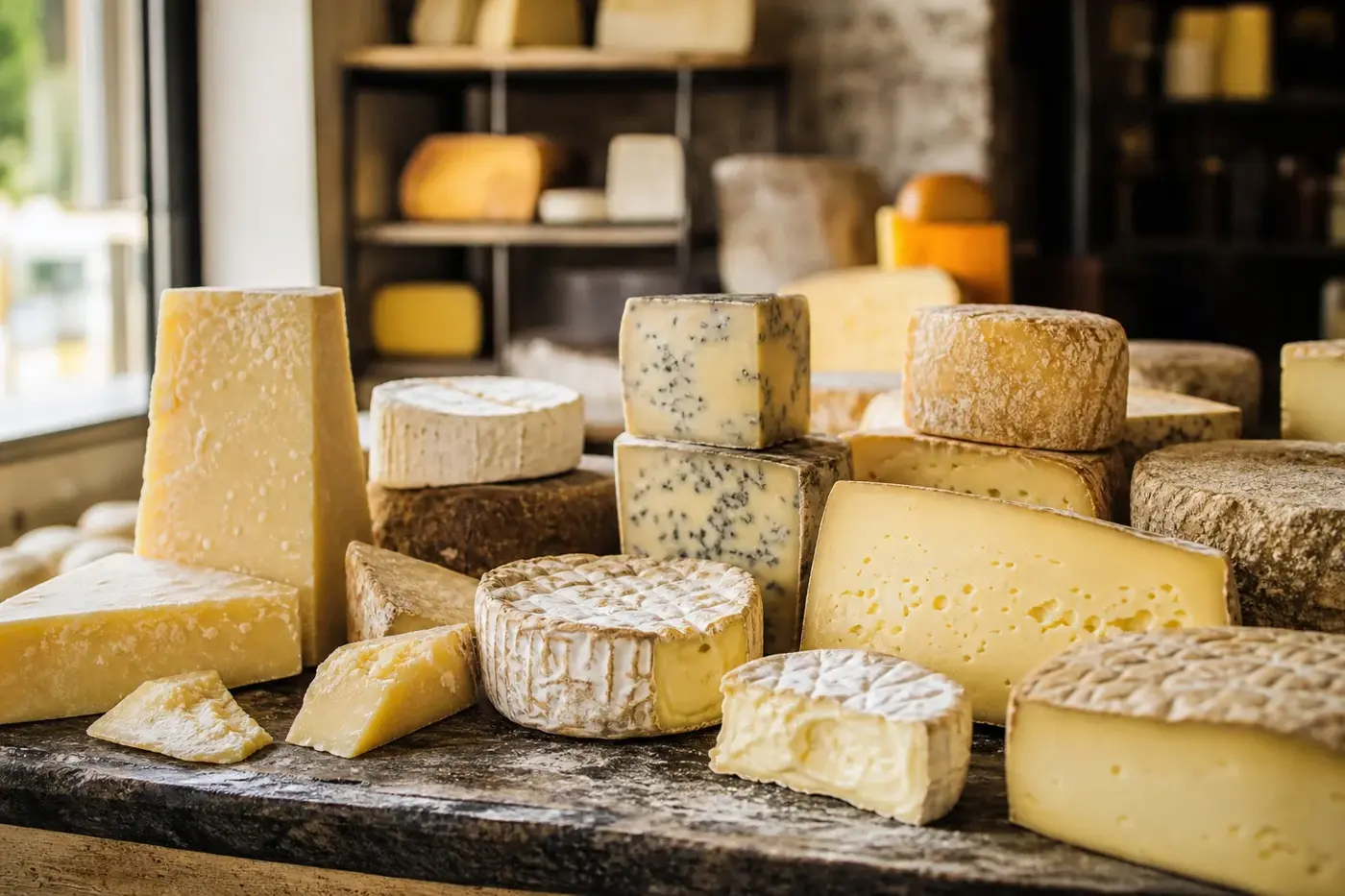
Two batches with the same name need not give you the same experience. Neal's Yard Dairy says it selects individual cheeses and batches, favouring characterful production. A name on a label is a beginning, not the whole conversation.[1]
The question is not simply whether a cheese belongs on the counter. It is which examples have the qualities the buyer wants, whether further care will improve their flavour, and when they should be sold. The company's quality policy explicitly connects maturation with those decisions.[6]
Variation is not necessarily something to smooth away. Trethowan Brothers describes subtle differences in Pitchfork Cheddar linked to season, pasture, diet and starter cultures, alongside consistent care in production. Consistency need not mean identical batches: selection can recognise worthwhile differences rather than treating every variation as a fault.[7]
If you would like a clearer picture of the choices before you, explore how to tell cheese styles apart. Those broader distinctions give you a useful starting point.
Inside the Bermondsey maturing rooms
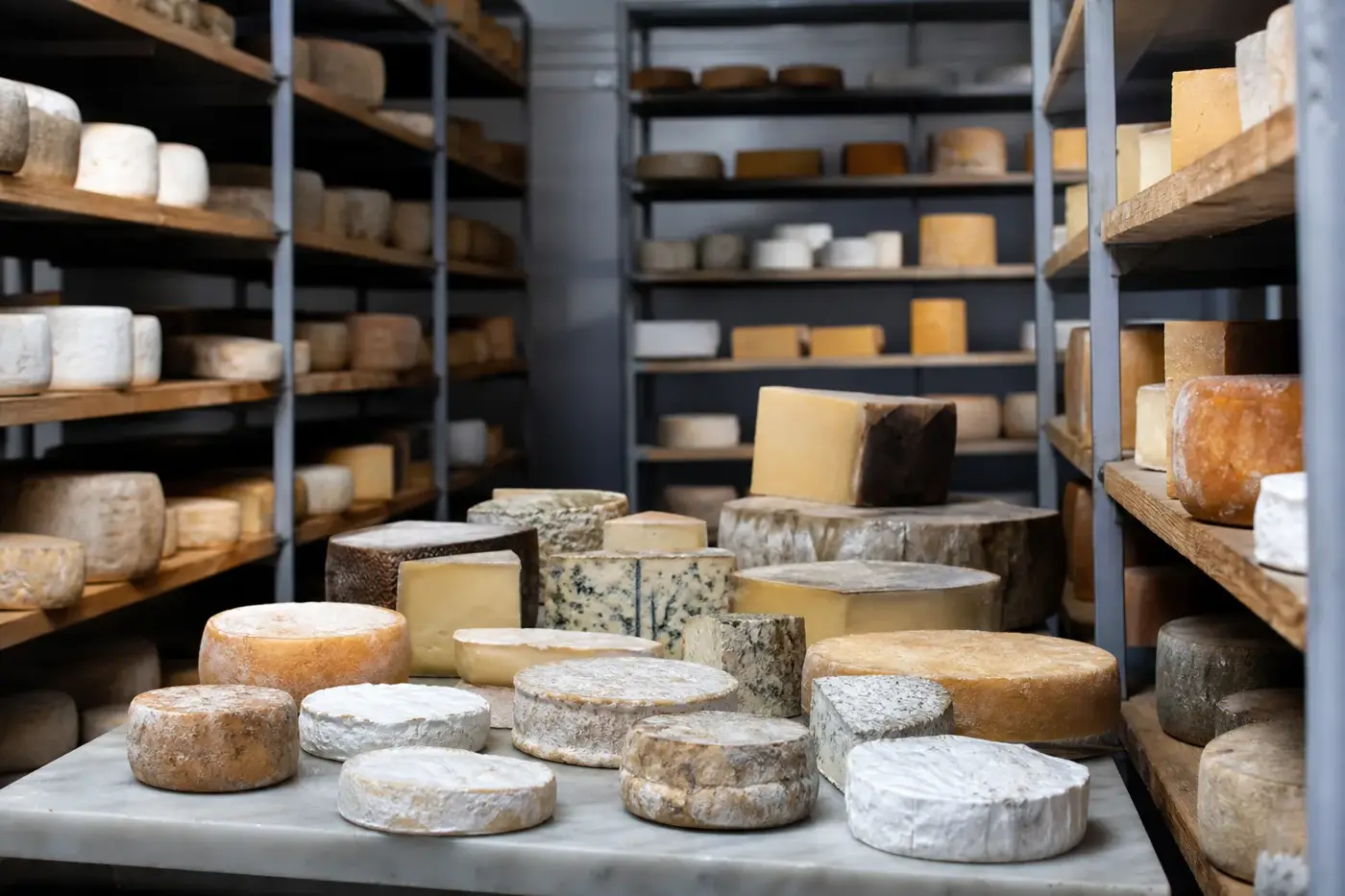
In the railway arches in Bermondsey, Borough Market describes cheeses being turned, brushed and washed in the maturing rooms.[5] This care and assessment as cheese matures is called affinage. The maker may have finished making, but the cheese has not finished developing.
Every batch brings decisions. The company's export information says its maturation team monitors cheeses and decides how to treat them. Its quality policy makes the moment of sale a judgement too, rather than simply a date arriving on the calendar.[6][8]
Turning a wheel is not just tidying the shelves. Trethowan Brothers describes turning Gorwydd Caerphilly daily during maturation to encourage even ripening and rind development. That is the maker's own process, but it gives you a concrete example of how handling helps a cheese develop.[7]
The care continues beyond the maturation room. Neal's Yard Dairy's trade guidance advises keeping soft cheeses away from refrigerator fans to limit drying, and covering cut surfaces after use. These small details matter to the next shop or restaurant looking after the cheese.[9]
Templegall gives that work a particularly tangible shape. Made in County Cork by Hegarty's Cheese, these large cheeses needed shelves that Neal's Yard Dairy reports building in its arches. The first batches from that ageing project were ready for sale in late autumn 2024.[10]
What today's batch tells tomorrow's maker
A maker knows what happened during production. A maturer sees what follows, while a cheesemonger hears what you notice and which explanations help you choose. Neal's Yard Dairy's quality system places contact across these stages at the heart of understanding its cheeses.[6]
An identifiable batch gives those conversations something solid to work with. Comparing its development with expectations helps maker and maturer discuss care for later batches. That is the practical logic of the company's selection and monitoring approach, rather than a particular tale of a conversation leading to a recipe change.[1][8]
Information travels with the cheese, too. The published wholesale service promises updates on variations in flavour and texture. If you are the next person handling a wheel, those details help explain what is distinctive about the batch arriving at your counter.[11]
Meet the makers, taste the places
Start in East Somerset, with Westcombe Cheddar from Westcombe Dairy. The maker describes a clothbound cheese made with unpasteurised cows' milk, typically aged for 12 to 18 months. Its tasting notes give you plenty to look for: brothy flavour, mellow lactic tang, hazelnut, caramel and citrus.[12]
Pitchfork Cheddar takes you to Trethowan Brothers in Somerset. The dairy dates its introduction to 2017 and lists raw milk, salt, rennet and heritage starter cultures as its ingredients, with maturation lasting 12 to 14 months. Those are the maker's production details, distinct from any later selection or handling by a cheesemonger.[7]
For Templegall, the story moves to Ireland. Neal's Yard Dairy identifies it as an Alpine-style cheese from Whitechurch, County Cork, and documents its own maturation project. The current product information includes raw cows' milk and egg lysozyme among the ingredients.[10]
The division of work is straightforward, even if the work itself demands care. An independent dairy makes the cheese; Neal's Yard Dairy selects it, handles it, sometimes matures it further, and sells it. These cheeses give you names and places to attach to that relationship.[7][10][12]
Bring your curiosity to the counter
You will find the Covent Garden counter at Short's Gardens and the Borough Market shop on Park Street. The current shop list also includes Essex Road in Islington, Palliser Road in Barons Court and Lucey Way in Bermondsey.[4]
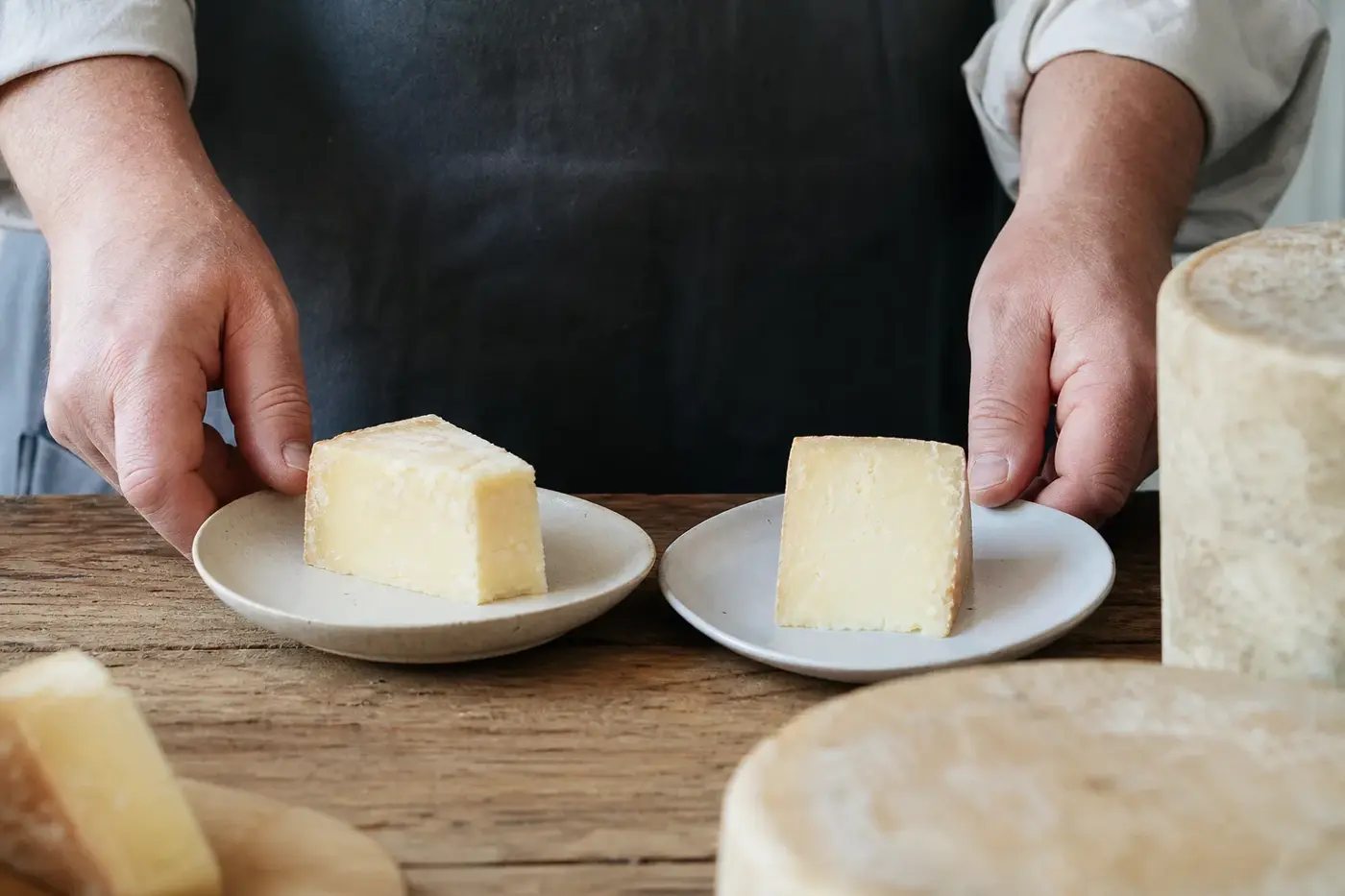
You do not need a cheese vocabulary to walk in. The company describes its counters as welcoming people with little cheese knowledge as well as experienced customers. Tell the staff what you enjoy, what you fancy exploring and when you plan to eat it.[1]
Then put a little detail into those broad preferences. Does “strong” mean sharp acidity, blue-cheese pungency or an assertive rind to you? Would you prefer something supple, crumbly or firm? There is no entrance exam, thankfully; for the information accompanying your purchase, see reading a cheese label.
Before you set off, visit the official location page. Its current arrangements and accessibility information will help you plan your visit.[4]
Beyond the London shop door
Neal's Yard Dairy supplies shops, restaurants and distributors as well as its own retail customers. Its wholesale information describes delivery throughout Britain. Support covers ordering, cutting and selling cheese, not simply getting it to the door.[3][11]
Export takes that connection between farmhouse producer and counter further afield. The published service includes international shipment, updates on changes in flavour and texture, and help with cheese terminology and handling. If you are overseas, you can ask the company about suppliers near you.[8]
For producers, these services offer a route to buyers through a business equipped to select cheese, assess its condition and explain its character. Their practical market significance lies in that knowledge supporting the journey from maker to customer. This is not a quantified measure of market share or national sales.[3][8][11]
Enjoy the flavour, know the ingredients
Flavour and food safety sit together in Neal's Yard Dairy's published quality policy. It includes hygienic production and food-safety controls. Supporting raw-milk cheesemaking also forms part of its stated approach to the sector.[6][13]
If you follow UK guidance, NHS pregnancy advice lists hard cheeses made with pasteurised or unpasteurised milk among foods that can be eaten. It says soft cheeses with a white coating on the outside and soft blue cheeses should be cooked until steaming hot. Consult the complete advice, retrieved in November 2026, for the cheeses and exceptions it covers.[14]
Read the actual product's ingredients, not only its milk treatment. Templegall's listed egg lysozyme is a reminder that a cheese name alone cannot answer allergen questions.[10] You can find further explanation in raw milk, thermised and pasteurised cheese and cheese food safety.
The 2024 theft and the makers affected
More than 22 tonnes of cheese, comprising 950 cheeses, were involved in the fraud Neal's Yard Dairy reported in 2024. The cheeses were Hafod Welsh Organic Cheddar, Westcombe Cheddar and Pitchfork Cheddar. Behind those names were three suppliers caught up in the incident.[13]
In its statement identified as originally issued on 25 October 2024, the company described a fraudulent buyer impersonating a wholesale distributor for a major French retailer. The cheese, it said, had already been delivered when the false identity came to light.[13]
The same statement said all three suppliers had already been paid in full. In a trade built around continuing relationships, that detail explains the company's response to the producers involved. The fraud remains one episode in a much longer history of selecting, maturing and distributing cheese over decades.[13]
Home with your cheese: what happens next
Tell the counter staff when you intend to eat your cheese. Ask which batch suits the occasion, who made it, what further maturation it has received and how to store it. Keep the instructions with the wrapping, so the advice stays with your purchase.
Once home, follow the product's instructions. The Food Standards Agency's consumer guidance for England, Wales and Northern Ireland advises keeping your fridge between 0 and 5 °C. It also advises using a fridge thermometer and keeping dairy products refrigerated.[15]
When serving, put out the amount you expect to eat and leave the rest chilled. In UK guidance retrieved in November 2026, the NHS advises eating chilled food that is ready to eat within four hours of taking it from the fridge. Follow any stricter product instructions, observe use by dates and, as the NHS also advises, keep raw foods separate from food that is ready to eat.[16]
For more detailed handling advice, turn to how to store cheese at home. Keep those practical instructions close, alongside your plans to enjoy what you have chosen.
General information only, not medical advice: follow the official guidance where you live.
Questions people ask
Does Neal's Yard Dairy make its own cheese?
No. It buys cheese from independent makers, selects individual cheeses and batches, and takes responsibility for how particular cheeses develop after purchase.
Where are the Neal's Yard Dairy shops?
The shops listed are in Covent Garden, Borough Market, Islington, Bermondsey and Barons Court in London. Check the official location page for current arrangements and accessibility information before travelling.
What happens to cheese in the Bermondsey arches?
Cheeses are turned, brushed and washed as they mature. The maturation team monitors them and decides how to treat them.
Can I eat these cheeses during pregnancy?
The NHS says hard cheeses made with pasteurised or unpasteurised milk can be eaten during pregnancy. It advises cooking soft cheeses with a white coating and soft blue cheeses until steaming hot. Consult the complete NHS pregnancy advice for the cheeses and exceptions it covers.
How should I store cheese at home?
The Food Standards Agency advises keeping the fridge between 0 and 5 °C, using a fridge thermometer and keeping dairy products refrigerated. Follow the product's instructions and consult the agency's consumer guidance for England, Wales and Northern Ireland.
Sources
[1] Neal's Yard Dairy, Our Work, undated current web edition, retrieved November 2026.
Read at nealsyarddairy.co.uk
[2] Neal's Yard Dairy, FAQs, undated current web edition, retrieved November 2026.
Read at nealsyarddairy.co.uk
[3] Neal's Yard Dairy, Wholesale & Export, undated current web edition, retrieved November 2026.
Read at nealsyarddairy.co.uk
[4] Neal's Yard Dairy, Shop Locations, current web edition, retrieved November 2026.
Read at nealsyarddairy.co.uk
[5] Borough Market, Neal's Yard Dairy, undated trader profile, retrieved November 2026.
Read at boroughmarket.org.uk
[6] Neal's Yard Dairy, Quality System, undated current web edition, retrieved November 2026.
Read at nealsyarddairy.co.uk
[7] Trethowan Brothers, Our Cheeses, undated current web edition, retrieved November 2026.
Read at trethowanbrothers.com
[8] Neal's Yard Dairy, Export & International Stockists, undated current web edition, retrieved November 2026.
Read at nealsyarddairy.co.uk
[9] Neal's Yard Dairy, Wholesale Cheese Care, undated current web edition, retrieved November 2026.
Read at nealsyarddairy.co.uk
[10] Neal's Yard Dairy, Templegall, undated current product information, retrieved November 2026.
Read at nealsyarddairy.co.uk
[11] Neal's Yard Dairy, Neal's Yard Dairy Wholesale, undated current web edition, retrieved November 2026.
Read at nealsyarddairy.co.uk
[12] Westcombe Dairy, Westcombe Cheddar, undated current product information, retrieved November 2026.
Read at westcombedairy.com
[13] Neal's Yard Dairy, Neal's Yard Dairy Victim of Theft, Reaffirms Ethical Commitment to Producers, original statement identified within the page as 25 October 2024, subsequently updated. Retrieved November 2026.
Read at nealsyarddairy.co.uk
[14] NHS, Foods to avoid in pregnancy, current web edition, retrieved November 2026.
Read at nhs.uk
[15] Food Standards Agency, How to chill, freeze and defrost food safely, published 2017, current retrieved edition, November 2026. Applies to England, Northern Ireland and Wales.
Read at gov.uk
[16] NHS, Listeriosis, current web edition, retrieved November 2026.
Read at nhs.uk
This desk-researched article brings together the company's published working methods, makers' product information, Borough Market's account and official UK consumer guidance.
Last checked: November 2026
Last checked November 2026.
The editors suggest you read next
Farmhouse, Artisan and Industrial Cheesemakers Explained
Slabs of curd are turned and stacked by hand.