La Fromagerie
A wheel of Beaufort comes home from a skiing trip in Méribel.
A wheel of Beaufort comes home from a skiing trip in Méribel. For Patricia Michelson, it leads to selling cheese from a London garden shed, then to a British specialist cheesemonger with shops in Highbury, Marylebone and Bloomsbury. Quite a result for holiday luggage. Today, you can step into walk-in rooms of British and European cheeses, settle in for food or a tasting, or find the business supplying wholesale customers beyond the counter. [1][2][3]
| At a glance | The details |
|---|---|
| Founded | Trading from 1991; first shop opened September 1992. [1][4] |
| Founder | Patricia Michelson. [1] |
| Where to visit | Highbury, Marylebone and Bloomsbury, London. [2] |
| What happens here | Cheese shopping, ripening, wholesale, dining and tastings. [3][5][6] |
| A taste of the selection process | Beaufort wheels selected for further maturation in a cellar near Chambéry, described by the business in 2025. [13] |
| Advertised activities | Shop, restaurant and wholesale services, November 2026. [2][3][5] |
| Official website | lafromagerie.co.uk. [1] |
Follow the Beaufort from Méribel to the garden shed
Beaufort was the beginning. In the business’s own account, Michelson tasted it while skiing in Méribel, brought a wheel back to London and began selling cheese from her garden shed. A Camden market stall followed. Enthusiasm for one cheese had become the practical business of finding customers who would return for more. [1]
In her recorded 2020 Jazz Shapers interview, Michelson dates the shed operation to 1991 and the move into a shop to 1992. La Fromagerie’s history puts the Highbury opening in September 1992, Marylebone in November 2002 and Bloomsbury in 2017. Follow those dates and you follow the business growing: first trading, then a shop, then a wider London presence. [1][4]
The first shop borrowed some furnishings from Michelson’s home. She recalls expecting to open only a few days a week, with customers surrounded by cheese in what she described as a cooled room. Before the later shops and restaurant services, the guiding idea was already there: let the cheese shape the room, and your experience inside it. [4]
Find your corner of London
You will find a cheese room at all three neighbourhood locations. The setting for eating and shopping changes with each address, and Marylebone also extends into neighbouring premises at No.6. Here are the addresses and published offers for November 2026. [1][2]
| Choose your stop | Address | What awaits you |
|---|---|---|
| Highbury | 30 Highbury Park, N5 2AA | Shop, cheese room and small café. [7] |
| Marylebone | 2 to 4 Moxon Street, W1U 4EW | Cheese shop and events. [2][8] |
| No.6, Marylebone | 6 Moxon Street, W1U 4EW | Café, cheese and wine bar. [9] |
| Bloomsbury | 52 Lamb’s Conduit Street, WC1N 3LL | Shop, cheese room and restaurant. [10] |
Check the relevant shop page before you travel, and contact the business about bookings or accessibility requirements. For cheese shopping, choose your branch; for a meal or tasting, confirm the venue and event. Each door opens onto a slightly different offer. [2][7][8][9][10]
Step inside the cheese room
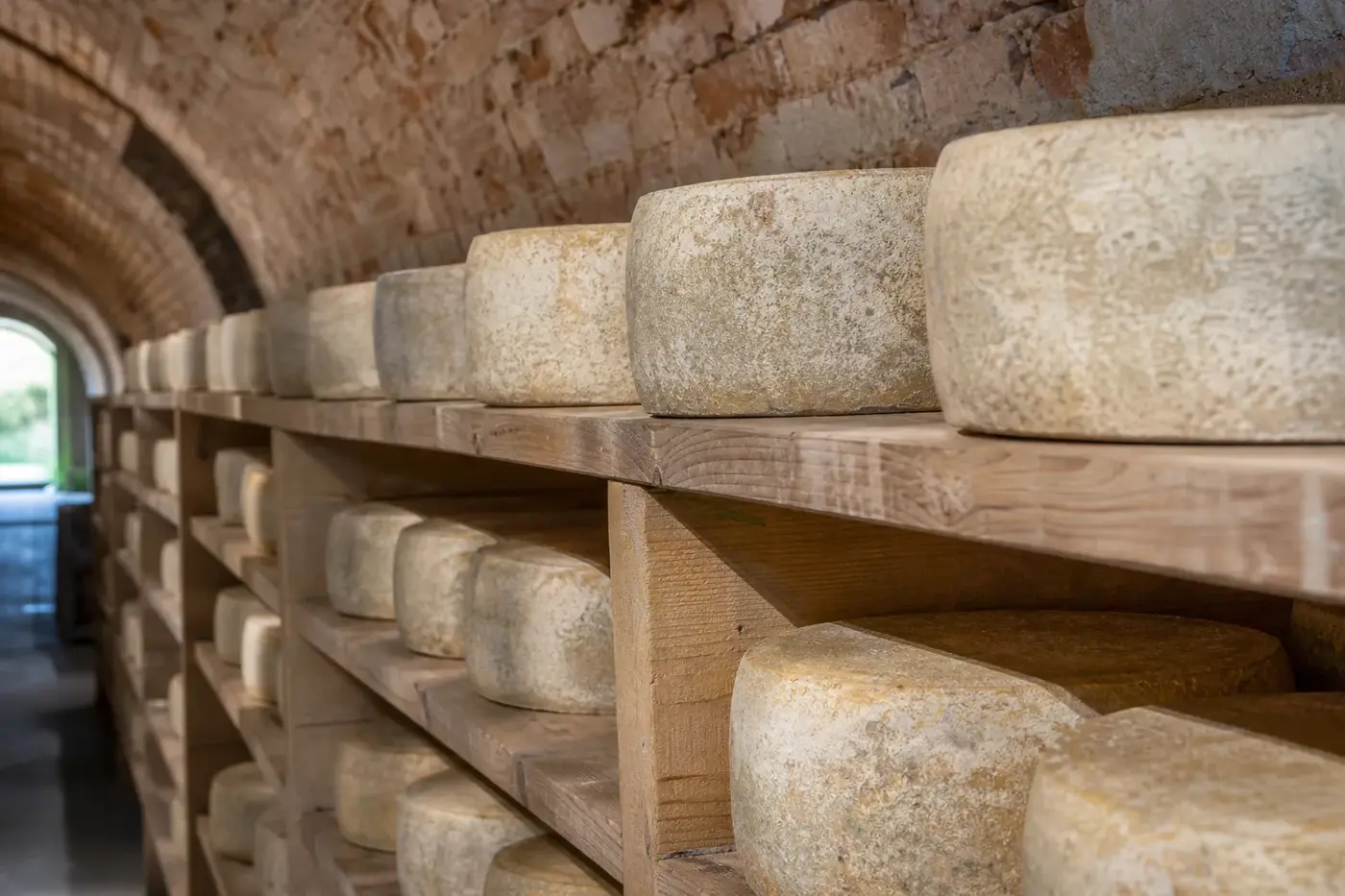
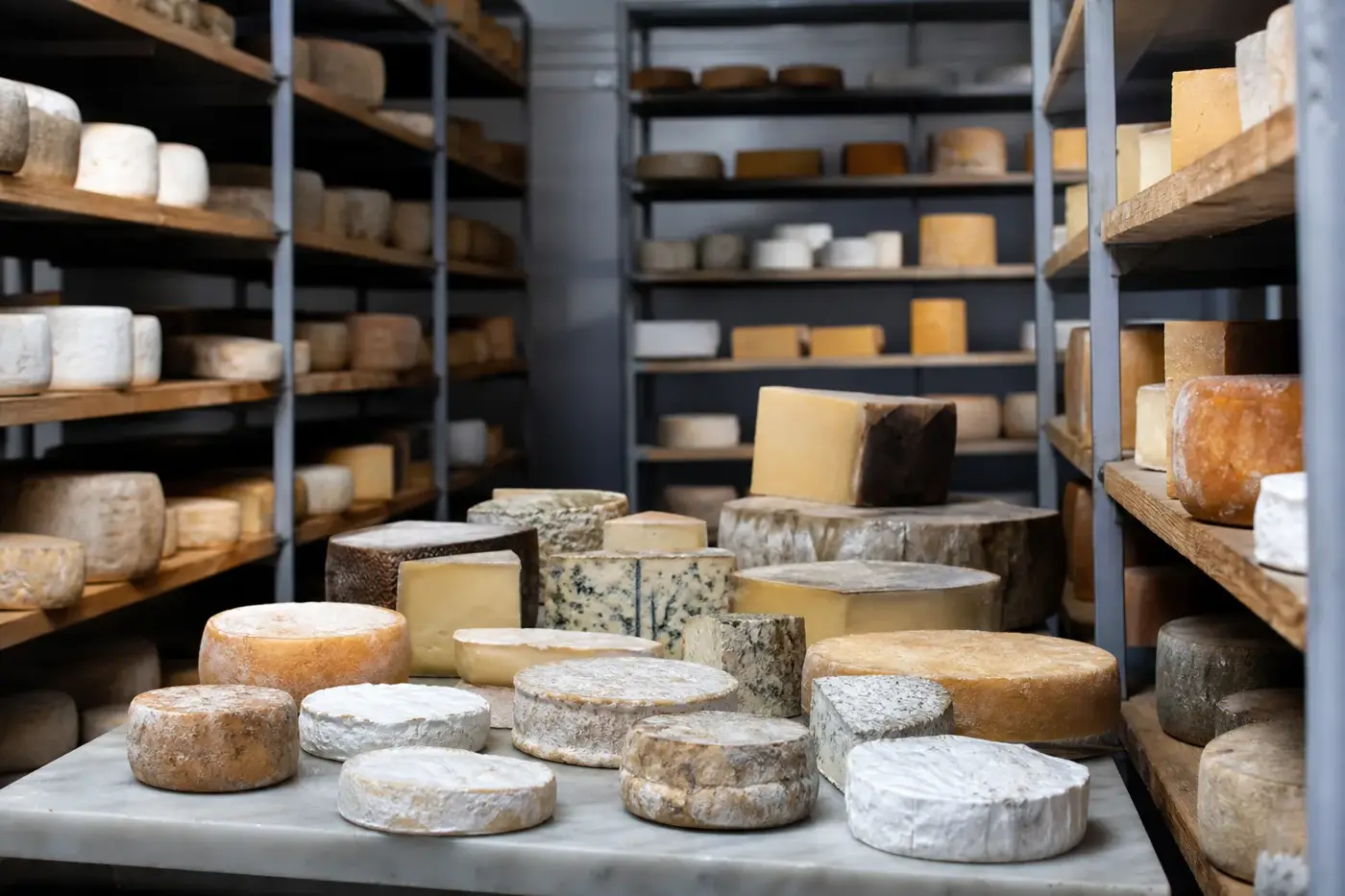
Here, you enter the cheese’s space rather than waiting for someone to fetch a piece from behind a counter. La Fromagerie identifies walk-in cheese rooms as a feature of all three locations. Its wholesale operation describes four separate ripening rooms: hard and semi-hard cheeses; white bloomy and goat cheeses; fresh cheeses; and blues. [1][5]
There is more going on than a handsome display. Temperature, humidity and air movement help determine how cheese develops and loses moisture. The University of Wisconsin’s Center for Dairy Research explains that these conditions matter especially for surface-ripened cheeses, whose bacteria, yeasts and moulds contribute to flavour, appearance and texture. Looking after the room means looking after the cheese. [11]
Your fridge has a different job from a professional ripening room. At home, you are caring for cheese you have already bought, rather than managing its professional maturation. For practical guidance, turn to how to store cheese at home.
Discover the daily care behind the counter
A white bloomy rind needs attention as well as admiration. La Fromagerie describes daily monitoring of these rinds, including those on Brie and Brillat Savarin. It also describes rubbing certain Italian cheeses with olive oil to limit drying. The treatment follows the needs of the cheese. [5]
The people doing that work need knowledge, too. The business’s careers page describes staff training, tastings and opportunities to develop product knowledge through the Academy of Cheese. You meet the results of that learning when you ask a question at the counter. [12]
Three different jobs can lie behind your purchase. Cheesemaking turns milk into cheese; affinage manages its maturation; retail care covers display, cutting, wrapping and sale. Those roles can overlap: a cheesemonger might select a wheel matured elsewhere, continue caring for it or commission further ageing from an affineur. [11][13]
Ask who made your cheese and who matured it. They are different questions, and both answers help explain the piece in front of you. [11][13]
Meet the makers and follow a wheel of Beaufort
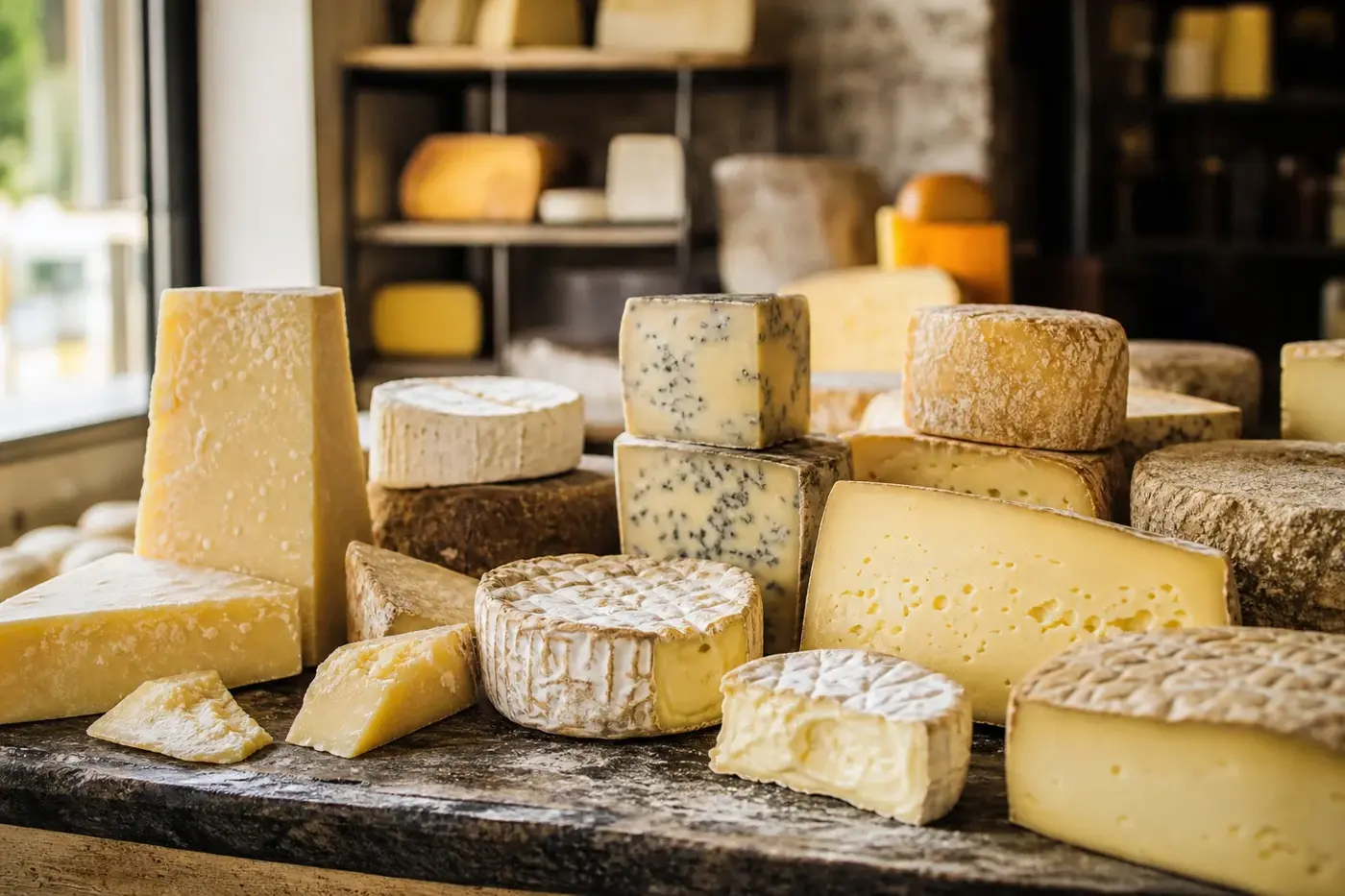
Open the British catalogue and you will find Baron Bigod, Beenleigh Blue, Colston Bassett Stilton, Hafod and Isle of Mull Cheddar. La Fromagerie says it sources directly from small cheesemakers and maintains close working relationships with them. Its European sections lead you through French, Italian, Swiss, Spanish, Portuguese and other traditions. There is plenty here to start a conversation about that day’s selection. [5][14][15]
Beaufort gives you a closer look at the buying process. In a 2025 article, La Fromagerie described choosing wheels and requesting further ageing for some in a cellar near Chambéry. Its cheesemonger contrasted the delicate fragrance sought in younger selections with the concentration of older examples. The individual wheel mattered, not simply the name of the cheese. [13]
That does not make the oldest wheel the automatic winner for your table. Cheese selection is not a competition for the most birthdays. The same account describes the judgement involved in extending ageing, including the possibility of cracking and drying. Ask about producer, season and maturity, rather than simply requesting the oldest cheese available. [13]
The place matters, too. This extended ageing happened near Chambéry, with the London team choosing the cheeses and requesting the treatment. Ask where your cheese spent its maturation, rather than assuming every wheel in a specialist cheese room has aged entirely on the premises. [13]
Bring your appetite and a few useful questions
You do not need a finished shopping list to begin a good conversation. Tell the cheesemonger about the occasion, then add a few clear details. These will help them choose both the cheese and the right piece for you:
- Say when you will eat it. Ask which piece is ready for that day and how you can expect its texture to develop.
- Explain the meal. Give the number of people and say whether cheese is the main food, a course after dinner or an ingredient. Ask for a total weight that suits your plan.
- Describe what you enjoy. Mention texture, sharpness or a kind of rind you like. A familiar favourite gives the cheesemonger a useful starting point for suggesting something new.
- Explain the journey home. Say how long you will be travelling. Ask for wrapping, refrigeration and serving guidance specific to your cheese.
Keep the cheese’s name and any handling instructions with your purchase. If milk treatment matters to you, ask about that particular cheese and read its label. You can explore the differences in raw milk, thermised and pasteurised cheese.
Pull up a chair for lunch or a tasting
Choose your address with your appetite in mind. Highbury’s café offer includes cheese and charcuterie, salads, tarts, sandwiches and soups. At Marylebone, food shopping sits alongside No.6, with its published offer of breakfast, lunch, cakes and cheese boards. Bloomsbury has a seasonal restaurant menu beside the shop and cheese room, giving you another setting for a meal. [7][8][9][10]
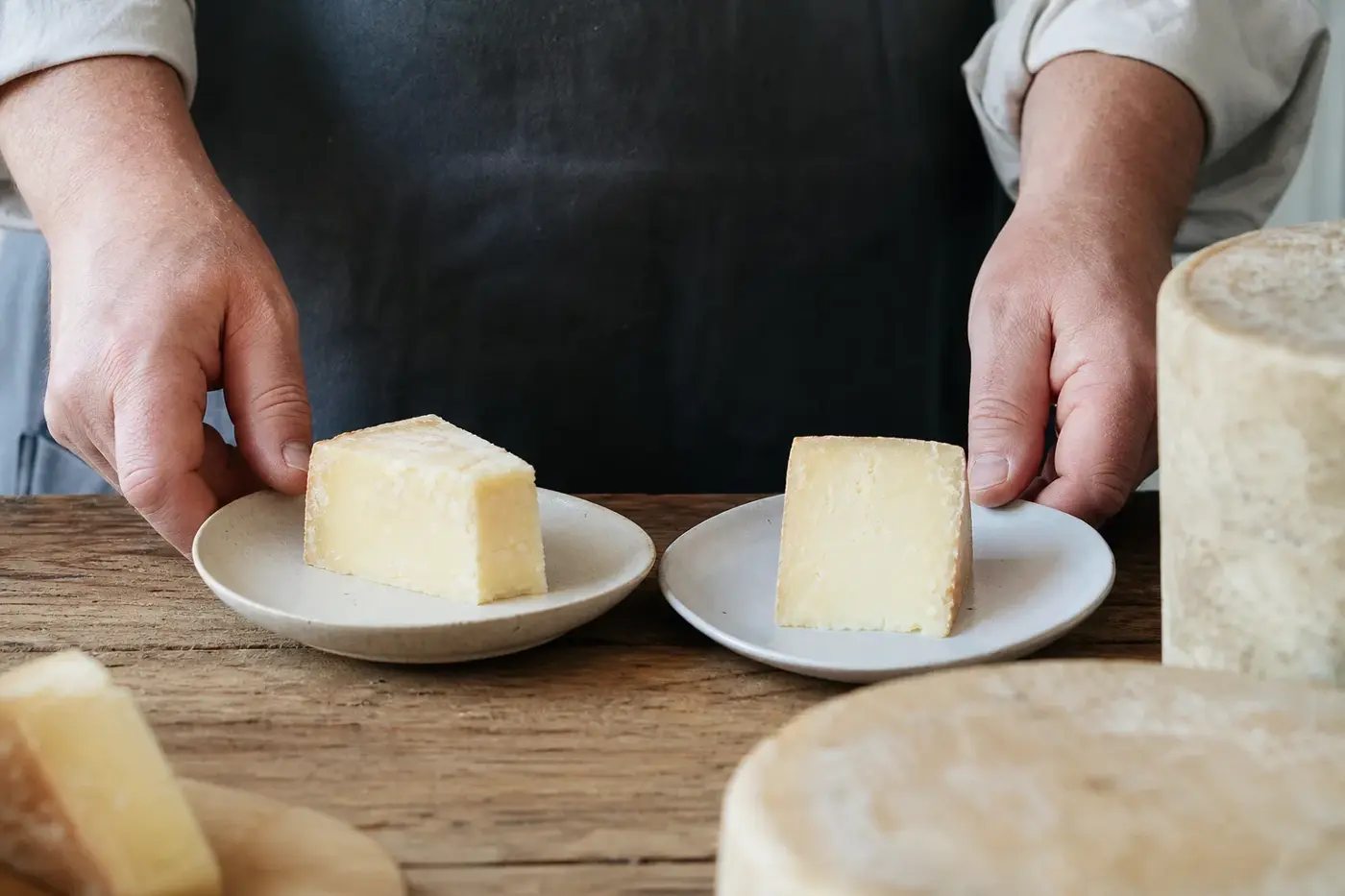
At Marylebone’s shop, cheese has plenty of company. Seasonal fruit and vegetables, bread from London bakeries, preserves, pickles and other cupboard ingredients place it firmly within a whole meal. The kitchen’s salads, soups and tarts connect that produce with food you can eat there. You can shop for ingredients and see how they come together on a plate. [8]
If you prefer to learn by tasting, La Fromagerie advertises tutored tastings, private events and bespoke virtual tastings. There are cheese-only boxes as well as versions with drinks. Ask about cheese-only or alcohol-free arrangements when you book. [1][3][6]
For restaurants and shops, the wholesale department describes help with cheese selection and training for chefs, sommeliers and front-of-house teams. The warehouse and online operation are based in Highbury. Behind your shop visit sits a business reaching into other kitchens and counters. [1][5]
This page summarises published guidance from the official sources it cites. It is not medical advice. Guidance differs between countries and changes over time, so check the current source for where you live, and ask your doctor, midwife, pharmacist or dietitian about your own circumstances.
Make safety part of your cheese choice
La Fromagerie supports raw milk production, but you will also find pasteurised cheese here. Its Bix listing, for instance, explicitly describes pasteurised cow’s milk. Ask about milk treatment for the individual product, alongside the cheese type and how it has been handled. [5][17]
For pregnancy in the UK, NHS guidance as of November 2026 includes pasteurised and unpasteurised hard cheeses among foods you can eat. It advises thoroughly cooking soft cheeses with a white coating and soft blue cheeses, whether made with pasteurised or unpasteurised milk, until steaming hot all the way through. Follow the current NHS guidance for the full categories and exceptions. [16]
Proper chilling helps stop harmful bacteria growing, as the Food Standards Agency explains in its guidance for England, Wales and Northern Ireland. Follow your product’s storage instructions, and consult official guidance for your country if you need advice for pregnancy or another higher-risk circumstance. The site’s cheese food safety guide offers a route into the wider subject. [18]
Take home more than a cheese name
British and European cheeses, walk-in cheese rooms and places to eat the food sold in the shop give La Fromagerie its particular character. If you are choosing a specialist cheesemonger, compare those features alongside geographical focus, where maturation happens and the depth of advice. Add opportunities for dining or teaching, and you begin to picture both the business and the visit you might have. [2][8][10]
The most rewarding conversation treats your cheese as an individual selection, with a maker, an age and an intended day of eating. Ask what brought that wheel or batch into the shop, what care it has received and what the cheesemonger likes about its condition now. You will connect the producer’s work with the piece you take home. Its name is only the start of the story.
Questions people ask
Where are La Fromagerie’s shops?
La Fromagerie has London shops in Highbury, Marylebone and Bloomsbury. All three have a walk-in cheese room.
Can you eat at La Fromagerie?
Highbury has a small café, while Bloomsbury has a restaurant with a seasonal menu. In Marylebone, No.6 offers breakfast, lunch, cakes and cheese boards.
Does La Fromagerie mature its own cheese?
Its wholesale operation describes four separate ripening rooms for different types of cheese. It also selects cheeses matured elsewhere: some Beaufort wheels receive further ageing in a cellar near Chambéry.
Does La Fromagerie offer cheese tastings?
La Fromagerie advertises tutored tastings, private events and bespoke virtual tastings. It offers cheese-only boxes as well as versions with drinks.
Can I eat cheese from La Fromagerie during pregnancy?
The NHS advises that pasteurised and unpasteurised hard cheeses can be eaten during pregnancy. It advises thoroughly cooking soft cheeses with a white coating and soft blue cheeses until steaming hot all the way through, whether made with pasteurised or unpasteurised milk. Check the current NHS guidance for the full categories and exceptions: https://www.nhs.uk/pregnancy/keeping-well/foods-to-avoid/
Sources
- La Fromagerie, About us, undated, current website retrieved November 2026. Founder’s origin story, shop chronology and Highbury warehouse.
- La Fromagerie, Our locations, undated, current website retrieved November 2026. Addresses and location descriptions.
- La Fromagerie, Official homepage, current website retrieved November 2026. Advertised shops, dining, events and wholesale activities.
- Mishcon de Reya and Jazz Shapers, Jazz Shaper: Patricia Michelson, interview and transcript, 17 October 2020. Primary testimony from the founder.
- La Fromagerie, Wholesale, undated, current website retrieved November 2026. Company account of sourcing, four ripening rooms, care and customer support.
- La Fromagerie, Bespoke virtual cheese & wine tastings, undated, current website retrieved November 2026. Advertised tasting formats.
- La Fromagerie, Highbury N5, undated, current website retrieved November 2026. Shop, cheese room and café description.
- La Fromagerie, Marylebone W1, undated, current website retrieved November 2026. Cheese selection, shop produce, kitchen and events.
- La Fromagerie, Location No.6, undated, current website retrieved November 2026. Café, cheese and wine bar, and tasting events.
- La Fromagerie, Bloomsbury WC1, undated, current website retrieved November 2026. Restaurant, shop, cheese room and seasonal menu.
- University of Wisconsin-Madison, Center for Dairy Research, Environmental conditions for aging surface-ripened cheeses, Dairy Pipeline, volume 34, number 2, summer 2022. Technical explanation of ripening and environmental control.
- La Fromagerie, Careers, 2026 website version. Published staff training and development offer.
- La Fromagerie, The Beauty in the Ugly, 2025. Company account of Beaufort selection and extended maturation.
- La Fromagerie, British cheese, current catalogue retrieved November 2026. Named catalogue entries only.
- La Fromagerie, Cheese library, current catalogue retrieved November 2026. Geographical catalogue sections.
- NHS, Foods to avoid in pregnancy, current guidance retrieved November 2026, section “Cheese, milk and other dairy”.
- La Fromagerie, Bix, product listing retrieved November 2026. Published product title identifies pasteurised cow’s milk.
- Food Standards Agency, How to chill, freeze and defrost food safely, published 18 December 2017, current landing page retrieved November 2026. Scope: England, Northern Ireland and Wales.
This desk-researched article combines the business’s published history and service descriptions with a recorded founder interview, institutional dairy guidance and official food safety information.
Last checked: November 2026
Last checked November 2026.
The editors suggest you read next
Farmhouse, Artisan and Industrial Cheesemakers Explained
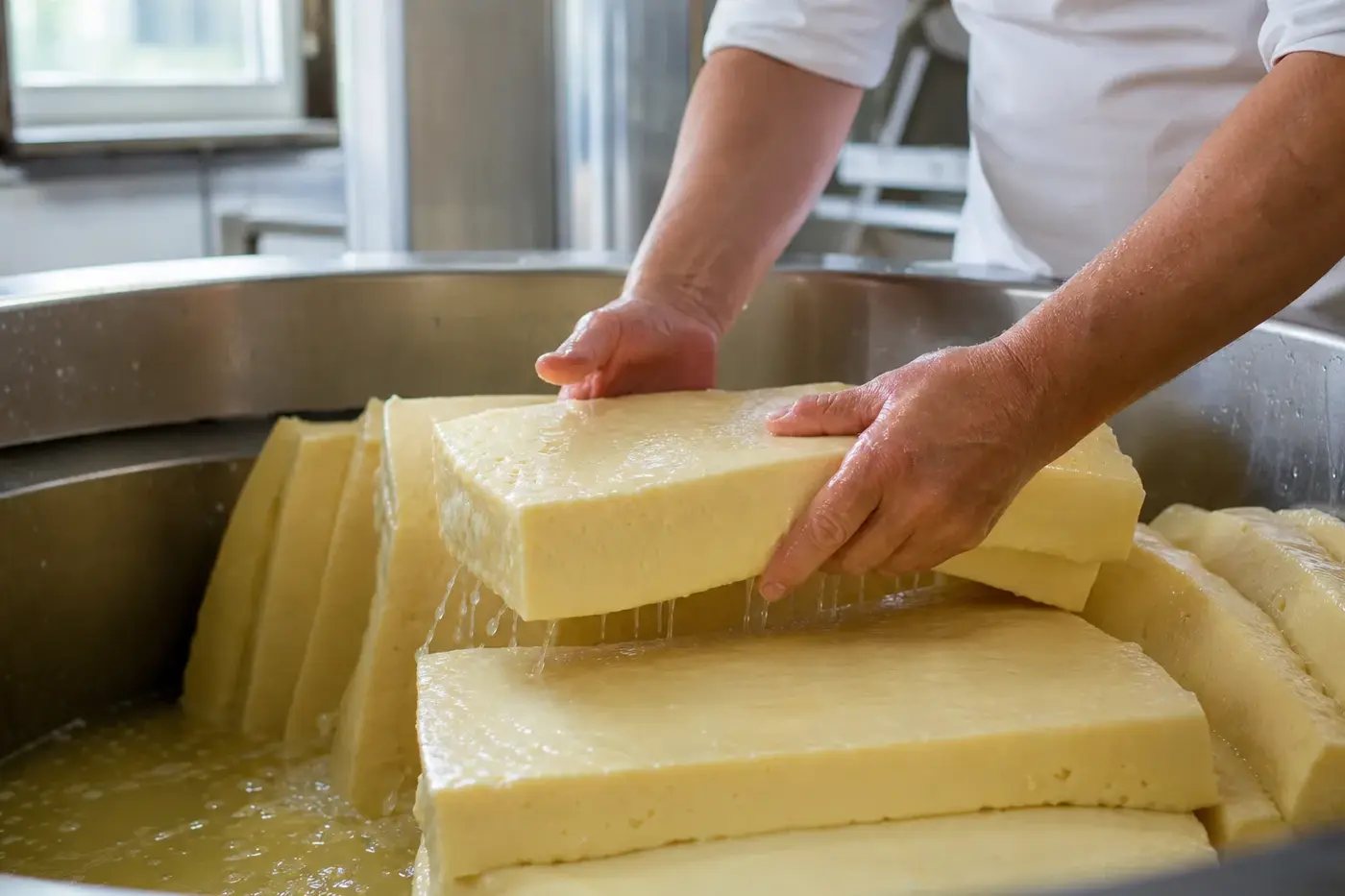
Slabs of curd are turned and stacked by hand.