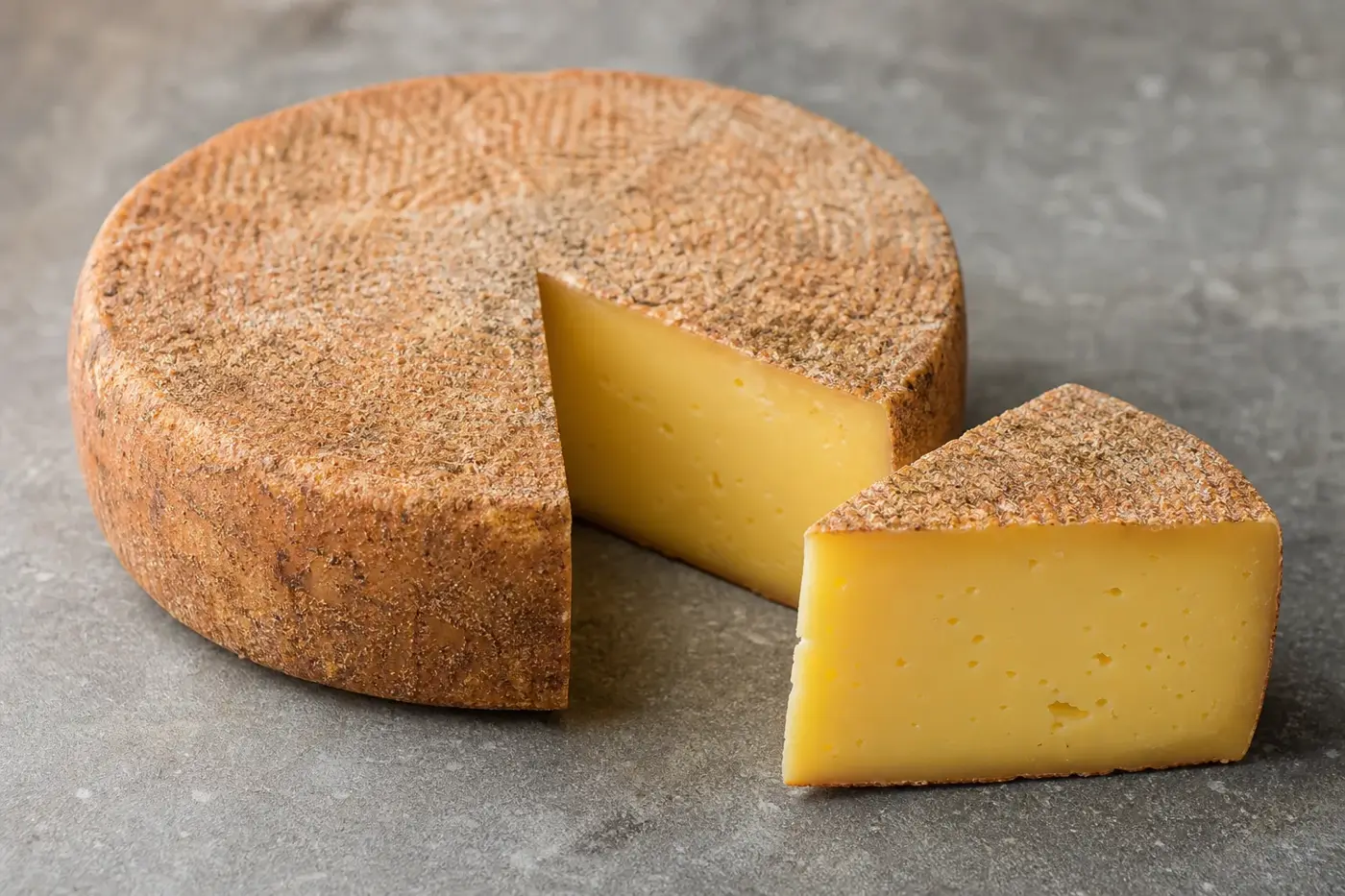
Mohant
First comes the aroma, penetrating enough to make you pause over the plate.
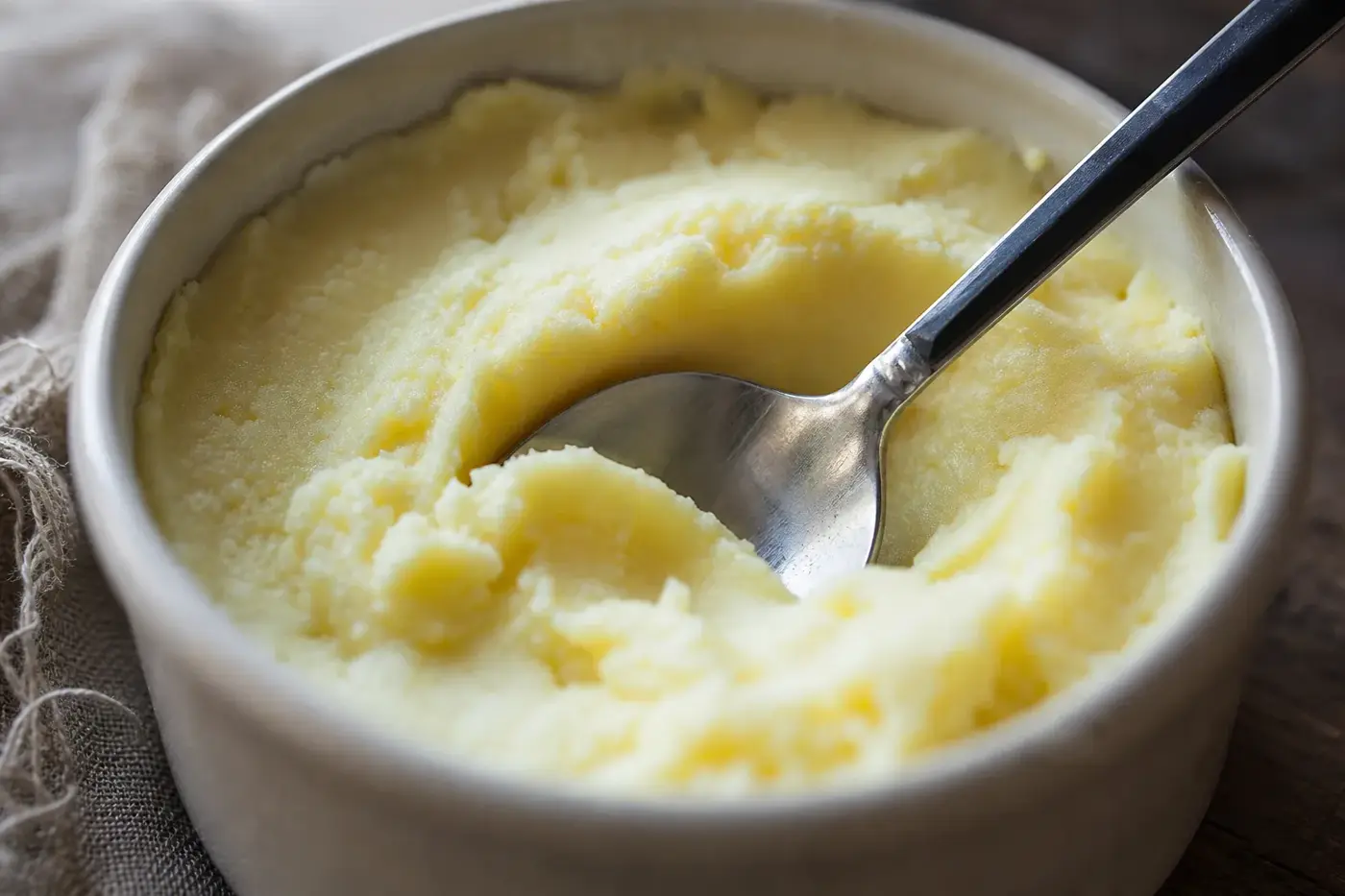
First comes the aroma, penetrating enough to make you pause over the plate. Then you taste the pale, soft cheese: piquant, forceful, sometimes a little bitter. This is Mohant, from Bohinj in Slovenia’s Julian Alps, where families in villages and mountain pastures have passed down its distinctive making and ripening methods.[1][3]
| Get to know Mohant | The essentials |
|---|---|
| Familiar and registered name | Mohant.[1][2] |
| Home | Bohinj, Slovenia.[1] |
| EU application identifier | SI-PDO-0005-0424-29.10.2004, European Commission.[1] |
| EU registration date | 19 November 2013, recorded by Defra.[2] |
| Great Britain protection | Registered PDO; UK scheme registration on 31 December 2020 at 23:00. November 2026.[2] |
| Milk | Raw cow’s milk in the 2013 application; current requirements unconfirmed.[1] |
| Rind | None.[1] |
| Traditional ripening times | Four to six weeks in spring; up to three months in winter, according to Slovenia’s heritage account.[3] |
| Pregnancy guidance | UK NHS guidance, November 2026.[8] |
That pale paste has plenty to say
Mohant’s softness gives you little warning of its strength. Slovenia’s agriculture ministry describes a whitish yellow cheese with a uniform, smooth, partly elastic paste, sometimes with small lumps. It may be difficult to spread or readily spreadable: picture a yielding mass, rather than a neat slice of firm mountain cheese.[4]
The ministry describes a pronounced smell and a sometimes pungent taste. Longer ripening can bring bitterness, too. Start with a little on plain bread, then decide how much you want beside your meal. Mohant has plainly not mistaken a pale complexion for a duty to be discreet.[4]
For a broader guide to what’s on your plate, try how to tell cheese styles apart. Here, the fascination lies in the contrast between softness and intensity. Give Mohant a small, uncluttered place, away from equally assertive ingredients, so you can taste that contrast for yourself.
Follow Mohant into Bohinj’s villages
Mohant’s story leads you through settlements and mountain dairies. Slovenia’s intangible cultural heritage register names Podjelje, Nemški Rovt, Brod, Srednja vas and Češnjica, alongside the pastures of Zajamniki, Krstenica and Laz. It describes a cheese made throughout the year, with families passing the knowledge from one generation to the next.[3]
Bohinj’s cheesemaking history reaches back to the thirteenth century. Written evidence for Mohant comes later, from the first half of the nineteenth century, while a cheesemaking association was established in Bohinj in 1873. Those are separate milestones: the region’s medieval dairying history comes before the written record of this particular cheese.[3]
A 2012 ethnographic study brings you closer to the household reasons for making Mohant. In remote places, families used milk that could not be sold through the main collection routes, turning it into cheese for their own tables. The study drew on fieldwork in two Bohinj villages during December 2009 and January 2010.[5]
This is the history of everyday food, rather than something made only for a tasting board. Mohant’s cultural significance lies in practical knowledge, family continuity and making use of local milk. An elaborate presentation reserved for special occasions feels far removed from the household setting described in the study.[5]
Why Bohinj belongs on the label
Mohant’s original EU PDO registration dates to 19 November 2013, according to Defra, which also records its later registration in the Great Britain scheme. PDO means protected designation of origin. If you’d like to untangle the different schemes, protected names explained is a useful starting point.[2]
The 2013 EU application mapped out a mountain production area around Bohinj. Its boundary passed through Kobla, Bohinjsko Sedlo, Debela Peč, Rjavina, Triglav, the Triglav Lakes valley, Komna, Vogel and Črna Prst. According to that application, both milk production and cheesemaking took place within this area.[1]
When you buy, remember that a retailer’s address is not the cheese’s birthplace. Ask who made it and where, particularly if you’re shopping away from Bohinj. Read the identification on the container alongside the seller’s description, rather than relying on either alone; how to read a cheese label guides you through the wider checks.
Evening milk, morning milk and a cheesemaker’s hands
The published 2013 application specified raw cow’s milk from the production area. Local producer Gartner also describes its own Mohant as a raw milk cheese, ripened without air. That last detail helps explain the character you’ll find when you open the container.[1][6]
Before ripening, though, comes the milk. The heritage register records a traditional combination of skimmed evening milk and fresh morning milk. The cheesemaker warms it and adds rennet, the coagulant that helps it set into curd, before roughly cutting, breaking up and stirring the set mass.[3]
The 2012 ethnographic account follows the curd through its next stages. The solid curd is separated from whey, the liquid released during cheesemaking. After draining through cloth or a sieve, it is mixed with salt and put into containers for pressing and ripening.[5]
Each step prepares the way for the next. Coagulation creates a mass the cheesemaker can handle; cutting and draining separate curd from liquid; salting and packing prepare it for Mohant’s distinctive maturation. For the broader picture, how cheese is made explains the foundations behind this particular treatment of the curd.[3][5]
Inside the container, character takes shape
Mohant’s household history includes both wooden vessels and plastic containers. The ethnographic study records an earlier practice of shaping loaves and putting them into wooden vessels. Later methods included building layers in plastic containers, with cloth and a weighted cover pressing the cheese as released whey drained away.[5]
For Gartner, anaerobic ripening, meaning ripening without air, is central to its Mohant’s characteristic smell and taste. The ministry likewise connects the finished cheese with a traditional method passed between generations. Its character comes from this particular way of working, not simply from the milk alone.[4][6]
What reaches your plate is a worked, yielding paste without a protective outer rind. Choose a spoon or spreading knife to suit the cheese in front of you. There is no need to negotiate a wedge with a cheese that has other plans.[1][4]
Ask the seller about age as well as texture. Explain whether you want it for spreading on bread or serving in small portions beside potatoes. A conversation about the batch you’re buying will tell you more than a general description of maturity alone.
Buying Mohant starts with the container
According to the 2013 EU application, Mohant was kneaded and divided after maturation, then packed within the production area. The application also described a sealing label fastening the jar and lid. Before you put the container aside, give that useful piece of packaging your attention.[1]
Gartner lists Mohant among its farm products. Bohinj’s destination organisation places the cheese within the area’s wider dairy culture, taking in village farms, mountain farms and the Bohinj cheese factory. The individual pack is one small part of that local story.[6][7]
Check who made it, whether the seal is intact and what date appears on the container. Read the refrigeration and after-opening instructions before buying. If you’re unlikely to finish it promptly, ask for a smaller pack rather than trying to stretch the storage period.
For your first purchase, ask about the batch’s texture, too. “Spreadable” might mean a paste that needs working with a knife, or one you can portion easily with a spoon. A clear description helps you choose for the meal you have in mind, before the container is open.[4]
Pull up a chair at the Bohinj table
Bread and potatoes offer you the clearest starting point. Slovenia’s heritage register records both alongside žganci, soups, eggs and štruklji, the filled dough dish found in Slovenian cooking. These are everyday meals, with Mohant at the table rather than confined to a separate cheese course.[3]
The ethnographic study brings that household table into sharper focus. It lists bread, boiled sliced potatoes, corn and buckwheat mush, roast potatoes, soups and fried eggs. It also distinguishes newer recipe development from these established domestic uses.[5]
For a straightforward introduction, try plain bread with a little Mohant, followed by a bite of boiled potato. Keep the cheese separate at first, so everyone can adjust the proportion. You’ll get a clearer sense of its character than by immediately folding a generous amount into a dish.
If you’re cooking, begin with those recorded combinations rather than a complicated sauce. Make potatoes, eggs or a plain cereal preparation the centre of your meal. Add enough Mohant to make its presence felt, while leaving yourself room to taste the other ingredients.
Give Mohant a little breathing space on the plate
Plain bread, potatoes and an otherwise simply dressed plate let Mohant lead. Taste it before reaching for pickles, strong mustard or heavily seasoned accompaniments. If you enjoy that contrast, serve them separately, so every mouthful need not have the same intensity.
For an alcohol-free drink, start with still water, then try sparkling water if you prefer. A small glass of apple juice diluted with water is another possibility. These are suggestions for exploring the cheese at your own table, rather than documented Bohinj traditions.
Change one accompaniment at a time as you compare combinations. Taste a little cheese alone, repeat with bread, then try your drink. A few deliberate mouthfuls tell you more about what you enjoy than a crowded board of competing flavours.
This page summarises published guidance from the official sources it cites. It is not medical advice. Guidance differs between countries and changes over time, so check the current source for where you live, and ask your doctor, midwife, pharmacist or dietitian about your own circumstances.
Keep Mohant chilled and follow UK safety guidance
Start with the storage instructions on your container. The UK Food Standards Agency recommends a home fridge temperature between 0 and 5 °C. Keep chilled food outside refrigeration for the shortest possible time, with a maximum of four hours during preparation; the cited guidance applies to England, Northern Ireland and Wales.[10]
Serve a small portion and leave the remaining container refrigerated. Follow the label instructions and observe the use-by date. The NHS advises using opened ready-to-eat food within two days unless the packaging says otherwise.[9]
If you’re pregnant, the NHS says hard cheeses made from unpasteurised milk can be eaten. Before choosing Mohant, consult its current UK guidance on soft cheeses. Follow its cooking advice where applicable.[8]
The NHS says pregnant people, newborn babies, people with weakened immunity and older people are at greater risk of serious listeriosis. It lists dairy products made from unpasteurised milk among possible sources. If you or someone you’re serving belongs to these groups, consult the linked official guidance and your healthcare professional about your own circumstances.[9]
Questions people ask
Where does Mohant come from?
Mohant comes from Bohinj in Slovenia. Its making methods have been passed down within families in villages and mountain pastures of the Julian Alps.
What does Mohant taste and smell like?
Mohant has a pronounced smell and a piquant, sometimes pungent taste. Longer ripening can bring some bitterness.
What milk is Mohant made from?
The 2013 EU application specified raw cow’s milk, although current requirements have not been verified. Traditionally, cheesemakers combined skimmed evening milk with fresh morning milk.
How is Mohant made?
The milk is warmed and set with rennet, then the curd is cut, broken up and stirred. The curd is drained, mixed with salt and placed in containers for pressing and ripening.
How is Mohant traditionally eaten?
Slovenia’s heritage register records Mohant eaten with bread, potatoes, žganci, soups, eggs and štruklji. A household study also mentions boiled sliced potatoes, roast potatoes and fried eggs.
Sources
- European Commission. Single document: Mohant, application publication 2013/C 160/05, 6 June 2013, sections 3 to 5. Official document.
- Department for Environment, Food & Rural Affairs. Mohant, protected food names register entry, published 4 January 2021, retrieved November 2026. Register entry.
- Slovenian Intangible Cultural Heritage Register. Priprava bohinjskega mohanta, entry EID 2-00025, registered 17 July 2013. Heritage record.
- Republic of Slovenia, Ministry of Agriculture, Forestry and Food. Protected Slovenian Agricultural Products and Foodstuffs, digital edition, 2021, page 16. Ministry publication.
- ZRC SAZU, Traditiones. Contemporary Appropriations of Culinary Tradition in Slovenia, 2012, pages 95 to 98. Research article.
- Tourist Farm Gartner. Cheese Mohant, undated producer product page, retrieved November 2026. This is a commercial producer’s account of its own cheese. Producer account.
- Tourism Bohinj. Bohinjsko/From Bohinj, undated destination page, retrieved November 2026, “Culinary products and produce”. Destination account.
- NHS. Foods to avoid in pregnancy, current page retrieved November 2026, “Cheese, milk and other dairy”. UK pregnancy guidance.
- NHS. Listeriosis, reviewed 10 November 2023, retrieved November 2026, “Risks of listeriosis” and “How to avoid listeriosis”. UK listeriosis guidance.
- Food Standards Agency. How to chill, freeze and defrost food safely, published 18 December 2017, current page retrieved November 2026. Storage guidance.
Researched through official product documentation, Slovenian heritage and agricultural records, an ethnographic field study, a producer account and UK public health guidance.
Last checked: November 2026
Last checked November 2026.
The editors suggest you read next
Tolminc
Your knife slips through a smooth, straw-coloured rind into yellow cheese that gives a little beneath the blade.