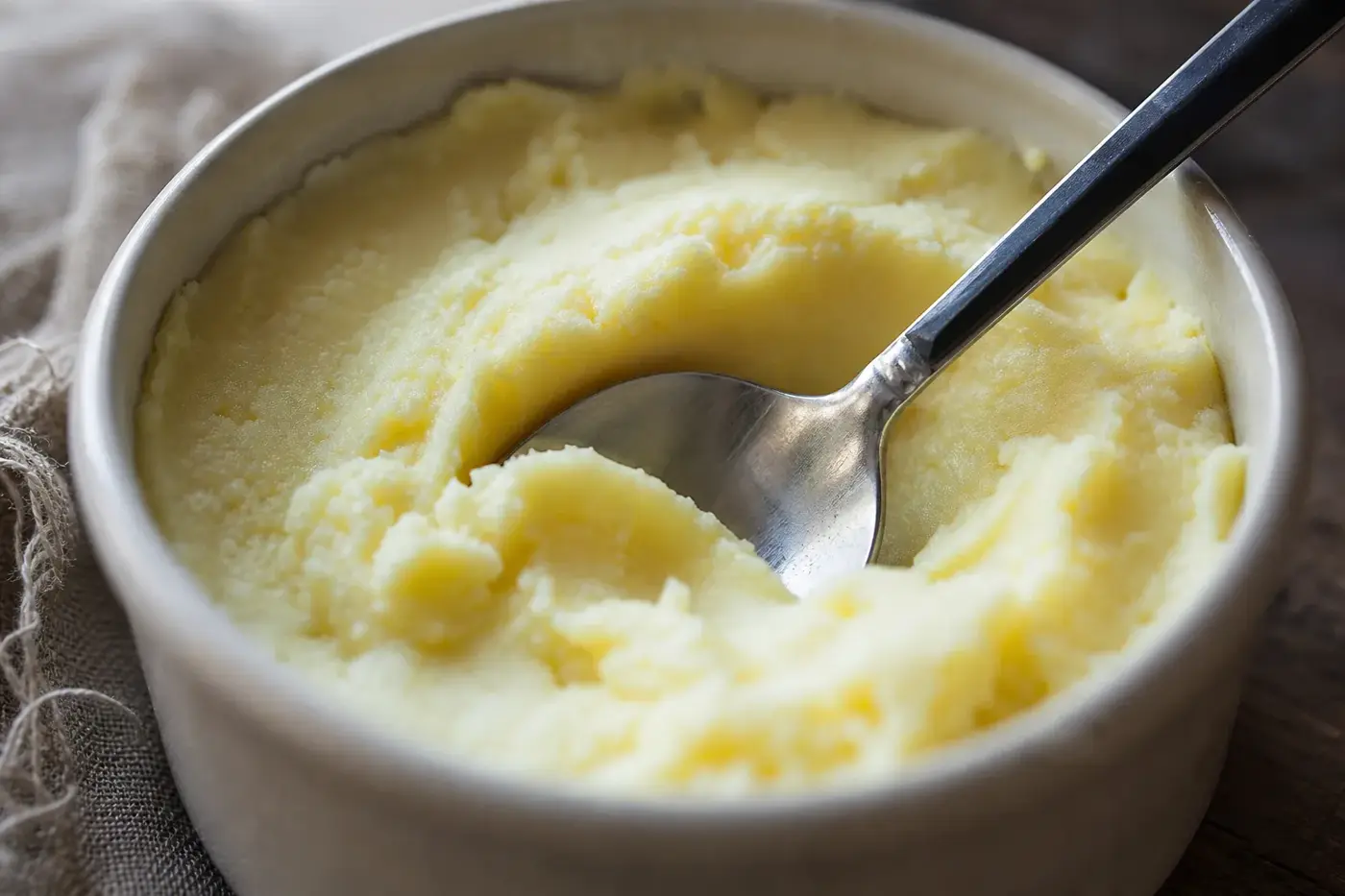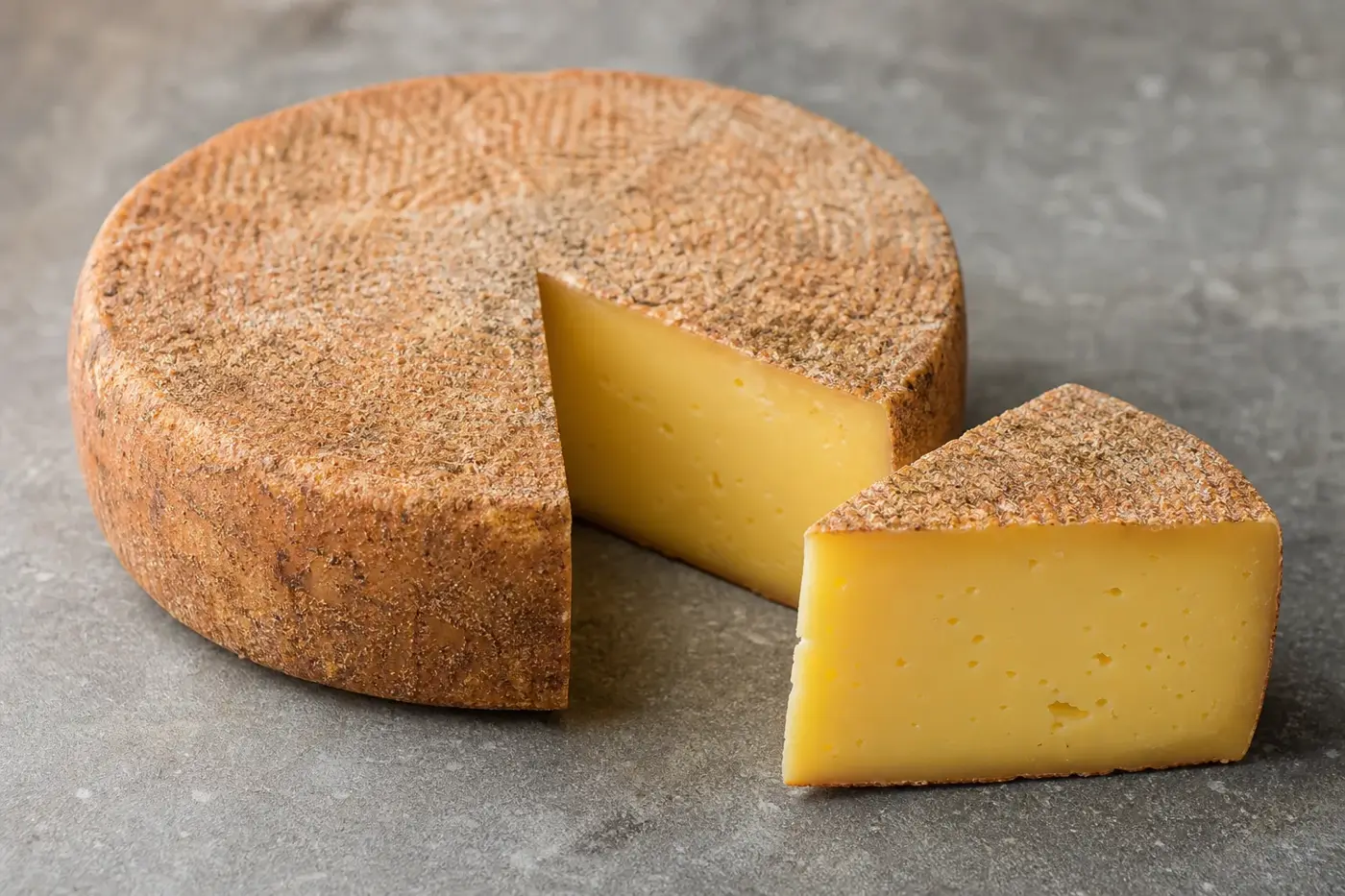
Picture rent day on the Nanos plateau in western Slovenia. In the sixteenth century, pasture users handed over cheese as part of what they owed. A useful arrangement, provided you could resist eating the payment. Today, Nanoški Sir carries that plateau’s older sheep milk tradition into a cheese made from cow’s milk. [1][5]
Cut yourself a piece and you find yellow, supple paste, a restrained aroma and a gently piquant, salty flavour. The published EU application describes a cheese shaped by pressing, brining and at least 60 days of maturation. There is a good deal of patient work beneath that rind. [1]
| Fact | What to know |
|---|---|
| Familiar name | Nanoški Sir |
| Exact registered name | Nanoški sir [2] |
| Registration authority and application identifier | European Commission; SI-PDO-005-0421-29.10.2004 [1] |
| EU protection | Registered by Commission Implementing Regulation (EU) No 987/2011; current register status uncertain [2] |
| Great Britain protection | PDO, registered from 31 December 2020 at 23:00; information dated November 2026 [4] |
| Northern Ireland protection | Uncertain |
| Switzerland protection | Uncertain |
| United States rights | Uncertain |
| Legally defined origin | Western Slovenia, with separate areas for milk production and cheesemaking [1] |
| Milk and treatment | Cow’s milk; at least 80% from Brown breed cows; published specification records heat treatment at 63 to 69 °C [1] |
| Coagulant | Rennet; source unspecified in the published summary [1] |
| Minimum maturation | 60 days [1] |
| Typical maturation beyond the minimum | Uncertain |
| Composition requirements | At least 60% dry matter; at least 45% fat in dry matter [1] |
| Wheel size | 8 to 11 kg after minimum maturation; diameter 32 to 34 cm; height 7 to 12 cm [1] |
Follow Nanos down into the valleys
The name sends you towards Nanos, but the cheesemaking happens in the valleys below. The neighbouring Vipava Valley sits where Mediterranean and continental pre-Alpine climates meet. The published specification describes hot summers and the powerful bora wind descending from the plateau. [1]
The protected geography draws two boundaries: one for milk, another, smaller one for making cheese. Cheesemaking belongs to the upper Vipava Valley, including the Močilnik valley between Lozice and Vipava and the Vipava river valley between Vipava and Ajdovščina. Establishments must stand no higher than 500 metres above sea level. The milk comes from a considerably broader area. [1]
You have, then, a cheese connected to a plateau but made in its valleys. The specification brings cattle, local feed, climate and maturation microorganisms into that geographical story. It describes their combined contribution, without assigning a measured flavour effect to each one. [1]
Get to know the place behind the PDO
Those three letters, PDO, stand for protected designation of origin. Slovenia’s agriculture ministry explains the principle: a product’s characteristics belong with its geographical environment, including natural conditions and local knowledge. Both raw-material production and processing must happen within the defined area. [3]
For Nanoški sir, the milk boundary follows the Italian border between Sežana and Nova Gorica, then the Soča to Most na Soči and the Idrijca towards Idrija. It also follows specified roads through Godovič, Kalce, Planina, Postojna, Pivka and Divača. The named settlements sit inside the boundary. [1]
The EU registration regulation was adopted on 30 September 2011 and published on 5 October 2011. It specifies entry into force on the twentieth day following publication. Great Britain maintains a separate registered PDO entry. [2][4] If you would like a clearer picture of the wider schemes, try protected names explained.
A cheese with history, and a change of milk
Nanoški Sir’s history is not the story of one recipe standing still. The EU application summary points to a sixteenth-century land register for the Vipava manor. Its record of pasture users paying part of their rent in cheese gives grazing and cheesemaking on Nanos an early connection. [1]
Then the milk changed. Slovenia’s agriculture ministry says cheese on Nanos was once made exclusively from sheep’s milk, until a shortage prompted the move to cow’s milk. The EU summary dates the beginning of cow milk Nanoški sir production to 1986. [1][5]
That distinction matters when you choose a wedge today. The regional tradition survived, but its raw material changed. The registered name belongs to the specification’s cow milk requirements; sheep milk belongs to the cheese’s earlier story. [1][5]
Meet the cows behind your wedge
Brown breed cows take a central role here. At least 80% of the cow’s milk for Nanoški Sir must come from them. Local forage and roughage matter too: these feeds must supply 75% of the dry matter in each ration. [1]
Milk for the cheese is collected and stored separately. No more than 72 hours may pass between the first milking and heat treatment, recorded in the traceability provisions at 63 to 69 °C. The published summary gives no holding duration alongside that range. [1]
If milk treatment matters to your choice, ask the seller for the producer’s declaration for that particular cheese. Temperature and holding time need to be considered together. You can explore the terminology in raw, thermised and pasteurised cheese.
Into the vat, then into the brine
First, the milk reaches coagulation temperature. Rennet is added and mixed in, setting it into curd. Once set, the curd is cut and moved into moulds, where fermentation continues during pressing. [1]
Each fresh wheel receives a production identifier before its salt bath. It spends three days in sea-salt brine at 12 to 18 °C, turning daily. Afterwards, it drains until its surface is dry enough for the maturation room. [1]
Pressing, brining and rind care tell you more about its structure than the broad label “mountain cheese”. Each is a specified part of production. For dietary requirements, ask about the actual rennet source: the summary names rennet without identifying its origin. [1] You will find the different sources in rennet explained.
Give the wheel its sixty days
A wheel needs at least 60 days of maturation, plus the required composition, before it can be marketed. During the first fortnight, it is wiped and turned every three days. After that, turning happens at least weekly, with wiping as necessary and a wash before release to remove surface mould. [1]
The calendar does not decide readiness alone. Selection also involves examining the wheels’ appearance, assessing them with the senses and chemically analysing the selected batch. Together with maturation, these checks establish the finished cheese’s condition. [1]
Age strengthens the aroma and piquancy, according to the specification. But do not expect an older wedge necessarily to turn crumbly: the described texture is elastic, smooth and cohesive. Ask about the wheel’s age and condition, as the published summary defines no separate older-cheese category. [1]
Look closely at that yellow paste
Before you cut, take a moment with the wheel. Nanoški sir has a slightly convex edge and a dry, smooth rind, its yellow surface shaded from brick-red to brown. Traces of mould associated with traditional maturation are permitted, but cracks and other exterior imperfections are not. [1]
Inside, the paste is an intense yellow. You may see occasional irregular eyes, the openings on the cut surface, in small or medium sizes. Few eyes fit the description perfectly well; a regular pattern of large holes is not the defining look. [1]
Slovenia’s ministry attributes that strong yellow colour to beta-carotene in the milk. [5] Whether you have a wheel in front of you or a photograph, take in rind and paste together. Colour offers a clue to appearance, not proof of identity on its own.
Let the first bite have your attention
Expect firmness with suppleness, pleasant saltiness and slight piquancy. The specification calls the aroma clean and unobtrusive, becoming more pronounced with age alongside the piquancy. Individual wheels still have their differences. [1]
Start with a small piece, without accompaniments. Notice the resistance as you bite, how readily the paste breaks down, and whether salt or piquancy speaks first. These prompts follow the published descriptors and help you pay attention to the cheese in front of you. [1]
Comparing two wedges? Set their stated ages and producers beside your impressions. That gives you a useful basis for comparison while leaving room for each wheel’s character and condition. It is a perfectly respectable reason to have another small piece.
Nanoški Sir and Paški sir: start with the milk
Put these cheeses beside each other and milk and place tell the clearest story. Nanoški sir comes from western Slovenia, with cow’s milk specified in its protected description. Paški sir’s EU application describes a hard cheese made from whole sheep’s milk from the native sheep breed of the Croatian island of Pag. [1][6]
Sheep milk belongs to Nanoški Sir’s documented past, but remains central to Paški sir’s specified identity. You are looking at two distinct regional cheesemaking traditions. They are not interchangeable examples of one coastal or Balkan style. [1][5][6]
Find the narcissus on your label
Start with the exact name, Nanoški sir, and the PDO identification. The published specification requires the cheese’s name, a narcissus symbol, the EU scheme symbol and the national quality symbol. It also describes a stamp combining the narcissus and name on the wheel, plus serial identification on prepacked pieces. [1]
Next, ask for the producer, batch information and stated age. If you have dietary requirements, request the actual product information, including rennet source and any added ingredients. The regional name cannot answer every dietary question, although cow’s milk is intrinsic to this cheese. [1]
Slovenia’s ministry offers a searchable quality-scheme certification service and identifies the national authority responsible for official supervision. [3] For help separating the food’s identity from producer, packer and other details, turn to the guide to reading a cheese label.
This page summarises published guidance from the official sources it cites. It is not medical advice. Guidance differs between countries and changes over time, so check the current source for where you live, and ask your doctor, midwife, pharmacist or dietitian about your own circumstances.
Make a simple plate, then store it well
Follow the storage instructions and date marking on the cheese you buy. For household storage advice in England, Wales and Northern Ireland, consult the Food Standards Agency’s current guidance. Give those practical details your attention before serving. [7]
Cut only what you intend to serve and return the rest promptly. For a simple first plate, try plain bread, fresh pear or apple, with water or unsweetened tea. Taste the cheese alone, then add one accompaniment at a time so its specified saltiness and piquancy remain easy to recognise. [1]
These are suggestions for finding what you enjoy, not established regional pairings. Let your own preference guide you. For more detailed handling advice, continue to how to store cheese at home.
Questions people ask
Where is Nanoški sir made?
Nanoški sir is made in the upper Vipava Valley in western Slovenia, below the Nanos plateau. Cheesemaking establishments must be no higher than 500 metres above sea level.
Is Nanoški sir made from sheep’s milk?
Nanoški sir was once made exclusively from sheep’s milk, but a shortage prompted a move to cow’s milk. Production using cow’s milk began in 1986, and at least 80% of the milk must now come from Brown breed cows.
What does Nanoški sir taste like?
It has a pleasantly salty taste, slight piquancy and a clean, unobtrusive aroma. Its aroma and piquancy become stronger with age.
How long is Nanoški sir matured?
Nanoški sir must mature for at least 60 days before it can be marketed. During the first fortnight, the wheels are wiped and turned every three days.
Is Nanoški sir vegetarian?
The published summary says the cheese is made with rennet but does not identify its source. Ask the producer or seller about the rennet used in a particular cheese.
Sources
[1] European Commission, Publication of an application pursuant to Article 6(2) of Council Regulation (EC) No 510/2006, 2010/C 340/16, 15 December 2010, sections 4.1 to 4.8. Published summary of the Nanoški sir specification.
[2] European Commission, Commission Implementing Regulation (EU) No 987/2011 of 30 September 2011 entering a name in the register of protected designations of origin and protected geographical indications [Nanoški sir (PDO)], published 5 October 2011, Articles 1 and 2 and Annex.
[3] Slovenian agriculture ministry, Sheme kakovosti in zaščiteni kmetijski pridelki in živila, official quality-schemes guidance, page updated 6 October 2026.
[4] Department for Environment, Food & Rural Affairs, Nanoški sir, Great Britain protected food names register entry, published 4 January 2021.
[5] Slovenian Ministry of Agriculture, Forestry and Food, Slovenski zaščiteni kmetijski pridelki in živila, 2021, Nanoški sir entry, printed page 17.
[6] European Commission, Paški sir: single document, 2019/C 225/08, 5 July 2019, section 3.2, EU application PDO-HR-02397. The retrieved official search extract supplies the milk and origin description used here.
[7] Food Standards Agency, How to chill, freeze and defrost food safely, published 18 December 2017, current retrieved guidance for England, Northern Ireland and Wales, section 1.
This desk-researched article brings together official registration documents, the published specification summary, Slovenian ministry accounts and attributed household storage guidance.
Last checked: November 2026
Last checked November 2026.
The editors suggest you read next
Tolminc
Your knife slips through a smooth, straw-coloured rind into yellow cheese that gives a little beneath the blade.