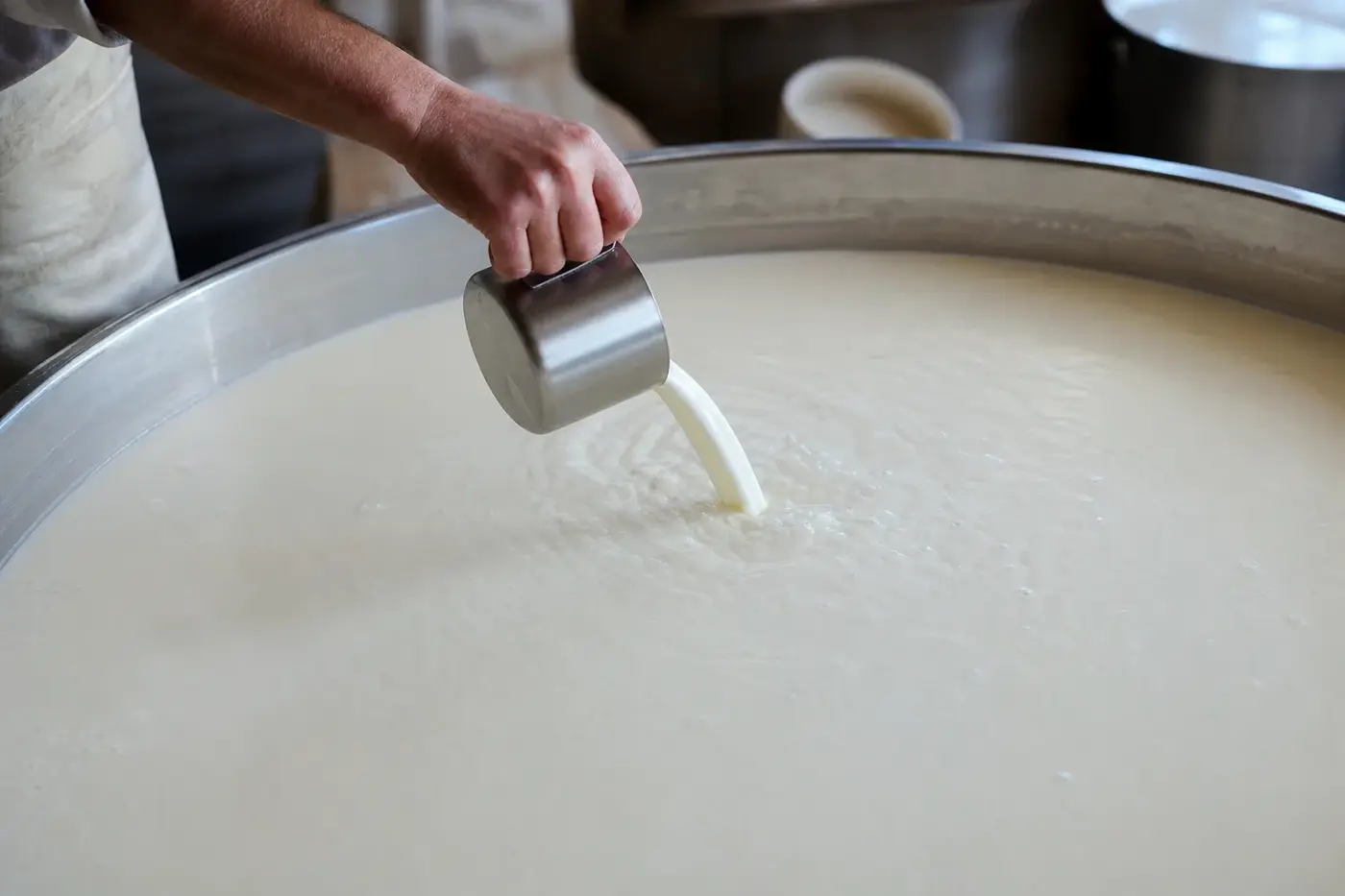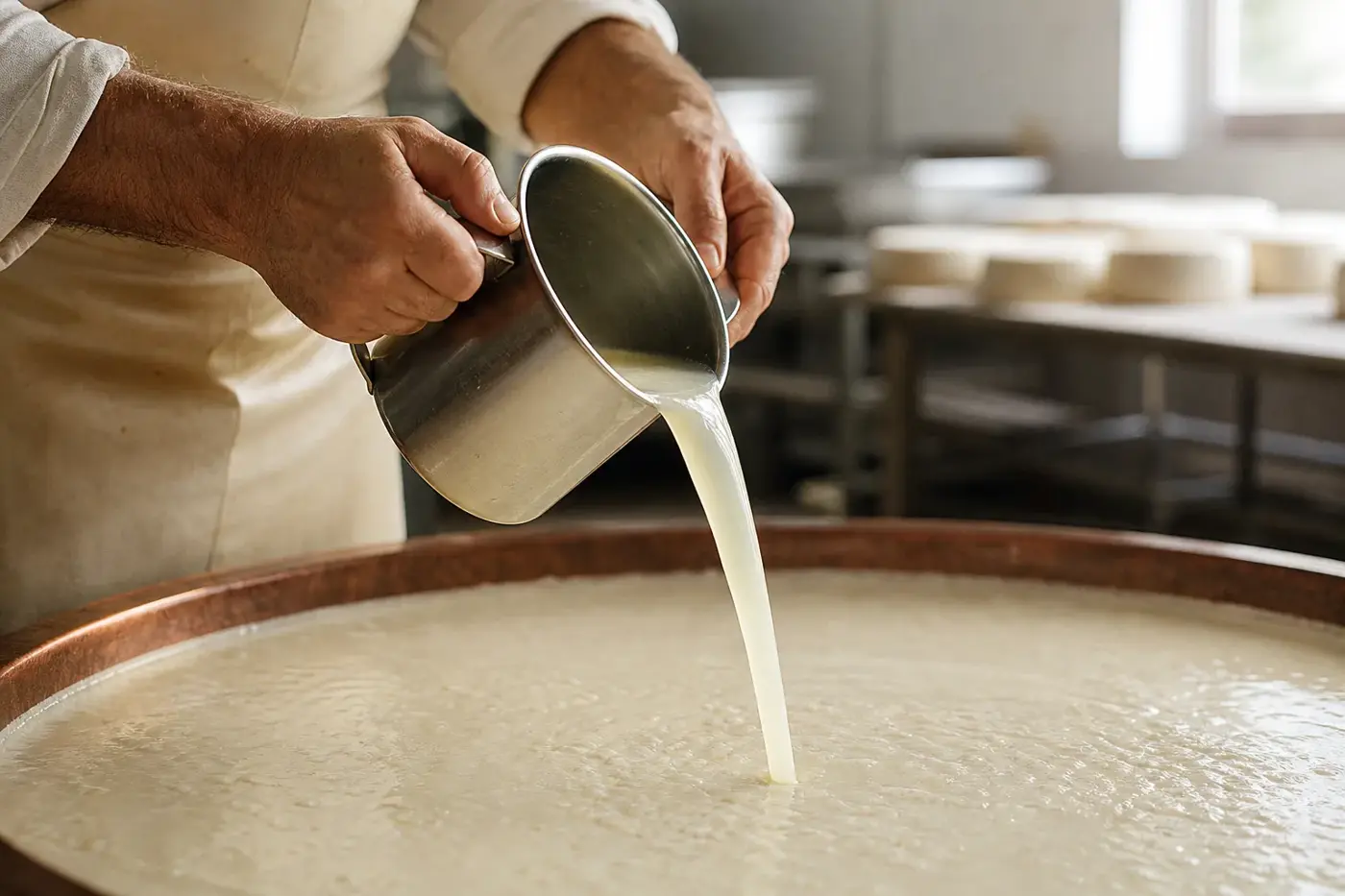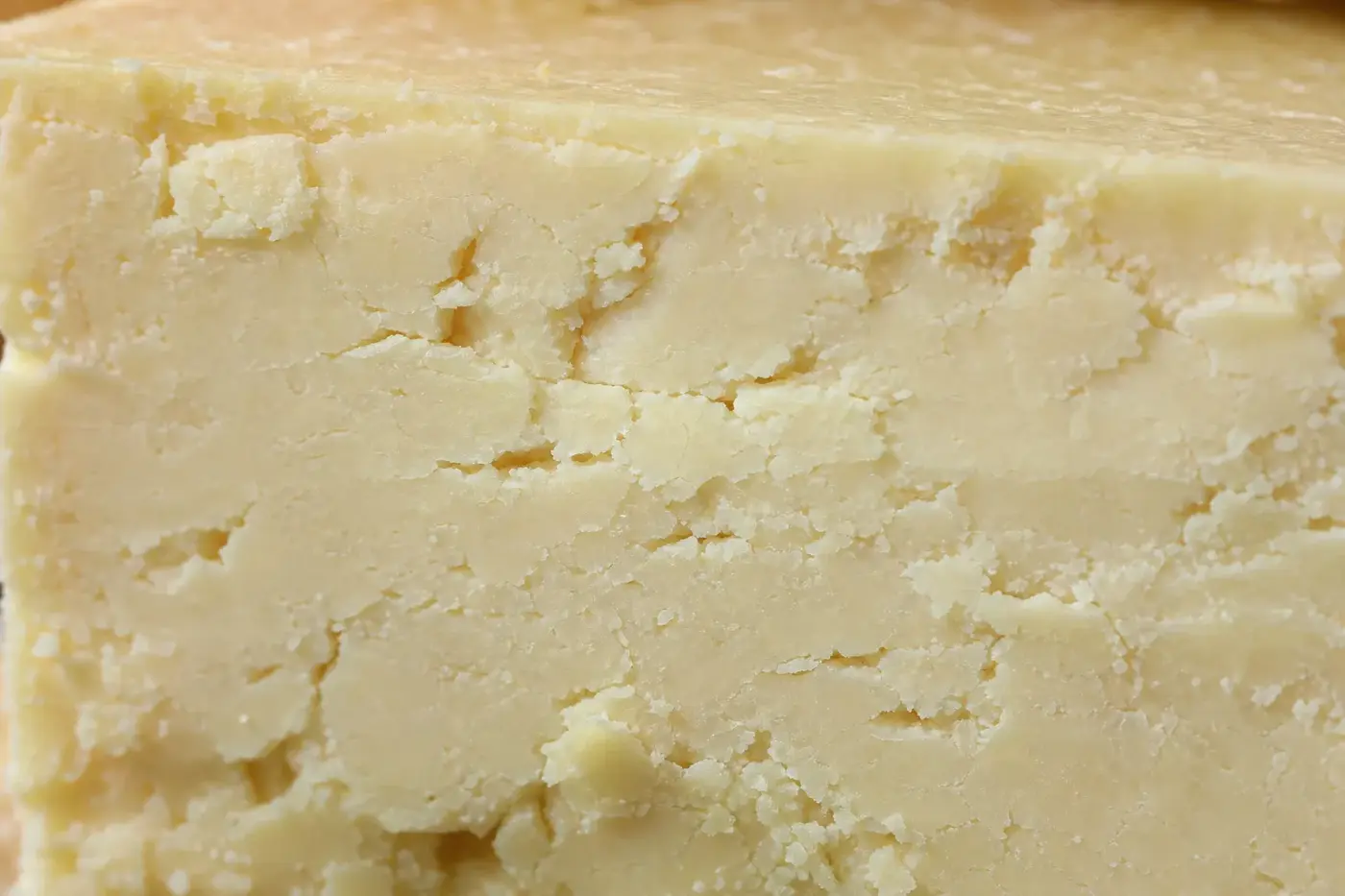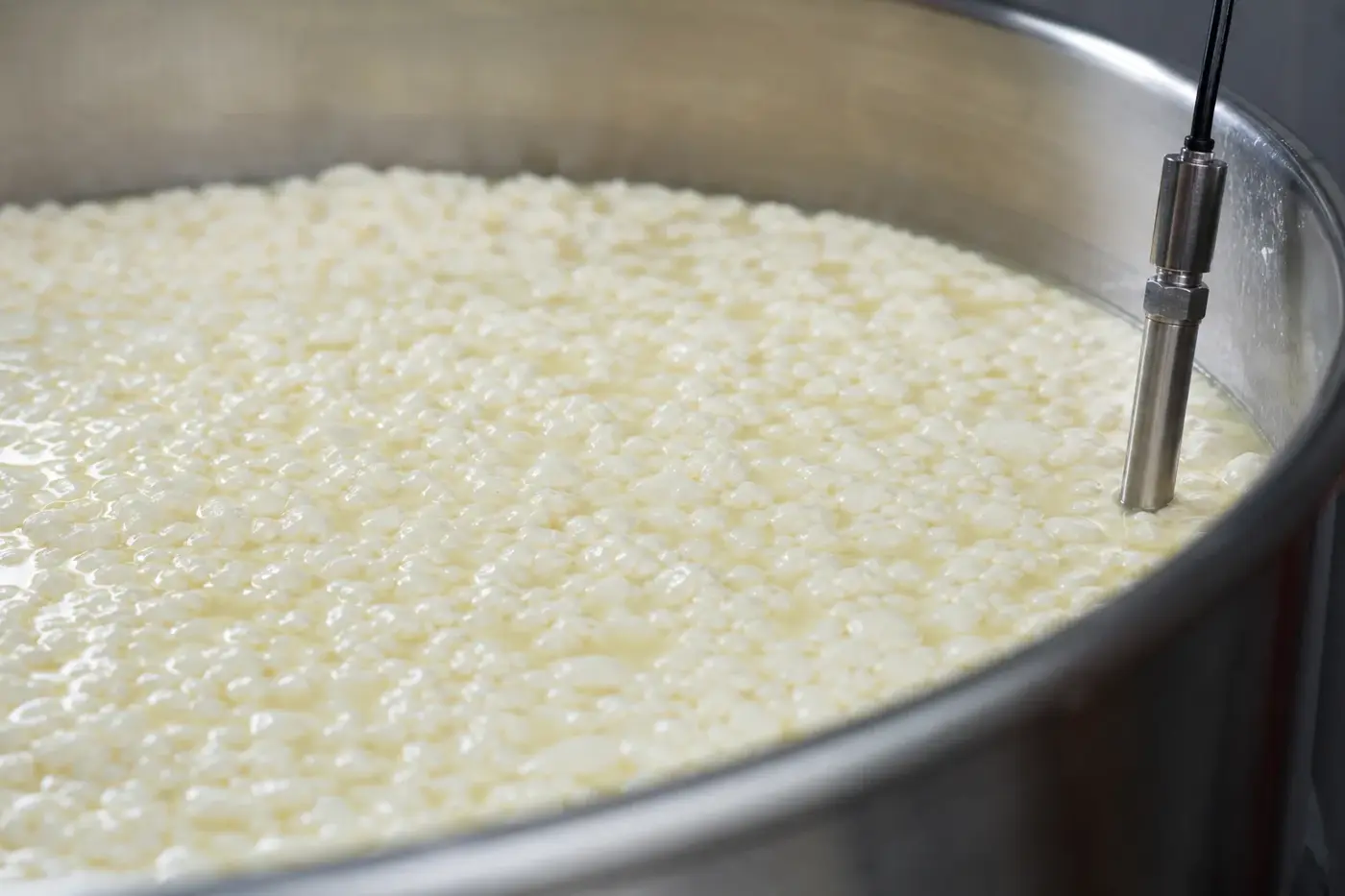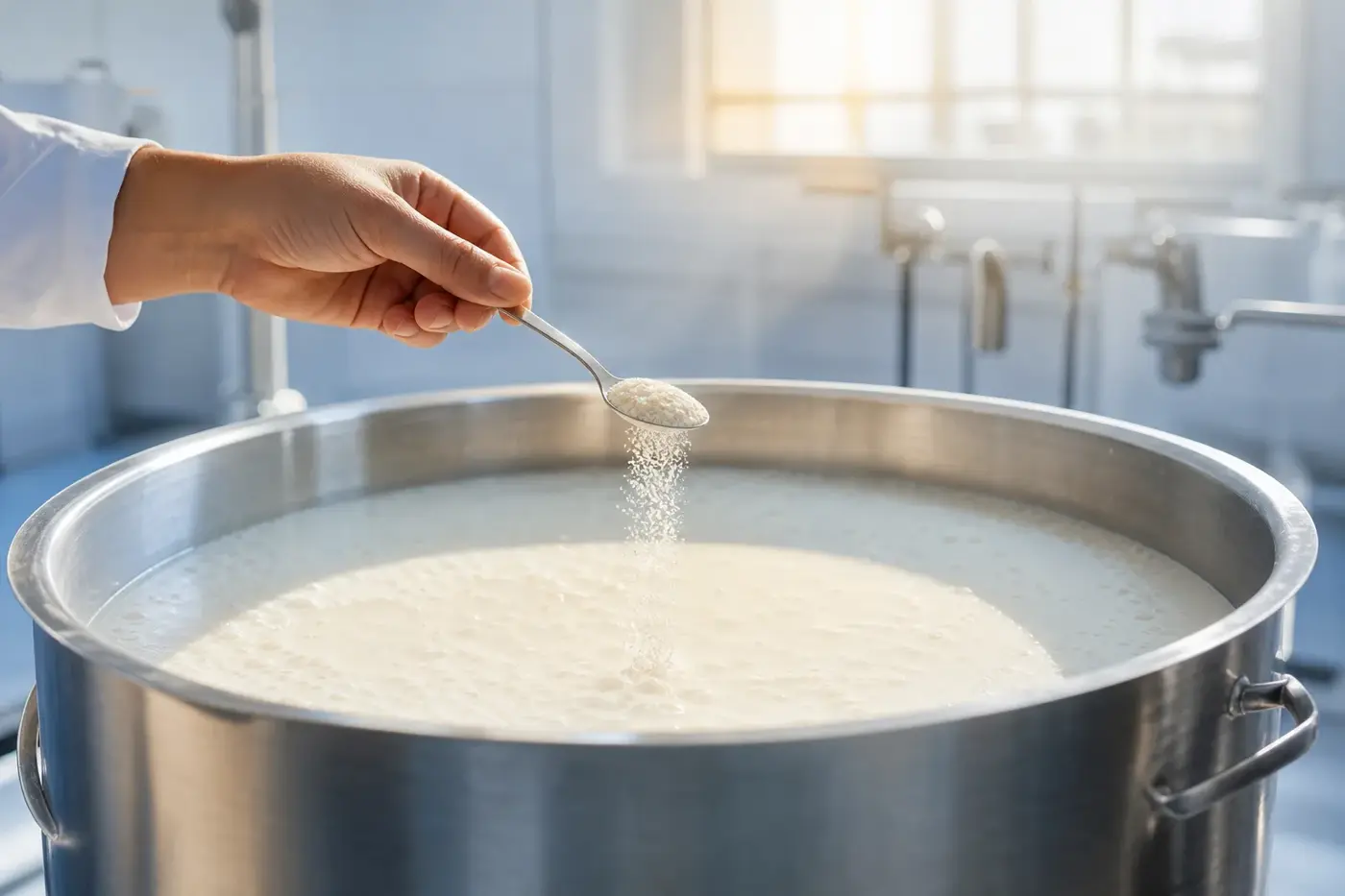
The milk has set. Now the curds face the heat. For cottage cheese, that can mean setting at 22 to 32 °C and cooking the curds at 47 to 60 °C, according to Tetra Pak's Dairy Processing Handbook. Judge the starter bacteria by the hottest figure and you can get the wrong answer: setting and cooking are separate stages, with separate jobs. [2]
Mesophilic cheese cultures generally work best around 30 °C; thermophilic cultures prefer warmer conditions, commonly around 37 to 44 °C. To choose between them, you need the whole temperature programme, from adding bacteria to heating curds. Cheesemakers also choose strains for how quickly they produce acid and what they contribute during ripening. Temperature gets you into the conversation, but it does not get the final word. [1]
Get to know the strains behind the names
Mesophilic and thermophilic describe temperature preferences, not fixed recipes. Within either group, strains differ in growth rate, acid production and tolerance of conditions in the cheese vat. A strain is a particular lineage within a bacterial species, so the species name gives you only part of the story. [1, 2]
The University of Wisconsin's Center for Dairy Research gives about 30 °C as an optimum for mesophilic growth and acid production, and 37 to 44 °C for thermophilic cultures. Those are useful bearings, provided you look at what each figure measures. Growth, acid production and survival during brief heating are different things. [1]
Consider a strain with an Emmental connection. DSMZ lists 37 °C for laboratory cultivation of Lactobacillus helveticus DSM 20075, isolated from that cheese. That is the culture collection's cultivation condition for this particular strain, not a shared optimum for every strain of the species. [4]
Watch the starter get to work
Starter bacteria ferment lactose, milk's principal sugar, into lactic acid. As acid builds, pH falls: a lower pH means greater acidity. That changes how milk proteins form a gel, how curd releases whey and how cheese later ripens. Making milk taste sour is only the opening act. [5, 16]
In many cheeses, rennet, a preparation of milk-clotting enzymes, provides the initial set. Milk forms a gel, which is cut into curds; the liquid draining away is whey. Acidification and rennet coagulation work together, but each has its own job. Explore rennet for the setting mechanism, or follow the cheesemaking sequence to see where the starter fits. [5, 15]
Follow the milk through every temperature
Inoculation simply means adding the culture to milk. Curd cooking comes later, after coagulation and cutting, when curd grains and their surrounding whey are heated according to the make. The bacteria experience these changing conditions throughout. They may actively produce acid at one stage, then work more slowly or survive heat exposure at another. [2]
Remember those cottage cheese temperatures? The temperature used to set the milk and the heat later applied to its curds tell you different things about the process.
Ask when the starter needs to produce acid, and how the full temperature programme will affect that activity. Read the early milk temperature, heating stages and later acidification period together. The highest number in the recipe cannot choose your culture for you, however impressive it looks. [1, 2]
Meet the mesophilic starters in Cheddar and Gouda
Lactococcus lactis is a familiar mesophilic starter bacterium in culture systems for Cheddar and Gouda. You will also encounter Lactococcus cremoris. Older publications and some current supplier ingredient lists call it Lactococcus lactis subsp. cremoris; DSMZ's taxonomic reference now records Lactococcus cremoris as the correct species name. [1, 3, 10]
Acid production is not the whole shopping list. Tetra Pak distinguishes cultures used principally for acidification from adjunct cultures chosen for particular flavour or texture effects. Some mixed cultures generate carbon dioxide, too, which may or may not suit the intended cheese structure. Two starters labelled mesophilic can have quite different jobs. [2, 16]
Find the warmer-loving cultures in mozzarella and Parmesan
Streptococcus thermophilus and Lactobacillus helveticus are common thermophilic cheese bacteria. The University of Wisconsin names mozzarella and Parmesan among cheeses made with thermophilic cultures. Both species names remain current in DSMZ's nomenclature database, including Lactobacillus helveticus, which keeps its Lactobacillus genus name. [1, 3]
A cheese style gives you a starting point; the specified process determines the suitable strain or blend. A culture suitable for a Parmesan-style make, for instance, does not establish the production requirements for Parmigiano Reggiano. The culture group and the recipe answer different questions. [1, 2]
See how acidity helps curds set and whey escape
Acidification changes how readily rennet sets milk. In a laboratory study comparing carbon dioxide treatment with lactic acid treatment, both shortened rennet coagulation time. Lactic acid had the larger effect. Acidity at setting matters, but starter and rennet still have distinct roles. [5]
After cutting comes syneresis: the curd network contracts and pushes out whey. Acidity helps govern that release, alongside heating and mechanical handling. Research on renneted milk gels has examined pH, temperature, heating rate and agitation together. If you want to control moisture, you need the whole make, not just the starter packet. [2, 6]
Acidity's influence continues into ripening. In experimental cheese made from ultrafiltered milk, changing the pH at renneting altered when starter cells broke down. Conditions you establish during manufacture can therefore affect the later release of bacterial enzymes, even with the same culture. [7]
Follow the slow making of flavour and texture
Starter bacteria supply enzymes that break down proteins during ripening, a process called proteolysis. Some enzymes cut proteins into peptides; peptidases release smaller fragments and free amino acids. In controlled Cheddar experiments, changing the starter's proteinase activity changed the accumulation of these smaller products and the flavour development that followed. [8]
That breakdown changes the material forming the curd network, affecting texture. Meanwhile, the smaller products offer routes towards flavour development. Controlled Cheddar research found that rennet and milk enzymes were mainly responsible for the initial breakdown of casein. Starter enzymes supplied much of the subsequent production of smaller peptides and amino acids. [15]
There is another step before those enzymes can contribute: they must reach the surrounding cheese. Autolysis is the breaking open of bacterial cells, releasing their intracellular enzymes. A study of enzyme activities in Cheddar cheese juice during the first 70 days of ripening found that strains with different autolytic behaviour released different levels of proteolytic activity. [9]
If you are choosing a strain for an aged cheese, that distinction matters. Producing the right acidity on making day is one job; supplying the enzyme system for maturation is another. In the same research, enzyme activity measured in cell extracts before manufacture did not predict the activity later released into cheese juice. [9]
Discover why a blend belongs in the vat
A mixed starter may contain several strains from one temperature group, or combine mesophilic and thermophilic bacteria. An adjunct is added for a particular contribution to flavour or texture, rather than principally to drive acid production. These terms tell you about the organisms' jobs as well as their temperature preferences. [2]
Lactobacillus helveticus shows how those categories overlap. A Cheddar investigation compared four individual starter strains, including this thermophilic species and lactococcal strains. It found significant differences in proteolysis and sensory characteristics, with highly autolytic starters supporting flavour development more successfully in that experiment. Temperature classification alone could not explain the differences. [11]
Choose your starter with the recipe open
Start with the recipe's named starter or specified blend, then consult the supplier's technical information. Match the culture to the entire make, including its temperature sequence and expected acidification checkpoints. A substitution changes the process. Two packets are not interchangeable just because both say mesophilic or thermophilic. [10, 12]
- Know what is in your packet. Read the organisms or blend description, intended cheese applications and whether you add the culture directly or prepare it first. Follow that product's instructions, not directions remembered from another culture. [10]
- Follow the dose and storage instructions. New England Cheesemaking Supply Company, for example, tells you to keep its mesophilic starter in the freezer and add it when the recipe specifies. Those directions apply to its product. [10]
- Record time, temperature and acidity. Ireland's Food Safety Authority includes starter batch information, acid development records and pH meter checks among its farmhouse cheesemaking controls. Your records show whether the culture followed the expected pattern. [12]
- Follow the recipe's response when things stray. The same Irish guidance includes corrective action for slow acid development. Keep those actions within the established method and food safety plan. Do not improvise a longer warm hold when acidification falls behind. [12]
This page summarises published guidance from the official sources it cites. It is not medical advice. Guidance differs between countries and changes over time, so check the current source for where you live, and ask your doctor, midwife, pharmacist or dietitian about your own circumstances.
Put cultures in the full food safety picture
Starter activity is one part of a controlled cheese make, not the whole safety system. The UK's Advisory Committee on the Microbiological Safety of Food identifies hygiene, milk handling, starter activity, milk temperature and culturing time as separate considerations in its cheese process diagram. Choose your culture alongside suitable milk treatment, clean equipment and control of later handling stages. [13]
For businesses in England, Wales and Northern Ireland, the Food Standards Agency's published guidance places food hygiene within wider food safety management. That includes documented procedures and their regular review. As of November 2026, its current guidance is the official starting point for that jurisdictional advice. [14]
Want to follow the milk a little further? Read raw milk, thermised and pasteurised cheese for differences in milk treatment, or cheese food safety for the broader controls. You can also explore related topics including starter cultures, wild cultures and bacteria involved in ripening.
Questions people ask
What is the difference between mesophilic and thermophilic cultures?
Mesophilic cultures generally work best around 30 °C, while thermophilic cultures commonly favour 37 to 44 °C. The names describe temperature preferences, not fixed recipes, and individual strains differ in how they perform.
Which cheeses use mesophilic or thermophilic cultures?
Lactococcus lactis is a mesophilic bacterium used in culture systems for Cheddar and Gouda. Mozzarella and Parmesan are among cheeses made with thermophilic cultures.
What do starter cultures do in cheese?
Starter bacteria ferment lactose into lactic acid, lowering the pH. This affects how milk proteins form a gel, how curd releases whey and how the cheese ripens.
Can mesophilic and thermophilic cultures be mixed?
A mixed starter can combine mesophilic and thermophilic bacteria, or contain several strains from one temperature group. An adjunct culture may be added for flavour or texture rather than principally to produce acid.
Can I substitute one starter culture for another?
Two cultures are not interchangeable simply because both are labelled mesophilic or thermophilic. Begin with the recipe's named starter or blend, and check the supplier's technical information against the whole temperature sequence and expected acidification checkpoints.
Sources
-
University of Wisconsin-Madison, Center for Dairy Research. Part 1: Essential principles of cheesemaking: Starter cultures. Dairy Pipeline, volume 31, number 3, autumn 2019. Technical publication.
-
Tetra Pak. Dairy Processing Handbook, chapter 16, Cheese. Online edition, checked November 2026. Equipment manufacturer's technical reference. Chapter.
-
Leibniz Institute DSMZ. List of Prokaryotic names with Standing in Nomenclature: species records for Lactococcus lactis, Lactococcus cremoris, Streptococcus thermophilus and Lactobacillus helveticus. Current database records, checked November 2026.
-
Leibniz Institute DSMZ. Lactobacillus helveticus DSM 20075. Culture collection catalogue record, checked November 2026. Strain record.
-
Instituto de Fermentaciones Industriales, CSIC. Rennet, Clotting Properties and Starter Activity on Milk Acidified with Carbon Dioxide. Journal of Food Protection, volume 56, number 12, 1993, pages 1073 to 1076. Research abstract.
-
Journal of Dairy Science. Factors Affecting Syneresis of Renneted Milk Gels. Original experimental paper, 1972. Research record and abstract.
-
Journal of Dairy Science. Altering Renneting pH Changes Microstructure, Cell Distribution, and Lysis of Lactococcus lactis AM2 in Cheese Made from Ultrafiltered Milk. Original experimental paper, 2006. Research paper.
-
University College Cork, National Food Biotechnology Centre. The contribution of lactococcal starter proteinases to proteolysis in cheddar cheese. Journal of Dairy Science, volume 76, number 9, 1993, pages 2455 to 2467. Research abstract.
-
Teagasc and collaborating researchers. Proteolytic enzyme activities in Cheddar cheese juice made using lactococcal starters of differing autolytic properties. Journal of Applied Microbiology, volume 100, number 4, 2006, pages 893 to 901. Research abstract.
-
New England Cheesemaking Supply Company. Mesophilic Starter Culture. Supplier's product ingredients, storage instructions and directions, checked November 2026. The company sells the culture described. Product instructions.
-
Teagasc and collaborating researchers. Starter strain related effects on the biochemical and sensory properties of Cheddar cheese. Original experimental research, 2006. Research abstract.
-
Food Safety Authority of Ireland. Food Safety Workbook for Farmhouse Cheesemakers. Online workbook, checked November 2026. Workbook.
-
Advisory Committee on the Microbiological Safety of Food. Third Report on Campylobacter, September 2019, chapter 7, figure 2: cheese process flow and safety considerations. Report.
-
Food Standards Agency. Managing food safety. Current online guidance for England, Wales and Northern Ireland, checked November 2026. Official guidance.
-
International Dairy Journal. Role of starter enzymes during ripening of Cheddar cheese made from pasteurized milk under controlled microbiological conditions. Original experimental paper, volume 7, number 1, 1997, pages 55 to 63. Research record and abstract.
-
Tetra Pak. Dairy Processing Handbook, chapter 12, Cultures and starter manufacture. Online edition, checked November 2026. Chapter.
This desk-researched article brings together culture collection records, dairy technical references, original cheesemaking experiments and official food safety publications.
Last checked: November 2026
Last checked November 2026.
The editors suggest you read next