Payoyo
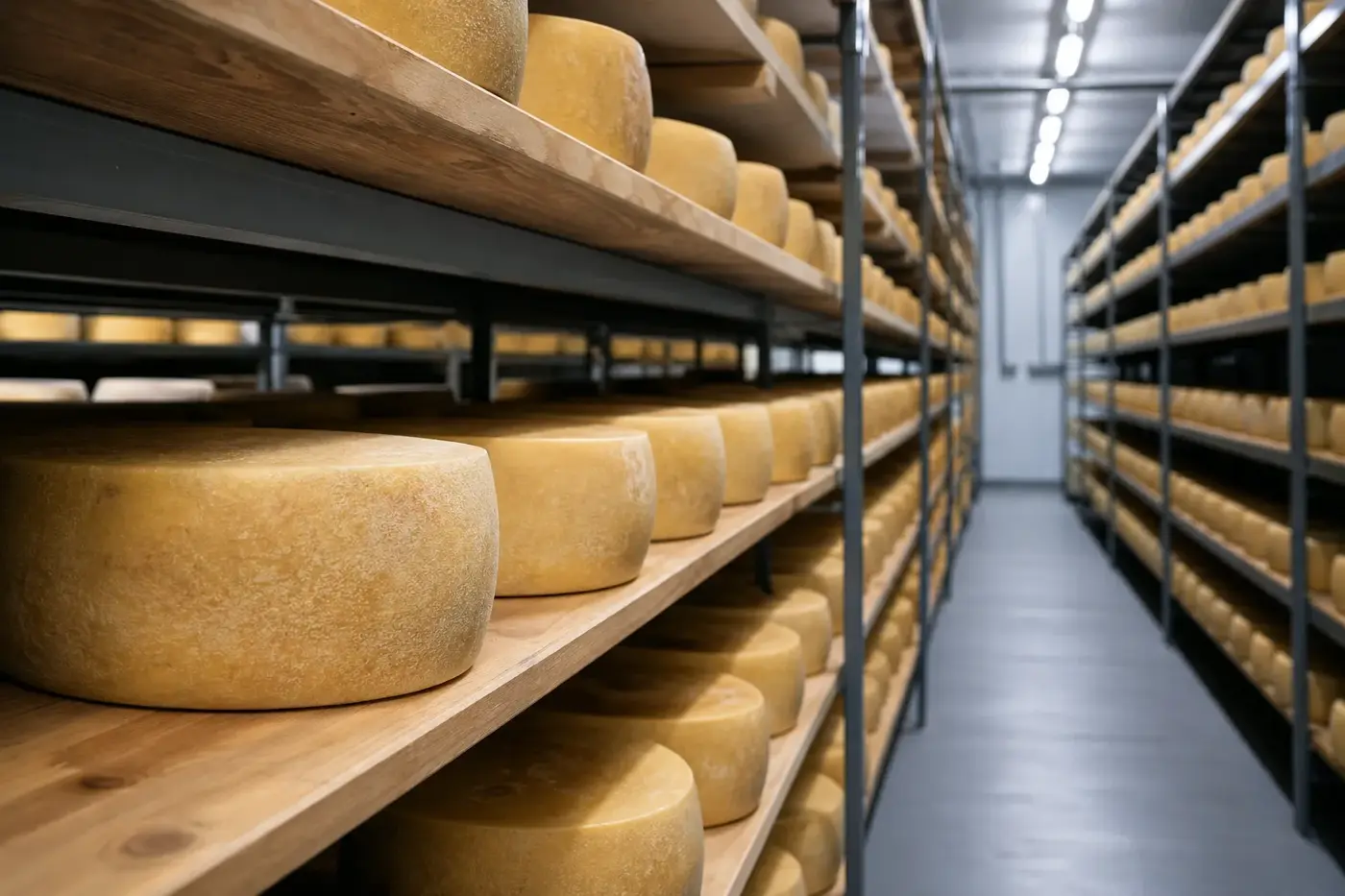
In the cellar, a goat’s cheese gets its coating of local Iberian pig fat.
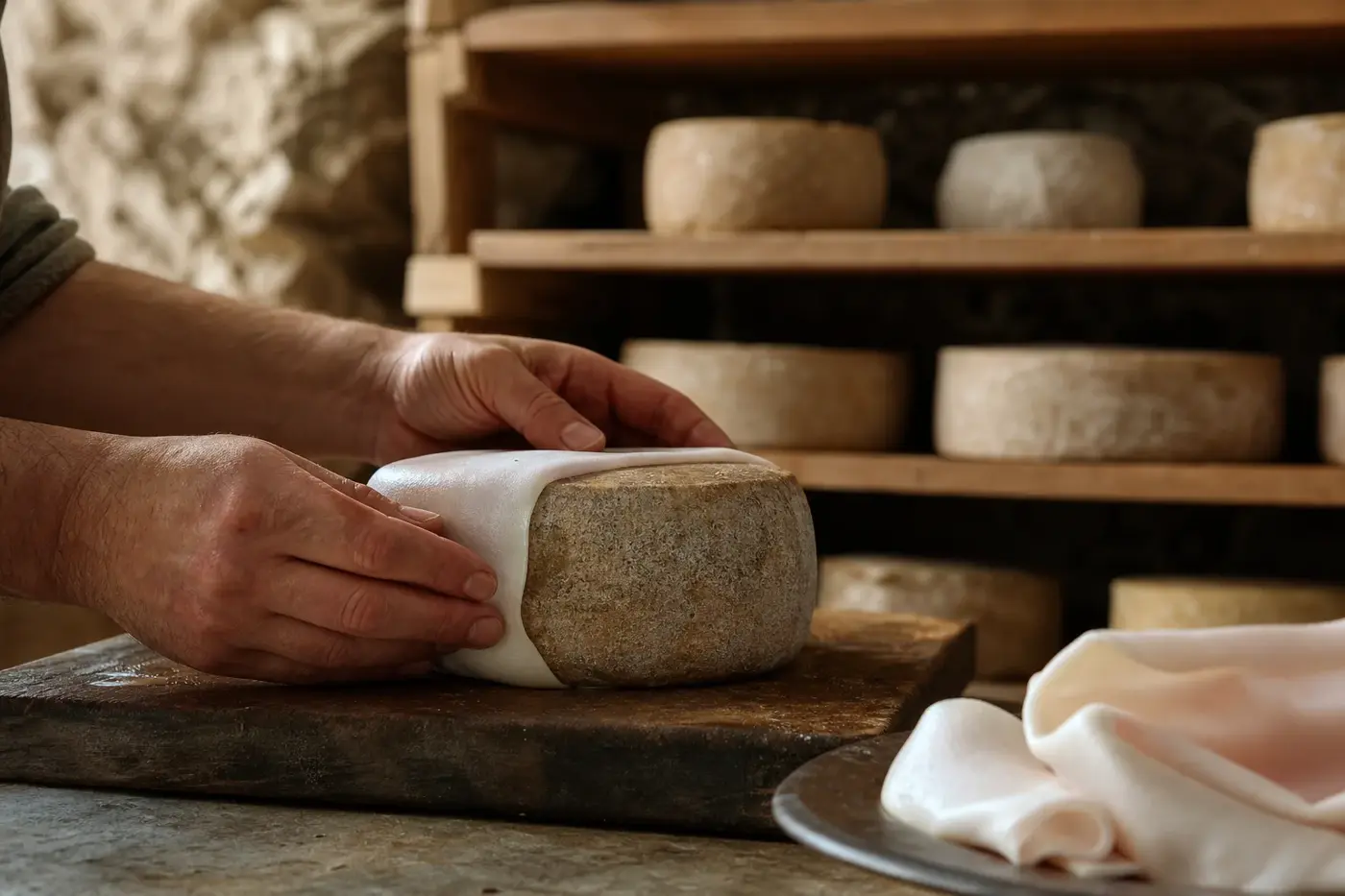
In the cellar, a goat’s cheese gets its coating of local Iberian pig fat. It has already matured for at least 105 days; now another 90 days begin. This is the finish Queso Payoyo describes for its manteca-coated cheese, and patience is clearly part of the recipe.[4]
Follow that cheese home to Villaluenga del Rosario, a mountain village in Cádiz’s Sierra de Grazalema. Here, a cheese brand, a village nickname and a goat breed have closely related names. Payoyo is the commercial brand of Queso Payoyo, S.L., which makes goat’s milk, sheep’s milk and mixed milk cheeses; Payoya is the breed.[1,2]
| What you’d like to know | The detail |
|---|---|
| Name | Payoyo.[1,6] |
| Maker | Queso Payoyo, S.L., according to the company.[1,3] |
| Made in | Villaluenga del Rosario, Cádiz, Andalucía, Spain.[1] |
| First commercial sales | September 1997, according to the company.[3] |
| Main milk types | Goat, sheep and mixtures of both.[1] |
Two friends and a mountain dairy
Two friends from the meat trade started with a small cheese dairy. The company’s anniversary account dates its foundation to 1996, with the first commercial sales following in September 1997. First came the business; then came cheese for the counter.[3]
By its twentieth anniversary, the business reported sales through Spanish shops and restaurants, alongside exports to markets including the United Kingdom, Sweden and the United States. That account gives you a glimpse of one stage in its growth. Today, the published catalogue takes you through goat, sheep and mixed milk ranges, from fresh cheese to several matured or coated versions.[1,3,4,5]
Payoyo and Payoya: a letter worth noticing
One letter does quite a bit of work here. Payoya is a native Spanish goat breed; payoyos is the name given to the inhabitants of Villaluenga del Rosario. Spain’s agriculture ministry traces the breed’s name to the village and records another name, Montejaqueña, used in the Sierra de Ronda.[2]
There is local history behind those similar names. When you choose a cheese, keep three questions separate: who made it, which animals supplied the milk, and where it was made. A reference to Payoya goats answers the breed question.[2,6]
To find this producer’s cheeses, look for both Payoyo and Queso Payoyo, S.L. on the original label or in the seller’s product information. The company has published a notice explaining the distinction between its brand and milk from Payoya goats. Other cheesemakers can work with the same breed.[6]
Think of the goat as part of the farming story and the commercial name as your signpost to a particular business’s products. Once you separate those details, the label becomes much more helpful. For the wider picture of milk, rind and method, see how to tell cheese styles apart.[2,6]
Meet the goats and the farmers
Tall, long-bodied goats with varied coats are part of this landscape’s dairy farming. The ministry’s breed catalogue places the Payoya’s traditional range in the Sierra de Grazalema and the Serranía de Ronda. It describes predominantly family farming and a semi-extensive system: the animals graze, with pasture supplying an important part of their diet.[2]
Behind Queso Payoyo is a network of farms, rather than a single herd. Its history describes buying milk from surrounding goat and sheep farmers. A Cádiz provincial government profile published in 2023 also describes its relationship with local livestock farmers, connecting the business to local farms, milk collection and cheesemaking.[3,7]
You can follow that connection through the milk in a particular wheel. Ask which milk it contains, which farms supplied it and whether the maker provides a breed-specific statement. Those answers tell you more than a mountain picture on the wrapper, however handsome the mountain.[3,7]
Choose your milk, then follow your appetite
Start with the milk, then turn to maturity and rind treatment. The producer lists fresh and matured goat’s milk cheeses, sheep’s milk cheeses, and mixtures of goat’s and sheep’s milk. Its mixed milk descriptions do not give a percentage for each milk.[1,4,5]
For a November 2026 view of the range, begin with the maker’s published descriptions. The ages below are its stated minimum maturation periods for these particular products. They are not a timetable for every Payoyo cheese.[4,5]
| Cheese to look for | Maker’s minimum maturation | Flavours and textures to look for, as described by the maker |
|---|---|---|
| Goat semicurado | 35 days | Pale, slightly acidic, with a dried-nut flavour.[4] |
| Goat curado | 105 days | Dark straw colour; pronounced goat’s milk flavour.[4] |
| Goat and sheep semicurado | 75 days | Softens readily in the mouth; slightly acidic, with a hazelnut note.[5] |
| Goat and sheep curado | 120 days | Tender paste, dark straw colour and a biscuit-like aroma.[5] |
Fancy a comparison? Put a younger mixed milk cheese beside its curado counterpart, or taste the two goat’s milk maturities together. The producer’s notes give you something specific to follow, from the younger cheeses’ acidity to the curado’s more pronounced flavours and aromas.[4,5]
To explore ageing, keep the milk category constant. To explore milk type, choose cheeses of broadly comparable age. Change one thing at a time: a perfectly respectable reason to put more than one cheese on your plate.[4,5]
Into the cellar for manteca and patience
The coatings deserve your attention: they are a distinctive part of the documented process. For its goat’s milk cheese finished in manteca, the maker specifies at least 105 days of maturation before applying a coating of local Iberian pig fat. Another 90 days in the cellar follows.[4]
Pig fat also appears in the coatings of its paprika and rosemary goat cheeses. If you avoid pork, ask specifically about manteca, even when the cheese is described chiefly as rosemary-coated. The headline flavour does not tell you everything about the finish.[4]
Before that stage, the producer specifies enzymatic coagulation for its matured cheeses. Enzymes set the milk, and maturation follows; this account leaves the intervening steps for each product unspecified.[4,5] For the general journey from milk to curd and whey, see how cheese is made.
Both the coating and the maturation time after coating matter to the product description. The mixed milk range has its own maturation schedules. Look at the named cheese rather than borrowing the goat cheese timetable for every wheel.[4,5]
What the Payoyo name tells you
Queso Payoyo describes Payoyo as its registered brand and explicitly distinguishes it from a denomination of origin. When you are deciding what a name promises, that distinction matters.[6]
Spain’s patent and trade mark office, OEPM, explains the difference. Trade marks identify one business’s goods or services against another’s. Geographical indications concern products linked to a geographical origin, so they answer a different question.[10]
Use the brand and maker to identify the commercial product. Use any separately documented geographical designation to understand its rules of origin. A reference to the Sierra de Grazalema or the Payoya breed tells you something different about place or livestock; for PDO, PGI and TSG, see protected names explained.[2,6,10]
Bring a little curiosity to the cheese counter
At the counter, establish the exact milk mixture, maturity and whether the rind is plain or treated. If you are buying a cut portion, ask to see the original product information.[4,5]
Keep the name, batch details, date marking and storage instructions. They help you find the same cheese again and compare it with an official recall notice if necessary.[4,5,12,13]
At home, follow the pack’s storage instructions. The UK Food Standards Agency’s guidance for England, Wales and Northern Ireland recommends refrigeration at 0 to 5 °C. It advises keeping chilled food outside the fridge for the shortest possible preparation time, with a maximum of four hours; serve small portions and leave the rest refrigerated.[8]
For a tasting, begin with an uncoated semicurado, move to a curado and leave strongly flavoured coatings until last. Plain bread and water between pieces keep your attention on the cheese. Ask the maker or seller whether that particular rind is intended to be eaten, especially when a coating forms part of the finish.[4,5]
Try fresh pear with the younger mixed milk cheese, or a small piece of quince paste beside a curado. These are suggested accompaniments, not the maker’s pairings, offering contrast to the acidity and stronger matured flavours in its descriptions. Water or an unsweetened alcohol-free drink keeps another strong flavour out of your comparison.[4,5]
Let the milk details guide your choice
Start with the specific pack when you need to establish milk treatment. Leche pasteurizada means pasteurised milk; leche cruda means raw milk. If the treatment is unstated, or you are buying loose cheese, ask the seller or maker about that exact product rather than assuming it is pasteurised.[9]
The NHS also advises checking packaging for pasteurisation. For pregnancy in the UK, consult its guidance on cheese, milk treatment and cooking before choosing a product. What matters is the particular cheese and how it will be prepared, not its name alone.[9]
The linked NHS source gives the full pregnancy guidance; the FSA source covers chilling instructions. Outside the UK, consult the national food safety authority for where you live. For more on the treatments themselves, read raw milk, thermised and pasteurised cheese; for help with the pack, use how to read a cheese label.[8,9]
If you are choosing for someone who needs particular food precautions, establish the product details before selecting a wheel. Semicurado and curado describe useful aspects of the cheese, but NHS advice is organised by cheese type and milk treatment. Keep the label so the person can consult the official guidance or discuss it with their healthcare professional.[9]
General information only, not medical advice: follow the official guidance where you live.
Questions people ask
What is the difference between Payoyo and Payoya?
Payoyo is the commercial cheese brand of Queso Payoyo, S.L. Payoya is a native Spanish goat breed that other cheesemakers can also use.
What milk is Payoyo cheese made from?
The producer makes goat’s milk, sheep’s milk and mixed milk cheeses. Its mixed milk descriptions do not give a percentage for each milk.
How long is Payoyo cheese matured?
The maker’s minimum maturation periods vary by product. Goat semicurado matures for at least 35 days, while goat curado matures for at least 105 days.
Does Payoyo cheese contain pork?
The maker uses local Iberian pig fat in the coating of its manteca finished goat’s cheese. Pig fat also appears in the coatings of its paprika and rosemary goat cheeses.
Can I eat Payoyo cheese during pregnancy?
The NHS advises checking packaging for pasteurisation. Consult the NHS guidance on cheese, milk treatment and cooking during pregnancy for the particular cheese and how it will be prepared.
Sources
-
Queso Payoyo, S.L. Home. Undated company website, version retrieved November 2026. Location, maker and broad milk categories. Producer website.
-
Ministerio de Agricultura, Pesca y Alimentación, Spain. Razas de ganado del Catálogo Oficial de España, Payoya entry, printed page 128. Online PDF, publication date not verified. Breed name, local nickname, morphology, distribution and farming system. Official breed catalogue.
-
Queso Payoyo, S.L. Quienes somos and XX aniversario de Queso Payoyo. Undated company accounts, versions retrieved November 2026. Foundation, commercial launch, milk suppliers and historical development. Company history; anniversary account.
-
Queso Payoyo, S.L. Quesos de cabra. Online product descriptions, version retrieved November 2026. Producer’s maturation periods, sensory descriptions, coagulation and coatings. Goat cheese range.
-
Queso Payoyo, S.L. Quesos de cabra y oveja. Online product descriptions, version retrieved November 2026. Mixed milk cheeses, producer’s maturation periods and sensory descriptions. Mixed milk range.
-
Queso Payoyo, S.L. Comunicado para clientes. Company statement, page dated 3 February 2016. The producer’s distinction between its commercial brand and the goat breed. Customer statement.
-
Diputación de Cádiz, Gabinete de Prensa. Empresas Queso Payoyo SL. Medalla de la Provincia de Cádiz. 2023 profile. Historical account and connection with livestock farmers. Provincial government profile.
-
Food Standards Agency. How to chill, freeze and defrost food safely. Published 18 December 2017, current retrieved version November 2026. Applies to England, Wales and Northern Ireland. Official chilling guidance.
-
NHS. Foods to avoid in pregnancy. Current online version retrieved November 2026. Cheese categories, pasteurisation checks and cooking advice. Official pregnancy guidance.
-
Oficina Española de Patentes y Marcas, Spain. Buscar marcas y nombres comerciales. Current online portal retrieved November 2026. General distinction between trade marks and geographical indications. The individual Payoyo registration was not readable through the retrieved search interface. Official trade mark search portal.
-
European Commission. eAmbrosia geographical indications register. Search interface accessed November 2026; an individual Payoyo result was not verified. Official register.
-
Food Standards Agency. Alerts. Live official notice index accessed November 2026. Official food alerts.
-
Agencia Española de Seguridad Alimentaria y Nutrición, Spain. Alertas alimentarias. Live official notice index accessed November 2026. Spanish food alerts.
Researched through official breed documentation, the producer’s published history and product descriptions, public authority records and UK consumer guidance; serving suggestions are editorial, with no site tasting or visit undertaken.
Last checked: November 2026
Last checked November 2026.
The editors suggest you read next
Who Makes the World's Cheese? The Big Dairy Groups
You pick up Galbani at the cheese counter, then pause over Kerrygold.