Raw Milk Cheese Law Around the World
Sixty days in the maturing room, then an unwelcome discovery.
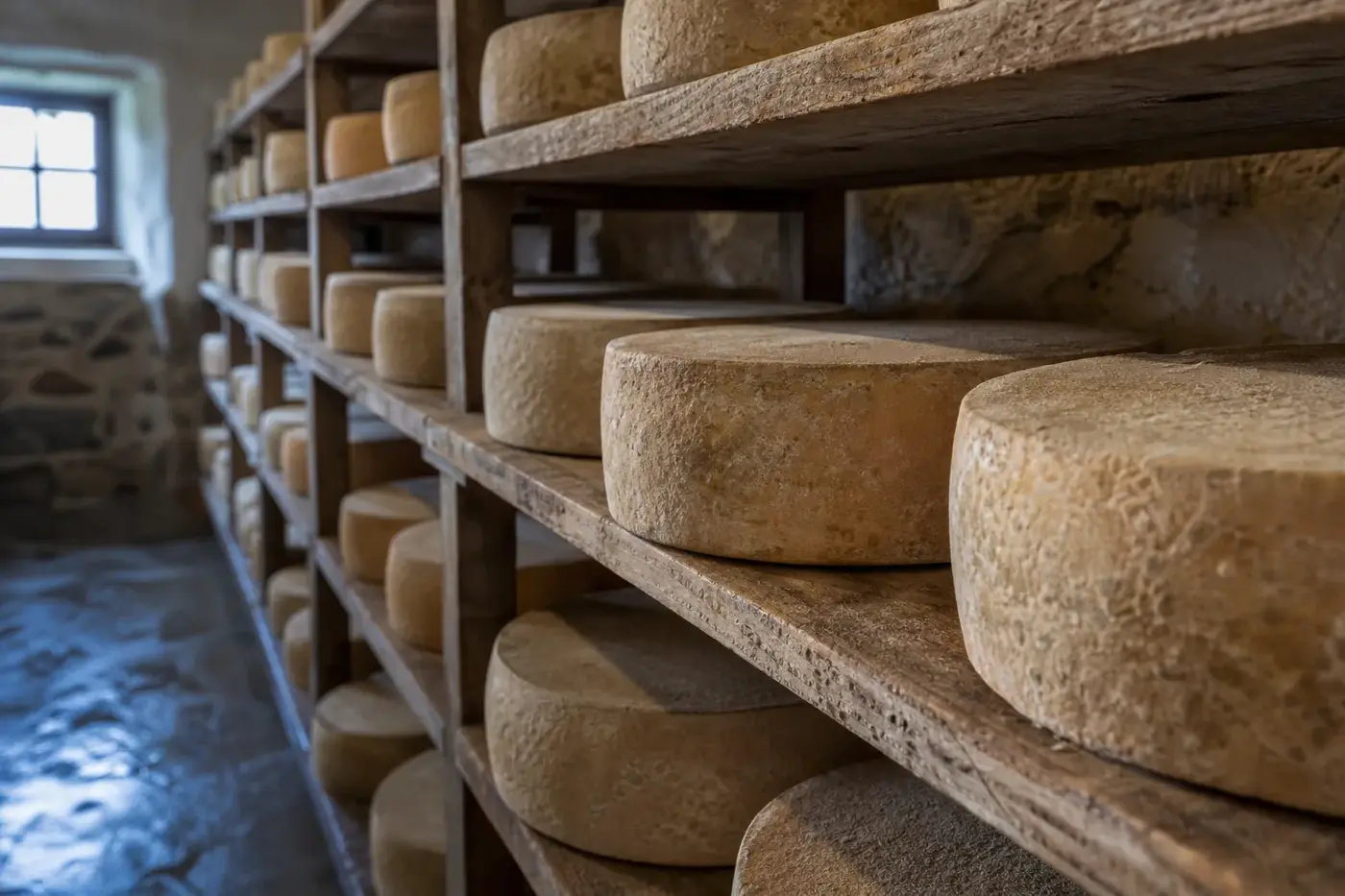
Sixty days in the maturing room, then an unwelcome discovery. When the US Food and Drug Administration tested 1,606 samples of raw milk cheese aged at least 60 days during its 2014 to 2016 sampling assignment, some contained disease-causing bacteria. Ageing matters, but time alone is not enough. [6]
That distinction runs through raw milk cheese law. Europe permits sales under hygiene controls, the United States sets cheese-specific ageing requirements, and Australia has defined certification routes for imports. For the cheese you have your eye on, milk treatment, manufacture, age and destination often matter more than its familiar name. [1,4,10]
Raw, thermised, pasteurised: what happened in the vat?
You might expect “unpasteurised” and “raw” to mean the same thing. Not necessarily. Raw milk cheese uses milk that retains raw status under the applicable rules; thermisation is a milder heat treatment that does not meet the applicable pasteurisation standard. Thermised milk is therefore unpasteurised, but not necessarily classified as raw. [10]
Australia's import guidance separates pasteurisation, thermisation with additional storage conditions, and high-temperature curd cooking with additional measures. Each route can begin with unpasteurised milk. To understand the import classification, you need to follow what happens during cheesemaking, not just what enters the vat. [10]
Want to untangle those processing differences? Take a closer look at raw, thermised and pasteurised milk.
Ageing matters, and so does everything before it
Ageing helps control risk. It does not reliably erase contamination. The FDA's sampling findings explain why an ageing requirement needs controls throughout production alongside it. [6]
Each cheese gives microorganisms different conditions in which to survive and grow. Regulators consider acidity and water activity, meaning the water available to microorganisms. New Zealand's import notice uses combinations of pH and water activity to identify certain cheeses that do not support Listeria growth. [12]
The work begins with milk production and continues through transport, manufacture and handling. Victoria's regulator asks raw milk cheese manufacturers to demonstrate two things: production must not increase pathogen levels, and the finished cheese must not support pathogen growth. Both matter. [9]
European Union: follow the milk from farm to cheese
In the EU, you will not find one universal ageing period governing raw milk cheese. Instead, Regulation (EC) No 853/2004 sets the specific hygiene framework for milk and dairy products. It covers animal health, hygienic milking, milk handling, processing establishments and the information accompanying products. [1]
The words “made with raw milk” have a precise job. The regulation requires them on products made with raw milk whose manufacturing process includes no heat treatment or physical or chemical treatment. That condition determines when you should see the wording. [1]
Producers' own controls sit alongside official oversight. Food Standards Agency guidance for Northern Ireland puts the labelling into everyday terms: prepacked raw milk cheeses need the prescribed wording. A delicatessen's larger cheese awaiting cutting can carry it on a label or an accompanying notice. [2]
Great Britain and Northern Ireland: which rules go where?
In Great Britain, relevant former EU food legislation operates as assimilated law. The FSA explains that this terminology took effect on 1 January 2024. If you are reading about later EU changes, consider them separately rather than assuming they apply in England, Scotland and Wales. [3]
Keep cheese rules separate from restrictions on raw drinking milk. A government parliamentary answer makes the distinction explicit: Scotland prohibits raw drinking milk, but permits the sale of unpasteurised cheddar. The milk and the cheese have different legal treatment. [15]
Northern Ireland has different arrangements under the Windsor Framework. The FSA identifies a specific route allowing GB public-health standards for qualifying prepacked retail goods moved through the Northern Ireland Retail Movement Scheme. For those goods, you need to consider how they travel alongside what they are. [3]
United States: start with the cheese, then count the days
You have probably encountered the familiar 60 day rule. It belongs to specific federal cheese standards, not every cheese. Under 21 CFR 133.113, cheddar made with unpasteurised dairy ingredients must be cured for at least 60 days at not less than approximately 1.7 °C (35 °F). That temperature is a minimum, not a maximum. [4]
The soft-ripened cheese standard, 21 CFR 133.182, also provides a 60 day route. Cream cheese follows a different standard: 21 CFR 133.133 requires pasteurised dairy ingredients. Giving a cheese 60 days cannot replace the requirements of its own standard. [5]
If you produce or import cheese, identify that standard first. Then compare the ingredients, manufacture and curing with its requirements. Meeting an ageing requirement and assessing contamination remain separate questions, as the FDA's sampling findings demonstrate. [4,5,6]
Canada: count the days and check the route
In Canada's Food and Drug Regulations, pay attention to the word “stored”. Cheese, including cheese curd, made from an unpasteurised source generally cannot be sold unless it has been “stored”. Section B.08.030 means at least 60 days at 2 °C or above, counted from the beginning of manufacture. [7]
There is a further-processing exception. Section B.08.044 permits such cheese as an ingredient when subsequent manufacturing or processing pasteurises it as prescribed. It does not give you permission to sell an untreated young cheese. [7]
Qualifying French imports have another route. CFIA publishes an arrangement accepting French certification and continuing microbiological monitoring instead of the 60 day storage period. It covers qualifying raw soft and semi-soft cheeses from France. [8]
Imported dairy products must still meet Canadian food requirements and applicable animal-health conditions. CFIA identifies requirements that vary by origin. These include zoosanitary certification in many cases, so where your cheese comes from matters too. [13]
Australia: making it and importing it are different journeys
Australia permits certain cheeses made from unpasteurised milk under Standard 4.2.4. In Victoria, approval comes before production. Manufacturers need approval for their validation process and the entire relevant supply chain, with a documented, validated food safety programme. [9]
Imports face a separate assessment. The Department of Agriculture, Fisheries and Forestry classifies raw milk cheese as risk food and requires a recognised foreign government certificate. Its published arrangements identify specified cheeses from France and the United Kingdom; biosecurity requirements must be satisfied before imported-food inspection requirements apply. [10]
Permission to make a cheese in Australia is therefore not permission to import a comparable cheese from overseas. If you are planning either, keep the routes separate. Each has its own requirements. [9,10]
New Zealand: find the notice for your cheese
New Zealand's Ministry for Primary Industries publishes separate requirements for dairy manufacture and imported food. For domestic manufacture, start with MPI's dairy framework to establish the requirements for your particular operation. You need to consider the import route separately. [11]
For commercial imports, Part 8 of the Food Notice dated 1 May 2026 distinguishes raw milk cheese, thermised cheese and cheese receiving a curd heat treatment. Its table provides certification routes for qualifying unpasteurised milk products from the EU, Switzerland and the United Kingdom. Australia is excluded from Part 8's application. [12]
Look for a match between your product, exporting region, conditions and the clearance evidence specified in the notice. Age is only one detail. On its own, it cannot establish whether a cheese qualifies. [12]
Your quick guide to raw milk cheese laws, November 2026
Making a cheese, selling it at retail and importing it commercially are separate legal questions. Use this table to keep your route in view. Conditions still depend on the particular product and route.
| Jurisdiction | Making it domestically | Selling it at retail | Importing it commercially |
|---|---|---|---|
| EU | Follow the hygiene framework under Regulation 853/2004. [1] | Follow applicable hygiene and raw milk labelling rules. [1,2] | Check product-specific entry conditions separately. |
| Great Britain | Assimilated food law applies. [3] | Keep raw milk cheese and raw drinking milk rules separate. [15] | Check destination requirements separately. |
| Northern Ireland | EU-related arrangements apply, with relevant exceptions. [3] | Raw milk labelling rules apply, with special arrangements for qualifying retail movements. [2,3] | Identify the movement route that applies. [3] |
| United States | Start with the applicable cheese standard. [4,5] | Some standards allow unpasteurised ingredients with prescribed curing; others require pasteurisation. [4,5] | Ageing alone does not establish compliance. [6] |
| Canada | Federal manufacturing and storage provisions apply. [7] | Generally 60 days at 2 °C or above; a processing exception applies. [7] | Check the French certification arrangement and applicable import conditions. [8,13] |
| Australia | Certain cheeses are permitted with validated controls. [9] | Compliant products are permitted. [9] | Recognised certification and biosecurity conditions apply. [10] |
| New Zealand | Consult MPI's dairy framework for your operation. [11] | Consult the applicable retail requirements. | Match product, origin and certification conditions in the current notice. [12] |
Legal at home does not mean welcome everywhere
A cheese can be lawfully sold where it is made yet fail to qualify for import elsewhere. Canada's French certification arrangement shows why: the importing authority accepts a particular control system and evidence for a particular category. Australia's arrangements likewise specify eligible products and certificates. Neither accepts every cheese lawfully sold in its country of manufacture. [8,10]
For a commercial shipment, begin with the actual manufacturing country, milk treatment, product category and destination. Then establish which certification requirements apply. New Zealand's notice expressly connects permitted products with exporting regions and clearance evidence. [12]
Take your exact product and shipment details to the destination authority. Packaging, an exporter's address and an ageing statement cannot supply the evidence these certification routes require. The paperwork needs to match the cheese you are moving. [10,12]
At the counter: read the milk treatment, then the age
You may already be choosing what goes on the cheeseboard. Give the label a moment first. Start with the milk-treatment statement and legal product description. Where the EU wording requirement applies, look for “made with raw milk”; at a staffed counter, check the label or notice accompanying the larger cheese. [1,2]
Then consider maturity separately. It tells you something different from whether the milk was pasteurised. US curing requirements and Canadian storage requirements specify conditions too, not simply how much time has passed. [4,7]
If the wording leaves you unsure about milk treatment, ask for the product information. There is more to read than the name that caught your eye. For the other details worth your attention, turn to reading a cheese label.
This page summarises published guidance from the official sources it cites. It is not medical advice. Guidance differs between countries and changes over time, so check the current source for where you live, and ask your doctor, midwife, pharmacist or dietitian about your own circumstances.
Food safety: follow the guidance where you live
United Kingdom, pregnancy: the NHS lists pasteurised and unpasteurised hard cheeses among foods that can be eaten. It advises thoroughly cooking mould ripened soft cheeses with a white coating and soft blue cheeses, whether pasteurised or unpasteurised. It also advises thoroughly cooking other soft cheeses made with unpasteurised milk. For the full November 2026 advice, and any current changes, consult its guidance, including cooking until steaming hot. [14]
United States, higher-risk groups: CDC guidance covers pregnancy, newborns, people aged 65 or over and people with weakened immunity. Its November 2026 advice is to avoid unheated raw milk cheeses. It identifies raw milk cheeses heated to approximately 74 °C (165 °F), or until steaming hot, among safer alternatives. [16]
These agency recommendations differ, including in their treatment of hard raw milk cheese. Follow the current source for your country and circumstances. For further background, see Listeria and cheese safety and cheese food safety.
Questions people ask
Is all raw milk cheese legal in the United States after 60 days?
No. The 60 day rule belongs to specific federal cheese standards. Cheddar made with unpasteurised dairy ingredients must be cured for at least 60 days at no less than approximately 1.7 °C, while cream cheese must use pasteurised dairy ingredients.
Can Canada import French raw milk cheese aged for less than 60 days?
Qualifying raw soft and semi soft cheeses from France can enter under an arrangement accepting French certification and continuing microbiological monitoring instead of the 60 day storage period. Imported dairy products must still meet Canadian food requirements and applicable animal health conditions.
Can raw milk cheese made overseas be imported into Australia?
Australia has separate requirements for imported raw milk cheese, including a recognised foreign government certificate. Its published arrangements identify specified cheeses from France and the United Kingdom, and biosecurity requirements must be satisfied before imported food inspection requirements apply.
What are New Zealand's rules for importing raw milk cheese?
Part 8 of the Food Notice dated 1 May 2026 provides certification routes for qualifying unpasteurised milk products from the EU, Switzerland and the United Kingdom. Australia is excluded from Part 8, and eligibility depends on the product, exporting region, conditions and clearance evidence.
Can I eat raw milk cheese during pregnancy in the UK?
The NHS lists pasteurised and unpasteurised hard cheeses among foods that can be eaten during pregnancy. It advises thoroughly cooking mould ripened soft cheeses with a white coating and soft blue cheeses, whether pasteurised or unpasteurised, as well as other soft cheeses made with unpasteurised milk. Check the NHS's current pregnancy guidance for the full advice, including cooking until steaming hot.
Sources
- European Parliament and Council. Regulation (EC) No 853/2004 laying down specific hygiene rules for food of animal origin, 2004, consolidated text dated 9 November 2024, particularly Annex III, Section IX. Official text retrieved.
- Food Standards Agency. Food Law Practice Guidance Northern Ireland, 2021, section 7.4.10. Official guidance.
- Food Standards Agency. Managing food safety, updated 21 August 2026. Official guidance.
- US Food and Drug Administration. 21 CFR 133.113: Cheddar cheese, eCFR text displayed as current to 5 November 2026. Applicable standard.
- US Food and Drug Administration. 21 CFR 133.182: Soft ripened cheeses and 21 CFR 133.133: Cream cheese, current eCFR texts retrieved November 2026. Soft-ripened standard; cream cheese standard.
- US Food and Drug Administration. Microbiological Surveillance Sampling: FY14-16 Raw Milk Cheese Aged 60 Days, reporting sampling conducted in 2014 to 2016. Official findings.
- Government of Canada. Food and Drug Regulations, sections B.08.030 and B.08.044, consolidation current to 19 October 2026. Definitions; sale and processing provisions.
- Canadian Food Inspection Agency. Raw, soft and semi soft cheese policy and sample certificate (France), modified 3 January 2019. Published certification arrangement.
- Safe Food Victoria. Dairy products using raw milk, undated guidance retrieved November 2026. Manufacturing approval requirements.
- Australian Department of Agriculture, Fisheries and Forestry. Raw milk cheese, undated import guidance retrieved November 2026. Classification, certification arrangements and treatment definitions.
- New Zealand Ministry for Primary Industries. Getting started in dairy, undated guidance retrieved November 2026. Dairy business requirements.
- New Zealand Ministry for Primary Industries. Food Notice: Requirements for Registered Food Importers and Imported Food for Sale, 1 May 2026, Part 8 and Table 8.1. Official notice.
- Canadian Food Inspection Agency. Importing dairy products, undated guidance retrieved November 2026. Food and animal-health import requirements.
- NHS. Foods to avoid in pregnancy, reviewed 15 June 2026. Current pregnancy guidance.
- UK Parliament. Written question HL9129, answered 14 July 2023. Government answer distinguishing drinking milk and cheese.
- US Centers for Disease Control and Prevention. Preventing Listeria Infection, current guidance retrieved November 2026. Higher-risk groups and food choices.
Research used official legislation, regulatory guidance and FDA surveillance findings, comparing manufacturing requirements with sale, certification and border requirements.
Last checked: November 2026
Last checked November 2026.
The editors suggest you read next
Cheese Law Around the World: The Complete Guide
GRUYERE reached an American legal border and lost its exclusivity.