Summer Milk, Winter Milk: How Seasons Shape Cheese
Cut a slice of cow’s milk cheese and look at that yellow interior.
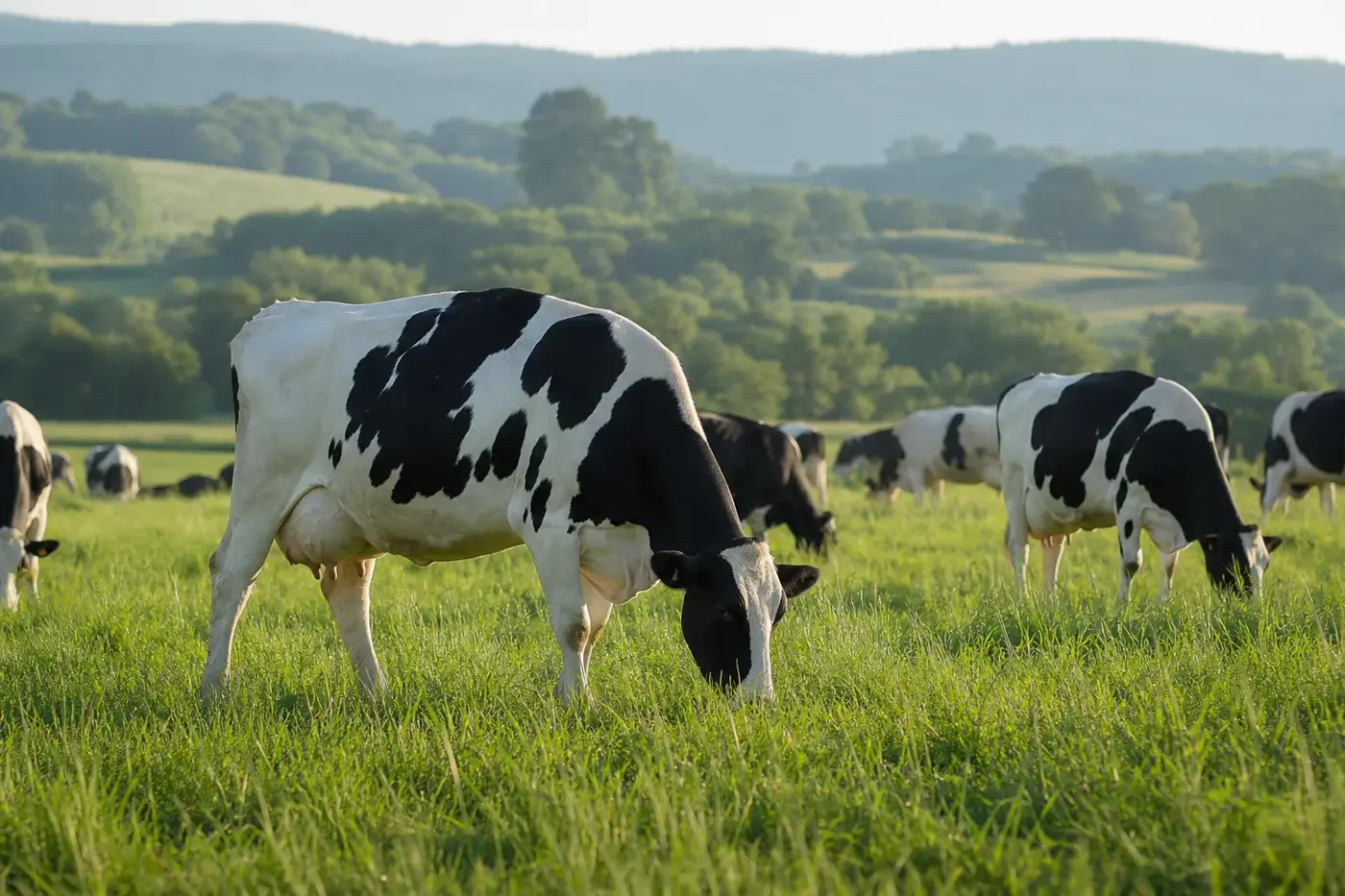
Cut a slice of cow’s milk cheese and look at that yellow interior. You may be seeing summer grass, fresh pasture leaving its mark long before your knife arrived. Winter hay or silage changes what reaches the same herd, but colour is only the beginning. Milk composition, the animal’s stage of lactation, farming and the work in the vat all shape how clearly the season emerges in your cheese.[1,2]
Follow the animals out to pasture
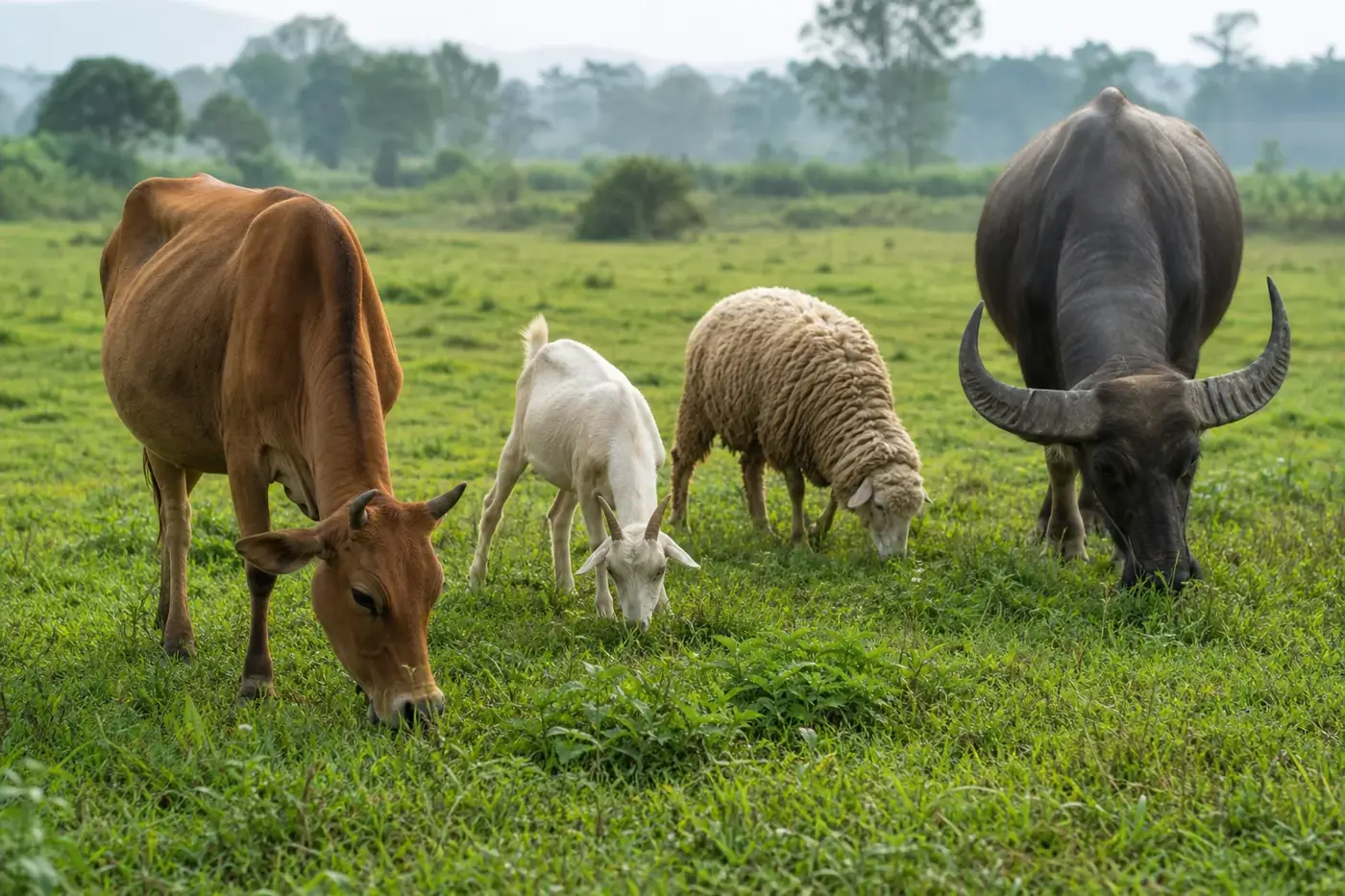
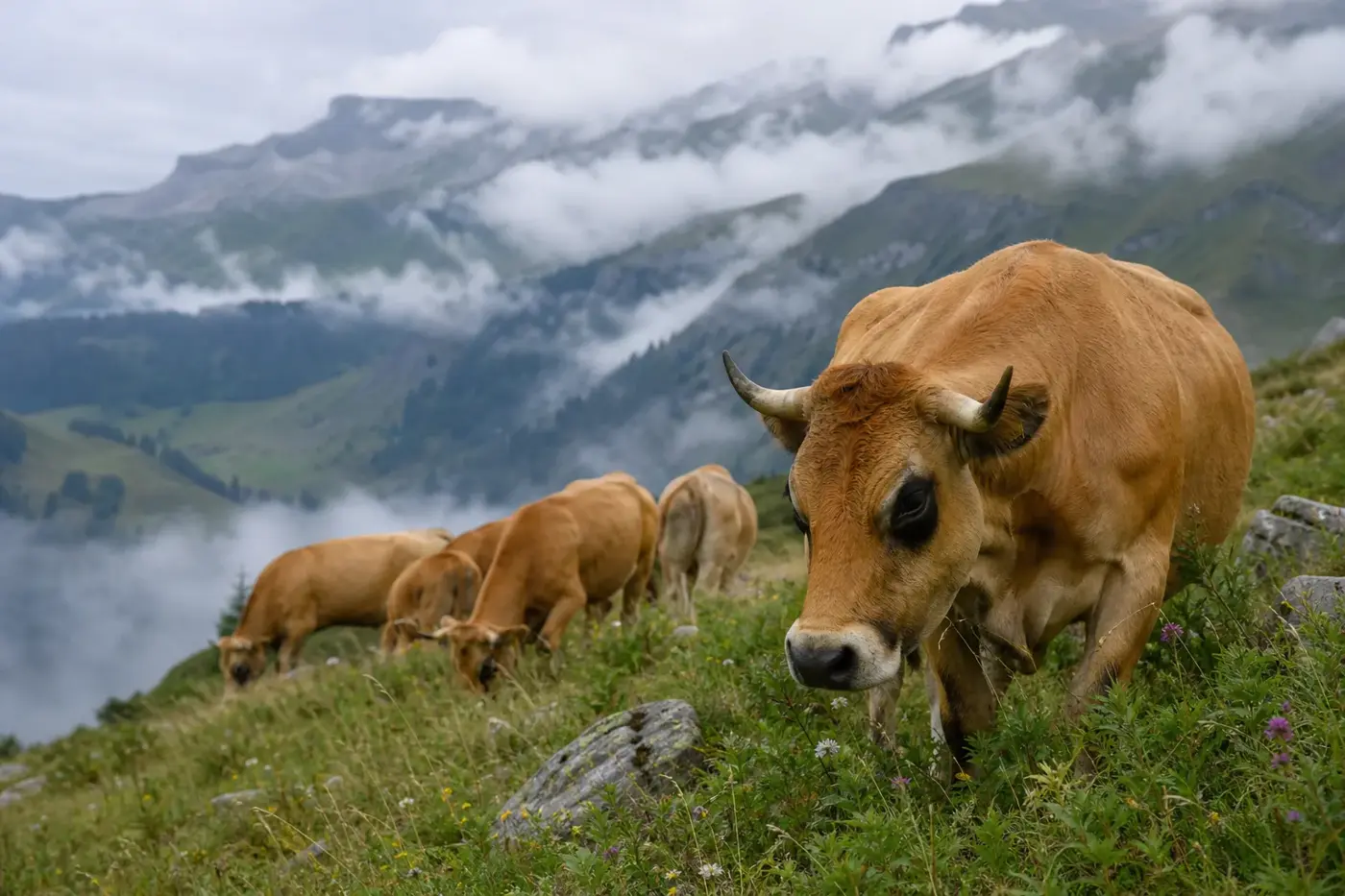
Before you get to the cheese, look at what the animals eat. Daylight and weather frame the growing and grazing season. Local conditions and farm management decide when animals graze, receive supplementary feed or move indoors. In a pasture-based system, changing access to grass can change the milk arriving at the dairy.[2]
Summer pasture and winter housing sound like a dependable rhythm. But farms follow local conditions, not a fixed global calendar. A pasture-based experiment in Uruguay recorded changing proportions of grazed forage, concentrate and conserved forage through the year. During winter sampling, none of the experimental groups received grazed pasture.[2]
Even grazing season has its complications. In a Wisconsin sheep milk study, researchers attributed lower August milk solids partly to hot weather and poorer pasture. February milk produced more cheese than milk from May or August. Summer, in this case, did not bring the richest milk to the dairy.[3]
Give the season a fair tasting
Put the same cheese from the same maker beside itself, batch against batch. That gives you the clearest starting point. Otherwise, differences between species, breeds and feeding systems can hide what the season actually contributed. Your cheeseboard has enough variables without recruiting the entire cheese counter.
A study of 2,400 individual milk samples, equally divided between cows, goats and sheep, found distinct species patterns in composition, colour and coagulation. Across the species, milk solids were related to curd yield. The relationships involving curd firmness, however, differed.[4]
Breed and management deserve your attention too. A controlled cow feeding trial balanced its treatment groups by breed before comparing hay, silage and fresh herbage.[1] Bring that same care to your tasting: compare batches of one maker’s product before drawing conclusions from unrelated cheeses labelled “summer” and “winter”.
Keep the local climate in mind as well. Ask where the milk came from and what the animals actually ate. A calendar month tells you less than the farm’s feeding record.[2]
Meet the herd’s other calendar
After an animal gives birth, its period of milk production, or lactation, brings changes of its own. Where births cluster in a particular season, much of a herd or flock moves through lactation together. Changes in feed and changes within the animals then overlap.[2,5]
Milk volume and the concentration of solids can head in opposite directions. A pasture-based New Zealand study covering 169 ewes found that milk production declined substantially between mid and late lactation, while fat and protein percentages rose. Yet that later milk took longer to coagulate and formed a softer curd.[5]
An Australian cow study tells a different story. It compared extended lactations with conventional lactations under similar management at the same time of year. Extended-lactation milk contained more fat and protein and yielded more cheese per unit of milk. The finished cheeses showed few differences in composition or sensory properties.[6]
The breeding calendar helps explain when milk is available and what reaches the vat. If you know the farm’s production calendar, “late-lactation milk” tells you more than “autumn milk”. It identifies a stage in the animal’s milk production, not simply a month.
Look beyond the milk volume
Milk volume is only the beginning of the yield story. Fat and protein supply much of the material retained in cheese, so their concentrations and how much the curd recovers help determine the yield. The cross-species study found a positive relationship between these major milk solids and curd yield.[4]
Then there is casein, a group of proteins worth getting to know. It forms the main network in a rennet-set curd. In the Wisconsin sheep experiment, casein concentration and the balance of casein to fat changed between sampling months. Higher casein and fat concentrations explained February’s higher cheese yield.[3]
More fat does not automatically mean firmer cheese. Fat, protein structure and retained water each contribute differently to texture. Water complicates yield too: a heavier fresh curd may hold more moisture rather than more recovered solids. The New Zealand ewe study associated its higher late-lactation laboratory curd yield with greater moisture retention.[5]
For a dairy, composition and processing behaviour belong in the same conversation. The quantity of solids matters, but so does how those solids form a curd and hold water.
Let the curd set the pace
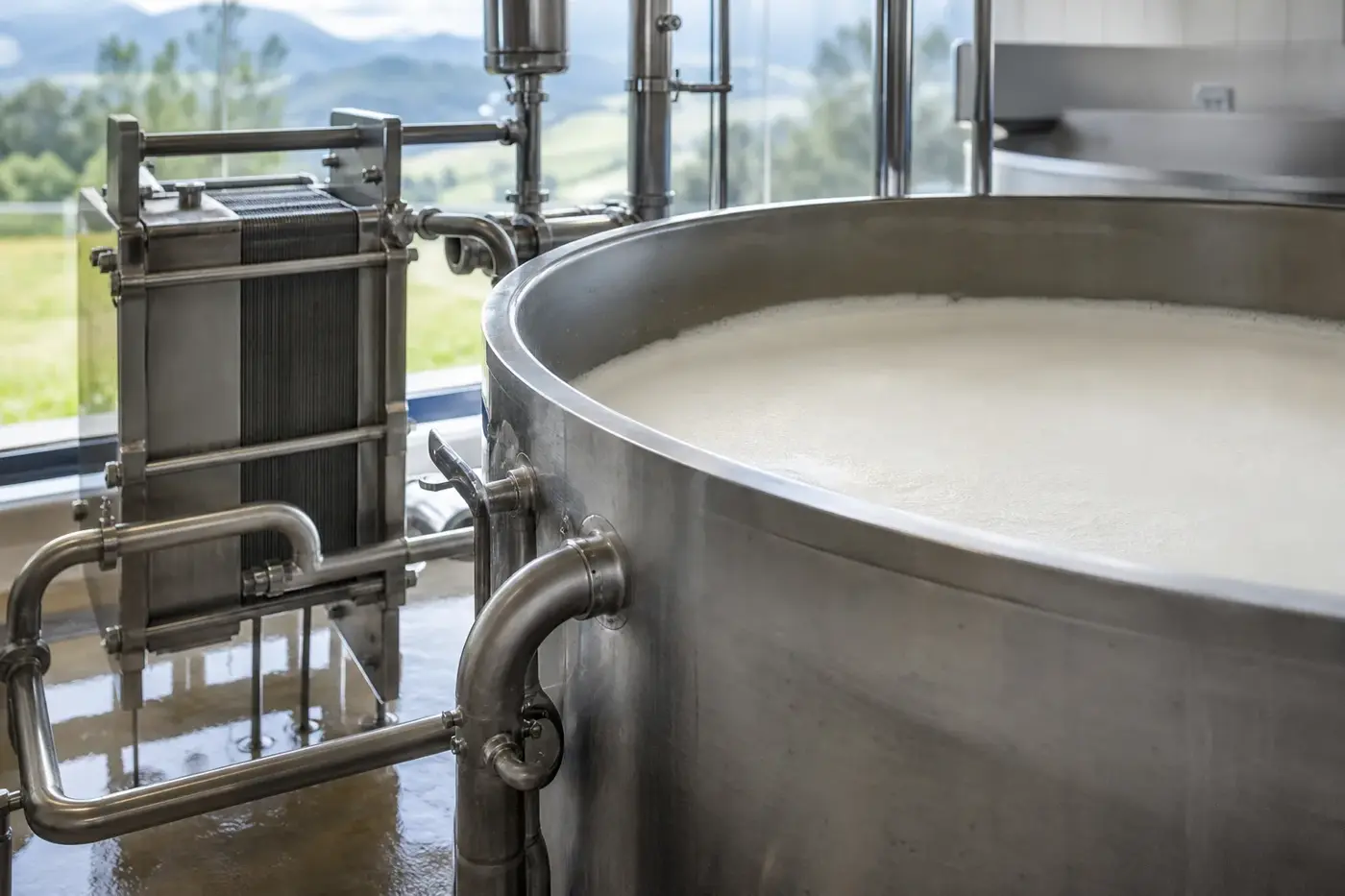
In the vat, coagulation turns milk into a gel. For rennet-set cheese, rennet acts on milk proteins so that a curd forms. Cutting and draining then separate that curd from whey, the liquid portion.[5,7]
A slower set or softer gel gives the cheesemaker a different starting point. Cut at yesterday’s clock time and today’s curd may have reached a different firmness. Seasonal research therefore measures coagulation time, the rate of firming and the firmness eventually reached. Setting is a process, not a single moment.[5,7]
Those measurements need not move together. Research following 11 commercial ewe flocks in a part-time grazing system found that both coagulation time and curd firmness increased over the milking season. The milk took longer to set, but the eventual curd was firmer.[7]
The practical lesson is simple: follow the developing curd rather than just the timetable. Changes in milk can influence drainage and moisture without delivering one predictable summer texture.[5,7] You can follow the wider sequence in how cheese is made.
Read the pasture story in the colour
Fresh herbage can make cow’s milk cheese more yellow. A controlled feeding trial compared pasture, freshly cut herbage fed indoors, hay and silage. Both fresh-herbage groups produced cheeses with yellower interiors than the conserved-forage groups.[1]
Carotenoids, including yellow-orange beta-carotene, help explain this familiar pasture signal in cow’s milk cheese. But species handle these pigments differently. A chromatographic study comparing cows and goats found no measurable carotenoids in the mature goat milk examined, although beta-carotene was present in goat colostrum.[8]
Sheep milk has its own colour relationships. In the species comparison, it combined high lightness with high measured yellowness. Those relationships differed from cow and goat milk, although that finding alone does not establish the role of carotenoids in sheep milk.[4]
So a pale goat’s or sheep’s cheese tells you little about whether the animals grazed. Compare the same product across batches. Ask about feeding before you let colour tell the whole story.
Taste the difference between pasture, hay and silage
Hay is dried forage; silage is forage conserved by fermentation. Both carry harvested plants beyond the grazing period. If you want to understand their effects on cheese, feeding comparisons tell you more than a simple summer versus winter ranking.[1]
The controlled cow trial used forage from the same grassland, with hay and silage harvested on the same day. Its trained panel found stronger overall flavour in cheeses from grazing cows. Compared with cheeses from hay-fed or silage-fed cows, they had more pronounced dry-fruit flavour and weaker lactic odour. Differences between the hay and silage cheeses were much smaller.[1]
Now consider the goats. In a feeding trial, twenty goats received either pasture or an indoor hay-based diet, with concentrate supplied to both groups. The pasture cheeses contained distinctive volatile compounds and were less hard. Yet the panel found no significant differences in the smell and taste descriptors evaluated.[9]
Chemistry, texture and perceived flavour do not always travel together. A chemical difference may escape your senses in a tasting. Even a pronounced flavour difference in one trial remains specific to its species, recipe and ripening period.
Step into the maker’s balancing act
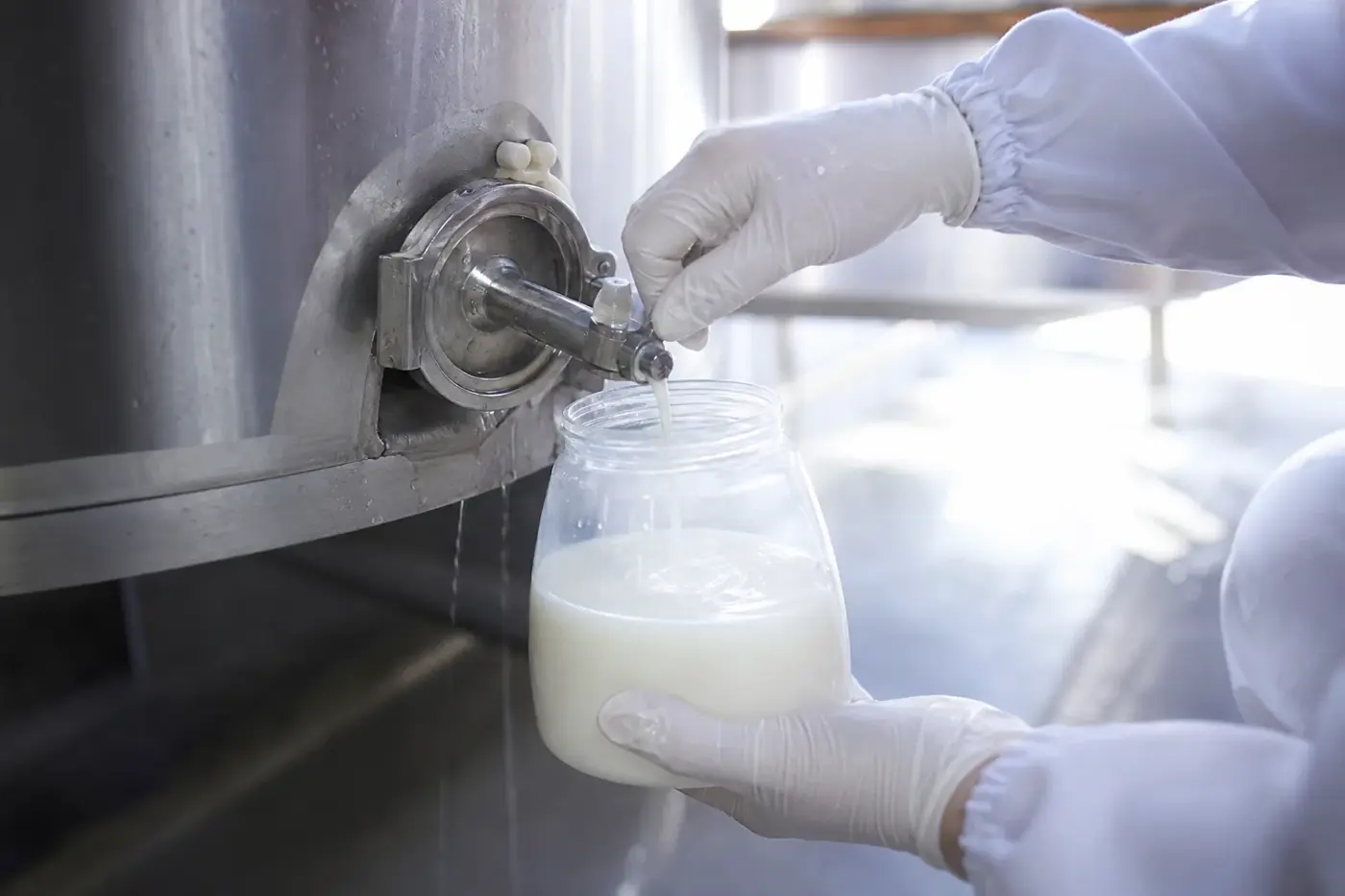
Before milk reaches the vat, standardisation can moderate seasonal differences by adjusting the balance of its components. In a seasonal feeding study, Cheddar was made from milk standardised to a protein-to-fat ratio. Feeding system then had no significant effect on the measured cheese composition, including moisture, fat, protein and salt.[10]
Ripening still had something to reveal. In the same study, proteins and fats broke down differently, particularly in late-lactation cheeses. Bringing the starting composition into line did not remove every difference that developed later.[10]
Monitoring setting time and curd firmness gives cheesemakers a way to follow changing milk.[5,7] These studies support that observation. They do not, however, specify which seasonal adjustments a maker should make to cultures, rennet or recipes.
Ask the maker what changed in the milk and what they adjusted in response. A seasonal difference may be deliberately preserved, moderated for consistency or expressed differently after maturation. Your finished cheese reflects those decisions as well as the milk.
Follow the farm’s microbial footprint
Moving between housing and pasture changes the microbial environments around the animals. An Irish study followed the same herd indoors and outdoors, using DNA sequencing to examine milk and potential environmental sources. Microbial communities separated according to environment. Teat surfaces were identified as an important source of organisms reaching milk.[11]
Those findings connect seasonal variation with farm conditions and milking practices. Safety is a separate question: microbial composition, contamination and processing controls each need their own evidence. A grazing date or winter housing date cannot serve as a safety classification.[11]
Milk treatment is another distinct part of the production record. For the differences between treatments, see raw milk, thermised and pasteurised cheese.
Ask when your cheese was made
Maturation puts time between the milk season and your first taste. In the cow feeding trial, cheeses were assessed after nine weeks of ripening. Their pasture or conserved-forage characteristics were therefore examined well after the milk entered the vat.[1]
For a matured cheese, ask when it was made rather than reading the milk season from the month you buy it. Ask its age too. Two batches offered together may have different production dates and different lengths of maturation.
Your clearest seasonal comparison puts two batches of similar age alongside one another, with their milk or making dates recorded. Otherwise, season and maturation compete to explain what you can see, smell and taste.[1,10] The date of your shopping trip is not much of a witness.
Put the seasons on your cheeseboard
Approach seasonal batches as an observation exercise, not a contest with a predetermined winner. Notice what changes, then find out enough about the milk and making to make sense of it.
- Choose one cheese from one maker. Keep the recipe, milk species and milk treatment as consistent as possible. Ask whether the milk supply or production method changed between batches.
- Note the making date and age. Add the milk date if it is available. Keep batch details from the packaging; how to read a cheese label explains which information may help.
- Ask what the animals ate. Were they grazing, receiving freshly cut grass indoors, or eating hay, silage and supplementary feed? Ask whether there was a notable spell of heat or poor pasture.
- Take a proper look. Compare cut interiors in the same light. Record colour, visible openings and whether the paste looks close, open or uneven.
- Give texture and flavour their own attention. Note firmness, crumbliness, suppleness and how the cheese breaks down. Then describe specific aromas and flavours. Pasture need not introduce itself with a grassy taste.
- Look for a pattern, not a verdict. Feeding trials show that visible, chemical and sensory differences need not move together. Keep your explanation provisional and repeat the comparison with another batch before assigning a recurring characteristic to the season.[1,9,10]
At the counter, you can bring the whole subject into focus with one question. “What changes in this cheese through the production year, and what does the maker do about it?”
Questions people ask
Why can summer cheese be more yellow?
Fresh herbage can make cow’s milk cheese more yellow. In a feeding trial, cheeses made from cows given fresh herbage had yellower interiors than those made from cows given hay or silage.
Does pasture make cheese taste different?
In one cow feeding trial, a trained panel found stronger overall flavour and more pronounced dry fruit flavour in cheeses from grazing cows than in cheeses from cows fed hay or silage. A goat feeding trial found no significant differences in the smell and taste descriptors evaluated.
Does richer milk always make a firmer cheese?
No. Fat, protein structure and retained water all contribute to texture, so more fat does not automatically produce a firmer cheese. In a New Zealand ewe study, fat and protein percentages increased between mid and late lactation, but the later milk formed a softer curd.
How can I compare summer and winter cheese?
Compare batches of the same cheese from one maker and choose cheeses of similar age. Ask when each was made and what the animals ate, then compare colour, texture and flavour.
Can cheesemakers reduce seasonal differences in cheese?
Cheesemakers can standardise milk by adjusting the balance of its components before manufacture. In one study of Cheddar made from milk standardised to a protein to fat ratio, feeding system had no significant effect on measured cheese composition, although differences still developed during ripening.
Sources
[1] American Dairy Science Association, Feeding cows with hay, silage, or fresh herbage on pasture or indoors affects sensory properties and chemical composition of milk and cheese, Journal of Dairy Science, volume 104, 2021. Full paper retrieved through Agroscope.
[2] American Dairy Science Association, Effects of extended and seasonal calving systems on milk composition and heat coagulation time in a pasture-based dairy herd, JDS Communications, volume 7, 2026.
[3] American Dairy Science Association, Impact of seasonal changes in ovine milk on composition and yield of a hard-pressed cheese, Journal of Dairy Science, volume 88, 2005. Published abstract retrieved through PubMed.
[4] University of Córdoba research team, Exploring Interrelationships between Colour, Composition, and Coagulation Traits of Milk from Cows, Goats, and Sheep, Foods, volume 13, article 610, 2024. Full paper retrieved through the university repository.
[5] Massey University research team, Animal factors affecting the cheese-making properties and the heat coagulation time of milk from dairy sheep in a New Zealand flock, New Zealand Journal of Agricultural Research, published online 2024.
[6] American Dairy Science Association, Composition, coagulation properties, and cheesemaking potential of milk from cows undergoing extended lactations in a pasture-based dairying system, Journal of Dairy Science, 2010. Published abstract and indexed conclusions retrieved.
[7] American Dairy Science Association, Effects of seasonal changes in feeding management under part-time grazing on the evolution of the composition and coagulation properties of raw milk from ewes, Journal of Dairy Science, 2010. Published abstract retrieved.
[8] Hannah Dairy Research Institute, The partition of carotenoids and vitamin A in the colostrum and milk of the cow and the goat, The Journal of Agricultural Science, volume 43, 1953. Published research extract retrieved through Cambridge University Press.
[9] Elsevier, Effect of high forage-to-concentrate ratio pasture feeding on the chemical, physical, and sensory properties of semi-hard goat cheese, Food Chemistry Advances, volume 7, article 101018, 2025. Published abstract retrieved.
[10] American Dairy Science Association, The impact of seasonal calving systems with varying pasture allowance on Cheddar cheese composition, nutritional quality, and ripening characteristics, Journal of Dairy Science, online record 2024. Indexed results and conclusions retrieved.
[11] American Society for Microbiology, Impacts of Seasonal Housing and Teat Preparation on Raw Milk Microbiota: a High-Throughput Sequencing Study, Applied and Environmental Microbiology, volume 83, issue 2, 2017, first published online 2016.
This piece synthesises primary feeding experiments, lactation studies and milk-processing research, distinguishing measured findings from practical interpretations.
Last checked: November 2026
Last checked November 2026.
The editors suggest you read next