Terroir in Cheese: Does Place Matter?
Look past the cheese on its bamboo ageing mat.
Look past the cheese on its bamboo ageing mat. Notice the wooden dairy equipment nearby. Neither gets much attention at the cheese counter, yet both belong to the story, alongside pasture, milk and the microbes and conditions of the dairy and ageing room. Cheesemakers guide these influences, so the local character you taste usually belongs to people and environment together. [1,3,4]
Start with the place, then meet its people
Follow your cheese back to its beginnings and the landscape soon fills with people. Soil and climate help determine what grows; farmers choose breeds and feeding systems; cheesemakers choose cultures and methods. Affineurs, the people who mature cheese, guide its final development. Environment, living organisms and human practices work together. [3,5,8]
Think of a chain of causes, rather than a rock somehow posting its flavour into a wheel. A convincing explanation needs a connection you can investigate: a feeding difference, a microbial population or a maturation condition. “Mineral” describes a sensory impression. Showing that geology caused it takes additional evidence. [1,4]
Follow the grass all the way to the milk
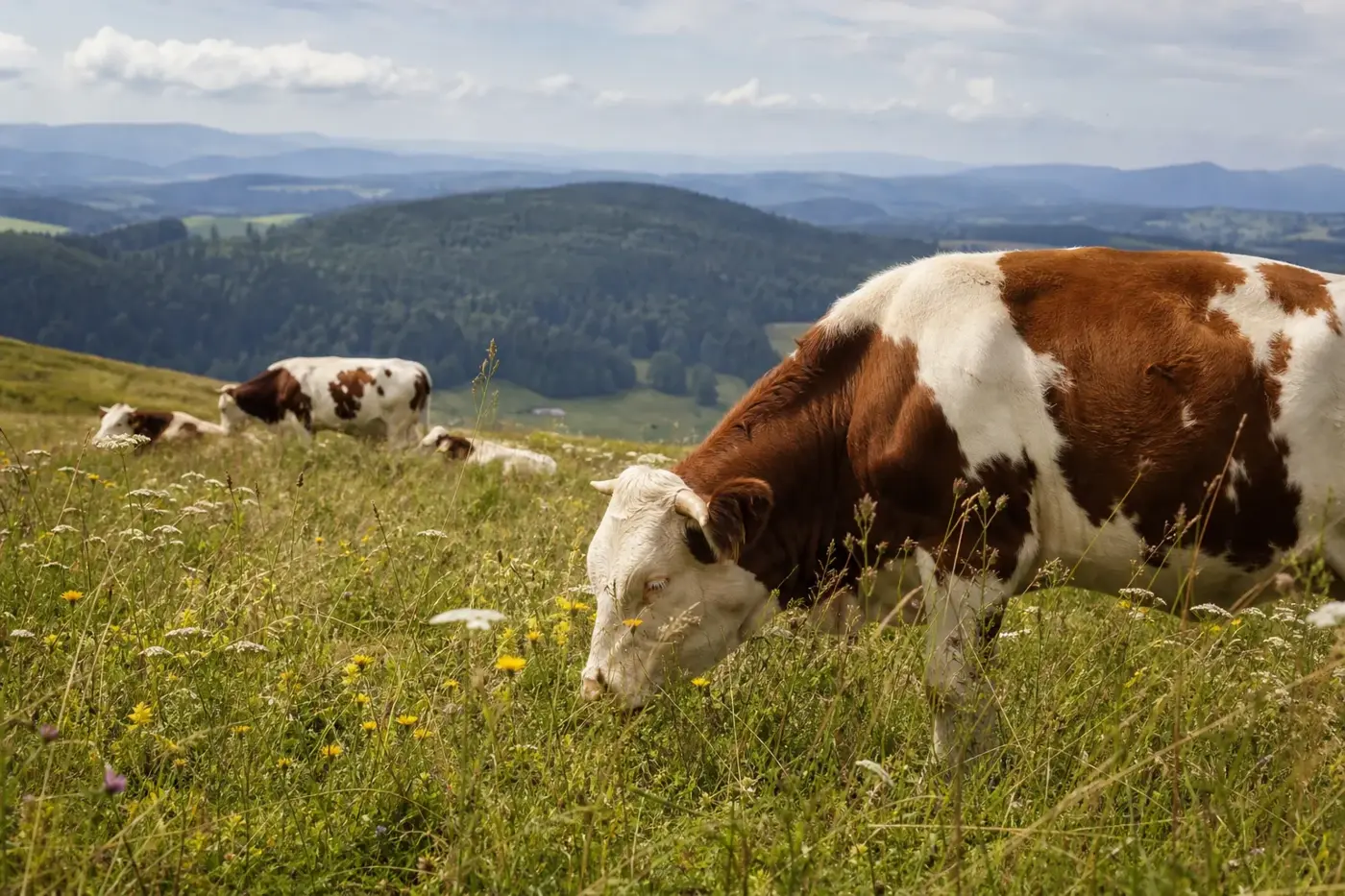
What an animal eats can change its milk, including its fat and aroma compounds, and influence the cheese you taste. Preserve that grass as hay or silage, meaning fermented forage, and another variable enters the picture. Season changes both the available plants and how a herd is fed. “Summer cheese” fits several possible influences into two rather inviting words. [1,2]
A 2021 experiment teased some of those influences apart. Researchers compared hay, silage, fresh grass eaten outdoors and fresh grass fed indoors, using forage from the same plot. The preserved feeds came from its first cut; fresh feeding used regrowth. That made the comparison much tighter, although plant development remained part of the contrast. [1]
Another controlled trial compared hay with grass silage using 42 cows and identical cheesemaking conditions. Many chemical and sensory characteristics differed little. Preserved feed deserves investigation, but neither method automatically promises you a more interesting cheese. [2]
Meet the herd behind the flavour
The animals belong in this geographical story too. The 42-cow trial included Holstein, Montbéliarde and Tarentaise animals, allowing researchers to consider breed alongside feed rather than muddle them together. When a regional cheese uses a characteristic breed, its connection to place is biological as well as geographical. [2]
Animal health and stage of lactation matter when you compare herds. Lactation stage means how far an animal is through producing milk after giving birth. Ignore it, and a seasonal comparison may mix feeding changes with changes in the animals themselves. The revealing question is how herd and farming system interact, not which single factor deserves credit for the flavour. [1,2]
Discover the dairy’s microbial life
Milk is not the only route microbes take into your cheese. Equipment, production rooms and maturation rooms can contribute populations that become established in the finished product. Repeated production, contact surfaces and the maker’s routines all help shape these working environments. [3]
In a 2021 farmstead study, researchers collected 118 samples across milk production, cheesemaking and ripening. DNA sequencing and source-tracking analysis linked microbial communities in cheese with the dairy environment, including wooden equipment and bamboo ageing mats. Different rooms carried different communities. As the cheese matured, its rind and interior followed different patterns too. [3]
That gives you evidence of an effect specific to a dairy. Whether those communities are regionally unique is another question. What individual microbes contribute to flavour also needs further experiments. [3]
See how heat and cultures set the course
Heat treatment changes milk’s starting microbial population. Added starter cultures deliberately introduce organisms to drive fermentation, so both need considering separately from pasture and dairy location. The farmstead study examined production without added cultures. Its findings describe that particular system. [3]
Want a useful comparison of raw and heat-treated milk? Begin with the same milk, then keep the recipe, cultures and maturation constant. Unrelated retail cheeses differ in too many ways to isolate the treatment. For the distinctions themselves, see raw milk, thermised and pasteurised cheese.
Step inside the ageing room
The cellar helps shape both rind and paste. Affinage, the managed maturation of cheese, brings another environment into the story: temperature influences microbial activity and ripening reactions, while humidity influences surface drying. Surface organisms interact too. Laboratory work has shown fungi making cheese-curd medium less acidic, favouring some bacteria and inhibiting others. [4]
A survey of 137 cheeses from ten countries found rind type and moisture more closely associated with microbial composition than geography. Its laboratory experiments also changed community development by altering moisture and surface treatment. Rind moisture and room humidity are related, but they measure different things. [4]
Give the cellar a place alongside the pasture, then. To understand the whole cheese, researchers must also measure changes in the paste, its interior. A rind survey alone cannot tell you what happens to texture or flavour inside.
Comté: a landscape shaped by shared craft
In the French Jura massif, Comté draws these connections into a defined production system. Its French specification links the production area with raw cows’ milk and permitted breeds: Montbéliarde, French Simmental and certified crosses between them. Here, origin means choices about farming and making cheese, not merely a spot you can point to on a map. [5,6]
Feed belongs to that connection. The European Commission’s account of Comté describes fodder coming from fields within the defined area. INAO also describes the fruitière system: producers’ milk comes together for cheesemaking, before the wheels pass to maturation. Pooled milk can express a shared production area. [6,10]
Hazelnut, honey, caramel and vegetal notes are among the aromas INAO identifies in Comté. They give you a vocabulary for tasting, rather than a way to assign each aroma to its cause. Separating the contributions of feed, dairy and ageing needs comparative evidence. Explore the Comté profile for the cheese itself. [6]
Read the promise behind protected origin
In November 2026, the UK register lists Comté as a registered protected designation of origin, or PDO. UK geographical indication schemes apply in Great Britain, meaning England, Scotland and Wales. EU schemes apply in Northern Ireland and the EU. [7,9]
Defra’s guidance for Great Britain says a PDO requires production, processing and preparation in the identified area. It also requires geographically linked characteristics and local knowledge. Producers using a registered name must follow its specification and undergo verification of that compliance. [7,8]
When you encounter “local” and “traditional”, take them as invitations to ask questions. Where did the milk originate, where was the cheese made, and which practices does the description mean? A registered specification gives you a documented framework for answering. The protected names guide explains the schemes. [7,8]
Tradition answers a different question. A long-established practice can explain why people in a place make cheese a particular way; testing its sensory consequences still needs a comparison. Historical continuity, legal recognition and experimental evidence can support the same account of terroir. They simply explain different parts of it.
Pull apart the place and the process
Two cheeses from different valleys may also differ in breed, recipe, salt, cultures and age. A difference between them establishes an association, not its cause. Finding the cause needs comparisons that separate those variables. Same-forage feeding experiments and laboratory reconstructions of rind communities help researchers investigate particular links in the chain. [1,2,4]
Strong studies combine replicated cheesemaking with measurements of milk composition, microbes and ripening. They then test whether people can detect a difference without knowing where the cheese came from. Repeating the work across seasons helps establish whether an apparent place effect lasts. A chemical difference and a flavour difference you can perceive are separate findings.
The size of the place matters too. A country, a valley, a milk collection area and a particular ageing room are different units of comparison. Evidence for a dairy-specific microbial community answers a narrower question than evidence for a regional flavour signature. An explanation helps you more when it says precisely which scale it means.
Taste first, then enjoy a little detective work
You can borrow the logic of a controlled experiment for your own tasting. Taste and record both samples before looking at the production details. The cheese can manage without its impressive biography for a moment.
- Choose a close match. Compare the same style at a similar stated age, preferably from makers who disclose milk source, treatment and maturation.
- Keep the identities hidden. Ask someone to code the samples and keep the key until you have written your observations.
- Give each sample the same treatment. Use similar portions and compare the same part of each cheese. Do not compare one sample’s centre with another’s rind.
- Be specific in your notes. Record firmness, crumbliness, acidity, saltiness, aroma and persistence. Keep “I prefer this” separate from “these samples differ”.
- Reveal the details, then ask questions. Compare the production information. List plausible explanations, including age and recipe, then repeat with another batch if you can.
Keep what you notice separate from what the production details tell you. Your reward is a better description and a sharper question for the cheesemonger. A repeated difference deserves exploring. To pin it specifically on pasture, microbes or maturation, though, you need evidence that those factors actually differed.
Look beyond the local address
Bought cultures and milk from several farms can produce distinctive cheese. A commercial culture tells you something about the starting microbial community, but leaves questions about milk, recipe and maturation open. Pooling milk describes a supply arrangement. Comté’s collective dairying shows how that arrangement can belong to a geographically rooted system. [4,6]
Local origin alone cannot establish quality. Judge a cheese against its intended character and your preferences, and ask for concrete production information. A recognisable connection to place, a well-made cheese and a cheese you enjoy are three worthwhile judgements. Each answers a different question.
Take your curiosity to the next cheese
- How Cheese Is Made: From Milk to Cheese: follow the production stages that connect milk with the finished wheel.
- How to Read a Cheese Label: find the declared origin, treatment and product details to help you make your comparison.
Questions people ask
What does terroir mean in cheese?
Terroir describes the interaction of environment, living organisms and human practices. Soil, climate, animal breeds, feeding, cheesemaking and maturation can all play a part.
Does pasture change the flavour of cheese?
Pasture can change milk composition, including its fat and aroma compounds, and so influence cheese. Season and whether grass is fed fresh or preserved as hay or silage are also variables.
Does a mineral taste in cheese come from the local geology?
Mineral describes a sensory impression, but establishing geology as its cause takes additional evidence. A convincing explanation would identify a connection such as a feeding difference, microbial population or maturation condition.
What does PDO mean for a cheese such as Comté?
Comté is listed on the UK register as a protected designation of origin, or PDO. Defra says a PDO in Great Britain requires production, processing and preparation in the identified area, with geographically linked characteristics and local knowledge.
How can I compare cheeses to explore the effect of place?
Choose the same style at a similar stated age and taste coded samples before looking at their production details. Compare the same part of each cheese, record your observations and then check for possible explanations such as age, recipe and maturation.
Sources
- Journal of Dairy Science, “Feeding cows with hay, silage, or fresh herbage on pasture or indoors affects sensory properties and chemical composition of milk and cheese”, volume 104, issue 5, 2021, pages 5285 to 5302. Retrieved abstract and experimental outline. Publisher record.
- INRA research published in The Journal of Dairy Research, “Effect of forage conservation (hay or silage) and cow breed on the coagulation properties of milks and on the characteristics of ripened cheeses”, volume 65, issue 1, February 1998, pages 9 to 21. Retrieved indexed abstract. PubMed record.
- University of Connecticut research published in mSystems, “Composition, Succession, and Source Tracking of Microbial Communities throughout the Traditional Production of a Farmstead Cheese”, volume 6, issue 5, e00830-21, 2021. Full article.
- Cell, “Cheese rind communities provide tractable systems for in situ and in vitro studies of microbial diversity”, volume 158, issue 2, 2014, pages 422 to 433. Full article.
- French Ministry of Agriculture and INAO, “Cahier des charges de l’appellation d’origine ‘Comté’”, homologated by the order of 18 December 2025, published in the ministry’s Bulletin officiel number 2026-02, 8 January 2026. Published specification.
- INAO, “Comté”, product record and linked regulatory documents, retrieved November 2026. Sensory descriptions are INAO’s published account. Product record.
- Department for Environment, Food & Rural Affairs, “Protected geographical food and drink names: UK GI schemes”, updated 8 March 2024. Official guidance.
- Department for Environment, Food & Rural Affairs, “Protect a geographical food or drink name”, live guidance retrieved November 2026. Official guidance.
- Department for Environment, Food & Rural Affairs, “Comté”, protected food name register entry, published 4 January 2021, retrieved November 2026. Status: registered; protection type: PDO. Register entry.
- European Commission, Directorate-General for Agriculture and Rural Development, “Comté PDO”, official explanatory account, retrieved November 2026. Commission account.
This desk-researched article combines experimental study designs, microbial research, official Comté documents and government guidance, with editorial synthesis separating observed differences from their possible causes.
Last checked: November 2026
Last checked November 2026.
The editors suggest you read next
Where Cheese Flavour Comes From: The Chemistry Explained
Your knife slips through a bloomy-rind cheese.