Where Cheese Flavour Comes From: The Chemistry Explained
Your knife slips through a bloomy-rind cheese.
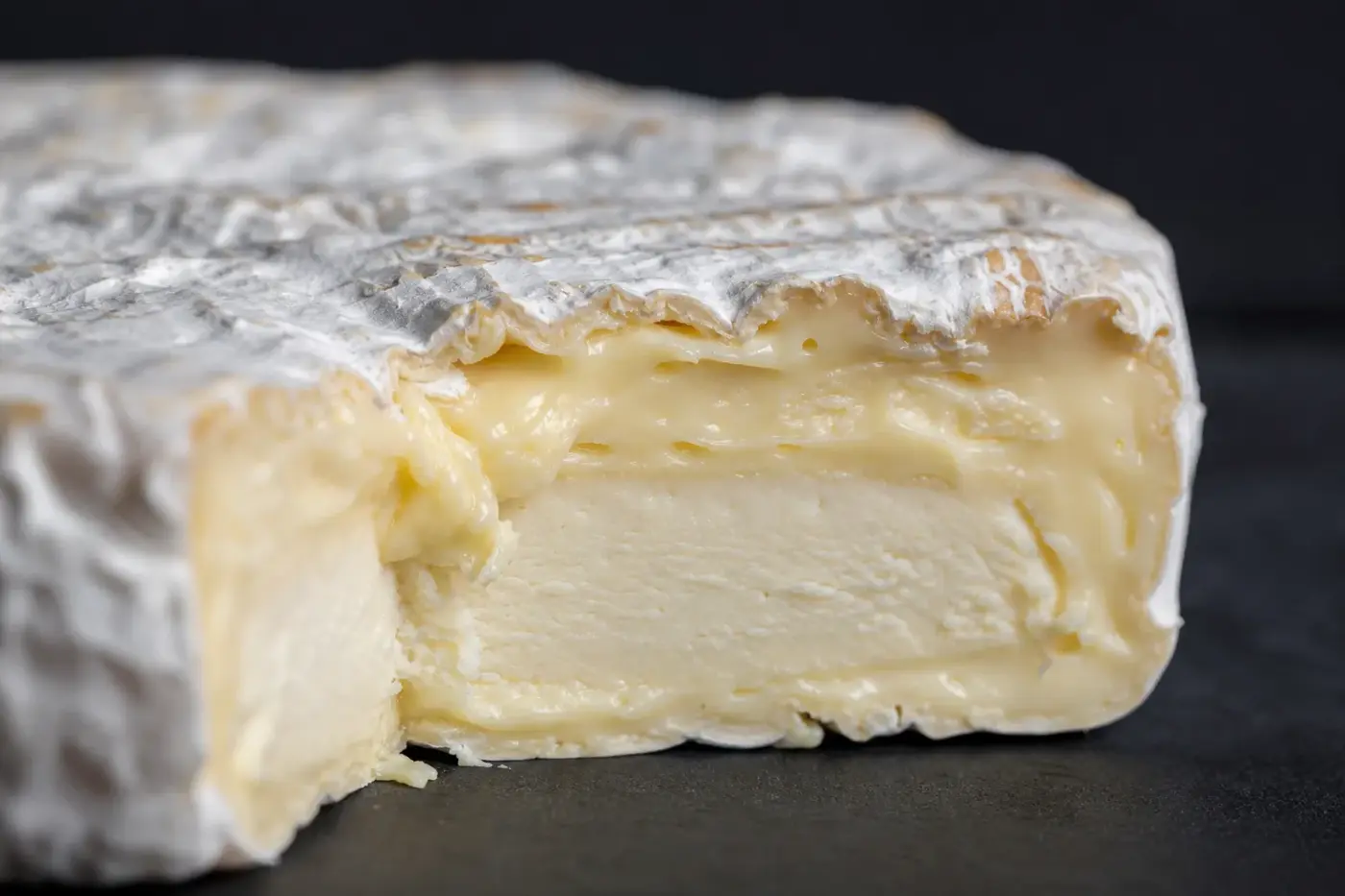
Your knife slips through a bloomy-rind cheese. Just beneath the rind, it meets softness; at the centre, something firmer. On the surface, yeasts and moulds are consuming lactate, raising the pH and contributing enzymes that break down proteins. You have caught a cheese changing from the outside in. [1,2,10]
That transformation is one route to flavour. From vat to rind to centre, microbes and enzymes turn milk sugars, proteins and fats into tang, savoury depth and pungent aromas. Young Cheddar, blue cheese and bloomy-rind cheese send this connected chemistry in wonderfully different directions. There is rather a lot going on behind your modest slice. [8]
Your tongue only tells part of the story
A cheese can smell powerful without tasting especially sour or salty. Your tongue responds to substances dissolved in saliva, giving you saltiness, sourness, sweetness, bitterness and umami, the savoury taste. Aroma comes from volatile molecules reaching smell receptors, through your nostrils as you sniff or from your mouth as you eat. That second route has a name: retronasal smell. [5,6]
Texture helps decide how those aromas reach you. Chewing breaks the protein structure, saliva moistens the fragments, and fat influences which molecules stay put or escape. In a study of 48 people eating four model cheeses, chewing behaviour helped explain aroma release, while the effects of firmness and fat depended on the compound. Two equally aromatic cheeses can therefore feel quite different in your mouth. [6]
Temperature changes both the release of volatile molecules and the physical state of fat. That is why the tasting comparison later uses matching temperatures. You want to compare cheeses without coldness adding another variable. [5,7]
Start with the milk in the vat
Milk brings four essential ingredients to the cheesemaker: fat, protein, lactose and minerals. Much of its fat arrives as triglycerides, molecules carrying three fatty acids. Caseins, the main cheese-forming proteins, assemble into the network that holds curd together. [7]
Curd is the solid portion formed when milk coagulates; whey is the liquid drained from it. Lactose is milk sugar, while calcium and phosphate help determine how that protein network behaves as acidity changes. Here are the raw materials behind the flavours and textures you will eventually meet. [7]
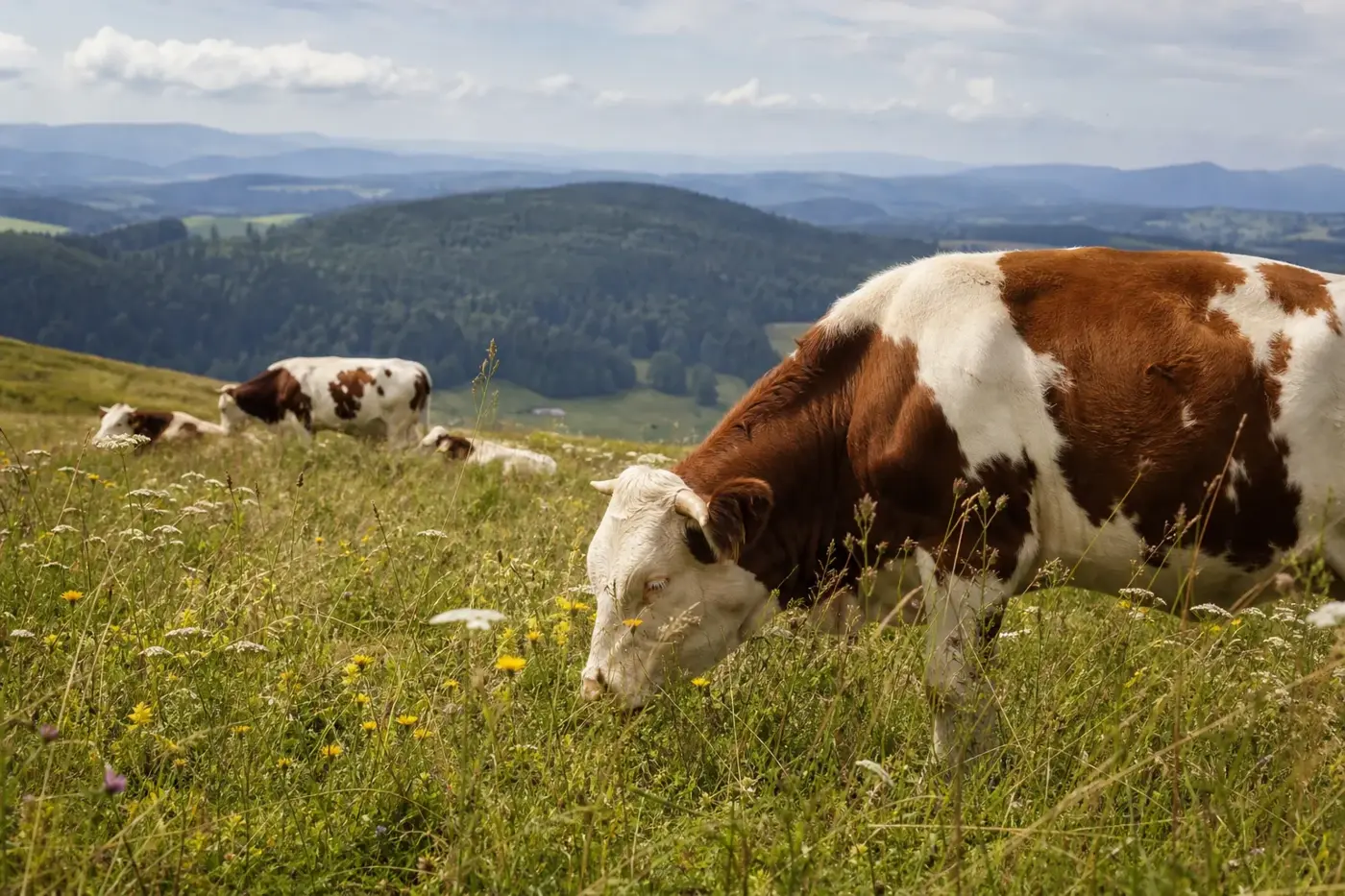
Cow's, sheep's and goat's milk supply those ingredients in different proportions and forms. Feed can alter the fatty acid profile and introduce plant-associated compounds, while season can change both feeding and the stage of lactation. Cheesemaking then transforms or obscures some milk aromas. Reviews of feeding studies report effects that vary with the cheese, maturation period and sensory method used. [3,4]
Think of terroir as a chain linking pasture, milk and local practice, rather than a flavour geography supplies all by itself. Even measurable differences do not always become flavours you can recognise. The feeding review describes studies where trained panels detected differences but consumer panels did not. A plant-derived compound can change in concentration without leaving a recognisable note in the finished cheese. [4]
Meet the cultures making that first tang
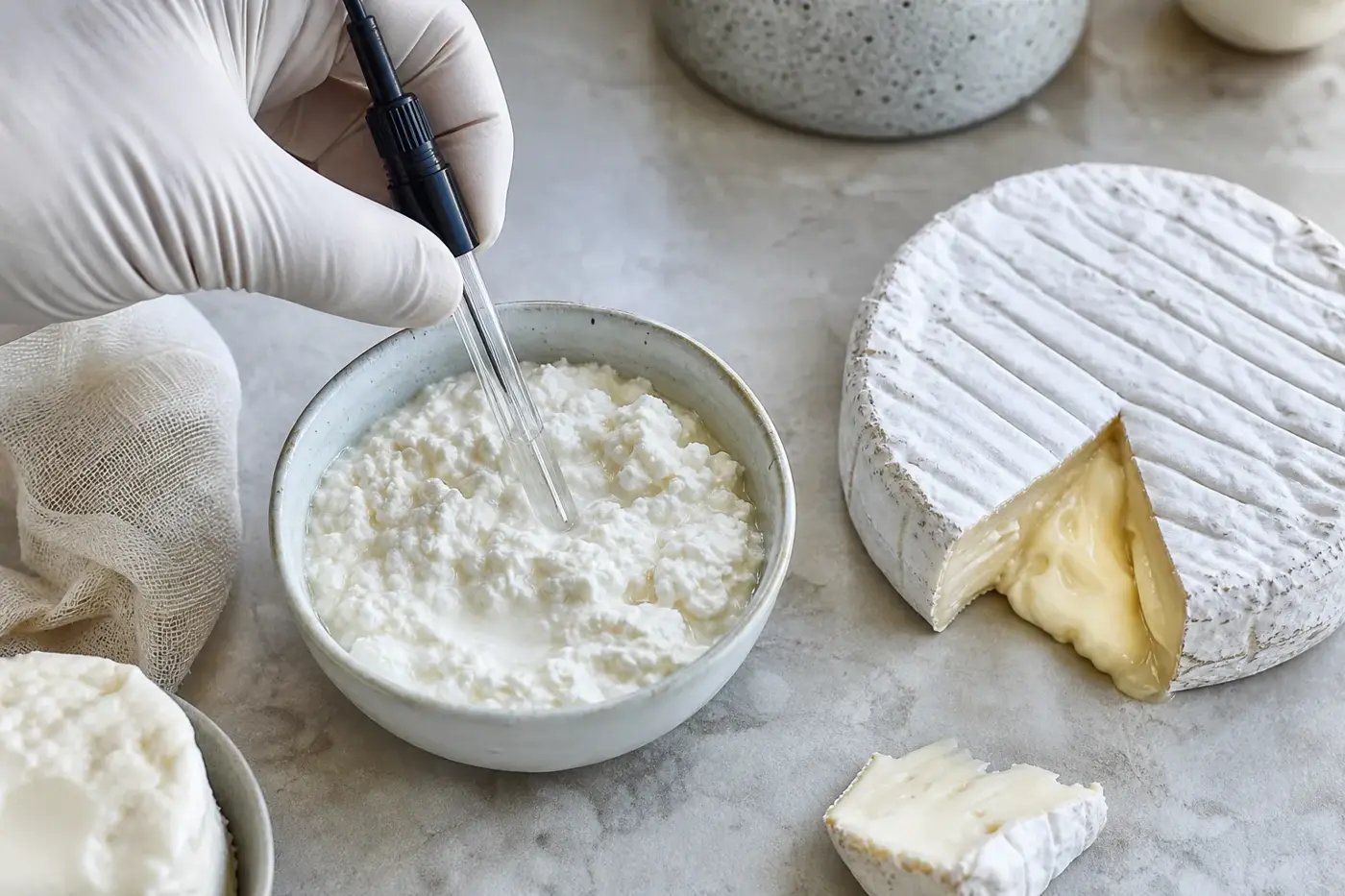
The first tang begins with fermentation. Starter cultures are selected microorganisms, usually lactic acid bacteria, added to guide it. Bacteria such as Lactococcus lactis and Streptococcus thermophilus use lactose and produce lactic acid. This lowers pH, the measure of acidity, bringing an early sour taste while changing drainage, mineral balance and the conditions other microbes will encounter. [10]
Much of the original lactose leaves with the whey. Bacteria keep using what remains in the curd, and later organisms may consume the lactate produced by fermentation. That early acidification does more than make cheese sour: it prepares the way for the next stages of flavour. You can follow the wider sequence in how cheese is made. [10]
How proteins bring savouriness, bitterness and aroma
Protein breakdown gives you both tastes and the raw materials for aromas. Called proteolysis, it begins as residual coagulant, the enzyme preparation used to set milk, and milk enzymes such as plasmin cut caseins into peptides. These are shorter chains of amino acids. Enzymes from starter bacteria and other ripening organisms continue the work, releasing smaller peptides and individual amino acids. [1,2]
Those fragments can taste savoury or bitter, as well as supplying material for further aroma reactions. Bitterness can develop when particular peptides, often hydrophobic ones, accumulate faster than enzymes break them down. What matters is not simply how much protein breaks down, but whether peptide production and removal stay in balance. [1,2]
Microbes can then turn amino acids into aldehydes, alcohols, acids and sulphur compounds. Methionine, for example, supplies sulphur-containing aroma pathways. For more on the initial coagulant's part in this process, head to rennet explained. [3]
Follow fat from pungent to fruity
Meet butanoic acid, also called butyric acid: pungent, with a rancid character. It is one of the shorter-chain free fatty acids that can contribute directly to cheese flavour when enzymes split milk fat. That process is called lipolysis. Whether its note adds character or takes over depends on its concentration and the surrounding mixture. [2,3]
Fatty acids also supply other reactions, and blue cheese puts them to striking use. Penicillium roqueforti can convert them through oxidation and decarboxylation into methyl ketones, notably 2-heptanone and 2-nonanone. Further transformations produce secondary alcohols, while reactions involving fatty acids and alcohols can produce fruity-smelling esters. What reaches your nose is a mixture of acids and their descendants. [2,3]
A little microbial teamwork goes a long way
That buttery smell can start with citrate. Some citrate-utilising lactic acid bacteria, including certain Lactococcus and Leuconostoc strains, generate precursors from citrate and sugars that lead to diacetyl, a buttery-smelling compound. Microbes can also reduce diacetyl to acetoin and then to 2,3-butanediol. As the cheese matures, those changes shift the balance of aromas. [10]
Yeasts and moulds bring their own enzymes and change conditions for neighbouring organisms. One organism's waste can become another's food: an unusually efficient arrangement for sharing a home. Species names alone cannot tell you how the finished cheese will smell. Strains differ, and their activity depends on the surrounding community and the cheese itself. [2,10]
Why Cheddar, blue and bloomy rinds go their own ways
Inside Cheddar's relatively closed body, starter and other bacterial activity drive development. Blue cheese combines bacterial fermentation with mould-driven fat and protein breakdown. In a Camembert-style bloomy-rind cheese, surface growth changes acidity and breaks down proteins from the outside. Each style brings together a different combination of milk, manufacture and microbial activity. [1,8]
Then age changes the picture again. Proteolysis alters texture and the supply of flavour precursors, while microbes keep transforming those precursors. Comparing young and mature Cheddar lets you follow that development within one style before you leap between entirely different cheeses. [1,5]
Water, salt and air set the pace
Think of a cheese as a carefully controlled habitat. Available water supports microbial activity and molecular movement; drying and salting change that availability. Salt brings its own salty taste, but its influence on ripening depends partly on its concentration in the cheese's moisture, not simply its proportion in the whole cheese. Acidity helps select which organisms thrive and changes enzyme activity. [1,5]
Oxygen favours surface organisms and mould growth around the air channels in blue cheese. Temperature influences microbial growth and enzyme reactions, while humidity affects surface drying. Adjusting these conditions changes which processes dominate. Maturation is not just waiting for the same flavour to get louder: the maker is managing a changing balance of reactions. [1,2]
Taste your way from rind to centre
The surface has access to oxygen and contact with the maturing room. It offers opportunities you will not find inside the cheese. In bloomy-rind cheeses, yeasts and moulds consume lactate and raise the surface pH. Their enzymes contribute to protein breakdown, allowing a softer layer to develop beneath the rind while the centre remains firmer. [1,2,10]
On washed-rind cheeses, yeasts can first make the surface less acidic and more welcoming to bacteria that tolerate those conditions. Sulphur-containing compounds make important contributions to the aromas of many surface-ripened cheeses. Taste rind and centre and you can find different experiences within the same piece. Those differences reflect where organisms grow and how their products move through the cheese. [2,3]
Heating milk and browning cheese tell different stories
Heating milk changes the starting conditions for ripening. It alters the microbial population and can inactivate enzymes, including milk's native lipase. More severe heating can also produce cooked, sulphurous notes through changes involving whey proteins. The effects depend on the treatment applied. [7]
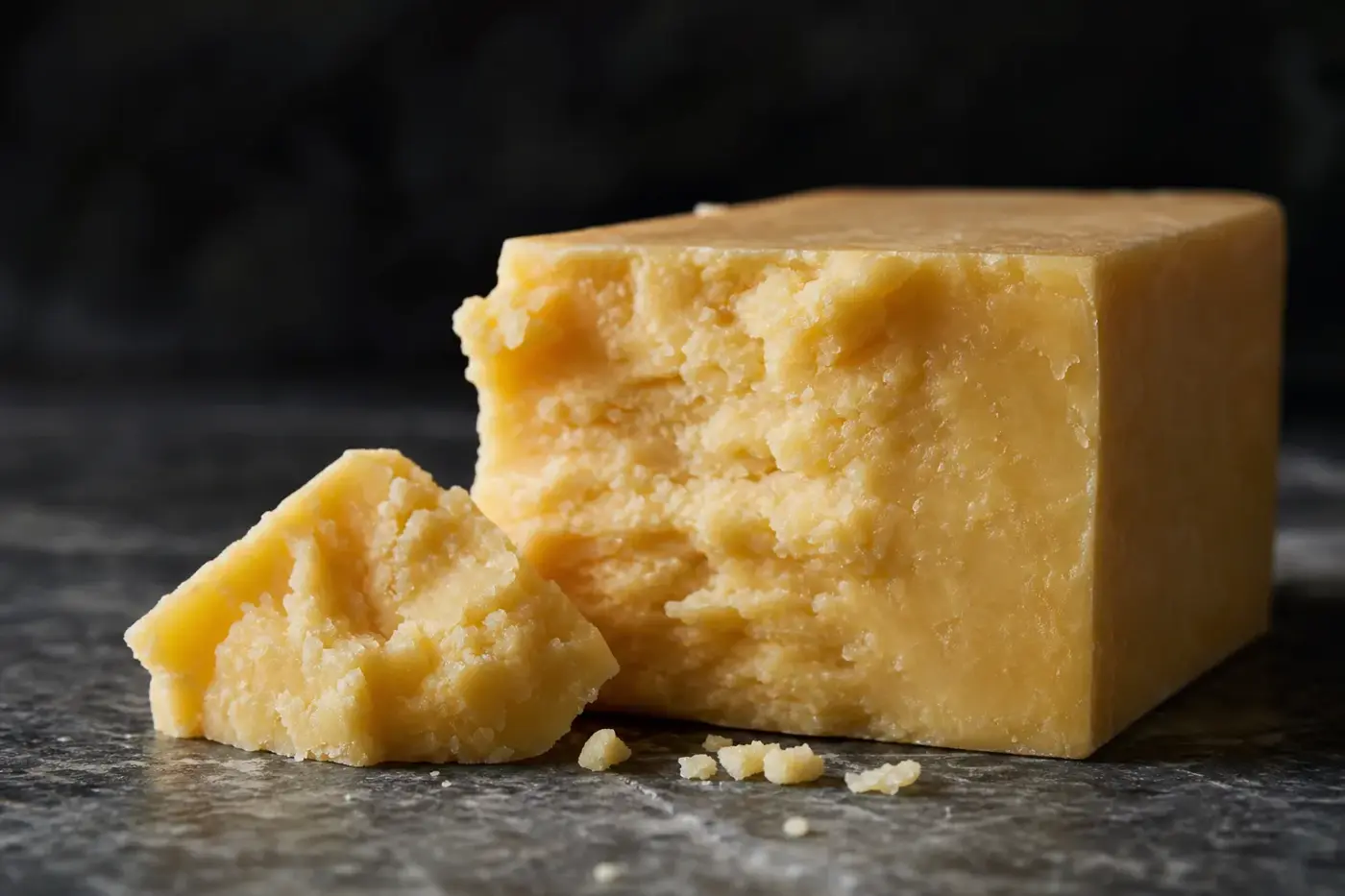
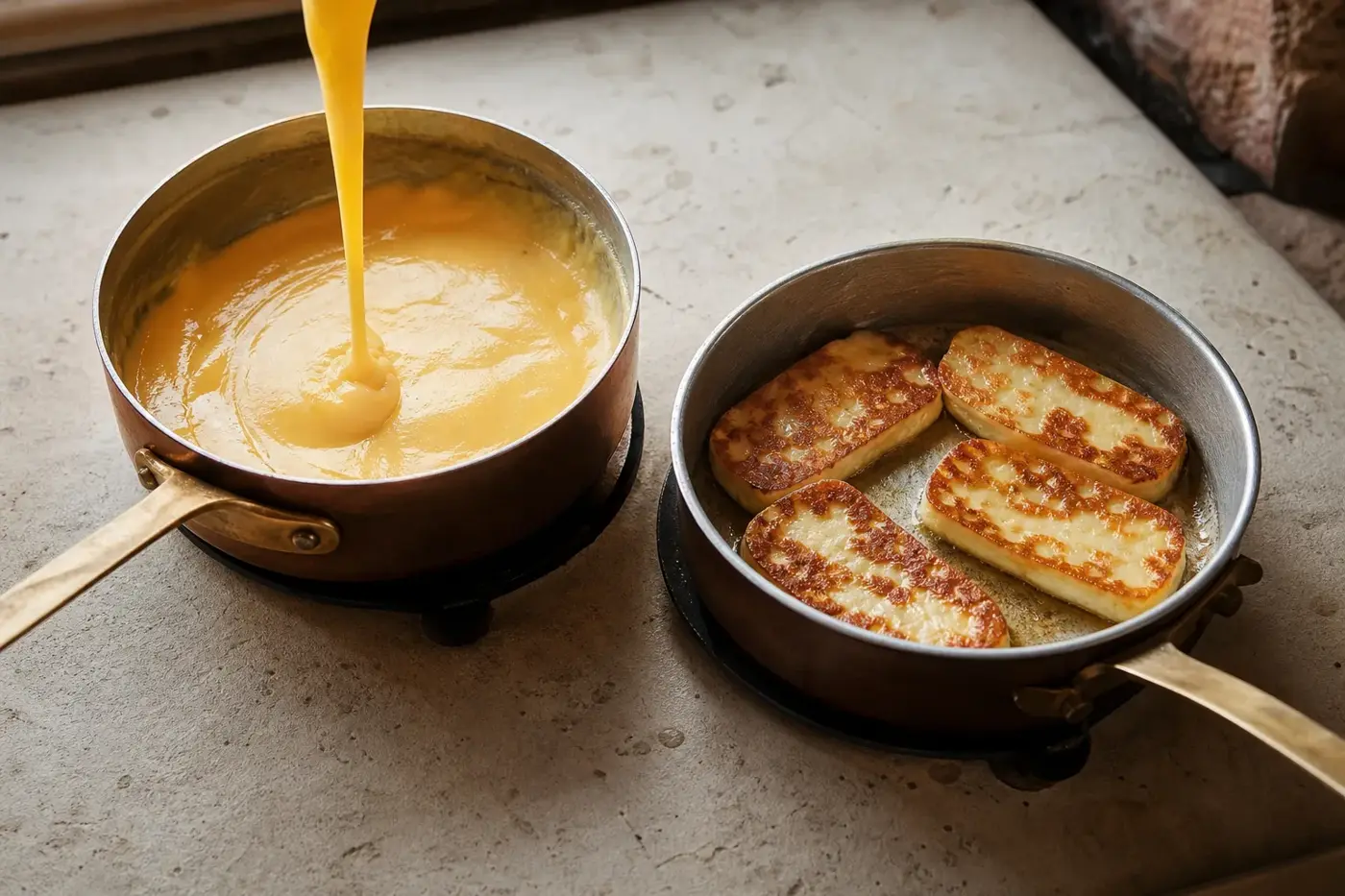
Apply heat to finished cheese and another set of possibilities opens up. At a drying, browning surface, reducing sugars can react with amino groups through the Maillard reaction. Residual lactose and galactose help explain differences in browning behaviour. Research comparing heated and unheated Edam, Emmental and Gouda samples identified changes in volatile profiles through chemical analysis, including alkyl pyrazines in the heated cheeses. [7,8]
Melting changes the cheese's physical structure; browning can create additional flavour compounds. They deserve separate attention, even when you encounter them together. For the distinctions between milk treatments, continue to raw milk, thermised and pasteurised cheese. [7,8]
The biggest chemical signal may escape your nose
The most abundant compound does not necessarily define a cheese's smell. A chromatogram separates and measures chemicals, but its largest peak need not point to the most important aroma. Compounds differ in the concentration needed for detection, and mixtures affect perception. Sensory assessment alongside chemical analysis connects those molecules to what people actually notice. [2,8]
A 2024 experiment brought that connection into focus. Researchers produced 16 cheeses under controlled conditions, combining sensory evaluation with measurements of aroma compounds and their release during eating. Fat, salt and lactose levels influenced release, and microbial strains also affected the results. Cheese structure actively shapes your experience of its chemistry, rather than simply holding aroma until your first bite. [5]
A lingering finish can therefore reflect release from your mouth as well as the amount of aroma originally present. In the model-cheese work, mouth coating and the behaviour of the chewed food helped explain persistence. If you and another taster notice different timings, neither description has to be wrong. [6]
Give young and mature cheese a tasting of their own
Choose young and mature examples of the same style, preferably from the same maker, with their ages stated. Cheddar is a useful starting point. Keep accompaniments simple so you can concentrate on the cheese.
For this exercise, follow the US FDA's handling advice for foods requiring refrigeration. Keep the fridge at 4 °C (40 °F) or below and limit time out to two hours, or one hour when the air is above 32 °C (90 °F). Count preparation and serving together. [9]
- Cut small, similar pieces. Keep the main blocks refrigerated. Let only your tasting portions briefly lose their refrigerator chill, keeping both samples under the same conditions and within the FDA limits above. [9]
- Smell before you taste. Record one or two observations for each sample. Use familiar comparisons when they occur to you; this is a tasting, not a chemistry exam.
- Take your time tasting. Separate saltiness, sourness, bitterness and savouriness from the aromas that emerge as you chew and breathe out. Notice whether the texture is elastic, crumbly or softer, and whether the finish changes after swallowing.
- Compare your discoveries. Look beyond intensity to the balance of tastes, kinds of aroma, texture and persistence. An older sample may develop in several directions at once. [5,6]
Keep following the flavour
Within The Science of Cheese, explore proteolysis and lipolysis for the reaction pathways, terroir for milk and place, and texture for the structure behind your eating experience. For handling questions, turn to Cheese Food Safety: The Complete Guide.
General information only, not medical advice: follow the official guidance where you live.
Questions people ask
Why does cheese sometimes taste bitter?
Protein breakdown produces peptides, some of which can taste bitter. Bitterness can develop when particular peptides accumulate faster than enzymes break them down.
What gives blue cheese its distinctive aroma?
Blue cheese combines bacterial fermentation with mould driven breakdown of fat and protein. The mould Penicillium roqueforti can transform fatty acids into compounds called methyl ketones, contributing to an aroma made up of acids and their descendants.
Why do young and mature Cheddar taste different?
As cheese ages, protein breakdown changes its texture and supplies material for further flavour reactions. Microbes continue to transform that material, so the balance of tastes and aromas can change.
Does the milk used affect cheese flavour?
Cow's, sheep's and goat's milk provide fat, protein, lactose and minerals in different proportions and forms. Feed and season can also affect milk, though cheesemaking may transform or obscure some of its aromas.
How long can cheese be left out for a tasting?
For foods requiring refrigeration, the US Food and Drug Administration advises keeping the fridge at 4 °C or below and limiting time out to two hours, or one hour when the air is above 32 °C. Preparation and serving time count together. See the US FDA's handling advice for current guidance.
Sources
- University College Cork and Society of Dairy Technology. Biochemistry of cheese ripening. International Journal of Dairy Technology, volume 57, issues 2 and 3, 2004. Retrieved article PDF.
- Frontiers in Microbiology. A Review on the General Cheese Processing Technology, Flavor Biochemical Pathways and the Influence of Yeasts in Cheese. Volume 12, article 703284, 2021. Retrieved full text.
- Foods. Volatile Flavor Compounds in Cheese as Affected by Ruminant Diet. Volume 9, article 167, 2020. Retrieved full text.
- Teagasc and University College Cork. Factors Influencing the Flavour of Bovine Milk and Cheese from Grass Based versus Non-Grass Based Milk Production Systems. Foods, volume 7, article 37, 2018. Retrieved full text.
- Centre des Sciences du Goût et de l’Alimentation and collaborating research units. Influence of Cheese Composition on Aroma Content, Release, and Perception. Molecules, volume 29, article 3412, 2024. Retrieved full text.
- INRA, CNRS, Université de Bourgogne and collaborators. Understanding Aroma Release from Model Cheeses by a Statistical Multiblock Approach on Oral Processing. PLOS ONE, volume 9, article e93113, 2014. Retrieved full text.
- Dairy Chemistry and Biochemistry. Chapter 9, Heat-induced changes in milk, first edition, 1998. Retrieved chapter PDF.
- eFood. Volatiles profiling in heated cheese as analyzed using headspace solid-phase microextraction coupled to gas chromatography coupled to mass spectrometry. Volume 3, article e2, 2022. Retrieved full text.
- US Food and Drug Administration. Are You Storing Food Safely? Consumer guidance, online version retrieved November 2026. Official guidance.
- Foods. Omics Approaches to Assess Flavor Development in Cheese. 2022. Retrieved indexed article passages.
This desk-researched explanation combines published biochemical pathways with experimental work on aroma release, feeding research and official US handling guidance.
Last checked: November 2026
Last checked November 2026.
The editors suggest you read next
Why Some Cheese Melts and Some Does Not
Picture curds sitting in hot whey at 93 to 95 °C.